5920 Hollywood Boulevard: Movie Town Motel

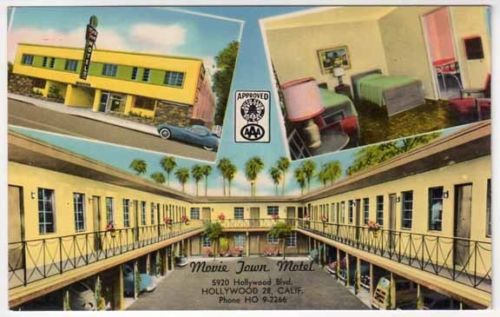
Anthony Pinelli obtained a permit to build a 2-story apartment house at 5920 Hollywood Boulevard located within the Bronson Tract #2 on the south side of the street just west of Bronson in April 1951.  It opened as the Movie Town Motel (not to be confused with the Hollywood Town Motel just down the street).

The property had a brush with notoriety when it was barely a year old. On November 19, 1952, a man was arrested in Hollywood for petty theft after making a phone call from a booth at 1269 N. Vine Street using “slugs” instead of real coins. Two telephone company employees who had been staking out the booth, as a number of expensive calls to Las Vegas had been made to it in recent days using slugs, nabbed the man as he was about to step into his new Caddy. He tried to bribe them but they turned him over to police. The man,”John Baker,” was booked for petty theft and released on bond. But before he had breathed the clean, fresh, Los Angeles air for more than a few paces, police rearrested him.

Hollywood Citizen News 11/20/1952.

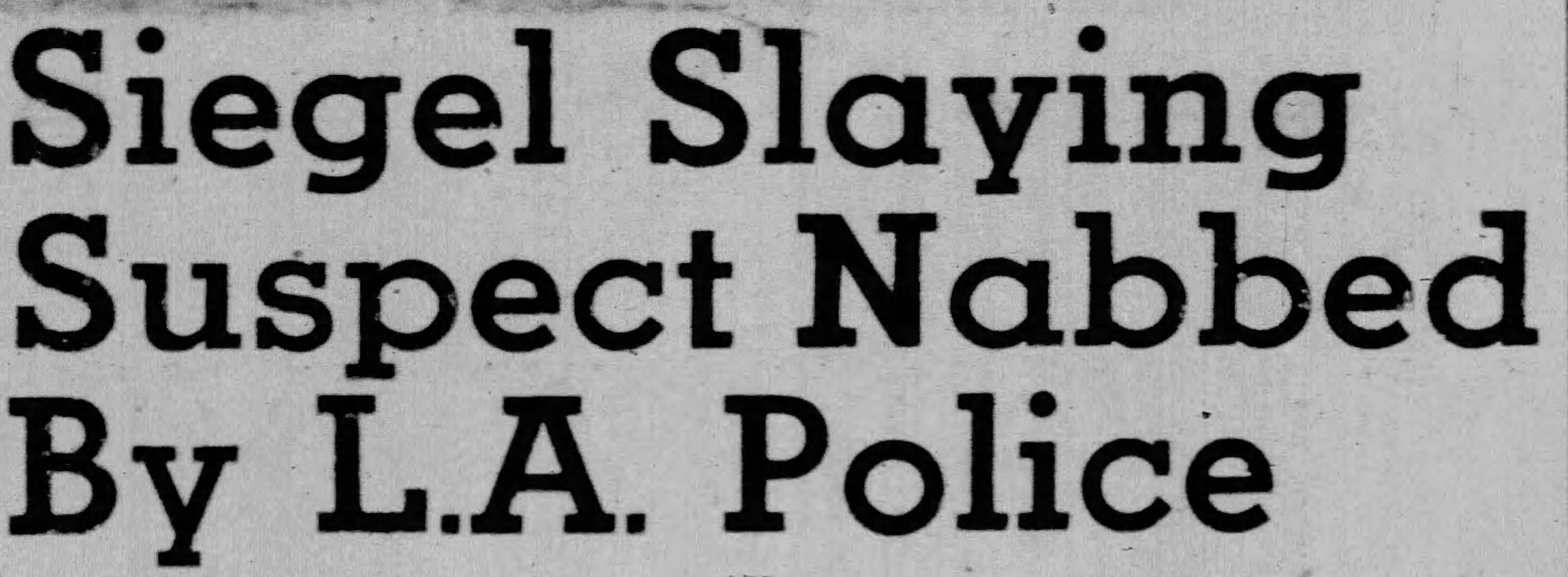
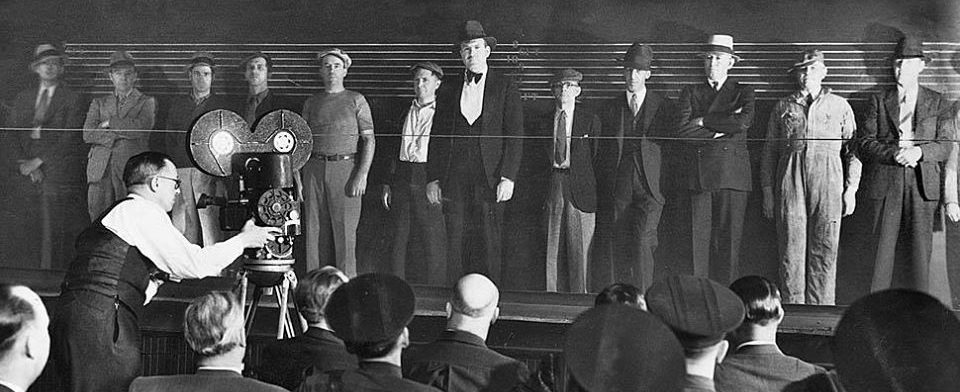
The slug user was identified through his fingerprints as a Midwestern gangster, Leonardo “Lips” Moceri. Thought to be a hired killer for a gang run by Thomas “Yonnie” Licacoli (then doing time in Ohio State Prison), Moceri was long wanted in Toledo as a suspect in the October 1931 murders of bootleggers Abe Lubitsky and Norman Blatt and the July 1932 slaying of gangster Jack Kennedy and Kennedy’s girlfriend Louise Bell in November 1932. Locally, police questioned him about the June 1947 murder of Bugsy Siegel, the suspected 1949 murders of Mickey Cohen henchman Dave Ogult and Frank Nicoli, the December 1950 murder of mob lawyer Sam Rummel, August 1951 double murder of the “two Tonys” Trombino and Brancato, in front of a Hollywood apartment building at 1648 N. Ogden, and the December 1951 disappearance of former moonshine king Frank Borgia. He was also wanted by the FBI for draft dodging.

Leo Moceri after his Los Angeles arrest, 11/19/1952. UCS photo.

In Moceri’s wallet contained $1800 cash, a bank deposit slip for $10,000 made out to Charles Battaglia, and a business card for Salvatore Pinelli, identified as the operator of the Movie Town Motel.

Pinnelli was picked up for questioning along with Tom Dragna, ex-Cohen henchman Mike Rizzo, and Jimmy “the Weasel” Fratiano. All but Fratiano were released without charge after questioning.

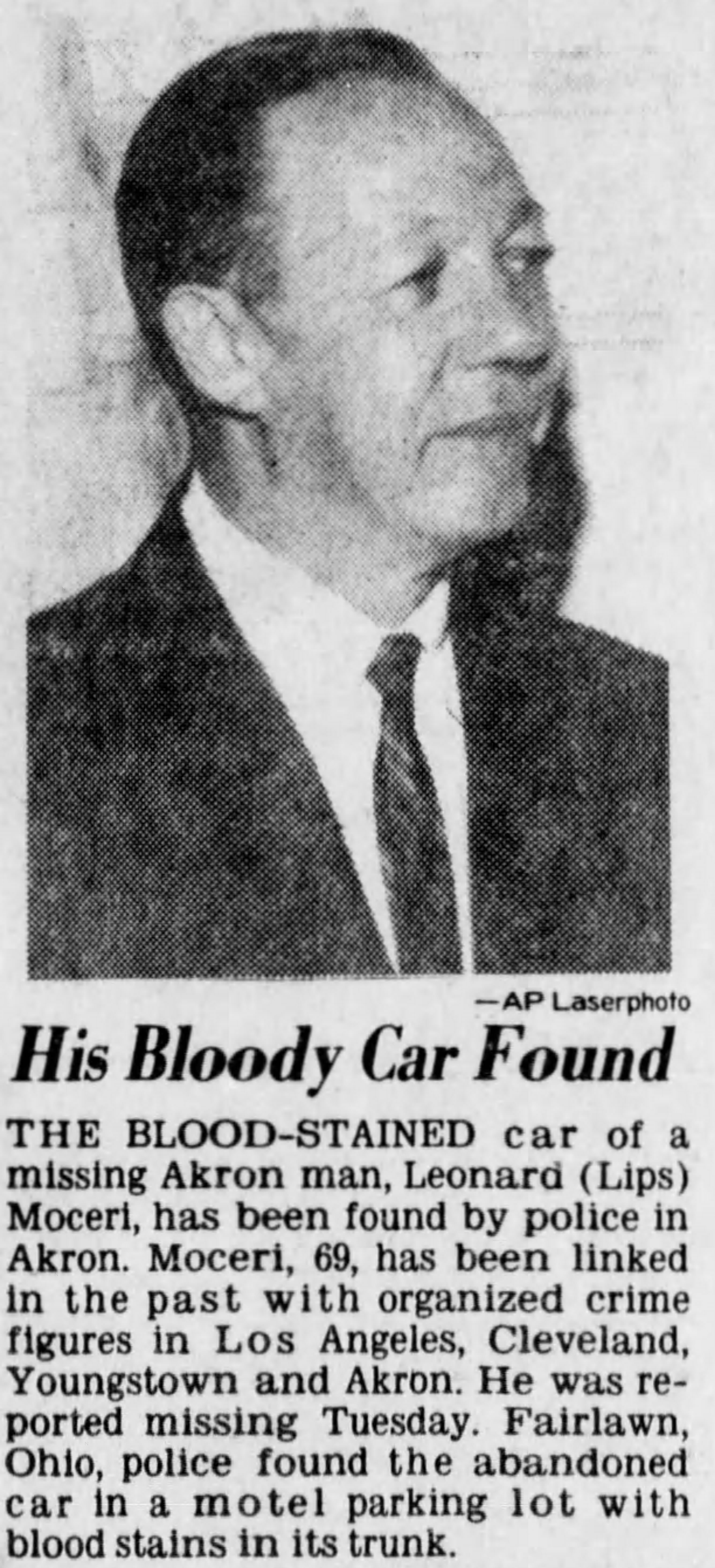
Whatever information Moceri may have had about local crimes came to nothing. He remained jailed here until being extradited to Ohio in December 1952 and charged with four counts of murder but the charges were dropped due to the deaths of key witnesses. In March 1953 he was convicted of blackmail. He went on to become underboss of the Cleveland crime family. In August 1976 he went missing. His car, with a bloodstained trunk, was found in a motel parking lot (in Fairlawn Ohio- not the Movie Town Motel).

Cincinnati Enquirer 9/3/1976.

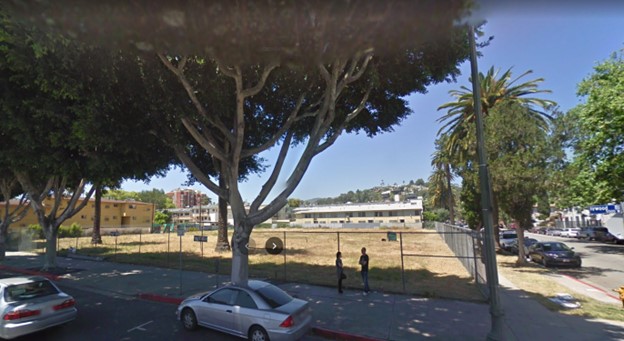
Movie Town Motel in 2011. Google Map image.

The former Movie Town Motel  motel operates today as the Banana Bungalow.

5800 Block of Hollywood Boulevard: Hollywood Freeway

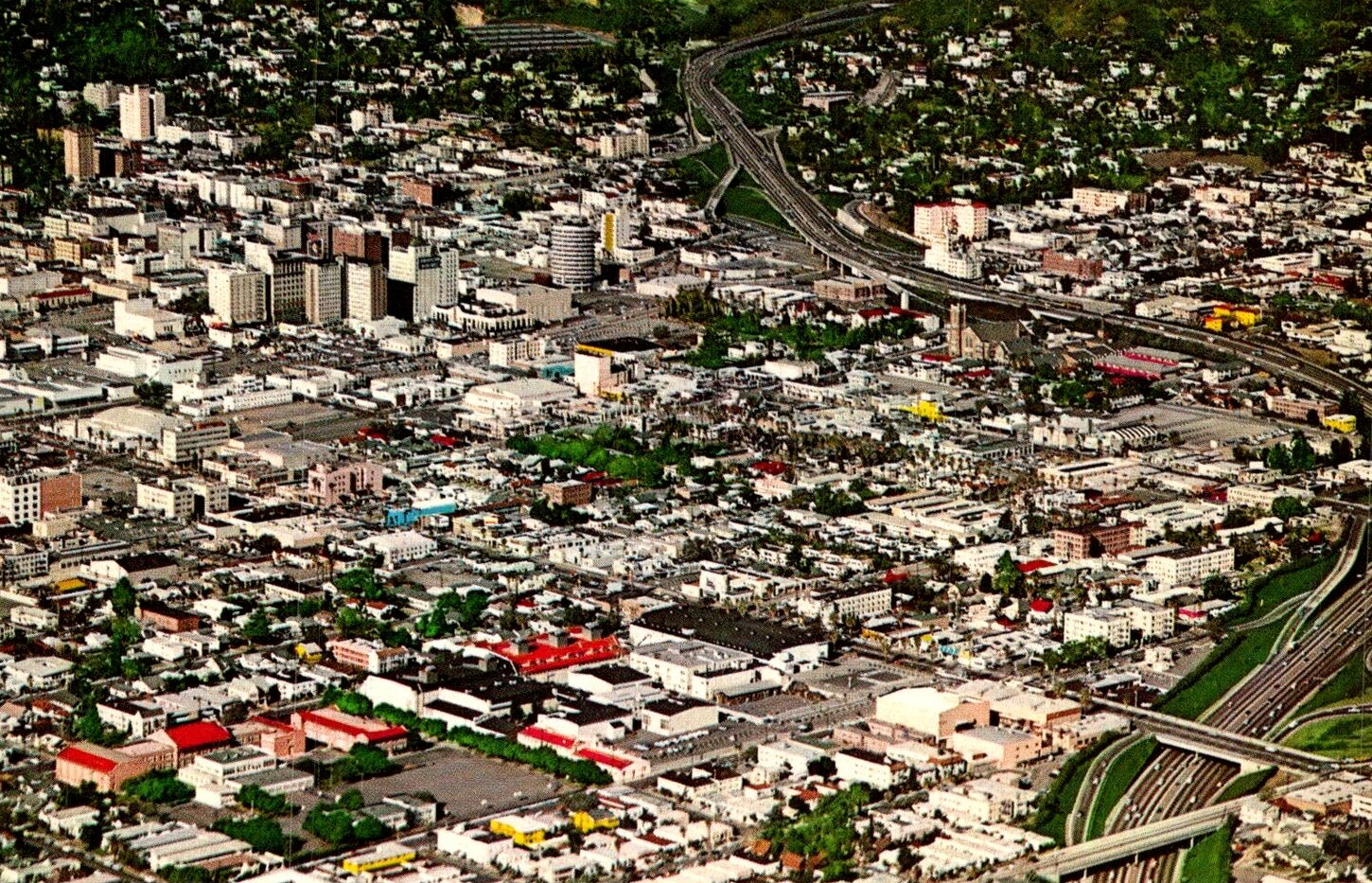
The Hollywood Freeway (US Route 101) was constructed to connect downtown Los Angeles with the San Fernando Valley.

Originally to be known as the Hollywood Parkway when a plan was presented to Mayor Bowron in 1939, the first unit, constructed by the City of Los Angeles with city and state funds, opened in July 1940 through the Cahuenga Pass from Highland Avenue to Barnham Boulevard.

Funding and World War II put a halt to further progress on the freeway for the duration, After the war, restarting of the project was again pushed back as civic leaders and residents protested that removal of existing dwellings would make the already severe housing shortage situation worse (see my posts on the postwar housing crisis here and here), but in 1946 excavation got underway in the Civic Center section and Fort Moore Hill became a lot less hill. The project was full steam ahead when the Collier-Burns Act of 1947 assured state highway funding for freeway construction.

Hollywood business and religious leaders expressed concerns about the route through Hollywood, arguing that it would impact the acoustics of the Hollywood Bowl and cause the destruction of  KTTV’s new studio (later Metromedia Square), which opened at 5746 Sunset Boulevard on January 1, 1947 and the 1923 First Presbyterian Church of Hollywood at 1760 N. Gower. The State Highway Commission did indeed modify the route to avoid the studio and the church, and added what would today be called mitigation measures around the Hollywood Bowl in the form of landscaping to diminish effects to the acoustics (which as it turned out were fine).

By 1949 right of way acquisition for the Western Avenue to Hollywood Boulevard link began. Because the Hollywood Freeway is a depressed freeway, construction on the Boulevard meant excavating underneath it and constructing a bridge over the freeway as well as on and off ramps. The 5800 block of Hollywood Boulevard was affected, between Van Ness Avenue to the east and Bronson Avenue to the west. Canyon Drive, which had gone through to the north side of Hollywood Boulevard, would be rerouted onto Van Ness north of the Boulevard.


Overall, Hollywood Boulevard itself was minimally impacted by the project. There wasn’t a lot of development here; there were 1 and 2-story retail buildings, remnants of large, formerly rural residential estates, used car lots (this was the tail end of Hollywood Boulevard’s Auto Row), and gas stations.

5821 Hollywood Boulevard between Van Ness and Canyon Drive had been the home of Mary Taft, matriarch of the Taft family, from 1904 until her passing in 1938 at age 96; her daughter Dr. Gertrude Taft continued to live here until her death in September 1941. Detail of a 1913 Sanborn Fire Insurance map, LOC.


5873 Hollywood Boulevard, between Bronson and Canyon Drive, was a residence in 1913; the site had been a Union Oil gas station since 1921. It survived the Hollywood Freeway construction and was demolished in 1969. The current Original Tommy’s fast food restaurant was built in 1995. Detail of a 1913 Sanborn Fire Insurance map, LOC.


Nash dealers J. F. O’Conner & Son relocated from 5800 Hollywood Boulevard, where they had been since 1945, to 6028 Hollywood Boulevard due to freeway construction. Mark M. Hansen, owner of the Marcal Theater and part owner of the Florentine Gardens, owned both this property and the new location. Hollywood Citizen News 8/12/1949.

With right of way acquisition completed, excavation work at Hollywood Boulevard got underway in March 1951. The first task was to build a detour for the Pacific Electric tracks between Bronson and Van Ness.

Hollywood Citizen News 2/24/1951


Work on the PE detour. Hollywood Citizen News 3/8/1951

The final link, from Hollywood Boulevard to Mullholland Bridge was opened with a ribbon cutting ceremony on April 15, 1954.

The Hollywood Freeway bridge carrying eastbound Hollywood Boulevard traffic, May 1952. LAPL photo.


The opening if the Western Avenue to Hollywood Boulevard link. Hollywood Citizen News 3/3/1953

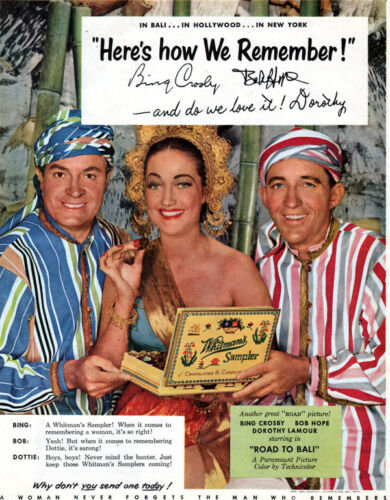
The Western Avenue to Hollywood Boulevard link of the freeway was to have opened in January 1953 but heavy rains delayed construction. It opened on March 16, 1953. Dorothy Lamour appeared at the ribbon-cutting ceremony- a nod to her “Road to…” series of films with Bing Crosby and Bob Hope. The first accident on this stretch of highway occurred about 5 minutes later.

Dorothy Lamour, Bob Hope and Bing Crosby were known for their “Road” films. In 1953 it was “The Road to Bali.”

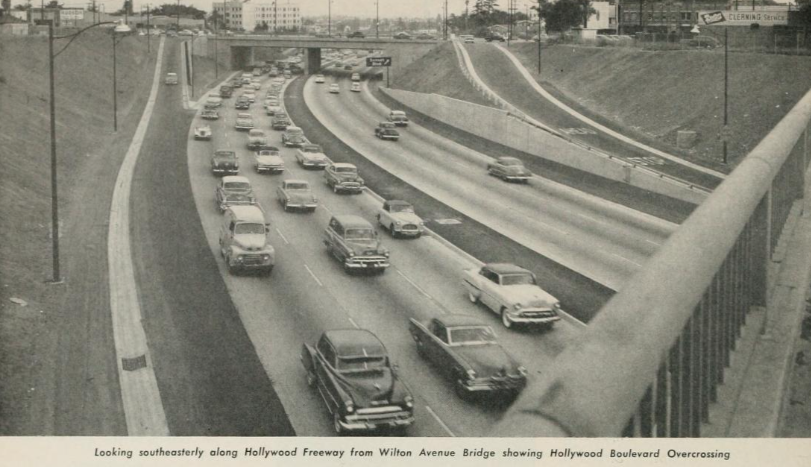
Looking toward the Hollywood Boulevard overcrossing from the Wilton Avenue Bridge. From California Highways and Public Works magazine September/October 1954.

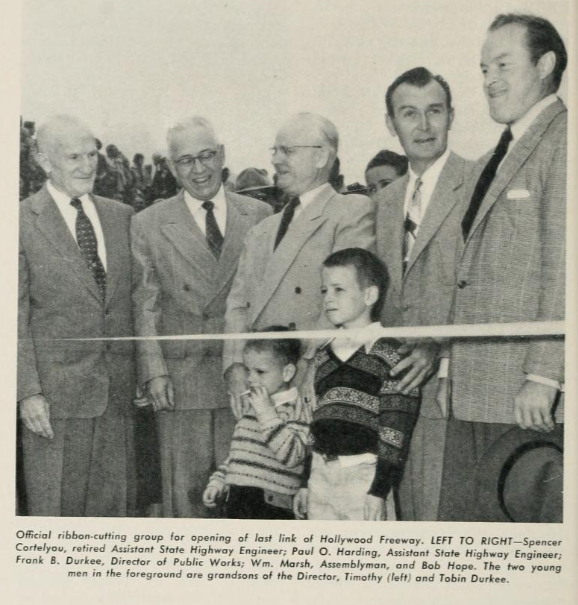
Hollywood Boulevard would be the end of the freeway until the final link opened in April 1954. This time, Bob Hope officiated at the ribbon cutting.

Bob Hope opening the final link of the Hollywood Freeway, April 1954. From California Highways and Public Works magazine May/June 1954.


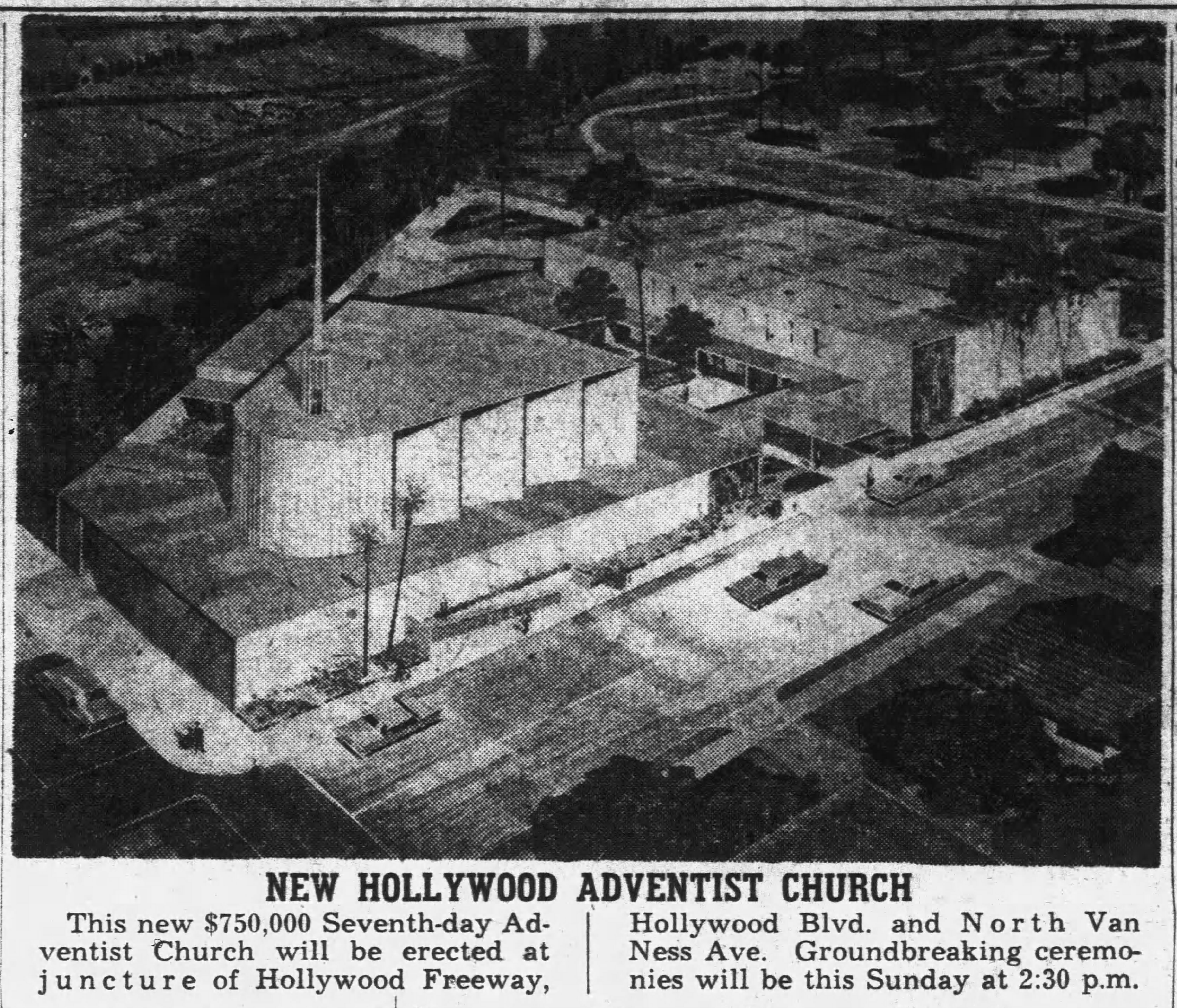
Although it looks like it was marooned by the Hollywood Freeway construction, the Seventh-Day Adventist Church between the ramps was built in 1961, almost 10 years after the freeway was completed. Its address is actually on Van Ness Avenue. Hollywood Citizen News 5/27/1961.


5756 Hollywood Boulevard: Hollywood Town Motel

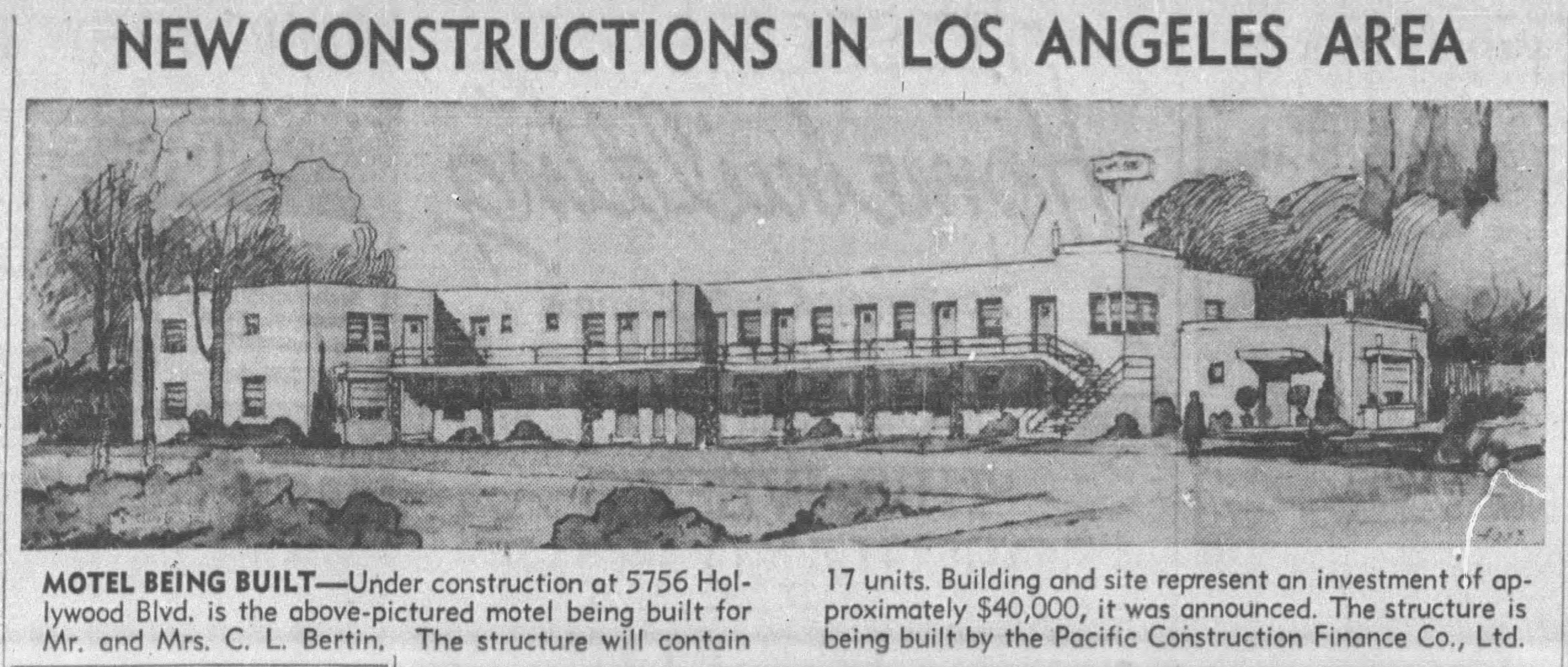
This 2-story brick motel on the south side of Hollywood Boulevard was designed in February 1940 by architect L.B. Clapp for owners Mr. and Mrs. C. L. Berton. Plans for the project were made public in April 1940.


LA Times 4/28/1940.


The Town Motel rooms had kitchens and offered weekly rates, catering to long-term tenants rather than short term tourist traffic. Harry Rubin was owner c. 1945 through 1960.

Colorized postcard view of the Town Motel.


The Hollywood Town Motel c. 1960.

The building was demolished in 1973.

5751 Hollywood Boulevard: Reginald Denny Hobby Shop

This modest little building at 5751 Hollywood Boulevard on the northwest corner of Taft Avenue started out as the Hollywood sales office of the Taft Realty Company.

The head of Taft Realty was Alfred Z. Taft, Sr.. Son of Harley Taft and Mary E. Hazard, he was a Los Angeles native, born in 1864. In 1888 he married Blanch Tedford. In April 1893, the couple moved with their young children- 3 daughters and 4 sons- to a 10-acre property along Hollywood Boulevard (then Prospect Avenue) between Wilton Place (then Lemona Avenue) and Van Ness Avenue (then Warner Avenue), originally addressed as 716 W Prospect Avenue, which he planted with lemons and oranges.

Taft dabbled in real estate in the early 1900s; by 1910 it had become a full time occupation rather than a sideline. Having bought and sold other properties, in February 1912, the company constructed a tract office on the ranch property and announced that it was subdividing the family orchard into lots along the newly-created Taft Avenue between Hollywood Boulevard and Franklin. The street had already been graded and sidewalks put in. A pair of unique cobblestone pillars marked the north and south entrances.

Hollywood Citizen 2/9/1912

Detail of a 1913 Sanborn Fire Insurance Company map showing the Taft subdivision and tract office at 5751 Hollywood Boulevard on what was now the northwest corner of Taft Avenue. LOC map.

Closeup of the 1913 Sanborn.


Having given up citrus ranching, in 1913 A.Z. Taft, Sr., relocated to Nogales, Arizona where he took up gold mining. His wife, Blanche Taft, died in Los Angeles in December 1915, at only 45 years old.

The two oldest Taft sons, A.Z., Jr. and Bertram Y. (who went by his initials, B.Y.) ran the family real estate and land development businesses.


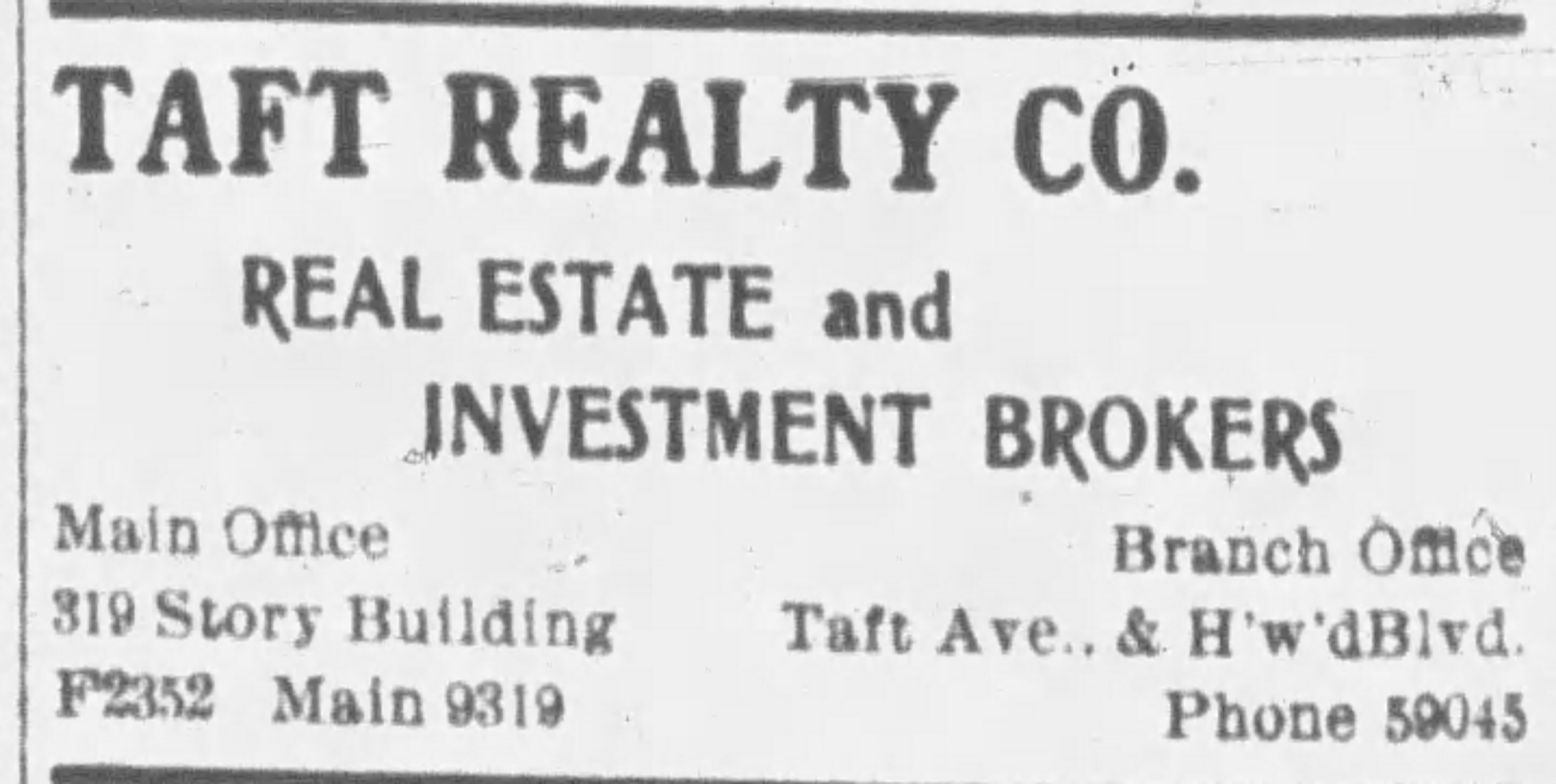
Taft Realty Co’s main office was in the Story Building in Downtown Los Angeles. Hollywood Citizen 2/27/1914
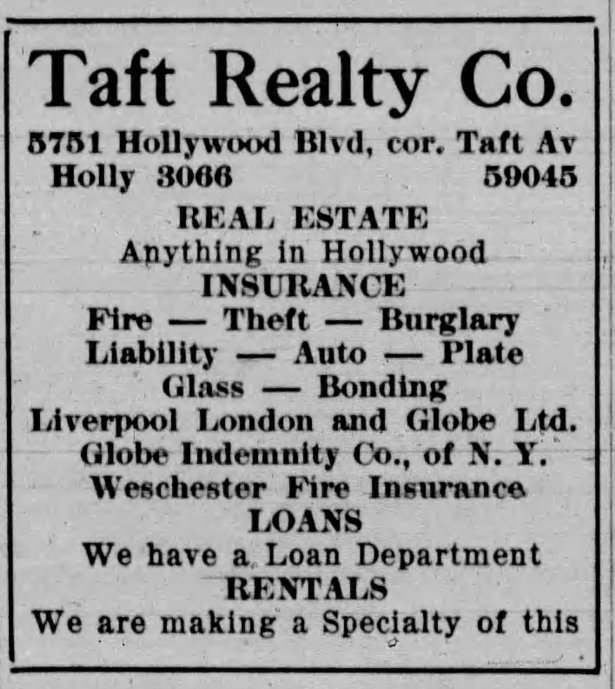
Taft Realty Co. ad, Hollywood Citizen 5/26/1916.

The Taft Realty Co’s Hollywood tract office in January 1920. One of the four cobblestone entrance pillars can be glimpsed on the right. LA Times 1/1/1920.

Originally a wood-clad structure, in November 1920, society architect Frank Rasche (who also designed a retail building at 5526 Hollywood Boulevard for B. Y. that year) obtained a permit to make a number of alterations to the building. Originally a Craftsman-cottage in keeping with the architecture of many of the homes in the subdivision, it would be transformed into a Spanish Colonial Revival structure with stucco walls and a red tile roof as the style gained favor along the Boulevard.

An artist’s view of the remodeled 5751 Hollywood Boulevard. Hollywood Daily Citizen 1/14/1922

In 1923, the company proposed its most ambitious project to date: the Taft Building, to rise on Hollywood Boulevard at Vine Street. Completed in 1924, it would be the first height-limit building in Hollywood.

Sketch of the proposed Taft Building. Hollywood Daily Citizen 9/8/1923.
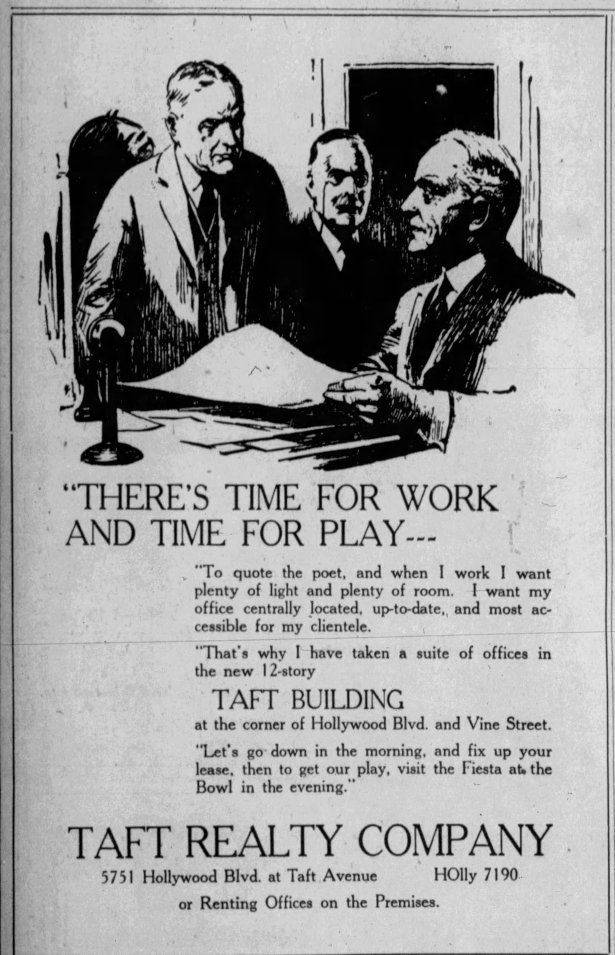
The Taft Realty Co. continued to use its tract office at 5751 Hollywood Boulevard even as it was renting space in the new Taft Building. Hollywood Daily Citizen 6/27/1924.

5751 Hollywood Boulevard remained in use by the Hollywood Realty Co. into 1925. Note the cobblestone entrance pillar. Mary Taft still lived nearby, at 5821 Hollywood Boulevard on the corner of Canyon Drive, with her daughter, Dr. Gertrude Taft. LA Times 1/1/1925.

After serving as the Taft Realty Co. tract office, the little building took on a variety of (usually short-lived) roles. Starting in July 1926, it became the headquarters of Screen Library Services, Inc.

The Screen Library Service Inc. opened at 5751 Hollywood Boulevard on July 16, 1926.

In June 1929, it became an office for Paul Marshal’s Health Institute.

Hollywood Daily Citizen 6/1/1929

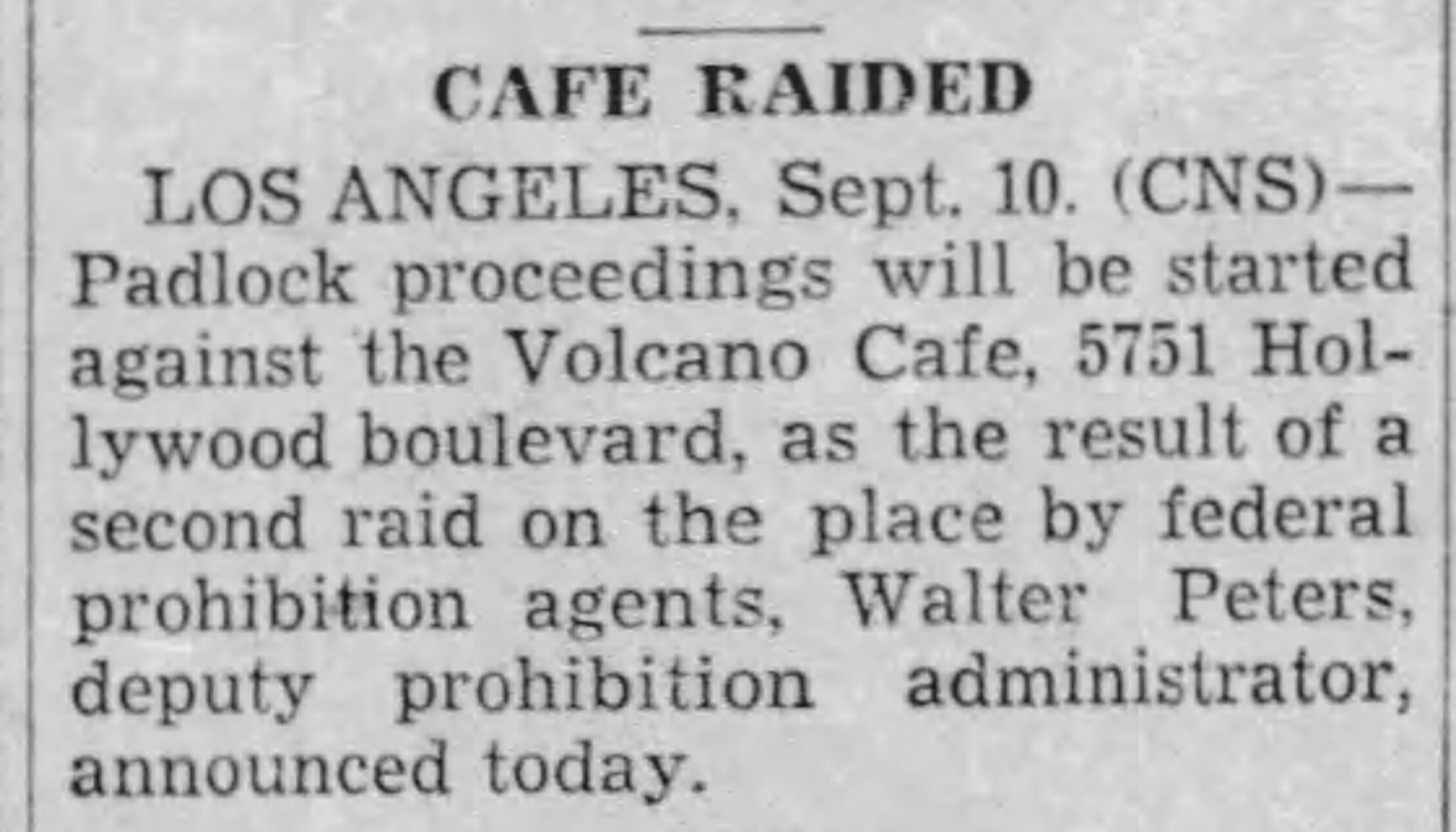
By early 1932, it was Del Zoppo’s Cafe Italian restaurant. Federal Prohibition agents raided the place on June 23, 1932 and found stockpiles of illegal alcohol. Owners Mike and Tony Del Zoppo were charged with violating the Volstead Act. Renamed the Volcano Cafe, it was raided again in September 1932, and Federal prohis recommended it be padlocked permanently.

Hollywood Citizen News 3/12/1932

Pasadena Post 9/11/1932.

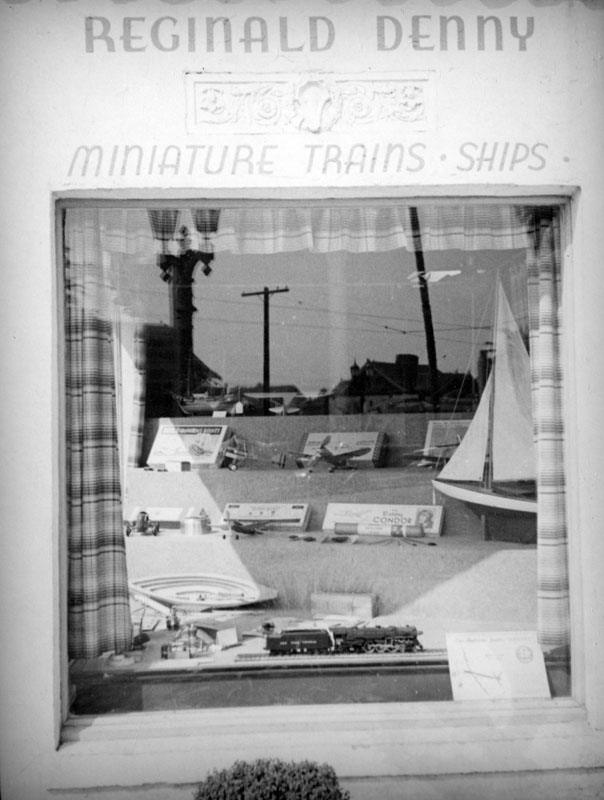
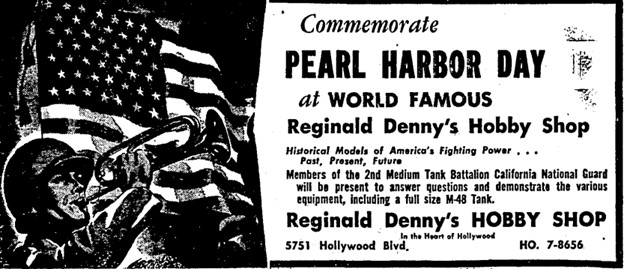
In 1934  through mid-1936 the building housed various theater arts purposes. In July 1936, Reginald Denny Industries, the listed owner of the building, obtained a permit to make minor alterations. By September 1936, 5751 had opened as the Reginald Denny Hobby Shop, selling model airplanes as well as model ships and trains. Denny’s factory for manufacturing his planes was located behind the shop.

5751 Hollywood Boulevard c. 1937 as Reginald Denny’s hobby shop. Note the old Taft subdivision cobblestone pillar and plane-shaped “Denny Planes” neon sign. LAPL photo.

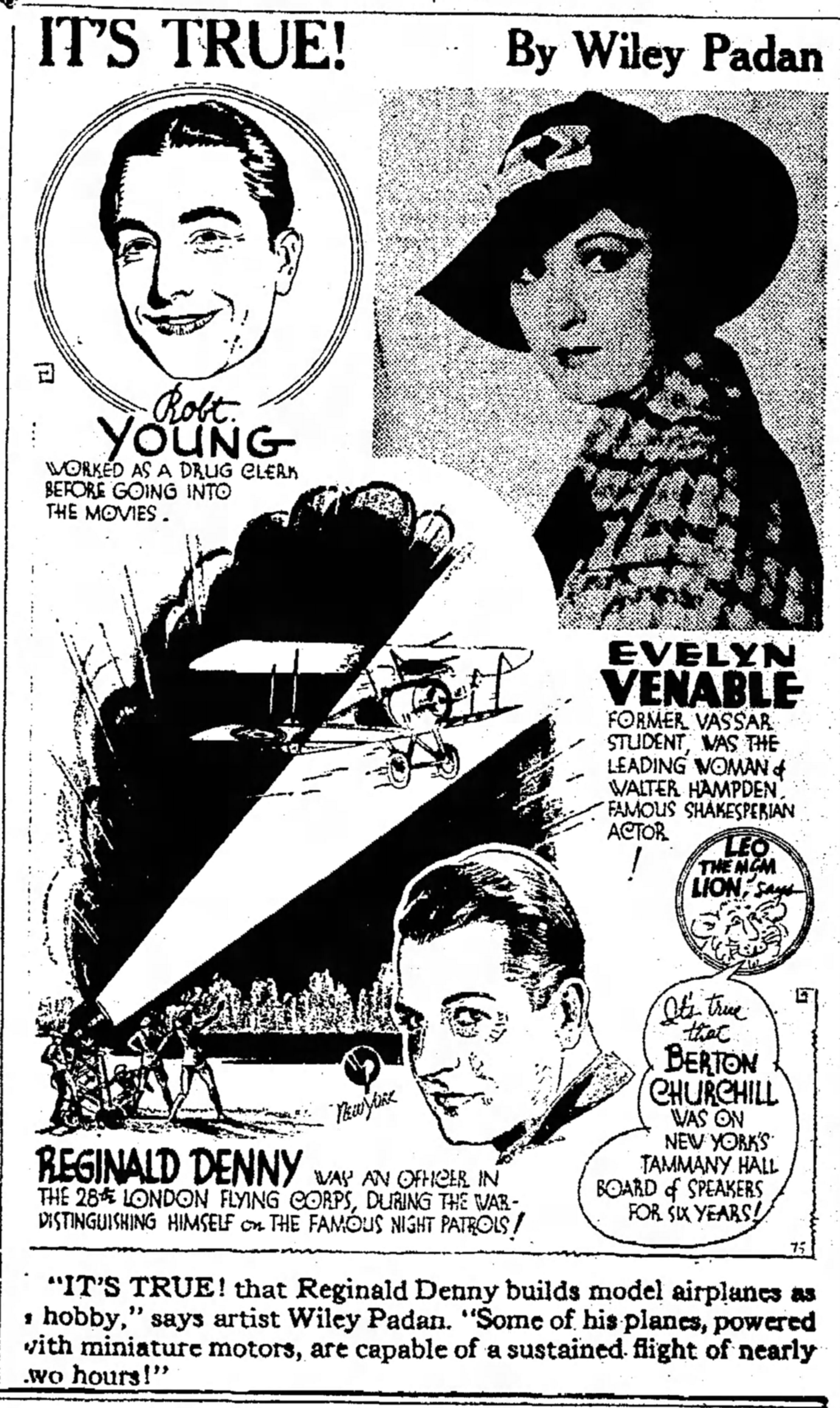
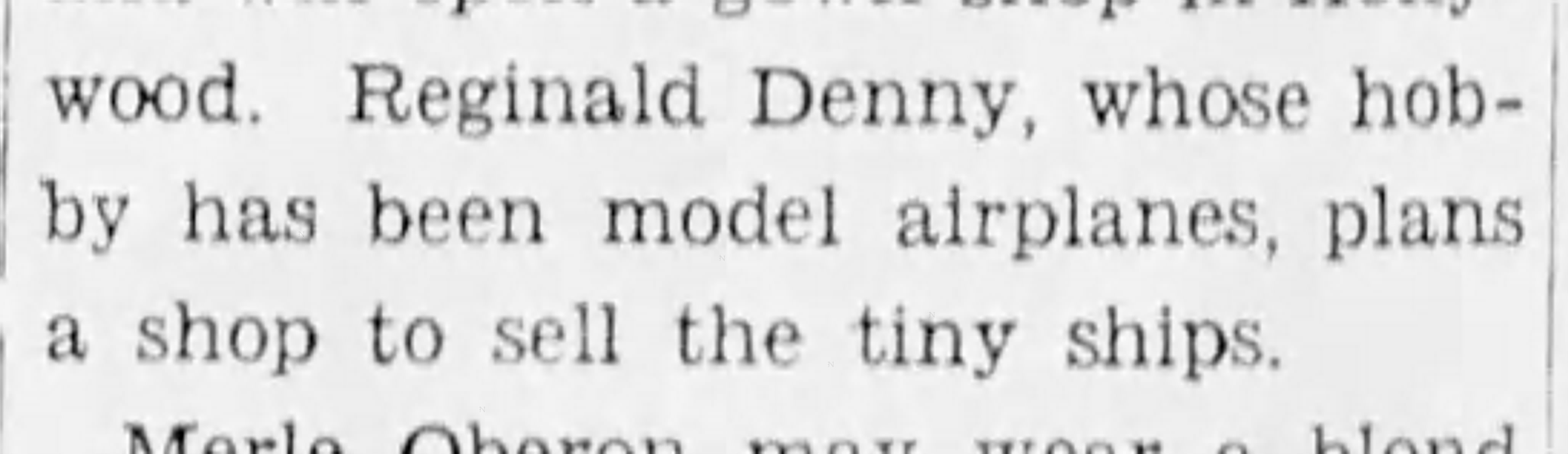
English-born actor Reginald Denny had served in the RAF during World War I and had been a popular leading man in silent films. As his career turned to character roles in the early 1930s, gossip columnists frequently noted Denny’s interest in model airplanes- a hobby that purportedly evolved from making them for himself, to making them in his home workshop for neighborhood children to the creation of Reginald Denny Industries to make and market the kits, which could be purchased from local shops or by mail order. By the Fall of 1935, it was reported that he would open his own retail outlet.

Ames Daily Tribune 5/25/1935.

Santa Ana Register 11/1/1935


A Hollywood gossip colimn mentioned in November 1935 that Denny planned to open a shop to sell his model planes. Perry County Republican 11/28/1935.


Palm Springs Desert Sun 1/29/1936.

Pasadena Post 9/5/1936.


Detail of the shop window c. 1937. LAPL photo.

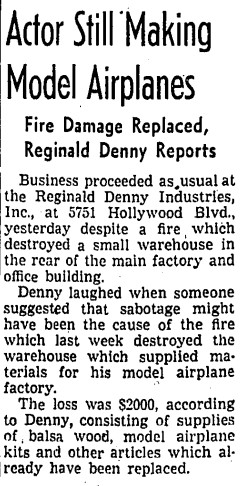
Denny was still affiliated with the shop as of September 1940 when a fire broke out in the rear warehouse.

LA Times 9/4/1940


The model shop continued in business here into the early 1960s before moving to another location.
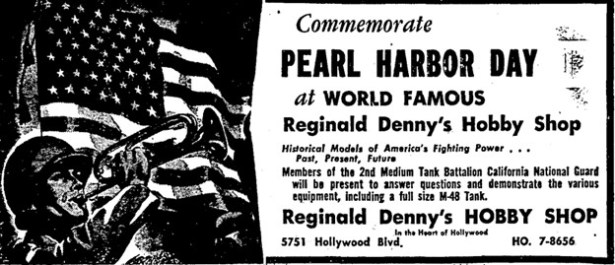
Though it continued to bear his name, Denny was no longer involved with the shop at this time. LA Times 12/6/1959.

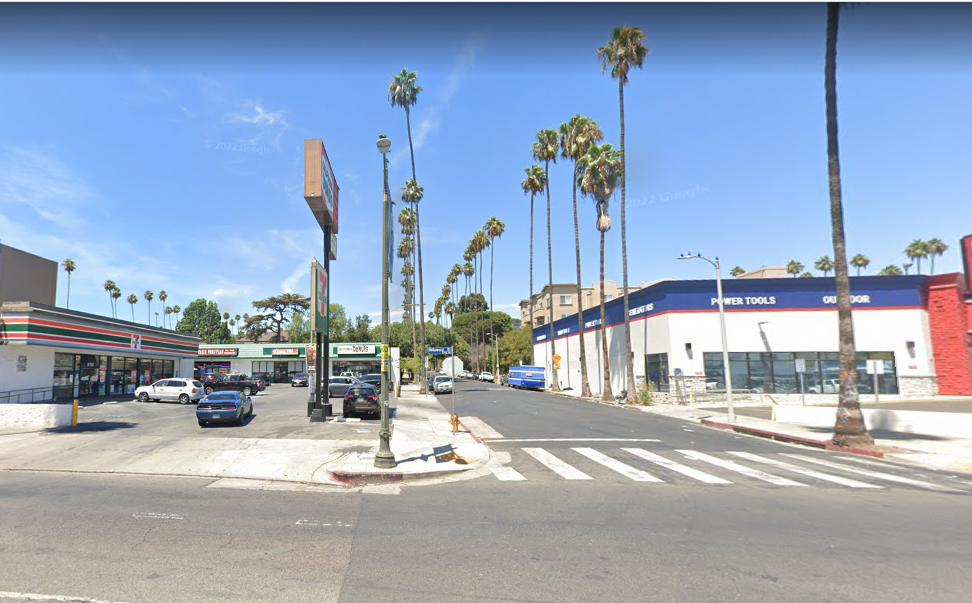
The corner of Hollywood Boulevard and Taft looks radically different today. The current buildings on this site, a 7-11 and mini-mall, were constructed in 1976.
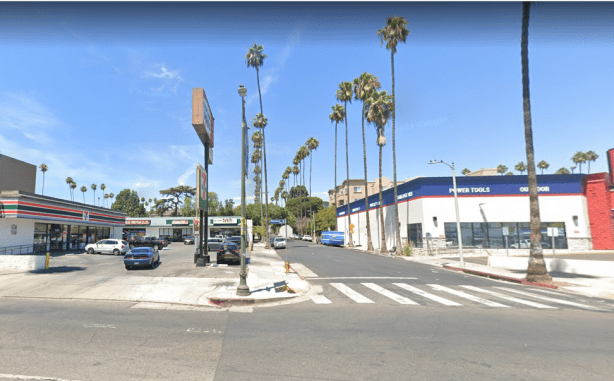
Google map image.


Notes:

Harley and Mary Taft moved to Hollywood in 1904. Taft died in 1906. A.Z. Taft Sr. died in Nogales in 1936. His mother, Mary Taft, continued to live at 5821 Hollywood Boulevard until her own passing in 1938 at age 96, one of the Very Old Ladies of Hollywood Boulevard who witness the transformation from rural to commercial.

Her daughter Dr. Gertrude Taft, lived in the residence at 5821 Hollywood Boulevard until she died in  September 1941. A.Z. Taft Jr, died in November 1941, at age 52. B.Y Taft died in November 1977.
5711-5717 Hollywood Boulevard: Ralphs Market

Founded in 1873 by brothers George A. and Walter B. Ralphs, Ralphs was one of the oldest grocers in Los Angeles. The chain had opened its first Hollywood store at 7257 Sunset Boulevard in May 1925.

In January 1929, the chain purchased a site for a second Hollywood store from Security Trust and Savings Bank (soon to be renamed Security-First National Bank), located on a portion of what had been Alfred Taft Sr.’s lemon orchard. At the northeast corner of Hollywood Boulevard and Taft Avenue, the address would be 5711-5717 Hollywood Boulevard.

LAT 1/20/1929

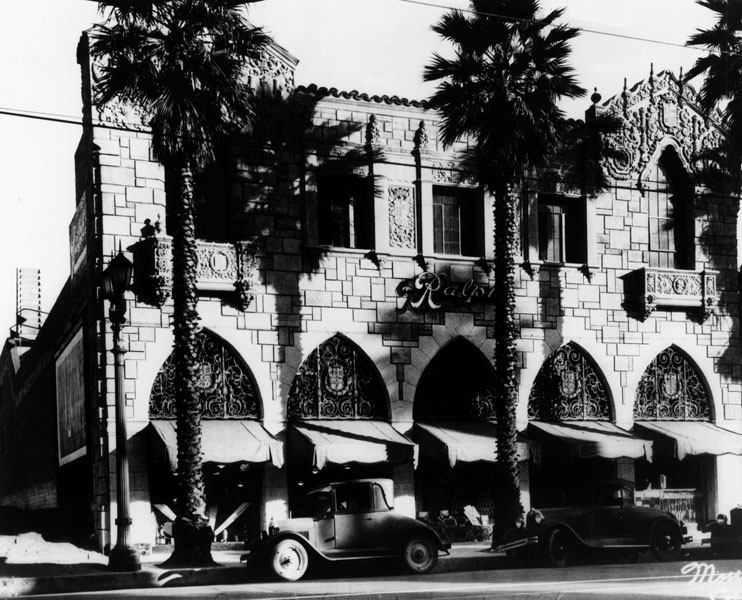
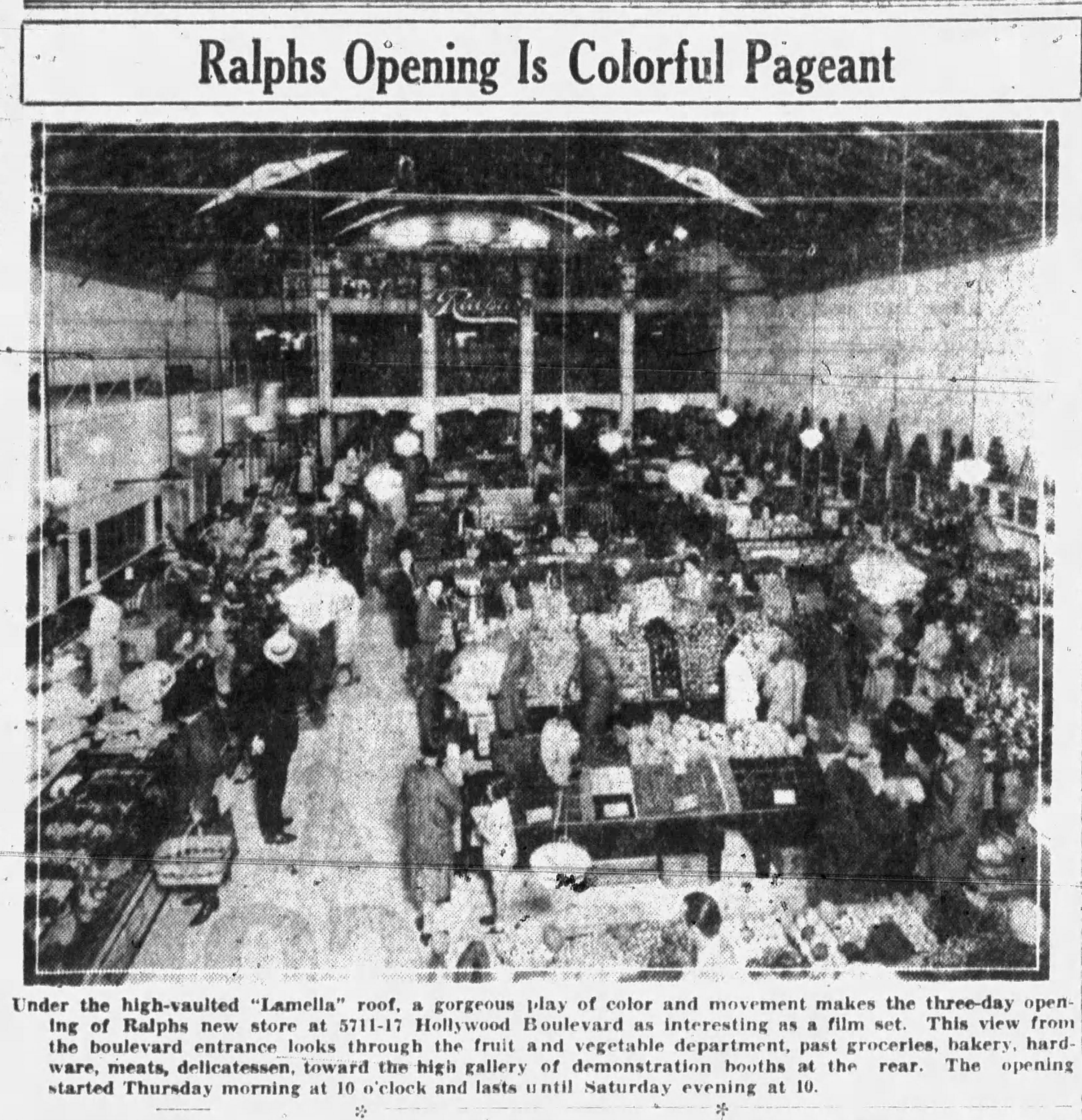
Architect Sidney Newton designed an unusual period-revival building, which the Hollywood Daily Citizen called a “modern interpretation of Spanish architecture.” The outer walls were of simulated antique stone blocks; interior walls were plastered with a simulated stone effect as well. The vaulted lamella roof, with its web of supporting timber beams, allowed the shopping area to be free of posts and pillars.

At the rear of the property was a 3-story garage and warehouse.

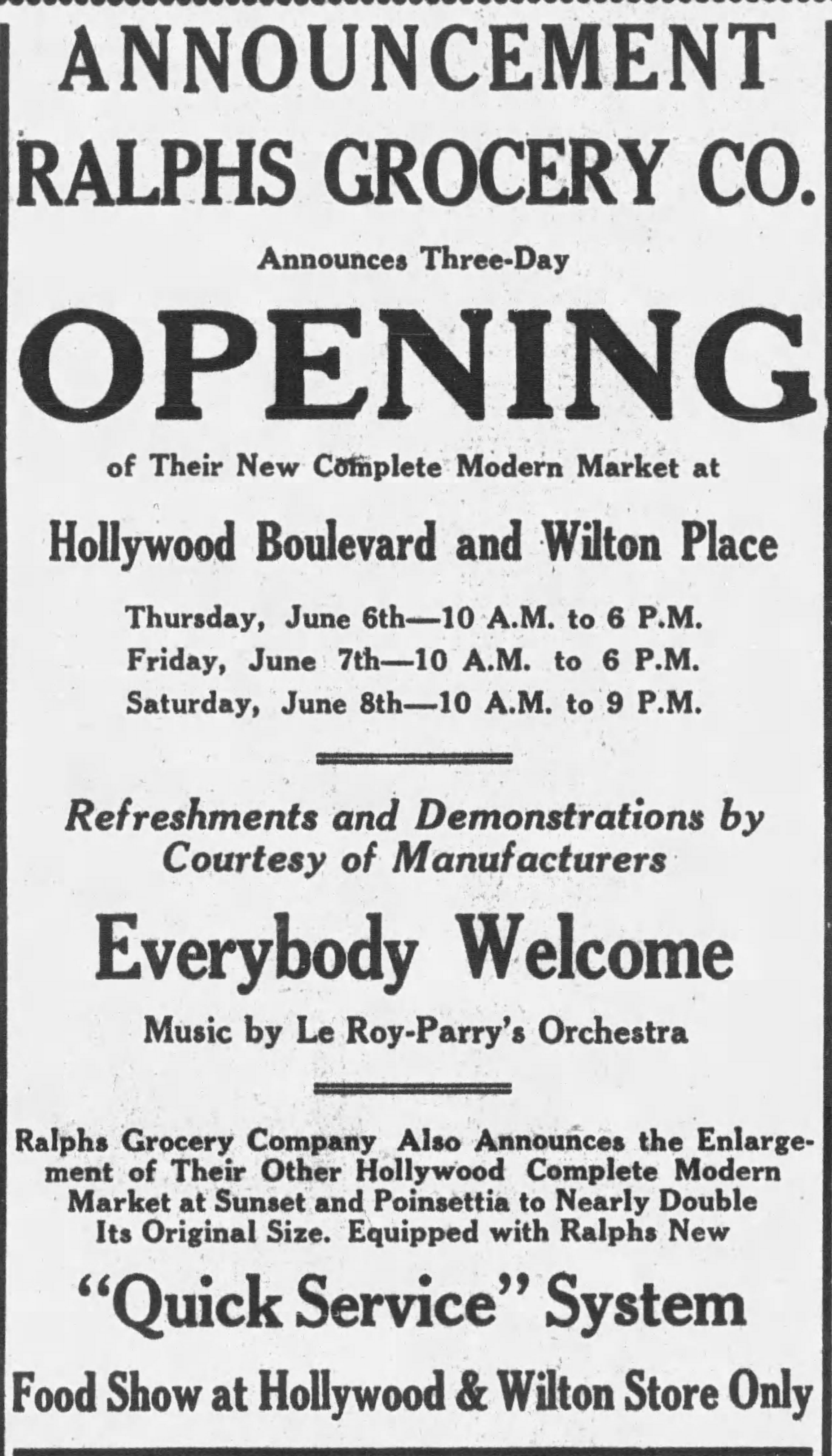
The new store held a 3-day gala grand opening on June 6, 7, and 8 1929.

The new market would introduce Ralphs’ “quick service” system, where customers could shop multiple departments- meat, dairy, bakery, etc, but pay for it all in one place.

La Times 6/6/1929

Hollywood Daily Citizen 6/7/1929

Hollywood Daily Citizen 6/5/1929.

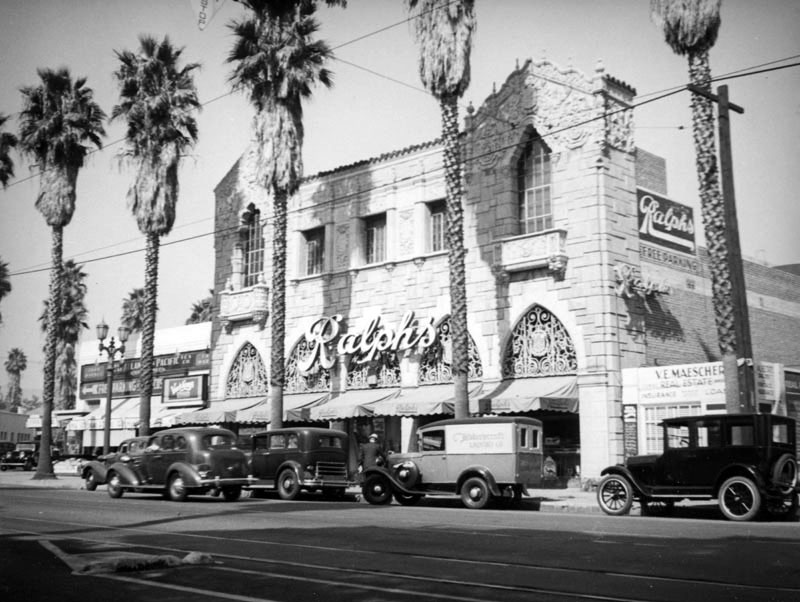
the Hollywood Ralphs c. 1937. LAPL photo.
The store remained in business as Ralphs into 1968. The building became a Pier 1 Imports store. It was demolished in April 1986 for a new Pier 1 building.

5701 Hollywood Boulevard: Security-First National Bank of Los Angeles

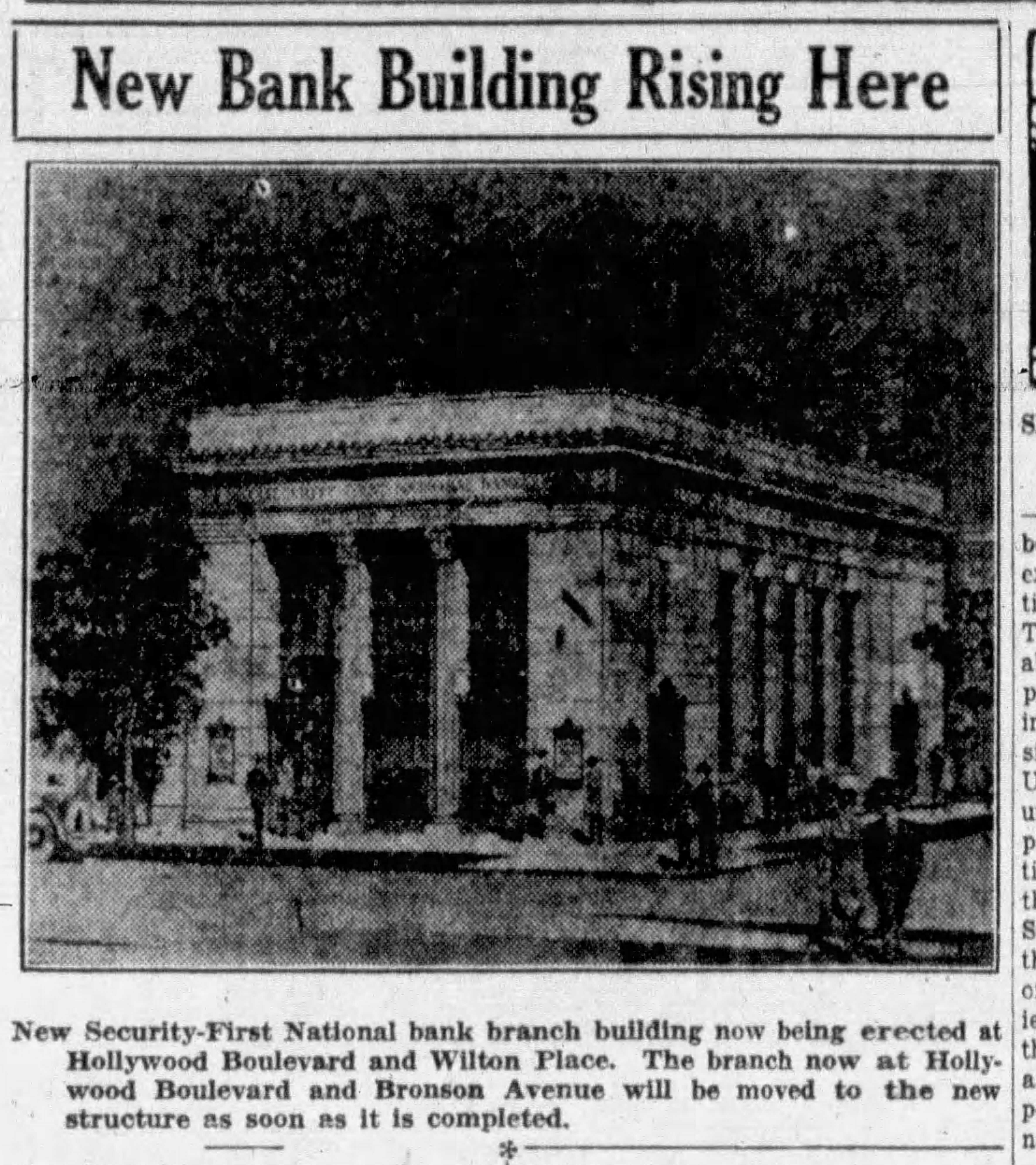
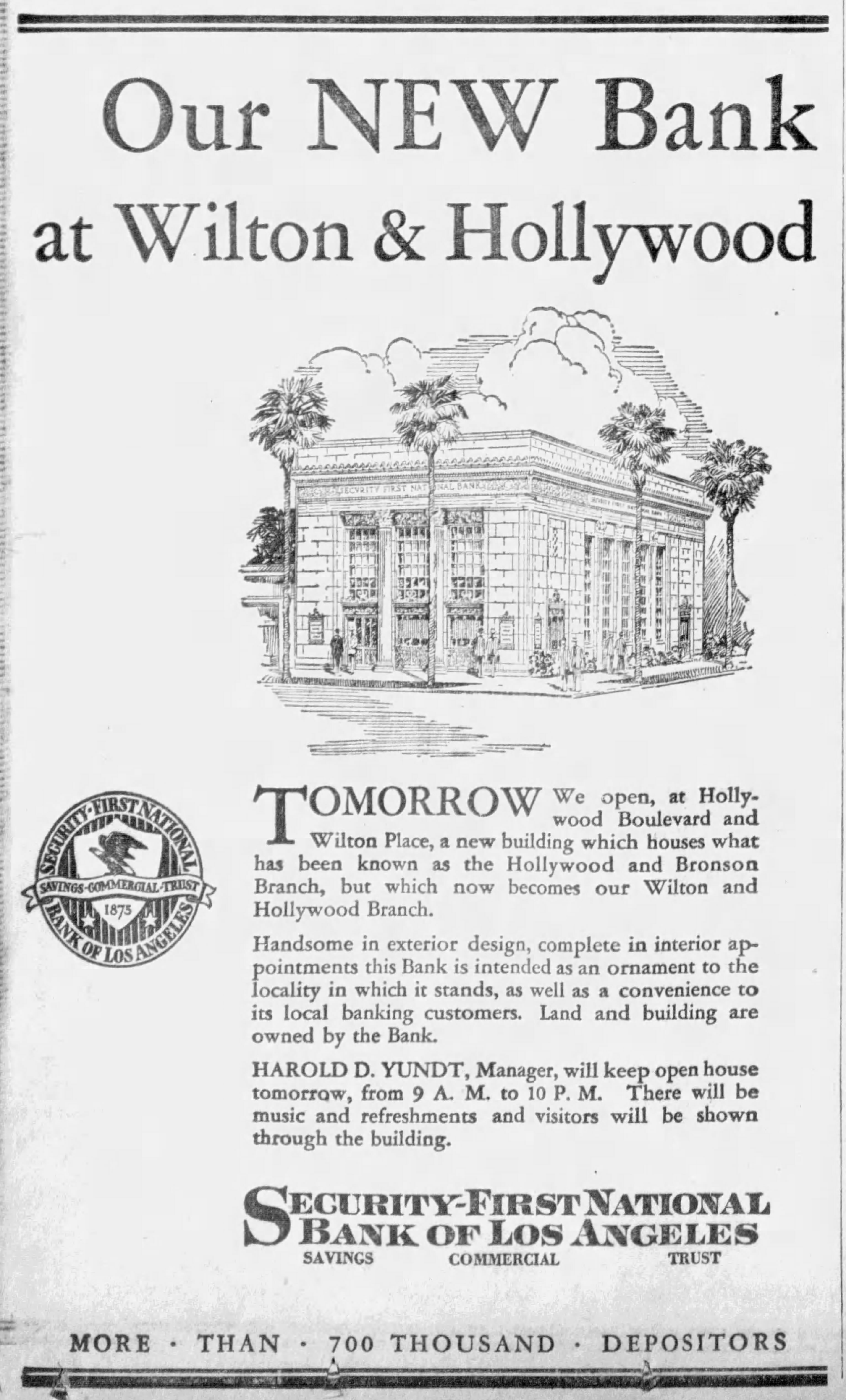
This classical building on the northwest corner of Hollywood Boulevard and Wilton Place was designed by architects Morgan, Walls and Clements for Security-First National Bank of Los Angles in 1929.

A permit for the structure was obtained in November 1929, less than 3 weeks after the Stock Market Crash had caused a major Panic and a run on banks, many of which collapsed. When plans for the bank’s new Hollywood branch were made public in December 1929, depositors must have felt doubly assured that their money was in safe hands and there was no need to withdraw it and hide it under the mattress.

Hollywood Daily Citizen 12/9/1929

Security-First National Bank had come to be in January 1929, the result of a merger between Security Trust and Savings Bank and Los Angeles-First National Bank.

Security Trust and Savings Bank itself had been created in December 1911 when investor Joseph Saroni’s Security Savings Bank consolidated with the Southwest Trust Company and Equitable Savings. Los Angeles-First National Trust and Savings Bank had merged with Pacific Southwest Trust and Savins Bank in February 1924.

LA Evening Express 3/7/1930


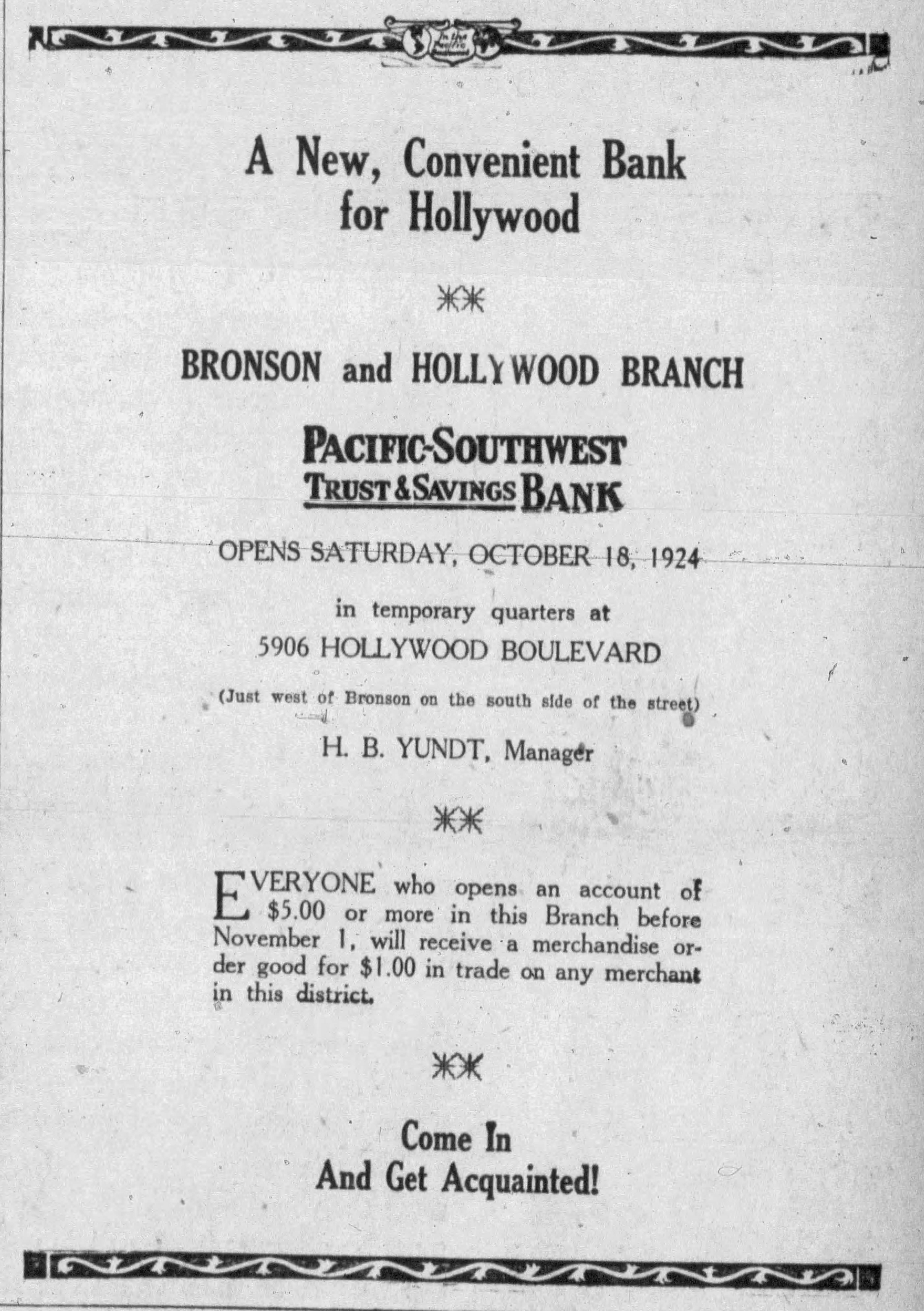
The new Hollywood branch opened at 5701 Hollywood Boulevard on March 8, 1930. It replaced its previous Hollywood branch at 5906 Hollywood Boulevard at Bronson, which had opened only a few years earlier, in 1924, as the Pacific-Southwest Trust and Savings Bank.

Hollywood Daily Citizen 10/17/1924

With such rapid changes, it’s a wonder customers could remember where their bank branch was located, let alone the name of the bank.

Practically every LA child was, or wanted to be, a card-carrying member of Security-First National Bank’s Hopalong Cassidy Savings Club, launched in March 1951, which could net you a letter from Hoppy, a Hoppy bank and other swag, plus coded messages that only members could decipher. On opening day, tellers wore Hoppy costumes but neither Hoppy nor Topper could appear. LA Daily News 3/14/1951.

In 1968, Security-First National Bank merged with Pacific National Bank of San Francisco and became known as Security Pacific National Bank.

The bank’s branch at 5701 Hollywood Boulevard became “Escrow Center” in 1973. The building is a lone survivor, its neighbor, the adjacent Ralphs Market (which also opened in 1930 having purchased the site from the bank) being long gone.

5701 Hollywood Boulevard at Wiltern in 2018. Google map image.

Notes:

In August 1991, after a series of bad overseas investments, Security Pacific National Bank merged with Bank of America and continued in business as Bank of America thereafter.

5555 Hollywood Boulevard: The New Hollywood Apartments

This 3-story wood-frame, stuccoed apartment building was located on the northwest corner of Hollywood Boulevard and Garfield Place. Designed in 1913 by architect Rudolph F. Schering for Coast Utility Investment Company, it was u-shaped with a courtyard in the center, a sun parlor on the roof and billiard parlor in the basement. Known as the New Hollywood Apartments, it was originally addressed as 5553 Hollywood Boulevard.

A permit for the construction was obtained in August 1913- nearly 100 years ago today. The plans were made public September 1913 and the building was ready for occupation by April 1914.

LA Times 9/21/1913

LA Express 4/4/1914

In November 1916, the apartment building was sold to investor Lucalvin M. Hoff for a reported #100,000.

LA Times 12/15/1916

George W. Tackabury took over lease of the property, managing it until February 1922, when he sold the lease to two women, Mattie H. Moore (Miss), who would run the place, and investor Mrs. Beth Lytal. By now the building’s address was 5555 Hollywood Boulevard. It was said to be “noted as the home of many motion picture celebrities.”

It surely well was, but it was also well known to the police blotter.

In 1968, David Chu built a 1-story restaurant on the property, known as Chu Chu’s. It later served a bakery.

Hollywood Citizen News 10/17/1969

The not-so new-anymore New Hollywood Apartments suffered substantial damage in the January 1994 Northridge earthquake and the building was demolished in 1997. The newer restaurant building remained but it too was demolished in 2005. The site sat vacant until late 2011, when the present senior housing complex, known as the Metro at Hollywood, was constructed.

Plan for the demolition of the New Hollywood Apartments, July 1997. LA Dept. of Building and Safety.

Plan for the demolition of the 1-story structure, 2005. LA Dept. of Building and Safety.

Site of the New Hollywood Apartments in 2009. Google map image.

5655-5661 Hollywood Boulevard: Retail Building

This 1-story building on the northeast corner of Hollywood Boulevard and Wilton Place was built in 1929 with four retail spaces addressed as 5655, 5657, 5650 and 5661 Hollywood Boulevard. The architect was Vincent Palmer.

Like its neighbor to the east at 5649-5653 Hollywood Boulevard built only a few months earlier, the architecture was modernistic- a style made popular by the Exposition internationale des arts décoratifs et industriels modernes held in Paris in 1925. Today it would be called Art Deco, a term coined in 1968. Unlike period revival or more traditional architectural styles that took inspiration from the past, Art Deco reflected the fast-paced world of the present and future.

The Hollywood Daily Citizen’s reporter, struggling to describe this new addition to the Boulevard, wrote that it was “built along perpendicular lines that stress the upward movement of the structure. Iron grill work is coated with silver leaf, giving the white-metal effect that is preferred these days.” It was painted a silvery-grey.

This particular form of modernism was popular for a short time only; after 1934, its sharp lines would give way to the aerodynamic curves of streamline moderne style. Both would be very popular on Hollywood Boulevard.

A permit for the building was obtained in November 1929 and ground-breaking took place on December 21, 1929.

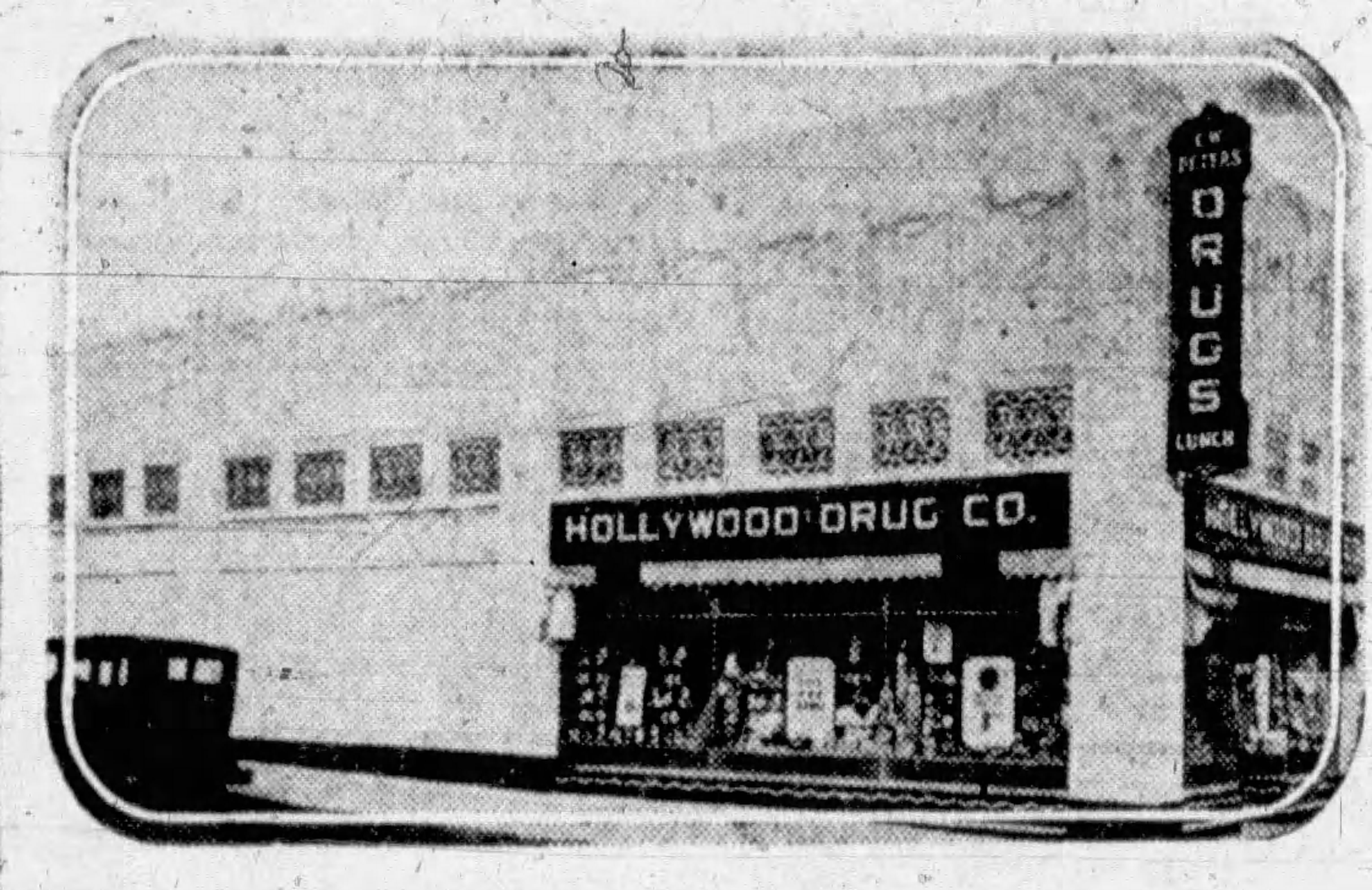
Druggist Charles W. Peters of the Hollywood Drug Company leased the key corner space, addressed as 5661 Hollywood Boulevard, while the building was still under construction.

Peters had been in Hollywood for 7 years and moved his Hollywood Drug Co. here from its previous location at 5600 Hollywood Boulevard with a gala grand opening on April 5, 1930.

Hollywood Daily Citizen 4/4/1930.

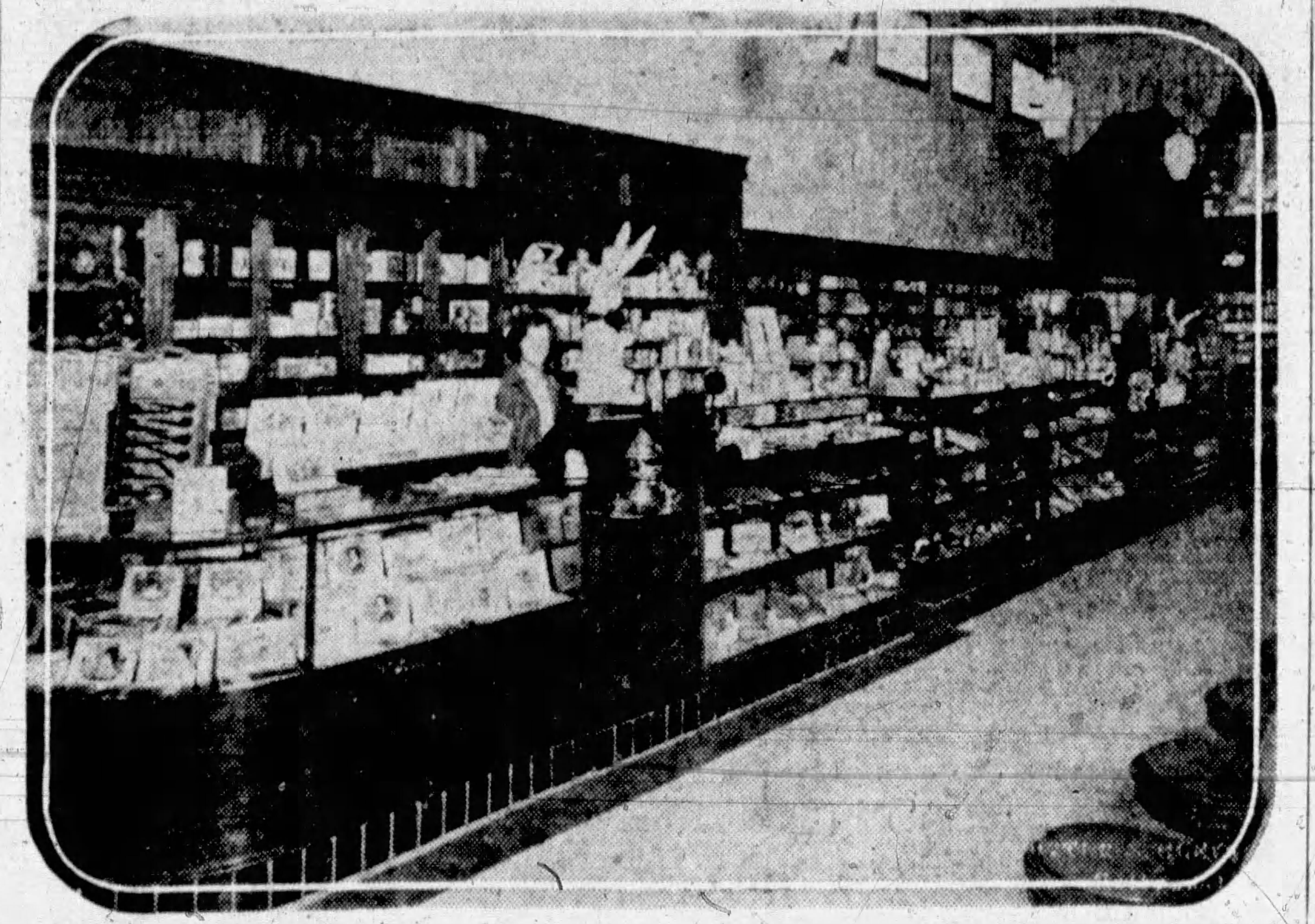
The interior of the store had a “velvety rose colored ceiling,” cream walls, walnut fixtures, and a Terrazzo floor. Like most drug stores at the time, it featured a large soda fountain.

Candy and stationary. Note the high windows, covered on the exterior by iron grillwork. Hollywood Daily Citizen 4/4/1930.

The soda fountain. Hollywood Daily Citizen 4/4/1930

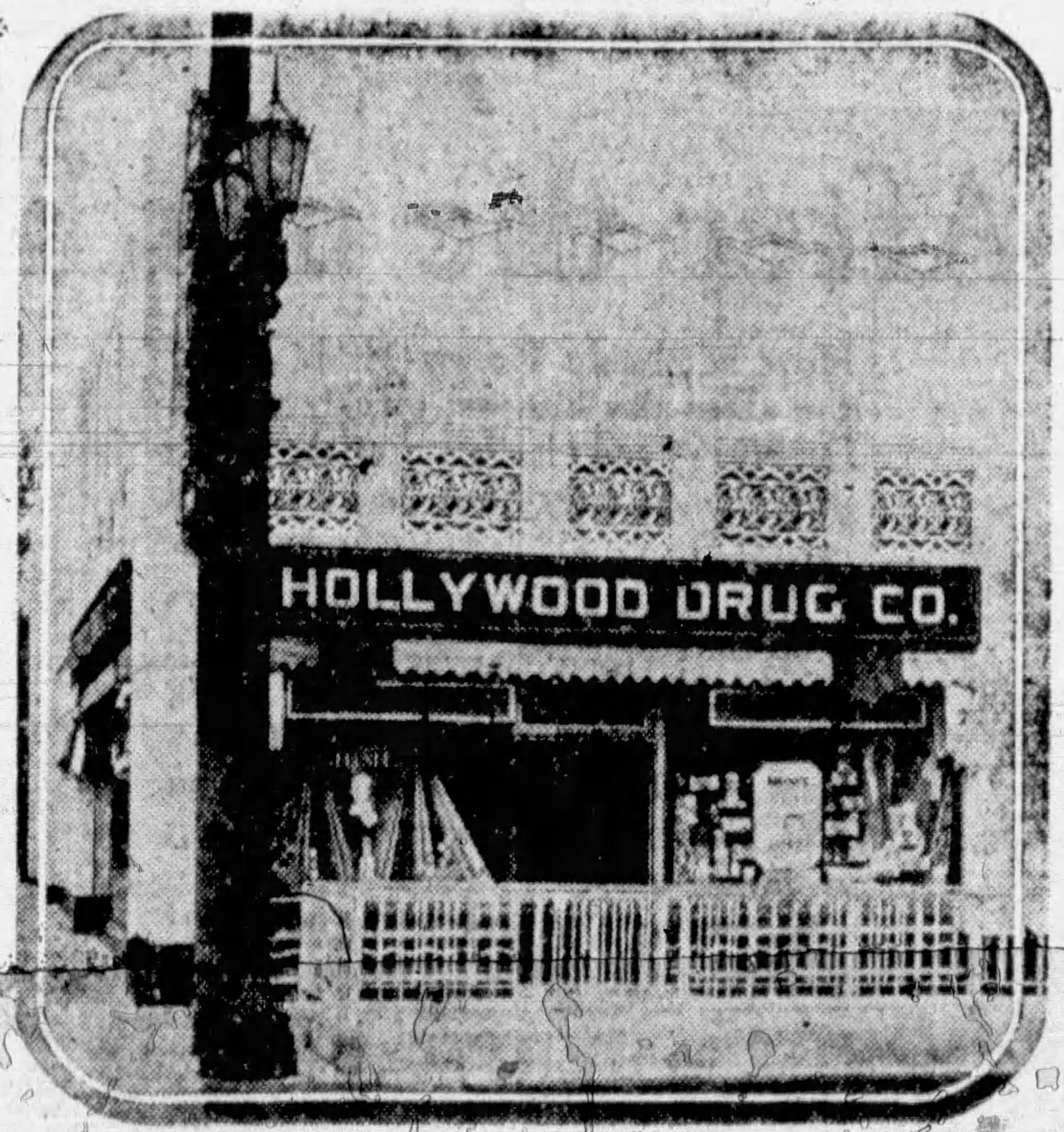
Exterior of the corner store, 5661 Hollywood Blvd., as it looked in 1930. Hollywood Daily Citizen 4/4/1930.

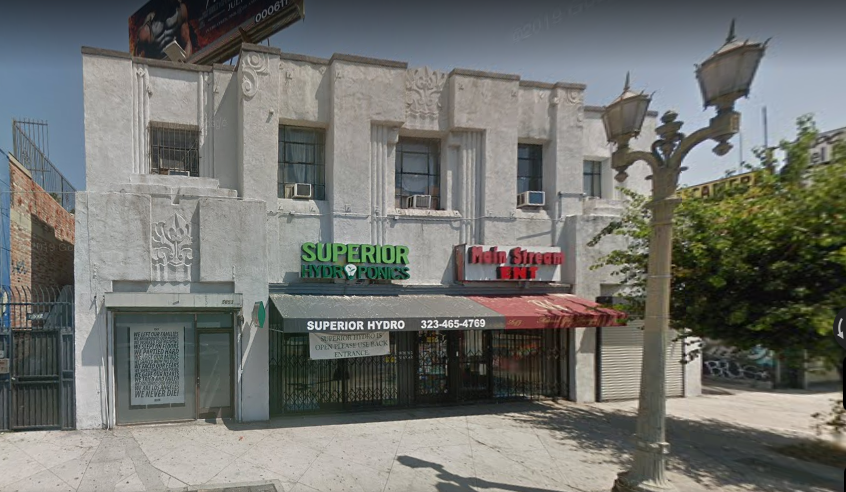
5661 remained an independent drugstore into the late 1970s. The building remains extant. The corner space has been significantly altered c. 1960s, in such a different style that it almost appears to be a separate building from 5555-5559. The original silver leaf grillwork is probably still present under the current modification.

The original grillwork is present on part of the building’s Hollywood Boulevard facade. Google map image.


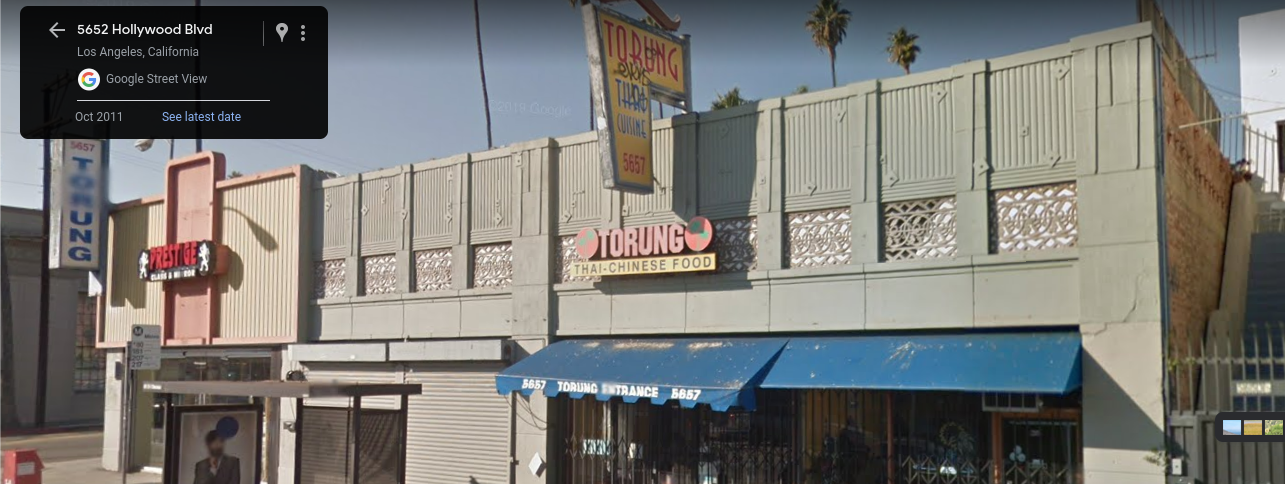
5657-5661 today. Google map image.

5649-5653 Hollywood Boulevard: Retail/Offices

This 2-story retail and office building at 5649-5651-5653 Hollywood Boulevard (upstairs was 5653-1/2) was constructed in 1929 in the fashionable modernistic style that would now be called Art Deco, a term coined in 1968.

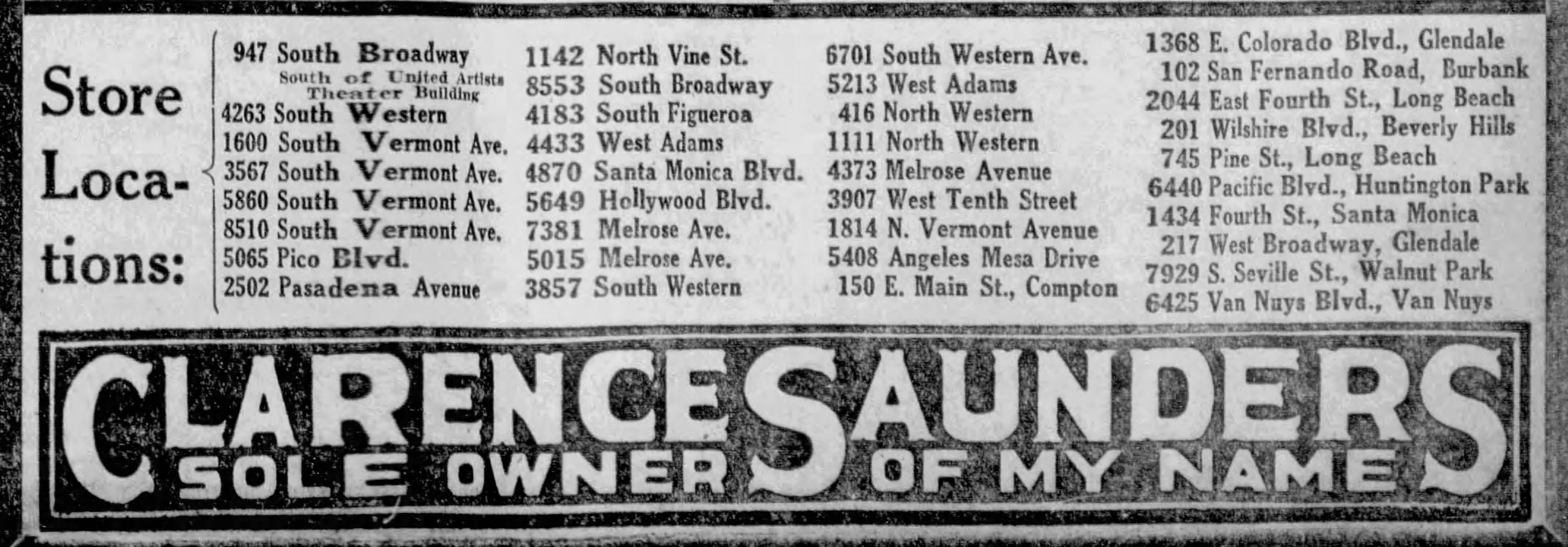
The key tenant, at 5649, was a grocery store chain with the not very catchy name of  “Clarence Saunders, Sole Owner of My Name.”

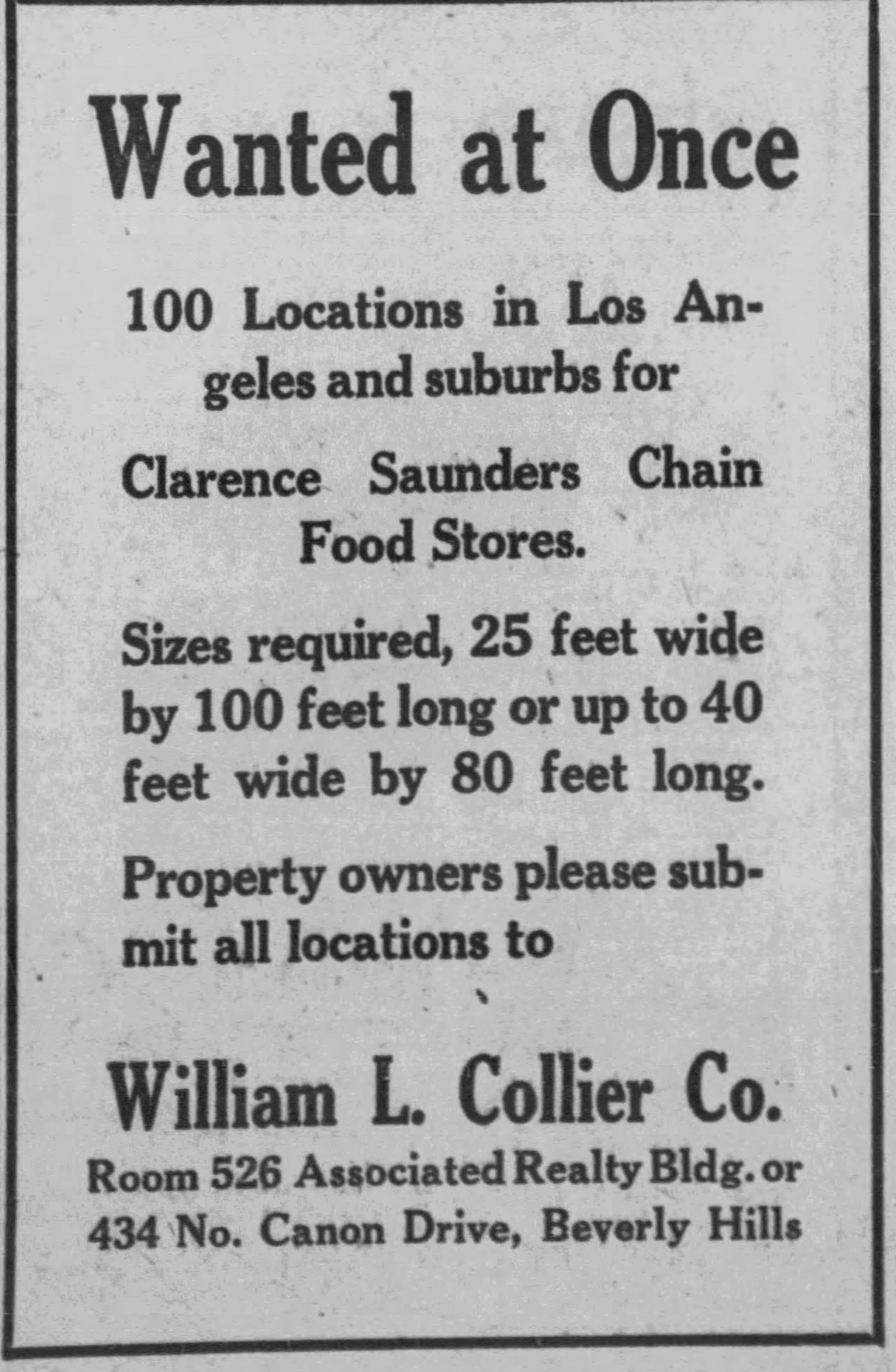
The Saunders chain had announced in February 1929 that it would be opening stores on the West Coast soon. In March 1929, the chain advertised in Los Angeles papers that it was seeking locations for 100 stores.

LA Times 3/14/1929

Los Angelinos may have been familiar with the name Clarence Saunders. He has revolutionized grocery shopping in the pre-supermarket era with his self service markets, Piggly Wiggly, which he founded in Tennessee in 1916. Customers could pick up a shopping basket as the entered the store through a turnstile,and pick out their own items from the shelves rather than presenting a list to the shopkeeper and waiting for their groceries to be retrieved. Due to Wall Street shenanigans, in 1923 he had been forced to give up his interest in Piggly Wiggly, which continued on without him.

In 1928 he founded the “Sole Owner of My Name” chain which likewise operated on a self-service basis.

The first Los Angeles area Clarence Saunders Sole Owner of My Name stores- 19 of them- opened on September 7, 1929.

By the time the Hollywood Boulevard store opened here, on December 21, 1929, it was one of 36 local stores.

This ad is kind of a downer, Clarence Sunders, Sole Owner of My Name. LA Evening Express 12/19/1929.

LA Evening Express 12/19/1929.

LA Times 4/11/1931

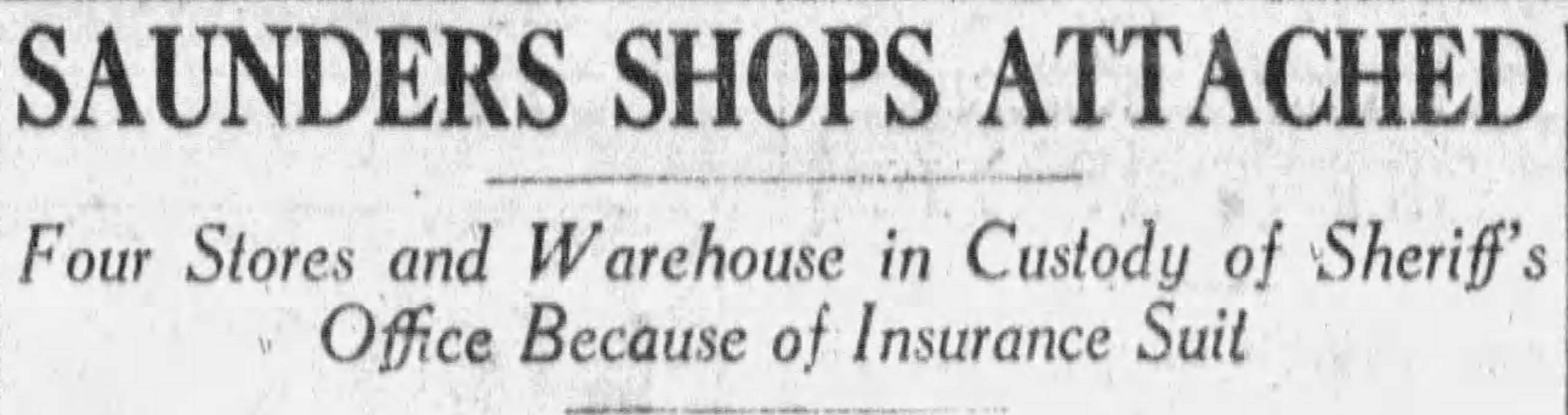
The opening came right after the Stock Market crash of October 1929 and the onset of the Great Depression. The store at 5649 Hollywood Boulevard closed at the end of March 1931, padlocked by the Sheriff’s office due to an insurance lawsuit. In April 1931 the company announced it was selling all of its stores in Los Angeles and San Francisco. In June 1931, Saunders filed for bankruptcy in federal court. He would begin again in a few years’ time.

It was a story that played out again and again during the Depression as chain stores expanded nationally. Unlike mom and pop stores who went into the breadline if they got into debt, corporations could file for bankruptcy, reorganize, and start fresh.

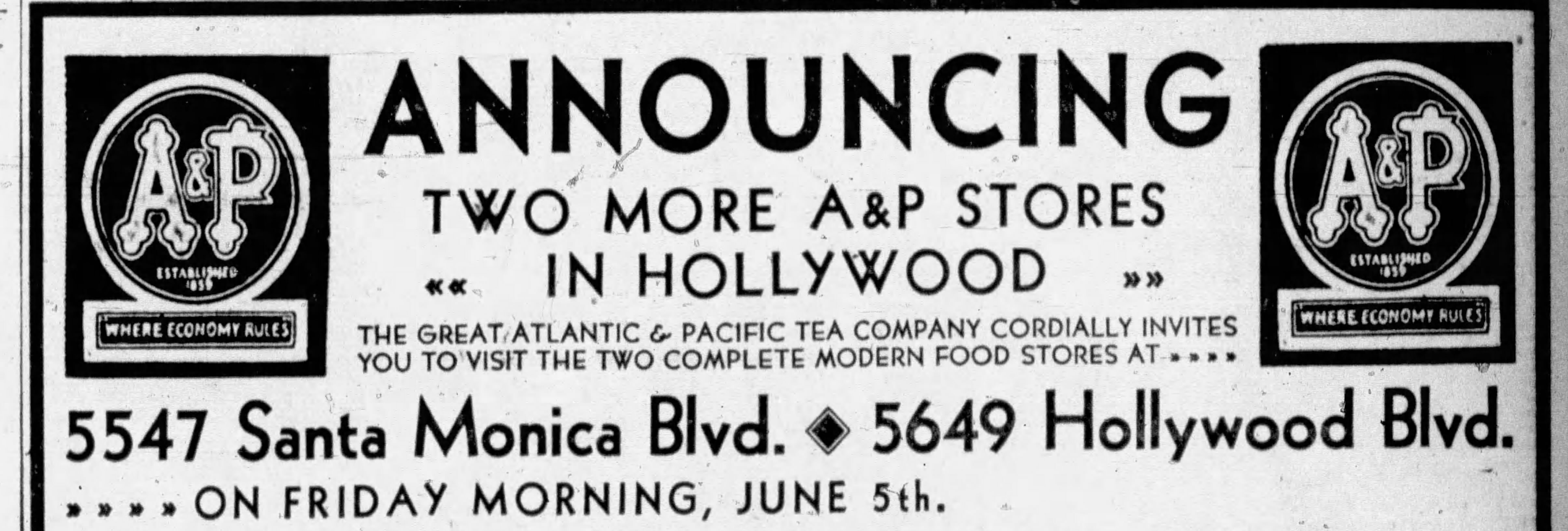
On June 5, 1931, 5649 Hollywood Boulevard opened as another chain grocery store, the Atlantic & Pacific Tea Company, better known as A&P. A&P was only here briefly.

(A&P opened at 5719 Hollywood Boulevard in November 1933, and in June 1940 it moved next door to its 1931 home, at 5635 Hollywood Boulevard.

Hollywood Daily Citizen 6/4/1931

5651 was briefly a Safeway in 1931.

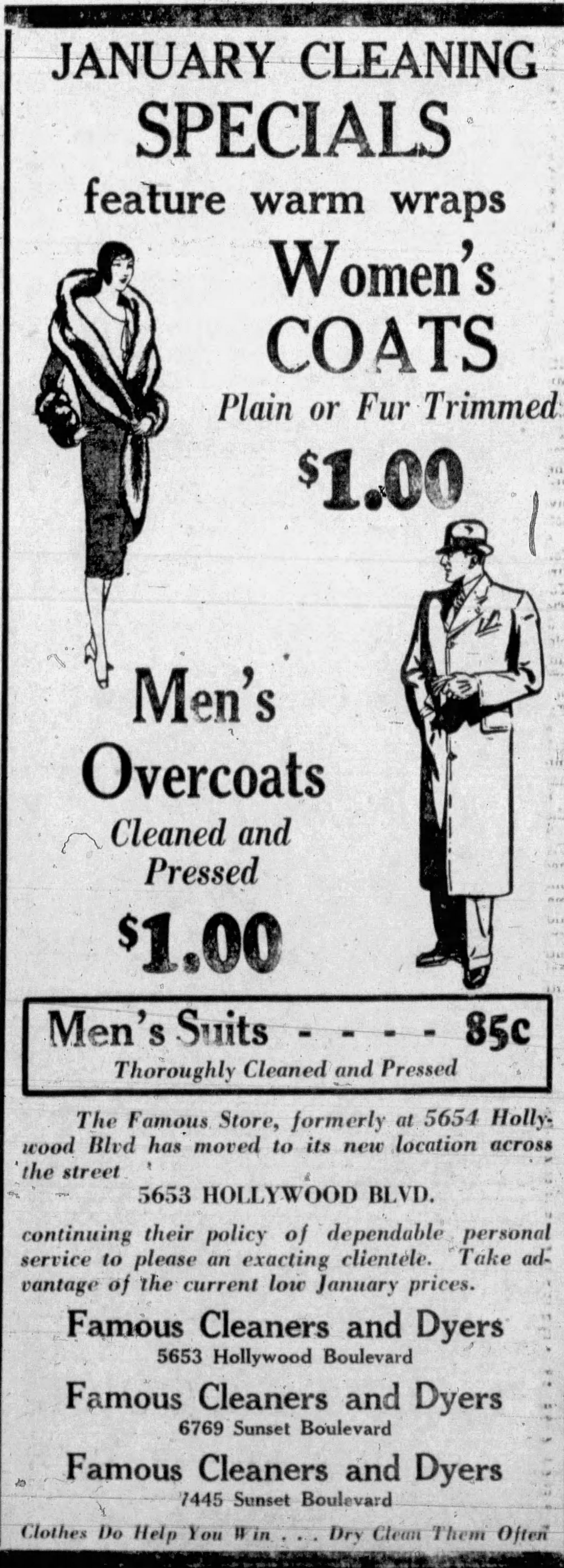
5653 opened in January 1930 as an outlet of Famous Cleaners, who moved here from across the street at 5654 Hollywood Boulevard. Was this the sunny side of the street?

Hollywood Daily Citizen 1/4/1930

The studio on the second floor, 5653-1/2 Hollywood Boulevard was initially to be a physical cultural studio started by Hayden Phythian, physical director of the Hollywood Athletic Club; announced in October 1929, its not clear that it ever opened. The space briefly became the Hollywood School of the Dance, run by I.C. Overdorff; the school moved to 5760 Sunset Boulevard in June 1930. Japanese dance/fencing instructor Micho Ito took it over in October 1930. Ito had previously been a guest instructor with the Edith Jane School (later known as Falcon Studios) and appeared in recitals with Ralph B. Faulkner. (See my posts on the Edith Jane School/Falcon Studios here and here). It became Mrs. R. R. Crow’s Fine Arts School in 1933.

LA Times 6/14/1931

The building is still standing, a good example of a modest late 1920s moderne style that looked to the future for inspiration rather than the past.

5635 Hollywood Boulevard: A&P Market

5635 Hollywood Boulevard was designed in December 1939 by architect Frank L Stiff on spec for the property owner, real estate investor Earl Callan. The first tenant was the Atlantic and Pacific Tea Company (A&P) grocery store. A&P moved here from 5719 Hollywood Boulevard, where they had been since November 1933, having previously been located next door at 5649 beginning in June 1931. The new store here opened in April 1940.

Like most Hollywood grocery stores before World War II, it was originally an open-air market, so that the dazzling displays of colorful local fruit and veg would extend out on the sidewalk, under an awning, to catch the eye of passing motorists. It was later enclosed with glass.

LA Times 4/19/1940

Located in the Morgan’s Hollywood Tract, 5635 Hollywood Boulevard had been the address of J.J. Morgan’s residence. (My post on Jackson is here).

Detail of a 1913 Sanborn Fire Insurance map showing 5635 Hollywood Boulevard when it was still a residence. Library of Congress map.

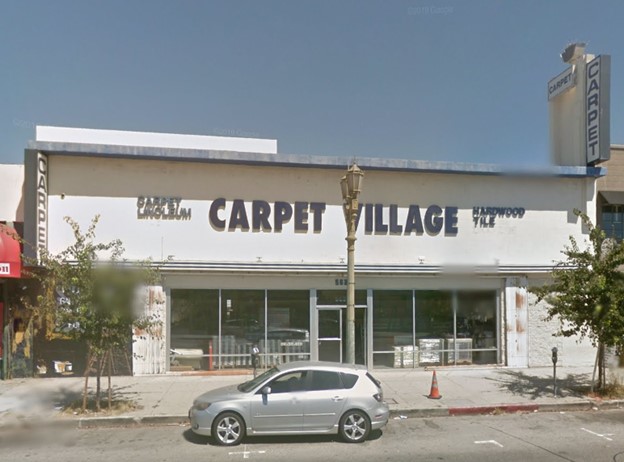
The store remained an A&P into the late 1960s. Today it is a “Carpet Village” flooring shop.