5652 Hollywood Boulevard: The W. O. Jackson Residence/Stores

LA Times 1-8-1922

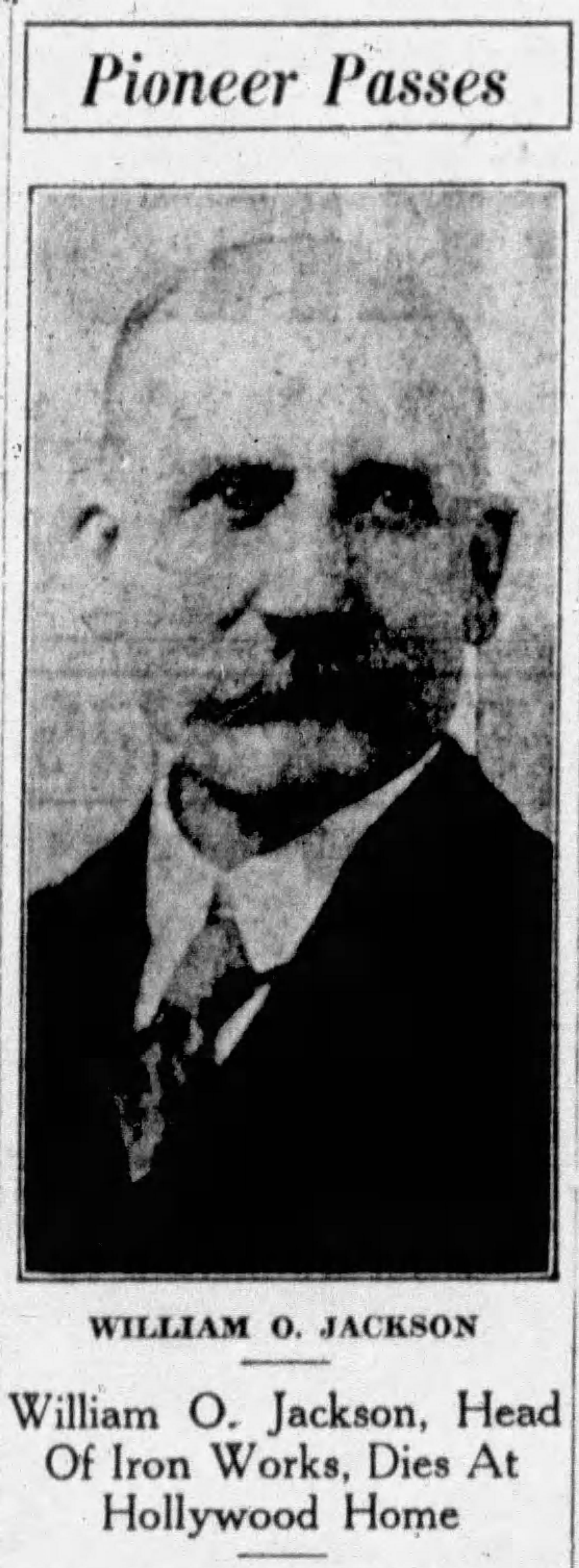
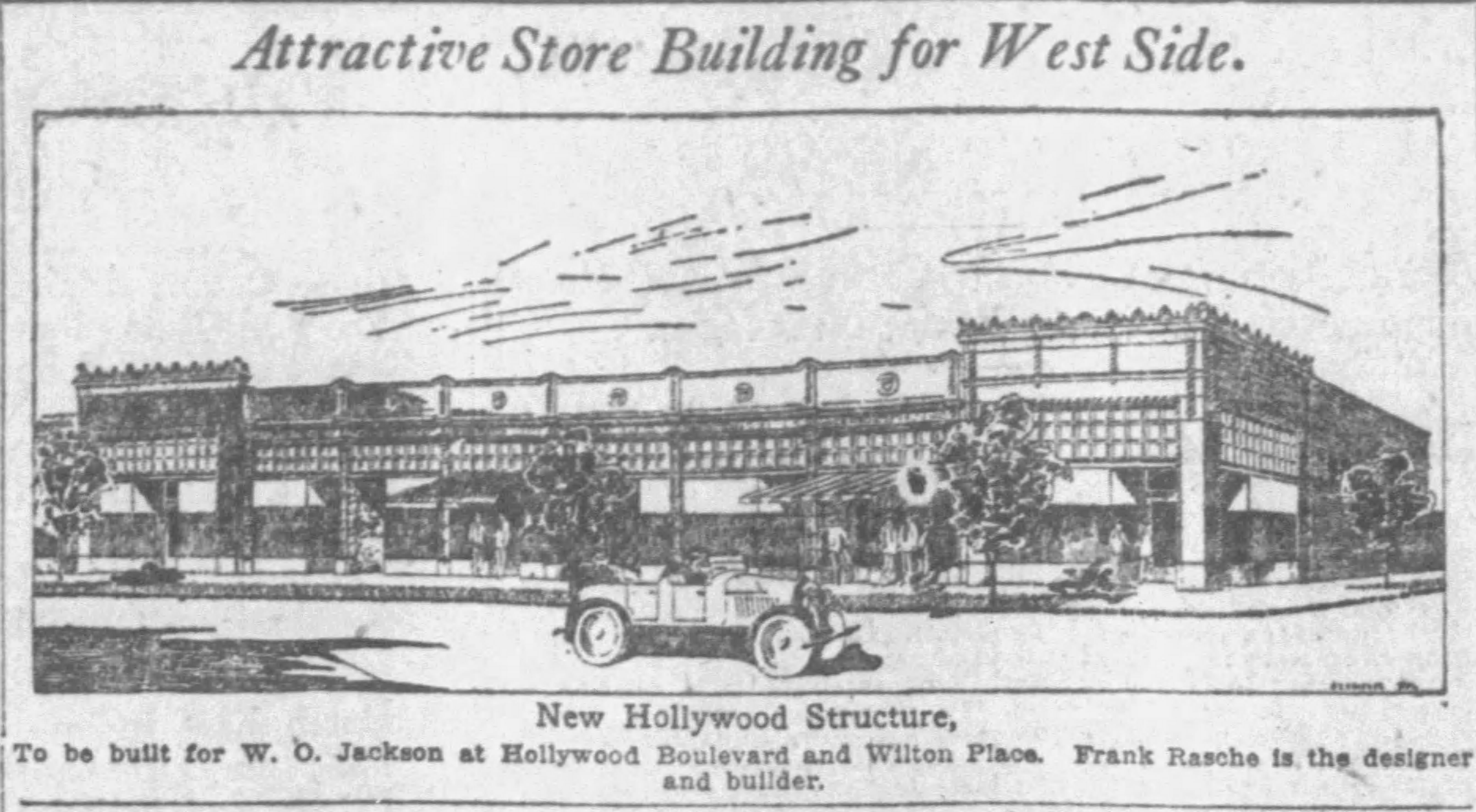
5652 was the modern address given to the 14-room frame residence of William O. Jackson and his wife Harriet M. Hovey Jackson. The Jacksons came to Hollywood from Chicago with their young sons in 1893 and bought a 10-acre lemon ranch between what is now Hollywood Boulevard and Carlton Way and Wilton Place and St. Andrews Place, which they called Lemona.

In 1918, society architect Frank F. Rasche designed a 9-room home for the Jackson’s oldest son Augustus along the property’s south boundary, addressed as 5653 Carlton Way.

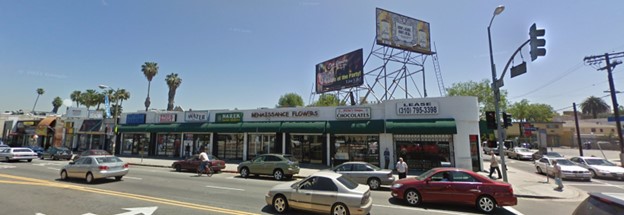
The Jacksons witnessed the phenomenal growth of Hollywood within a fairly short period of time and the increasing commercialization of this section of Hollywood Boulevard. In March 1921, William Jackson obtained a permit to build a row of 1-story stores along the property’s Hollywood Boulevard frontage, addressed as 5648-5664 Hollywood Boulevard, also to be designed by Frank Rasche, who the previous year had built a similar retail complex for B.Y Taft at 5524-5528 Hollywood Boulevard (see my post about this property here). The plans were made public in January 1922.

Hollywood Daily Citizen 1/2/1922

Unlike other Hollywood pioneers who may have subdivided their land and moved, the Jacksons remained in their ranch home, which was no longer visible from the street after the stores constructed in front of it. The ranch house was re-addressed as 1680 N. Wilton Place. The retail space now bearing the address 5526 Hollywood Boulevard became Rasche’s office through most of 1928.

Hollywood Daily Citizen 1/14/1925


Hollywood Daily Citizen 3/26/1930.

William O. Jackson passed away at home in March 1930. Harriet Jackson continued to reside in the old ranch house until her own death in February 1940. Son A.W. Jackson also remained at the 1918 home on Carlton way, where he died in 1948.

An apartment building was constructed at 1680 N. Wilton Place in 1953.

The Frank Rasche retail complex has been altered many times since 1922 but is extant- for the time being- an increasingly rare example of the low-rise development that characterized Hollywood Boulevard in the early 1920s.


5627 Hollywood Boulevard: Morgan’s Hollywood Tract and Morgan Place


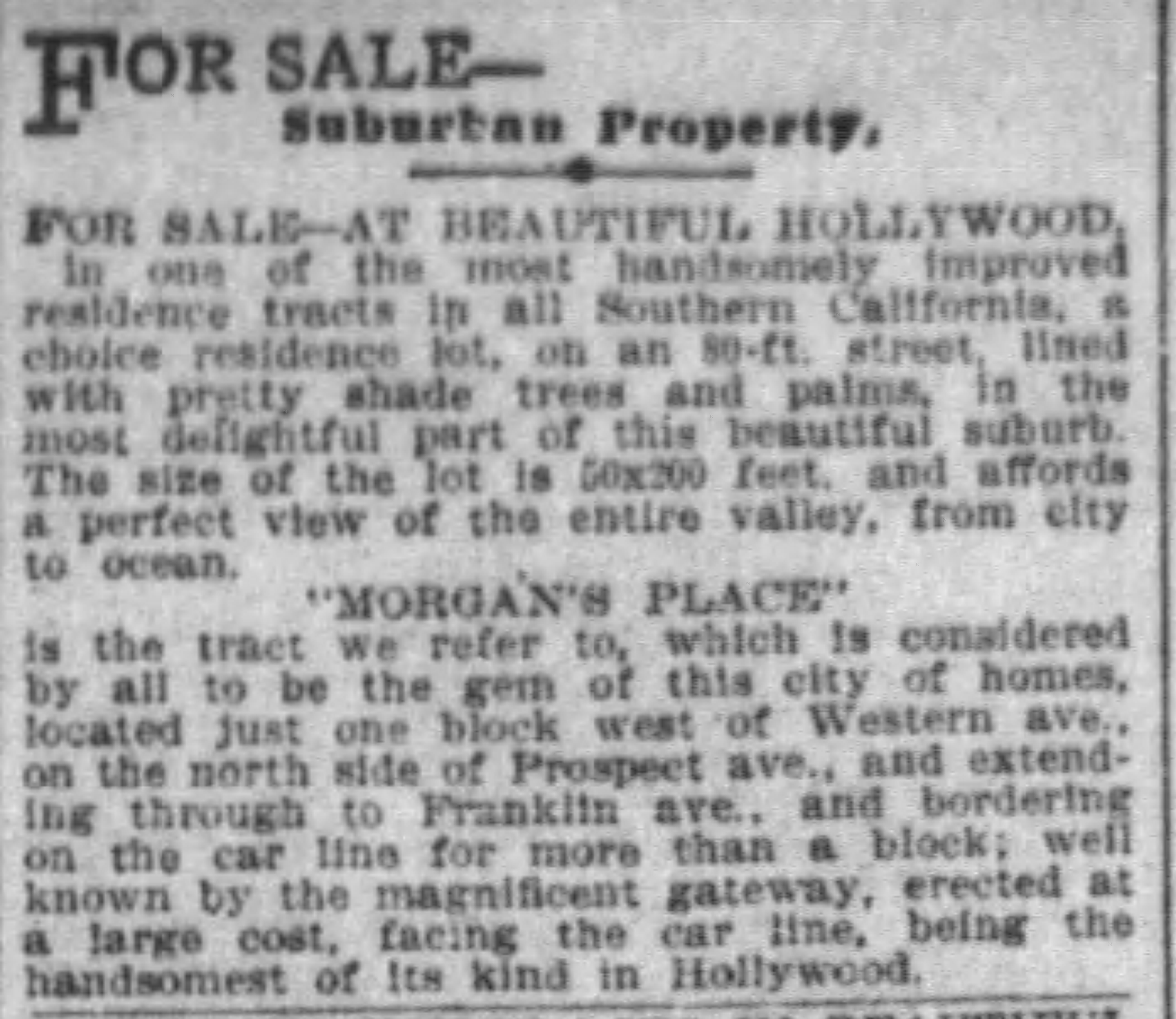
Morgan’s Hollywood Tract was a Hollywood subdivision started in 1905 by Jeremiah J. Morgan. It consisted of 10 acres of ranch and orchard land on the north side of Hollywood Boulevard (then Prospect Avenue) between Wilton Place and Garfield Place and Hollywood Boulevard and Franklin Avenue.

Front and center of the development was Morgan Place, a new street between Garfield and Wilton Place, running from the North side of Hollywood Boulevard to the South side of Franklin Avenue. Subdivided into 97 lots, Morgan Place was improved with cement sidewalks and shade trees. Ornamental gates market the north and south entrances to Morgan Place from Hollywood and Franklin.

LA Times 11/26/1905

LA Times 5/28/1905

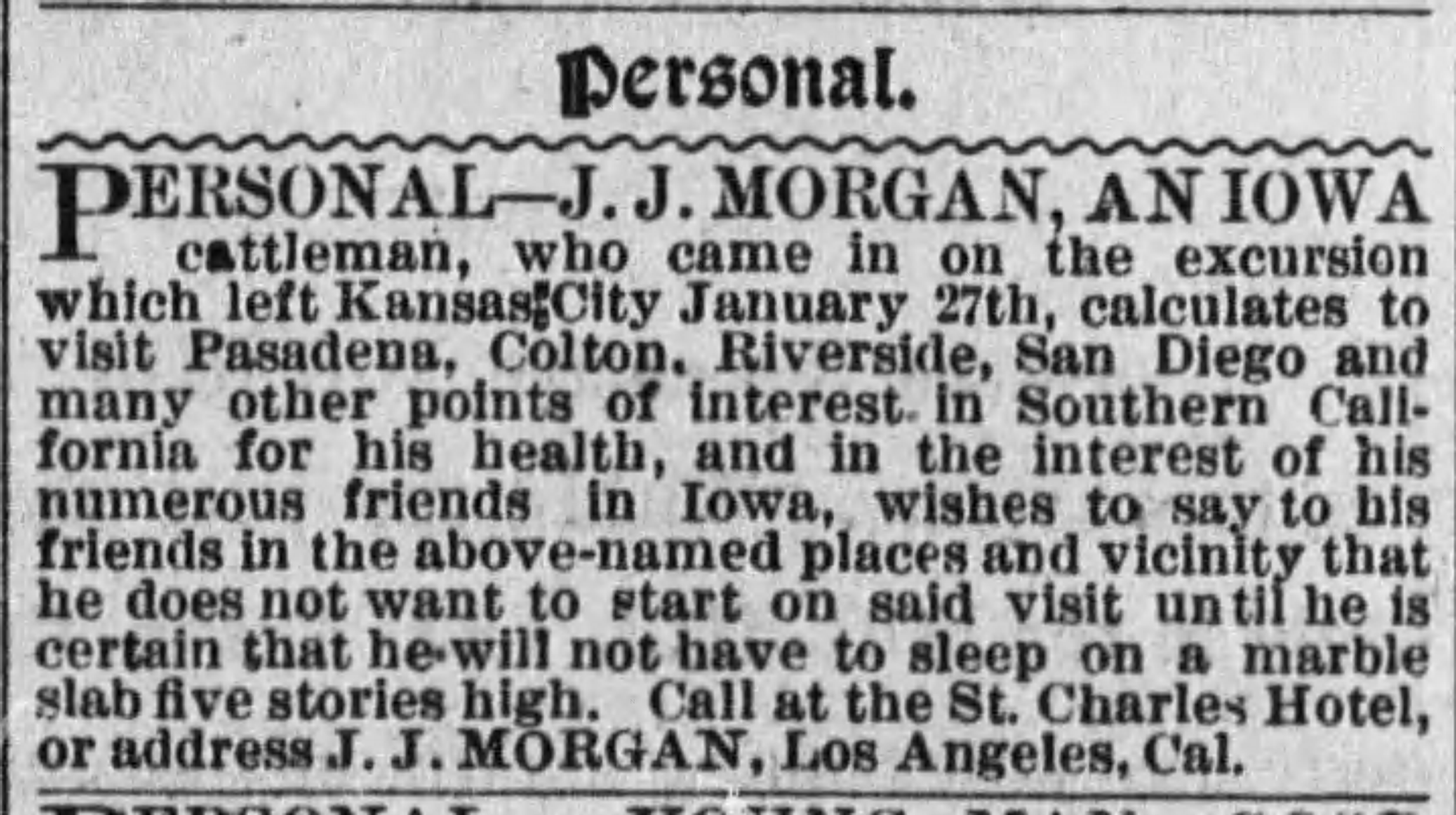
J. J. “Jerry” Morgan was born in Illinois in 1841. After serving in the Civil War, he settled in Iowa, where he raised cattle and later got into real estate and finance. He visited Los Angeles during the boom of 1886 and in 1887 began buying property there.

LA Times 2/3/1887

Morgan describes himself in this ad, disguised as a news item. LA Times 2/17/1887

In February 1902, Morgan settled permanently in Los Angeles and dealt in real estate, setting up offices at 244 1/2 S. Broadway.

The office for Morgan’s Hollywood tract was at the northwest corner of Hollywood and Morgan Place, later addressed as 5627 Hollywood Boulevard. It sat on a large parcel that also contained a residence., originally 955 E. Prospect Avenue, later 5535 Hollywood Boulevard. Morgan lived in the residence for a few years. He later moved to 1836 Taft Avenue.

Detail of a 1913 Sanborn Fire Insurance map showing 5627 Hollywood Boulevard. Library of Congress.


1913 Sanborn Fire Insurance Co. map showing the Morgan Place subdivision. Library of Congress.

Morgan acquired additional holdings in Hollywood and with son Alfonso F. Morgan, and as the Morgan Investment Company, created another 10-acre subdivision in the Hollywood foothills north of Franklin between Morgan Hill Dr./Taft Avenue and Wilson Place.

LA Times 4/16/1911.

In addition, J.J. Morgan bought property on the southwest corner of Hollywood Boulevard and Western Avenue. He later constructed a hotel on the Western Avenue side of the parcel and stores on the Hollywood frontage, except for the prime corner, where he planned to build a height limit building.

J.J. Morgan divorced his longtime wife, Alice Jane Lewis Morgan, c. 1908. She died in Los Angeles in 1911.

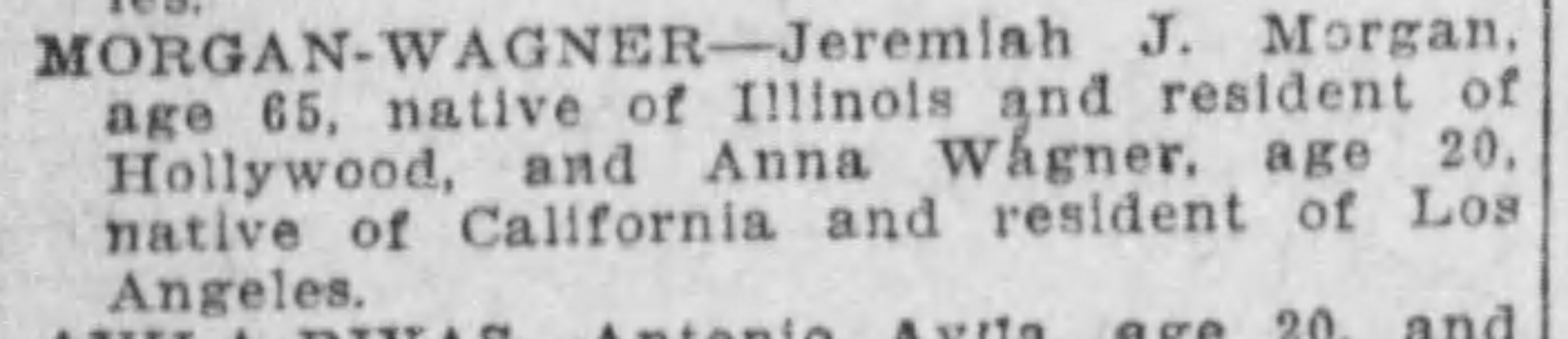
On July 10, 1909, Morgan, 65,  married a local girl, Joeanna F. (Annie/Anna) Wagner, age 20. Like Estelle Doheney- wife of the oil multimillionaire Edward Doheney- Anna had been a telephone operator. (The Doheney age difference was only 20 years, fairly average by Hollywood standards- not 45 years) The couple registered to wed in Los Angeles but ultimately tied the knot in Colorado Springs. After a 3-month honeymoon, they returned to Hollywood and lived in the house on Hollywood Boulevard.

LA Herald 7/8/1909

LA Times 9/10/1909

Morgan was canny enough to make his bride sign an Edwardian version of the prenup, barring her from any claim on his estate in exchange for $5000 cash.  The couple had a son, James George Morgan, born in Los Angeles March 31, 1912. But the May-December union was not a happy one. While on a business trip in Council Bluffs, Iowa, Morgan filed for divorce, which was granted on September 21, 1914. In March 1915, Anna sued, asserting that she’d never been served the divorce papers and that the action was not legal in any case because Jerry had not been a resident of Iowa at the time. Morgan prevailed and generously agreed to pay $5 a week for the support of his most recent son.

Morgan was making plans to develop his corner parcel at Hollywood and Western when he died in Los Angeles on May 31, 1925 at age 84.

Hollywood Daily Citizen 6/5/1925

J J Morgan in 1922; passport photo. National Archives.

He left an estate valued at a reported $1,250,000. There were numerous bequests to relatives, with the condition that they had to “become Christians.”

In May 1926, the City Planning Commission proposed changing the name of the street Morgan Place to Gramercy Place. A group calling itself the “Hollywood Boulevard, Western to Cahuenga, Improvement Association” protested, arguing that the name ought to stay out of memory to old Hollywood pioneer “Jeremiah P. Morgan” [sic] [LOL]. It’s Gramercy Place today, so we know how that went for them.

Hollywood Daily Citizen” 5/15/1926

In January 1927, the Morgan estate sold the Hollywood and Western parcel to Louis B. Mayer of MGM, who built the Hollywood-Western Building on it the following year.

As late as 1936, the corner of Gramercy Place and Hollywood Boulevard remained undeveloped. In January, a William A. Smith bought the property from the Morgan estate. He planned to demolish the old residence and lease the corner to a drive-in market organization. Whether that happened or not, in June 1940 a new A&P market opened at 5633 Hollywood Boulevard where the residence had stood. The Morgan’s Hollywood Tract real estate office at 5627 was moved to 4826 Van Nuys that year and the prime corner space may have been used for parking. In December 1950, a permit was obtained by I. Feldman and P. Rosenberg to build a 2-story retail complex, addressed as 55625-5627-5629-5631 and 5633 Hollywood Boulevard and 1707-1909-1711 and 1713 Gramcery Place. That structure is extant today.

Notes

Anna Wagner remarried in 1917. She died in 1965. Morgan and Anna’s son died in 1988.

In November 1927, a woman named Eleanor McIntyre, residing with Morgan in the 1920 US Census and listed as his niece along with her daughter Viola, then 13, sued the Morgan estate, asserting that she had looked after him for years and was engaged to be married to him shortly before his death. Her sister, Eva Helander, also sued, claiming that Morgan owed her money for a train ticket to Arizona, that she’d purchased the tickets and took “a young girl” named Jean to Arizona with her where the girl, Jean, waited to marry the 82-year old. When he didn’t show up, they returned to Los Angeles.

Detail of the 1920 US Census, which shows Morgan residing with McIntyre, 30, his niece, and McIntyre’s daughter Viola, 13.

5620 Hollywood Boulevard: California Bank Building, Hollywood-Gramercy Branch

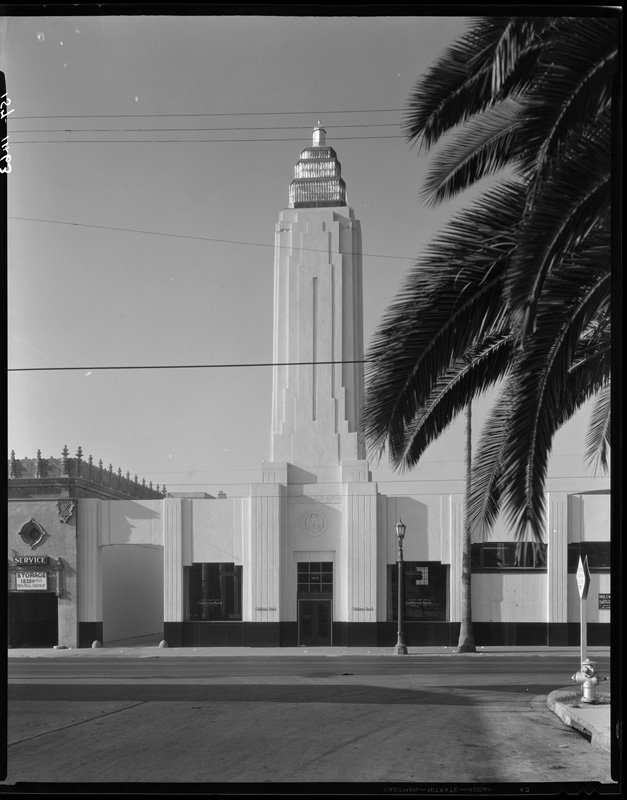
Located on the south side of Hollywood Boulevard facing Gramercy Place, 5620 Hollywood Boulevard could almost be a mini-Los Angeles City Hall. John Parkinson, who designed the building along with Donald Parkinson, had been one of the architects for the City Hall, which had opened less than two years earlier. In addition to the eye-catching 80-foot tower, the 2-story building had 3550 square feet for the bank’s needs and 4 retail shop spaces.

California Bank announced that it was constructing a new Hollywood branch in January 1930, having purchased the land from real estate investors Rodolfo and Consuelo Montes. 1930 was not a great year to be a bank. The Stock Market Crash in October 1929 had resulted in a run on banks and many had failed. Before federally-insures deposits, when a depositor’s money was gone, it was gone. In 1930, banks had to look solid, like they would still be around the next year and the year after that, to convince customers to trust them with their money rather than hiding it under their mattresses.

LA Evening Express 1/11/1930

California Bank had started in 1904 as the Co-operative Savings Bank. It changed its name the following year to California Savings Bank. In 1915 it was renamed California Savings & Commercial Bank.

In February 1918, California Savings & Commercial Bank opened its first Hollywood Branch, on the southeast corner of Hollywood Boulevard at Western Avenue.

Hollywood Citizen 3/1/1918

California Savings & Commercial Bank was acquired by Hibernian Savings Bank in 1919 and Hibernian took over all of its branches. The same year, Hibernian merged with Home Savings Bank. In November 1920, it became “California Bank.”

1930. California State Library photo.

California Bank’s new Hollywood-Gramercy Branch opened to the public on June 30, 1930. It replaced the Hollywood and Western branch.

Entrance detail, 1930. California State Library photo.

Hollywood Daily Citizen 6/27/1930

Just a little over a year later, in August 1931, the bank would open its main Hollywood branch in the new Equitable Building at Hollywood and Vine. There would also be a West Hollywood branch at 7550 Sunset Boulevard.

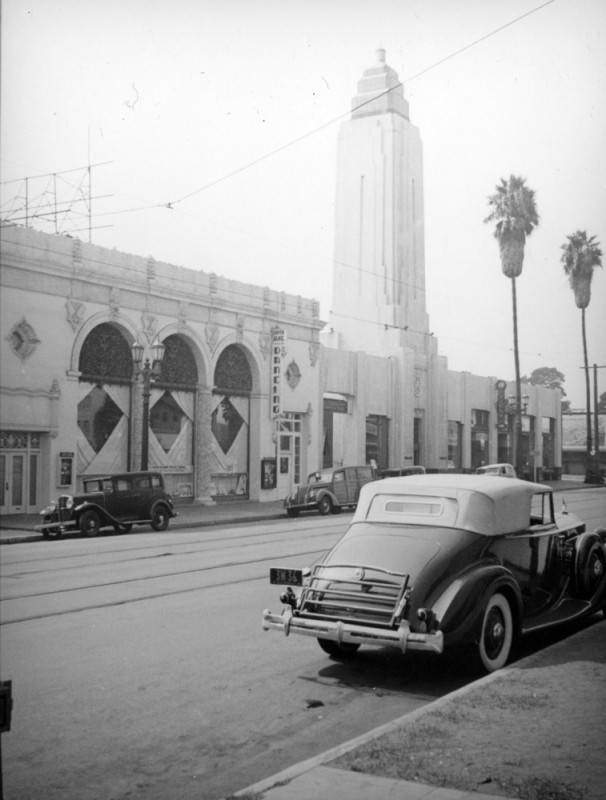
The California Bank Building in 1937. Next door at 5610 Hollywood Blvd. is the Edith Jane School of Dancing. Herman J. Schultheis photo, LAPL.

In June 1945, due to consolidation, the Hollywood Gramercy branch became surplus and the bank put the building up for sale.

Hollywood Citizen News 6/8/1945

It housed a radio training school for the remainder of the 1940s. In 1950 it became the Coast Visual Training Company, which lasted into 1968. It went on to have other uses.

The building was damaged in the January 1994 Northridge Earthquake but was repaired and is extant today.

5611-5623 Hollywood Boulevard: Retail/Office Building


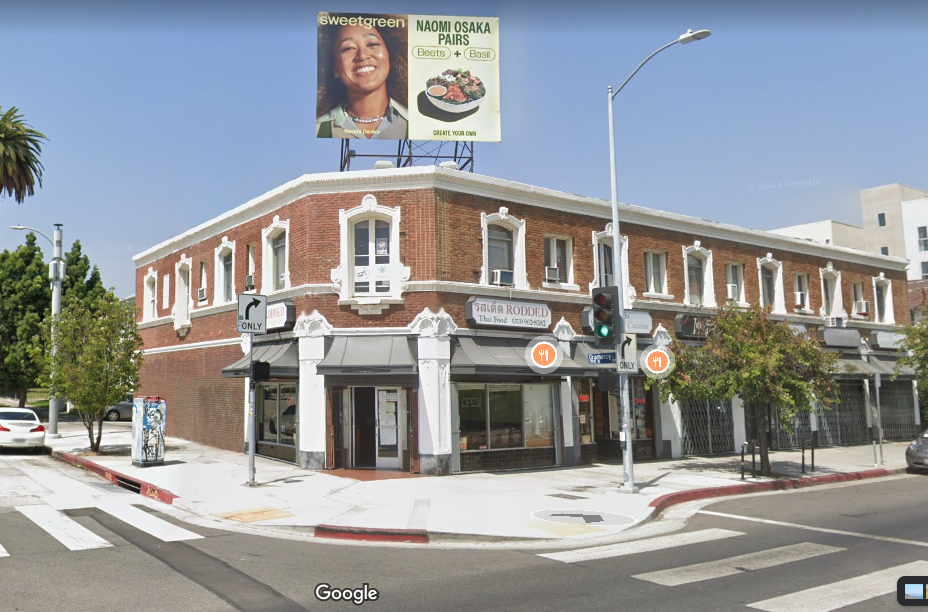
This 2-story brick retail and office building at 5611-5613-5615-5617-5619-5621-5623 Hollywood Boulevard on the northeast corner of Hollywood and Gramercy Place (originally Morgan Place) was  designed in 1922 by architect H. C. Deckbar on spec for owner Samuel Goodman.

LA Evening Express 7/22/1922

Located at what had been the gateway to Morgan’s Hollywood subdivision, Goodman first had Kress House Moving Company move an existing apartment building, built less than 10 years earlier at 5611-5617 Hollywood Boulevard, from this parcel north to 1706-1712 Morgan Place (now Gramercy Place).

Originally located at 5611-5617 Hollywood Boulevard (the NE corner of Hollywood Boulevard and Gramercy Place – then Morgan Place), this apartment building was constructed by the Milwaukee Building Company for owner J.E. Upson. It was moved to 1706-1912 Gramercy Place in 1922. LA Times 5/4/1913

The former 5611-5617 Hollywood Boulevard (now 1706-1712 Gramercy Place) is still extant. Seen here in an older Google map image.

The first major tenant of the attractive little retail and office building was the Holly Creame Ice Cream Company, operated by W.J. Tarrant and R.J. Murphy announced in January 1923 that they were moving in to 5623 Hollywood Boulevard. The shop had its grand opening on February 10. 1923.

Hollywood Daily Citizen  1/10/1923

Hollywood Daily Citizen 2/9/1923

Holly Creme remained at 5623 through the Summer of 1925. In July 1926, the space became the Marion Drug Company. It remained a drug store for years. Today, it’s a restaurant.

Hollywood Daily Citizen 7/30/1926

The building is an unusually attractive example of the low-rise development typical of Hollywood Boulevard in the early 1920s, and a rare survivor.

5610 Hollywood Boulevard: Home of the Star Car and more

Hollywood Daily Citizen 11/13/1925

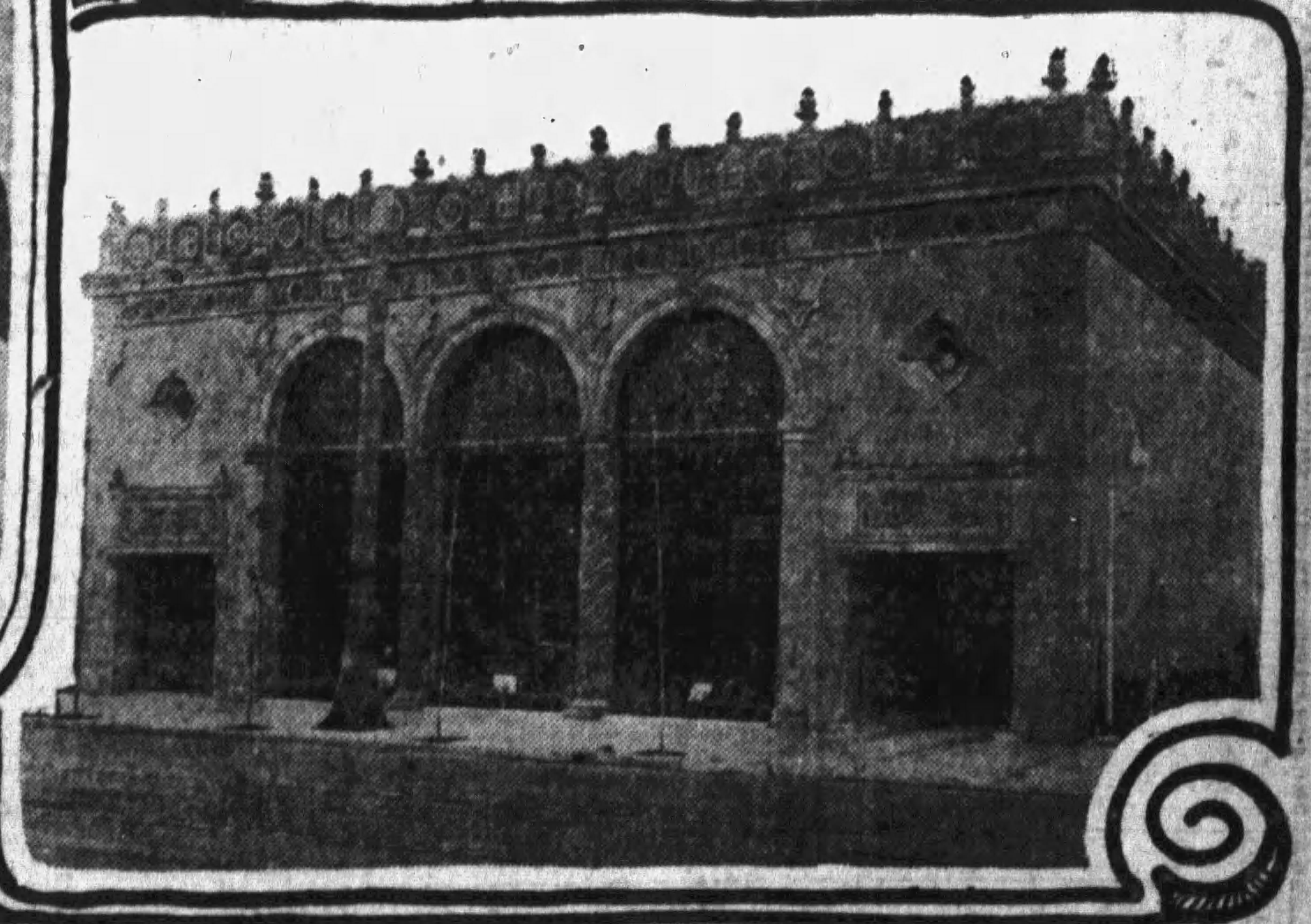
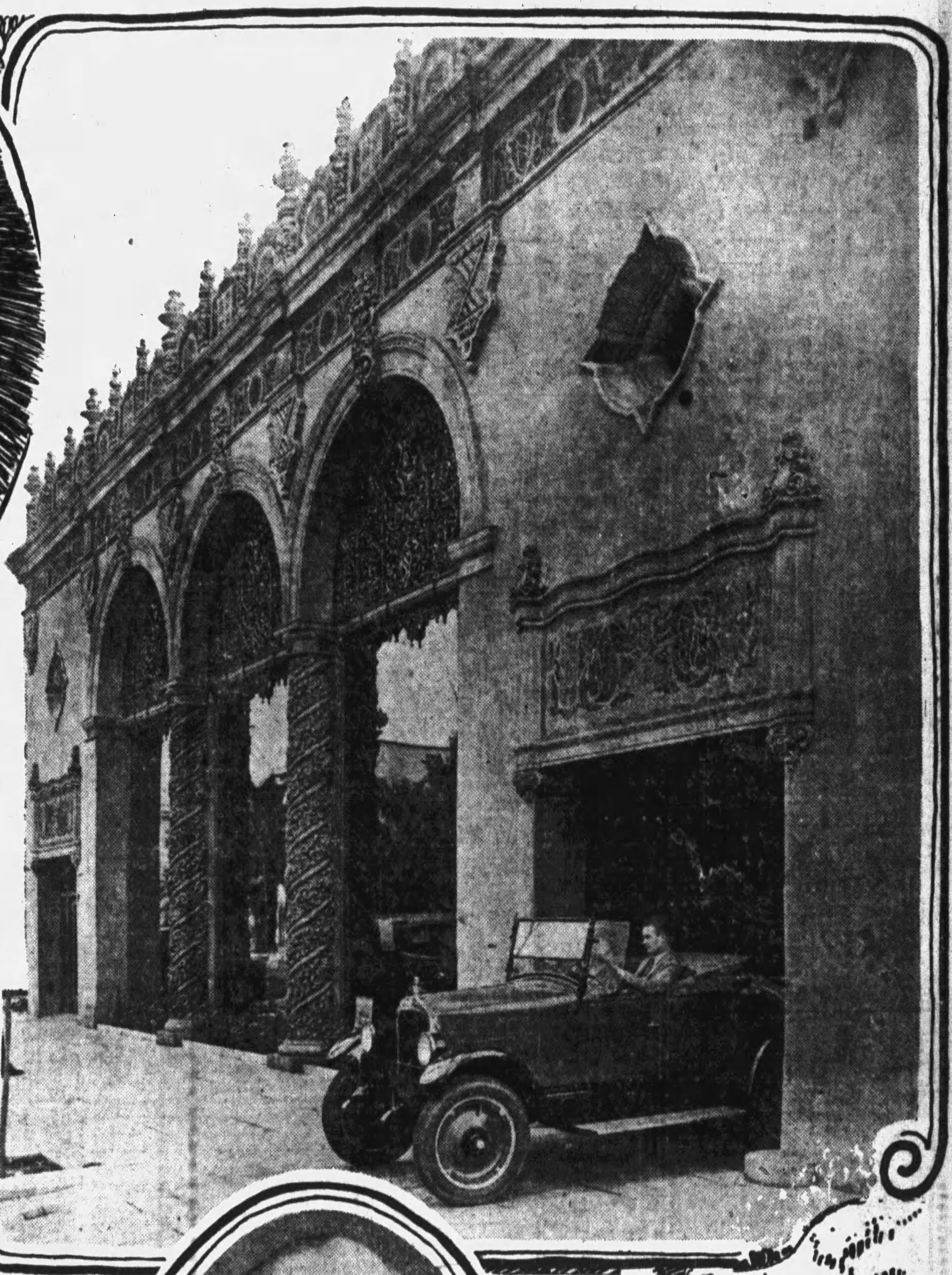
In 1925, the Christie Realty Company commissioned architects Morgan, Walls & Clements to design an elegant little building at 5610 Hollywood Boulevard to be the Star Motor Company of California’s new Hollywood showroom and garage. Though only one story, the high ceiling of the interior made it seem nearly two stories. Huge arched windows let passing motorists speeding along Hollywood Boulevard to glimpse the shining models inside the showroom. The company, with its parent, the Durant Motors Company, held a gala grand opening on November 14, 1925.

Hollywood Daily Citizen 11/13/1925

Hollywood Daily Citizen 11/13/1925

Hollywood Daily Citizen 11/13/1925

It remained an automobile showroom into late 1930; in 1931, Durant Motors, like many auto companies during the Depression, ceased production.

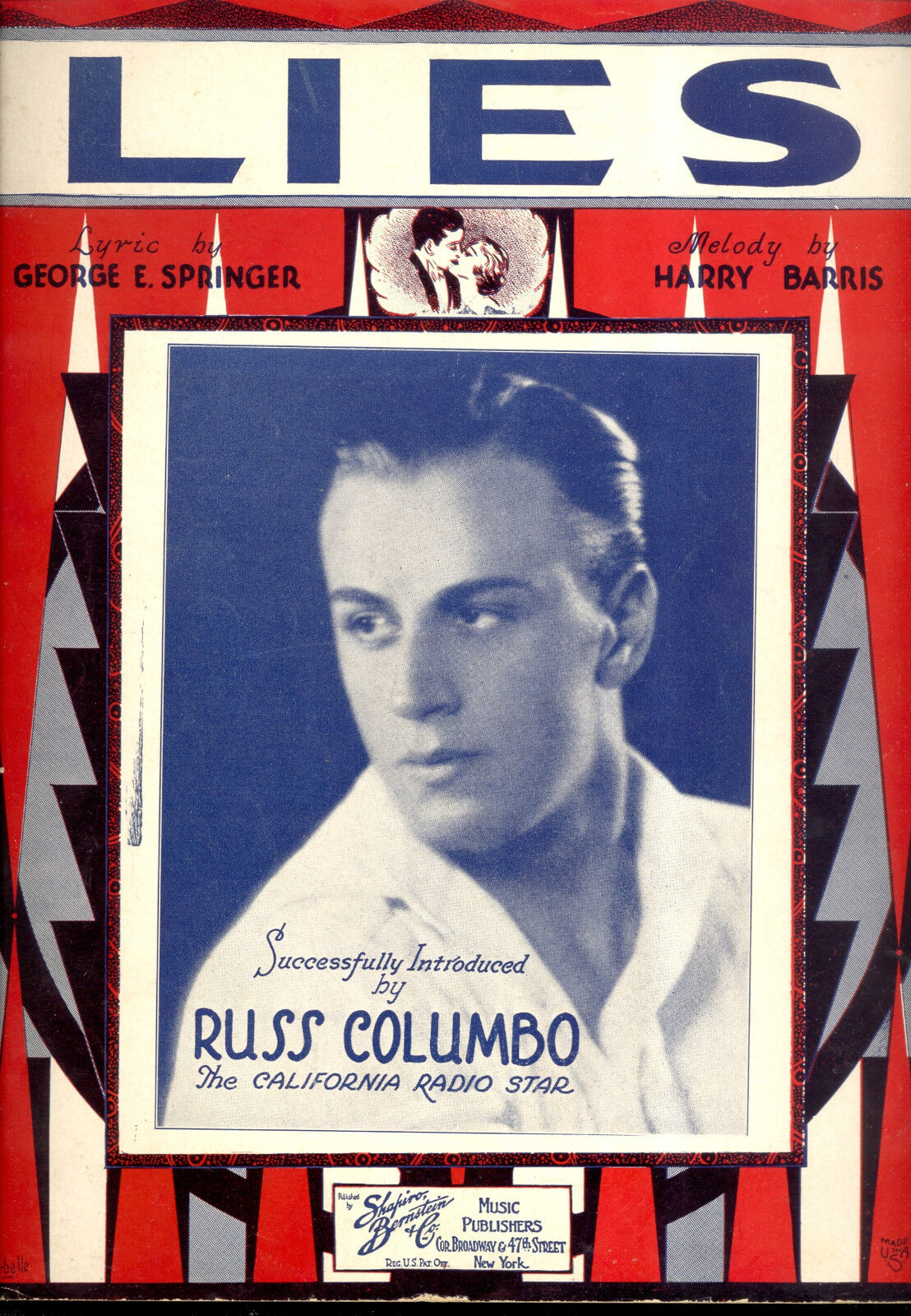
In February 1931, Albert Columbo, brother of singer and bandleader Russ Colombo, applied to the Police Commission for a permit to open a nightclub at the now vacant 5610 Hollywood Boulevard. Russ had performed with Gus Arnheim and His Cocoanut Grove Orchestra and was well known to local radio listeners but was not yet a huge recording and film star.

Sheet music for “Lies,” introduced by Russ Columbo, the “California Radio Star,” 1931.

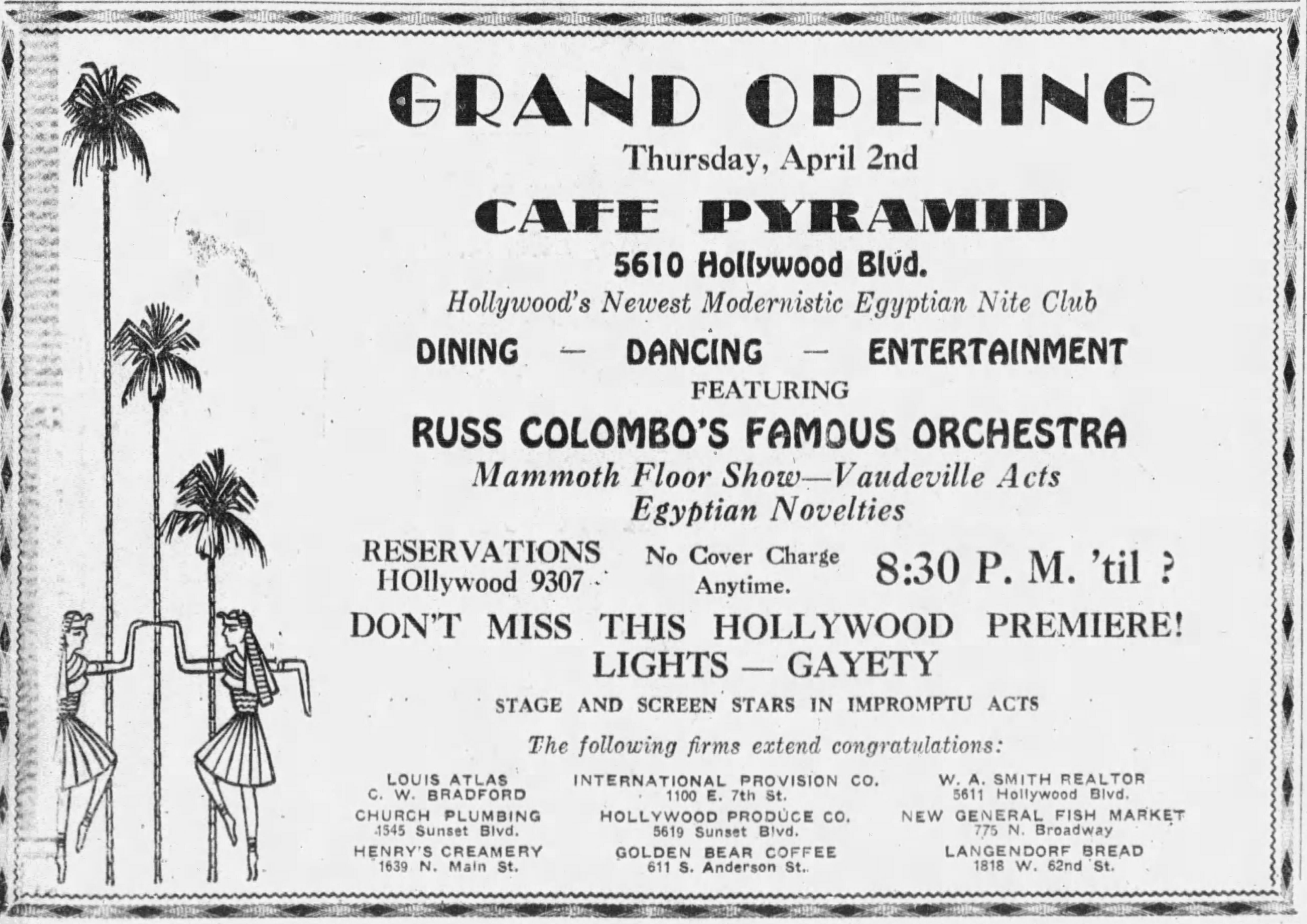
The nightclub, called Cafe Pyramid, opened on April 2, 1931 with acts of vaudeville, a mammoth floor show, stage and screen stars in impromptu acts (? !), Egyptian novelties, and dancing to Russ’ orchestra.

Despite the lights and gayety, the brothers Columbo were not in the club business for long. Russ traveled to New York later that year, where he gained national fame and in that pre-swing era would rival his former Gus Arnheim compadre Bing Crosby as the country’s #1 swooner crooner. Sadly, he was killed in an accident with a gun on September 2, 1934.

Ad for the opening of Albert and Russ Columbo’s Cafe Pyramid. LA Times 4/1/1931

Gene Morgan took over the space, which he called the Pyramid Club. It debuted on March 10, 1932 but was no more successful than the Cafe Pyramid. The club had closed as of May 1932, when several of his staff filed a suit, asserting that they had never been paid. Some were owed less than $20.

As Gene Morgan's Pyramid Club. LA Times 3/9/1932


The building had various uses for a few years and at times sat partially vacant. A fire damaged part of the interior in February 1937; at the time it was being used to store some old talking picture equipment.

In April 1937, the Edith Jane School of Dance announced that 5610 Hollywood Boulevard would be its new home. The school was run by dancer and foil champion Edith Jane Plate and her husband, also a sabre champion and fencing instructor to the stars, Ralph Faulkner. Shortly after moving in, they announced that the school would be called the Falcon School. The name was later changed to Falcon Studios.

5610 Hollywood Blvd. as the Edith Jane School of Dancing, 1937. Herman J. Schultheis photo, LAPL.

Hollywood Citizen News 4/10/1937.

LA Times 8/29/1937

Falcon Studios remained at 5610 until June 1943, when they moved to 5526 Hollywood Boulevard so that 5610 could be used for defense purposes. For more about Falcon Studios, see my post for 5526 Hollywood Boulevard.

After the war, in 1948, 5610 became a beauty product manufacturing plant for the Waval Thermal Company. A fire broke out here on May 14, 1948, stopping traffic along the Boulevard. It could have been worse had the flames reached the barrels of oil stored in back for use in the cosmetic manufacturing process.

Another fire at 5610 Hollywood. Hollywood Citizen News 5/14/1948.

The building was again reconstructed. It was put up for sale in 1949 and had another series of unremarkable uses for another 45 years. The building did whatever was required of it and was rewarded by being demolished in 1995, the fate of many historic buildings along the boulevard following the January 1994 Northridge Earthquake. The current 5610 Hollywood Boulevard is a new building constructed on the site.


5601 Hollywood Boulevard: Coral Isle Motel

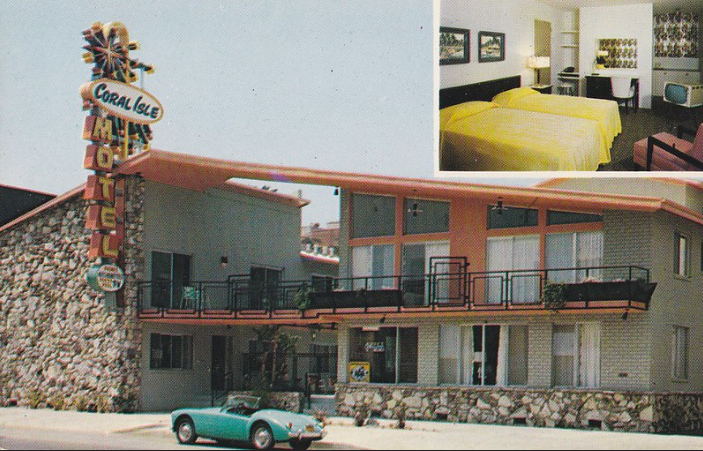
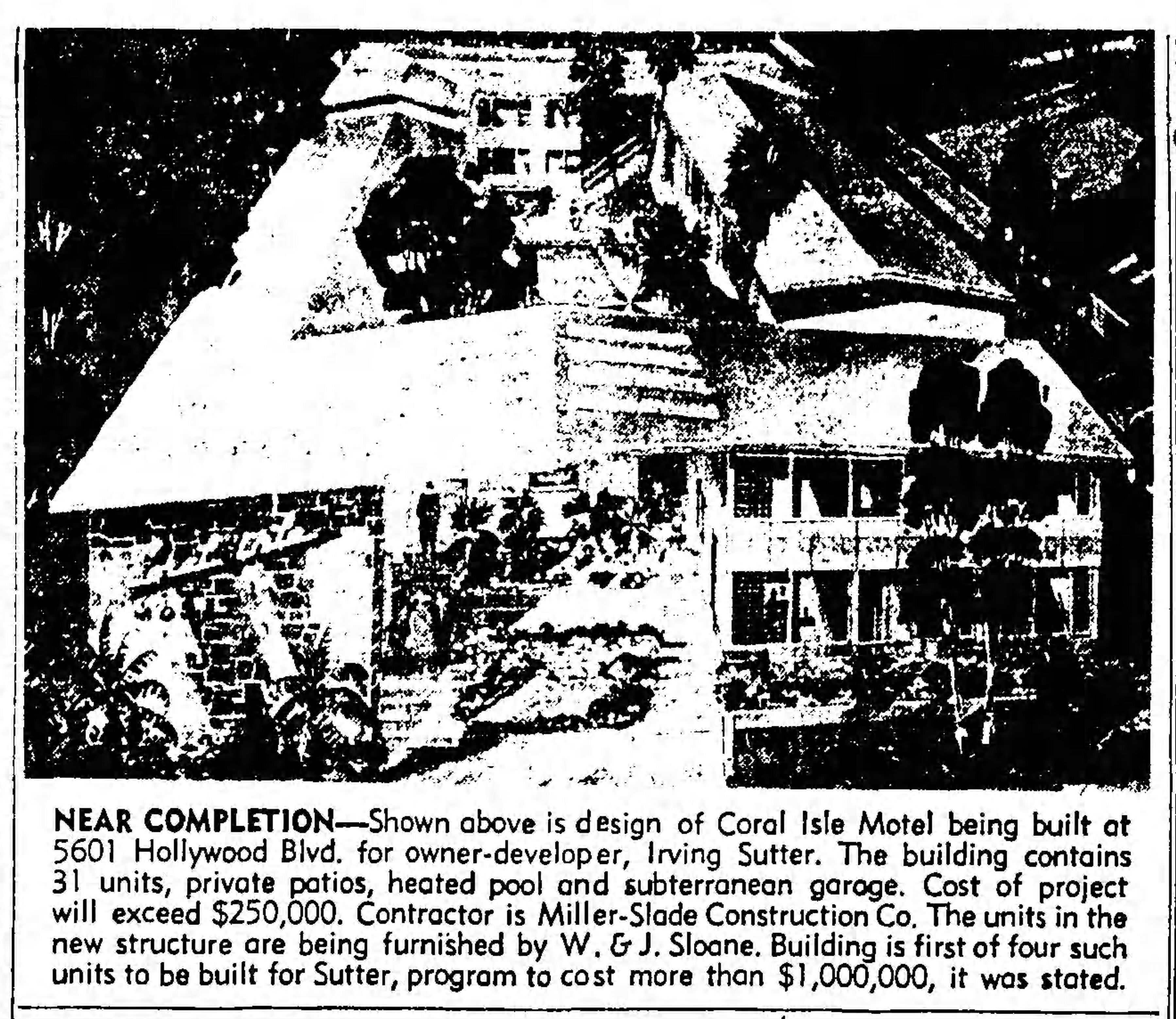
The Coral Isle Motel was built at 5601 Hollywood Boulevard, in the Morgan’s Hollywood Tract, in 1957 for owner-developer Irving Sutter. In June 1956, Richard E. Garland demolished an existing residential structure; the parcel also contained a recent building, used as a real estate office, built in 1945.

Construction on the Coral Isle was underway by April 1957. It catered more to long-term residents rather than transient guests.

LA Times 4/7/1957

LA Times 9/29/1957

Hollywood Citizen News 5/27/1959

Today the Coral Isle  is a boutique hotel, the Downtowner Inn.

5540 Hollywood Boulevard: Retail/Office Building

This little building at 5540 Hollywood Boulevard facing Garfield Place was designed and built by Frank Meline on spec for owner, a G.M. Benethun of Freeport, Illinois. Plans for the 2-story structure, to be of travertine stone with a tile roof, were announced in November 1920, as its neighbor to the west, the Apollo Theater at 5546, was under construction. It was to contain 2 storefronts on the first floor, 9 offices and 4 apartments on the second floor.

LA Times 11/21/1920.

Klett Brothers Company furniture leased the retail space of the building while it was still at the planning stage, turning it into one large storefront with a mezzanine. The brothers, as Klett & Nobel, had only recently opened the past summer, in another new building a few doors to the east, 5528 Hollywood Boulevard. only recently. Between August and September 1920, they became Klett Bros.

LA Times 7/10/1920

How could they afford to sell such wonderful pieces at such nominal prices? As it turns out, they couldn’t. A bankruptcy sale was held on the premises in April 1922 and the Bros vacated the building by the end of the month.

Hollywood Daily Citizen 4/12/1922.

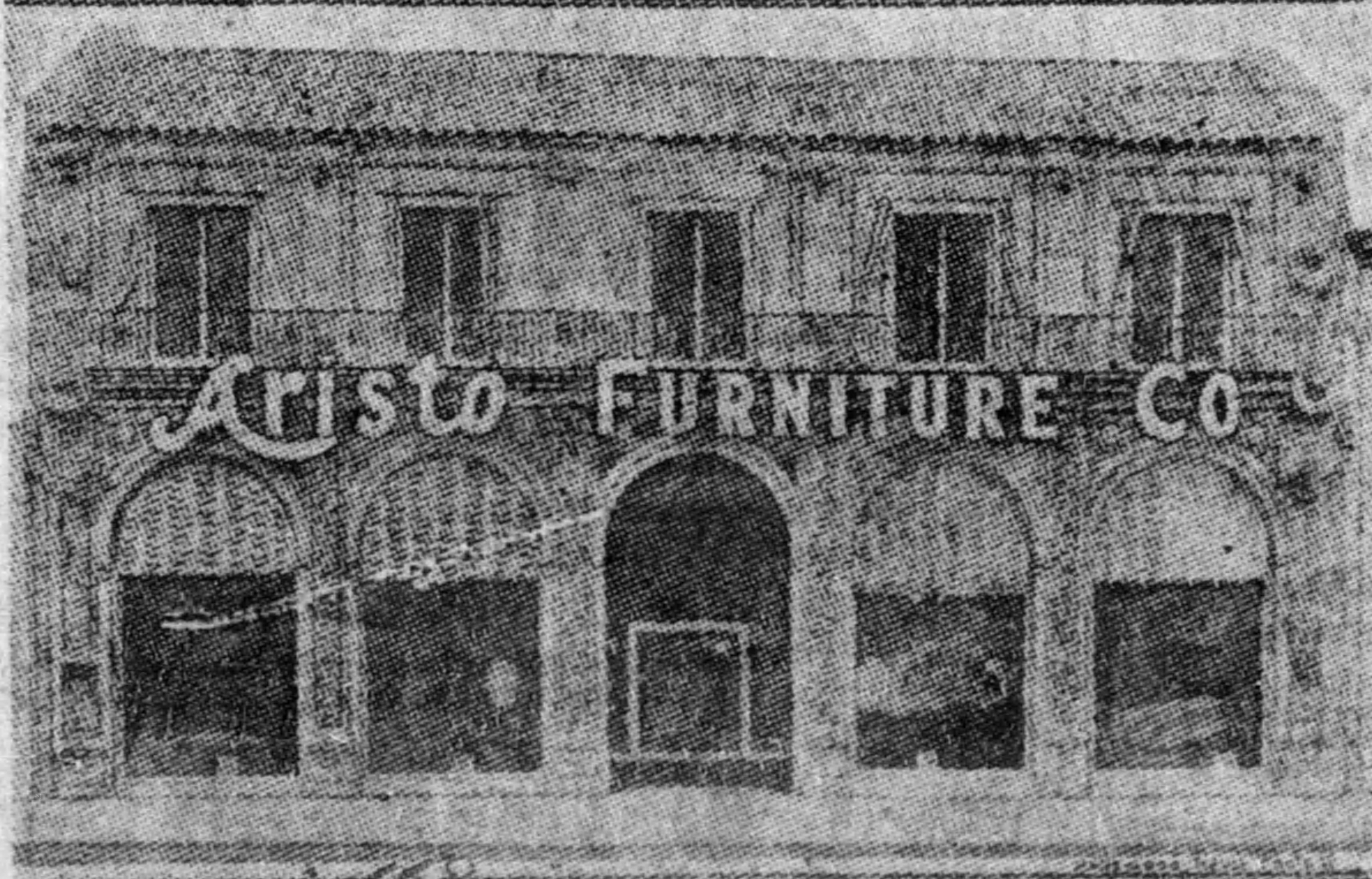
In May 1922, another furniture store moved in, the Aristo Furniture Company.

Hollywood Citizen News 5/12/1922

In July 1927, the proprietor retired and liquidation of the company’s assets began. It was a long goodbye; the process took nearly a year.

LA Times 8/21/1927

The building continued to fill a need in Hollywood; its various spaces served as studios for dance instructors and other similar uses. Another furniture retailer moved in, briefly. Private Detective Harry Von Wittenberg had his offices here in October 1932; Located at 7556 Hollywood Boulevard in the 1940s and 1950s, Von Wittenberg worked as a snoop for Robert Harrison, publisher of Confidential magazine.

Dorothy Anton aka Dorothea D’ Anton, specializing in Hawaiian and South Sea Island dancing, was a tenant for several years, overlapping with the Hawaiian Craze. LA Times 5/20/1932.

Misbehaving private detective Harry L Von Wittenberg had offices here briefly in late 1932. Hollywood Citizen News 10/12/1932.

A rare survivor of the low-rise development of this section of the boulevard in the early 1920s, 5540 Hollywood Boulevard is extant, albeit dwarfed by apartment towers built around it in 2016.

5540 in 2009. Google map image.

Google map image.


5526 Hollywood Boulevard: Falcon Studios

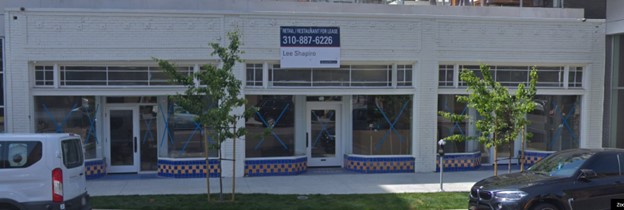
This modest, 1-story retail structure, originally 5524-5526 and 5528 Hollywood Boulevard was designed in 1920 by society architect Frank F. Rasche for Bertram Y. Taft, who, with his brothers Alfred Z. Taft, Jr., Harold O. and Chester, operated the Taft Realty Company. Typical of the low-rise development along Hollywood Boulevard at this time, before the brothers built the famous Taft Building (6280 Hollywood) on the corner of Hollywood and Vine in 1923, this building was sometimes referred to as the “Taft Building.”

The three retail spaces were originally leased by a phonograph company (5524), a cafe (5526) and a furniture store (5528). It is most well-known today, and the reason it was not demolished, for its association with the Falcon Studio school of fencing and dance from 1943 until the death of its co-founder Ralph B. Faulkner, in 1987.

Although his design was not selected, Rasche also made plans for the Hollywood YMCA in 1920. LA Times 1/25/1920

C.W. Worth’s Worth’s Cafe was the original tenant of 5526 Hollywood Boulevard. Hollywood Citizen 6/4/1920
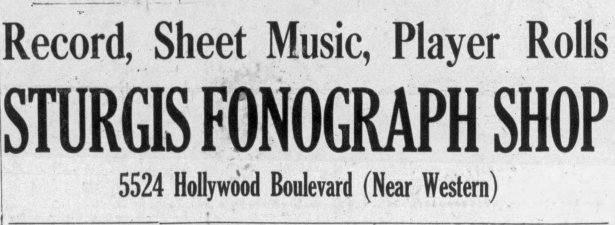
Sturgis Fonograph Shop was the first tenant of 5524 Hollywood Citizen 6/4/1920.

Hollywood Citizen 5/7/1920

Sturgis Fonographs opened at 5524 on May 22, 1920. Worth’s Cafe opened at 5526 on June 5, 1920. Klett & Noble’s furniture store opened in May 1920. None of them stayed very long, which was also typical of retail development in Hollywood at the time. (Klett & Nobel became Klett Brothers and moved a few doors to the west to another new building at 5540 a few months later). The building was damaged by fire in September 1923, thought to have originated in the cafe that succeed Worth’s at 5526.

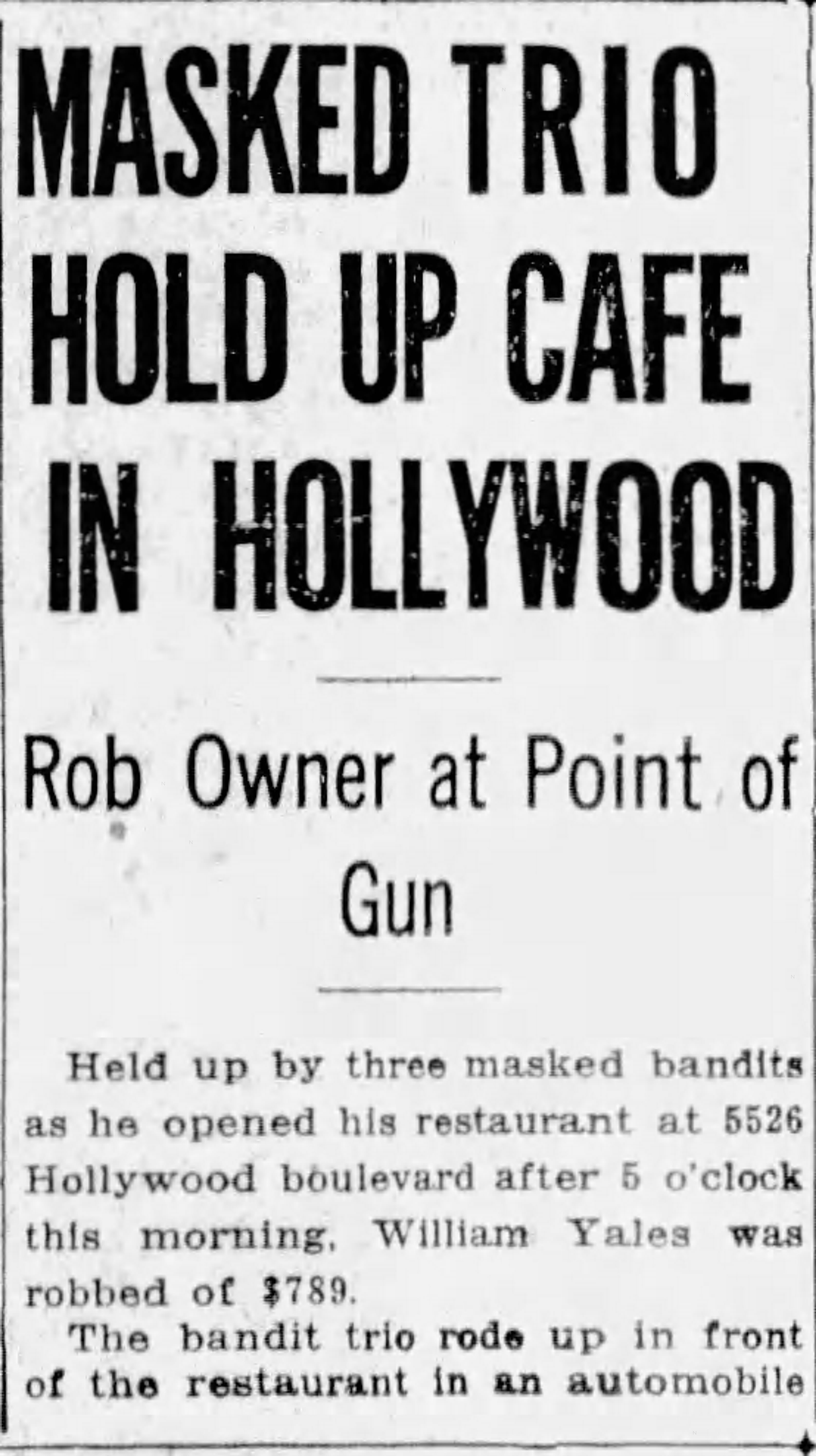
Crime at this section of town did not begin in the 1960s. The Worth Cafe was held up by a gang of armed robbers, believed responsible for a number of other local hold-ups, in April 1921.

LA Evening Express 4/2/1921
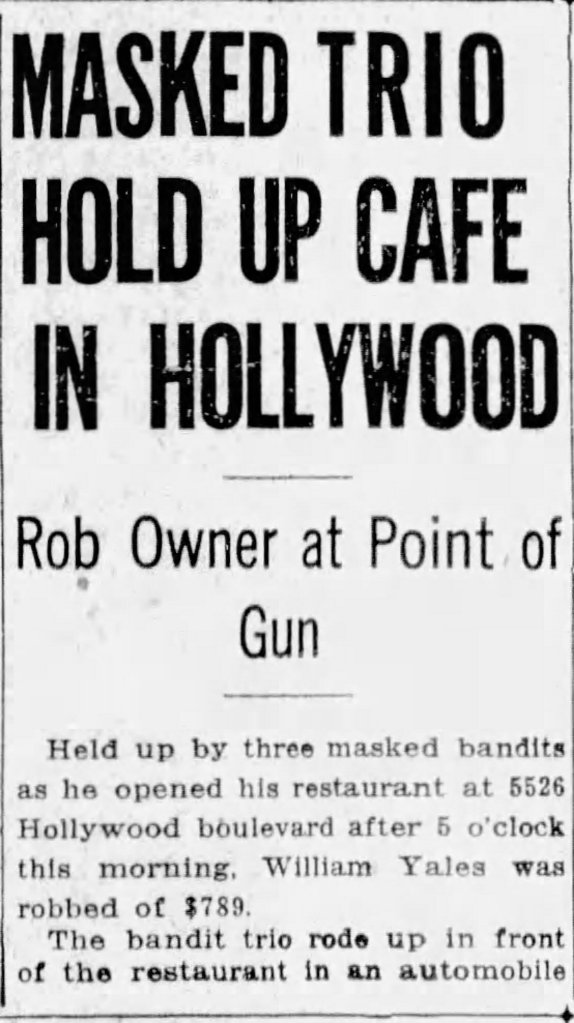
LA Evening Express 8/11/1923

The cafe that succeeded Worth’s, run by William Yalen (not Yales) was also held up – this time by mobile bandits. LA Evening Express 8/11/1923

The Taft Buildng in this case refers to B Y Taft, not the height-limit building being constructed by his brother, A Z Taft. Hollywood Daily Citizen 9/21/1923

5526 housed Kempler & Son’s from circa 1930 to 1940- they sold radios and later appliances.

In May 1943, Falcon Studios announced that it was moving to 5526 from its present home, 5610 Hollywood Boulevard, so that 5510 could be used for defense plant purposes. They made the move by June, although the remodeling of 5526 was not yet completed.

Falcon Studios originated as the Edith Jane School of Dance, founded by Edith Jane Plate in March 1929. The school’s first home was 1759 N. Highland Avenue.

Edith Jane Plate. Hollywood Daily Citizen 3/2/1929

Hollywood Daily Citizen 3/2/1920

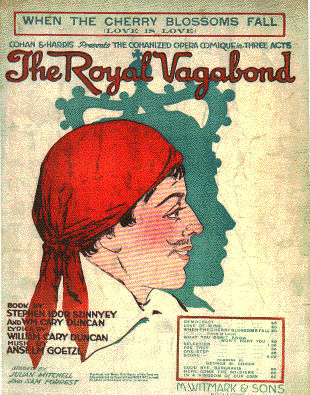
Edith Jane Plate came to Hollywood from New York, where she had graduated from the National Academy of Design, the Vestoff-Serova Russian Ballet School, and Ned Wayburn’s School of Modern Stage Dancing. She had also coached with Ruth St. Denis. Plate had appeared on Broadway in several George M. Cohen productions, including “The Royal Vagabond.” Since coming to Hollywood, about 1924, she had been an instructor and producer with the Walter Wills School, at 7617 Hollywood Boulevard.

Sheet music from George M. Cohen’s “The Royal Vagabond.”

Hollywood Daily Citizen 3/2/1929

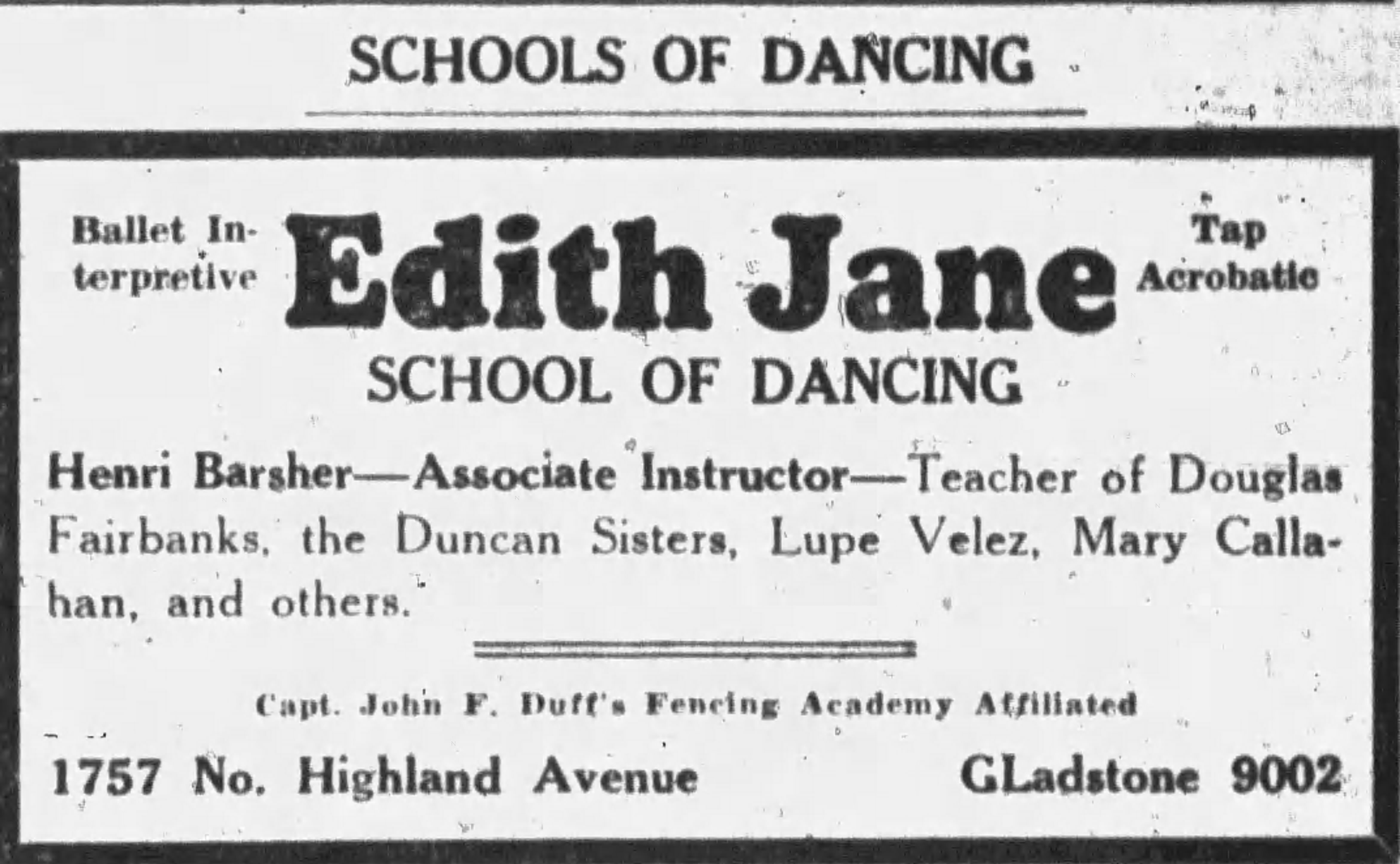
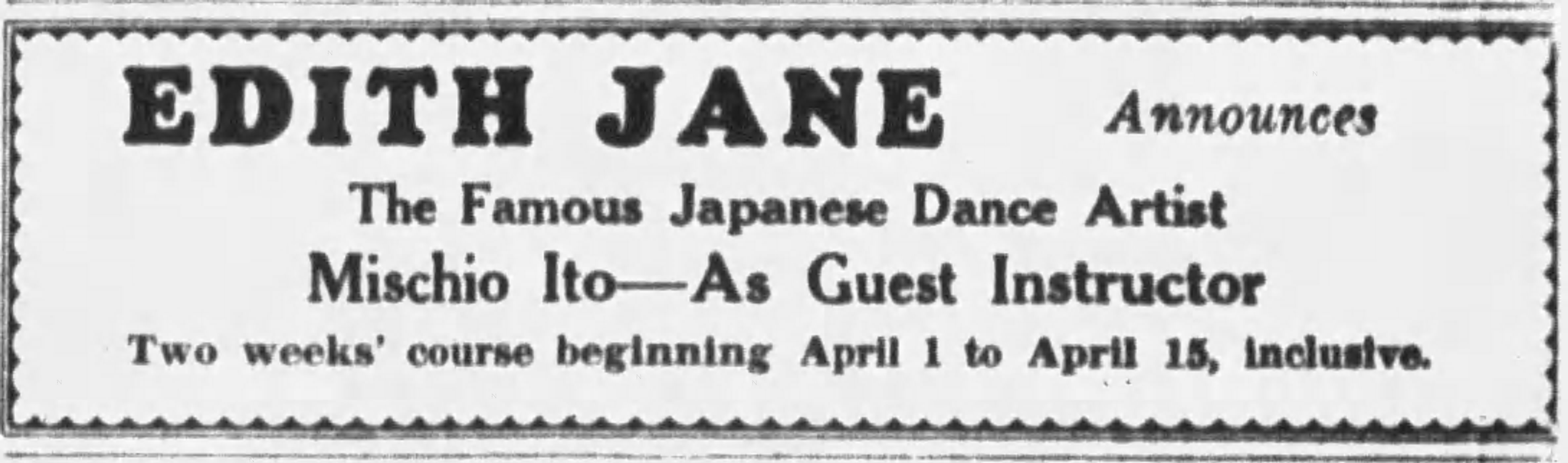
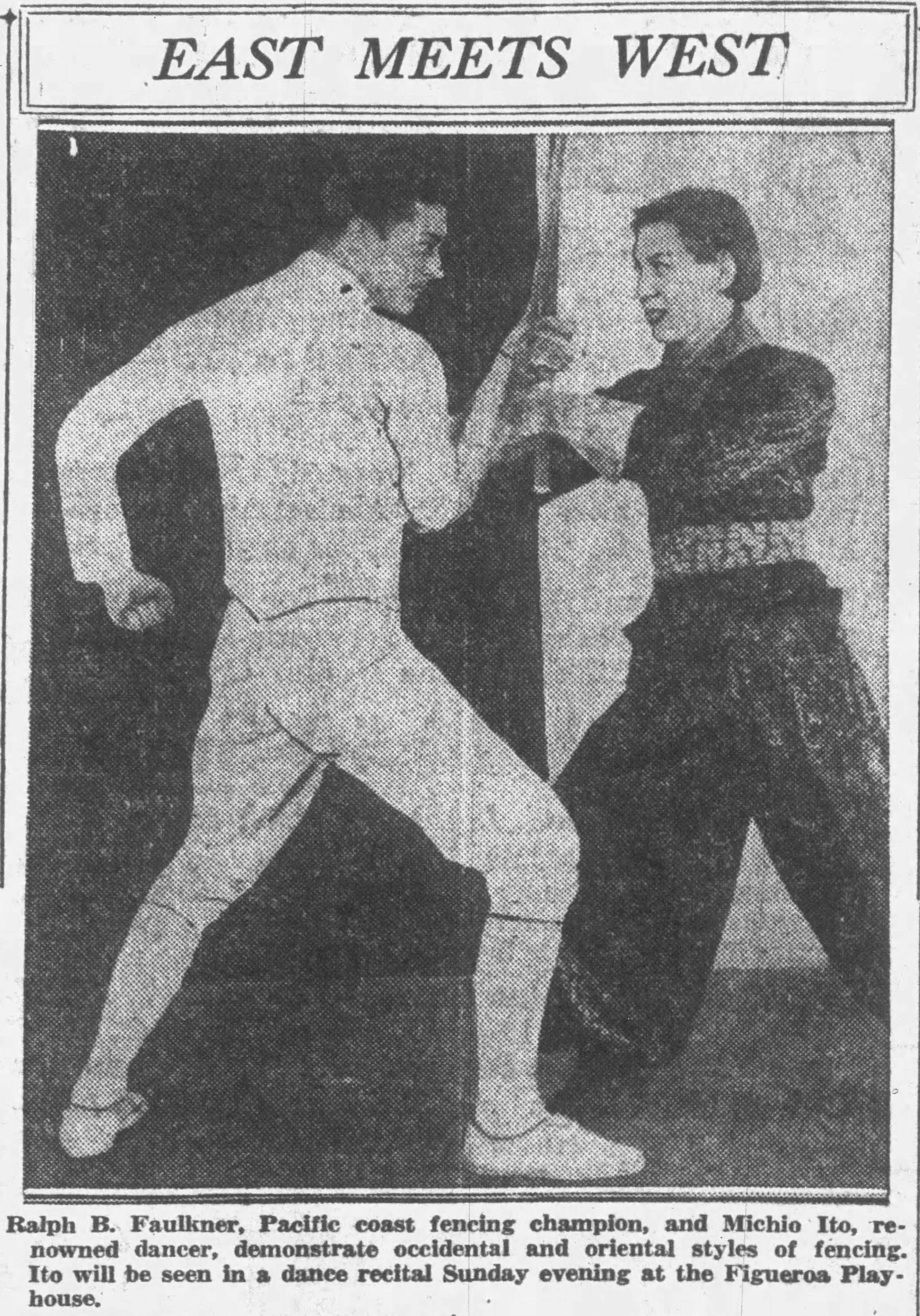
The Edith Jane School’s regular instructor was Henri Barshow, instructor of swashbuckler Douglas Fairbanks, Sr.  For fencing instruction, the school was affiliated with Captain John F. Duff’s Fencing Academy. In April 1929, the school invited Japanese dancer Michio Ito as a guest instructor. Ralph B. Faulkner, then the reining West Coast sabre champion and a participant in the 1928 Summer Olympics, met Ito at the studio and the two ultimately put on a recital at the Figueroa Playhouse, sponsored by Edith Jane School, to demonstrate “occidental and oriental” styles of fencing. In June 1922, Faulkner appeared with Edith Jane at the school’s Spring recital, held at the Windsor Square Theater.

Hollywood Daily Citizen 3/23/1929


Ralph B. Faulkner and Michio Ito. The LA Record 4/26/1929

Hollywood Daily Citizen 6/22/1929

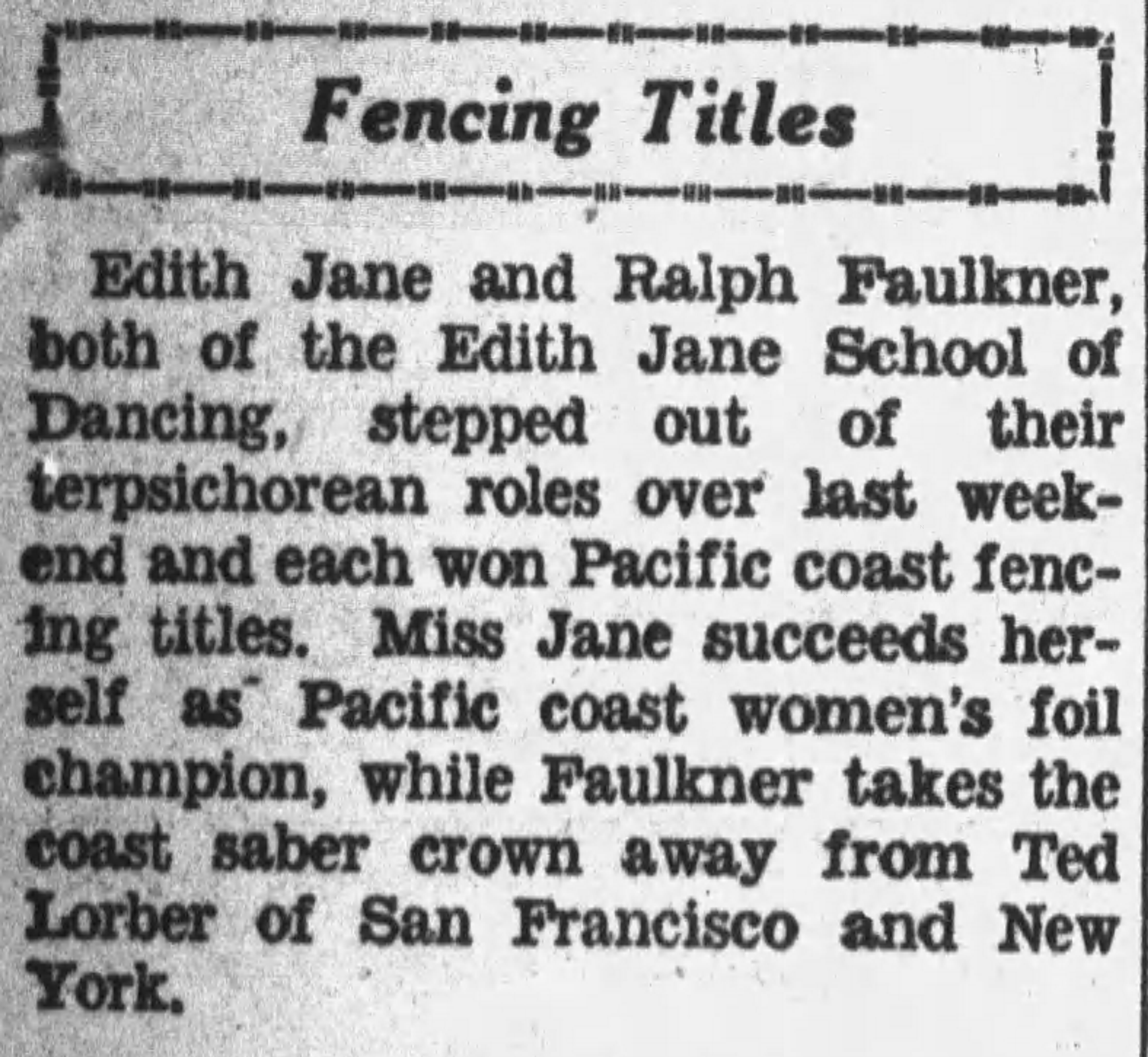
In April 1932, both Faulkner and Plate qualified to be on the US sabre team in the 1932 Summer Olympics, to be held in Los Angeles. Plate won the women’s foil championship in the Pacific Coast Fencing Tournament.

LA Illustrated Daily news 4/23/1932

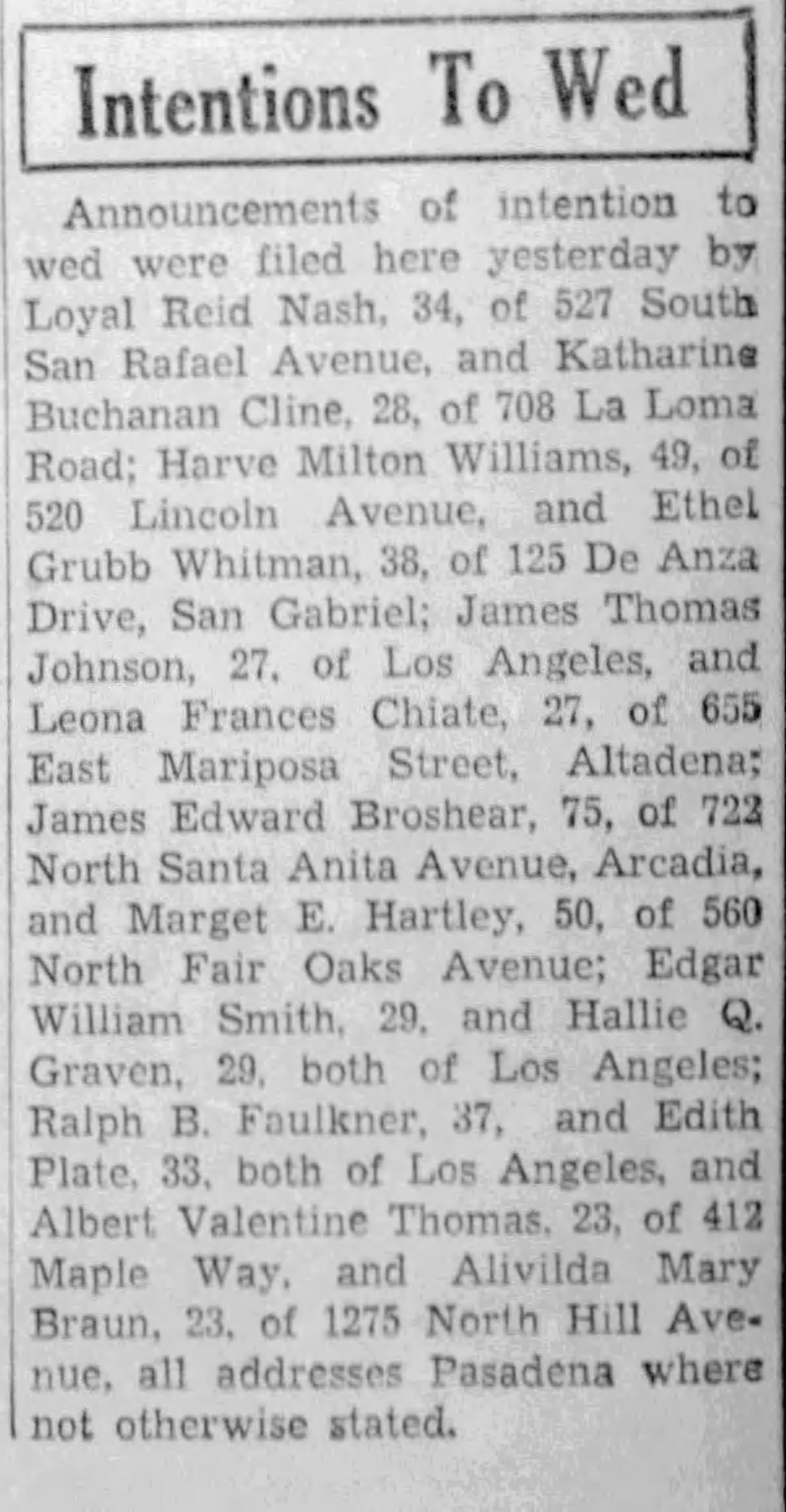
Faulkner and Plate were married in late 1936. By November 1936, Faulkner had organized his own school of fencing, the Faulkner Fencing Academy, aka the Faulkner School of Fencing. By January 1937, it was officially affiliated with the Edith Jane School. In April of that year, the Edith Jane School, which was still at 1759 N. Highland Avenue, announced that it had leased an entire building at 5610 Hollywood Boulevard. That building will have its own post.

Ralph Faulkner as an instructor at Edith Jane School. Hollywood Citizen News 8/22/1936

Pasadena Post 9/30/1936


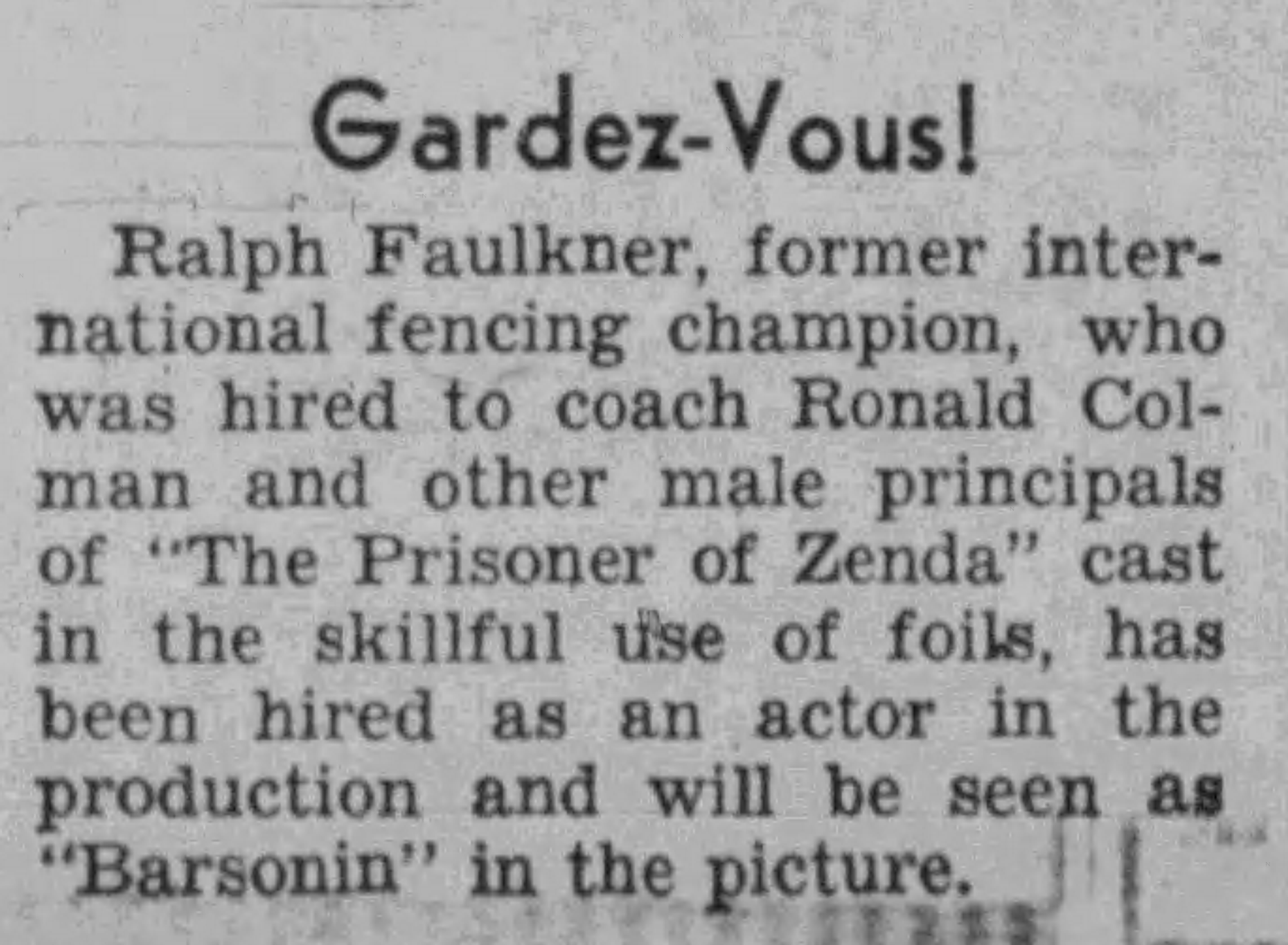
Faulkner, who had appeared in minor roles in silent films, was hired by David Selznick to instruct Ronald Colman on swordplay for his production of “The Prisoner of Zelda” (1937). He also appeared onscreen in the film (uncredited).

LA Daily News 5/29/1937

Hollywood Citizen News 2/6/1937
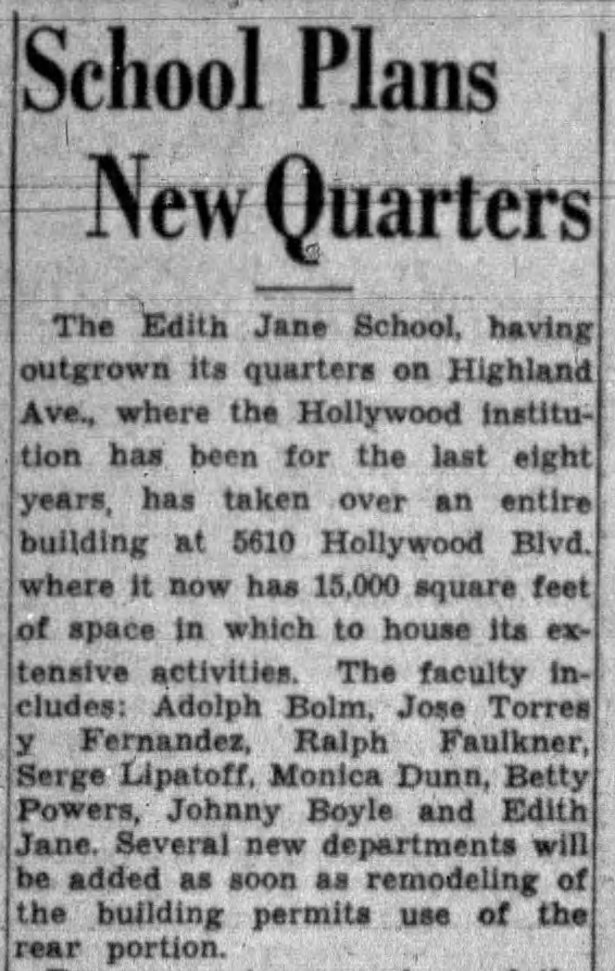
Hollywood Citizen News 4/17/1937


The Edith Jane School moved to 5610 Hollywood Boulevard in April 1937. Hollywood Citizen News 4/10/1937.

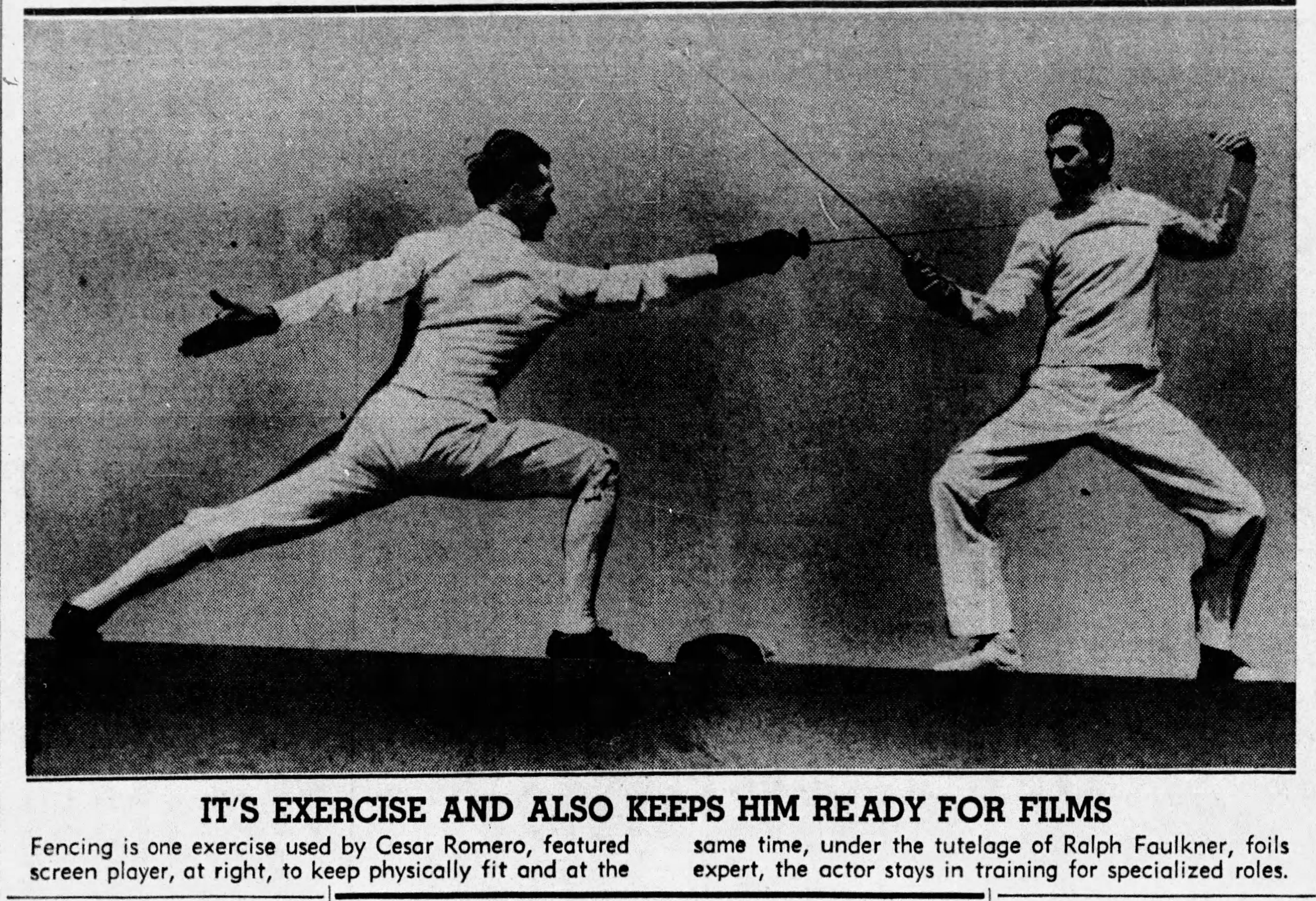
Increasingly known as fencing instructor to the stars since “Prisoner of Zelda,” Faulkner os seen here with Casar Romero. LA Times 7/11/1937.

In August 1937, the Edith Jane School and the Faulkner School of Fencing announced that it would now be known as “the Falcon School.”

Faulkner with a student. Hollywood Citizen News 8/28/1937

LA Times 8/29/1937.

In January 1938, the Falcon School added radio classes to its curriculum. Student made regular broadcasts over local radio. Hollywood Citizen News 1/22/1938

By December 1942, the school was known as the Falcon Studios.

Hollywood Citizen News 12/26/1942

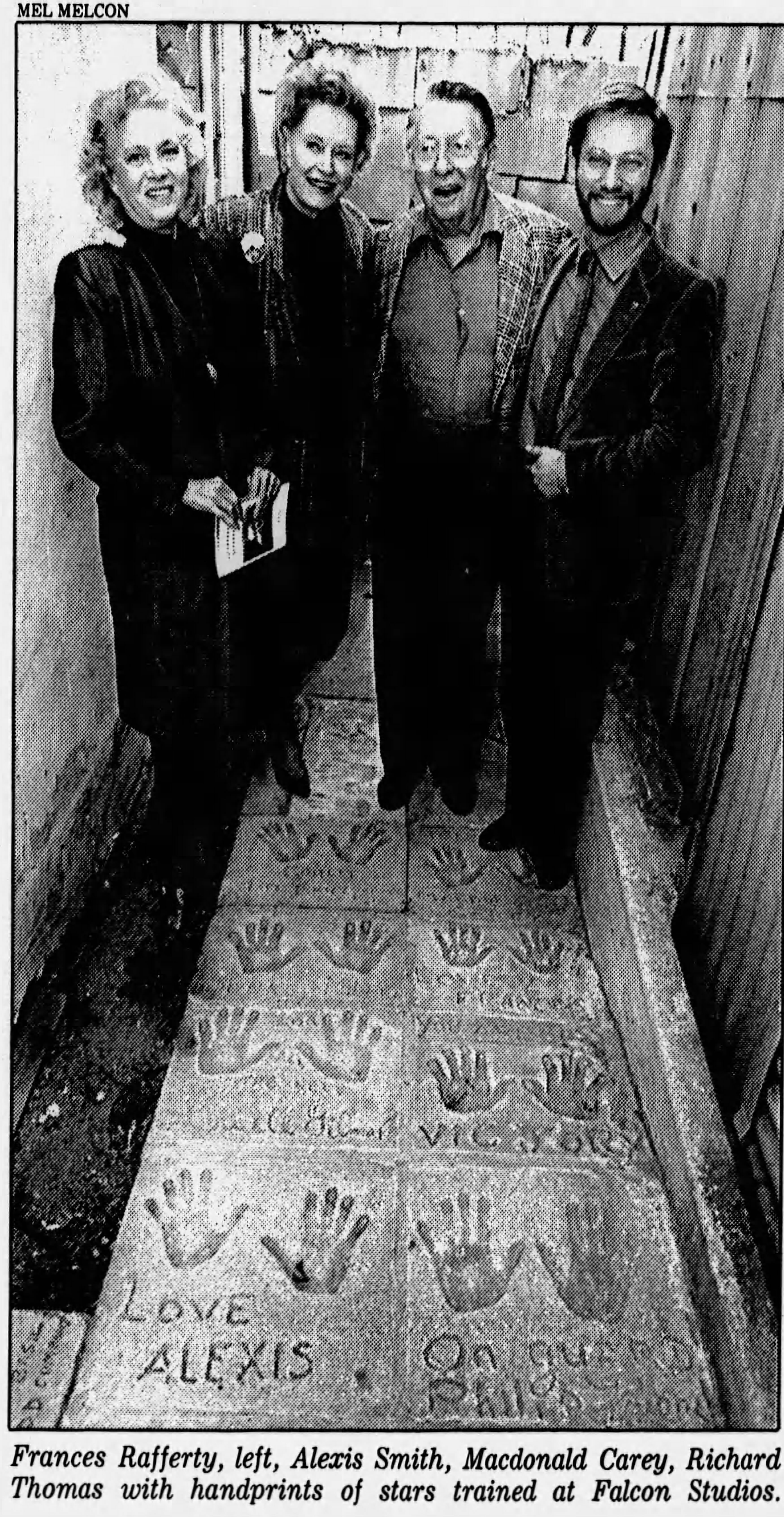
In June 1943, the Falcon Studios made the move to 5526 Hollywood Boulevard, The new quarters featured a large outdoor stage and theater, covered by a canopy, as well as a garden, a “Victory Garden” or World War II.. Famous students would press their handprints and autographs, into the cement of the walkways, a’ ‘la Grauman’s Chinese Theater.

Hollywood Citizen News 5/8/1943

Falcon School carried on at 5526 Hollywood Boulevard through the war years, into the 1950s, the 1960s, and the 1970s. Edith Jane Plate Faulkner died in July 1975. Ralph Faulkner carried on with fencing instruction until shortly before he passed away in January 1987.

Polly August, a former student who had helped run the business, inherited the building and studio from Faulkner. She sold it in July 1987. The new owners, Paul and Tep Tan, proposed demolishing the building, which was designated a city landmark in July 1988. Through the efforts of Hollywood television writer Jonathan Polansky and celebrity former students such as Alexis Smith and MacDonald Carey, the structure was saved.
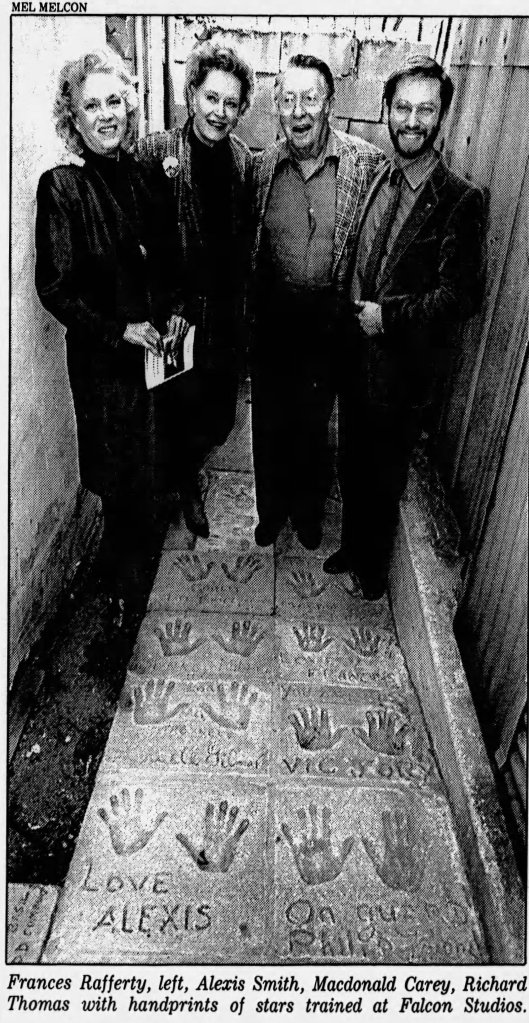
LA Times 3/9/1988

Today, thanks to them, the building is extant, although dwarfed by the apartment towers built around it in 2016.

5526 in 2007. Google map image.

5526 now. Google map image.
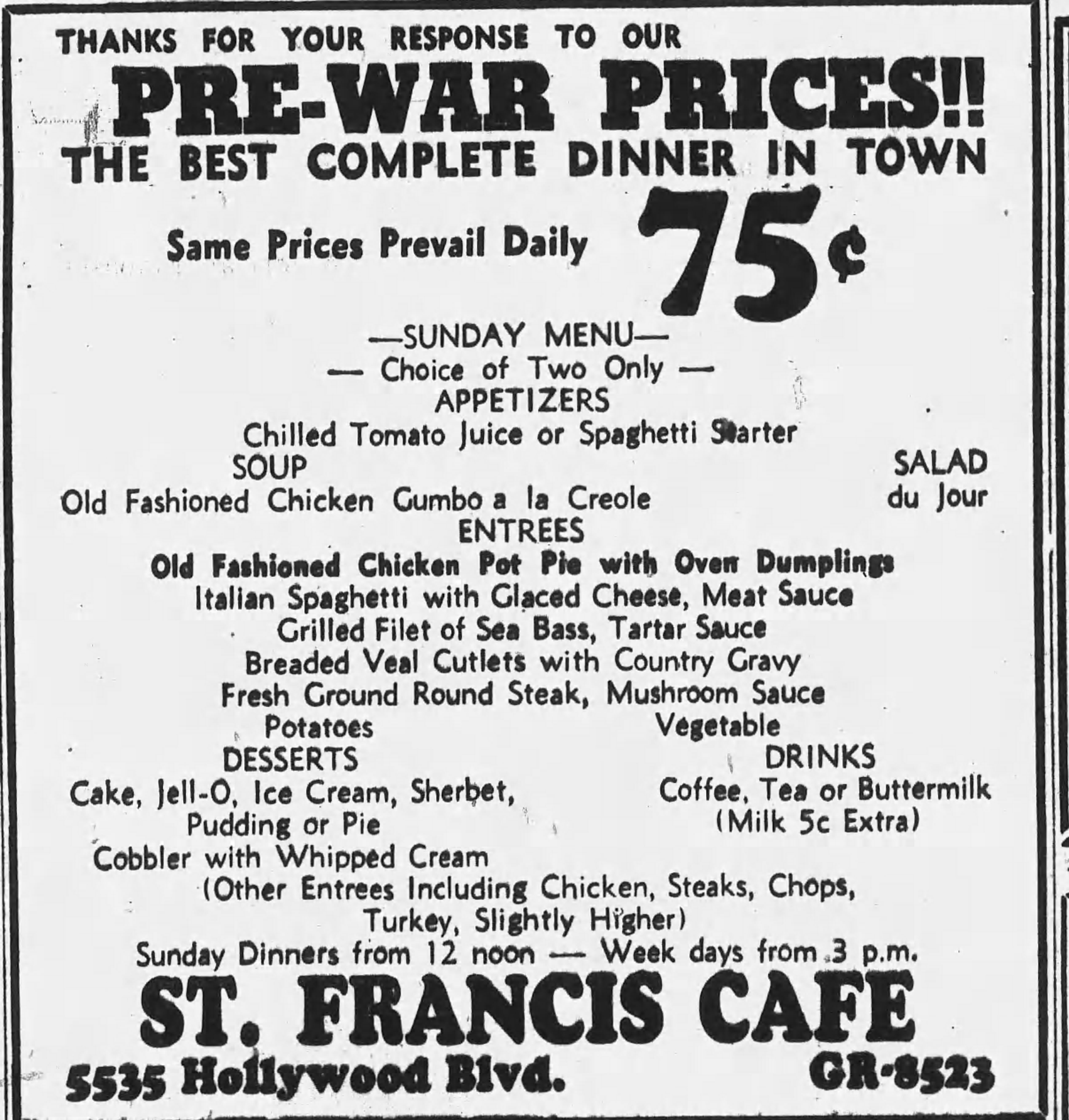
5533 Hollywood Boulevard: The St. Francis Apartment Hotel

The St. Francis Apartment Hotel opened at 5533 Hollywood Boulevard at the northeast corner of Hollywood Boulevard, a little ways west of Western Avenue, on August 15, 1928.

LA Times 8/22/1926.

LA Times 8/8/1926.

The owner, Hollywood Income Properties, represented by George Marcell, applied for a permit to construct the hotel in July 1926. In August 1926, the Times reported that the foundation had been completed, and that work on the structural steel frame was to begin. It was to be known as the Weston Apartments for owner of the parcels it stood on, Harold Weston, and would be completed about February 1, 1927. February came and went, however. In April 1927, the Weston was said to be nearing completion and set to open around May 1, 1927. That date, too, passed. In July 1927, the Times reported that the property was now the property of the Hollywood-Roosevelt Properties Corp (George Marcell, Secretary-Treasurer). Now known as the “Hollywood Apartment Hotel,” it would reportedly be ready about August 15.

It did open on August 15- but it was August 15, 1928 not August 15, 1927. In the meantime, in July 1928 the Times reported that the recently completed apartment hotel, now renamed the St. Francis, as well as the underlying land it stood on, had recently been sold to the Hollywood Securities Corp., James Long Wright, president, for $850,000.

LA Times 7/29/1928.

Finally, the 5-story, brick-veneer apartment-hotel, designed by architect William Allen, did hold its grand opening, with an open house and the now-usual light display by Otto K. Olesen.

Hollywood Daily Citizen 8/14/1928

Hollywood Citizen News 8/14/1928.

Hollywood Citizen News 8/14/1928

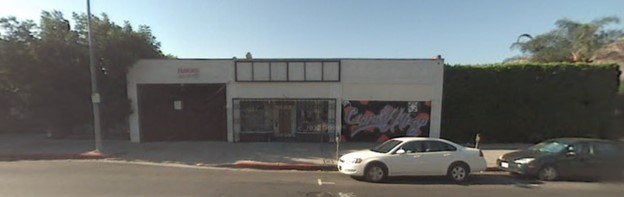
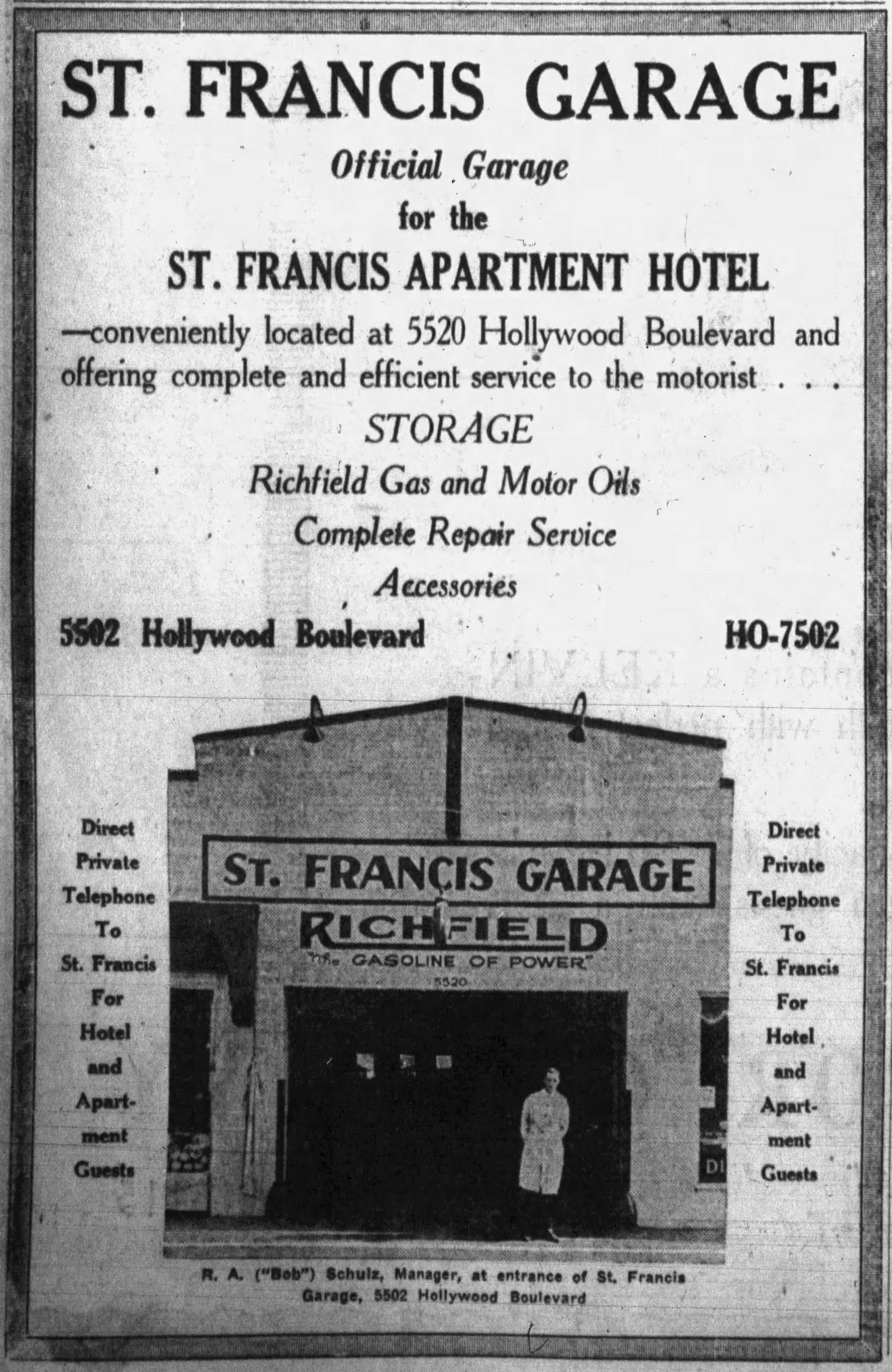
The hotel’s official garage was located across the street at 5502 Hollywood Boulevard. Hollywood Daily News 8/14/1928

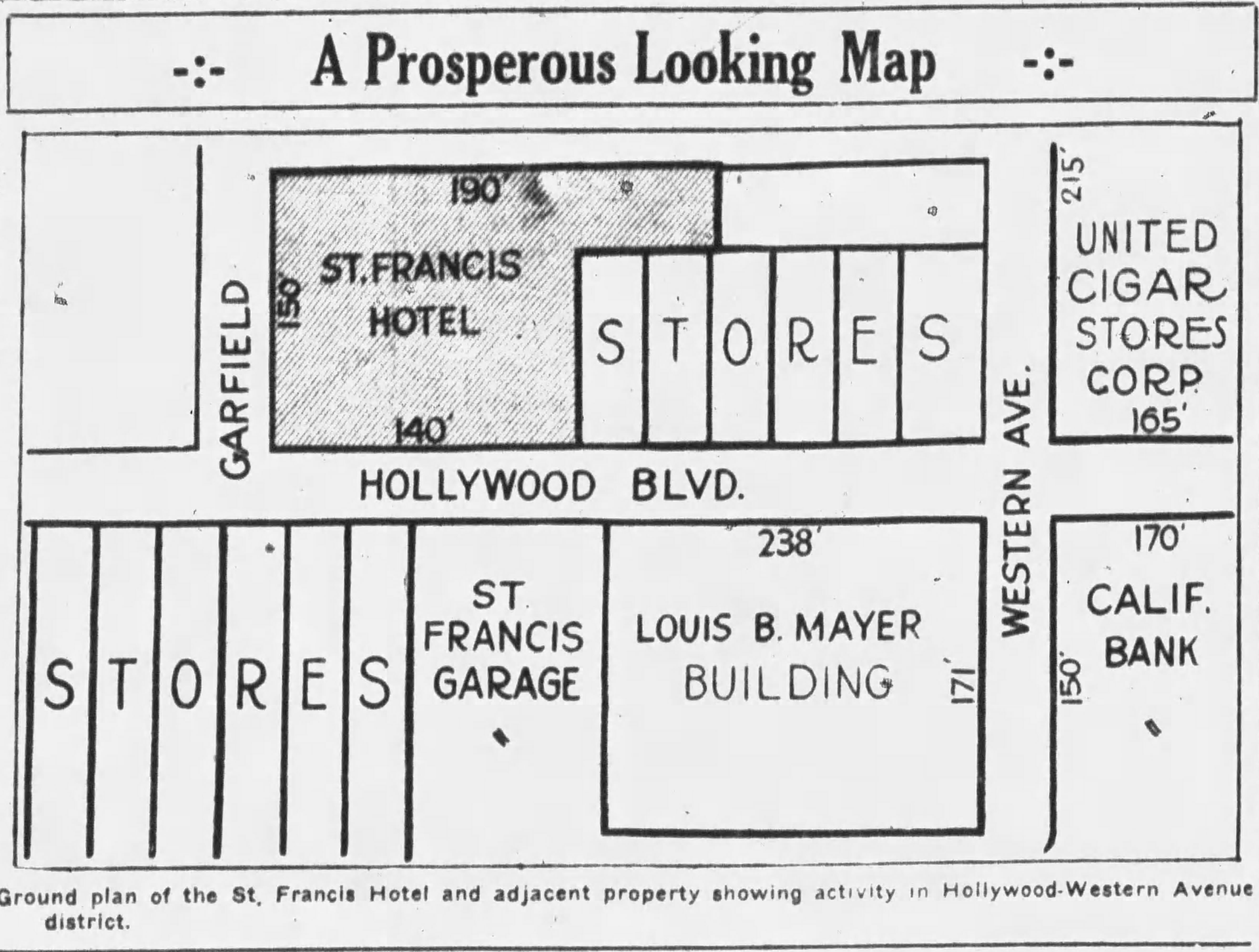
Map of recent development in the Hollywood & Western area, including the Rector Hotel (1924, owned by United Cigar Stores Corp) and the Hollywood-Western Building (1928). Hollywood Daily News 8/14/1928.

Hollywood Daily Citizen 12/7/1928

The hotel restaurant, the St. Francis Cafe, was addressed as 5535 Hollywood Boulevard. It has its own entrance from the street, as well as one from the lobby.

LA Daily News 4/19/1938

Hollywood Citizen News 5/13/1939

Hollywood Citizen New 4/17/1948

On May 15, 1951, it became the short-lived Hagen’s Restaurant. The cafe space was converted to other uses not long after this.

Hollywood Citizen News 5/14/1951


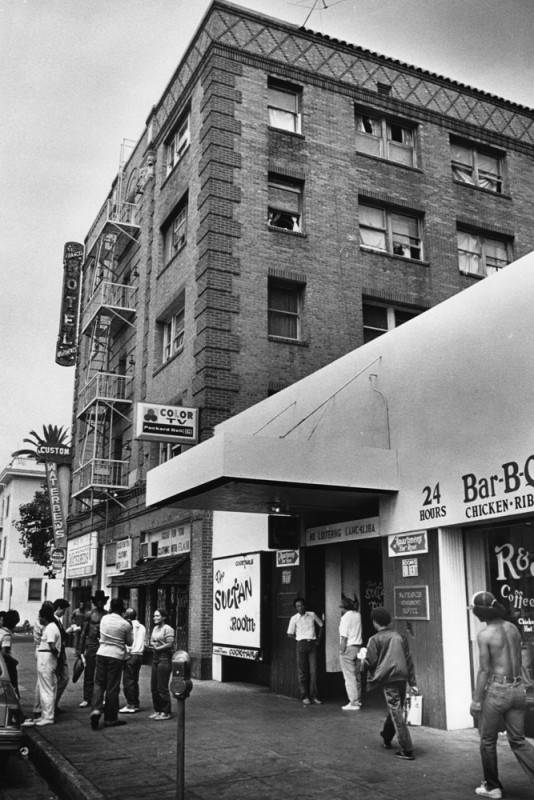
The St. Francis in the 1960s. LAPL photo.

The apartment-hotel is still extant. It is now known as the Gershwin.

5504 Hollywood Boulevard: The Hollywood-Western Building

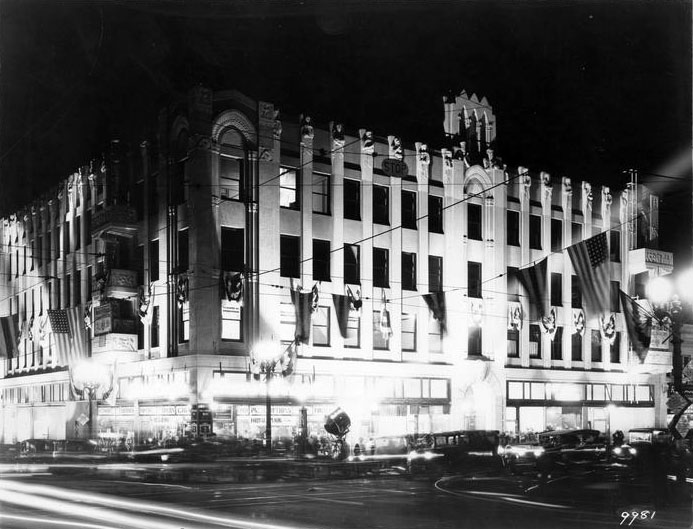
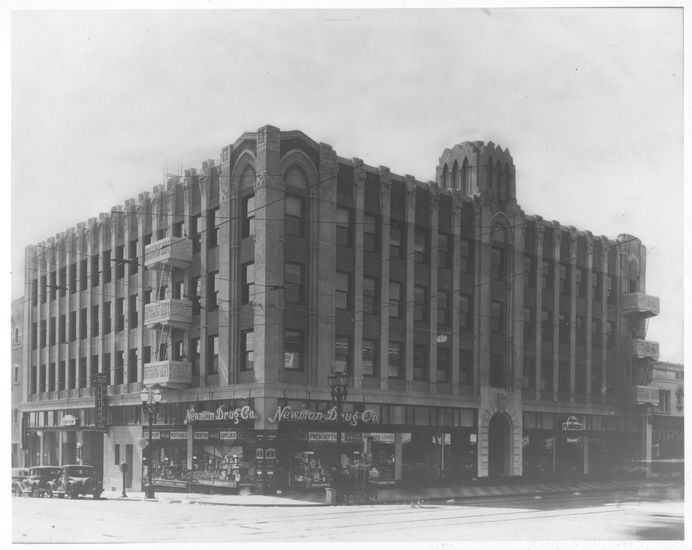
One of the most important buildings in the context of Hollywood movie history, the Hollywood Western Building, alternately known as the Mayer Building, opened at 5504 Hollywood Boulevard on the southwest corner of Hollywood and Western on December 8, 1928.

Commissioned by Louis B. Mayer of MGM Studio, and MGM executive Irving Thalberg, the 4-story Art Modern retail and office building was designed by S. Charles Lee (known for his work on numerous movie theaters).

LA Times 1/16/1927

Mayer purchased the land for the building in January 1927, from the estate of J. J. Morgan; Morgan had planned to build his own height-limit structure on the site but died before doing anything with it.

Construction on Mayer’s project got underway on July 26, 1928.

Hollywood Citizen-News 7/25/1928

Sketch of the proposed building that appeared in the LA Times on 8/5/1928. LAPL photo.

LA Times 8/5/1928

At the gala opening, MGM’s top leading lady Norma Shearer (Mrs. Norma Shearer) opened the doors with a gold key and klieg lights swept the sky.

The Hollywood-Western opening. L-R: Irving Thalberg, Leila Hyams, Norma Shearer, S. Charles Lee, Owen Lee, Raquel Torres and building manager Sidney Weisman. UCLA photo.

Opening night. LAPL photo.

Newman Drug, addressed as 5500 Hollywood Boulevard, was an anchor retail tenant occupying the prime Hollywood & Western corner storefront. Hollywood Citizen News 12/7/1928

Newman Drug in the prime corner location. UCLA photo.

LA Times 12/9/1928

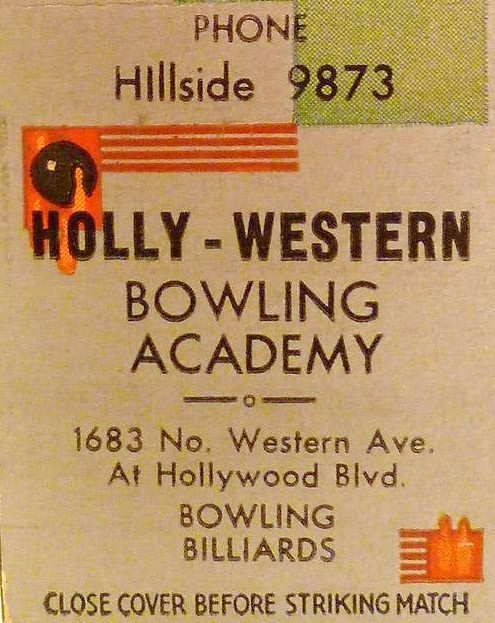
The new building housed 10 stores on the ground floor and a bowling alley/billiard parlor in the basement with an entrance on Western Avenue. The second floor held offices of the Motion Picture Producers Association; the two upper floors were reserved for the Central Casting Corporation, which primarily served as an employment agency for movie extras. If MGM or any other studio needed a cast of thousands, Central Casting could supply them. The company had been formed on December 4, 1925 by Will Hays, the president of the Motion Picture Association of America, as a means to regulate hiring and protect the hordes of hopefuls who arrived in Hollywood by the busload and hung around outside the studios hoping to be discovered, from being exploited by scam artists. Sadly, only white actors were welcome at 5504 Hollywood Boulevard- black actors had to register with Central Casting elsewhere.
The Edna Ezor dress shop was another original retail tenant. Hollywood Citizen News 12/7/1928.

The new building included spacious quarters for Hays. Mayer and the other studio heads had to pretend to make Hays welcome but in reality they dreaded him. In the 20s, under threat of federal regulation of film content, the movies promised to self-censor themselves. Hays was in charge of enforcing the censoring effort but the studios more or less flouted the Production Code (also known as the Hays Code) until 1934.

If Central Casting was casting a film czar in charge of censorship, it could do no better than Will H. Hays.

C.E. Mattson Jeweler was an original retail tenant. Hollywood Citizen News 12/7/1928.


The basement of the Hollywood-Western Building housed a bowling alley and billiard parlor from the opening until January 1994.


The Motion Picture Producers Association moved out of the building in early 1950.


On January 3, 1961, black movie extras were finally allowed to register for work at Central Casting headquarters at 5504 Hollywood Boulevard, ending segregation of CC. From its inception to this date, black actors had to register elsewhere. California Eagle 1/5/1961.

With the decline of Hollywood and the studio system, the building’s importance diminished. It was declared a city cultural historic landmark in 1988. Already suffering from years of neglect and deferred maintenance, the building sustained damage in the Northridge earthquake of January 1994 and was closed as unsafe to occupy. Squatters took it over and trashed the interior. In 1999, preservationists, who raised private and public funds, undertook the effort to restore the Hollywood-Western building.

The building remains extant.

Notes:

Morgan did build a 4-story hotel on the parcel’s Western Avenue frontage which was likely included with the sale. Some sources assert that this building was used to house the studio executives’ mistresses; this is probably just a myth.