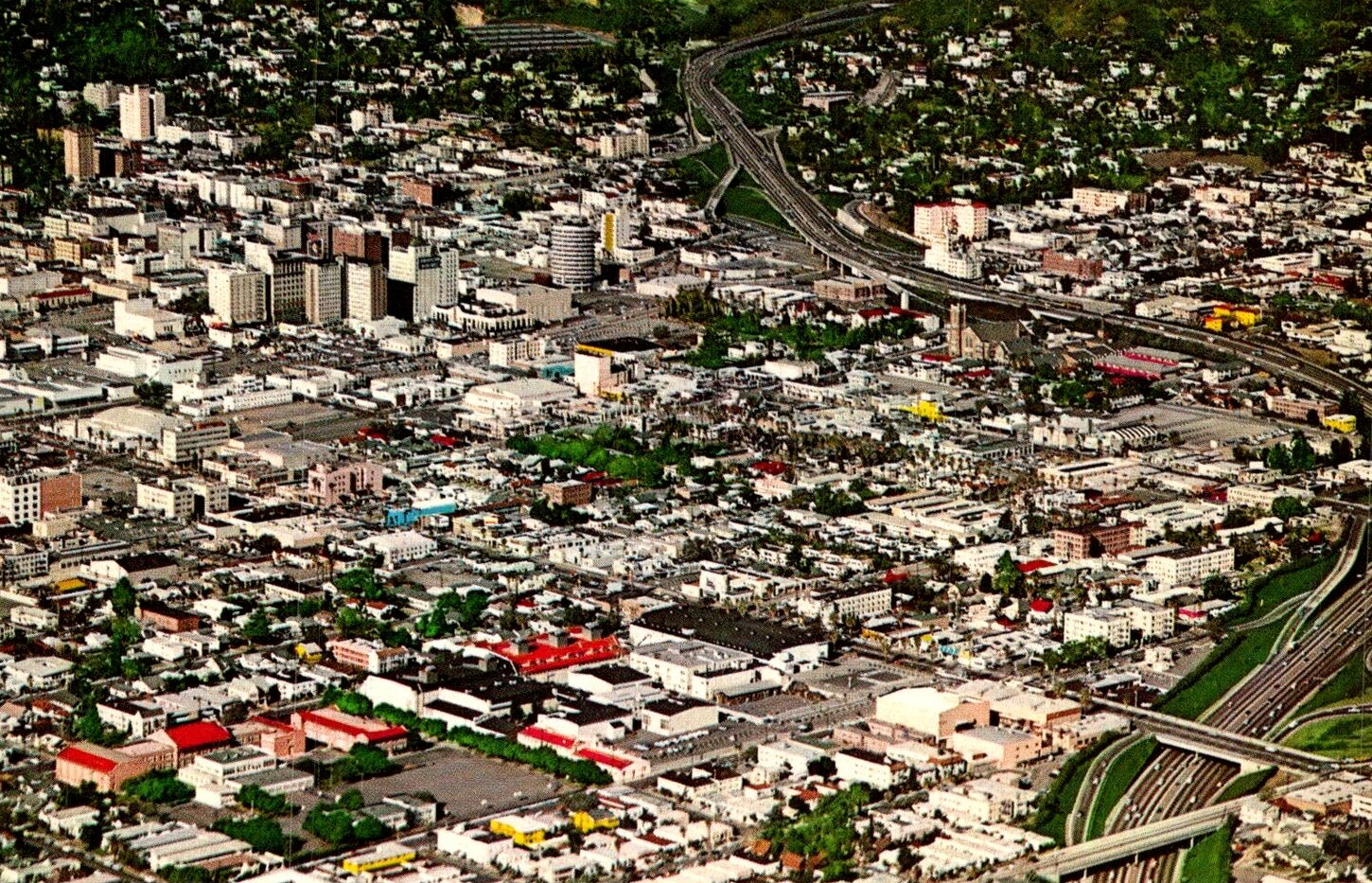
The Hollywood Freeway (US Route 101) was constructed to connect downtown Los Angeles with the San Fernando Valley.
Originally to be known as the Hollywood Parkway when a plan was presented to Mayor Bowron in 1939, the first unit, constructed by the City of Los Angeles with city and state funds, opened in July 1940 through the Cahuenga Pass from Highland Avenue to Barnham Boulevard.

Funding and World War II put a halt to further progress on the freeway for the duration, After the war, restarting of the project was again pushed back as civic leaders and residents protested that removal of existing dwellings would make the already severe housing shortage situation worse (see my posts on the postwar housing crisis here and here), but in 1946 excavation got underway in the Civic Center section and Fort Moore Hill became a lot less hill. The project was full steam ahead when the Collier-Burns Act of 1947 assured state highway funding for freeway construction.
Hollywood business and religious leaders expressed concerns about the route through Hollywood, arguing that it would impact the acoustics of the Hollywood Bowl and cause the destruction of KTTV’s new studio (later Metromedia Square), which opened at 5746 Sunset Boulevard on January 1, 1947 and the 1923 First Presbyterian Church of Hollywood at 1760 N. Gower. The State Highway Commission did indeed modify the route to avoid the studio and the church, and added what would today be called mitigation measures around the Hollywood Bowl in the form of landscaping to diminish effects to the acoustics (which as it turned out were fine).
By 1949 right of way acquisition for the Western Avenue to Hollywood Boulevard link began. Because the Hollywood Freeway is a depressed freeway, construction on the Boulevard meant excavating underneath it and constructing a bridge over the freeway as well as on and off ramps. The 5800 block of Hollywood Boulevard was affected, between Van Ness Avenue to the east and Bronson Avenue to the west. Canyon Drive, which had gone through to the north side of Hollywood Boulevard, would be rerouted onto Van Ness north of the Boulevard.
Overall, Hollywood Boulevard itself was minimally impacted by the project. There wasn’t a lot of development here; there were 1 and 2-story retail buildings, remnants of large, formerly rural residential estates, used car lots (this was the tail end of Hollywood Boulevard’s Auto Row), and gas stations.

5821 Hollywood Boulevard between Van Ness and Canyon Drive had been the home of Mary Taft, matriarch of the Taft family, from 1904 until her passing in 1938 at age 96; her daughter Dr. Gertrude Taft continued to live here until her death in September 1941. Detail of a 1913 Sanborn Fire Insurance map, LOC.

5873 Hollywood Boulevard, between Bronson and Canyon Drive, was a residence in 1913; the site had been a Union Oil gas station since 1921. It survived the Hollywood Freeway construction and was demolished in 1969. The current Original Tommy’s fast food restaurant was built in 1995. Detail of a 1913 Sanborn Fire Insurance map, LOC.

Nash dealers J. F. O’Conner & Son relocated from 5800 Hollywood Boulevard, where they had been since 1945, to 6028 Hollywood Boulevard due to freeway construction. Mark M. Hansen, owner of the Marcal Theater and part owner of the Florentine Gardens, owned both this property and the new location. Hollywood Citizen News 8/12/1949.
With right of way acquisition completed, excavation work at Hollywood Boulevard got underway in March 1951. The first task was to build a detour for the Pacific Electric tracks between Bronson and Van Ness.

Hollywood Citizen News 2/24/1951

Work on the PE detour. Hollywood Citizen News 3/8/1951
The final link, from Hollywood Boulevard to Mullholland Bridge was opened with a ribbon cutting ceremony on April 15, 1954.

The Hollywood Freeway bridge carrying eastbound Hollywood Boulevard traffic, May 1952. LAPL photo.
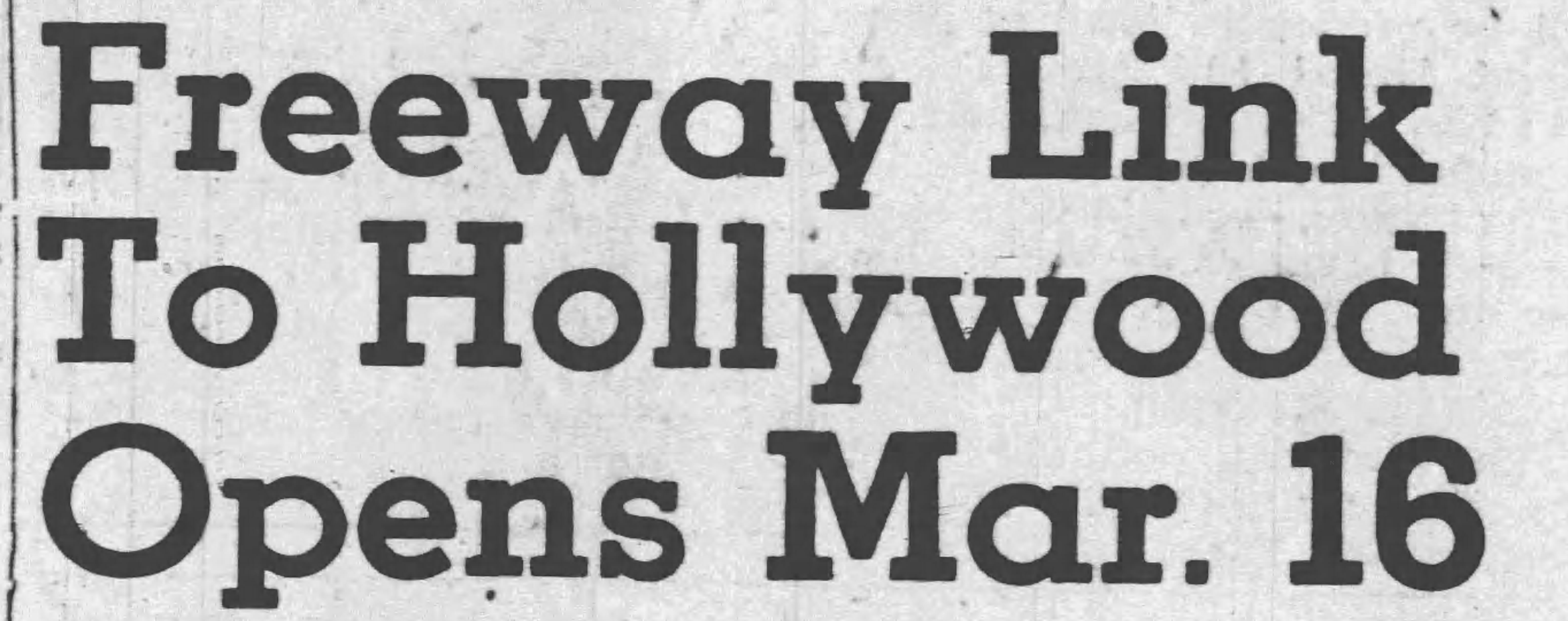
The opening if the Western Avenue to Hollywood Boulevard link. Hollywood Citizen News 3/3/1953
The Western Avenue to Hollywood Boulevard link of the freeway was to have opened in January 1953 but heavy rains delayed construction. It opened on March 16, 1953. Dorothy Lamour appeared at the ribbon-cutting ceremony- a nod to her “Road to…” series of films with Bing Crosby and Bob Hope. The first accident on this stretch of highway occurred about 5 minutes later.
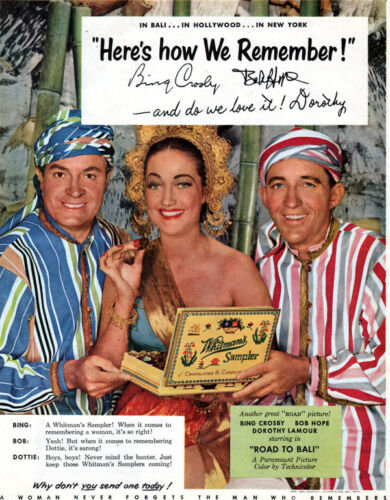
Dorothy Lamour, Bob Hope and Bing Crosby were known for their “Road” films. In 1953 it was “The Road to Bali.”
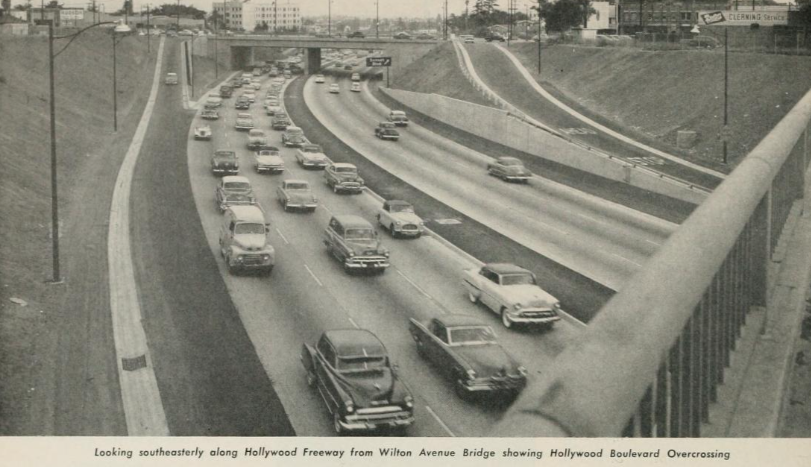
Looking toward the Hollywood Boulevard overcrossing from the Wilton Avenue Bridge. From California Highways and Public Works magazine September/October 1954.
Hollywood Boulevard would be the end of the freeway until the final link opened in April 1954. This time, Bob Hope officiated at the ribbon cutting.
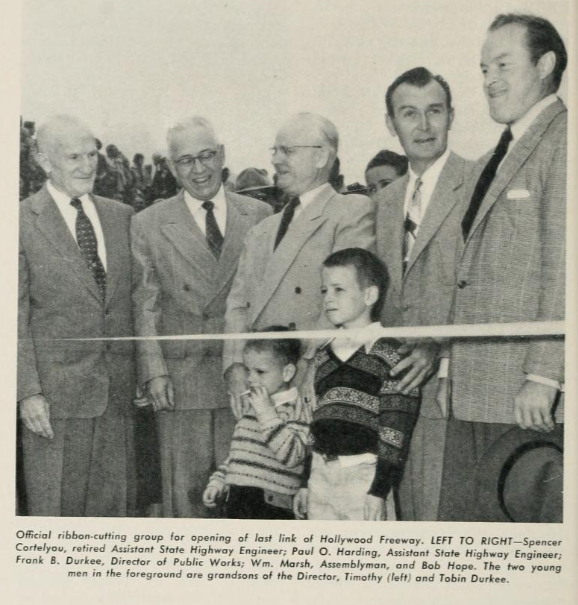
Bob Hope opening the final link of the Hollywood Freeway, April 1954. From California Highways and Public Works magazine May/June 1954.
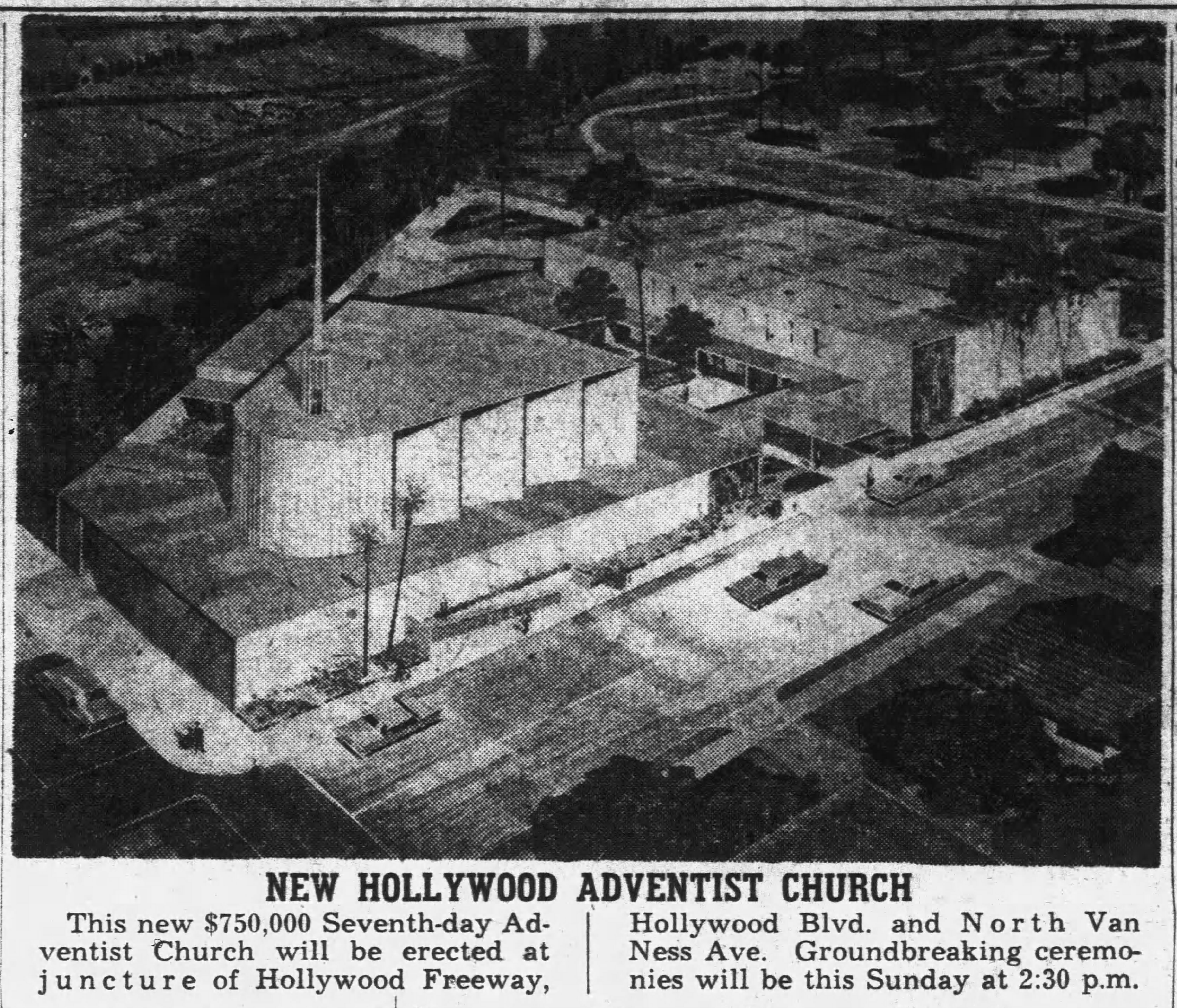
Although it looks like it was marooned by the Hollywood Freeway construction, the Seventh-Day Adventist Church between the ramps was built in 1961, almost 10 years after the freeway was completed. Its address is actually on Van Ness Avenue. Hollywood Citizen News 5/27/1961.
 J. H. Graham