This building was a 1-story auto showroom on the southwest corner of Hollywood Boulevard and El Centro built in 1919 for Frank E. Wright of the Wright Service Company, who leased the property from owner William E. Graham and his wife Mamie Kendall Graham.
F. E. Wright had the Hollywood Studebaker franchise at the time, having taken over management of the former Studebaker dealer, the Nixon Motor Car Company in September 1917. He was officially named the Studebaker agent for Hollywood in November 1917, his display room located at 6658 Hollywood Boulevard.
Construction on his new home at 6150 was announced in April 1925. The building featured tapestry brick (i.e., with a pattern effect) and enameled brick trim. Wright moved in in July.

LA Times 7/2/1919.
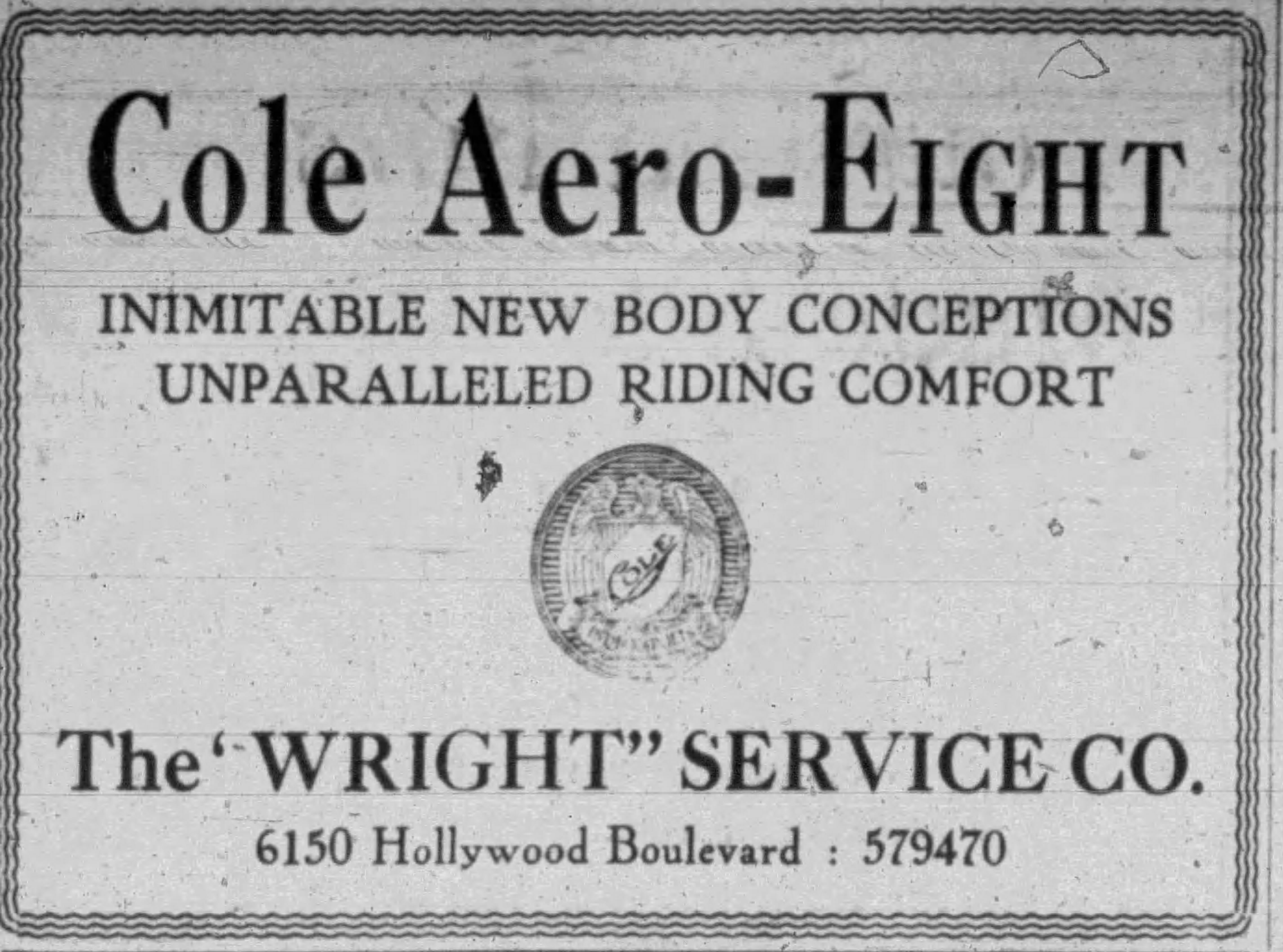
Hollywood Citizen News 10/3/1919.
Paul G. Hoffman, Studebaker distributor for So Cal would expand into Hollywood, and in 1922 built a new showroom a little ways to the East of 6150, at 6116 Hollywood Boulevard.
Wright, meanwhile, became the Hollywood Cole-8 dealer in October 1919.
Based in Indianapolis, the Cole Motor Car Company was founded by Joseph J. Cole in 1909. Its 8-cylinder engine, the Cole Eight was introduced in 1915. Cole distributors for So Cal and Arizona, House and Meyer, opened their own Hollywood branch across the street at 6145 Hollywood Boulevard in May 1920. That month, Wright became Hollywood’s Peerless dealer.
The Peerless Motor Car Company, based in Cleveland, made luxury automobiles beginning in 1900.

Hollywood Citizen News 6/25/1920.
Things moved quickly in the post-World War I automobile World. The rush of expansion in the late Teens was followed by a slump in 1920-1921.
In January 1921, 6150 briefly became home to the Marmon. Founded by Henry Carpenter Marmon, the company had been making luxury automobiles since 1902. Al G. Faulkner as their area distributor.
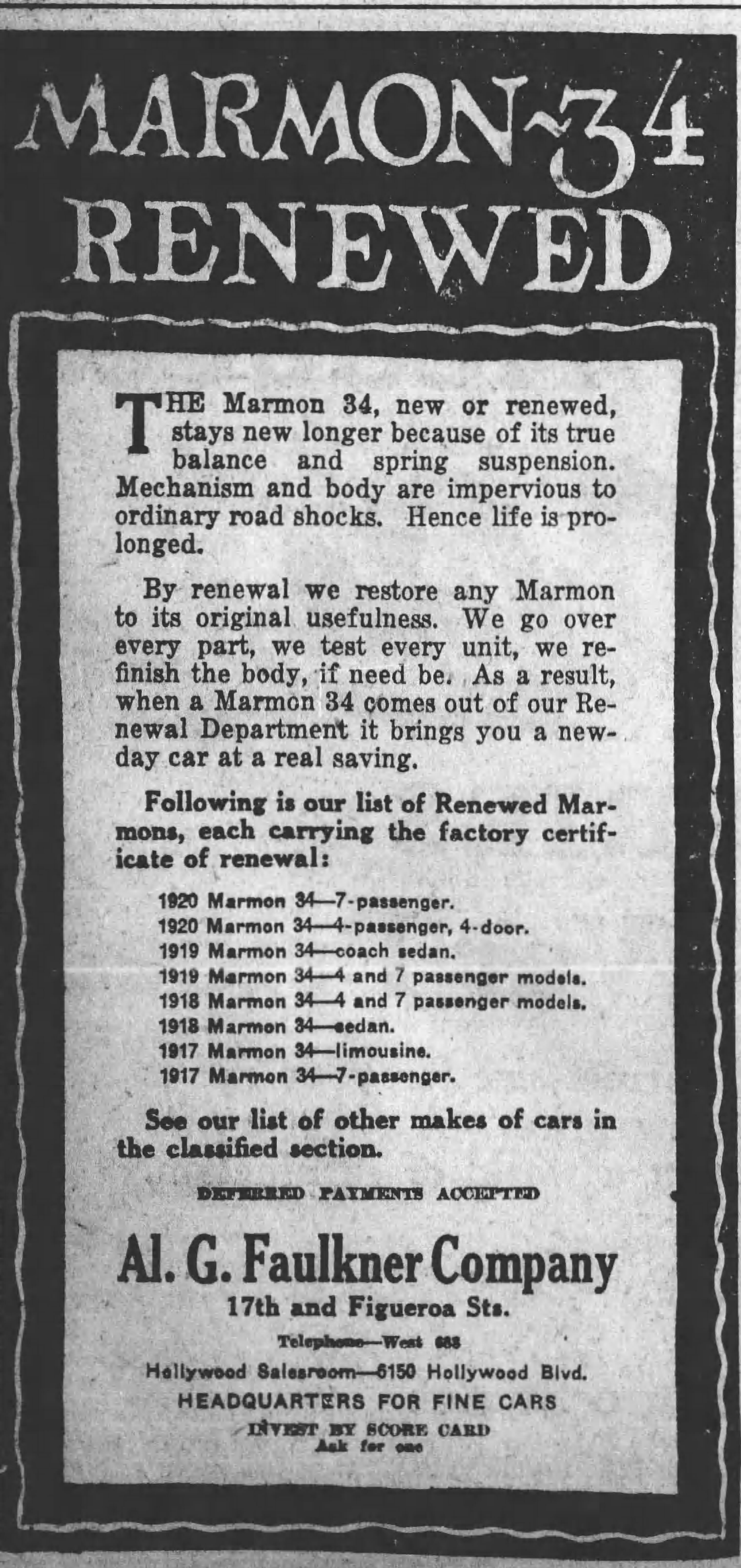
LA Evening Express 1/1/1921.
In April 1921, 6150 Hollywood Boulevard became the Paige-Hollywood Motor Company, dealers for the Paige-Detroit Motor Car Company.
Founded by Frederick O. Paige, the company began making luxury automobiles in 1908.
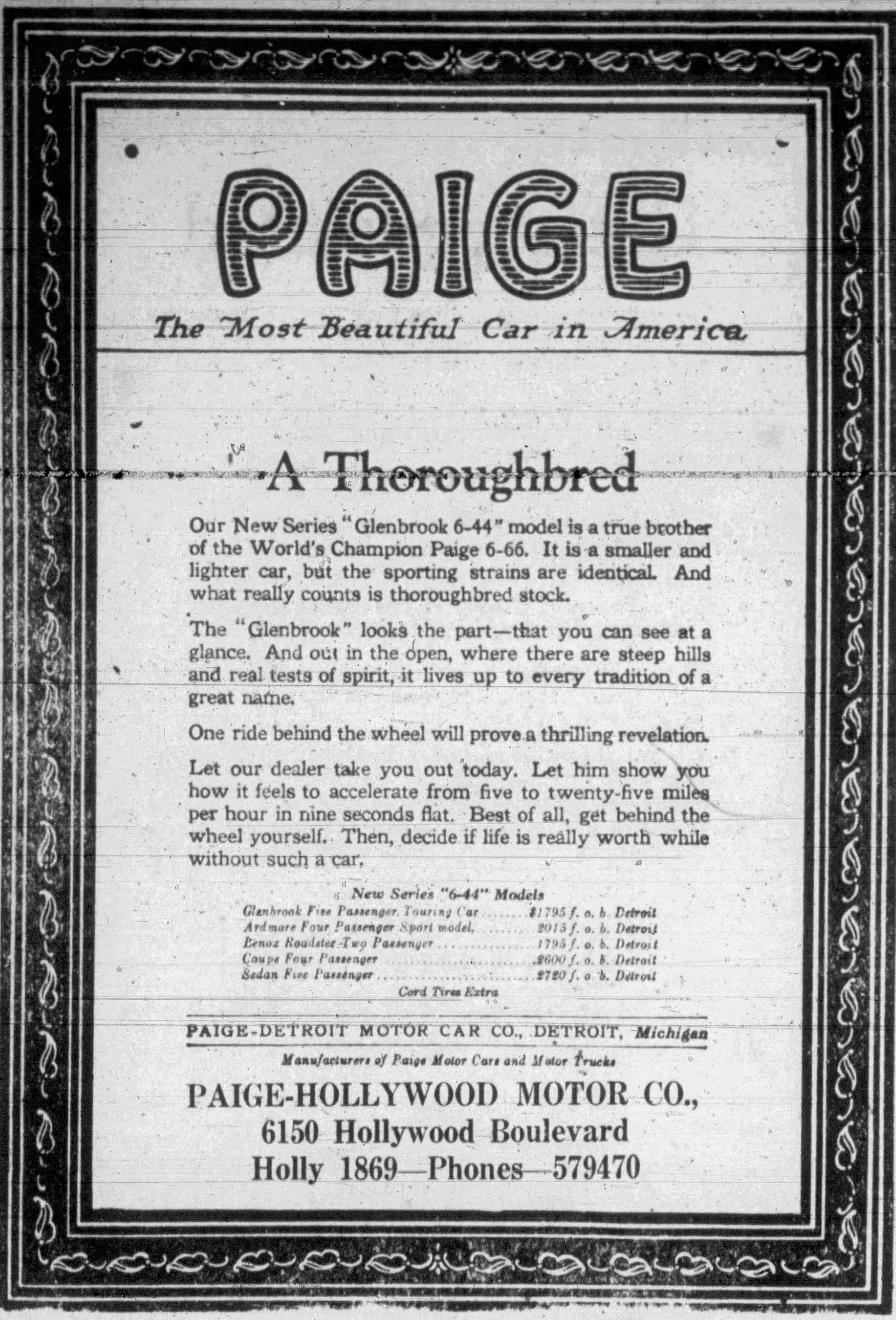
Hollywood Citizen 4/15/1921.
In September, the Paige-Hollywood Motor Company began handling the Dort motor car in addition to Paige.
The Dort Motor Car Company was based in Flint, Michigan. Founder Josiah Dallas Dort had been a carriage maker with partner William Durant; Dort began making autos in 1915. Paige-Hollywood Co.’s manager, L.n. McDowell had sold the first Dort in Hollywood back in 1916.
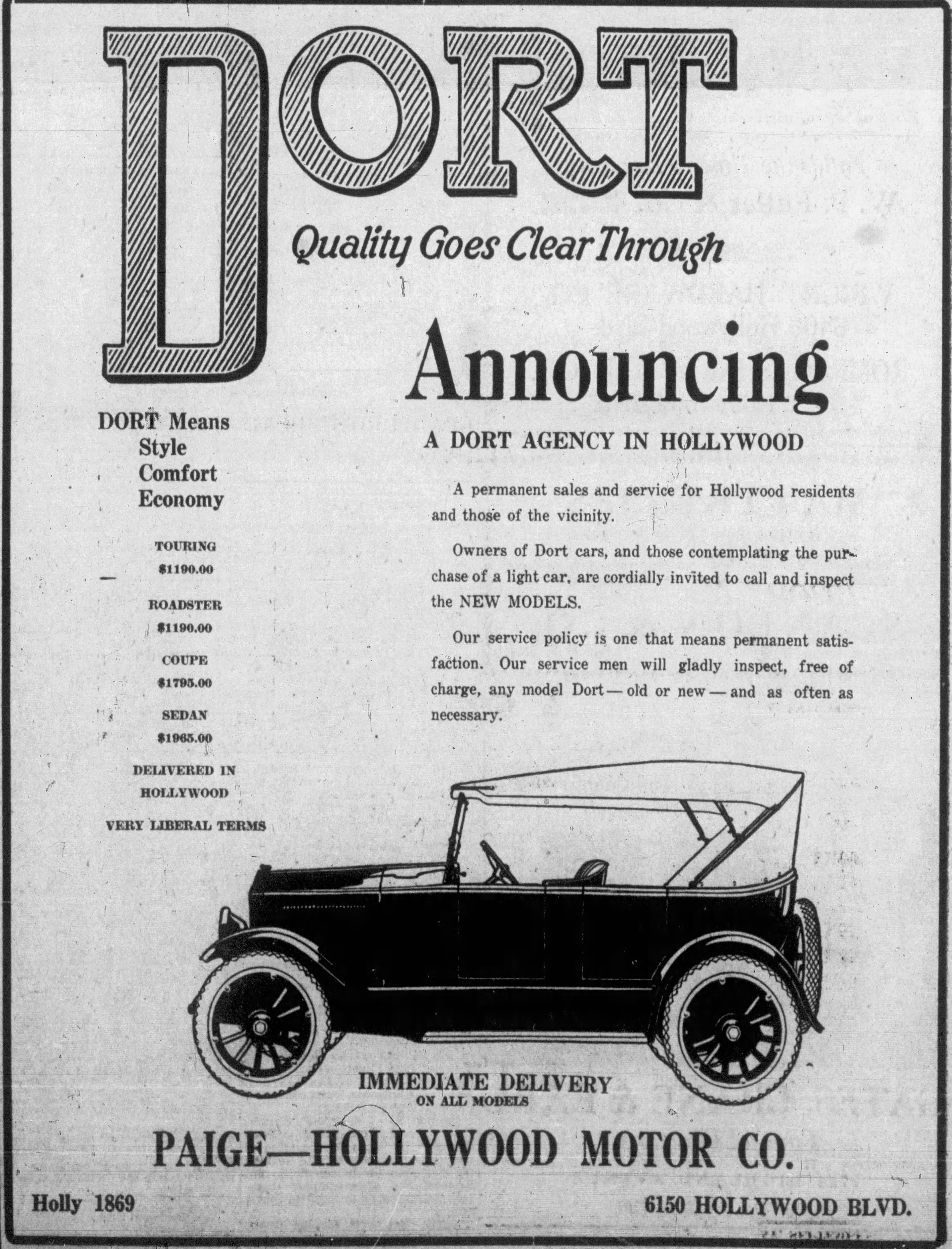
Hollywood Citizen 9/23/1921.
In January 1922, the Hollywood-Paige Motor Co. announced that it was changing its name to the Sunset Motor Company (no relation to another dealership company called Sunset Motors).

Hollywood Daily Citizen 1/14/1922.
In June 1922, Sunset Motor Co. added the Jewett to its lineup, a lower-priced offering from Paige. Made from March 1922 through 1926, it was named for company president Harry M. Jewett.

Hollywood Daily Citizen 6/30/1922.
On January 2, 1923, 6150 became H. W. Swanson’s new Hupmobile showroom.
The Hupp Motor Car Company was founded in Detroit in 1909 by Bobby Hupp and investor Charles Hastings.
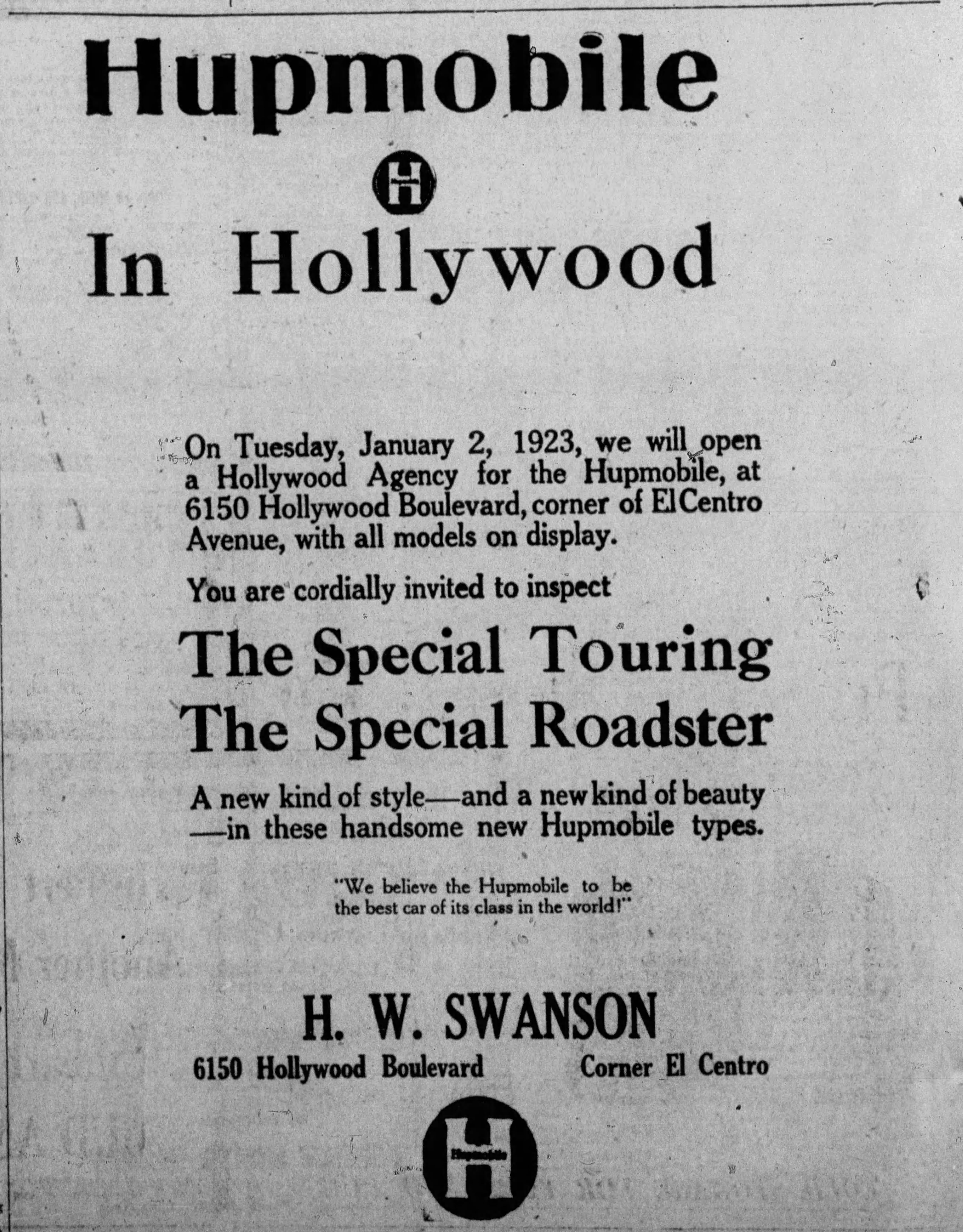
Hollywood Daily Citizen 12/26/1922.
Later in January 1923, Walter M. Brown Motors, Inc. announced that 6150 was to become the new home of the Star Car as of May 1. Hupmobile actually remained here through June 1923; the Star Car moved in in July from its temporary home at 5916 Hollywood Boulevard.
The Star, aka “the Star Car” was a passenger vehicle assembled by the Durant Motors Company, from parts manufactured by others. Durant Motors was the Baby Vamp of Auto Row, founded in 1921 by William (“Billy”) Durant. Son R. C. (“Cliff”) Durant was in charge of the company’s interests on the West Coast.
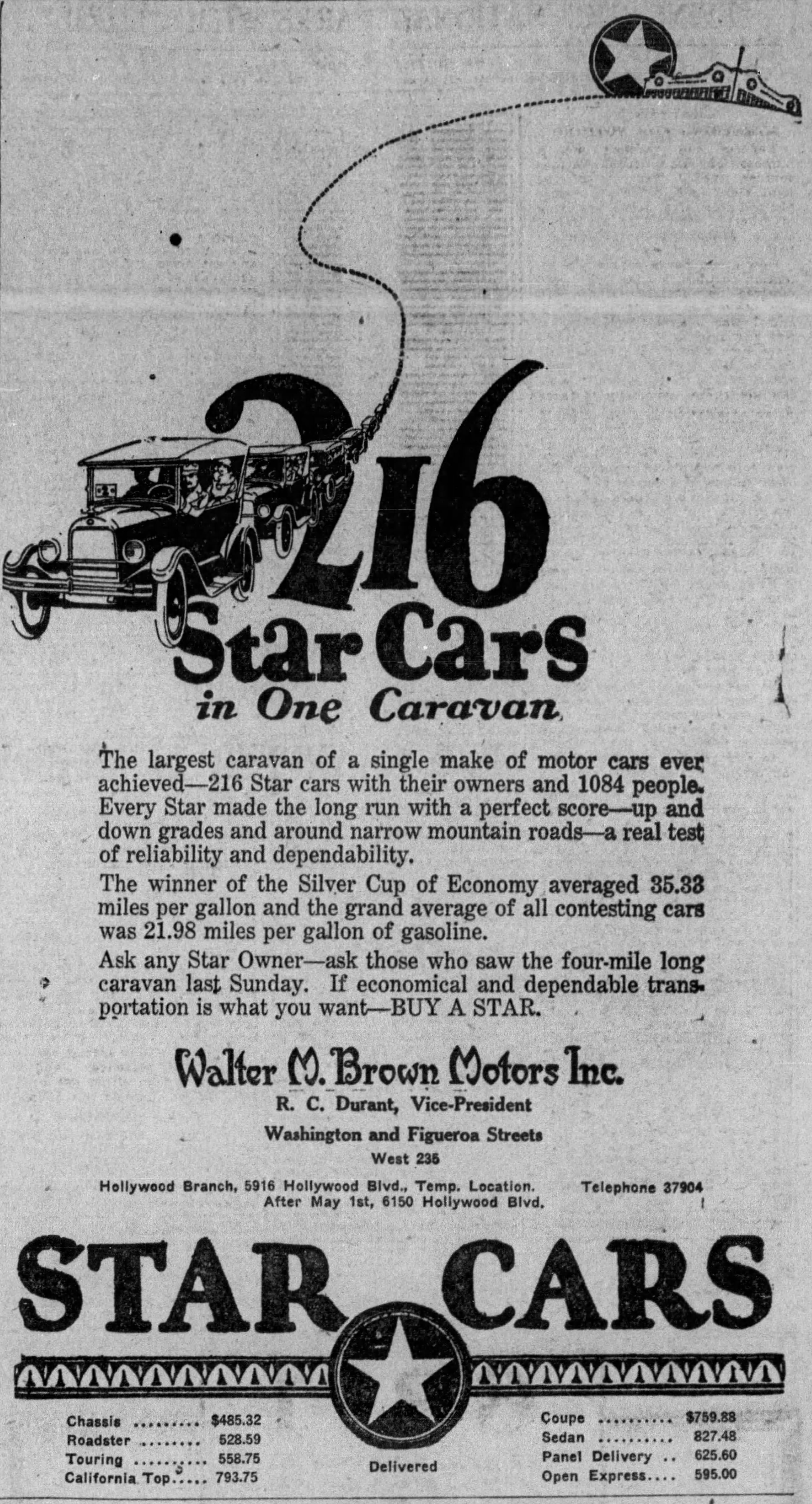
LA Times 1/28/1923.

Hollywood Daily Citizen 7/11/1923.
In November 1925, the Star Car (and its roof sign) moved to its own custom-built quarters at 5610 Hollywood Boulevard.

A glimpse of 6150 c. 1925 when its occupant was the Star. Note signage advertising their upcoming move to 5610 Hollywood Blvd. This photo is from the Homestead Museum collection.
In early December, 1925, the vacated 6150 became home of Sherman P. Bakewell’s Bakewell Motors, dealers of the Jordan.
The Jordan Motor Car Inc., was founded in Cleveland in 1916 by Edward S. (“Ned”) Jordan as the Jordan Motor Car Company. Like the Star Car, the Jordan was at this time an assembled car, built with parts made by others. Bakewell soon took on a partner, George B. Eshleman and became Bakewell and Eshleman.

Hollywood Daily Citizen 12/16/1925.
In February 1927, the building again became a Paige showroom, operated by Paige distributor Harry H. Anderson.

Hollywood Daily Citizen 3/2/1927.
In May 1927, the Marmon also returned to 6150 when Anderson became the area’s exclusive Marmon dealer. The Marmon was made until 1933 but they were not sold at 6150 for long.
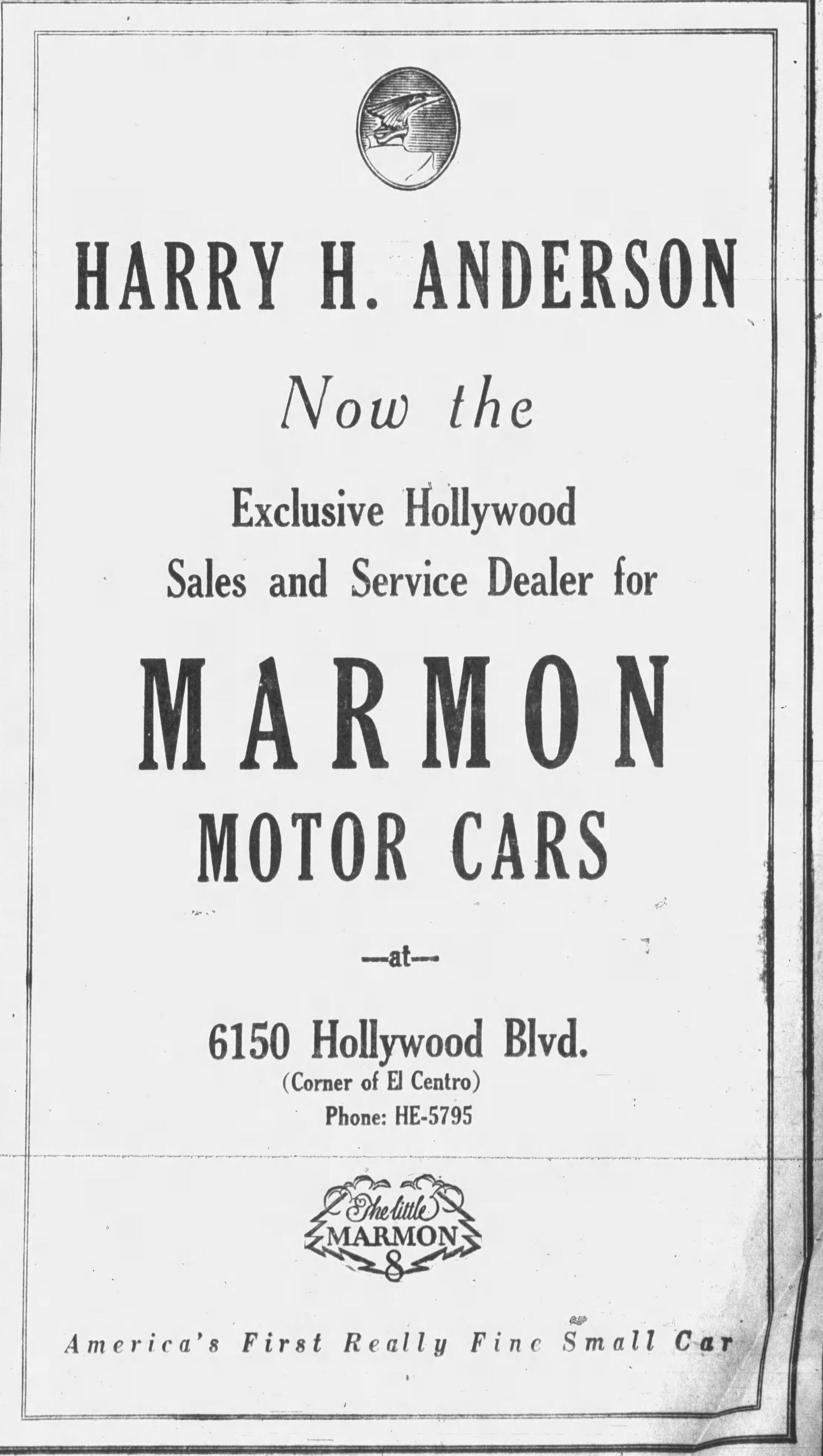
Hollywood Daily Citizen 5/11/1927.
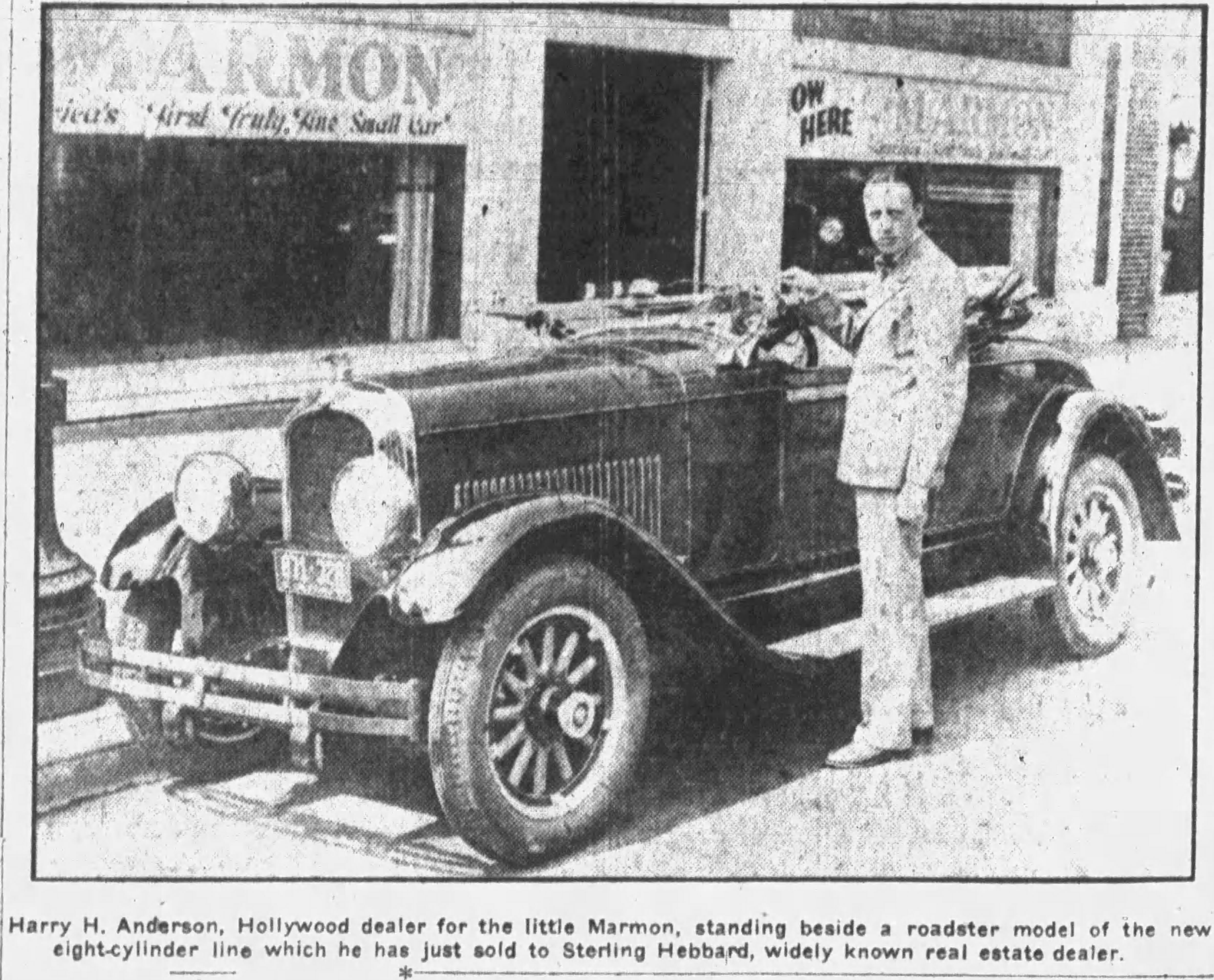
Harry H. Anderson in front of 6150 when it was a Marmon showroom. Hollywood Daily Citizen 6/15/1927.
In May 1928, the building became an outlet of the Hollywood Cadillac Agency, used car specialists. The agency was later taken over by Hollywood’s Caddy and La Salle dealer, Hillcrest Motor Co. and moved out of 6150 at the end of 1929.
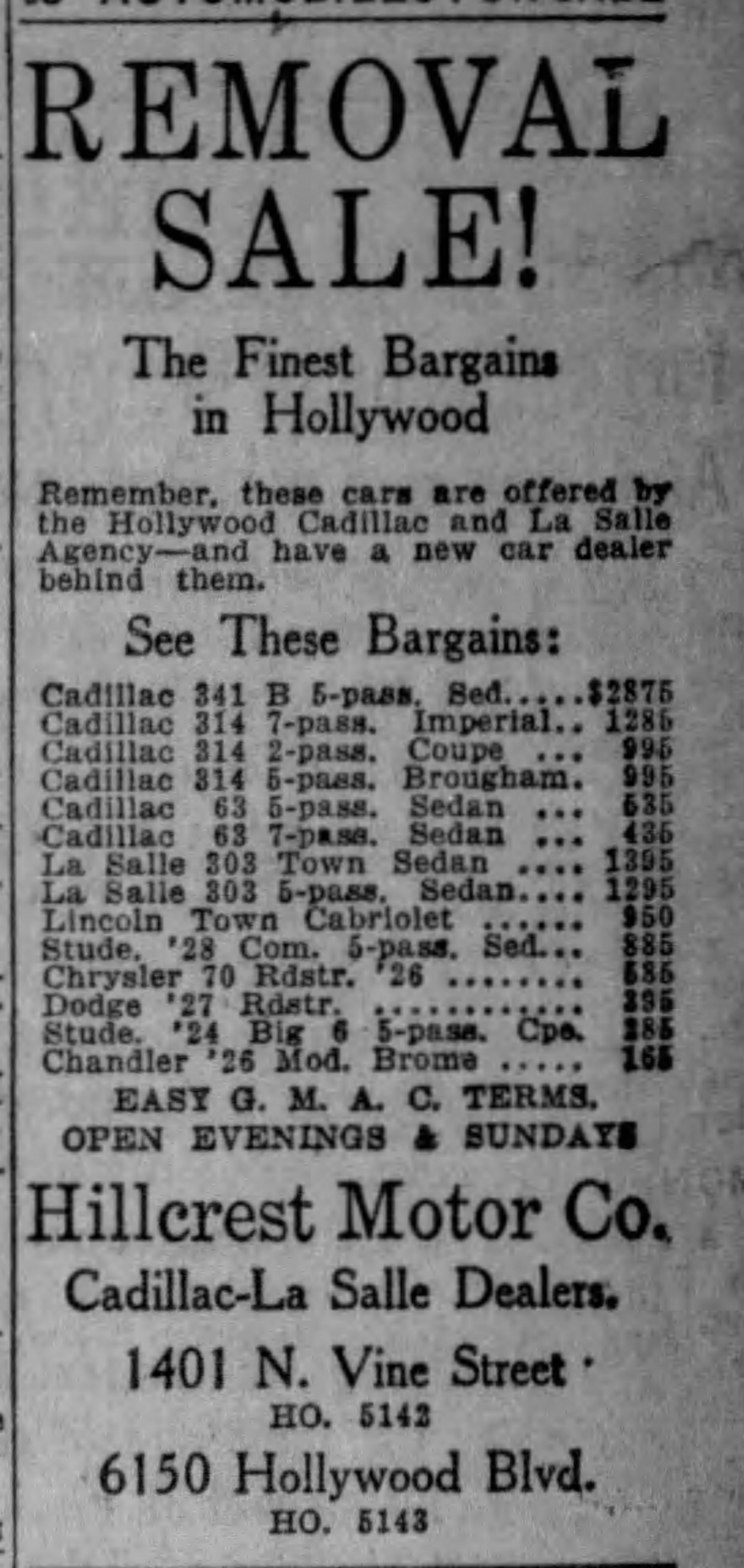
LA Evening Express 11/23/1929.
In January 1930 6150 became a second Hollywood home of the H. F. Haldeman Willys dealership.
Willys was a product of Willys Overland Motor, founded by John North Willys. Willys began bought Overland Automotive in 1912 and renamed his automobile company accordingly.

Hollywood Daily Citizen 1/8/1930.
6150 existed as a used car outlet for most of 1930 through 1931 and the first half of 1932.
In late June it became the new home of Homer Thompson’s “Nash in Hollywood” dealership. Thompson and Al Stuebing (later of Ford) as the Thompson Stuebing Co. were the Nash distributors for So Cal.
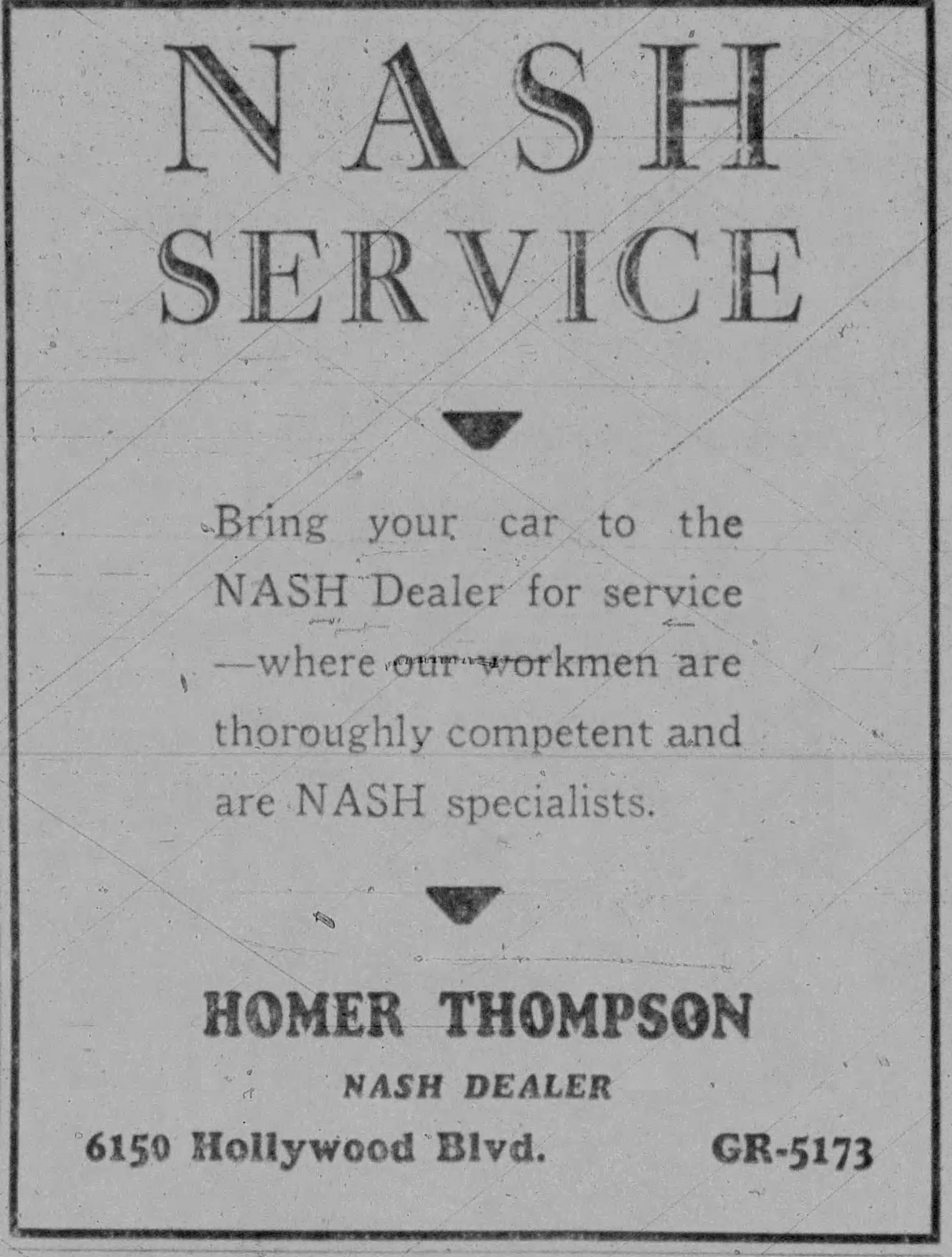
Hollywood Citizen News 7/6/1932.
In May 1934, Frank C. Bestor took over as Hollywood’s exclusive Nash dealer, renamed Nash Bestor Company. Bestor also offered the LaFayette. Nash had purchased the LaFayette in 1924 and in 1934 introduced the Nash-built Lafayette, a lower-priced model. Thompson resumed operation of the Nash dealership here for 1935- early 1936.

Nash Bestor also had a used car lot at 6170 Hollywood Boulevard. Hollywood Citizen News 5/2/1934.
Starting in May 1936, H. F. Haldeman returned to 6150, now as a De Soto and Plymouth dealer. Both cars were made by the Chrysler Corporation.
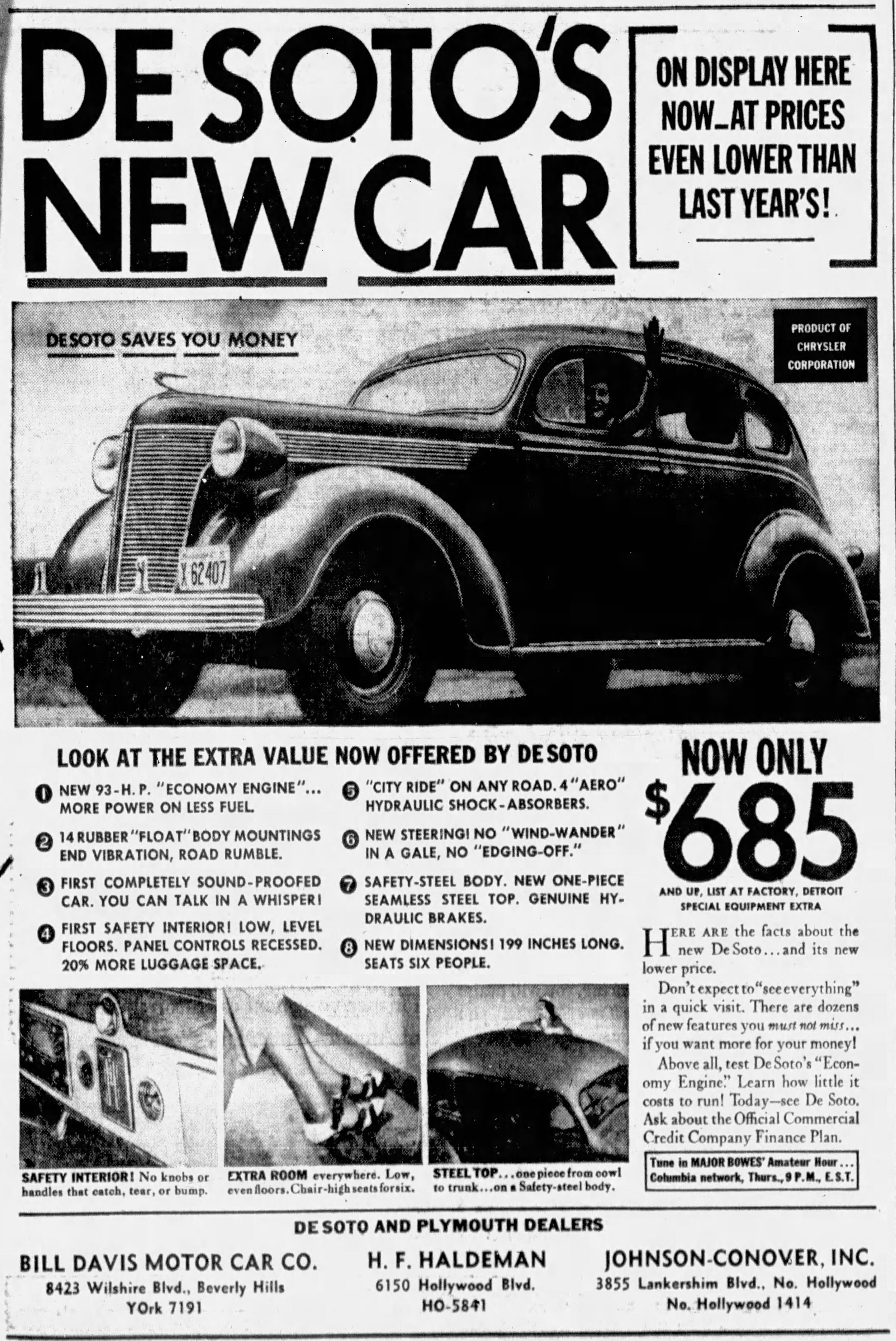
Hollywood Citizen News 11/23/1936.
Ferd H. Cate, Haldeman’s longtime manager, took over the De Soto Plymouth dealership in August 1938.

Hollywood Citizen News 8/3/1938.

Hollywood Citizen News 11/20/1940.
With domestic auto production halted in February 1942, the government had also put a freeze on new 1942 cars that had already rolled off the line and were sitting on dealers’ lots. Most of them went to military use. Others could be sold, under limited circumstances. For the duration, dealers like Ferd Cate would focus on used car sales and their service departments.

Hollywood Citizen News 5/20/1942.
Ferd Cate would not see the end of WWII or the postwar era of car sales. He died in July 1945, age 51.
Cate’s longtime manager Clem F. Atwater, partnered with Vance Fish, took over the Hollywood De Soto Plymouth dealership here, expanding and remodeling the building in January 1946 in anticipation of new cars arriving for the first time since 1942. Their appointment as official De Soto Plymouth dealers was announced in March 1946.
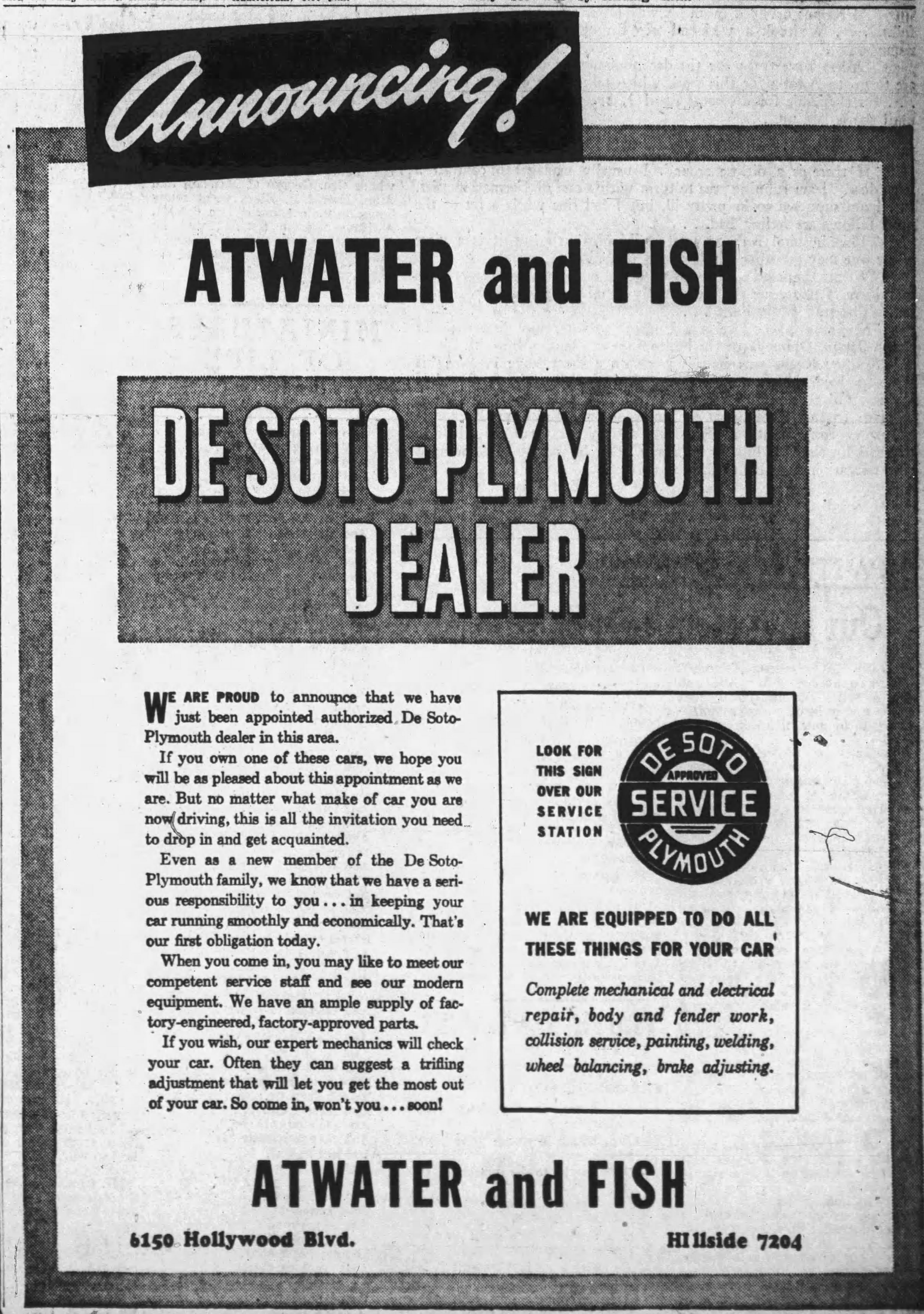
Hollywood Citizen News 3/2/1946.

One of the first 1958 Plymouth Fury cars in Hollywood at Atwater and Fish. 11/20/1957.
Although the firm still sold De Sotos, by June 1959, Atwater and Fish were known as Hollywood Plymouth Center.

The 1960 Valiant at Atwater and Fish Plymouth Center. Mel Alsbury was the Chrysler dealer, located across the street at 6119. Hollywood Citizen News 12/29/1959.
Atwater and Fish remained here into June 1961, the building’s longest occupants by far. It’s days as an automobile concern were over.
In September 1961, 6150 became a Blue Chip Stamp Redemption Center. Founded in California, the Blue Chip Stamp Company was a loyalty program, similar to S&H Green Stamps, where customers of certain stores were issued stamps that could be redeemed for crappy merchandise. They were introduced in So Cal in January 1960. 6150 remained one of many LA area redemption centers, through May 1963.

LA Times 5/12/1963.
In November 1963, 6150 became an outlet of the Chicken Delight fast food chain, which oddly specialized in a fish pizza.
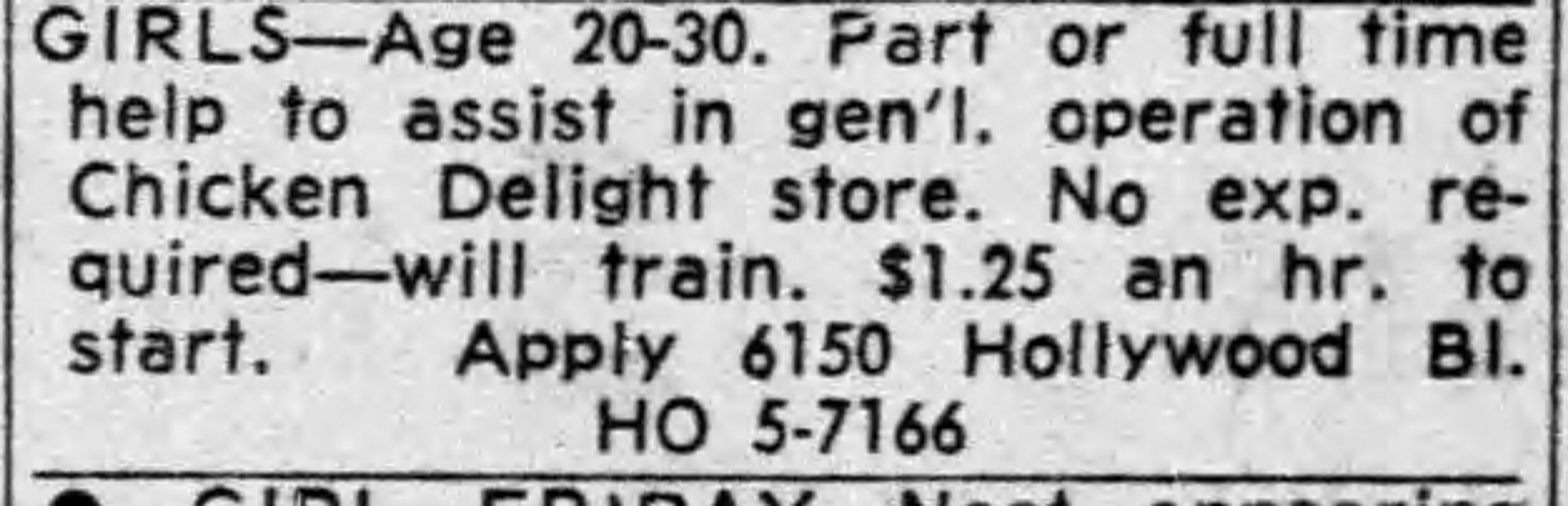
12/11/1963.

6/17/1970.
The building was demolished in 1994 for Metro’s Red Line subway project.
Notes
W. E. Graham died in 1924. Mamie K. Graham continued to own the building. She died in 1969.







 J. H. Graham