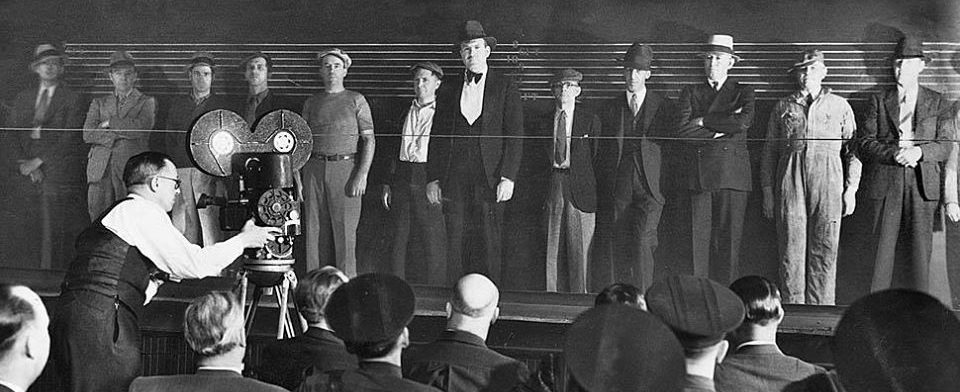
Farmer Page

El Rancho Vegas
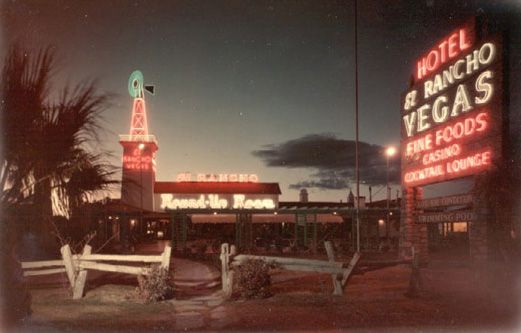
The Hotel El Rancho Vegas opened on April 3, 1941. It was the first resort casino-hotel on the strip.

How the Housing Crisis Brought Down the Gambling Ships
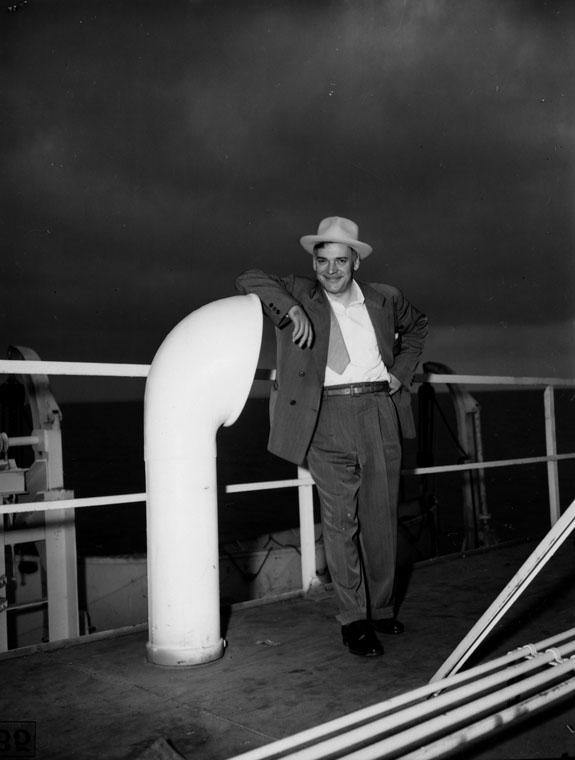
Gambling ships began operating off the Southern California coast regularly in the late 1920s. Local, county, state, and federal authorities tried various means to get them shut down, even dredging up 18th century piracy laws, without any real lasting effect. Earl Warren, as California A.G., successfully raided and closed the last four ships in 1939 and World War II put a damper on any new such ventures starting up. But there was still no state or federal statute outlawing them. Everyone may have thought the era of gambling ships had passed. Everyone except Tony Cornero.
Continue reading
Venice Pier and the Ship Café
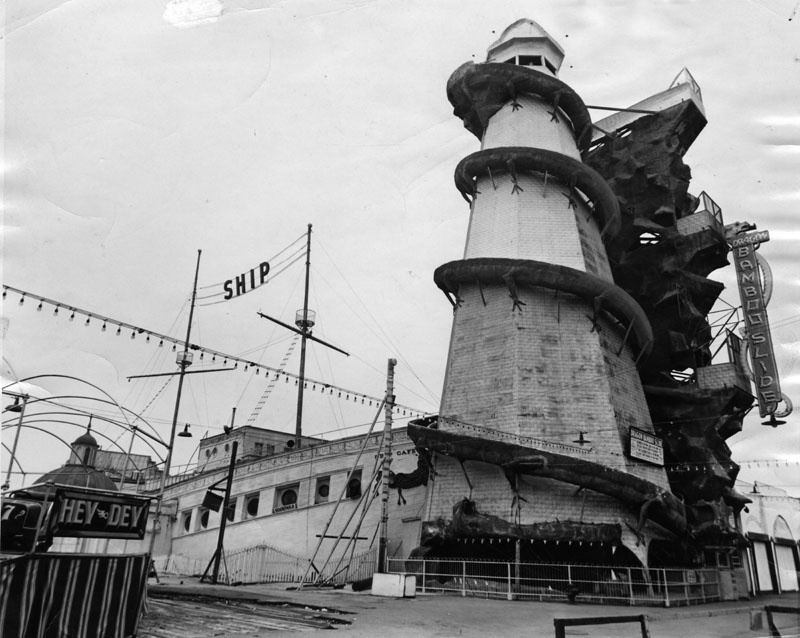
“As old as Venice itself.” Abbott Kinney developed the Venice amusement pier part of his Venice development The Ship Cafe was one of its original attractions. Both closed in 1946.
Les Bruneman
In its survey of Gangland Killings 1900-1951, the LAPD lists Les Bruneman as the unlucky first victim of the post-bootleg era.
Charles H. Crawford

Much of what is written about Charles Crawford and his Los Angeles crime syndicate today comes from a series of articles written in 1939 for Liberty magazine’s, based on information from cafeteria owner Clifford Clinton’s citizen-led vice investigations. Clinton’s work was sincere, but by that time Crawford was long dead and he was relying on secondary sources for information about him. The following is based on my original research.
Clinton’s efforts led to the voters of Los Angeles ousting Mayor Frank Shaw in 1938, often cited as the first mayor of a major U.S. city to be recalled. However, Seattle’s Mayor Hiram C. Gill beat him to it. Gill was booted out in 1911 after less than a year in office, when the public learned that he and his Chief of Police Charles “Wappy” Wapperstein were collecting a large percentage of the receipts from the Northern Club, a saloon-gambling hall-brothel run by a syndicate that included Charles Crawford.
August Palumbo
The LAPD’s survey, Gangland Killings 1900-1951, list just three gang-related murders for 1928, although newspapers at the time of August Palumbo’s shooting death of July 18 refer to him as the seventh such victim in a “bootlegger’s war” that had been going on for six weeks prior. The 1951 survey also notes that there was “no prosecution to date” in the Palumbo case. In fact, there were plenty of prosecutions, just no convictions. Continue reading
The Jacobson Case

It wasn’t the first time a public figure who opposed Los Angeles’ underworld suddenly found himself involved in a compromising position, intended to either discredit or bring them to heel. But the plot to silence vice-crusading city councilman Carl I. Jacobson didn’t run quite to plan.
Tony Cornero: The Bootleg Years

It was a woman scorned who first called Tony Cornero the King of the Bootleggers. The press ran with it. His rum-running operation was remarkably successful, if marred at times by drama, bootlegger wars and run-ins with police. Continue reading
 J. H. Graham