Many hotel projects proposed for Hollywood Boulevard in the 1920s were much hyped but never built- for example the Brokaw property, the Bartlett property, and the Shippee property. The Regent Hotel, on the south side of Hollywood Boulevard in the midst of Auto Row between El Centro and Argyle, did get built. It came along without fanfare, announced in the LA Times in September 1924.
Designed by architects Meyer and Holler, the 85-room, 4-story plus penthouse structure was built for the Christie brothers, who had a realty business as well as a film studio. the hotel rose on the site of a former orange orchard where the Nestor Film Company– with Al Christie, manager, had made some of the earliest motion pictures in Hollywood.
The Regent had its gala grand opening on April 29, 1925. A notable feature was that each room had a radio; connected to a central operating system at the room clerk’s desk, they could pick up local programs.
Hollywood Daily Citizen 4/29/1925.
Hollywood Daily Citizen 4/29/1925.
Photograph of Hollywood Boulevard featuring the Hotel Regent c.1932. LAPL photo.
Hollywood Daily Citizen 6/25/1925.
With its proximity to the early Hollywood movie studios, the Regent Hotel became popular with theatrical folk- as local papers would later put it- either on their way up or on their way down. It had become rather shabby by November 1949, when it was purchased by Ethel McCord Nelson and her son John McCord. McCord remodeled the hotel and renamed it the Hotel Gentry.
Ethel McCord owned the Hastings Hotel in Minneapolis at this time. As she was taking on the former Hotel Regent in Hollywood, Ethel also faced federal tax evasion charges back in Minnesota for the years 1940-1945. She was convicted in 1950 and was to have done a prison term but in December 1950, the sentence was changed to a fine and 5 years probation. She married Paul A. Nelson in Minneapolis in June 1950.
While cleaning, Ethel found an Oscar in a closet; the statuette had no identifying information on it, nor could McCord trace the owner through the hotel records, as she could not later recall which room she had found it in.
Hollywood Citizen News 2/25/1950.
The hotel remained the Hotel Gentry into September 1954. In October 1954, it was taken over by Irene Vermillion Dart and her husband Kermit Dart and renamed the Hotel Vermillion.
Hollywood Citizen News 10/5/1954.
Hollywood Citizen News 9/26/1958.
The Darts were something of a real life Fred and Ethel Mertz, retired Vaudevillians managing an apartment house. Irene, as Irene Vermillion, was a stage dancer; Kermit was a musician. The two continued to perform occasionally even after becoming landlords.
Irene Vermillion (center). The LA Record 2/28/1932.
Irene Vermillion and Kermit Dart appearing in a nightclub act. San Pedro News Pilot 11/11/1949.
The hotel remained the Hotel Vermillion until August 1959, when Ethel McCord Nelson took it over again, renaming it the Hotel Hastings.
Now offering TV and radio. Hollywood Citizen News 8/12/1959.
The Hotel Hastings was the name of the hotel in Minneapolis that Ethel had managed from 1936 to 1943, when she purchased it from the Arthur Roberts Hotel Company. She sold the Minneapolis Hastings in late May-early June 1959.
Postcard view of the Hotel Hastings in Minneapolis.
Ethel McCord managed the Hotel Hastings and The Parkway in Minneapolis. She married Edward R. Johnson in 1937; they divorced in May 1940. Minneapolis Star Journal 6/23/1940.
Eating and Drinking here
The hotel’s first restaurant opened shortly after the hotel itself, in June 1925 as the Hotel Regent Restaurant.
Hollywood Daily Citizen 6/19/1925.
On March 24, 1927, ex-boxer / dentist Leach Cross opened a namesake cafe, the “Leach Cross Cafe” in the hotel’s ground floor retain space, addressed as 6160 Hollywood Boulevard.
Hollywood Daily Citizens 3/24/1927.
Like most such Leach Cross ventures, the cafe was short lived.
On March 9, 1928, 616o Hollywood Boulevard opened as McHuron’s Grill with almost as much fanfare as the opening of the hotel itself.
Hollywood Citizen News 3/8/1929.
Hollywood Daily Citizen 3/8/1928.
Hollywood Daily Citizen 3/8/1928.
Hollywood Daily Citizen 3/8/1928.
McHuron’s Grill was founded by Loren A. McHuron and Charles Eaton. Both had been previously affiliated with the Paulais Cafe at Hollywood Boulevard and Las Palmas. The grill featured a German chef. The specialty of the house became a dish called “Toad in the Hole,” which McHuron’s claimed had originated there, and that it had a copyright. It was an old English specialty, so this is questionable. There are many varied recipes for Toad in the Hole- typically it involves a clump of sausages grilled with an egg in the center. So famed was the cafe for this dish that by the early 1930s, “Toad in the Hole” featured prominently in the grill’s print advertising as well as a neon vertical sign on the outside of the building.
Hollywood Daily Citizen 6/30/1928.
Hollywood Citizen News 4/21/1932.
Hollywood Citizen News 8/3/1932.
Hollywood Citizen News 2/11/1933.
Hollywood Citizen News 10/27/1934.
Charles Eaton left the partnership in 1935 to found his own namesake Easton’s chain of restaurants. L. A. McHuron carried on with the grill until 1940. The equipment and fixtures were sold at auction in July 1940. McHuron died in 1941.
LA Times 6/30/1940.
In 1952, Joe’s Cuba Club operated in the former grill space, serving Italian dinners in addition to American fare.
Hollywood Citizen News 4/24/1952.
The Hotel Gentry also still had a hotel dining room.
Hollywood Citizen News 8/17/1954.
During its time as the Hotel Vermillion, the hotel dining room became the Dart-Inn Room, with a twin organ bar. Kermit Dart was a talented organist.
Hollywood Citizen News 12/4/1954.
In 1959, the grill space became the Cart Inn, offering German, Irish and Italian fare. The chef had been there during McHuron’s time, so likely Toad in the Hole could be ordered off-menu.
Hollywood Citizen News 11/7/1959.
In 1962, it was a wine bar called The Tender Grape.
Hollywood Citizen News 6/12/1962.
In 1964, the Hollywood USO moved into 6160 fro mthe Pantages Theater building, on what was supposed to be a “temporary” basis that lasted into the 1970s.
The hotel remained the Hotel Hastings into 1993. The building was demolished in 1994.
Located on the southwest corner of Hollywood Boulevard and Gower, the Hollywood Christian Church dedicated its new home here on May 21, 1910. The building was a former residential home, a vine-covered bungalow set amid sloping lawns, pepper trees and palms, and the church was fondly known as the “bungalow church.”
Los Angeles would have other bungalow churches. The trend was considered a particularly Southern California phenomenon, like open-air grocery markets.
LA Times 1/1/1914.
Detail of a 1913 Sanborn Fire Insurance Company map for Hollywood. Library of Congress.
The Hollywood Christian Church was founded in 1888 by merchant B. F. Coulter of the department store and the Rev .M. L. Yager who organized the Disciples of Christ Church. It originally met at a school in Coldwater Canyon, later site of the Beverly Hills Hotel, sharing the space on alternating Sundays with the Southern Methodists. In 1890, the church built a small building in Cahuenga near Sunset on land donated by Helen M. Judson Beveridge, wife of the ex-Illinois governor John Lourie Beveridge.
Having outgrown that space, in 1910 they began looking for a new home and found it in a literal home at what was then Prospect Avenue and Gower.
1908 classified ad for the residence at 6100 Hollywood Boulevard that became the Hollywood Christian Church, LA Times 8/4/1908.
LA Times 5/21/1910.
The area was still largely rural and there were several other churches along the Boulevard. The church removed some walls to make room for the congregation but left the fireplace and window seats to create a home-like atmosphere. A deep side porch was enclosed with glass for the Sunday school room.
In 1920 the church acquired land at 1717 Morgan Place (later renamed Gramercy Place) just north of the Boulevard and in December 1921 revealed plans for a large new church to be built on it, designed by Robert H. Orr. Greek Revival in style, the new building would be quite different from the humble bungalow church.
LA Times 1/1/1922.
Hollywood Christian Church at what was now 1717 Gramercy Place c. 1937. Herman J. Schultheis photo, LAPL.
The church sold its bungalow home in December 1921 but continued to occupy it as a tenant, renting from the new owner while the new building was under construction. On April 5, 1923, the congregation moved out of the bungalow and began holding services in the Sunday school building of the Morgan Place property.
In May 1923, the former “bungalow church” building opened as a cafe with music and dancing called “Gypsyland.”
Gypsyland, Hollywood night”Where Joy Reigns Supreme.” Killjoys soon put an end to it. Hollywood Daily Citizen 5/30/1923.
Boulevard Karens went ballistic, aiming their criticism at the church for having allowed a rowdy cabaret to move into its former space. Pastor W.F. Richardson had to explain that they were no longer the owners and had no say over what the new owner (Christie Realty Co.) did with the property. Gypsyland was gone in a blink, anyway.
Hollywood Daily Citizen 7/26/1924.
The bungalow was next occupied by the Paul Gerson dramatics school. Born in England in 1871, Paul Gerson was a stage actor who founded an acting school in San Francisco about 1904. His Hollywood branch opened at 6100 on August 25, 1924. It remained through January 1929.
LA Times 1/27/1929.
As of March 1930, the property resumed a religious use as the home of the Spiritualist Science Church of Hollywood run by Dr. Mae M. Taylor.
Hollywood Daily Citizen 3/7/1930.
In February 1934 Packard dealer W. H. Collins leased the property’s Hollywood Boulevard frontage for one of his used car lots, while the Spiritualist Church continued to occupy the building itself.
LA Times 2/10/1934.
In November 1935, a permit was obtained to construct a Standard Oil service station and W. H. Collins began to clear his lot. The Spiritualist Church stayed until the end as well but in December 1935, the bungalow was demolished.
LA Times 11/17/1935.
The corner was a gas station for decades. Today it is a parking lot.
Notes:
In October 1934, the Hollywood Christian Church merged with the Beverly Christian Church to become the Hollywood-Beverly Christian Church. The building on Gramercy Place, having suffered earthquake damage, was demolished in 1988.
The Spiritualist Science Church moved to the Castle Center at Franklin and Argyle in December 1935.
The Marcal Theater (also written as Mar-Cal), on the north side of Hollywood Boulevard at 6025 just West of the Brokaw property, opened on May 15, 1926. The name was a combination of two of its owners’ names: Screen actress Alice Calhoun and theater operator Mark M. Hansen.
Marinus Mark Hansen was born in Aalborg, Denmark in 1892. He came to the USA by way of Liverpool in March 1910 aboard the doomed ocean liner Lusitania, and settled briefly in Lostwood, North Dakota where he had an older brother, Carl, who had immigrated a few years earlier, and worked as a laborer taking odd jobs.
As of 1914 he was working as a saloon keeper in Madoc, Montana. By 1915 he also had a half-interest in the Lyceum Theatre in Scobey, Montana with partner Charles Peterson; Hansen sold his half-interest in November 1915.
Scobey Montana in 1917.
He married Ida R. Nelson in Plentywood, Montana on September 9, 1915. The couple’s first daughter was born at Madoc in 1916.
In May 1919 Hansen bought a former saloon in Scobey, which he converted into a bowling alley and cigar store.
The Scobey Citizen 12/25/1919
In August 1919, Hansen bought the Lyric Theater in Williston, North Dakota. He soon joined with local businessmen to build a second theater there, the Orpheum.
Williston, ND as it looked in Hansen’s time.
Within two years, the couple had moved to Minnesota, where Mark also had theater interests, and their second daughter was born in August 1921. Hansen sold his theaters in Blue Earth, Minnesota in September 1921.
Blue Earth, Minnesota in 1920.
In June 1922, the Hansens relocated to the Coast when Mark bought 3 theaters in Oxnard, California.
Oxnard in the 1920s.
Oxnard Press Courier 6/2/1922
A year and a half later, on March 19, 1924 it was announced that Hansen was moving to Los Angeles. It was here that he would finally settle permanently.
Hansen already owned three theaters in Los Angeles, including the Larchmont. At 149 N. Larchmont, it had opened in 1922 and was operated by Alice Calhoun. Hansen had become an owner by January 1924.
On July 10, 1925, the Hollywood Daily Citizen reported that Hansen and Calhoun had taken a 99 year lease on the Jewett property at 6025 Hollywood Boulevard where they would build an as-yet unnamed theater, to be designed by architect William Allen.
Hollywood Daily Citizen 7/10/1925
J.C. and Margaret O. Jewett had been living at this address, originally 541 Prospect Avenue, since circa 1906. Margaret Jewett was still living here through 1924 before relocating.
Detail of a 1913 Sanborn Fire Insurance map showing the Jewett property at 6025 Hollywood Boulevard. Library of Congress.
In August 1925, the Jewett ranch house and garage were moved from 6025 Hollywood Boulevard to 3090 St. George Street in the Los Feliz neighborhood. It appears to have survived at this location.
The former 6025 Hollywood Boulevard today. Google map image.
Although the July 10 report had stated construction was to begin within 60 days, ground breaking for the new theater did not happen until December 1, 1925- with Alice Calhoun operating the steam shovel herself.
Alice Calhoun (center) and Mark Hansen (lower right) around the time the Marcal Theater was proposed. Hollywood Daily Citizen 2/25/1926
Earlier reports stated that it was a 99-year lease. LA Times 12/2/1925
Sketch of the Marcal. William Allen was architect. LA Times 1/24/1926.
The completed theater had a gala grand opening on May 14, 1926 with a showing of “Skinner’s Dress Suit.” The stars of the picture, Laura La Plante and Reginald Denny (who would later be on the Boulevard with his hobby shop) made a personal appearance.
Hollywood Daily Citizen 5/15/1926
Hollywood Daily Citizen 5/14/1926
Looking east on Hollywood Boulevard from Gower when the Marcal was new. The theater can be seen near the large trees. LAPL photo.
The new theater was an independent theater, unaffiliated with any movie studio. Independents typically didn’t get to show first-run films made by the major studios until after they had finished their initial run at a studio-owned or affiliated theater.
The exterior lobby and ticket booth of Marcal Theater. USC photo.
The Marcal had barely been open six months when it closed for renovations. On January 1927, Hansen announced that effective January 27, 1927, it would change programs weekly and present only first-run films. It held another gala grand opening on that date to celebrate the post-renovation reopening with a premiere of “Remember” and the Lindsay Simons jazz orchestra
Hollywood Daily Citizen 1/26/1927
Hollywood Daily Citizen 1/26/1927
On September 30, 1927, Mark Hansen and employees of the Marcal were called to testify before the federal grand jury in its investigation of booking agent T.R. Gardner, who was indicted on suspicion of having brought the Jack Dempsey/Gene Tunney fight film to Los Angeles from Chicago. The film had been showing at the Marcal.
It was illegal at the time to transport fight films across state lines. But everyone wanted to see the film of this fight- especially the 7th round and the infamous “long count.” The fight had taken place at Chicago’s Soldier Field on September 22, 1927, a rematch between the two fighters; Tunney had taken the heavyweight title away from Dempsey the year before (my post on that is here). Dempsey knocked Tunney down in the 7th round. It was a new rule that a fighter had until the count of 10 to get up after being knocked down and that the opponent was to retreat to a neutral corner. Dempsey stood over Tunney for several seconds; the referee did not begin the 10 second count until Dempsey went to a neutral corner, therefore giving Tunney that extra time to recover. At the end of the match, Tunney was declared the winner.
It was not illegal to show fight films in theaters, and despite the ad’s warning, there was no attempt to seize the film, which continued at the Marcal through October 3. For more information about fight films, see my post here.
Hansen also operated the Marquis Theater at 9038 Melrose Avenue at Doheny, It opened in November 1925. Hollywood Daily Citizen 9/30/1927.
Mentalist Pierre Brookhart was booked into the Marcal as an added feature following the run of the Dempsey-Tunney fight film. Hollywood Daily Citizen 10/3/1927.
In March 1928, Hansen announced that he was getting into the real estate business, with offices on the second floor of the Marcal (his theater company’s offices were also on the second floor). Hansen and his wife did for sure buy a number of Hollywood Boulevard properties, including 6028 and 6032 across the street and others in the 5800 block.
In December 1931, the Marcal celebrated its 5th birthday, with a cake from the Pig n’ Whistle cafe and in-person appearances by special guest stars. Hansen stated that the theater had hosted over 3 million patrons and had screened over 1200 feature films.
Hollywood Citizen News 12/16/1931
In December 1934, Hansen announced that he was leasing the operation of the Marcal Theater to Jay M. Sutton and Albert A. Galston of Galston & Sutton Theaters and retiring from the theater business, at least temporarily, to focus on running his new nightclubs.
Hollywood Citizen News 12/18/1934.
In the Summer of 1933, with national Prohibition on the way out (beer and wine sales were legalized in March 1933; spirits and hard liquor remained forbidden until full Repeal in December), Hansen opened the Cabin Club at 2914-2916 S. Western Avenue. On Halloween night 1933, he opened a second club, the 3 Little Pigs, at 335 N. La Brea. The theme was inspired by the smash hit Disney cartoon released that year.
Hollywood Citizen News 10/27/1933
LA Illustrated Daily News 10/15/1935.
On November 9, 1933, Hansen was arrested for failure to take out a license to sell alcohol (beer) at his clubs as well as failure to pay sales tax on alcohol sales. In July 1934 he was back in court facing charges by the State Board of Equalization (SBE), which regulated implementation of new State liquor laws after repeal of Prohibition, that he had failed to report to the SBE that he was selling beverages with greater than 3.2% alcohol within 1-1/2 miles of the Sawtelle Soldier’s Home, as the law required. With the laws in flux, such charges were fairly typical at the time. Hansen said her was endeavoring to operate his places in a legal manner and was allowed to continue in business.
Nightclubs typically have a high turnover, however, and Hansen’s career as a nightclub man did not last long. Both clubs appear to have changed hands by the end of 1936. 335 N. La Brea later became the infamous Pirate’s Den club. See my post on this address here.
LA Times 11/10/1933
While Hansen was busy with his nightclubs, Galston & Sutton steered the Marcal through difficult times as the economy slowly began to recover from the Great Depression. Many Hollywood theaters were dark several nights a week, or were leasing them out for radio broadcasts as the Movie Town became a Radio City (I discussed the Westward progress of radio in previous posts here and here.).
The Marcal “now under personal direction of Albert A. Galston.” There was free parking across the street because Mark Hansen owned several parcels there. Hollywood Daily Citizen 1/18/1935
In February 1935, the new management undertook another remodeling. It reopened February 24, 1935 with a 7 day celebratory “inaugural week” to usher in their new policy of lowered loge seat admission price for adults from 25 cents to 20 cents. Galston & Sutton would also institute a revival policy, showing films not seen in Hollywood theaters for several years- and always a double feature.
The Marcal Theater in April 1935 during the run of The Mighty Barnum.” LAPL photo.
Hollywood Citizen News 4/18/1935
In the Spring of 1939, Mark Hansen Theaters, Inc. was thrown into involuntary bankruptcy by creditors. Being a corporation, however, this simply meant that he reorganized and carried on.
In April 1940, Hansen sued Galston & Sutton, seeking to forfeit renewal of their lease. Galston and Sutton argued that the theater’s gross profit had increased by 50% under their management. The duo prevailed and the lease was renewed for 10 years. In May, their second theater, the Hawaii, would open a few doors down at 5939-5941.
In January 1947, Hansen would enter the annals of true crime infamy. The horribly mutilated corpse of a young woman was discovered in a vacant lot on January 15, 1947. She was soon identified through fingerprints as 22-year-old Elizabeth Short, who had been living in Hollywood on and off for several months. Police (and reporters) ran down hundreds of leads but no arrests were made. Just as the case seemed to go cold, someone mailed a package of Short’s belongings – the contents of her purse- to the Los Angeles Examiner.
LA Times 1/25/1947
One of the items was a small date book, known as a diary, that Short had been using as an address book. It was stamped on the cover with the name Mark M. Hansen and the year 1937. Questioned by police on January 25, Hansen said he knew Short “casually” through Ann Toth, a “friend.” Short and Toth assertedly rented rooms at Hansen’s home, 6024 Carlos Avenue, located on the block north of the Marcal. Toth, a bit player in the movies, had been questioned by police on January 17 and told them that Short had lived with her at 6024 Carlos Avenue for about 2 months starting in August 1946. Hansen told the authorities that the book had been black the last time he saw it and that Short must have taken it from his desk. He had last seen Short in November 1946, he said. He was eliminated as a suspect at the time. Amateur sleuths, with scant “evidence” have continued to speculate about his guilt in the case, which was never solved.
Hansen had occupied the Carlos Avenue residence since 1936 at least, along with his wife Ida and daughters though 1940 for sure, per the 1940 US Census. It was convenient to his offices in the Marcal Theater.
In the wee hours of June 25, 1948, the Marcal Theater caught fire. Hansen saw the flames from his Carlos Avenue home and called the fire department. The auditorium was extensively damage- $100,000 worth according to some papers, $75,000 in others. Insurance covered the loss and the theater reopened- with a refurbishment and modernized projection and sound equipment- on March 31, 1949 with a revival of “San Francisco” starring Clark Gable and Jeanette McDonald, and the Marx Brothers comedy classic, “A Night at the Opera.” The gala event was broadcast on local television via Don Lee’s KTSL.
Hollywood Citizen News 6/26/1948
Television by now posed a threat to the movies as audiences stayed home. The reopening of the Marcal was broadcast over Don Lee’s KTSL. LA Times 3/30/1949
Later in 1949, Hansen became a part owner of the Florentine Gardens, just east of the Marcal, which reopened under his management on July 1. Two weeks later, on July 15, 1949, a young woman named Lola Titus shot Hansen at the Carlos Avenue home. He survived, telling police that Titus was mad because he wouldn’t hire her for a show at the Florentine Gardens. Titus’ explanation of a romantic entanglement seems more plausible. Florentine Gardens would be sold to the Hollywood Canteen Foundation by the end of 1950.
Newspaper reports of the incident stated that Hansen and Ida had been estranged for 20 years. If so, they had been living together at the Carlos Avenue home in 1940, at least. They would live together again, at 2274 Canyon Drive (Ida’s address in 1949) per the 1950 US Census. She may have been used to his dalliances with other women (see notes below).
Television In May to June 1950, the television show “Hollywood Amateur Hour” was broadcast from the Marcal on Saturday mornings over KIEV.
Hollywood Citizen News 5/12/1950
San Pedro News Pilot 9/25/1951
In September 1951, the Marcal Theater joined the Hawaii and Beverly Hills Music Hall theaters in filing an anti-trust lawsuit against 20th Century Fox Corp., National Theaters Corp., Loew’s Inc., Warner Brothers Pictures, Inc., Warner Brothers Pictures Distributing Company, Universal Film Exchanges, Inc., Paramount Pictures Corp., Columbia Pictures Corp., United Artists Corp., Fox West Coast Theater Corp., and the Fox West Coast Agency Corp., charging them with unfair distribution and exhibition practices. The suit mirrored an earlier federal lawsuit, which had ultimately prevailed after going all the way to the US Supreme Court, but was still in the process of finalizing its terms.
The Marcal struggled as a film venue, however and for a time ceased showing movies.
In April 1952 FilmCraft Productions used the Marcal Theater for television filming. A pilot for a new Mark Goodson-Bill Todman produced game show, “Two for the Money” was filmed there on June 5, 1952. Allen turned down the job of emcee but the show was picked up using a different host. Excerpts of the pilot, with glimpses of the live audience in the Marcal auditorium, can be viewed here:
In December 1952, Hansen had a full stage constructed in the auditorium so that the theater could host legitimate theater. It’s first production, “The Merry Widow,” debuted on December 4, 1952 but was not well received. The French Postcard Review, an old Earl Carroll “girl review” style show opened on October 2, 1953. It was followed on November 24 by “Brooklyn USA,” a play about the mob’s Murder, Inc. It was poorly reviewed as well.
Films returned in early 1954. In February it screened the Billy Wilder hit Stalag 17. This was followed by the controversial film “Salt of the Earth.”
The LA Mirror 2/23/1954
LA Daily News 5/20/1954.
In November 1957, the theater was rented out to the People’s Church of Hollywood led by Nate Perry. In January 1958 through June 1958 it continued as a religious venue with evangelist Paul Cain conducting services here.
LA Times 11/16/1957
LA Mirror 1/18/1958.
In July 1958, the theater returned to hosting occasional live stage shows and the odd special-interest film. In 1959 it began showing films regularly again. In April 1960 it was reported that Hansen was mulling turning it into a legitimate playhouse but that didn’t happen.
The play The Innocents based on the Henry James novel “The Turn of the Screw” debuted at the Marcal on September 12, 1958 with poor reviews. Hollywood Citizen News 9/13/1958
The last shows screened at the Marcal were “Splendor in the Grass” on a double bill with Elvis in “Girls! Girls! Girls!” The fare opened June 5, 1963. The final show was June 9, 1963.
Hansen sold the Marcal to Pacific Theaters, who had it renovated inside and out by architect Carl Mohler. The facade of the theater was encapsulated by a modern screened effect and new signage was added. It reopened as The World Theater on July 3, 1963 with a screening of “Captain Sinbad” and “The Slave.” The Hawaii Theater was closing around this same time and became the new Hollywood headquarters of the Salvation Army.
Hollywood Citizen News 7/3/1963
Mark Hansen (far right) with reps from Pacific Theaters and Mayor Yorty’s office. Hollywood Citizen News 7/18/1963
An example of typical World Theater fare. Hollywood Citizen News 6/18/1964
Mark Hansen died in June 1964.
The World Theater operated into the 1980s. The facade was damaged in the 1994 Northridge Earthquake and while the building is extant, it has been significantly altered.
Notes:
Different sources (including his own crypt) cite different years for Hansen’s birth date. July 25, 1892, is what he used on his naturalization papers. He applied for citizenship in 1916.
“Used to his dalliances with other women”: In July 1936, an actress named Faith Norton sued Hansen for breach of promise; the case was decided in her favor in January 1937 but the court only awarded her $100 of the $125,000 she sought.
Carlos Avenue was a short street, north of Hollywood Boulevard between Argyle and Bronson. Originally it was even shorter and did not extend east of Gower except for a short stump for the First Presbyterian Church of Hollywood at Gower and Carlos until later. In 1947, newspapers sometimes referred to 6024 Carlos as an apartment, other times a bungalow. It was a small, 1-story, 7-room single-family residence designed by architect C.S. Albright in February 1915. It was demolished in 1973.
On November 14, 1947, gossip columnist May Mann reported that Nils T. Granlund (NTG), formerly of the Florentine Gardens, and Mark Hansen were going to open a 12-story hotel on Hollywood Boulevard near Gower, with a cabaret on the roof. Construction was to begin “shortly.” This project never happened.
This restaurant was located on the grounds of the old Brokaw ranch property. It featured a large outdoor patio for dining, shaded by the Brokaw’s mature landscaping and colorful umbrella tables.
The first commercialized use of this garden space was in June 1930, when it became Ralph B. Smith’s “Shady Greens” miniature golf course.
Miniature golf became a national craze in the summer of 1930. Another large rural property a few blocks east was also developed as a mini golf links that summer. Shady Greens was operated by Ralph B. Smith, a former real estate broker in the valley. Landscaper Daniel R. Hull, formerly of the National Parks Service, preserved the Brokaw’s ornamental shrubs, palms and mature trees that put the shade in Shady Greens. The 1-acre course featured rustic bridges over a winding waterway, a public address system and lights for night play. Smith also built a brick office structure and 2 concrete decks for shuffleboard.
“Golf in a Garden.” Shady Greens ad, 6/27/1930. Hollywood Daily Citizen
The opening, on the night of June 28, 1930, attracted a crowd of over 1000 duffers, including film stars.
Dorothy Granger, film star, teeing off at Shady Greens. LA Times 7/6/1930
“Since They’re All Playing Miniature Golf,” written by Eddie Cantor, Ballard MacDonald and Dave Dreyer in 1930. Dreyer was reportedly an investor in Shady Greens and made an arrangement with music stores to give free passes to anyone who purchased a copy of the song.
Shady Greens did open for the season the following year- on May 15, 1931- but it would be its last. While Hollywood would still play miniature golf, just as it had before 1930, the craze was over. Most of the links that opened in 1930 were short-lived.
The Van Nuys News 5/14/1931
One year later, on May 24, 1932, the space formerly occupied by the green, became an outdoor bridge club, called Hollywood Gardens founded by Elaine McIntire and Irene Miller. McIntire added toilets and an orchestra stage. But even with these improvements, the club was only here for one season.
LA Times 5/22/1932
The Van Nuys News 5/26/1932.
In May 1933, the gardens hosted the LA Kennel Club’s national dog show. Although given the address 5945, the event – which was held in the evenings as well- clearly made use of the Shady Greens PA system, lighting and concrete decks, and the orchestra stage added by McIntire.
LA Times 5/4/1933
When the Kennel Club hosted the event again in May 1936, it had the address 5937 Hollywood Boulevard.
Widowed in 1926, Ida H. Brokaw had continued to occupy her ranch home at 5947 Hollywood Boulevard. She moved sometime between 1932 and 1934 and the property was acquired by the Times-Mirror Company, owner of the Los Angeles Times.
According to permit records in 1933, the property still had the one small approximately 12×12 brick building on it, constructed for Shady Greens. Addressed as 5931, in July 1933, it was being used as a cafe by a Ralph Leamon, who added an awning over the concrete decks. As 5937, it was a cafe run by Sophia Alters from late 1935 through February 1937.
In December 1936, the Times-Mirror Co. obtained a permit for a cafe building to be built at 5931 Hollywood Boulevard, just east of the concrete decks built for the +Shady Greens shuffleboard court. The unfinished building was leased to William H. Klute for a cafe.
The reinforced brick, 1-story cafe building, streamline moderne in style, was designed by architect Gordon B. Kaufmann. A curved wall was added around the concrete decks and became the cafe’s outdoor dining area.
Originally known as the Palms Garden and Grill, the cafe opened in July 1937. It was known for its clam chowder and delightful outdoor dining under the colorful umbrellas.
LA Times 7/15/1937
The Palms Grill c. 1937. Herman Schultheis image, LAPL.
The Palms Grill, c. 1937. Herman Schultheis image, LAPL.
Herman Schultheis took this photo of his wife and in-laws on the patio at the Palms Grill c. 1937. The Mountain View Inn can be seen across the street. LAPL.
5/6/1950 ad for the Palms Grill in the LA Mirror (owner of the property is was built on).
The LA Mirror 11/26/1952.
In 1946, the Palms Grill had an 800 square foot addition, in the same style as the original building, designed by architect Harold S. Johnson. It provided a banquet facility as well as storage and additional kitchen space.
Hollywood Citizen-News 8/18/1955
Bill Klute, who was the Palms Grill chef as well as its owner, retired in October 1959. He passed away in January 1960 at age 58.
The Hawaii Theater next door closed in July 1963 and the building was acquired by the Salvation Army, which also took over the Palms Grill around the same time. It eventually became their children’s youth center. The building, with later additions at the north elevation, is still extant. The outdoor patio area was demolished; that space became a driveway to access the rear of the complex.
Notes
In 1952, the Palms Grill would celebrate its “20 year” anniversary. The building definitely wasn’t built until early 1937. It may have been counting the year 1932 as that was when, informally, patio dining began at this location.
The Salvation Army is listed as owner as of January 1964 for sure. The vacant property was likely taken over around the same time as the Hawaii Theater.
The Brokaw home at 5947 Hollywood Boulevard. LAPL photo.
The 2-story ranch home of John B. and Ida H. Brokaw, set amid lemon orchards, was located on 10 acres on the north side of Hollywood Boulevard (then Prospect Avenue) between Bronson and Gower extending north almost to Franklin. The residence was originally 539 E. Prospect Avenue; as of 1913 it was 5947 Hollywood Boulevard.
Brokaw, a buggy maker from Ohio, came to California on a visit in the 1880s and bought up 30 acres in the heart of Hollywood. He returned in 1892 and bout a 2-1/2 acre tract that he had planted with lemons; in 1894 he purchased the 10-acre tract that became the ranch home. Near the home, the Brokaws planted cypress and cedars and more exotic specimen trees and shrubs. The couple didn’t reside in Hollywood permanently, however, until after 1900; the 1900 US Census shows them still living in Ohio.
By 1901 Brokaw had decided to sell off his orchard property, other than the home ranch, in 1- to 3-acre tracts, through agent Alex Culver. The next year he would also sell tracts in Brokaw Tract #2, across the street from the family ranch on the south side of Hollywood Boulevard.
Ad for the first Brokaw Tract, along Hollywood Boulevard between Bronson and Gower, not including the family ranch parcel. LAT 11/17/1901.
The Brokaws did NOT move from the family ranch, however. In the 1910 US Census, they are at 539 E. Prospect, where John lists his profession as “rancher.”
Detail of the 1913 Sanborn Fire Insurance Company map showing the Brokaw home at 5947 Hollywood Boulevard.
Portion of a 1913 Sanborn Fire Insurance Company map showing the Brokaw ranch property at 5947 Hollywood Boulevard and some of the buildings built in the vicinity since the tracts were sold in 1-3 acre parcels starting in 1901. Library of Congress.
They were still living at the ranch, since re-addressed as 5947 Hollywood Boulevard, in the US census of 1920.
Excerpt of the 1920 US Census. National Archives.
In February 1921, Ida leased a 3-story brick building at 1320 S. Main Street in downtown Los Angeles to the Los Angeles Auto Engineering Company. In November 1921, John, the former buggy maker, announced the opening of his new auto body shop here.
LA Times 11/6/1921
On September 1, 1922 local papers blared the news of a gigantic 717-room. $6,000,000 hotel to be built in Hollywood on the Brokaw ranch property that would be known as the Hollywood-California Apartment Hotel. To be built by the Davenport Corporation, Noel Davenport told reporters he had secured a 99-year lease for the Brokaw ranch where the hotel would be built. Sketches of the mammoth project, by architect H. H Whiteley, were splashed across the front pages of the major local papers. It even made the mountains look small.
Hollywood Daily Citizen 9/1/1922.
On January 17, 1923, Davenport breathlessly announced that rather than leasing the property from Brokaw, the company had just completed paperwork to buy it outright. This was not true. The work of removing the old Brokaw residence would begin within 2-weeks, he said; the company would then build itself a 1-story admin structure and a month after that, excavation of the hotel would commence. None of this would happen, either. The Brokaw residence was not going anywhere anytime soon.
Hollywood Daily Citizen 1/17/1923
Ten months passed, then on November 13, 1923, the LA Times reported that the Davenports, “well-known Southern California hotel men” were building at 1002-room hotel on the Brokaw ranch house property. They wrote this as if it was the first time anyone was hearing about this project. Almost all details provided are verbatim from previous announcements. Work, they said, was to begin within 60 days and would be complete by the end of 1924.
LA Times 11/13/1923
LA Times 4/24/1924
Sixty days came and went. Nearly five months into 2024, Davenport announced that work on the $6,000,000 Hollywood-California Hotel would start within a few weeks (At least this time the paper acknowledged its previous reporting). Ads selling stock in the project, featuring a drawing of an entirely different building, sketched by architects Curlett & Beelman, appeared in local papers on May 5, 1924. Ida H. Brokaw was among the asserted board of directors.
LAT 5/5/1924
On May 22, the promoters held a presentation at the Jonathan Club. Curlett & Beelman showed of the plans. Finance director David A. Coleman said they’d sold a bond of $2,500,000 and almost half the preferred and common stock was subscribed. June 15, 1924, yet another drawing of the $6,000,000 hotel appeared (again) in major local papers. Davenport said preliminary construction work was to begin the project the first of next week and dismantling of the Brokaw homestead was to start immediately. That did not happen.
LAT 6/15/1924
It’s the last we hear of the hotel on the Brokaw ranch property. In 1925, Brokaw was the victim of a swindle, also coincidentally involving a $6,000,000 project- in this case a fake railroad merger that burned many LA businessmen, bankers and politicians. The bunco artists behind the swindle. Thomas Hennessey and Harry D. Hibbs were exposed by Brokaw in May 1925. They were found guilty in September 1925. Brokaw’s investment was variously reported as $10,000, $30,000 and $100,000.
LA Times 5/8/1925
LA Time 5/8/1925
John Brokaw died, age 74, on August 9, 1926 at his ranch home at 5947 Hollywood Boulevard.
Hollywood Daily Citizen 8/10/1926.
The ranch house property became the subject of a lawsuit brought by Ida Brokaw against Guarantee Trust & Title Company, the executors of her late husband’s estate. The title company asserted that she had signed away her rights to the property in 1924 in a document conveying her share to her husband. Ida argued that she had not understood the document she signed. The court agreed on August 27, 1929,that Ida was the victim of fraud, and her signature on the document was the result of duress and undue influence.
LA Times 8/28/1929
Ida continued to live on the ranch property, with her brother Will C. Higgins, in 1930, when a 1-acre section of the grounds were made into a miniature golf course.
1930 US Census showing Ida Brokaw living at 5947 Hollywood Boulevard.
The miniature golf craze was at its height in the summer of 1930. Another old ranch property down the street at 5261-5263 Hollywod Boulevard had a course put in around the same time. Ralph B. Smith’s “Shady Greens” opened with the address 5937 Hollywood Boulevard on June 28, 1930. It did open the next season, 1931, but that was it.
“Golf in a Garden.” Shady Greens ad, 6/27/1930. Hollywood Daily Citizen.
In May 1932, the site opened as the Hollywood Garden Bridge Club, using a part of the gardens for outdoor bridge club gatherings. The club was founded by Mrs. Elaine Warren McIntire, who added an orchestra stage and toilets. Concrete pads installed for shuffleboard during Shady Greens’ run were used as a patio with a canvas canopy overhead.
LA Times 5/22/1932
Ida still lived at 5947 Hollywood Boulevard in 1931 and into 1932. Sometime between 1932 and early 1933, the property was acquired by the owner of the Los Angeles Times, the Times-Mirror Corp. and Ida moved out.
In 1933, the property served as an outdoor venue for the Los Angeles Kennel Club’s national dog show, addressed as 5945 Hollywood Boulevard- the only time this address was used. When the Los Angeles club hosted the event again in 1936, the address used was 5937.
Hollywood Citizen News 5/19/1933.
LA Times 5/4/1933
In December 1936 owner Times Mirror obtained a permit for a cafe building, to be built at 5931 Hollywood Boulevard. Designed by architect Gordon B. Kaufmann, it occupied part of the ranch property next to the concrete decks where the golf course/bridge club had served outdoor meals. The unfinished building was leased to William Klute for a cafe, to be known as the Palms Grill. (It has its own post here).
The Palms Grill c. 1937. Schultheis Collection, LAPL photo.
In February 1937, Times Mirror commissioned a building designed by architect A. B. Sedley, to be construction on the west end of the property, at 5959 Hollywood Boulevard. As with the Palms Grill, it was leased before construction began to a grocery store and would open as the Hollywood Food Mart (it will have its own post).
5959 Hollywod Boulevard as the Hollywood Food Mart, c. 1937. LAPL photo.
In November 1937, another project for the parcel was announced: the Florentine Gardens cabaret restaurant, to be constructed at 5955 Hollywood Boulevard. Also designed by Gordon B. Kaufman, it would open in December 1938 (it has its own post here).
Florentine Gardens at 5955 Hollywood Boulevard. LAPL photo.
the Brokaw ranch house was being used as a boarding house in its last years. A permit to demolish the residence was obtained on June 9, 1938.
Ad for the Brokaw ranch house. Hollywood Citizen-News 8/19/1936.
Finally, in November 1939, Times Mirror announced a theater was to be built on the last vacant part of the parcel, to be known as the Hawaii Theater. (It has its own post here).s 5939 Hollywood Boulevard, it reportedly occupied the site of the Brokaw ranch house itself.
Sketch of the proposed Hawaii Theater, 5939 Hollywood Boulevard. LA Times 11/19/1939
Notes:
Ida H. Brokaw was buying property in Los Angeles as of 1888. Even after moving from the ranch, she remained in the vicinity of her longtime home. In 1934-1936 she lived at 6060 Franklin Boulevard. By 1938 she was at 1781 Gower. In financial difficulties later, she spent her last years in an apartment with her brother at 1765 N. Vine. Her brother died in February 1948. Ida passed away in July 1948 at age 90.
In 1925, the Christie Realty Company commissioned architects Morgan, Walls & Clements to design an elegant little building at 5610 Hollywood Boulevard to be the Star Motor Company of California’s new Hollywood showroom and garage. Though only one story, the high ceiling of the interior made it seem nearly two stories. Huge arched windows let passing motorists speeding along Hollywood Boulevard to glimpse the shining models inside the showroom. The company, with its parent, the Durant Motors Company, held a gala grand opening on November 14, 1925.
Hollywood Daily Citizen 11/13/1925
Hollywood Daily Citizen 11/13/1925
Hollywood Daily Citizen 11/13/1925
It remained an automobile showroom into late 1930; in 1931, Durant Motors, like many auto companies during the Depression, ceased production.
In February 1931, Albert Columbo, brother of singer and bandleader Russ Colombo, applied to the Police Commission for a permit to open a nightclub at the now vacant 5610 Hollywood Boulevard. Russ had performed with Gus Arnheim and His Cocoanut Grove Orchestra and was well known to local radio listeners but was not yet a huge recording and film star.
Sheet music for “Lies,” introduced by Russ Columbo, the “California Radio Star,” 1931.
The nightclub, called Cafe Pyramid, opened on April 2, 1931 with acts of vaudeville, a mammoth floor show, stage and screen stars in impromptu acts (? !), Egyptian novelties, and dancing to Russ’ orchestra.
Despite the lights and gayety, the brothers Columbo were not in the club business for long. Russ traveled to New York later that year, where he gained national fame and in that pre-swing era would rival his former Gus Arnheim compadre Bing Crosby as the country’s #1 swooner crooner. Sadly, he was killed in an accident with a gun on September 2, 1934.
Ad for the opening of Albert and Russ Columbo’s Cafe Pyramid. LA Times 4/1/1931
Gene Morgan took over the space, which he called the Pyramid Club. It debuted on March 10, 1932 but was no more successful than the Cafe Pyramid. The club had closed as of May 1932, when several of his staff filed a suit, asserting that they had never been paid. Some were owed less than $20.
The building had various uses for a few years and at times sat partially vacant. A fire damaged part of the interior in February 1937; at the time it was being used to store some old talking picture equipment.
In April 1937, the Edith Jane School of Dance announced that 5610 Hollywood Boulevard would be its new home. The school was run by dancer and foil champion Edith Jane Plate and her husband, also a sabre champion and fencing instructor to the stars, Ralph Faulkner. Shortly after moving in, they announced that the school would be called the Falcon School. The name was later changed to Falcon Studios.
5610 Hollywood Blvd. as the Edith Jane School of Dancing, 1937. Herman J. Schultheis photo, LAPL.
Hollywood Citizen News 4/10/1937.
LA Times 8/29/1937
Falcon Studios remained at 5610 until June 1943, when they moved to 5526 Hollywood Boulevard so that 5610 could be used for defense purposes. For more about Falcon Studios, see my post for 5526 Hollywood Boulevard.
After the war, in 1948, 5610 became a beauty product manufacturing plant for the Waval Thermal Company. A fire broke out here on May 14, 1948, stopping traffic along the Boulevard. It could have been worse had the flames reached the barrels of oil stored in back for use in the cosmetic manufacturing process.
Another fire at 5610 Hollywood. Hollywood Citizen News 5/14/1948.
The building was again reconstructed. It was put up for sale in 1949 and had another series of unremarkable uses for another 45 years. The building did whatever was required of it and was rewarded by being demolished in 1995, the fate of many historic buildings along the boulevard following the January 1994 Northridge Earthquake. The current 5610 Hollywood Boulevard is a new building constructed on the site.
The St. Francis Apartment Hotel opened at 5533 Hollywood Boulevard at the northeast corner of Hollywood Boulevard, a little ways west of Western Avenue, on August 15, 1928.
LA Times 8/22/1926.
LA Times 8/8/1926.
The owner, Hollywood Income Properties, represented by George Marcell, applied for a permit to construct the hotel in July 1926. In August 1926, the Times reported that the foundation had been completed, and that work on the structural steel frame was to begin. It was to be known as the Weston Apartments for owner of the parcels it stood on, Harold Weston, and would be completed about February 1, 1927. February came and went, however. In April 1927, the Weston was said to be nearing completion and set to open around May 1, 1927. That date, too, passed. In July 1927, the Times reported that the property was now the property of the Hollywood-Roosevelt Properties Corp (George Marcell, Secretary-Treasurer). Now known as the “Hollywood Apartment Hotel,” it would reportedly be ready about August 15.
It did open on August 15- but it was August 15, 1928 not August 15, 1927. In the meantime, in July 1928 the Times reported that the recently completed apartment hotel, now renamed the St. Francis, as well as the underlying land it stood on, had recently been sold to the Hollywood Securities Corp., James Long Wright, president, for $850,000.
LA Times 7/29/1928.
Finally, the 5-story, brick-veneer apartment-hotel, designed by architect William Allen, did hold its grand opening, with an open house and the now-usual light display by Otto K. Olesen.
Hollywood Daily Citizen 8/14/1928
Hollywood Citizen News 8/14/1928.
Hollywood Citizen News 8/14/1928
The hotel’s official garage was located across the street at 5502 Hollywood Boulevard. Hollywood Daily News 8/14/1928
Map of recent development in the Hollywood & Western area, including the Rector Hotel (1924, owned by United Cigar Stores Corp) and the Hollywood-Western Building (1928). Hollywood Daily News 8/14/1928.
Hollywood Daily Citizen 12/7/1928
The hotel restaurant, the St. Francis Cafe, was addressed as 5535 Hollywood Boulevard. It has its own entrance from the street, as well as one from the lobby.
LA Daily News 4/19/1938
Hollywood Citizen News 5/13/1939
Hollywood Citizen New 4/17/1948
On May 15, 1951, it became the short-lived Hagen’s Restaurant. The cafe space was converted to other uses not long after this.
Hollywood Citizen News 5/14/1951
The St. Francis in the 1960s. LAPL photo.
The apartment-hotel is still extant. It is now known as the Gershwin.
The Hollywood Canteen opened on October 3, 1942 at 1451 N. Cahuenga Avenue as a free entertainment center for servicemen in uniform. Co-founded primarily by Bette Davis, John Garfield and Mervyn LeRoy, it was modeled after the Stage Door Canteen in New York.
On February 7, 1942, the American Theater Wing had announced it was opening a canteen for servicemen in the unoccupied Little Club beneath the 44th Street Theater at 216 W. 44th Street in New York City. Staffed by Broadway actors, musicians and other theater workers, it opened on March 2, 1942 after a public open house on February 28 and March 1.
On March 26, 1942, AP columnist George Tucker reported that Bette Davis had appeared at the Stage Door Canteen and danced with the soldiers, sailors and marines. The column appeared in papers nationwide into early April 1942.
On June 2, 1942, LA Times arts writer Edwin Schallert returned from a visit to Broadway and reported: “I learned in New York that Bette Davis is much interested in establishing a Stage Door Canteen for the entertainment of servicemen on the Coast and that the idea is about to become a reality. In sprawling Los Angeles and Hollywood, I’d say they’d need several.” Gossip columnist Hedda Hopper also reported that Bette Davis, John Garfield and other top stars wanted to open a local Stage Door Canteen, identifying the prospective location for it as Ciro’s nightclub on Sunset Boulevard. Hopper thought a Hollywood Stage Door Canteen was unlikely to succeed, and questioned whether it was even needed since there was already the Hollywood USO and other similar facilities.
In fact, a Hollywood canteen was about to open- the Hollywood Guild Canteen, organized by Anne Lehr, wife of a former studio executive, Abraham Lehr. Anne had founded the Hollywood Guild in 1935 to air aged and indigent persons from the film industry. On May 15, 1942, she expanded her efforts to include a relaxation and entertainment facility for servicemen. It was up and running by July 1942.
Bette Davis would serve as chair of the Hollywood Guild Canteen but continued to pursue opening a Hollywood version of the Stage Door Canteen. On August 17, Davis and the Hollywood Victory Committee announced that that a Stage Door Canteen-style facility would be coming to Los Angeles. The following day Luella Parsons reported in her syndicated column: “Bette Davis finally will get her Stage Door Canteen only it will be called the Hollywood Canteen.”
Hollywood Citizen News 8/17/1942.
A series of fundraisers were held that month to raise money for the Hollywood Canteen- the first was a premiere for the film “The Talk of the Town” at the Four Star Theater on August 29, followed by dinner and dancing to Benny Goodman’s orchestra at Ciro’s. Ticket sales for the sold-out event raised some $5000 for the Canteen. The next day, Joan Bennett staged a garden party benefit at her Holmby Hills home, located at 515 Mapleton Drive.
Los Angeles Daily News 8/25/1942
The Hollywood Canteen was officially organized as a nonprofit on August 24, 1942. The following day, the Los Angeles Daily News reported that the Hollywood Barn building at Sunset and Cahuenga had been leased for the Hollywood Canteen. The space was donated for the duration by the owners, brothers Frank and Walter Muller and Sarah A. Laughlin. Film industry professionals donated their services to renovate and redecorate the structure.
Entrance to the Hollywood Canteen. LAPL photo.
Originally bearing the address 6426 Sunset Boulevard, the place had opened as The Latin Quarter’s Cafe, affiliated with artist Finn H. Frolich of the Norse Studio Club, in May 1924. The club featured themed rooms, including a pirate room, a Cleopatra room, and a “room of all nations.” Not a commercial success, the Latin Quarter was sold to Ward McFadden, original builder/owner of the Ship Cafe in Venice, and his associate Charles Simpson. It reopened on Halloween night, 1924, but didn’t last long. Frolich maintained a workshop at 6426 through 1925 at least.
As The Latin Quarter Cafe. LA Evening Express 5/21/1924
LA Times 10/31/1924.
In May 1928, the venue was offered for lease as a store or workshop and briefly housed a woodworking studio, then a catering company.
LA Times 5/20/1928.
On November 8, 1932, bandleader Buddy Fisher, “the nation’s joy boy,” who had recently completed an extended engagement at Eugene Stark’s Bohemian Club on Santa Monica Boulevard, applied for a dance hall permit at 6426 Sunset Boulevard. It opened on December 22, 1932 as the Hollywood Barn, a new nightclub with a farm theme.
As Buddy Fisher’s Hollywood Barn. Los Angeles Times 3/18/1933
Decorated by Jack Schula of the Hollywood Roosevelt’s Blossom Room, the Montmartre, Al Levy’s Tavern and others, the Barn had “old fashioned rafters, hay mows, grain bins, corn shucks, a cider press and other rural features,” including live animals- chickens and pigs. “Buxom farmers’ daughters” served as waitresses, while “pretty dairy maids” churned fresh butter nightly. Fisher modeled the club after one he reputedly ran in Chicago.
LA Post-Record 11/8/1933.
The last mention found of Fisher’s association with the Barn was May 1933. On May 26, 1933, it was raided by the LAPD vice squad for illegal sales of beer. By September 1933, police told the Hollywood Citizen News it had responded to at least 18 calls to the Barn to “quell disturbances, stop fights and arrest drunks in the vicinity.” Residents complained that it was being “conducted in a noisy manner.” On November 7, 1933, its beer license was revoked. Police asserted that it has become a hangout for bootleggers (hard liquor was still illegal) and gangsters.
By January 1934, it was operating as the Hollywood Stable (sometimes advertised as the Hollywood Stables as well). It was one of 20 nightclubs raided by the State Board of Equalization (which regulated the new State liquor laws) over the weekend of April 21-22, 1934, which was not uncommon in the early days of legalized alcohol sales.
As Hollywood Stables. LA Times 1/24/1934.
As the Hollywood Stable. LA Post-Record 3/24/1934,
As Hollywood Stables. LA Times 10/27/1934
Or was it the Hollywood Stable? The owners couldn’t seem to make up their mind. The address contains a typo- it was 1453 N. Cahuenga, not 1543. LA Times 11/17/1934
As the Hollywood Stables Cafe. LA Times 8/17/1935.
The Hollywood Stable/Stables faced additional suspensions of its license for violating liquor laws. By August 1935, it was known as the Hollywood Stables Cafe and was using the address 1453 N. Cahuenga rather than 6426 Sunset Boulevard. It appears that a service station was built on the prominent Sunset Boulevard corner of the parcel, prompting the address change. The Hollywood Stable Cafe continued to operate through 1935 at least.
LA Daily News 8/16/1938.
In August 1938, now using the address 1451 Cahuenga, it briefly served as a venue for Wayne Moore’s new Hollywood Drunkard, with a gala opening held August 11-13, 1938.
As the Gay White Way. LA Times 10/21/1938.
On October 21, 1938, the old barn building opened as another nightclub, the Gay White Way. By September 1941, it was the Rancho Grande theater cafe. It was likely vacant at the time the Hollywood Canteen leased it.
LA Daily News 9/12/1941.
The Hollywood Canteen’s volunteer workers transformed the structure, painting it white and adding a rope sign to the front entrance, in keeping with the Western theme. Inside, artists of the Screen Cartoonist Guild (many of them from Disney, including Mary Blair, Lee Blair, Marc Davis, Retta Scott and Earl Murphy) under the supervision of Elmer Plummer, created a 326-square foot mural on 4 panels, titled “Cowboy Heaven” that depicted “things cowboys dream of.” Actor-director Richard Whorf, who painted as a hobby, painted a mural for the men’s bathroom.
Elmer Plummer and the “Cowboy Heaven” mural. San Bernardino County Sun 10/14/1942.
Another part of the mural. Hollywood Citizen News 10/3/1942.
At the opening on October 3, Hollywood’s elite paid $50 for bleacher seats to watch service members enter the Hollywood Canteen, which could handle 3000 patrons a night. The club only admitted enlisted personnel- no officers were allowed. The only way civilians could enter, aside from the volunteer workers, was to pay $100 for the so-called “Angel’s Table” in the balcony.
Opening for the Hollywood Canteen. LAPL photo.
Opening night at the Hollywood Canteen, October 3, 1942. Like a movie premiere but in reverse- the bleacher seating held Hollywood’s elite. The stars of this show were the US service members.
Bette Davis addresses the crowd at the opening. LAPL photo.
Fan magazines covered the Hollywood Canteen’s opening. From Screenland magazine November 1942.
There was no cost to the regular patrons. A uniform was all they needed. Inside was a large snack bar that served food, soft drinks and cigarettes- and an autograph from the screen star hostesses. There were 30-40 hostesses to dance with and a show every hour and a half. Male stars served as busboys, and everybody helped out in the kitchen.
Waiting to get in the Hollywood Canteen.
Bob Hope at the Hollywood Canteen in 1943. UCLA photo.
Service members waiting to get inside the Canteen to celebrate its 1st birthday. LA Times 10/31/1943.
Crowd inside the Hollywood Canteen with visiting French sailors. LAPL photo.
Bette Davis, Marlene Dietrich show off the Hollywood Canteen’s Wall of Honor to Bob Hope. It depicted stars who were serving in the military. LAPL photo.
The 1-millionth patron passed through the doors before the club was even one year old- on September 15, 1943. He was First Sgt. Carl E. W. Bell of Rising Star, Texas.
Opening of the Hollywood Canteen in Hollywood 12/20/1944.
The right to use the famous name was sold to Warner Brothers for more than $500,000 (funds going to the Canteen). The film “Hollywood Canteen” opened in local theaters just before Christmas, 1944.
The hostilities in Europe ended on May 8, 1945 with Germany’s unconditional surrender. On August 14, 1945, President Truman announced that Japan had unconditionally surrendered The war was over, but Los Angeles was still inundated with visiting service members as they returned from the Pacific Theater. The Hollywood Canteen originally planned to close on its third anniversary, October 3, 1945, but due to the continued demand, it remained open through Thanksgiving Day, November 22, 1945.
Postcard view of the famous Hollywood Canteen c. 1945.
It had entertained more than 3 million servicemen. More than 11,000 actors, musicians, dancers and other film industry workers had volunteered their time.
The Canteen’s fixtures were auctioned off in December 1945.
Auction ad. 12/23/1945.
On June 13, 1946, The Hollywood Citizen News reported that the building had been leased by Thomas Lee of the Mark Twain Hotel and that Guy Francis was in charge of remodeling it as a Latin American nightclub. On July 10, Bette Davis filed a restraining order, complaining that the operators were trying to capitalize on the Hollywood Canteen’s famous name by using it in large letters on the club’s signage with “former” in tiny letters, and that with or without the “former,” it was damaging to the prestige of the wartime service organization and the cause to which it was still devoted. Bette won. In March 1947, the building became a new Armed Forces officers’ club, affiliated with the Hollywood Canteen Corporation.
As the Moroccan. The Valley Times 12/31/1955.
On October 15, 1948, 1451 N. Cahuenga reopened as the Hollywood Auditorium. a rental hall operated by Frank E. George. In November 1949 it became a theater, known as the Carousel Theater, which lasted into 1955. In November 1955, John Howard “Johnny” Caldwell announced that the venue had been completely refurbished. It opened on December 31, 1955 as The Moroccan theater restaurant.
As Le Grand Comedy Theater. LA Times 3/1/1959.
By March 1959 it was operating as the Le Grand Comedy Theater and continued into early 1966.
With the US involved in the Korean War, in November 1950, the Hollywood Canteen Foundation purchased the former Florentine Gardens nightclub on Hollywood Boulevard and planned to reopen it as a new Hollywood Canteen but ultimately it did not happen.
Hollywood Citizen News 12/21/1966.
On December 20, 1966, the Hollywood Citizen News reported that the building, said to have significant dry rot, was torn down for a parking lot. Slabs of sidewalk survived containing the names of servicemen who celebrated the first anniversary of Pearl Harbor at the Hollywood Canteen on December 7, 1942. Janis Paige, who made her movie debut in the Hollywood Canteen film, received the pieces of sidewalk.
Notes:
There was another, unrelated, Latin Quarter nightclub in the 1960s located at 5521 Sunset Boulevard.
There was also a modern era unrelated Hollywood Canteen cafe located at 1006 Seward St.
The Pirate’s Den Hollywood opened at 335 N. La Brea on May 8, 1940. Fronted by Don Dickerman, the club’s backers included Rudy Vallee, Jimmie Fidler, Bob Hope, Bing Crosby, Fred MacMurray, Ken Murray, and Tony Martin.
Don Dickerman was well known at the time for his Greenwich Village club The Pirate’s Den, which, like its later Hollywood successor, was decorated in the pirate theme with servers in pirate garb. The original Pirate’s Den opened in 1916 and burned down in November 1919; it would be rebuilt by 1921. (Douglas Fairbanks’ 1921 film “The Nut” also recreated the interior of The Pirate’s Den on the studio lot).
The original Pirate’s Den. Photo via “Restauranting Through History.”
Dickerman as a pirate. LA Daily News 12/27/1925.
Dickerman created other themed clubs, such as the Heigh-Ho, where Rudy Vallee (whose catchphrase was “Heigh-ho everybody”) rose to national fame. Vallee bought a property on Kezer Lake in Maine, near Dickerman, and called the boathouse “The Pirate’s Den.”
Rudy Vallee’s boathouse, named “The Pirate’s Den,: From Radio Stars magazine, November 1935.
Dickerman declared bankruptcy in August 1932, telling the court he only had “five old suits of clothes” to his name. He left New York and headed to Miami, where in January 1934 he advertised for backers in a new venture. He decorated the Serenade restaurant, which opened in February 1934.
The Miami News, 1/5/1934.
Serenade, featuring decor by Don Dickerman. The Miami Herald 2/9/1934.
By late 1934, Dickerman had the resources he needed for a new Pirate’s Den, located at 2300 NW 14th Street. The mayor of Miami, Louis F. Snedigar, attended the grand opening on December 29, 1934. “As a kid I liked to play pirate,” Dickerman told reporters. “I am still playing.”
Advertising for decor. The Miami Pirate’s Den would feature pirates (duh), chains, anchors, nets, boats, double-barreled pistols, cutlasses and a ship’s brig. The Miami Tribune,12/23/1934
Ad for the Miami Pirate’s Den. Miami Herald 12/31/1934.
The Miami Pirate’s Den was only open seasonally. As of December 1938, Don was getting ready to open a second Pirate’s Den in Washington, DC. Although Don told his Miami fans that he intended to return to his “southern home” the following season as usual, the Miami Pirate’s Den did not reopen. Located at 3135 K St. NW, the DC Pirate’s Den opened in January 1939. Despite three decks of fun– the Main Deck, a Gun Deck, and a musical Poop Deck (for the orchestra)–it didn’t last. In December 1939, the club was closed by court order for non-payment of rent. Its equipment and fixtures would be sold to pay the back rent on February 19, 1940. By then, Don was in Hollywood.
Ad for Dickerman’s DC Pirate’s Den. The Evening Star 1/29/1939.
AHOY HOLLYWOOD
Whitney Bolton of the Philadelphia Inquirer reported in her “Hollywood Snoopshots” column of February 11, 1940, that Don Dickerman would play a pirate in Errol Flynn’s picture “The Sea Hawk,” after which he and Flynn would go into partnership at the Isthmus on Catalina Island in a West Coast Pirate’s Den. Isthmus was the South Seas-themed film set turned actual bar, from the 1935 filming of “Mutiny on the Bounty,” which had sparked a Hawaiian/South Seas themed bar craze in Hollywood. (See my previous post, here).
On February 12, 1940, Hedda Hopper reported that Dickerman was staying with Flynn at Flynn’s home while appearing in a bit part in “The Sea Hawk.”
Hugh Hough of the Miami Herald reported on March 9, 1940 that Dickerman had driven out to Hollywood determined to open a Pirate’s Den there. Peter Pell of the Miami News also noted on March 18, 1940 that Dickerman was opening a Pirate’s Den type club with Flynn. James McLean of the Miami News added on March 30, 1940 that Rudy Vallee and Jimmie Fidler would be partners in the venture.
Whitney Bolton for The Philadelphia Inquirer 2/11/1940
In August 1940, Radio and Television Mirror magazine wrote: “The real reason Rudy Vallee is promoting that new Pirate’s Den Night Club in Hollywood is to pay a debt of gratitude to Don Dickerman, who will manage it. As owner of the famous Heigh Ho Club in New York, Dickerman gave Vallee his start ten years ago. It was there Rudy climbed to fame as a band leader and crooner. It was at the Heigh Ho Club that Rudy originated the famous salutation “Heigh-ho everybody.” So you can see that it’s true that Rudy never forgets a friend. Dickerman had been playing extra parts in motion pictures, when Rudy accidentally ran into him at a night club. Rudy personally solicited such stars as Bing Crosby, Fred MacMurray, Errol Flynn, Bob Hope, Johnny Weismuller and others to lend their financial support by going into the club as partners with him. The kitty holds a nifty $75,000 to make certain it will be a success.”
4/24/1940.
5/21/1940.
The new Hollywood Pirate’s Den opened on May 24, 1940.
Ad for the opening of The Pirate’s Den, 5/24/1940. Hollywood Citizen-News.
Rudy Vallee, Bob Hope, Ken Murray, Tony Martin and Jimmie Fidler at the Hollywood Pirate’s Den. Radio & Television Mirror, August 1940.
The famous Brig at the Hollywood Pirate’s Den. Photoplay August 1940.
The Bottle Gallery. Radio & Television Mirror September 1940.
The new Hollywood Pirate’s Den was located at 335 N. La Brea near the corner of Beverly. I previously posted my research on this building on the website “Noirish Los Angeles.” A person took my research and comments and posted it verbatim on his own website, without crediting the source. Readers of that site no doubt have the impression that it is his own research. I’ve since updated the information and am including it all below.
335 N. La Brea was built in 1927 as Eads Castle, operated by Ephraim Cook Jr. and Sara G. Eads formerly of Kansas City. “An attractive structure of Spanish type architecture” built at a cost, including furniture, of $100,000. “A radical departure from the orthodox type of café housing.” It was a family café, also popular with the after-theater crowd.
October 1928 ad showing the exterior of the building. “Eads for Eats” LA Times.
An earlier celebrity connection for 335 N. La Brea: in late 1929 the café was sold to Roscoe “Fatty” Arbuckle, Al Gilmore and Lou Anger for $25,000 and renamed Roscoe’s.
As Roscoe’s, November 1929.
Arbuckle had the café for less than six months. In February 1930 a complicated but successful lawsuit kept the sale to Arbuckle et al from becoming finalized. May 22-24, 1930 the Eads celebrated its grand re-opening as Eads Castle.
Just so we’re clear… Fatty Arbuckle is NOT associate with this café anymore. June 1930 Eads Castle ad
By late May 1932, it was operating as Casa Brea Dinners. Don’t get too attached to that name…
As Casa Brea, 5/28/1932.
On October 31, 1933, 335 N. La Brea reopened as the 3 Little Pigs cafe, named for the Disney cartoon released that year, owned by Mark M. Hansen of the Marcal Theater on Hollywood Boulevard. He was arrested in November 1933 for violation of the state liquor sales tax law and charged with failure to take out a liquor license. In June 1934, Hansen was in court again because the 3 Little Pigs was selling liquor within 1.5 miles of the Soldier’s Home and had failed to report it. (Now that liquor sales were legal, it was taxed and regulated by the State Board of Equalization and subject to local law and violations were frequent). Hansen promised the board that he intended to operate his establishment in a legal manner. The club added a cocktail bar and banquet hall in October 1935. 335 N. La Brea continued as 3 Little Pigs into May 1936.
Hollywood Citizen News 10/27/1933
LA Illustrated Daily News 10/15/1935.
On September 1, 1936 it had a grand re-opening as El Mirador Cafe.
In February 1937, El Mirador proprietor Benjamin J. Zimmer, manager H.R. Newman, and bartender Robert Rubin were arrested by Hollywood police for running a check/banking scheme. Exit El Mirador.
As El Mirador, 9/1/1936.
On October 8, 1937, 335 N. La Brea opened as the Waikiki, one of many new Hawaiian-themed clubs about town. Johnny Hall and Bob Cabaniss, operators. I covered it on my post on the Hawaiian Craze, here.
As Waikiki 10/3/1937.
335 N. La Brea as Waikiki. LAPL photo.
By June 1938, 335 N. La Brea had gone Latin (still featuring tropical drinks) as “Sebastian’s Cubanola” with Maurine and Norva, Sam Koki and Leon Durant.
As Cubanola, 1938. LA Times.
335 N. La Breas as Don Dickerman’s Pirate’s Den. Radio & Television Mirror, September 1940.
When worlds collide: Don the Beachcomber visits Don the Pirate. Los Angeles Daily News 8/9/1940.
The Sea Hawk, starring Errol Flynn, had a preview at the Hollywood Warner’s Theater on July 17, 1940. The film began its first run at Warners’ Hollywood and downtown Los Angeles theaters on August 24, 1940. The Sea Hawk was so popular with audience that it was held over for a second, then a third, week. It has its last showing at Warners’ flagship theaters on September 11 before moving to other houses. If Dickerman appears in the final cut of the film, he is not credited.
Battle scene footage from the 1924 silent film Sea Hawk filmed off Catalina were spliced into the 1940 film (same title, different plot). LA Times 8/3/1924.
Preview for The Sea Hawk (“The Robin Hood of the Seas”) held July 17, 1940 at the Hollywood Warner Brothers Theater.
The Sea Hawk began its Los Angeles run on August 24, 1940.
“Captain” Don Dickerman and “Dizzy Daisy.” Santa Marie Daily Times 9/7/1940.
10/27/1940 ad for the Pirate’s Den. LA Times.
The Hollywood Pirate’s Den got tons of free publicity thanks to its celeb owners and patrons. Dickerman’s association with the venue lasted only a few months, however. By October 1940, he had called it quits. On January 10, 1941, Miami Herald columnist Dorothy Day reported that Don was was back in Miami and planning to open a new Pirate’s Den. “Too many cooks” was later the stated reason for his Hollywood departure.
Joe Bart (formerly of La Conga) became manager of the Hollywood Pirate’s Den. The venue got some unwanted press attention in July 1941, when a Superior Court Judge complained that the establishment had charged him $6 for 3 beers and bounced him when he tried to use the telephone. As the case made national headlines, another patron came forward with a similar complaint. The Police Commission pondered the fate of the Pirate’s Den’s show license.
The Long Beach Independent wins for the most ridiculous headline for this story. 7/11/1941.
The club’s defenders asserted that a $2.00 minimum was quite usual for swank nightclubs and rube patrons were getting confused by the “No Cover” policy. Joe Bart agreed to remove the “No Cover” signage and the license was indeed renewed later that month- as if it was ever really in doubt.
7/9/1941. LA TImes.
There was more negative publicity the following month. A marine, Private Ralph Kolberg, was at the club on August 11, 1941, throwing dice in the bathroom. He and a group of people (including Lou Wertheimer, formerly of Detroit’s Purple Gang; his brother Al Wertheimer had been an investor in the Clover Club) left the Pirate’s Den and went to another club, Rhum Boogie (operated by Mickey Cohen), then went on to a private party at the home of agent Phil Berg, where a brawl ensued between Kolberg and Guy Rennie, a singer/comedian from the Pirate’s Den floor show. Treated at the San Diego Naval Hospital for a skull fracture and several broken ribs, Kolberg said he “woke up in a pool of blood and heard a couple of guys talking about dumping [his] body somewhere.” Rennie admitted punching the marine but claimed Kolberg started it. No charges were brought. Captain W.W. White of the Beverly Hills Police Department pronounced the case closed on August 19.
8/17/1941. LA Times.
This San Fernando Valley Times as for The Pirate’s Den still refers to some of the celeb owners of the club. 9/5/1941
The Pirate’s Den would continue in business for several more years to come, though between the negative publicity and the US entry into World War II, its celeb backers were seldom referenced anymore.* In October 1943, the LA Daily News referred to Vallee et al as “former owners” and asserted that Joe Bart was the sole owner. Florabel Muir, in her syndicated column that appeared in the Hollywood Citizen News on April 6, 1945, said that bickering among the former owners caused them to start avoiding the place. Muir further noted that of the original group only Fred MacMurray still had an investment in the Pirate’s Den.
The Pirate’s Den lifted the $2.00 minimum (“Just pay for what you order”) but never quite shook its reputation as a ripoff joint. San Fernando Valley Times 2/17/1942.
A wartime postcard view of the Pirate’s Den under Joe Bart. The targets in the Bottle Gallery are Hitler, Tojo and Mussolini.
A soldier added his own review in a 1943 guidebook “Sinning in Hollywood” entry for the Pirate’s Den. The 1941 incident over $6 beers cast a long shadow. Author’s collection.
On November 2, 1943, Joe Bart provided food and entertainment for an evening at the Hollywood USO. Hollywood Citizen News.
February 1945 ad for The Pirate’s Den.
Capitalizing on a recent nostalga-driven fad for Victorian-style melodrama theaters where audiences could boo and hiss at mustache-twirling villains while scarfing free pretzels and swilling beer, on April 5, 1945, the club became a venue for a Gay 90s-style review, “Adrift in New York, “and temporarily changed its name to the “Pirate’s Den Music Hall.” Adrift in New York closed after a successful almost 2-month run and on May 31, a “gorgeous girl review” opened, “Carefree Carnival” and the Pirate’s Den soon dropped the “Music Hall.”
As “The Pirate’s Den Music Hall” for the run of the melodrama “Adrift in New York.” 4/6/1945.
The Pirate’s Den remained the “Pirate’s Den Music Hall” for “Carefree Carnival” at first but soon dropped the “music hall” tag. 6/1/1945.
As the Pirate’s Den without the Music Hall. 6/15/1945.
The Pirate’s Den provided entertainment for the famed Hollywood Canteen on June 25, 1945. Hollywood Citizen News.
The Pirate’s Den “Carefree Carnival” cast performed again at the Hollywood Canteen on August 13, 1945. It was the end- the end of WWII and the end of the Pirate’s Den. Hollywood Citizen News.
On August 21, 1945 the Hollywood Citizen-News reported that Don Hankey and Leroy Hillman of Donroy Aircraft Parts, and comedian George Beatty had purchased the old Pirate’s Den from Joe Bart and were revamping it. Their Club Donroy opened on October 9, 1945.
Hollywood Citizen News 8/29/1945.
LA Evening Citizen News 9/29/1945.
Hollywood Citizen News 10/8/1945
In March 1946, 335 N. La Brea was advertised as the new home of Charlie Foy’s club. The Foy/Donroy partnership collapsed at the last minute, however, and the club continued as the Donroy.
This opening never happened. 335 N. La Brea remained Club Donroy for a bit longer.
In April 1947, the club was referred to as “Club Stanley,” (a reference to Stanley Page, Farmer Page’s former jockey brother?). It was raided by the LAPD vice squad on April 17 for selling liquor after curfew. On July 5, it reopened as The Track.
As The Track 7/5/1946.
On October 14, 1947, 335 La Brea again became a venue for a Gay 90s themed theater as the new home of Frank Fortier’s melodrama “Gaslights.”
The Southwest Wave 11/9/1947.
10/14/1947
In January 1951, the Motion Picture Relief Fund purchased the 8000 square foot building for use as its executive offices.
DON DICKSON Post-HOLLYWOOD PIRATE’S DEN
Don Dickerson may have left the Pirate’s Den but he was not done with Hollywood or California. In 1943 he became a partner in the Wooden Shoe at 7290 Sunset Boulevard.
The Wooden Shoe had been built in 1939 for Harry Zody, as a replica of the old Rembrandt House in Amsterdam. Dickerman added a “merry mermaid” cocktail bar and a buccaneer quarterdeck. He sued his partners Harry K. Curtis and Wendela Drury, on January 25, 1944, asserting that the venue had been sold on January 10 and he had not received his third of the sale price. The Wooden Shoe became Moon Mullins’ Cafe in December 1945, then the Club Tabu as of November 1946.
6/12/1943
12/29/1945
On September 19, 1946, Dickerman opened the Castaway Club at Newport Beach, built in the shell of the old Irvine golf club clubhouse. In 1949, his investor, Huntington Hartford, sued Dickerman for non-payment of a loan. The Castaways burned down in the wee hours of November 16-17, 1956. It was then owned by Broadway entertainer Frank H. Coburn. Dickerman died in 1981.
Don Dickerman c. 1946 at The Castaway Club, Newport. UC Irvine Library photo, Gerhardt Photograph Collection.
*
Ken Murray would open his own review, Blackouts, at the El Capitan Theater on Vine Street, in June 1942.
Rudy Vallee joined the Coast Guard in August 1942, serving as bandmaster at the Los Angeles post’s Long Beach base.
Errol Flynn became a US citizen in August 1942. He tried to join the service but was turned down due to health issues. That Fall, two young women ages 16 and 17 separately accused Flynn of statutory rape. The cases went to court in January and February 1943. Flynn was acquitted.
Tony Martin was accused and cleared of draft dodging in late 1941 and joined the Navy on January 2, 1942. Dismissed by the end of the year following a bribery scandal, Martin was subsequently drafted into the Army and assigned to the Army Air Force.
Fred MacMurray tried to join the service and was likewise turned down die to health issues. He was an active member of the Hollywood Victory Committee and civilian defense efforts.
Johnny Weissmuller, former Olympic swimming champion and Tarzan of the movies, also had health issues that rendered him unable to serve.
Bing Crosby entertained the troops in camps and on Red Cross trips overseas in addition to making recordings for service use.
Bob Hope toured extensively with his own show here and overseas, performing for the troops as well as making radio shows and recordings for service use.
La Conga was a Hollywood nightclub that capitalized on the Latin music craze of the 1930s and early 1940s, which overlapped with the Hawaiian craze; in fact, the Hawaiian-themed Tropics nightclub was located just a few doors down.
The 2-story building that housed La Conga, at the southwest corner of Vine and Selma, was built in 1925 by architects Dodd & Richards in the Italian Renaissance style. It included the addresses 1449 to 1559 North Vine.
Architectural drawing of the Vine and Selma building, LA Times, 1/25/1925.
The completed building. LAPL photo.
Completed by the fall of 1925, the upper floor housed a ballroom, The Hollywood Roof, addressed as 1549 N. Vine, from 1925 to 1930.
Ad for the Hollywood Roof 12/8/1926. LA Daily News.
1549 N. Vine then became the Hollywood Gardena as of January 1931, then on October 6, 1932 it opened as the Bal Taborin.
Gala opening of the Bal Tabarin 10/5/1932. LA Times.
The Bal Taborin soon gave way to the Victorian-themed The Nineties nightclub and dance hall in 1933. The club was raided by Detective Lt. Charles Hoy of the Hollywood vice squad in July 1934; Hoy claimed the bartender, Joseph Stevens, had served him whiskey in violation of new State liquor laws. In September 1934, two young women, Margaret Thorpe and Peggy Page, were arrested for performing a fan dance at the club.
Ad for 1549 N. Vine as The Nineties 5/12/1934.
It soon thereafter ceased to be a nightclub and on November 16, 1935 the space opened as The Hollywood Associated Studios.
Ad for the Hollywood Associated Studios 2/14/1937.
Back to 1551.
In August 1925, Tony Merlo, “Hollywood character and restaurant man” leased space on the first floor of the yet-to-be-completed building’s first floor, addressed as 1551 N. Vine, for a cafe serving Italian fare. Tony Merlo’s Italian Restaurant opened by December of 1925. Capitalizing on his Hollywood connections as well as the location, across the street from the Lasky/Famous Players studio, Tony promised that “all the movie people eat here.”
Unfortunately for the restaurant business, Lasky/Famous Players moved in 1926 to a new home on Marathon Street near Melrose (see my previous post about that property, here).
Ad for Tony Merlo’s 1/2/1926.
By 1930, 1551 N. Vine was Bernie’s Cafe, operated by Nathan Bernstein. It was raided by federal dry agents on September 17, 1930 after receiving complaints that the place was selling bitters, consisting of 48% alcohol, to minors. Bernstein was sentenced to 6 months in jail and received a $500 fine. (The old Jim Jeffries bar, associated with Zeke Caress, Farmer Page, Tutor Scherer and others, was also caught up in the same raid). Bernie’s nevertheless continued here into early 1932.
Dry raid at 1551 N. Vine. 9/18/1930. LA Times.
1551 next briefly operated as the “1551 Club,” reportedly affiliated with Fred Whalen, father of Jack Whalen, aka “the Enforcer,” On New Years’ Even 1933, the 1551 Club’s fixtures and equipment were sold at auction.
On May 30, 1935, 1551 N. Vine opened as Le Trianon. Again, it was operated by an actor, Eugene Borden and featured the decor and cuisine of Borden’s native France.
Ad for the opening of Le Trianon 5/30/1935.
Le Trianon didn’t last too long. By April 1937, 1559 N. Vine was known as the Dominic Tavern, operated by Dominick Ferrera, when it made unfortunate publicity- an employee, Frank Damiano, was brutally murdered with a meat cleaver during his early morning shift, ostensibly by bandits. The case went unsolved. In June 1937, Ferrera pleaded guilty to adulterating and mislabeling liquors (LA Daily News 6/10/1937).
Shortly thereafter, 1551 changed hands again. Louis Prima headlined at the unnamed club, “Hollywood’s newest,” on July 2, 1937.
So new, it didn’t even have a name. Louis Prima debuts at “Hollywood’s newest” nightclub, 1551 N. Vine, 7/2/1937.
Finally, La Conga
In January 1938, H. Goldstein, the owner of record, applied for a permit for architect James H. Garrott to design a false front inside the cafe “to represent the exterior of a Cuban plaza” and add a hardwood dance floor. Hollywood gossip columnist Read Kendall of the LA Times reported on February 3, 1938 that Johnny Meyers (a friend of Errol Flynn’s) was opening the La Conga cafe on Vine Street on February 17.
As was typical for Hollywood Clubs, there was already a La Conga in New York, which had opened in December 1937. Cuban musician Desi Arnaz, who had come to the USA with his family, fleeing the Cuban Revolution of 1933, was a performer at the NYC La Conga. Conga fever spread west to Hollywood.
Ad for “Monte Prosser’s La Conga” from National Box Office Digest 12/20/1938. Via The Lantern.
Monte Prosser was the professed owner of the Hollywood La Conga. Louis Sobol mentioned him as its operator in his syndicated “The Voice of New York” column in August 1938, and Prosser’s name appears in the advertising that year as well.
In October 1938, owners of the building that housed La Conga enlisted architects Walker & Eisen to give the structure a streamline moderne makeover, in keeping with the Hollywood Recreation Center next door, which had opened in December 1937, the Hollywood Tropics building on the other side of it, and the new West Coast home of NBC radio across the street, built on a portion of the old Lasky/Famous Players lot.
The new facade had smooth white stucco and “modernistic chrome trimmings” on black and maroon colored Vitrolite tile, and indirect neon lighting. The anchor tenant, Thrify Drugstore, opened here in December 1939.
La Conga and the future home of Thrifty Drug at Vine and Selma, 1939. LAPL photo.
The following screen shots are from the 1939 MGM short, “Rhumba Rhythm at the Hollywood La Conga” which appears to have been filmed on location. House band leader Eduardo Chavez appears as himself.
Two tourists contemplate the exterior of La Conga. Note the doorman.
A glimpse of the bar and beyond it the dance floor and stage.
The film shows a number of celebs living it up at La Conga, including Chester Morris and not yet a huge star Lana Turner.
Murals and a waitress in a sombrero.
The stage and dance floor.
Patrons do La Conga on the postage stamp-sized dance floor.
The film in its entirety can be seen on youtube, thanks to user “ShortFilm.
“
Spanish language ad for La Conga in the LA Opinión 8/25/1940.
In mid-1941, La Conga changed its name to the Copacabana, though it continued to feature rhumba/Cuban music. However, Monte Prosser (who would later front the New York Copacabana club) apparently did not follow procedure in the matter of updating the club’s license to reflect the new name, because on December 19, 1941, William G. Bonelli of the State Board of Equalization, which regulated compliance with the state alcoholic beverage control act, revoked La Conga’s liquor license on the basis that the owner, Monte Prosser, had abandoned it four months earlier.
LA Times 12/20/1941
La Conga reopened days later, on Christmas Eve 1941, with a new theme and a new name: Sugar Hill.
Ad for the opening of Sugar Hill at 1551 N. Vine, 12/24/1941.
By early 1945, 1551 N. Vine had become the Club Morocco. The Morocco filed for involuntary bankruptcy in January 1948 and its fixtures and equipment were sold at auction the following month.
Ad for 1551 N. Vine as the Morocco, 3/24/1945, describes it as “Hollywood’s newest.”
Screen capture of 1940s film footage showing 1551 N. Vine as the Morocco c. 1947. Note the maroon Vitrolite tile.
As “Art Martin’s” Club Morocco, 1946. LA Daily News.
Postcard view of Vine Street at Selma c. 1948 showing the Thrifty Drug building and the maroon Vitrolite exterior of 1551 N. Vine.
Ad for the Morocco’s auction, 2/22/1948.
1551 N. Vine Street’s days (and nights) as a club came to an end. In December 1949, it reopened as the new Hollywood ticket office of the Santa Fe Railroad.
Dorothy Lamour added glamour to the gala opening of Santa Fe’s new Hollywood ticket office, 12/16/1949. LA Times.
Postcard view of Vine Street c. 1952 with Santa Fe’s signage at 1551 N. Vine.
Notes
Whalen was identified as the former operator of the 1551 Club in December 1935, when he was arrested, along with “James Ray” and “Paul Parker” in San Francisco for robbing a Hollywood dress shop, Lillian Herts, 9268 Sunset Boulevard, of $4000 worth of gowns and furs. See LA Daily News 12/6/1935.
Prosser, a “publicity agent” would lend his name to the talent booking agency, Monte Prosser Productions, run by Johnny Roselli, the Chicago Outfit’s man in Hollywood. Prosser would open a “Beachcomber” restaurant in New York in the late 1930s that seems to have been a ripoff of Don the Beachcomber’s, and where the Zombie is said to have originated. He also operated Monte Prosser’s Zombie Bar at the 1939 World’s Fair. He ostensibly bought the New York Copacabana Club in 1947. In July 1950, Virgil Peterson of the Chicago Crime Commission, testifying before the US Congress Special Committee Investigation of Organized Crime in Interstate Commerce (aka the Kefauver Committee) said that Thomas Cassera, “an individual closely identified with the gangster element” had operated the Chanticleer club at 8572 Sunset Boulevard with Prosser.
In November 1939, Bonelli had been accused of graft in a pay to play liquor license scandal. Bonelli denied the accusations. It is worth noting that the LA mob made similar charges against citizen vice investigators led by Clifford Clinton. The bribe trial was unsuccessful and Bonelli continued on the SBE, eventually becoming its chair, until he was finally defeated in November 1954. At that time, Bonelli was implicated in another liquor license graft probe, in San Diego. He was indicted by the San Diego County grand jury in February 1955 and ended up fleeing to Mexico , where he died in 1970.
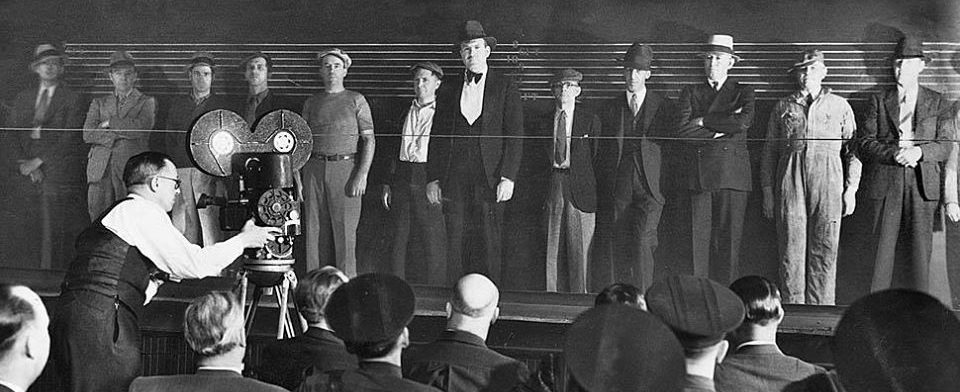


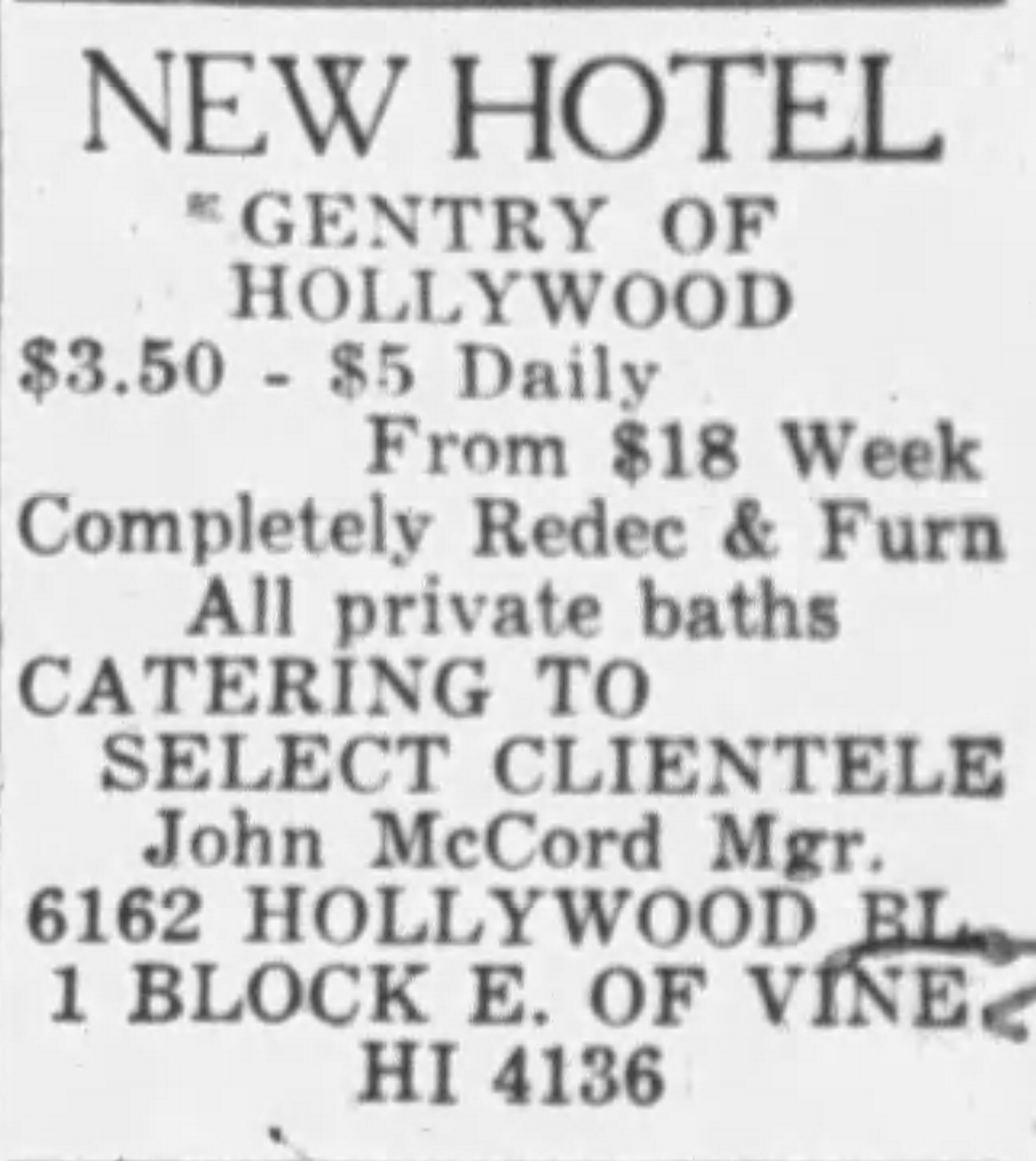


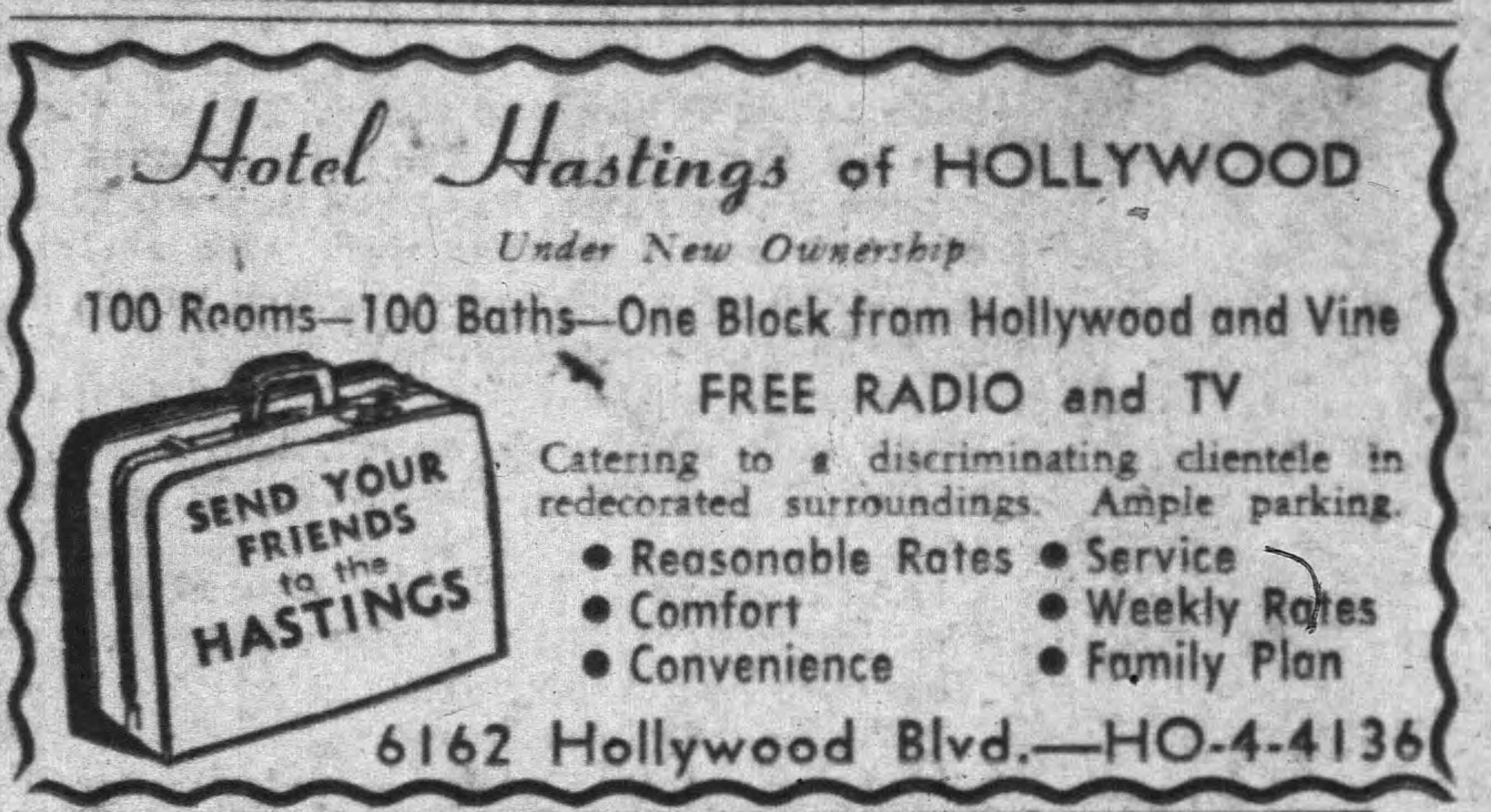


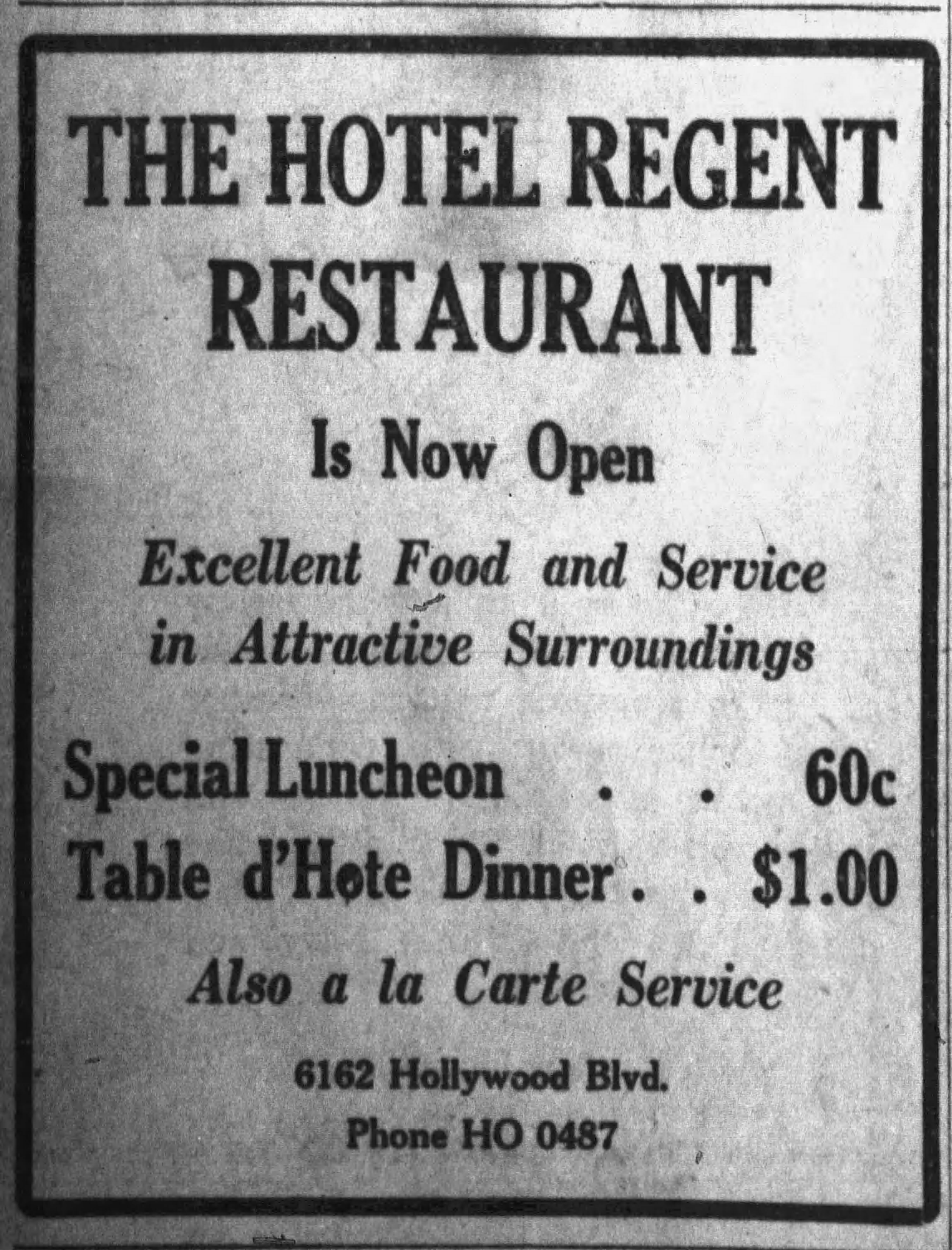




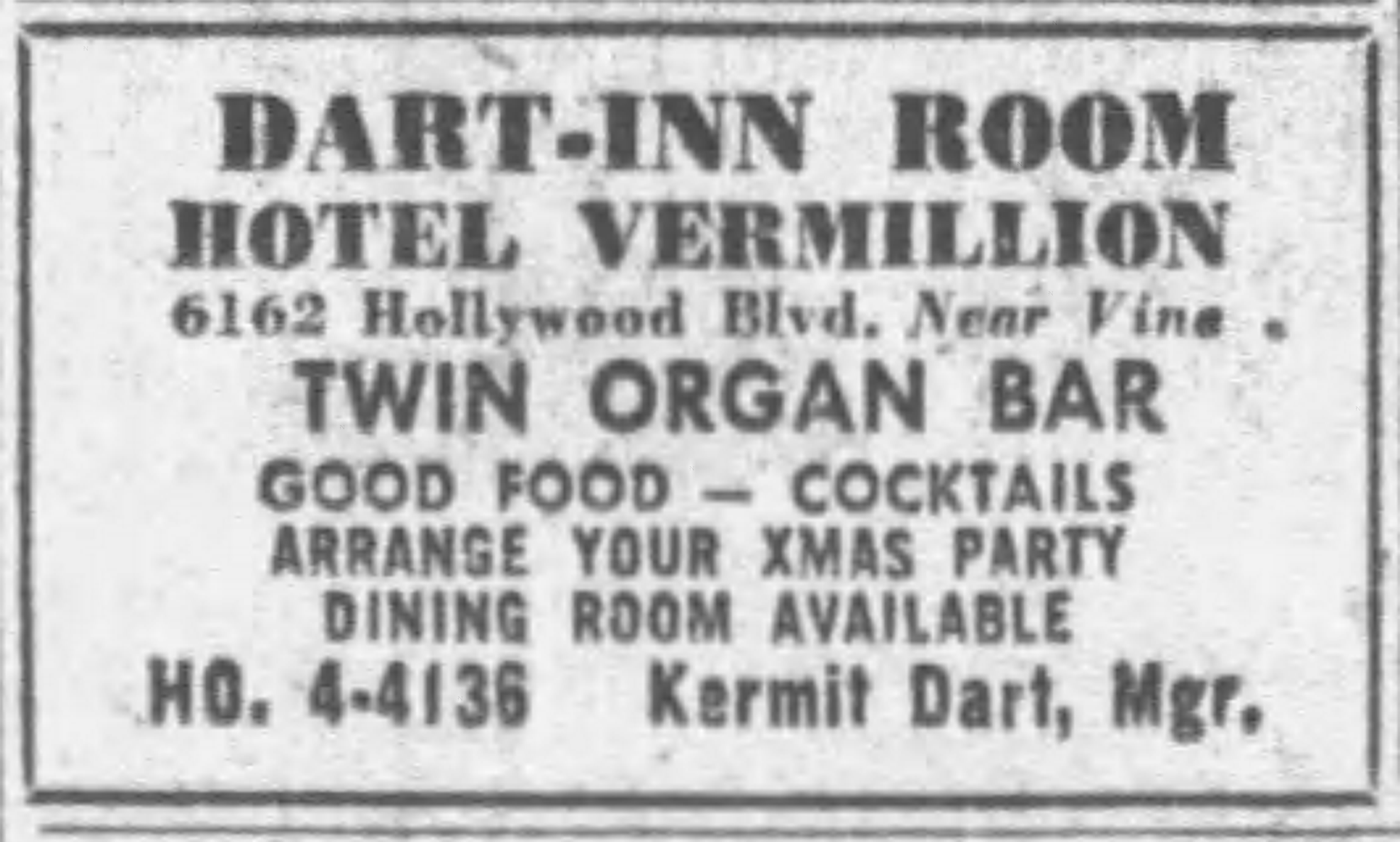
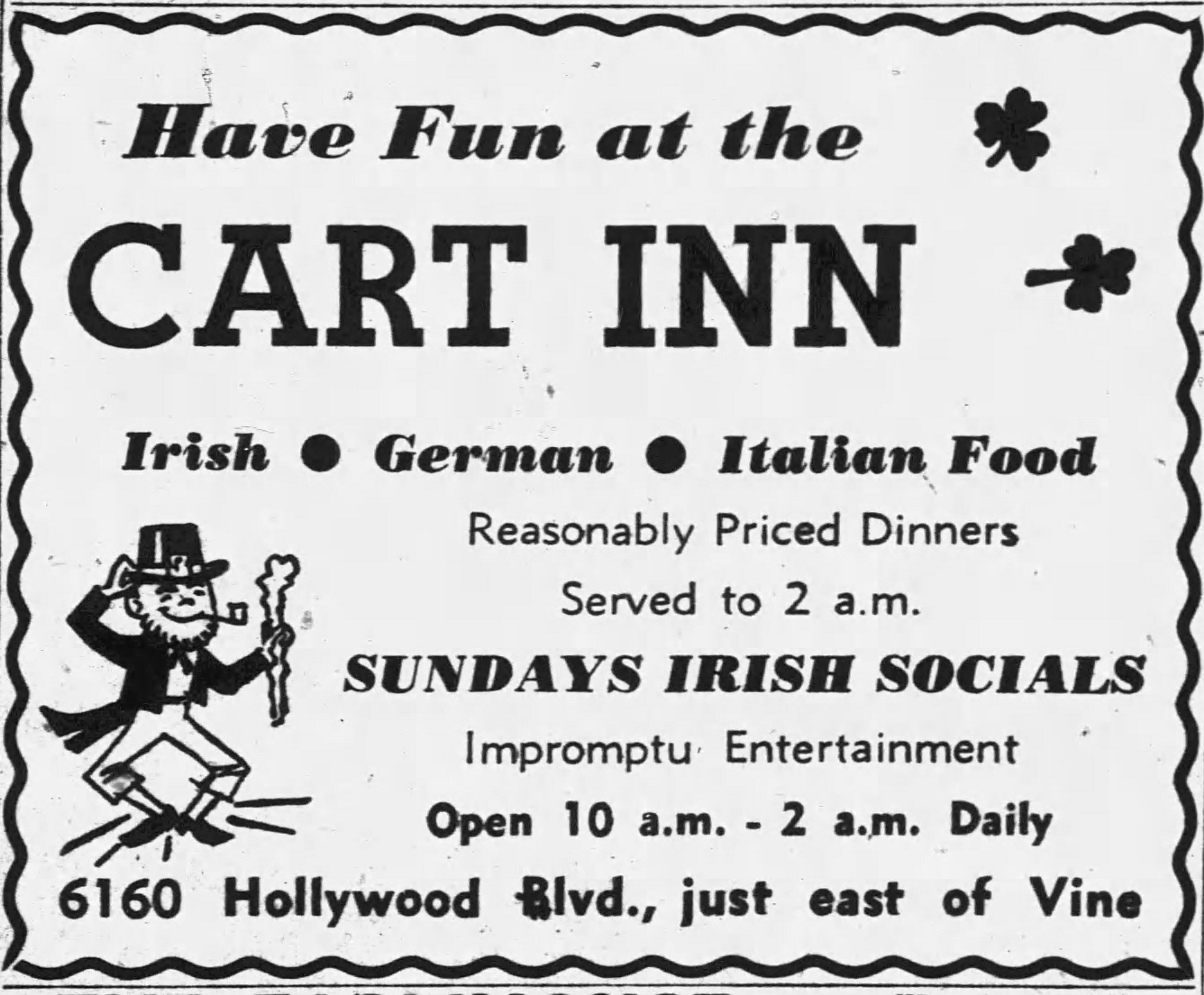



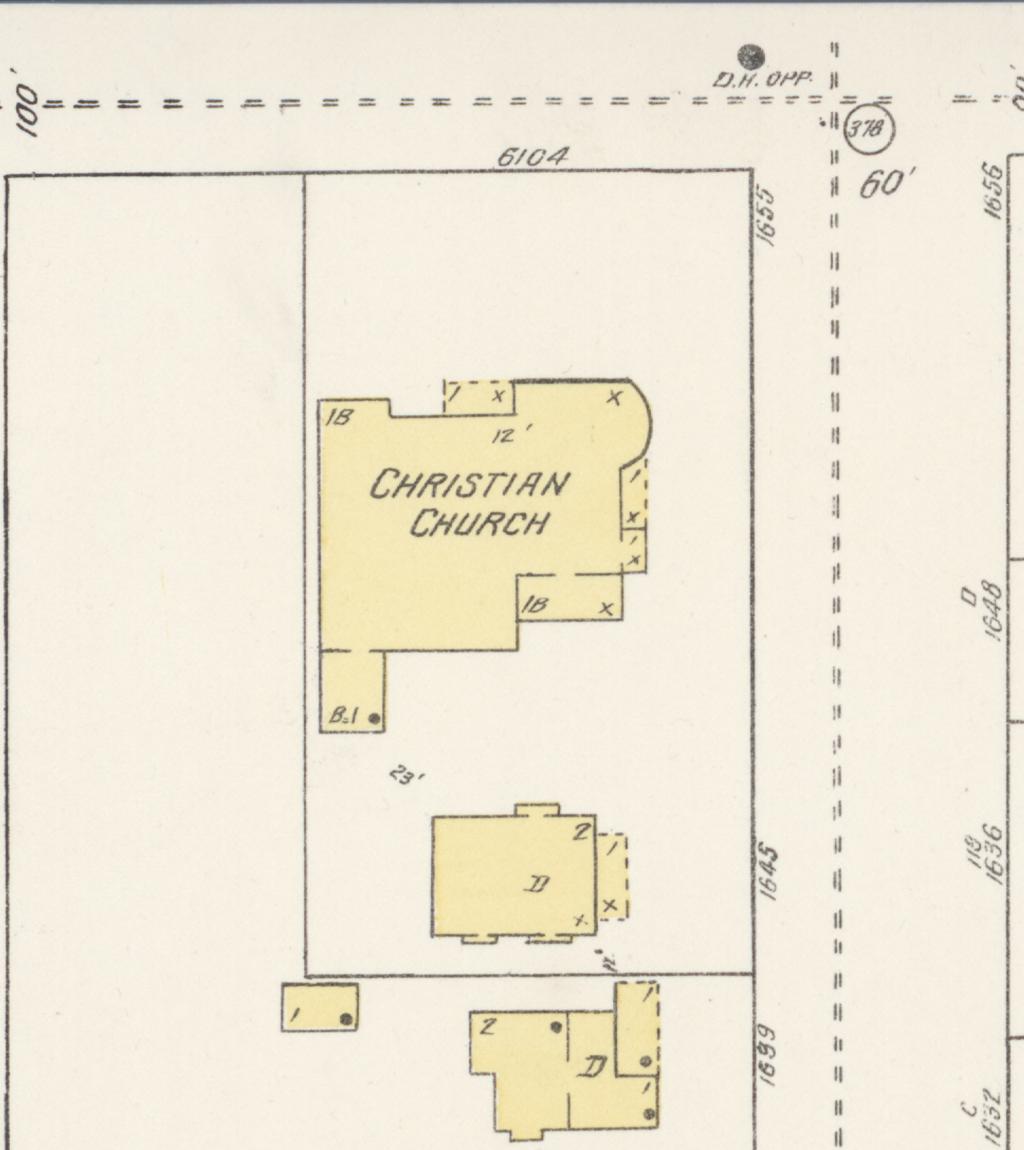


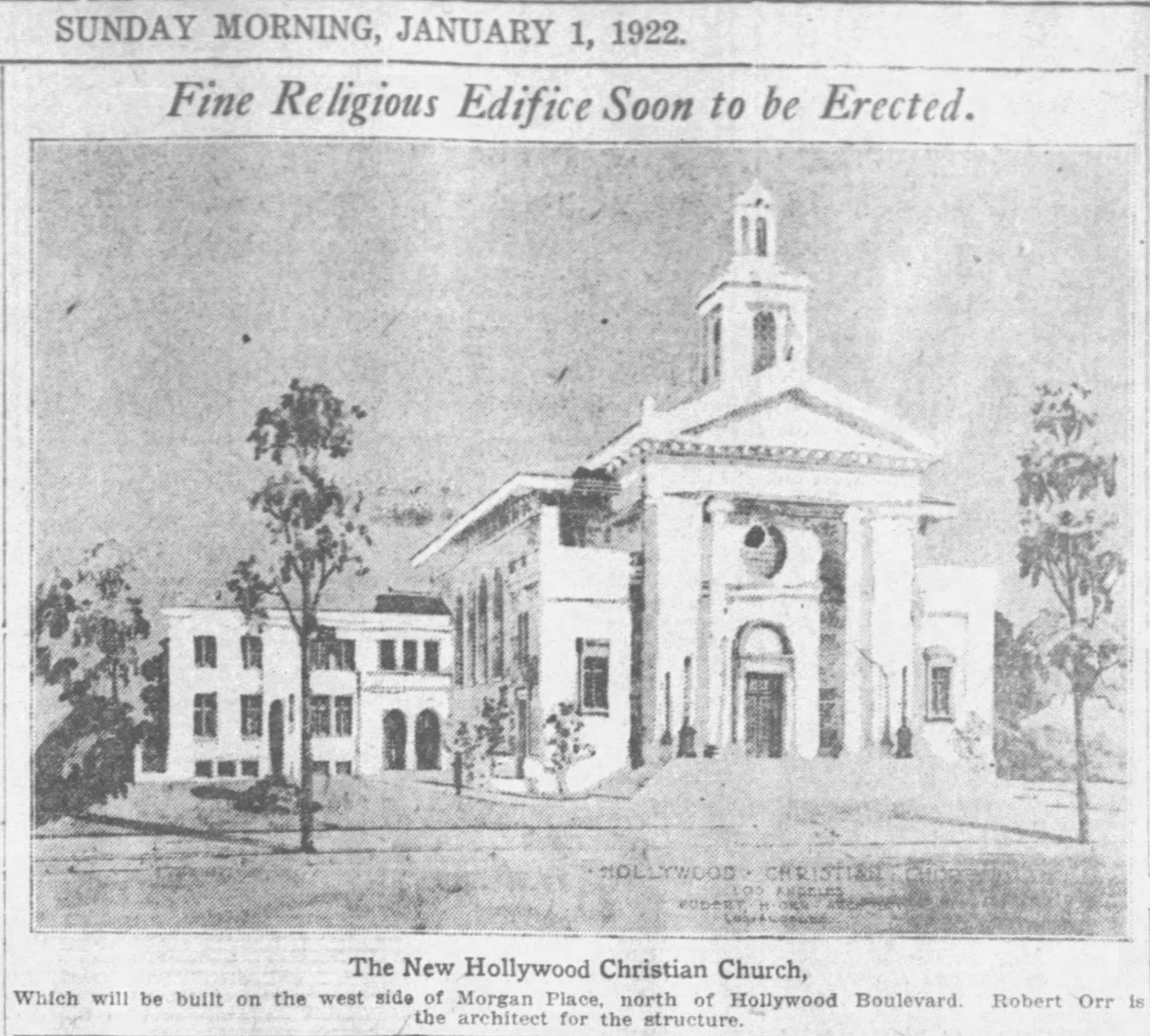
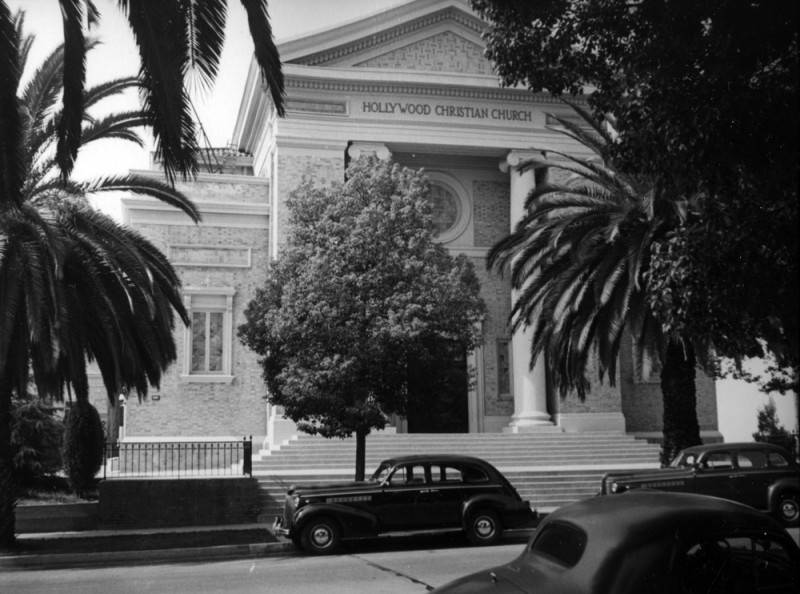

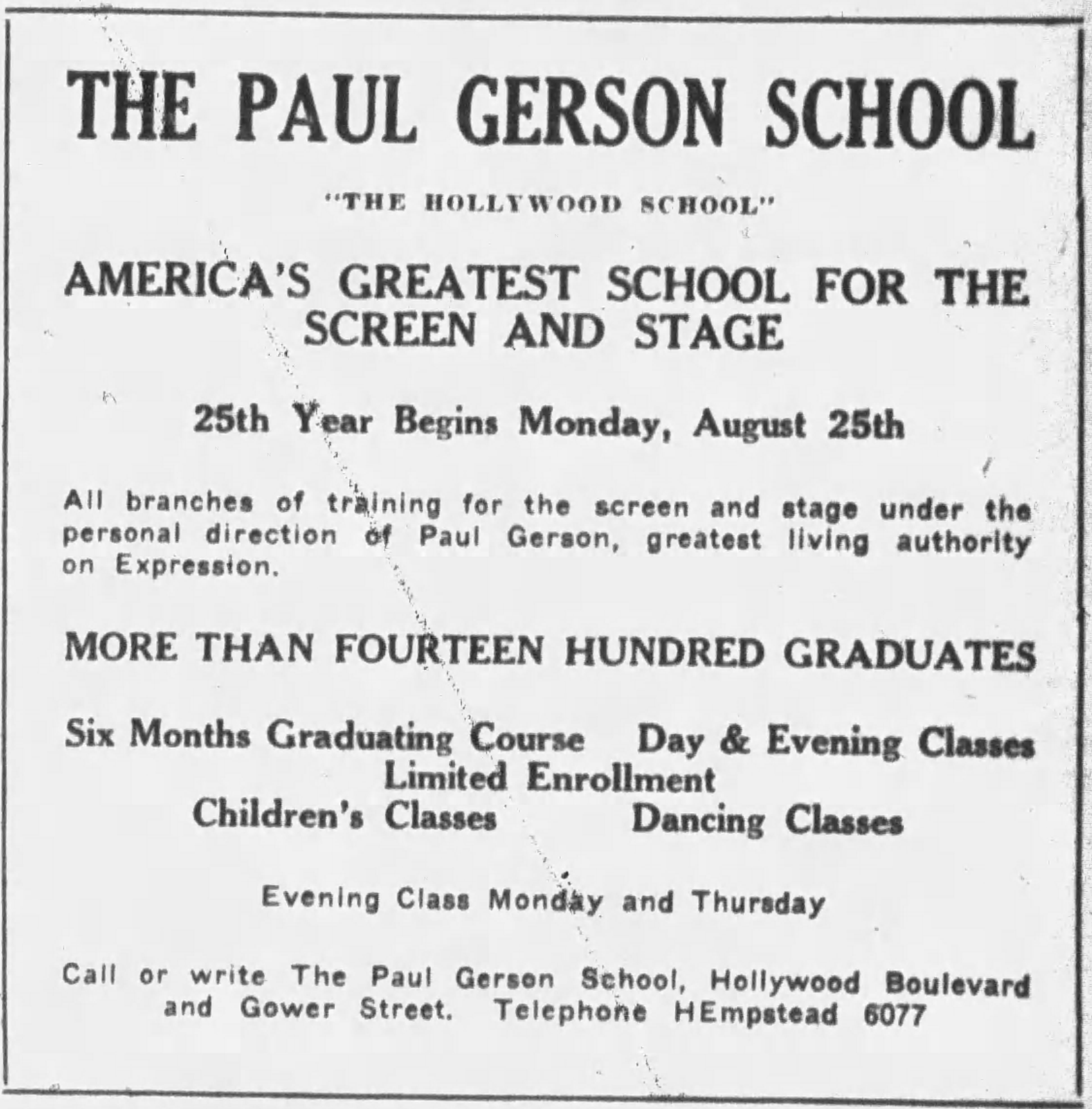

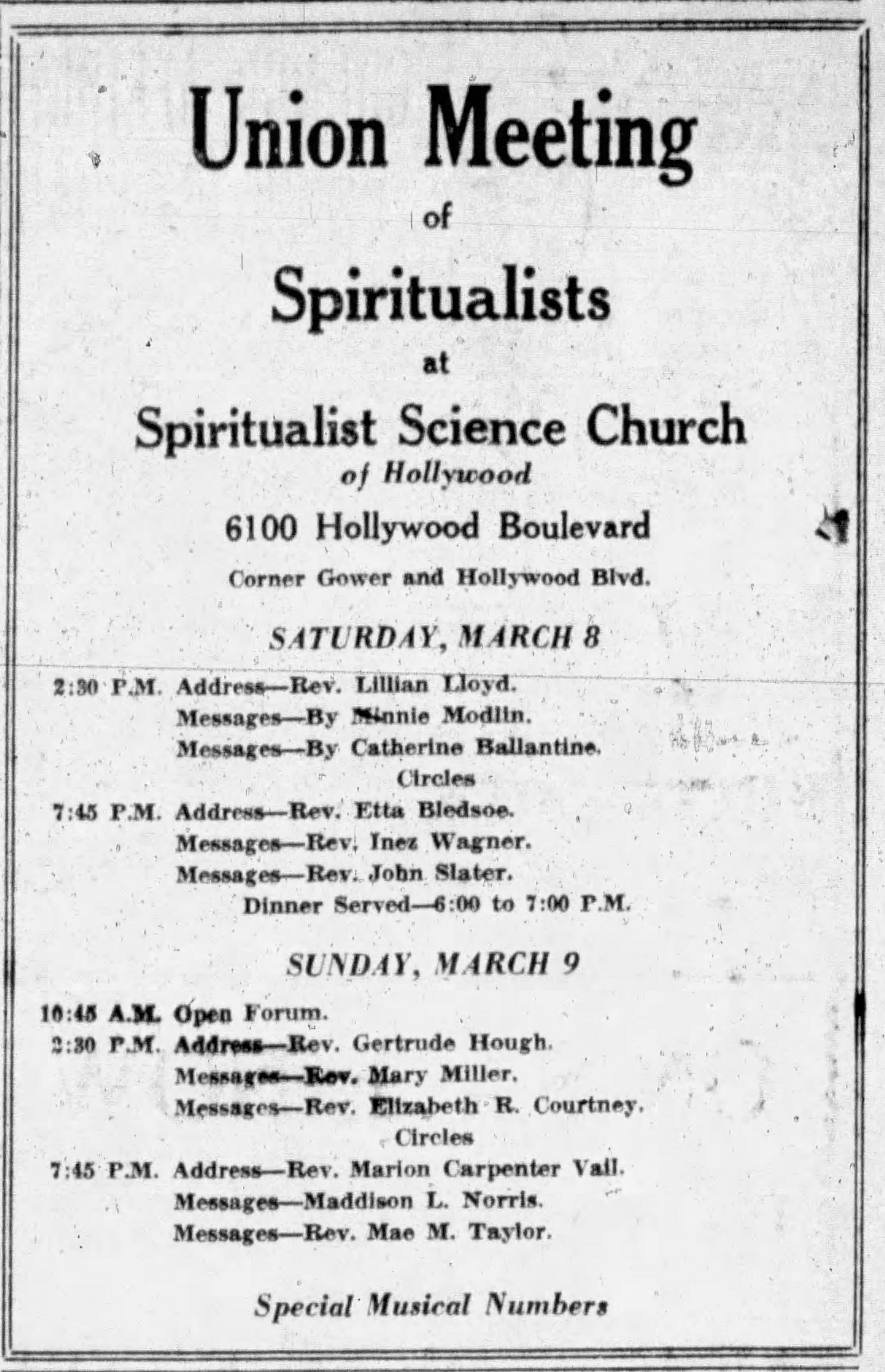


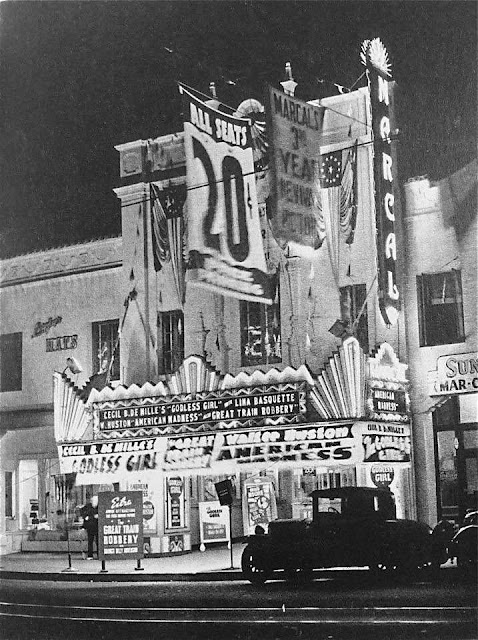

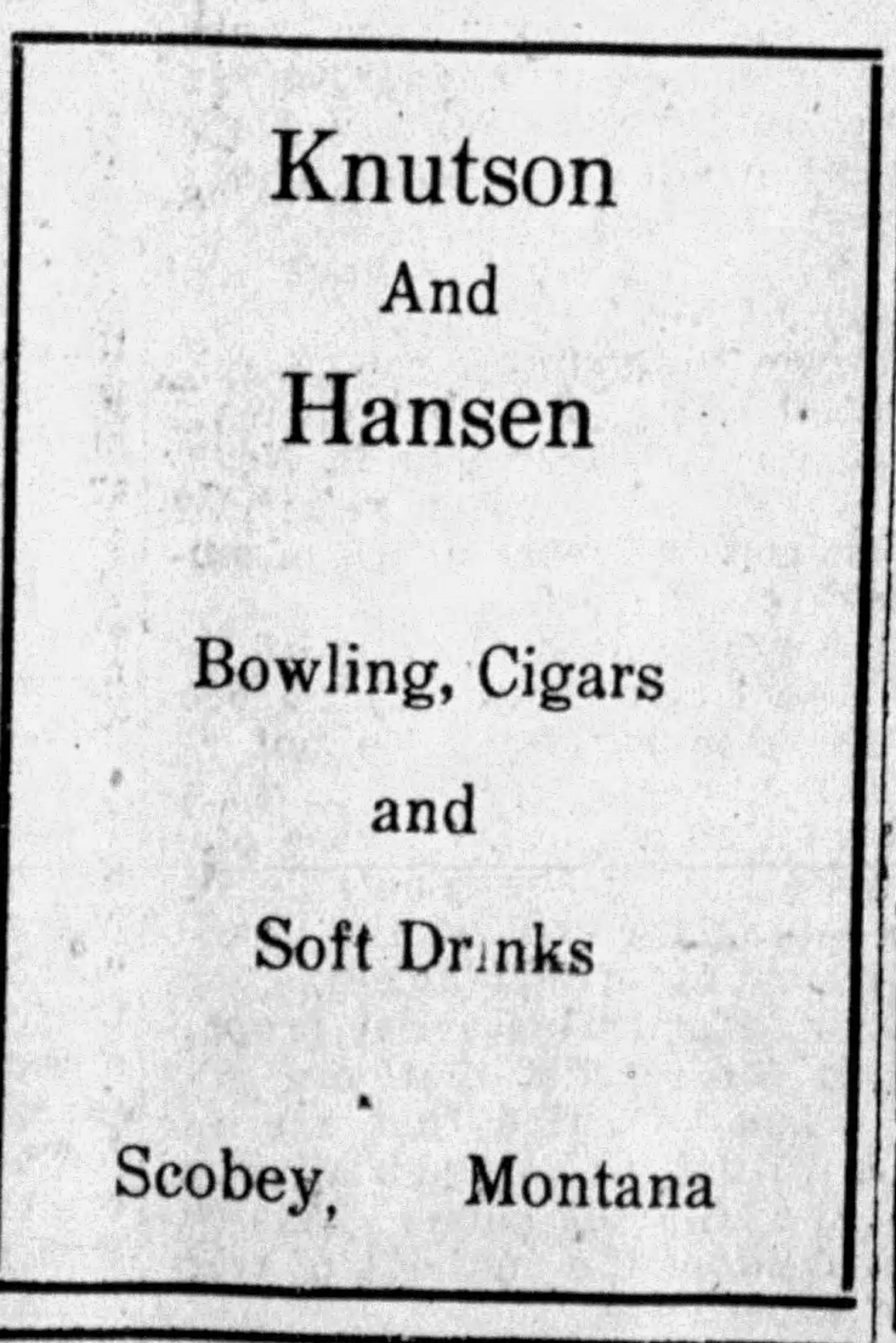


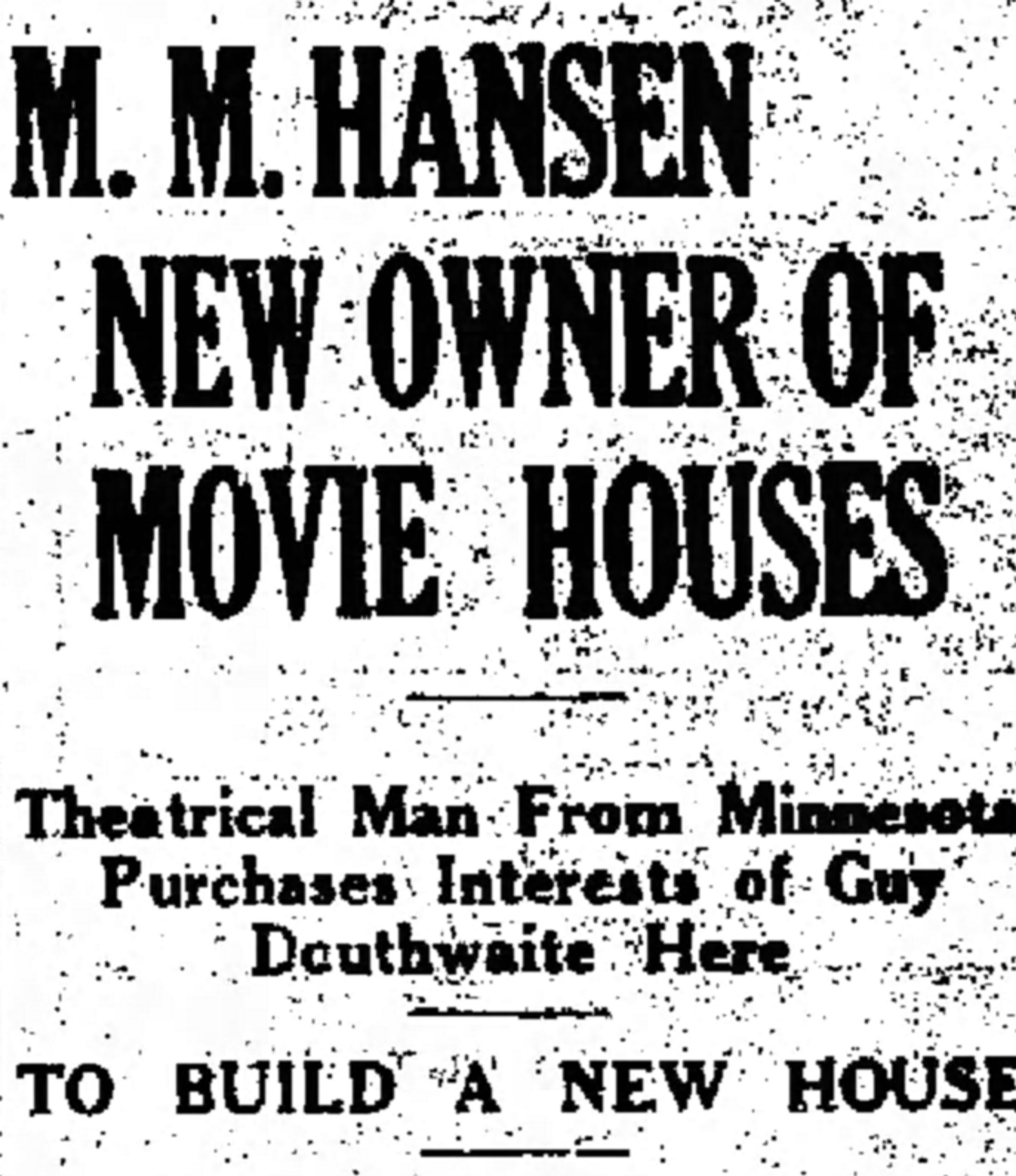
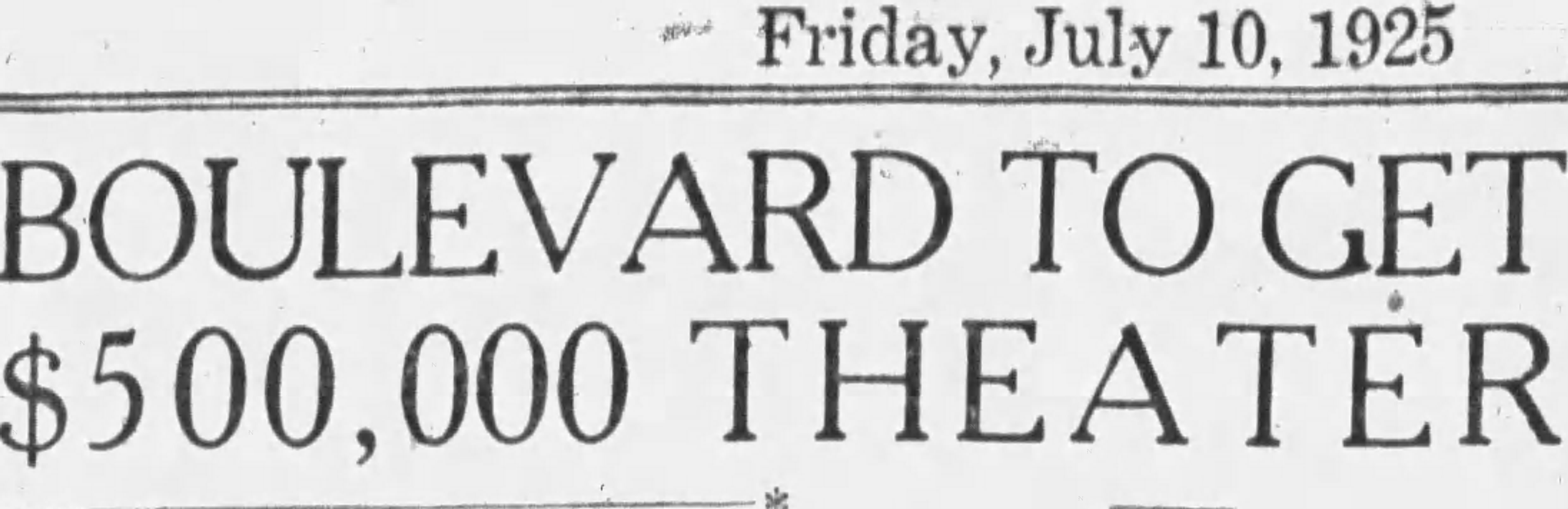

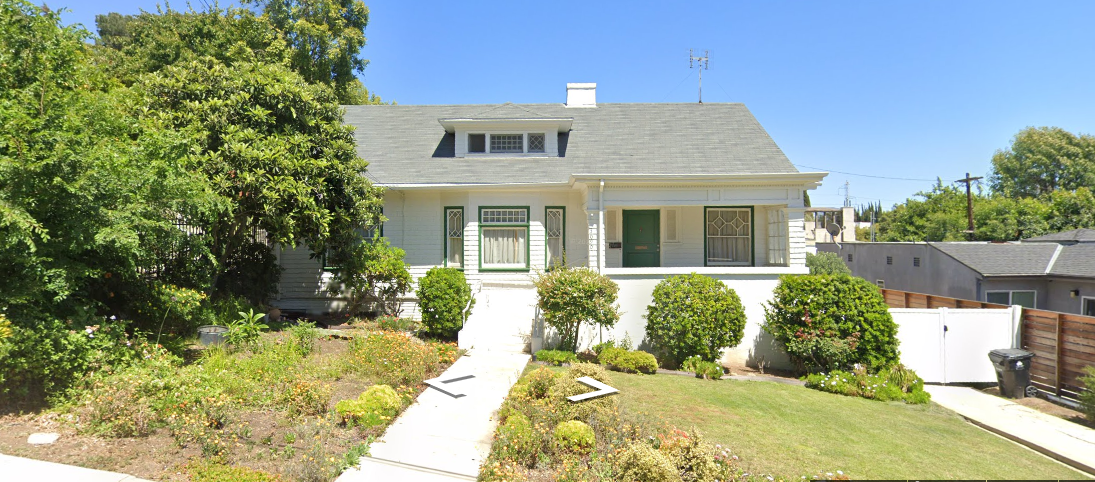


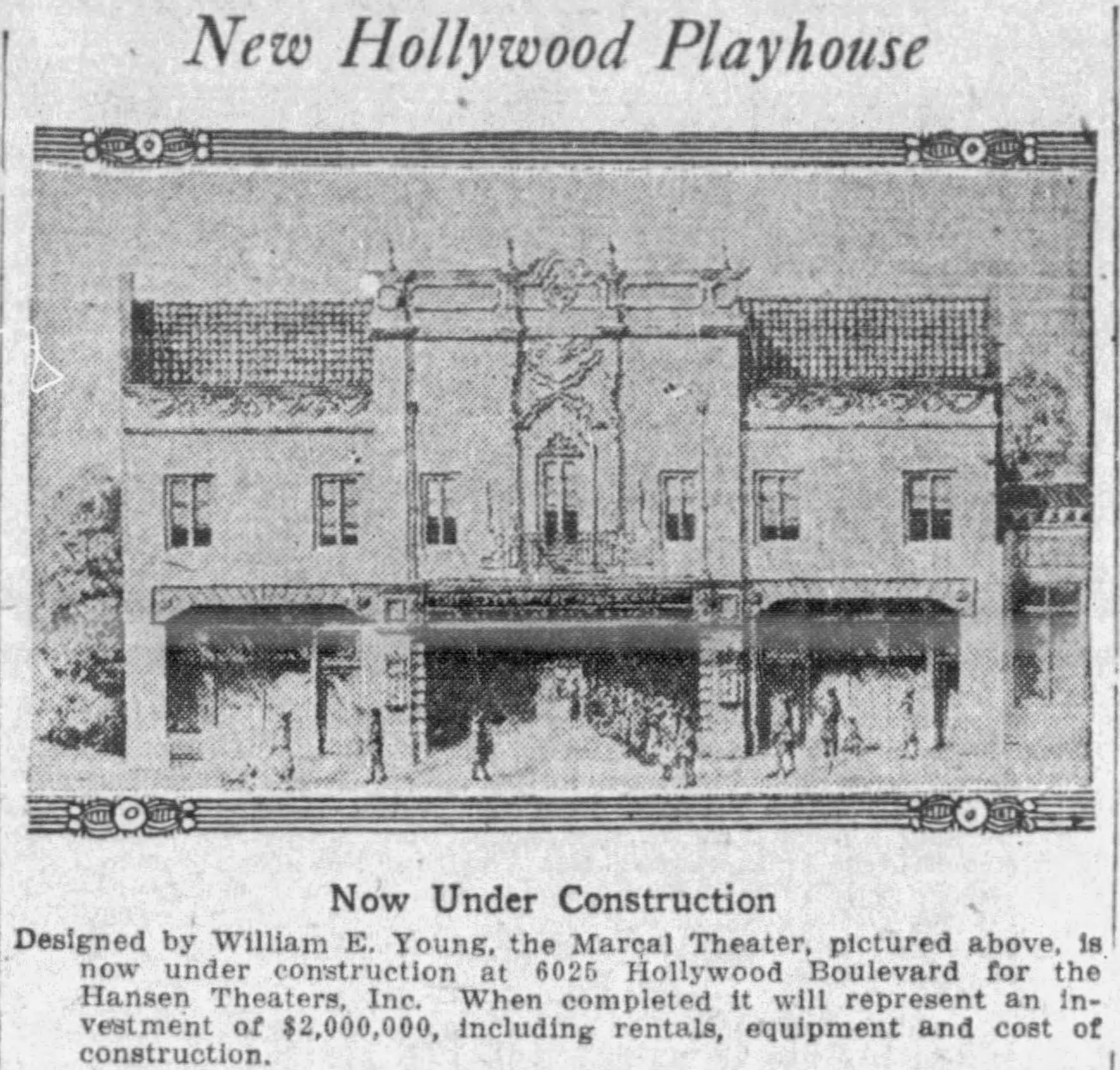





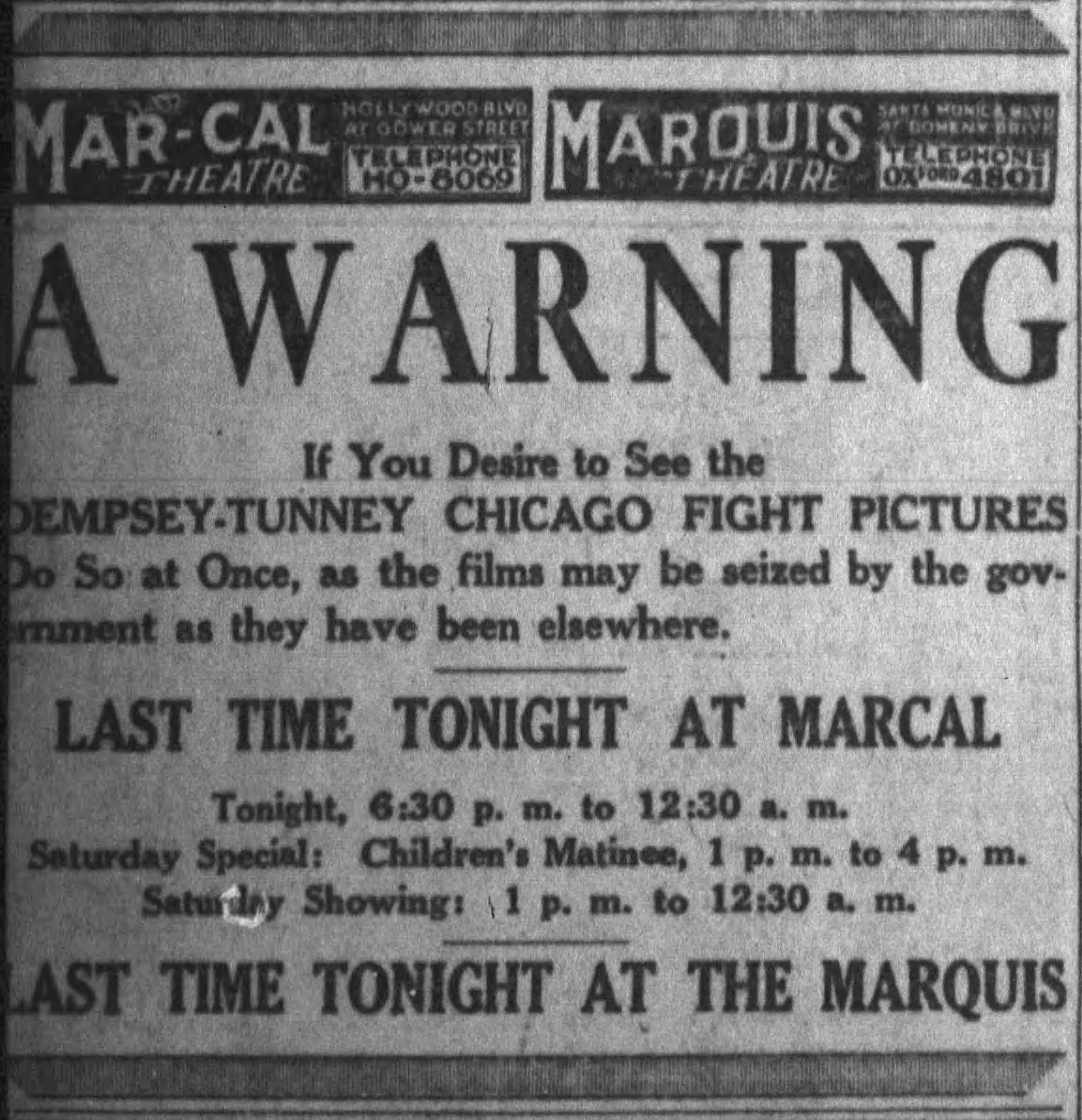
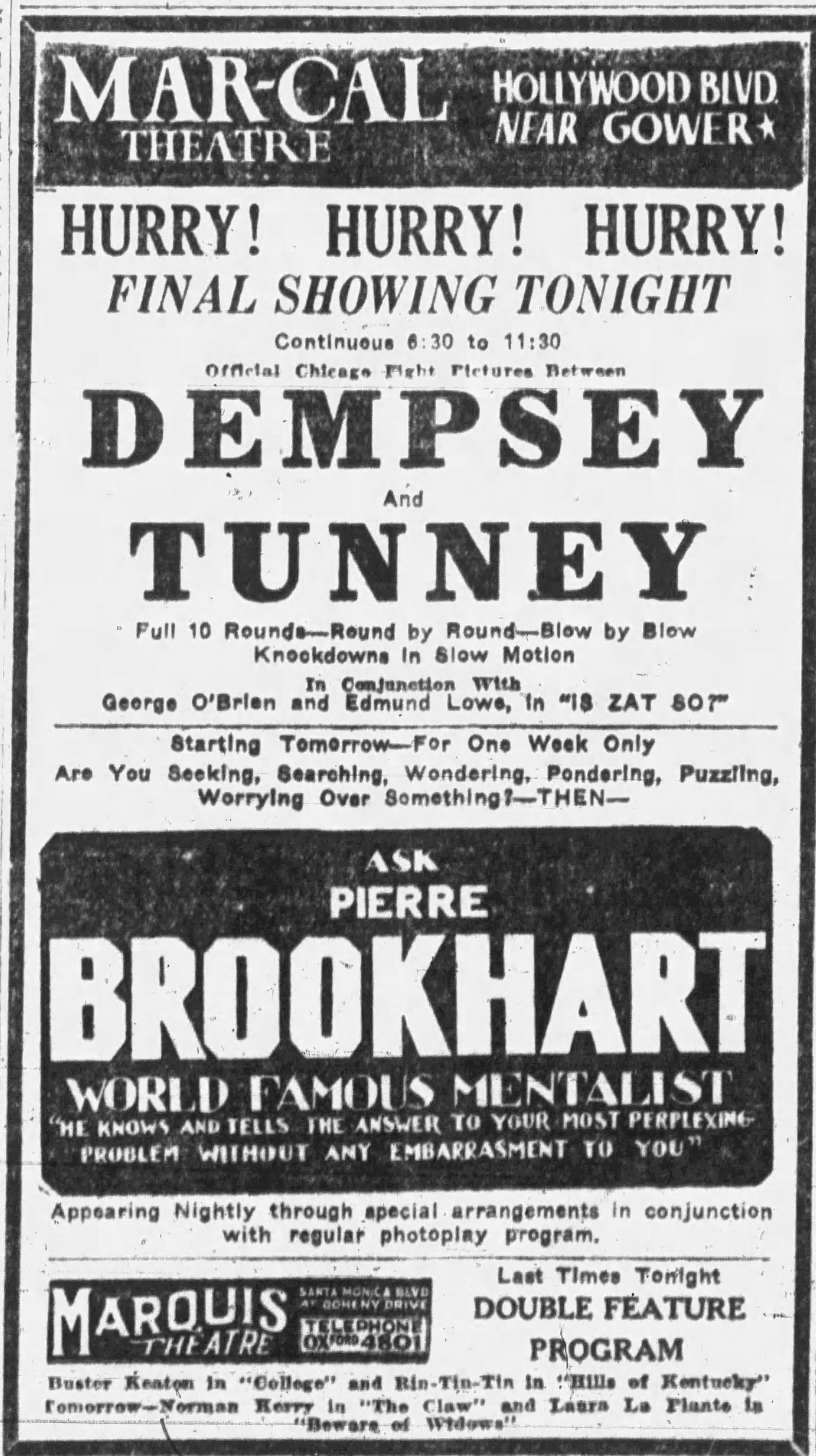


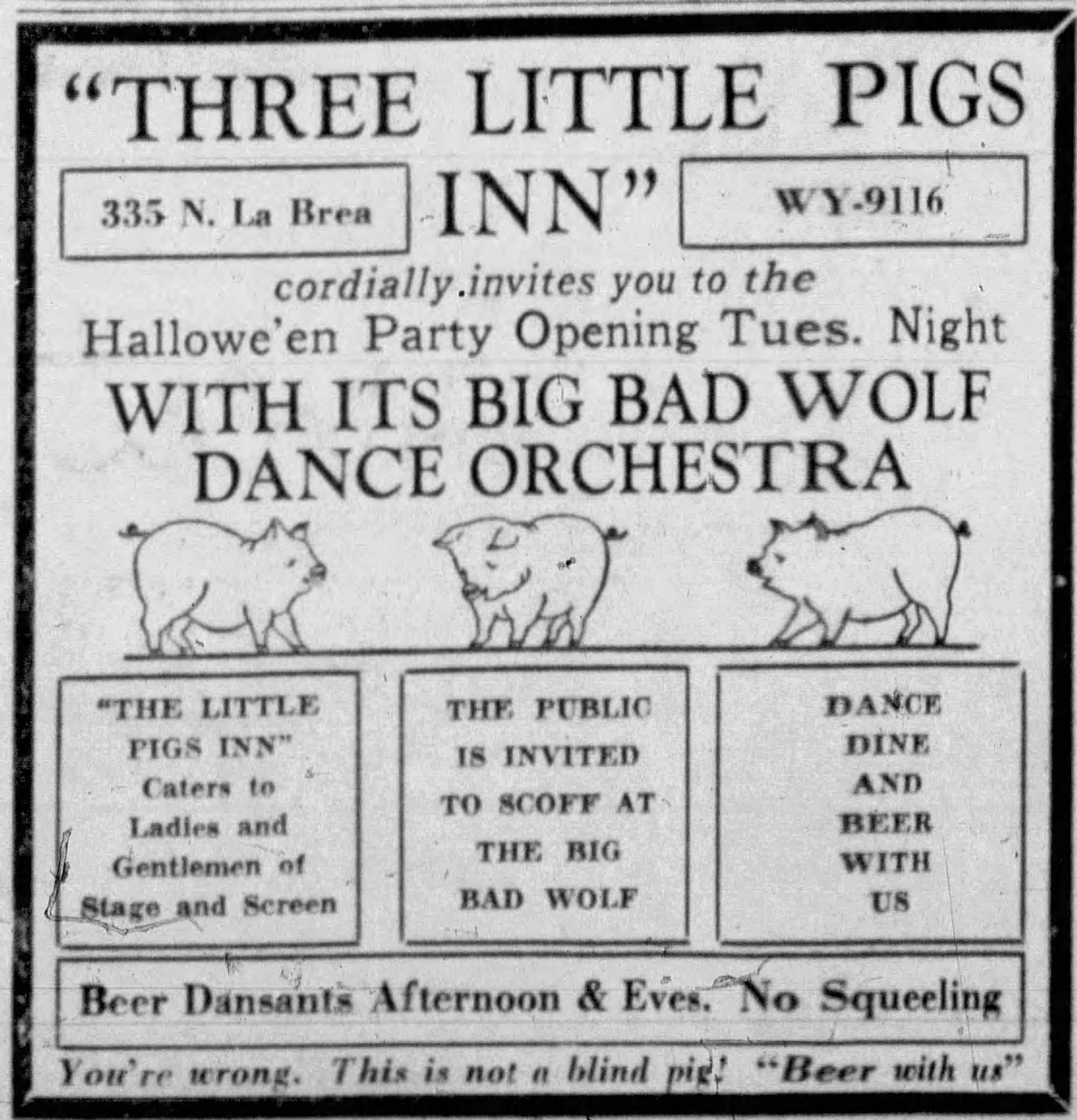
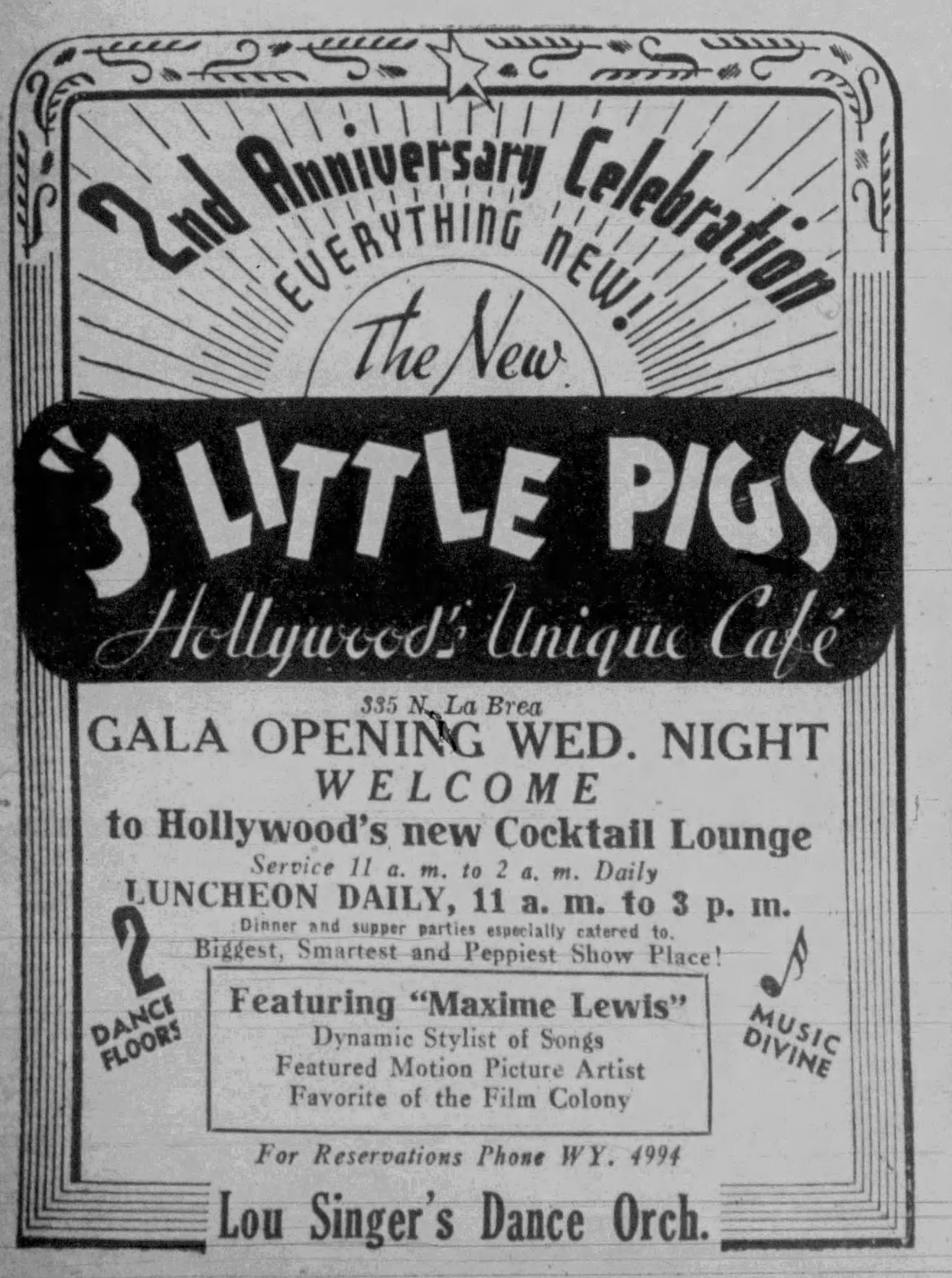

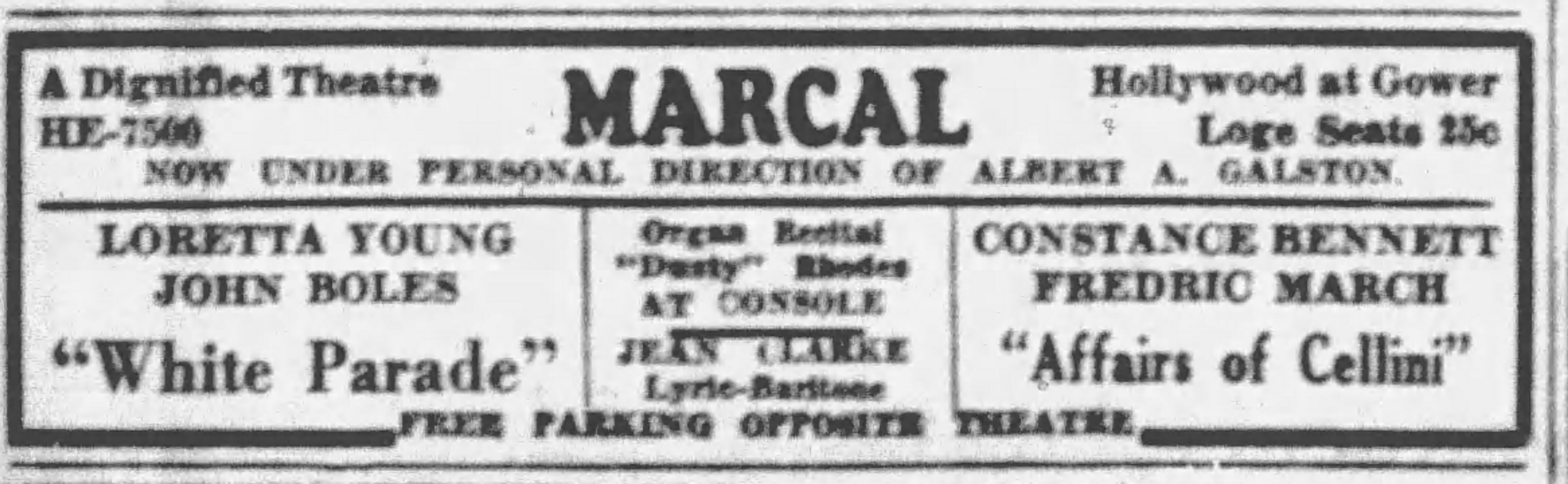
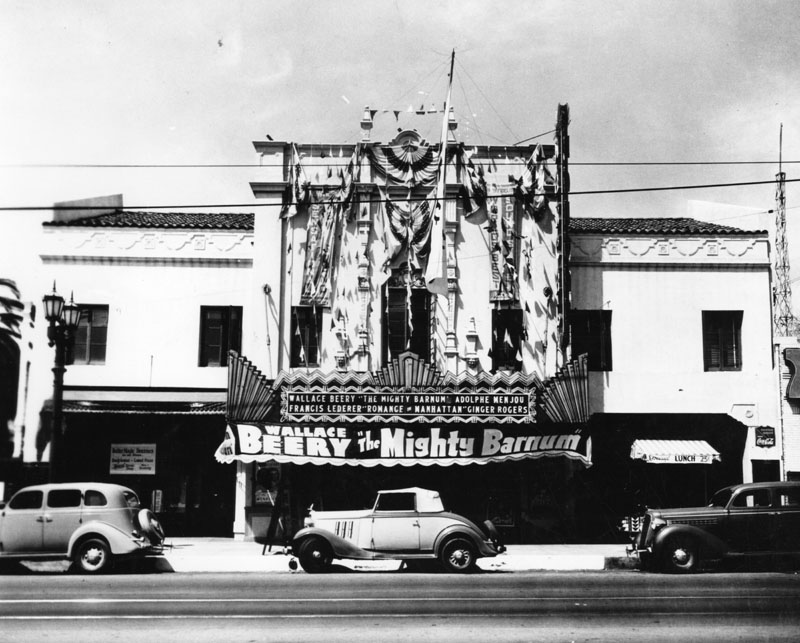






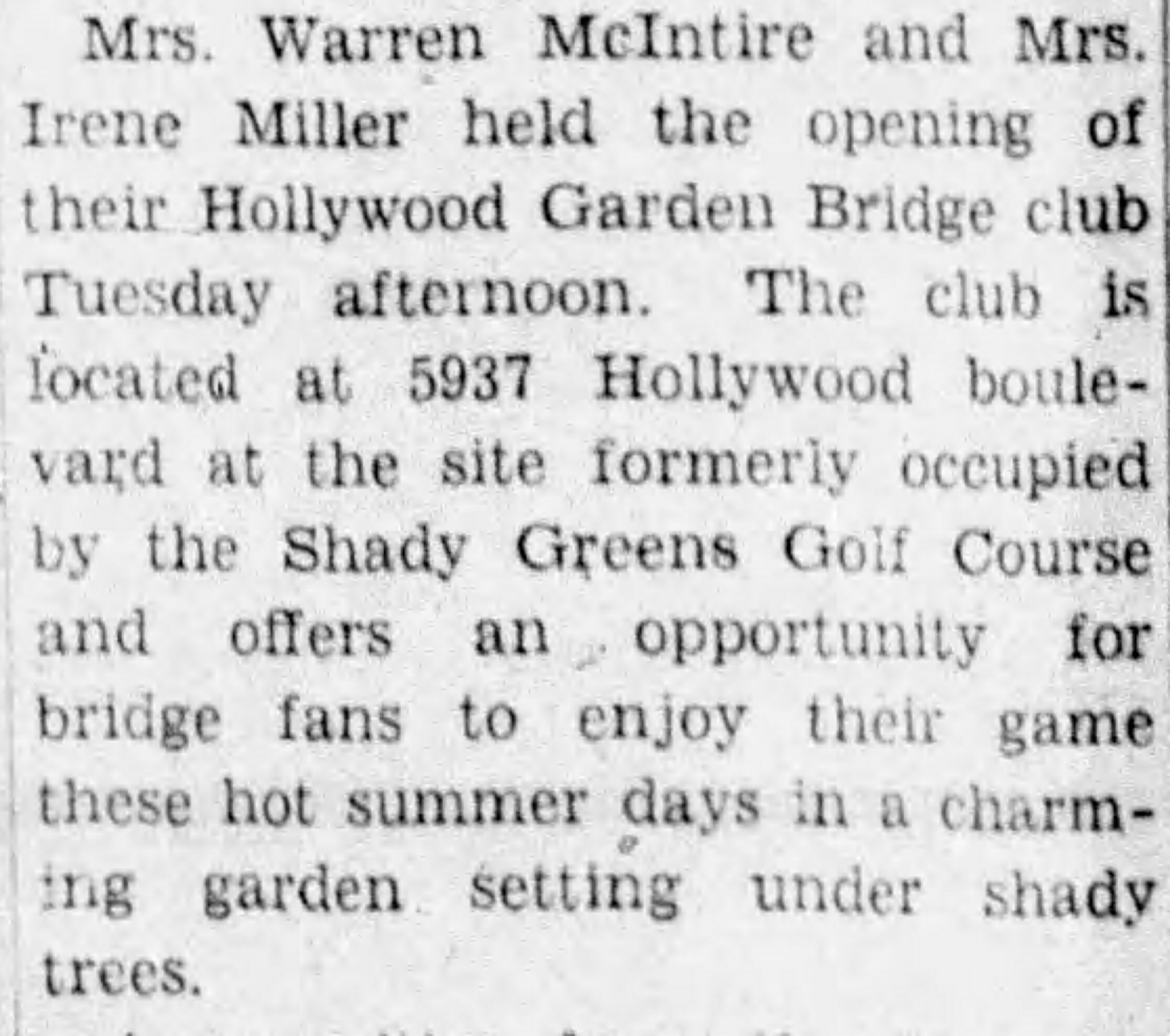

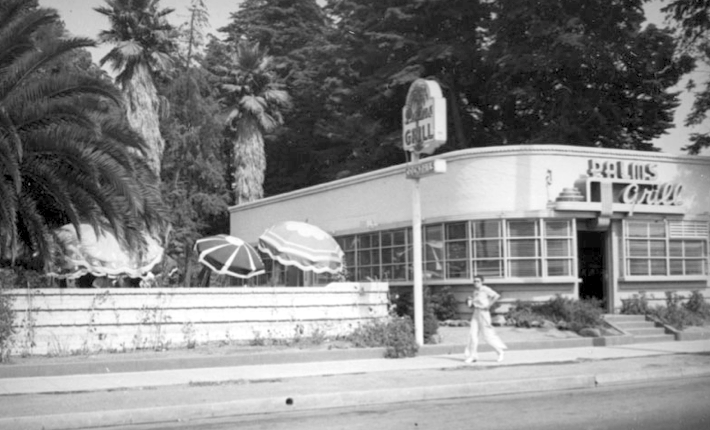


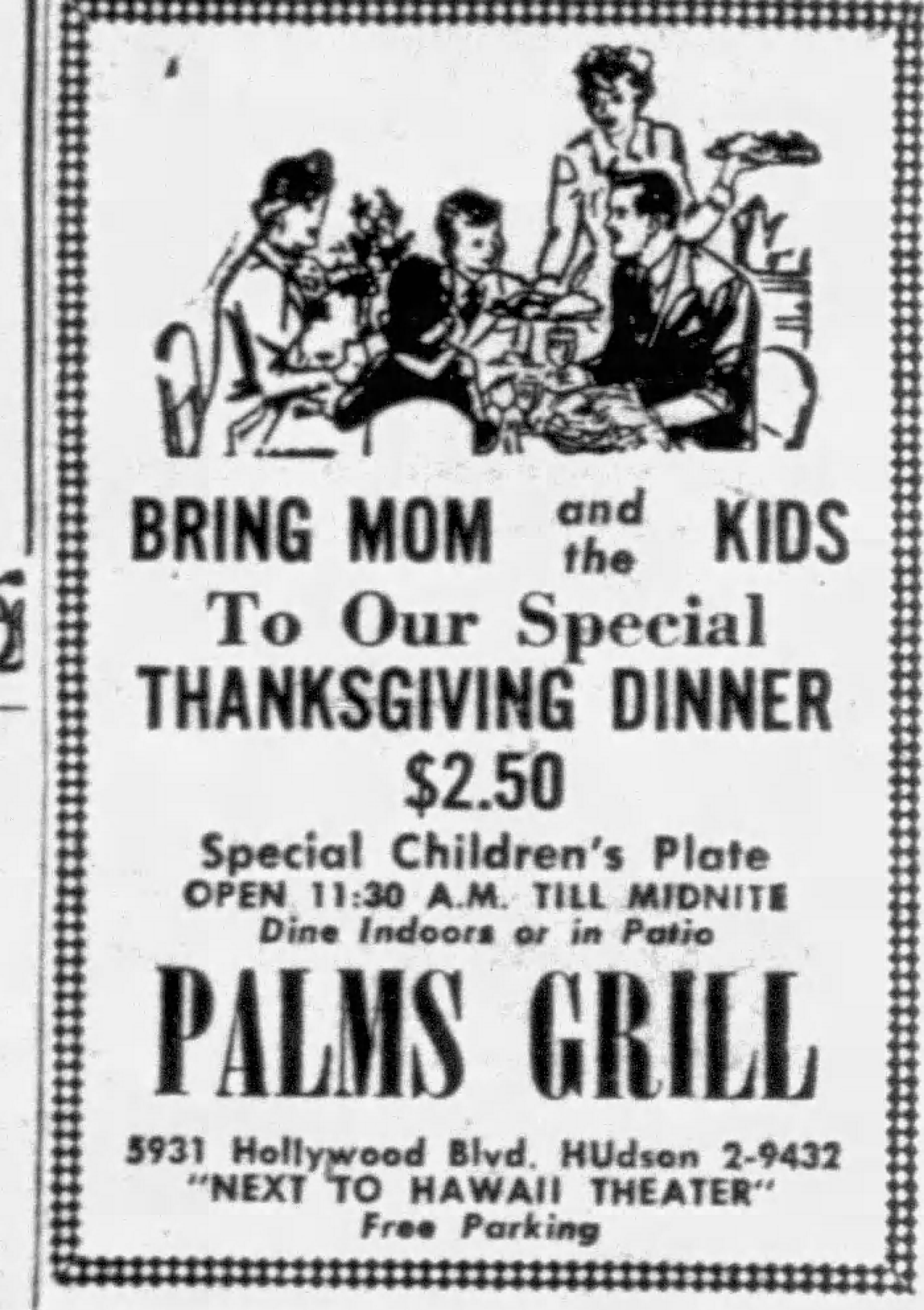
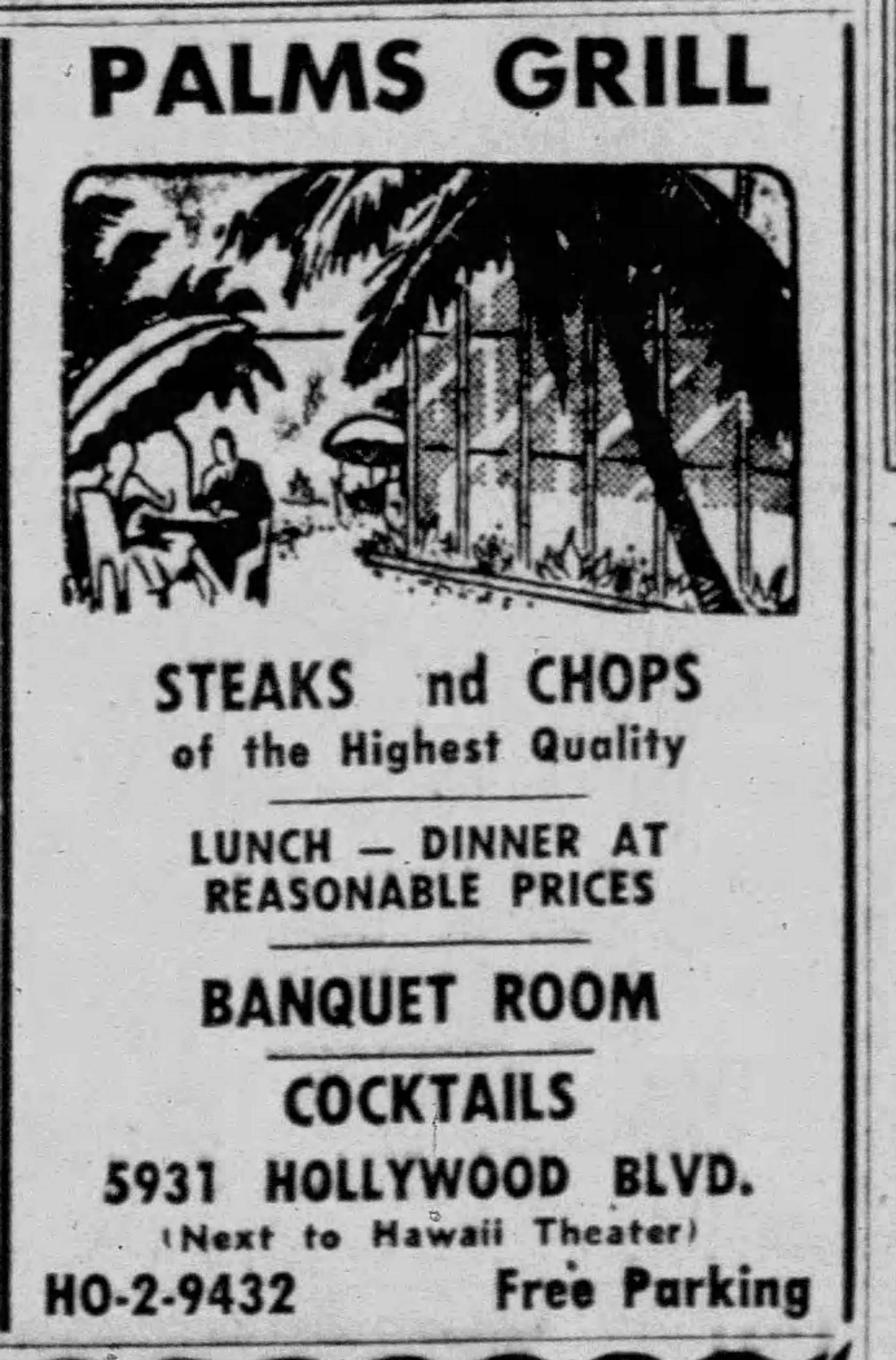


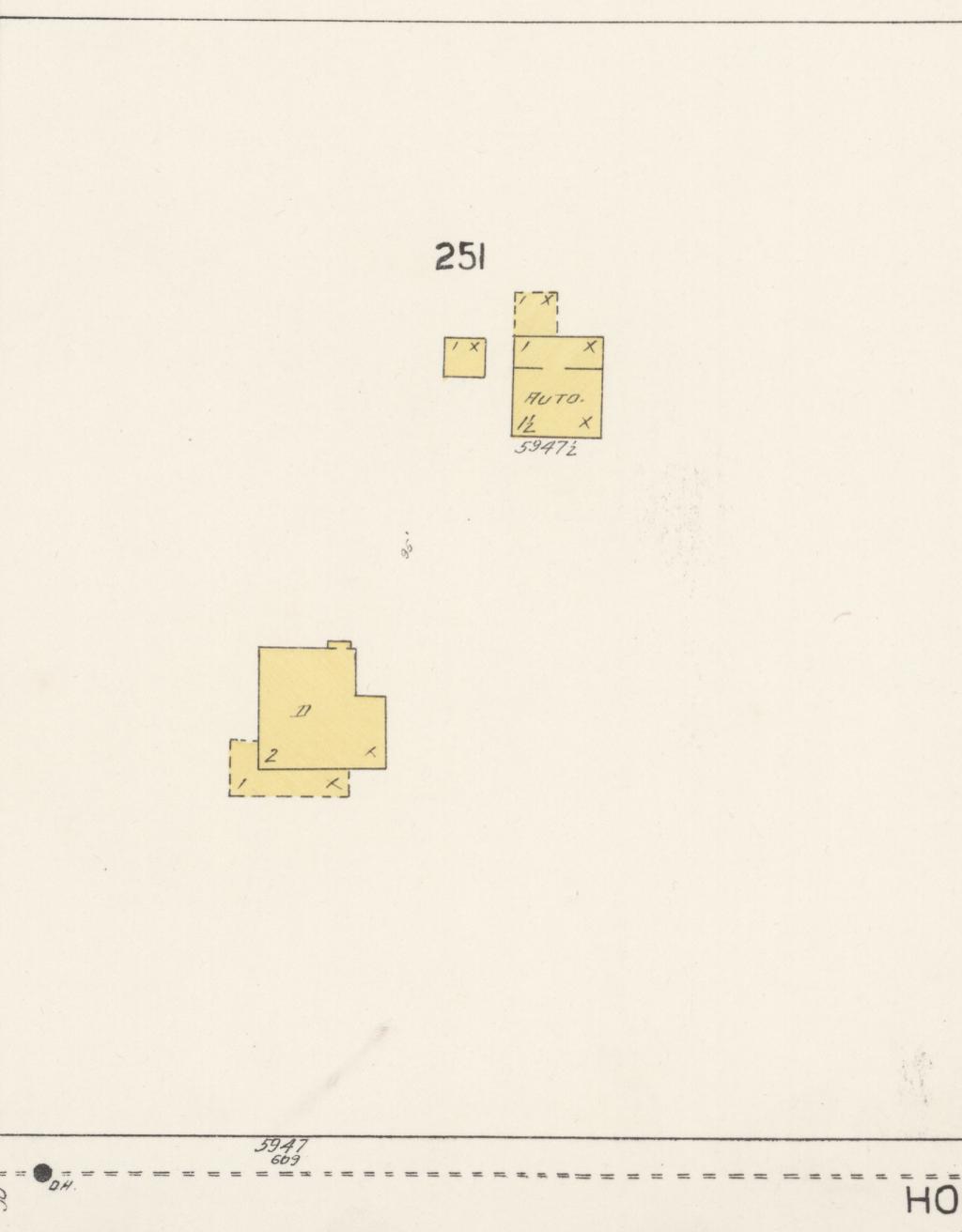
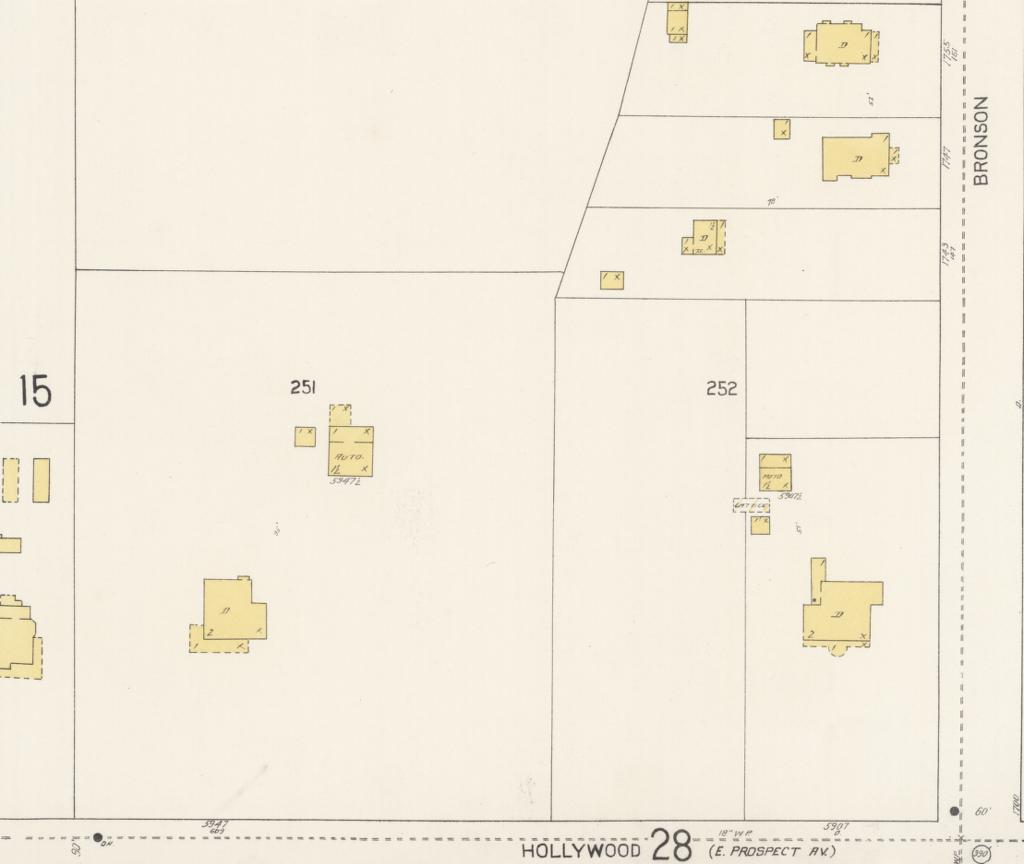


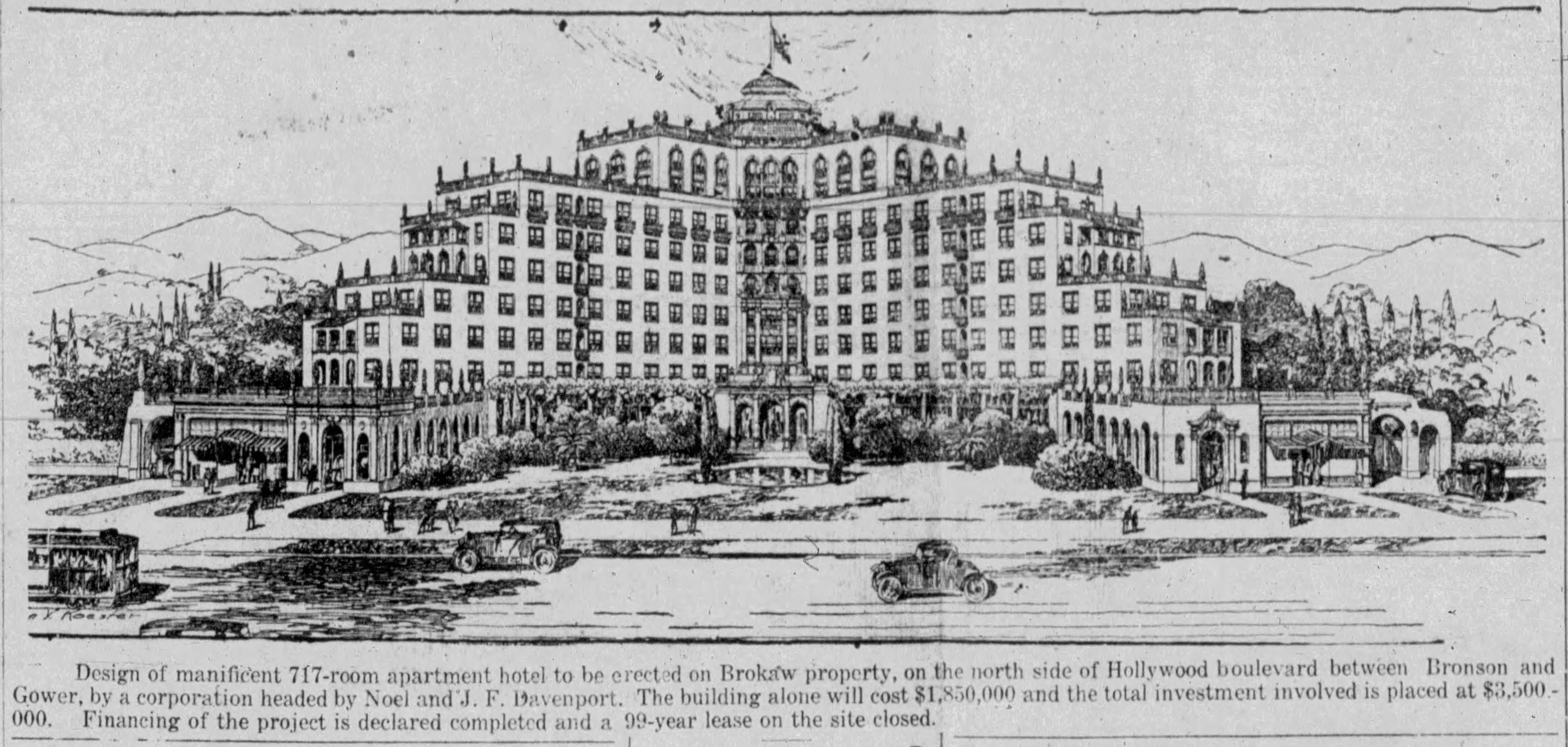
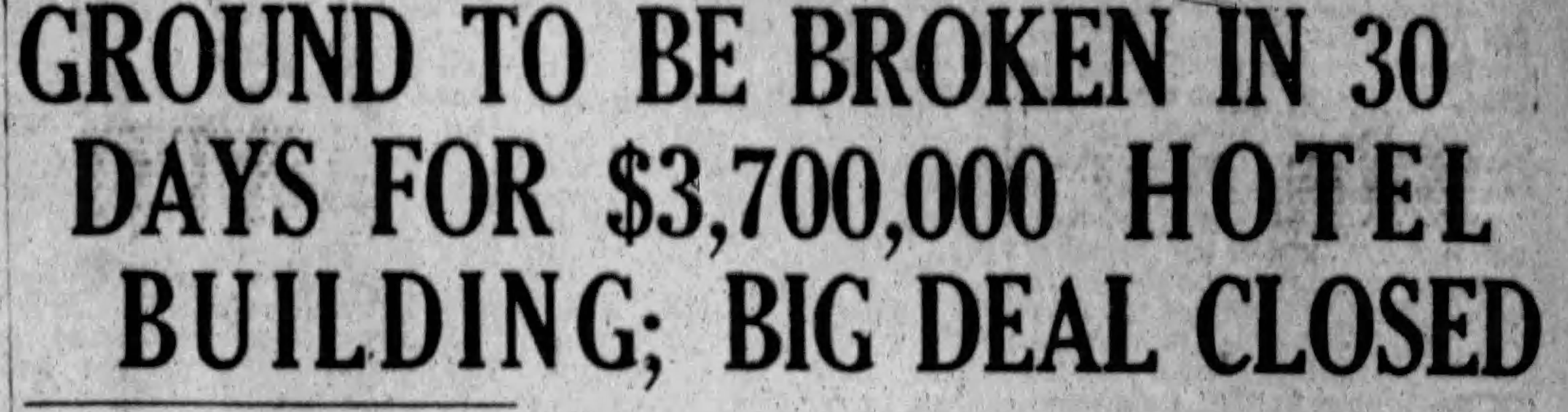


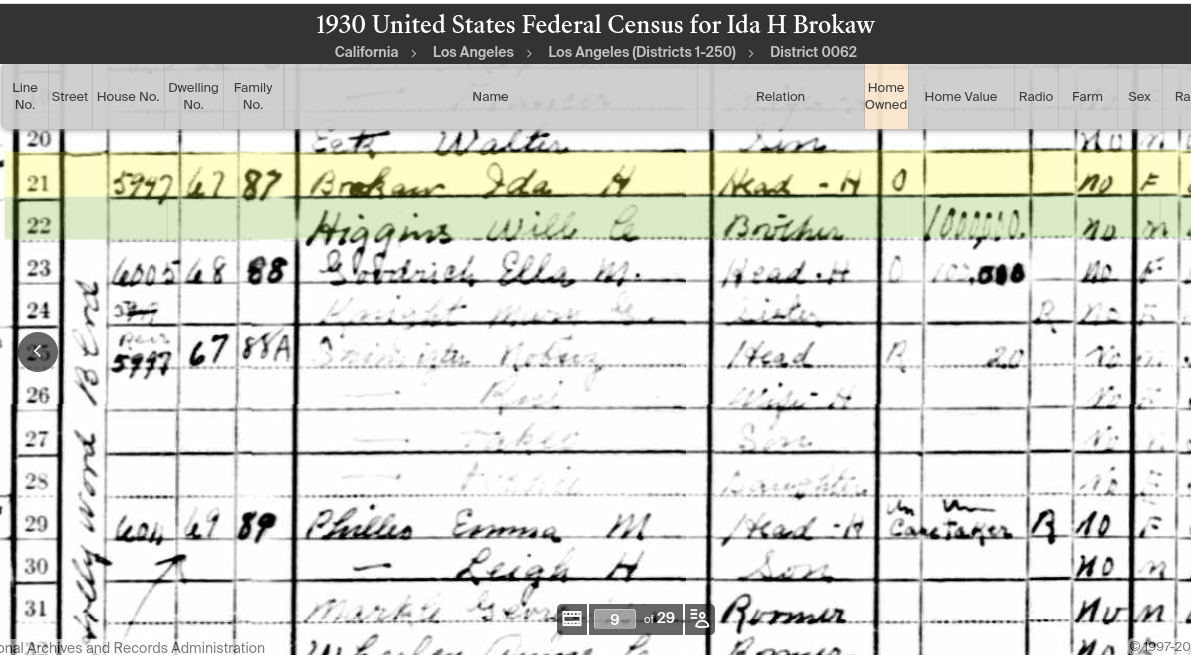


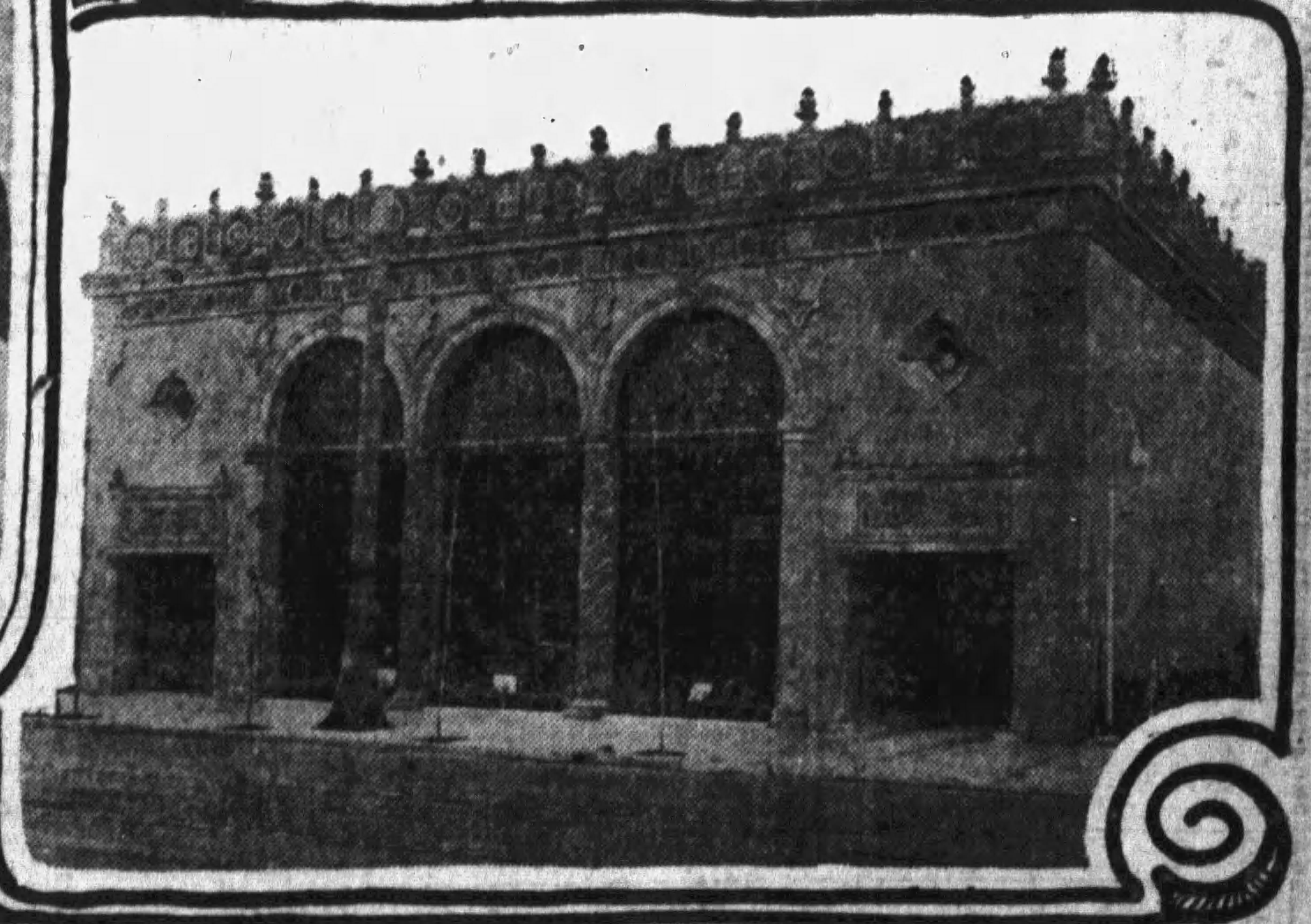


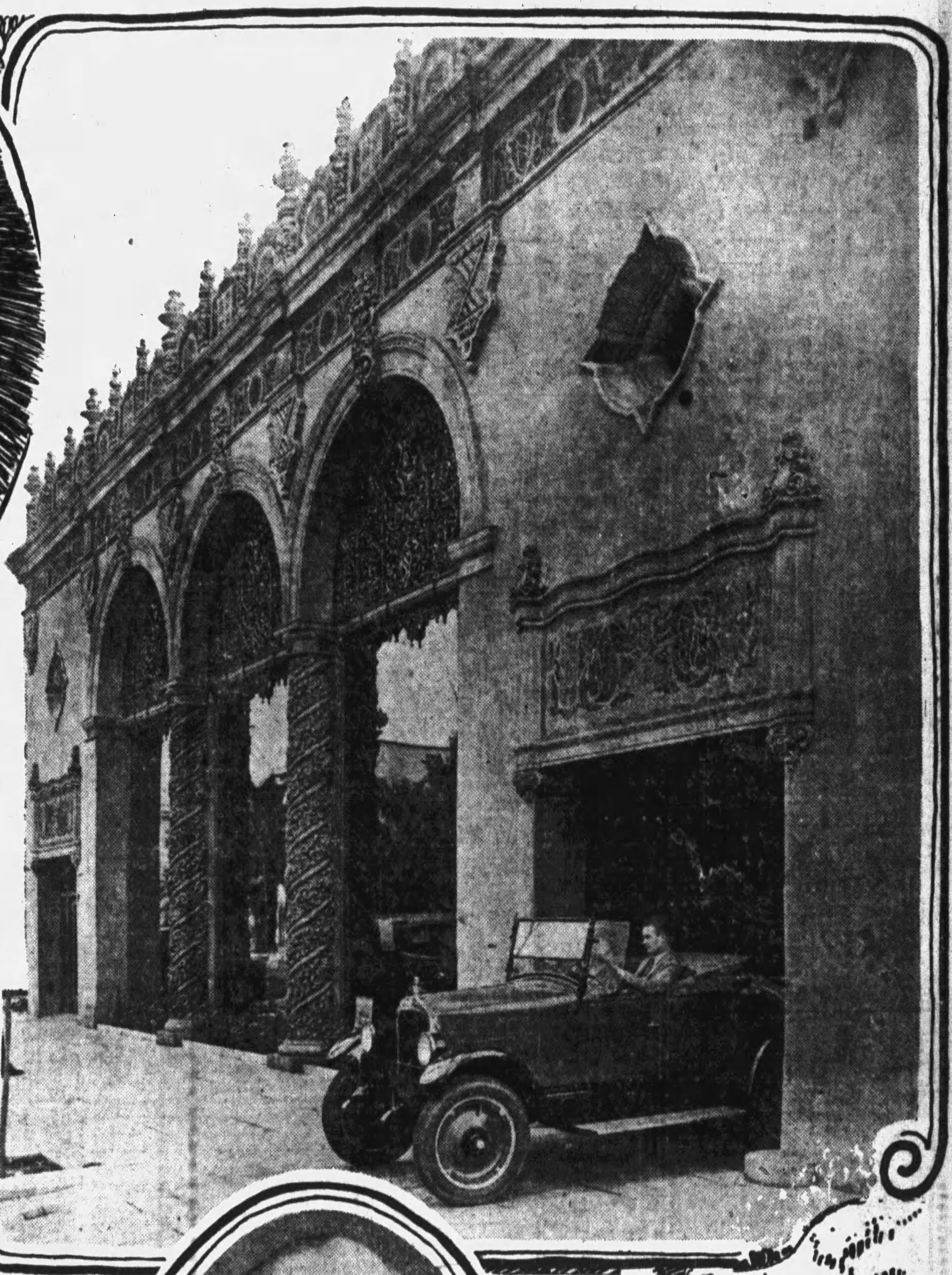
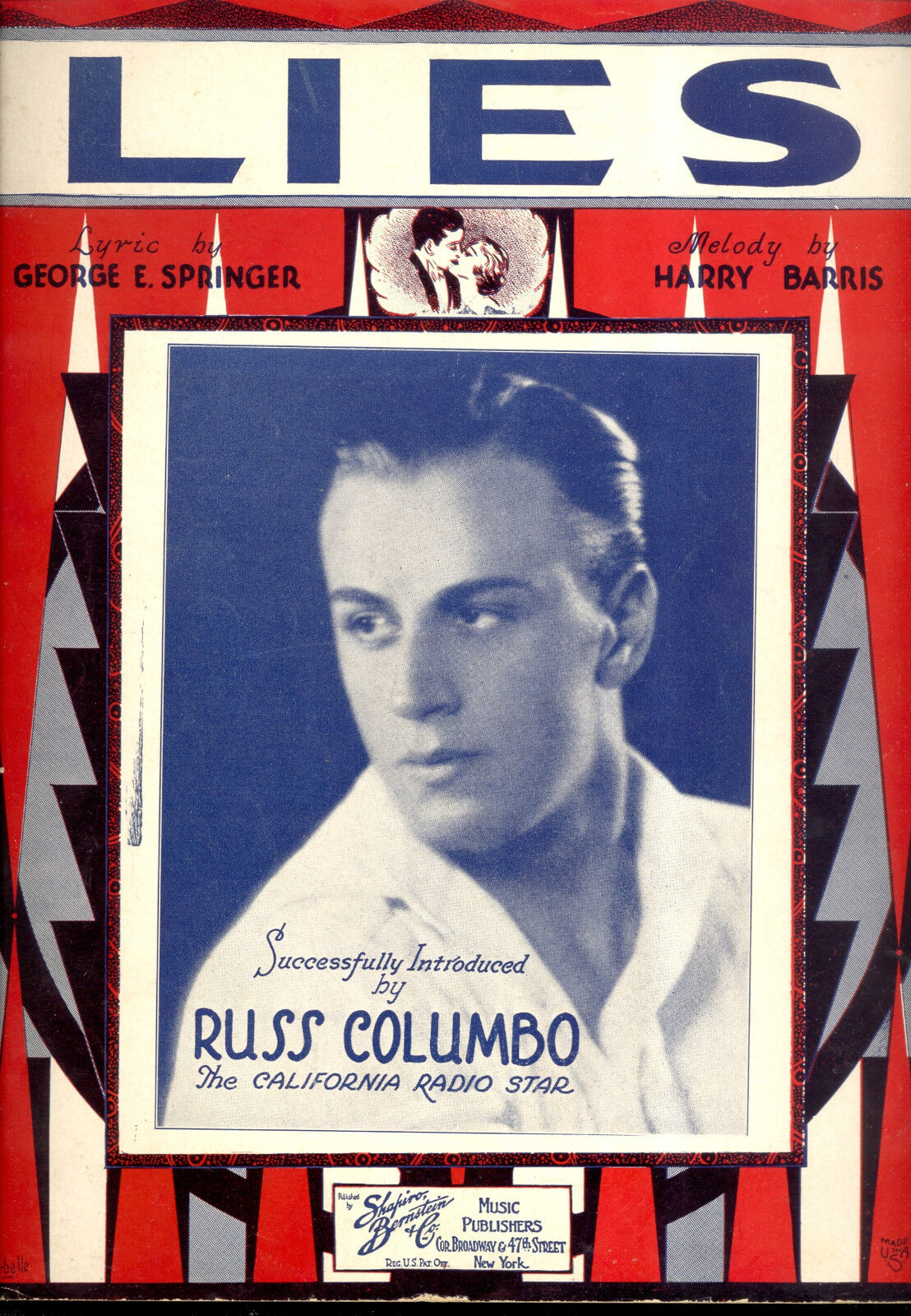
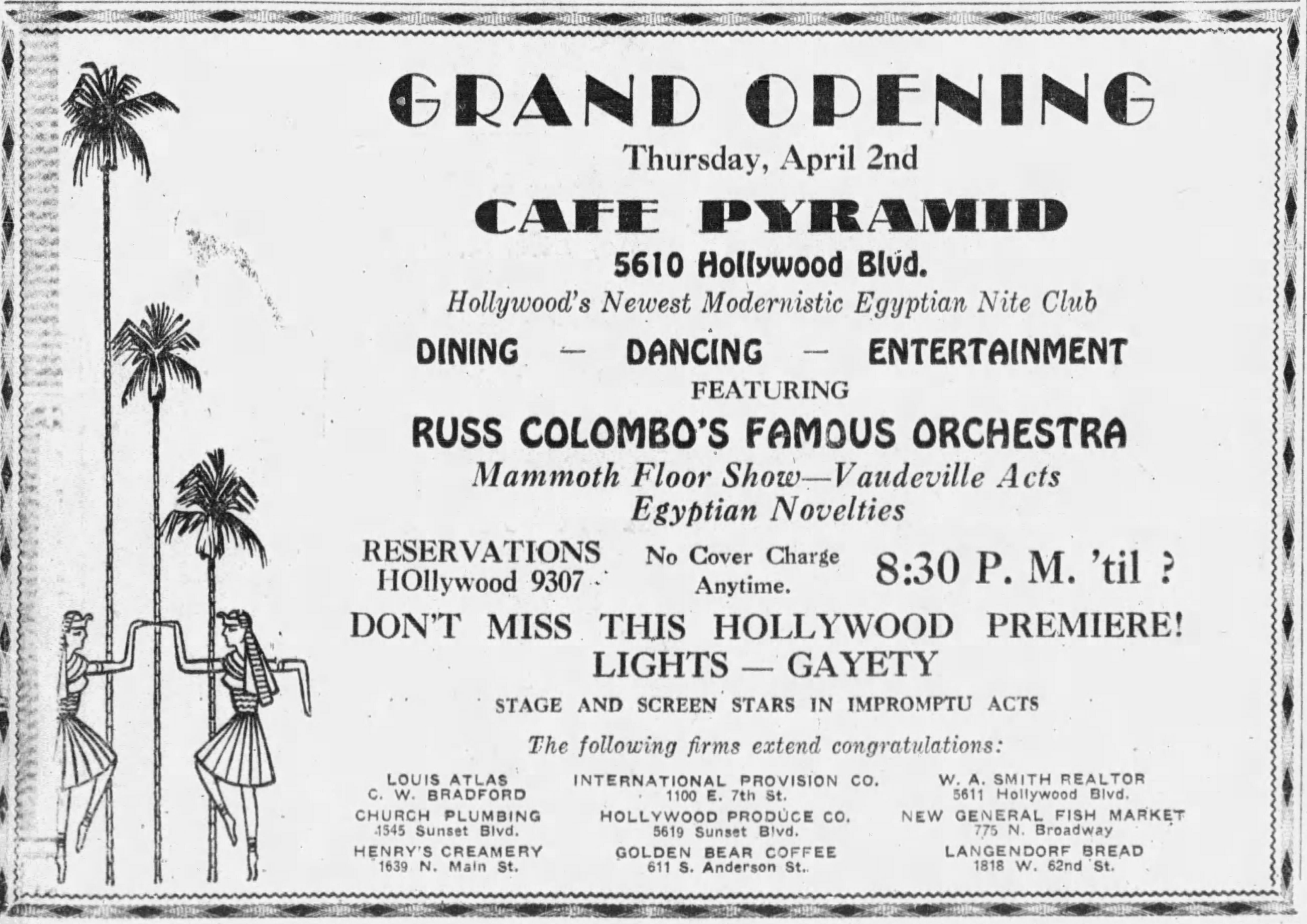

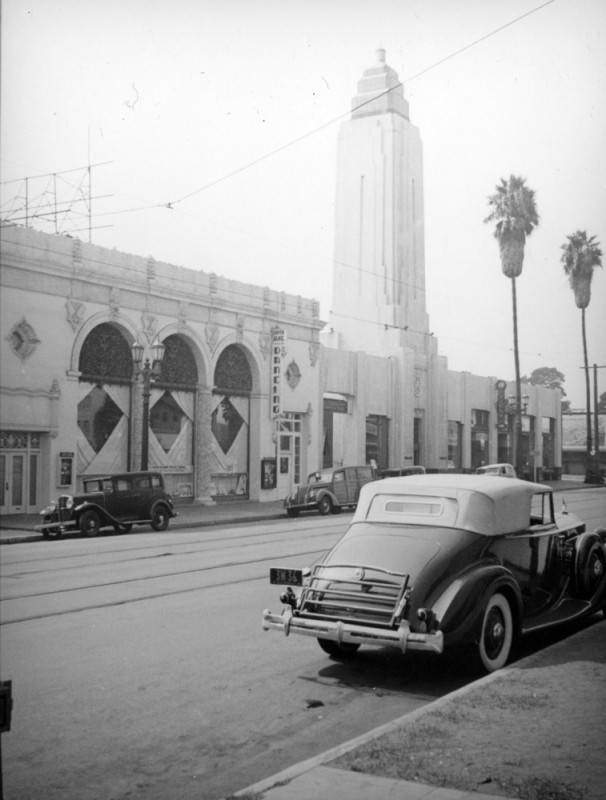




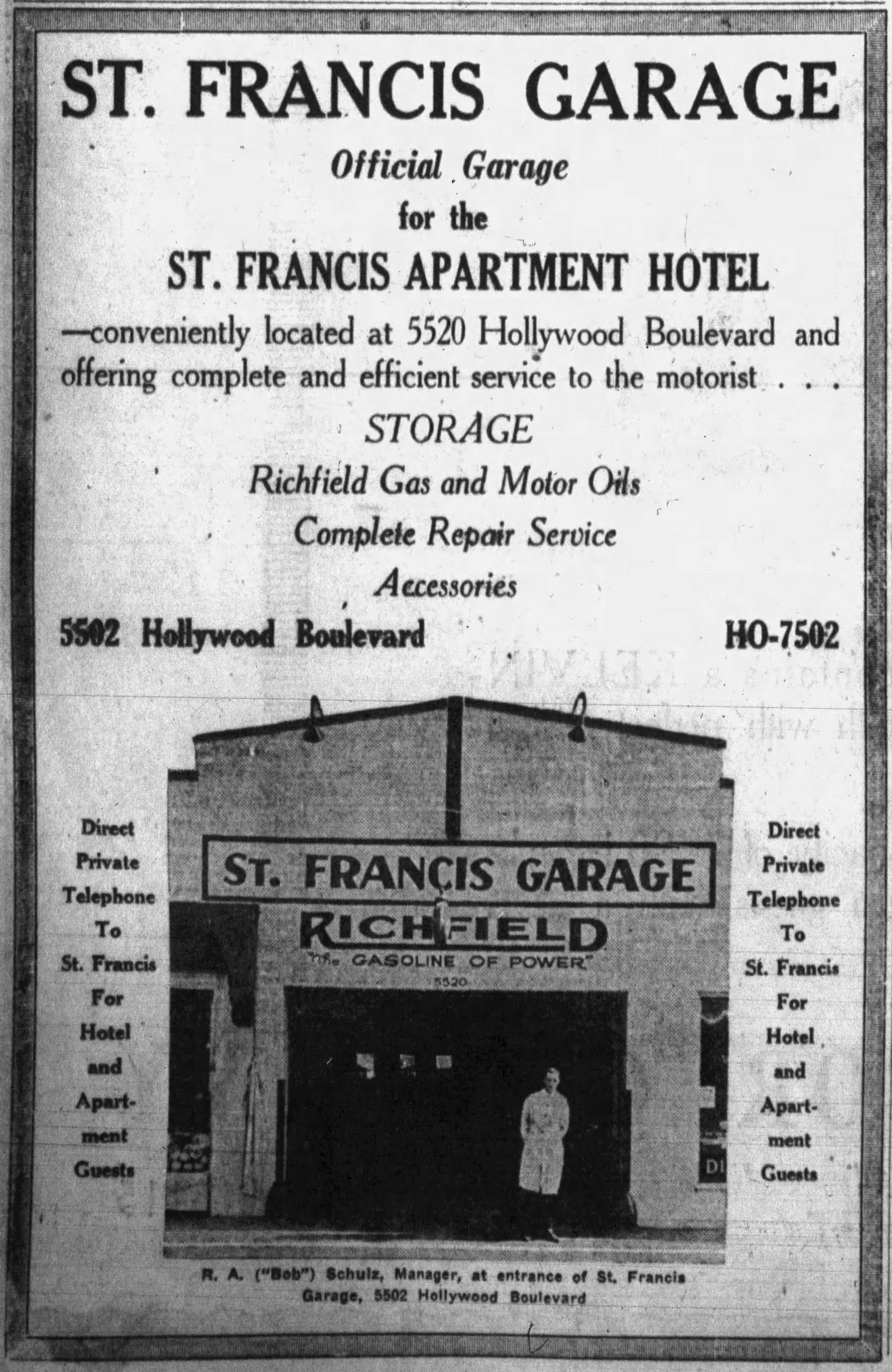
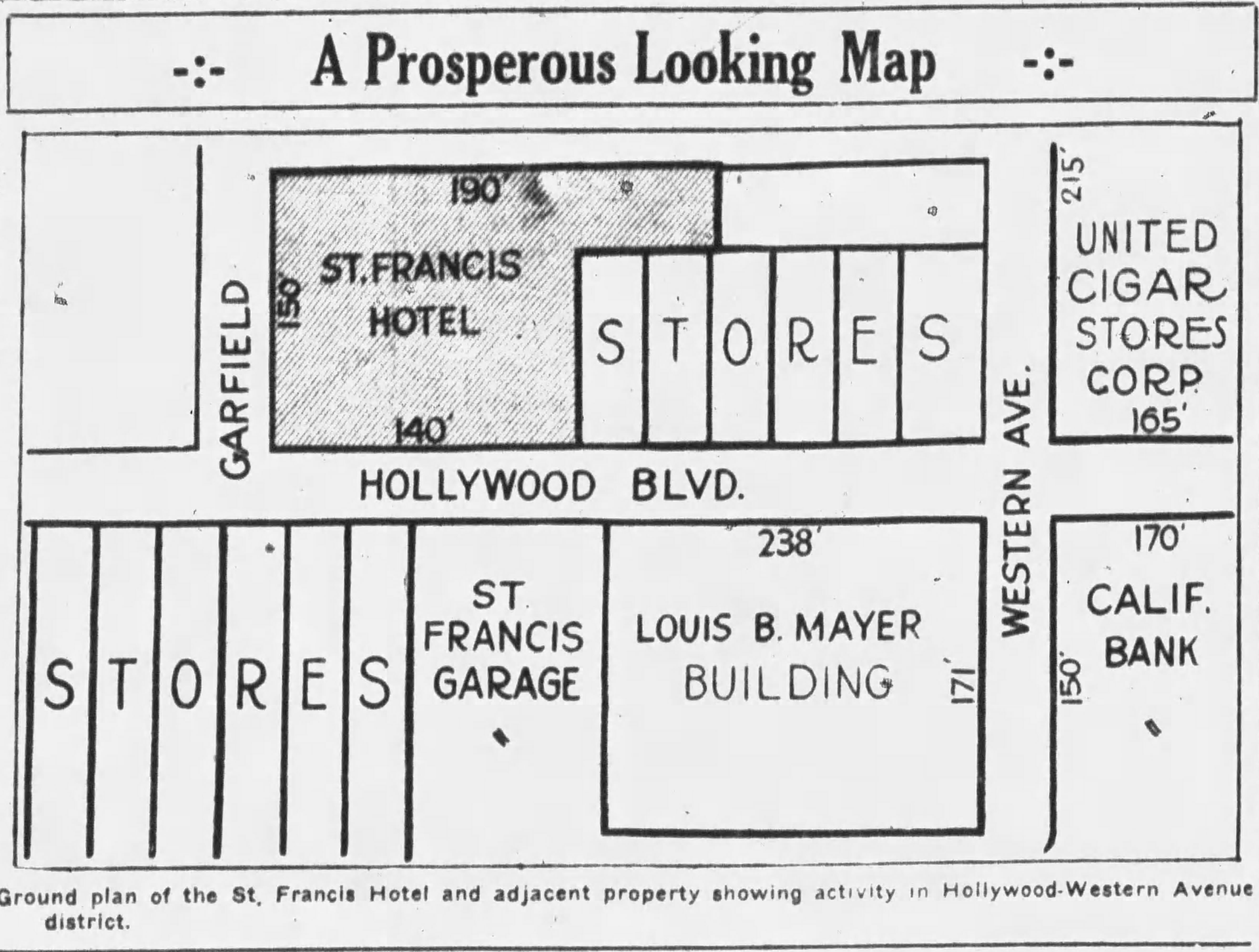


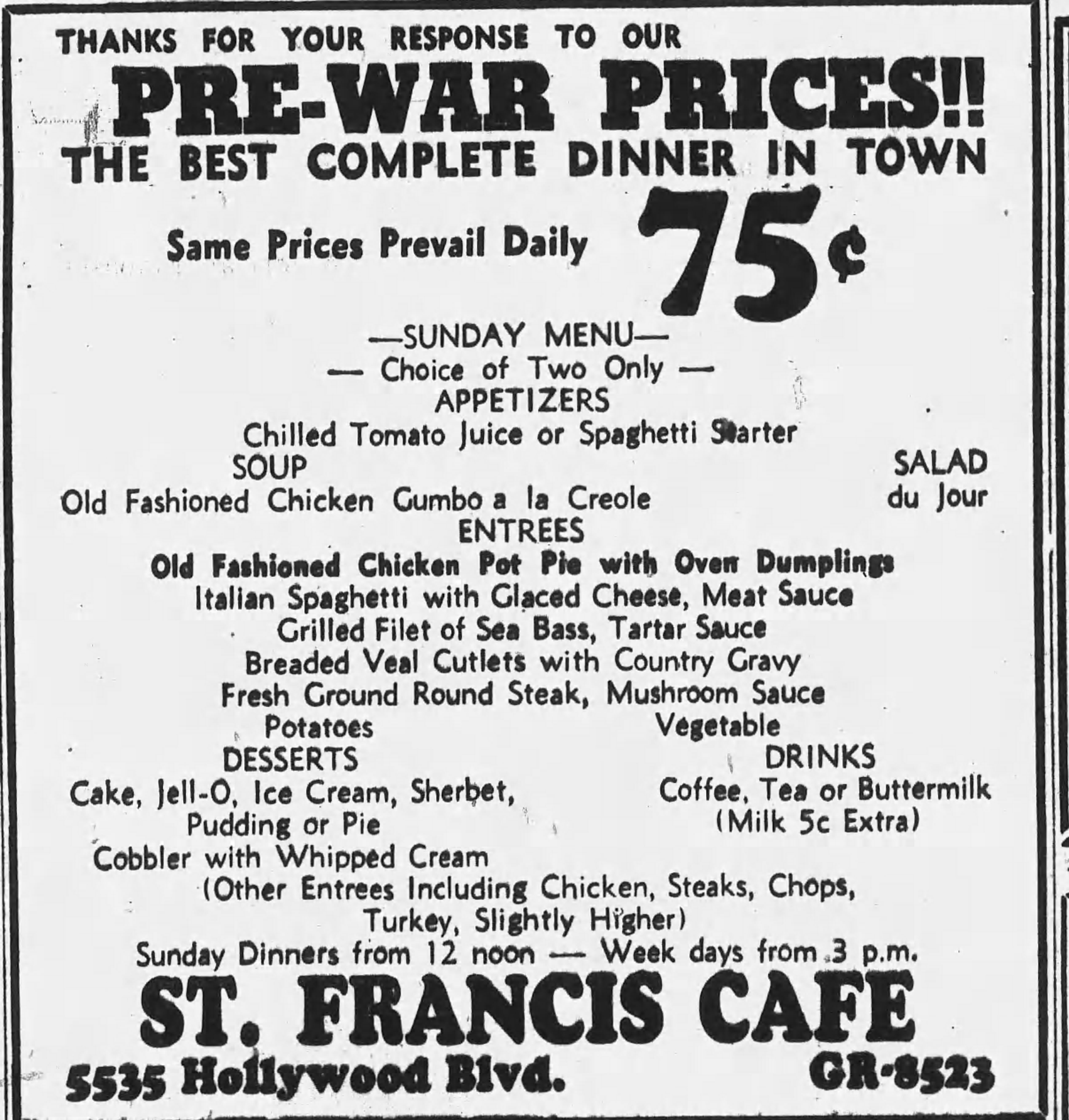

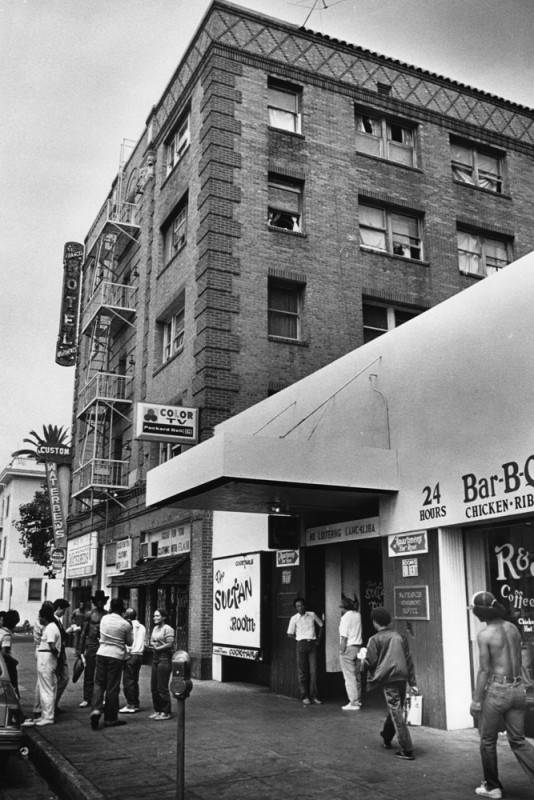


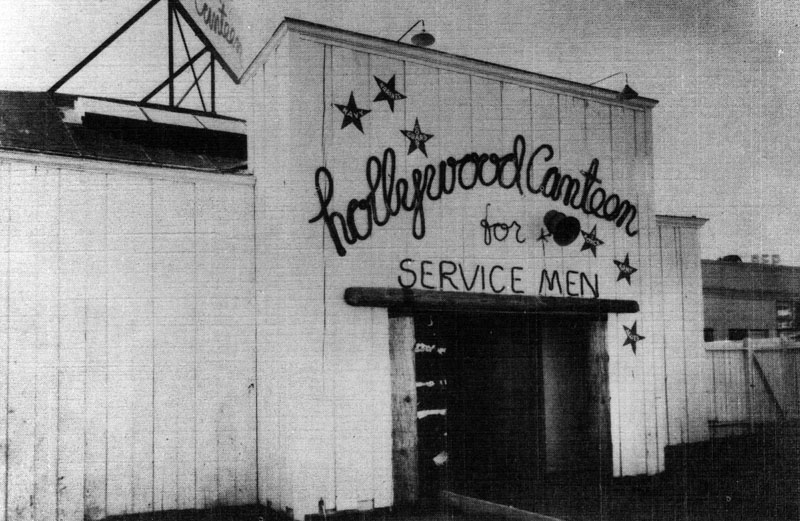
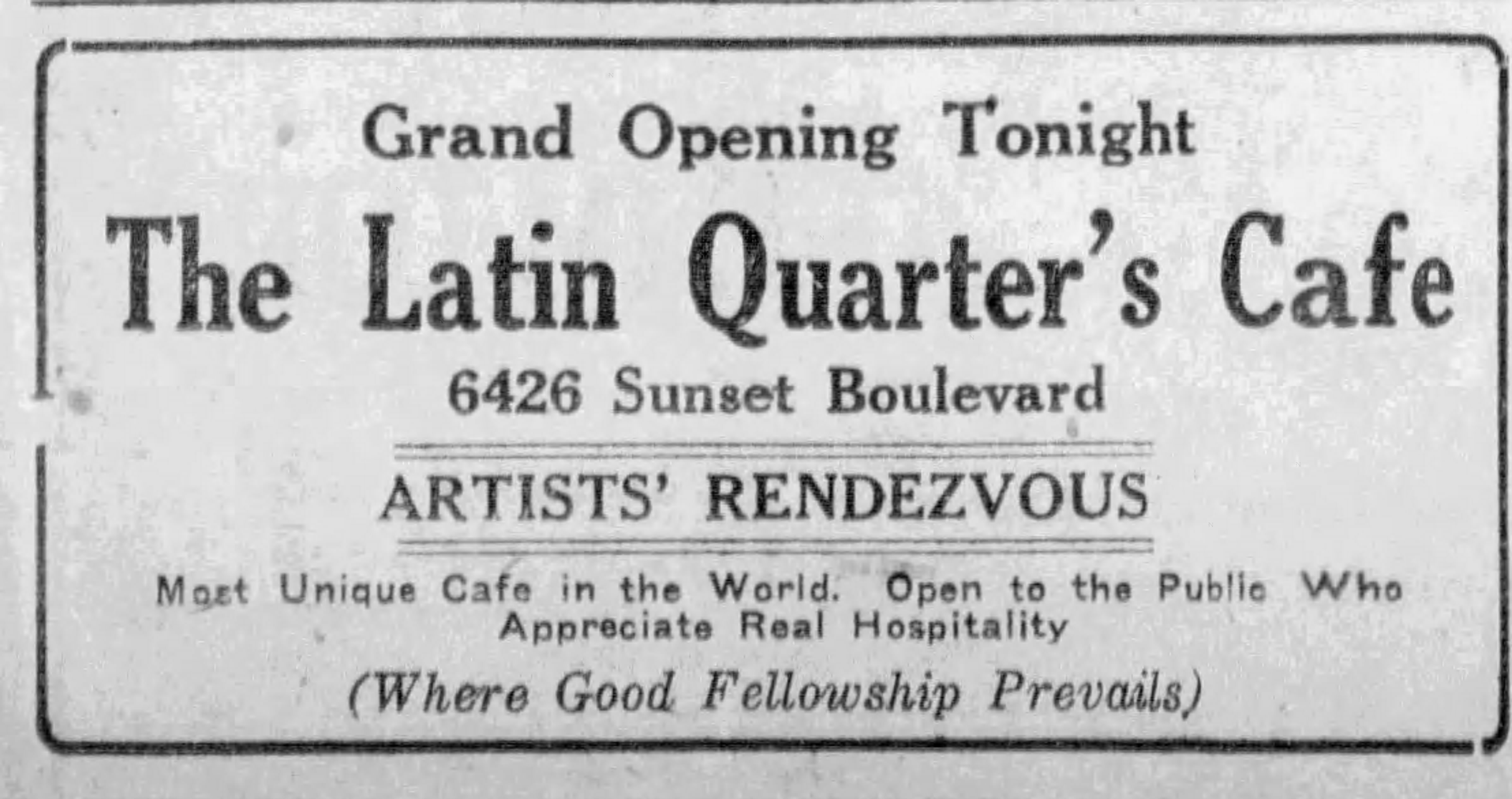

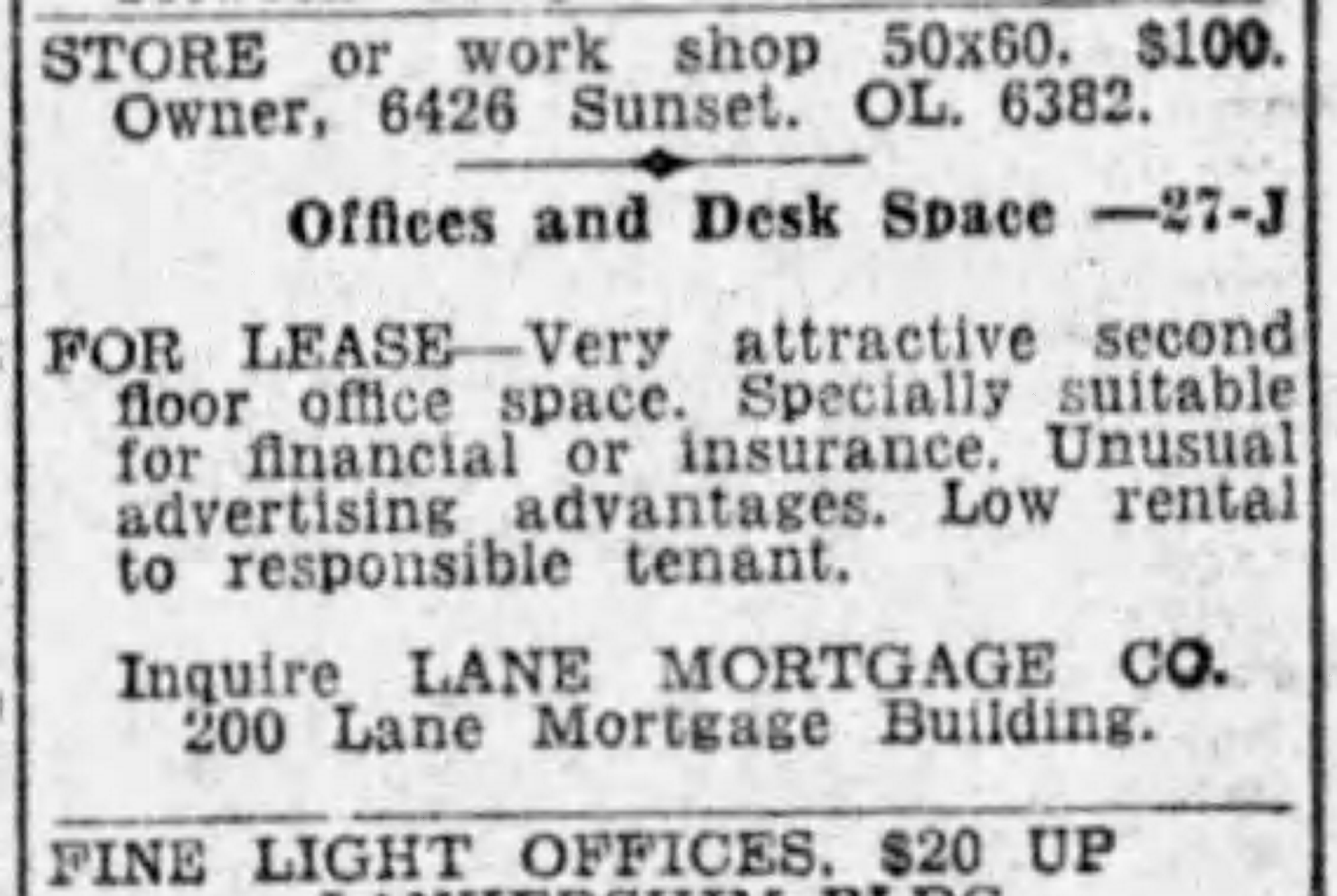
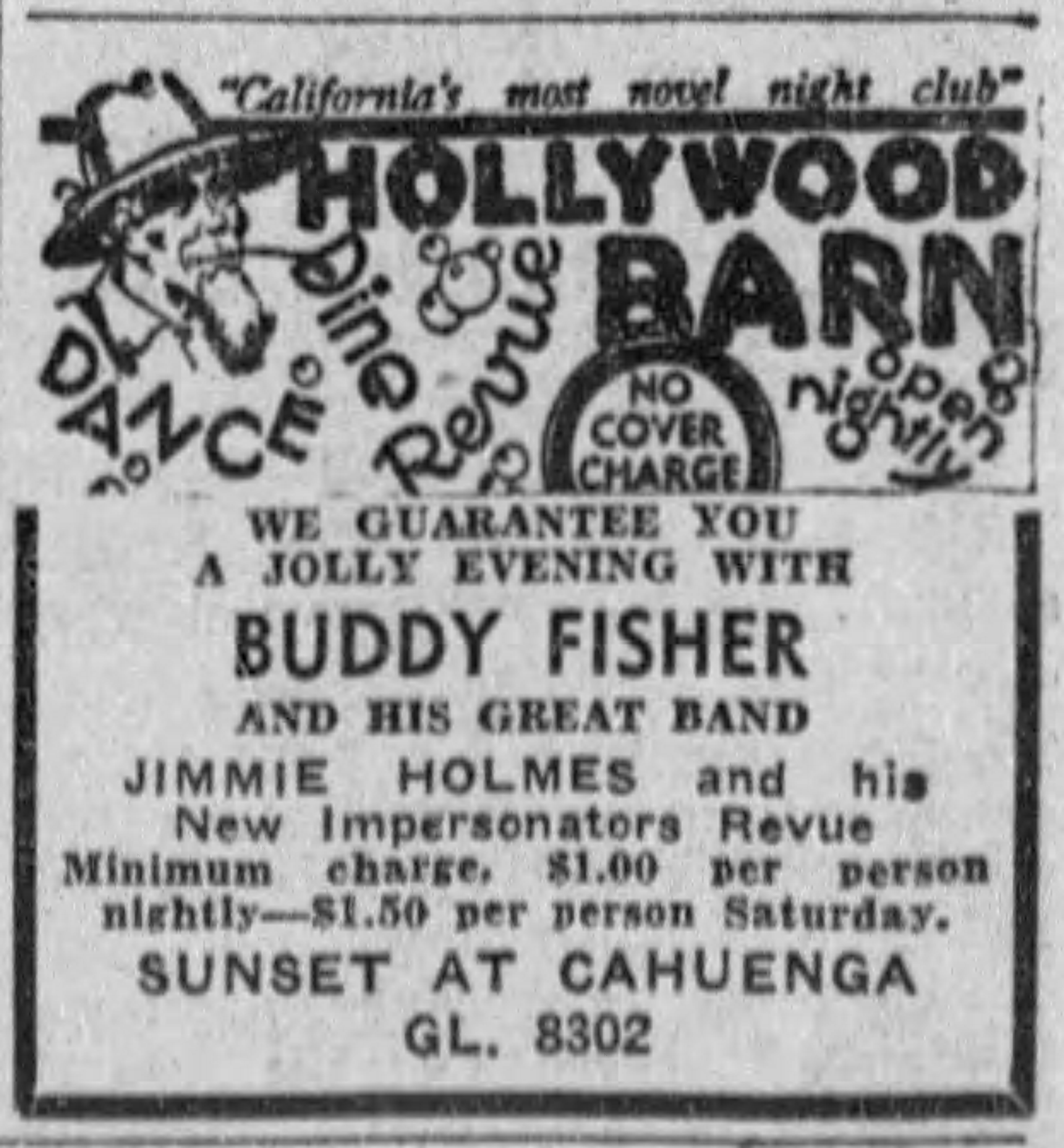




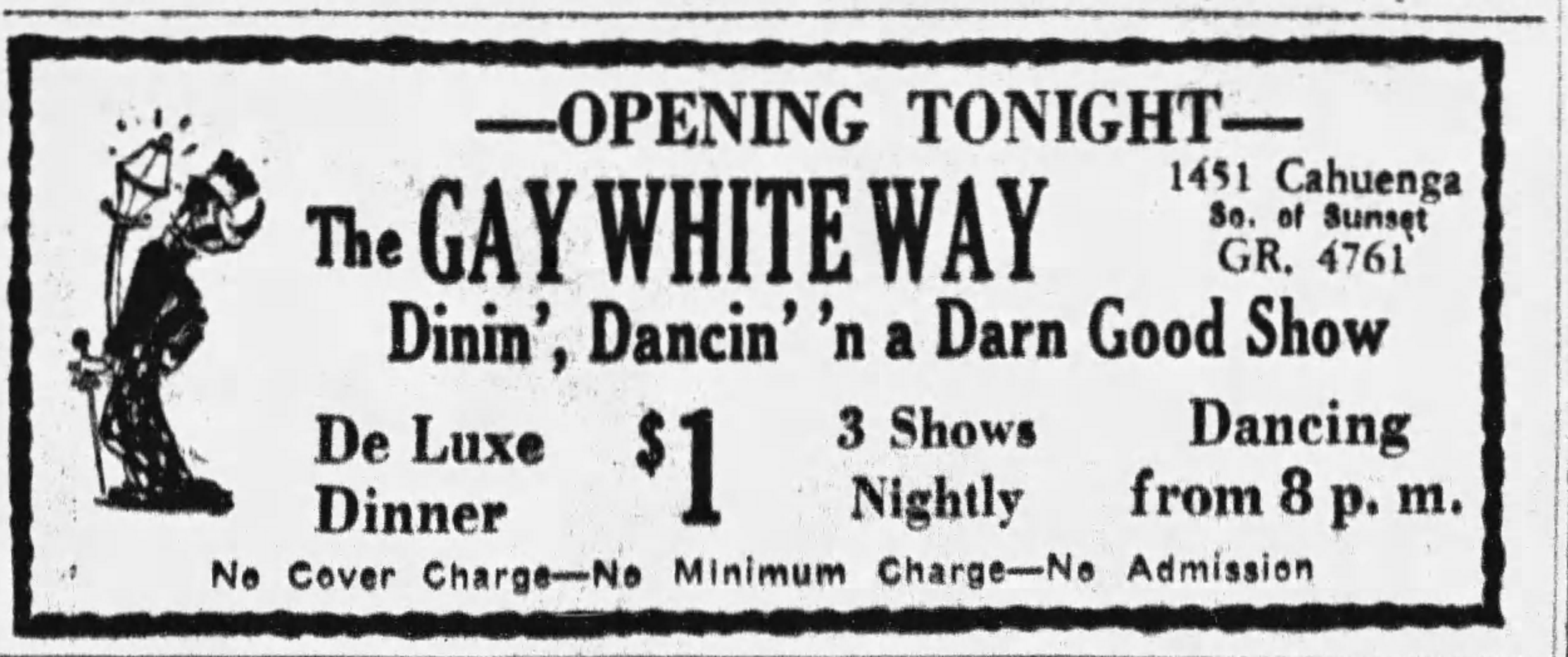
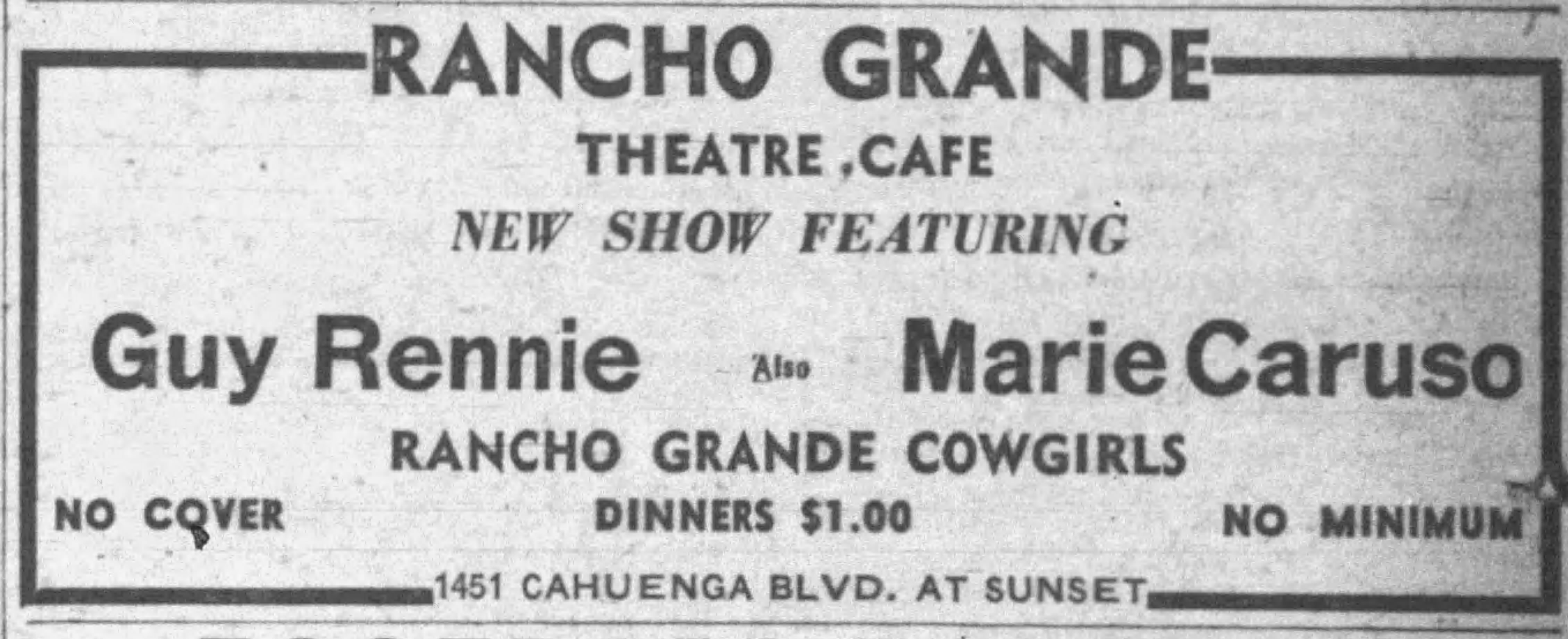
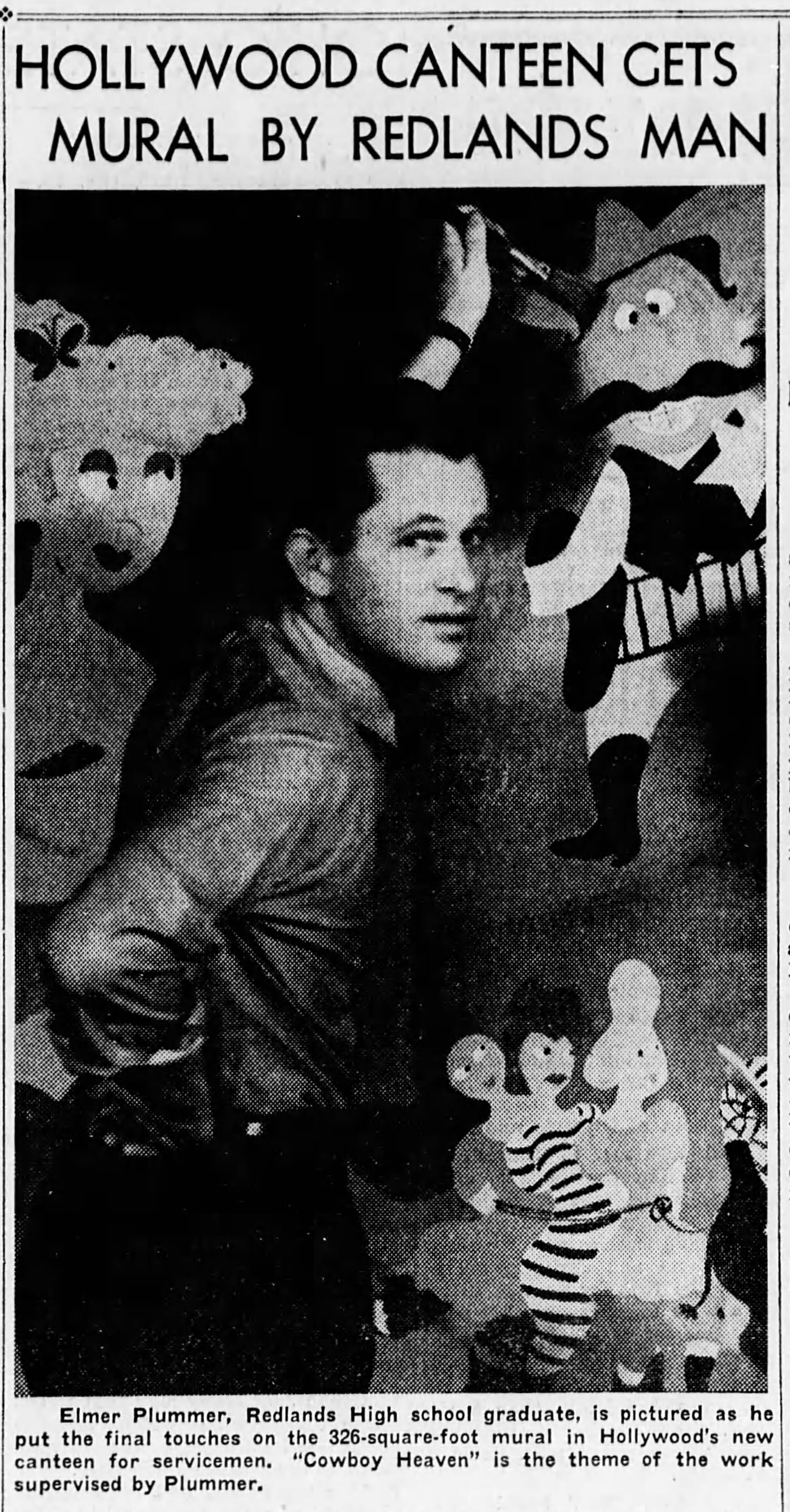


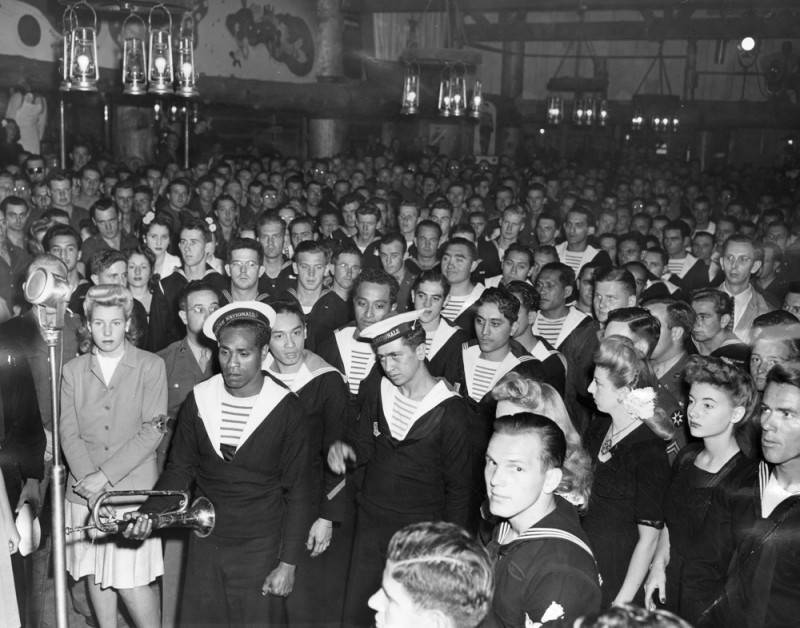


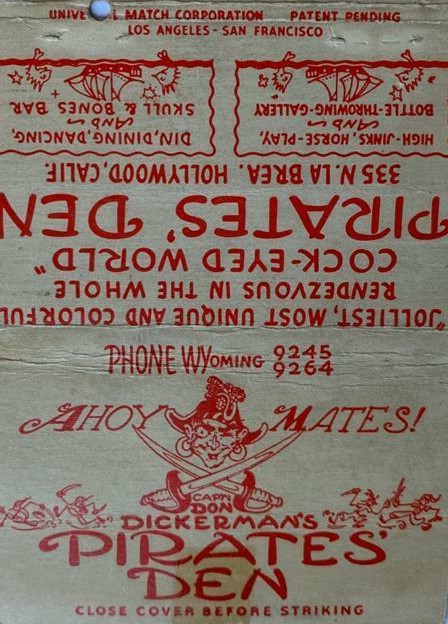


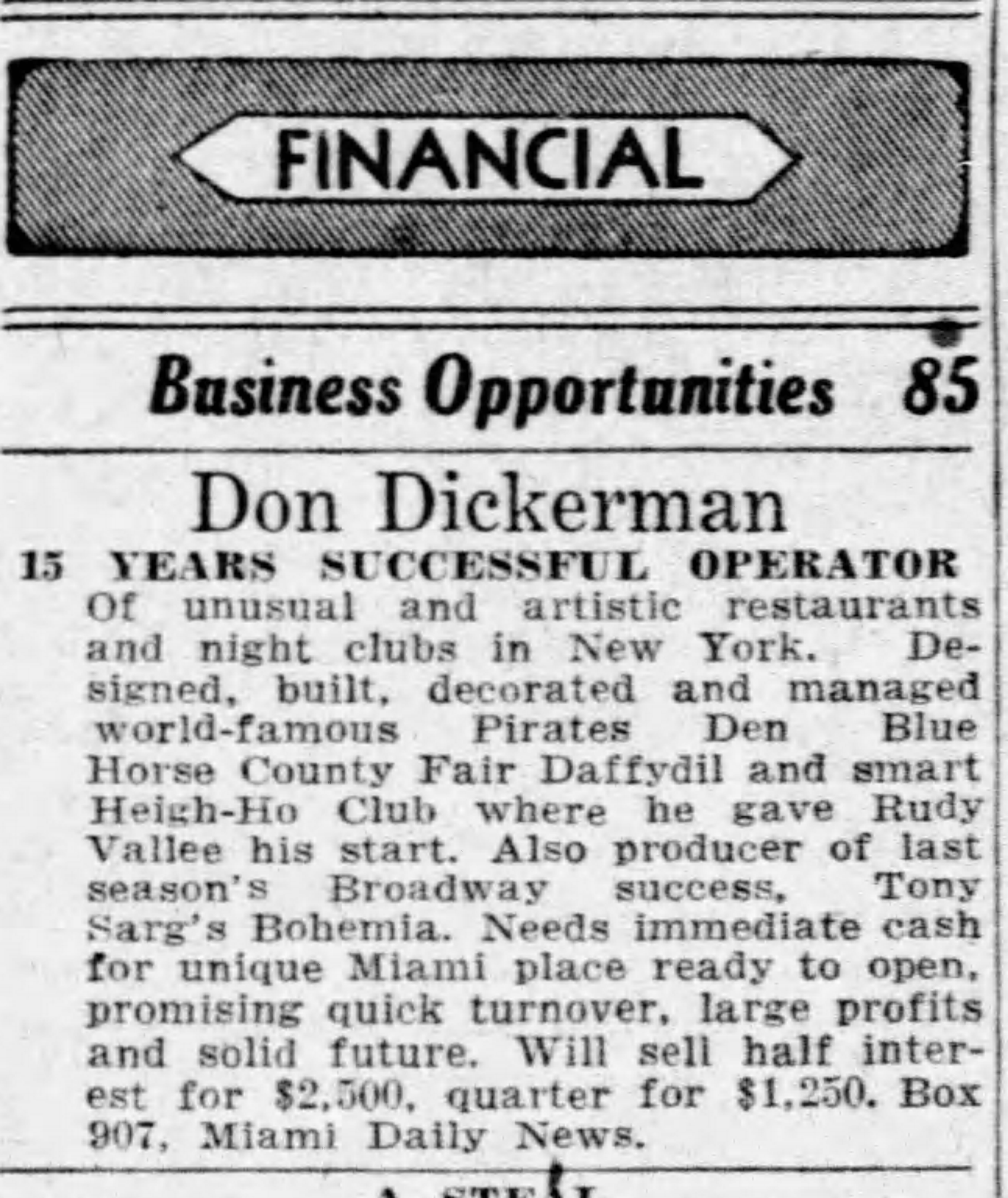


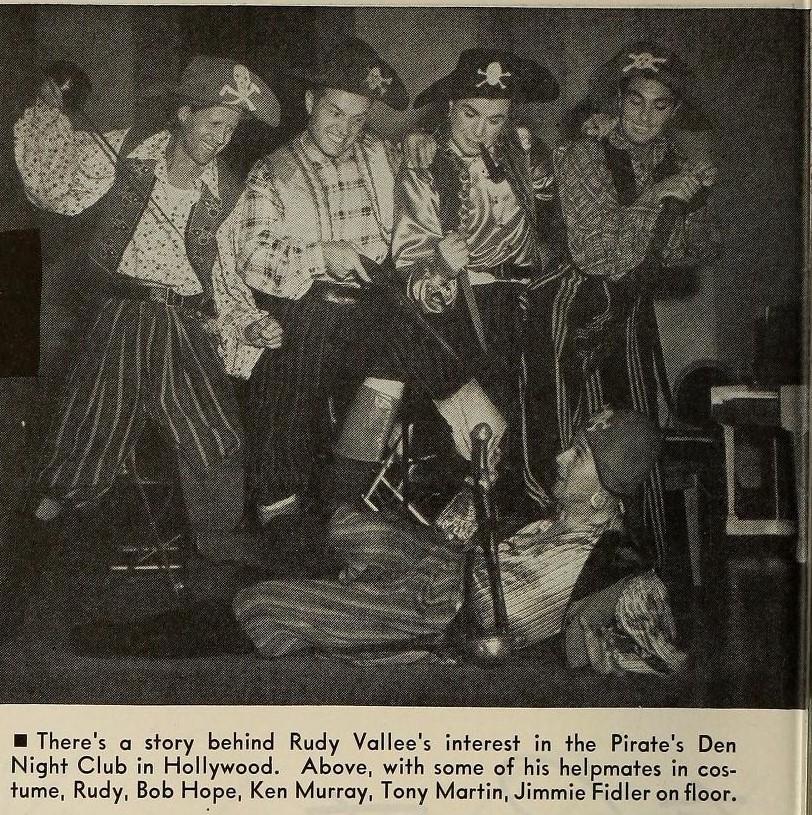

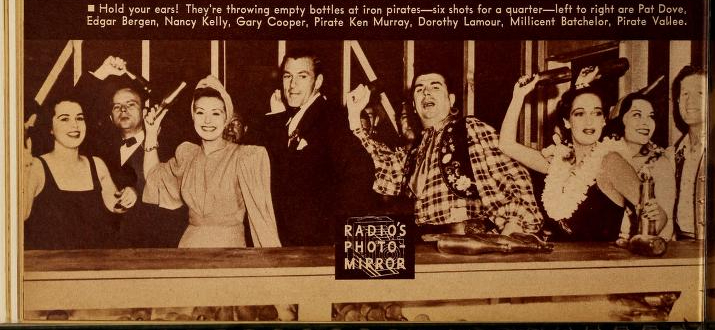



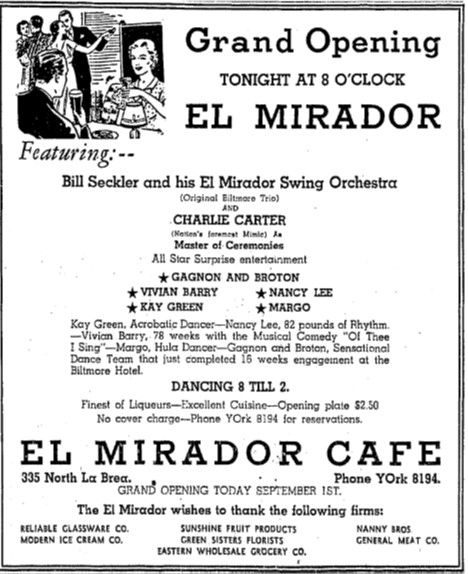


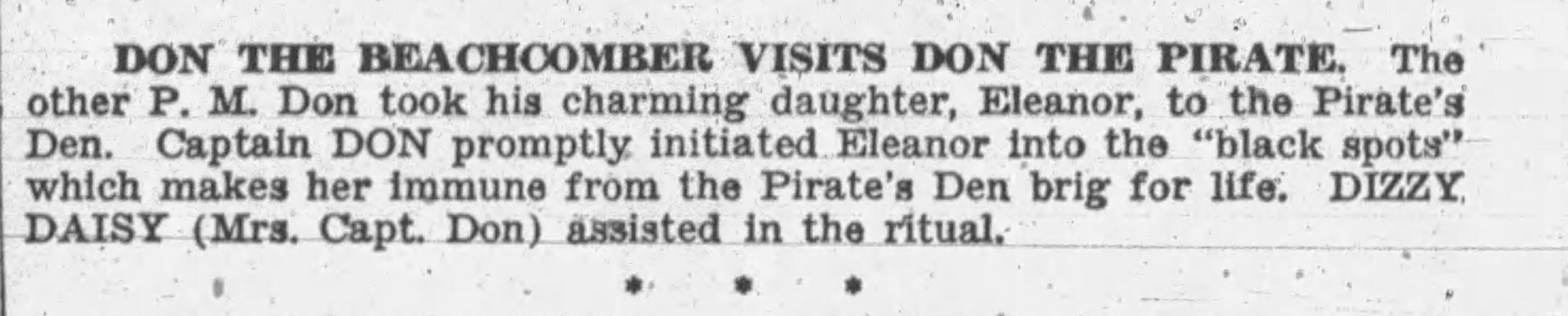

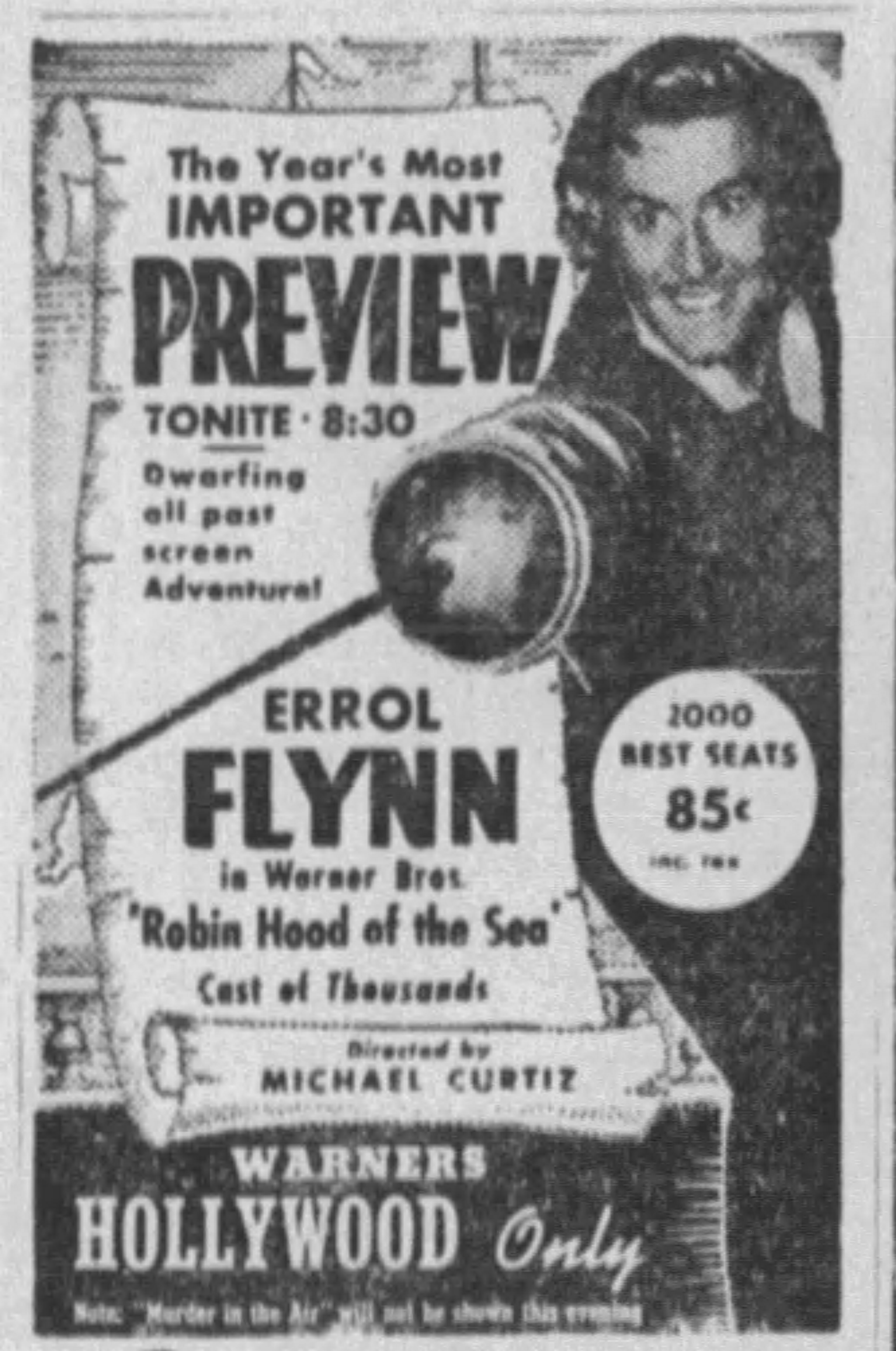


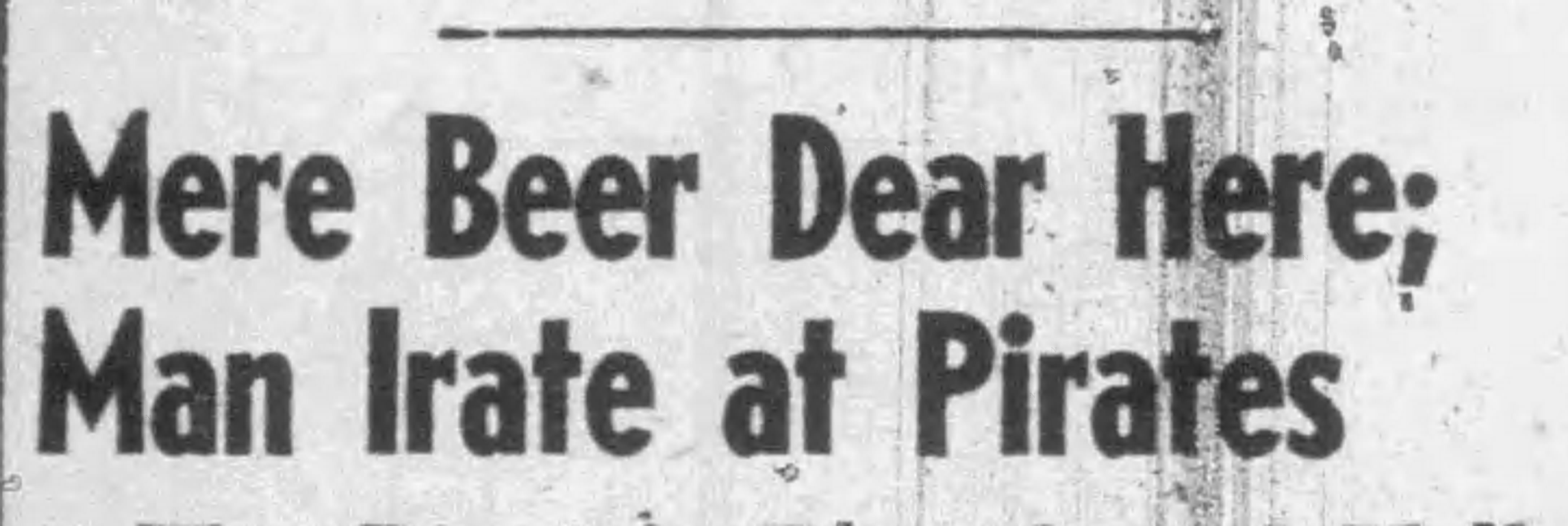


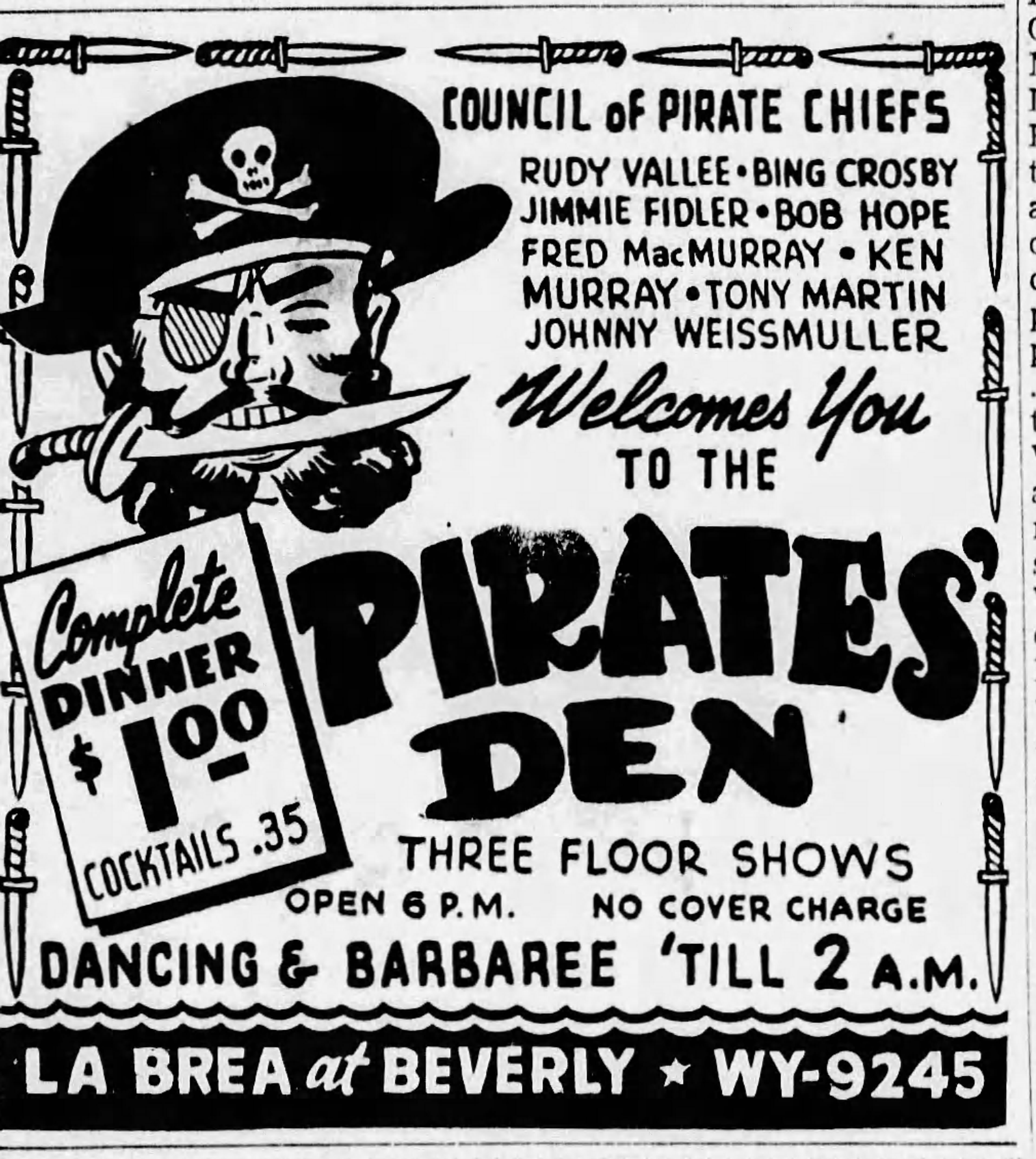
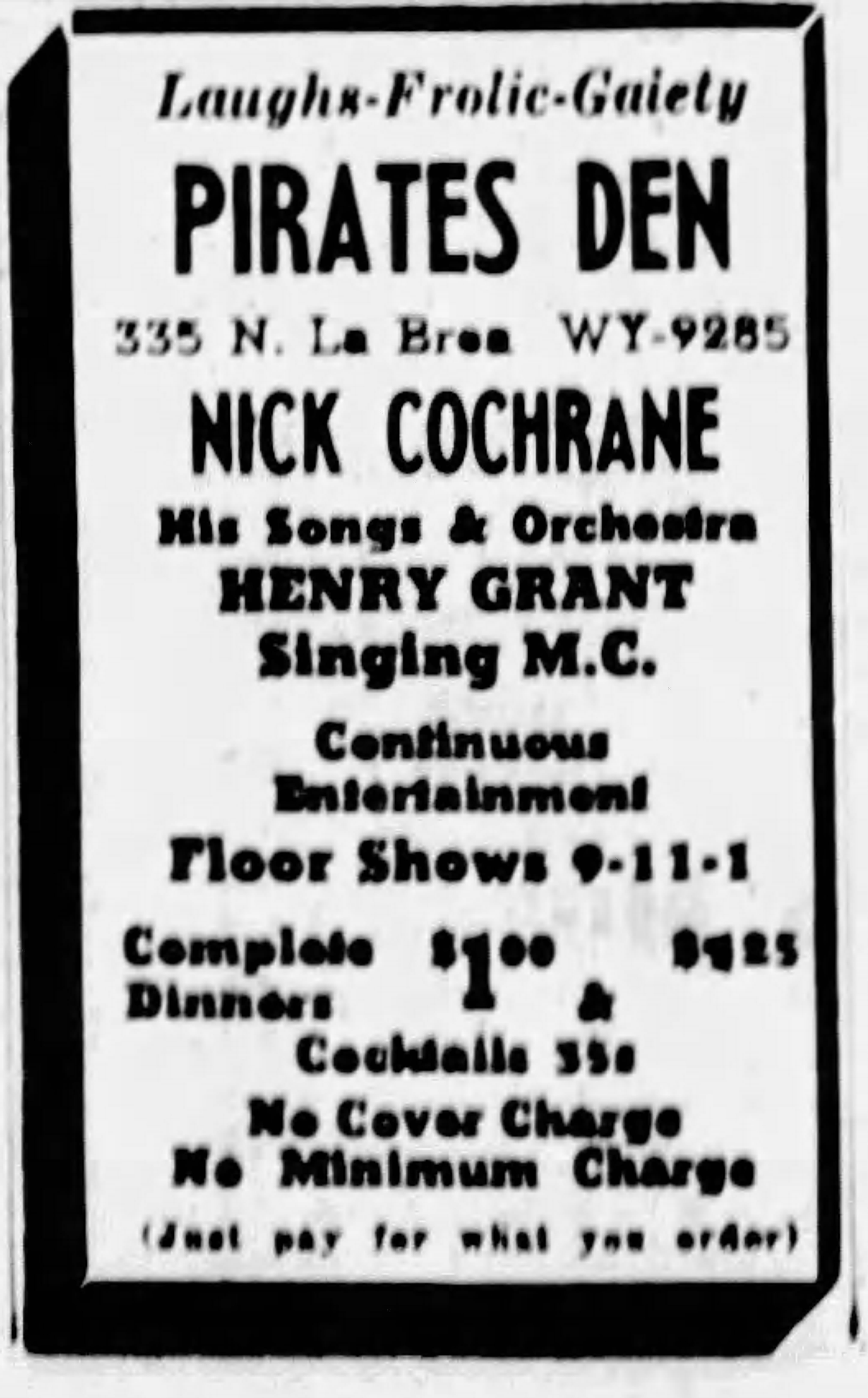
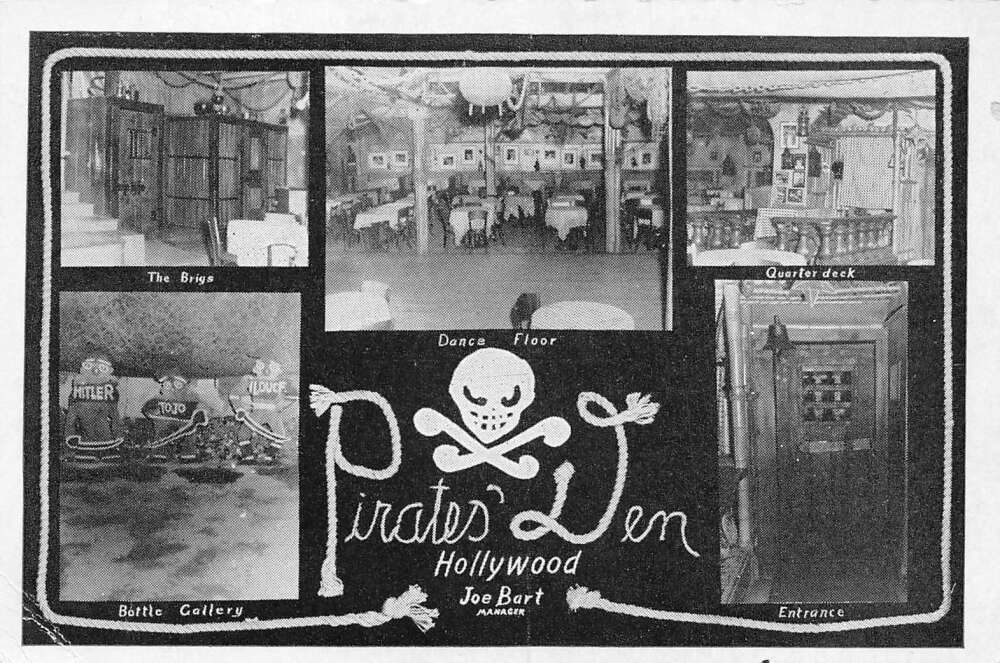







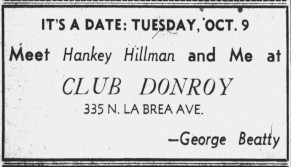


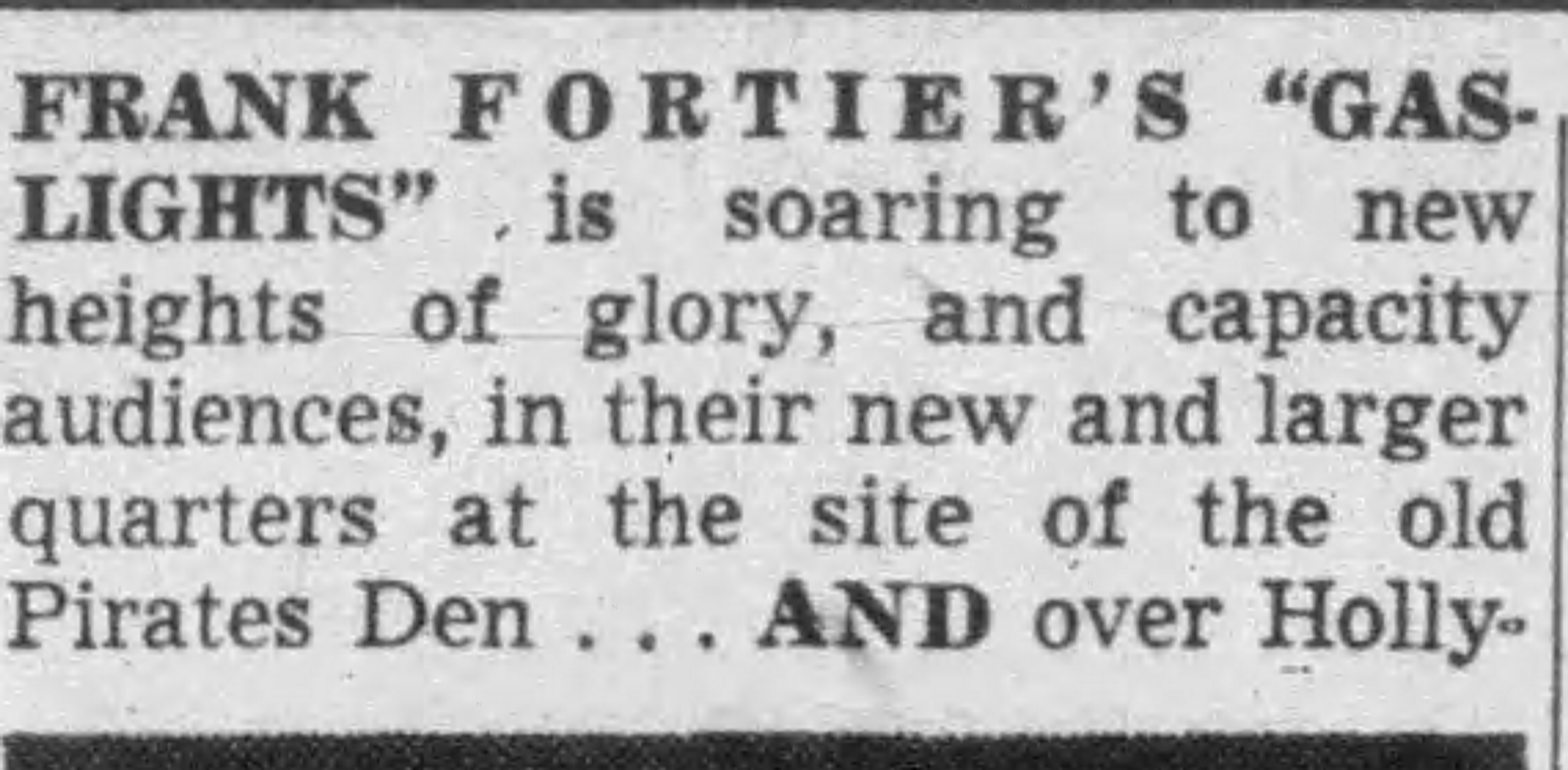




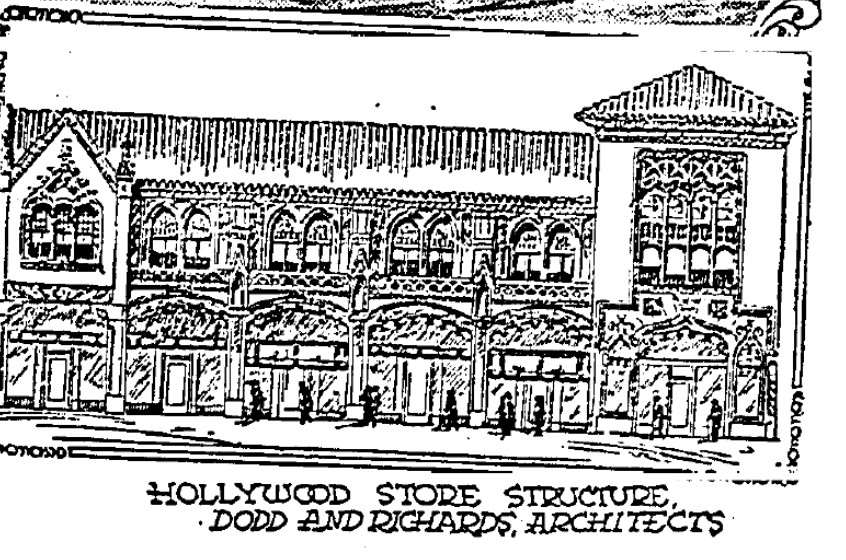
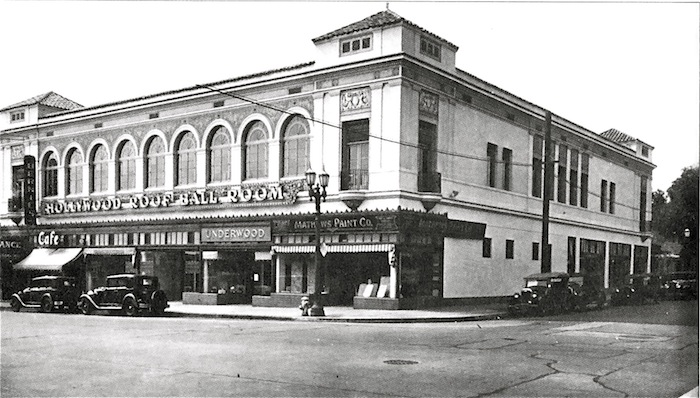


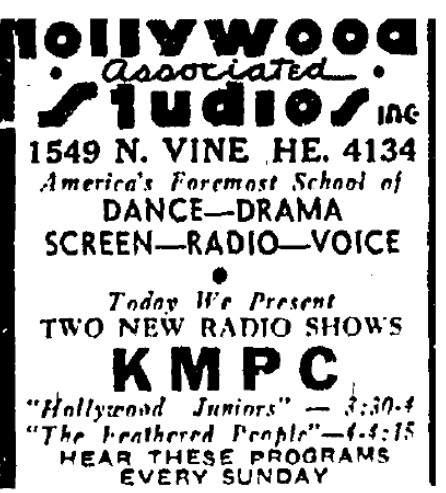

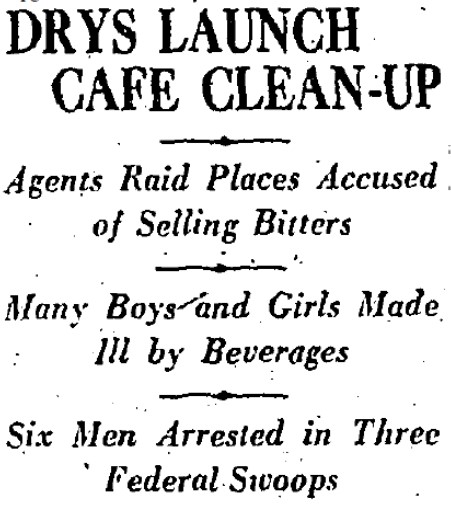


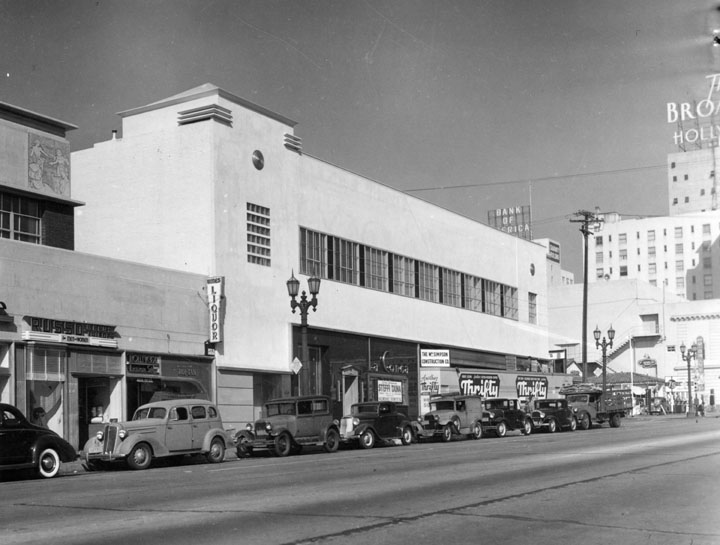


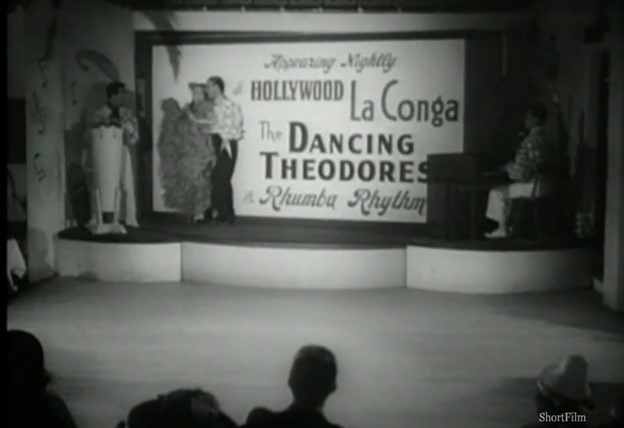
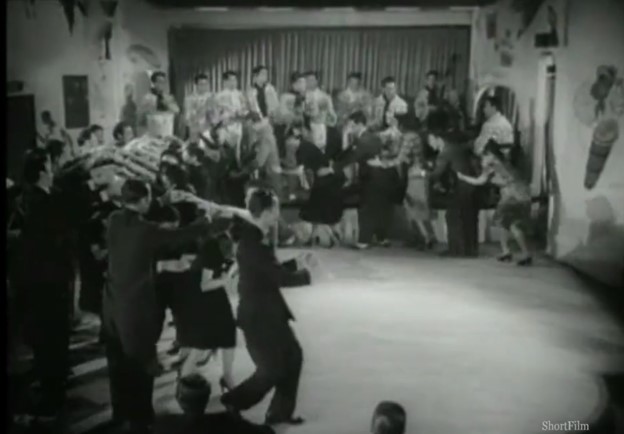
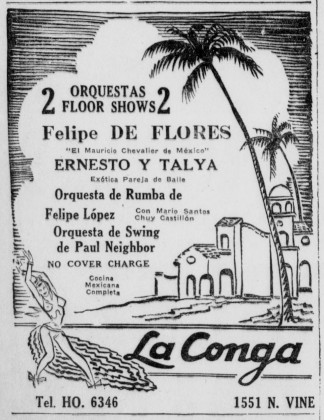





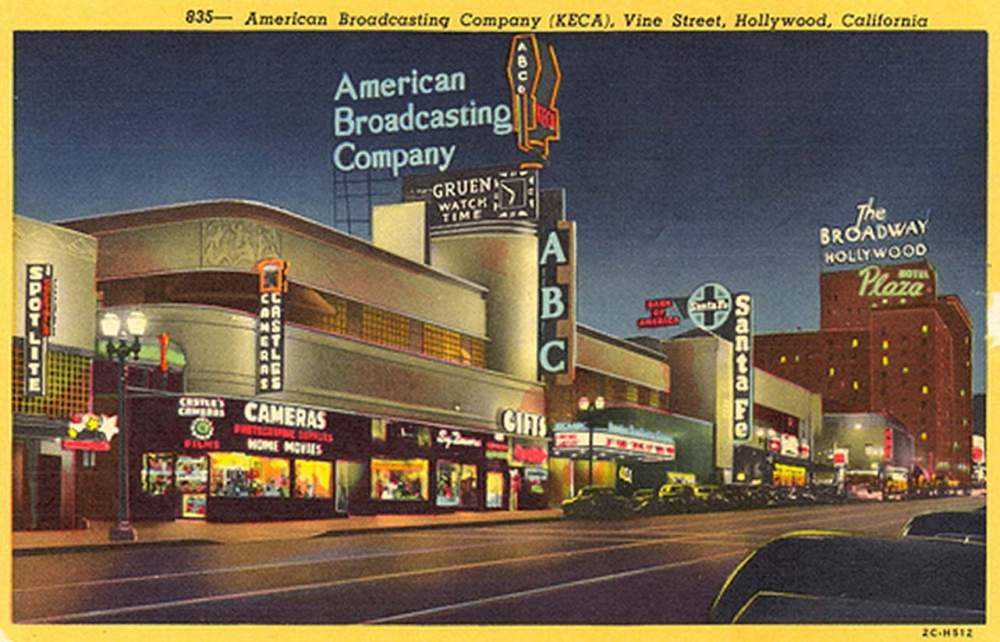
 J. H. Graham