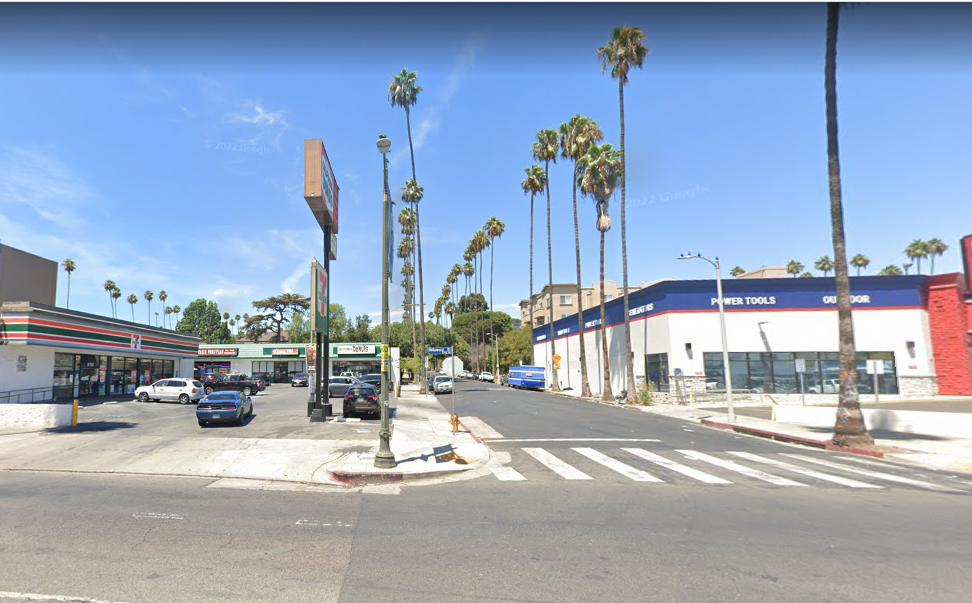
6000-6004 Hollywood Boulevard: Eskimo Village Mini Golf / Mary’s Lighthouse / Hollywood Ford

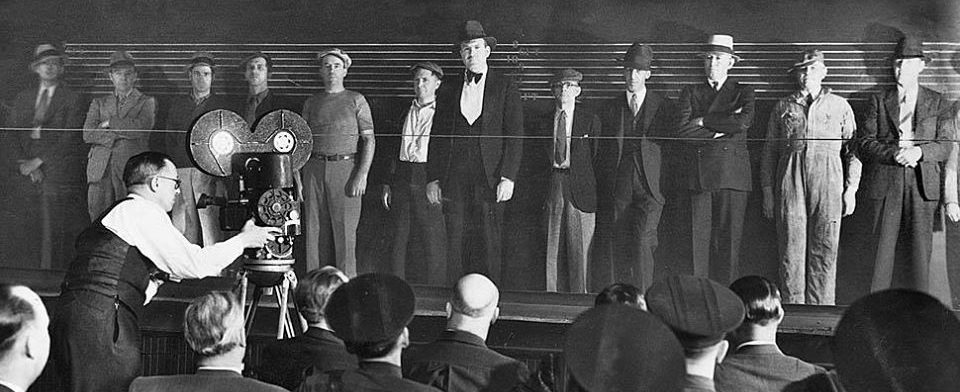
Eskimo Village, 1930. California State Library photo.

Located in the Mount View Tract and separated from the Mountain View Inn to the east by an alley called Brokaw Place (connecting Hollywood Boulevard to Carlton Way), Eskimo Village Miniature Golf opened at 6004 Hollywood Boulevard in August 1930 at the height of the nation’s short-lived miniature golf obsession. It wasn’t the only miniature golf links to open on Hollywood Boulevard that summer. It wasn’t even the only mini golf links on this block- there was Shady Greens across the street on the Brokaw ranch property, and Loma Linda links down the street. But it was certainly one of the most unique courses.

Organized by Sid Algier, a film director, it was meant to be the first in a chain of Eskimo Villages. The course was designed and built by H.C. Lydecker, a former art director and miniatures expert with the Tiffany-Stahl studio. It had an Alaskan theme with Hollywood studio snow, wrecked ships, totem poles, icebergs and igloos. It opened on the evening of August 7, 1930. Actress Alice White and her future husband, screenwriter Sidney “Sy” Bartlett, officiated.
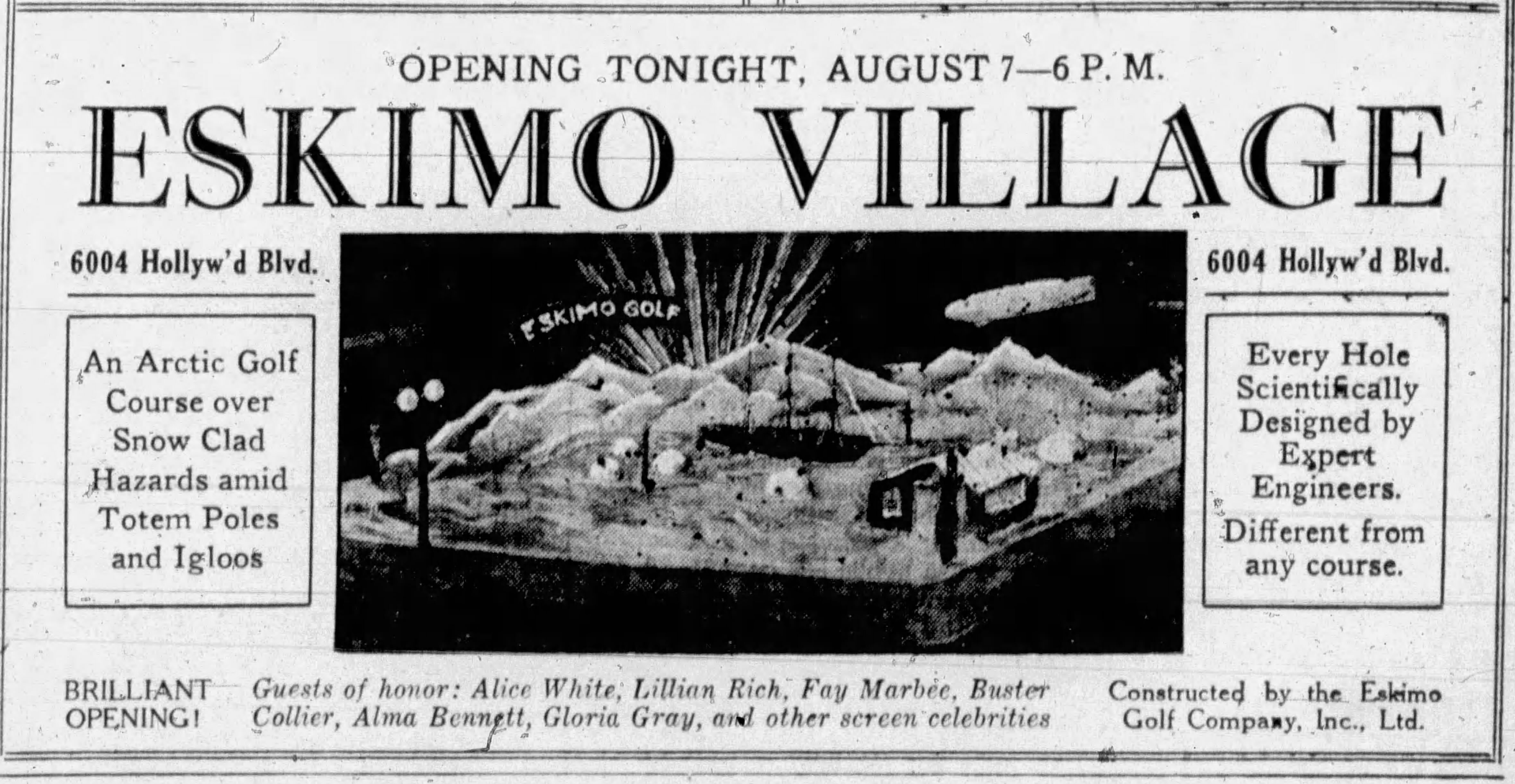
Hollywood Daily Citizen 8/7/1930.

6004 Hollywood Boulevard, originally addressed as 556 Prospect Avenue, had been the home of William Thornton Glassell and his wife Fannie.

W.T. Glassell was born in California in 1863. He was named after his uncle, who had been a captain in the Confederate Navy during the Civil War. His father had come West from Virginia during  the Gold Rush. Widowed in 1898, in 1901 he married Fannie E. Moore, lately arrived from England and 20 years his junior.

By 1905 the couple had settled in Hollywood with their two young children and William’s grown son from his first marriage. The ranch house was set amid a lemon grove.

LA Express 4/22/1905
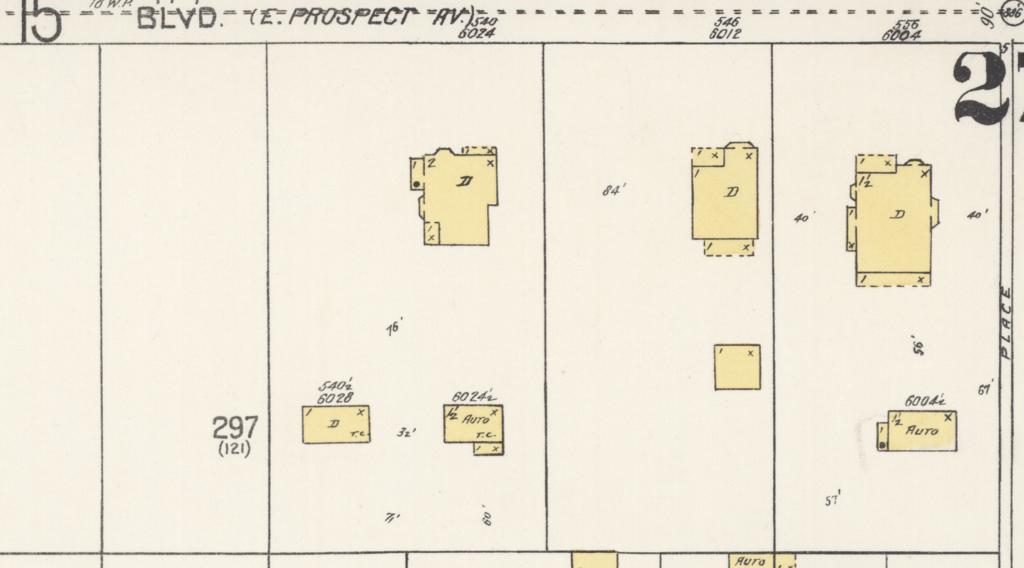
 

The Glassell residence, 6004 Hollywood Boulevard. Detail of a 1913 Sanborn Fire Insurance map. Library of Congress.

William Glassell died in January 1918. Fannie relocated with the children and rented 6004 Hollywood Boulevard, initially as a residence then for retail use as the Boulevard became increasingly commercial. She remarried in 1920 and became Fannie M. Shippee.

In March 1922, a film actress turned real estate agent named Mary Vittitoe obtained a permit, with Shippee’s permission, to build an office on the Glassell parcel. A. F. Leicht was the architect listed. The unique structure, shaped like a lighthouse, became an instant landmark when Mary opened for business, as 6002 Hollywood Boulevard, in July 1922.

Originally it was going to be 6004 Hollywood Boulevard but Mary opened her lighthouse-shaped office as 6002. Hollywood Daily Citizen 3/10/1922.

Postcard view of Mary’s lighthouse-shaped office.

Mary billed herself as the “youngest real estate salesgirl in the world.” How young was she? Well…. In the 1920 US Census Mary’s age is listed as 18. She appears in the census of 1900, however, as a year-old baby; her birth date is given as May 1899. In the 1930 US Census, Mary shaved even more years off her age, stating that she was 25. For 1940 and 1950, though, she reverted back to her actual age. The May 1899 date is correct; therefore she would have been 23 when her lighthouse office opened. Did that still make her the youngest real estate salesgirl in the world? Who was to say.
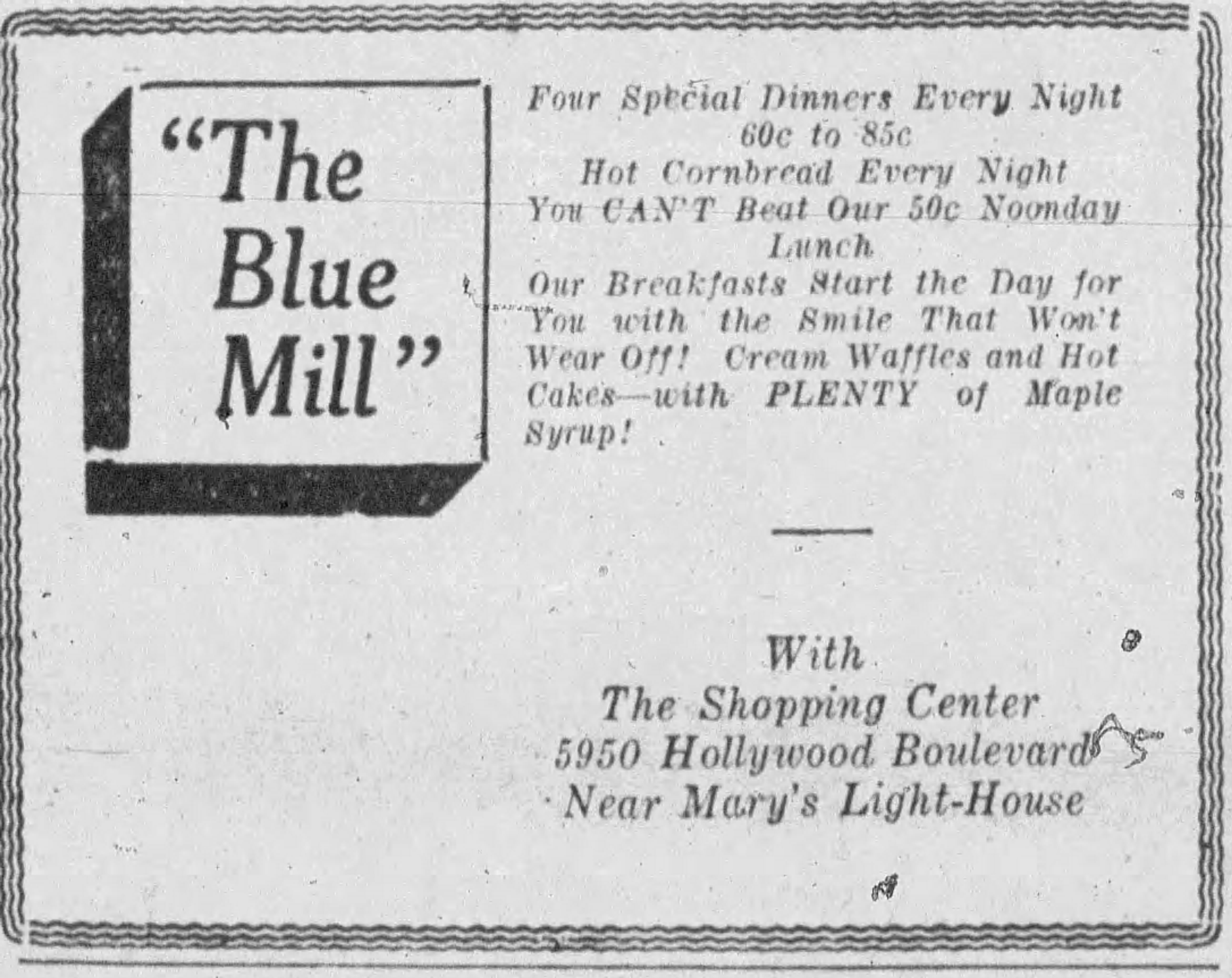
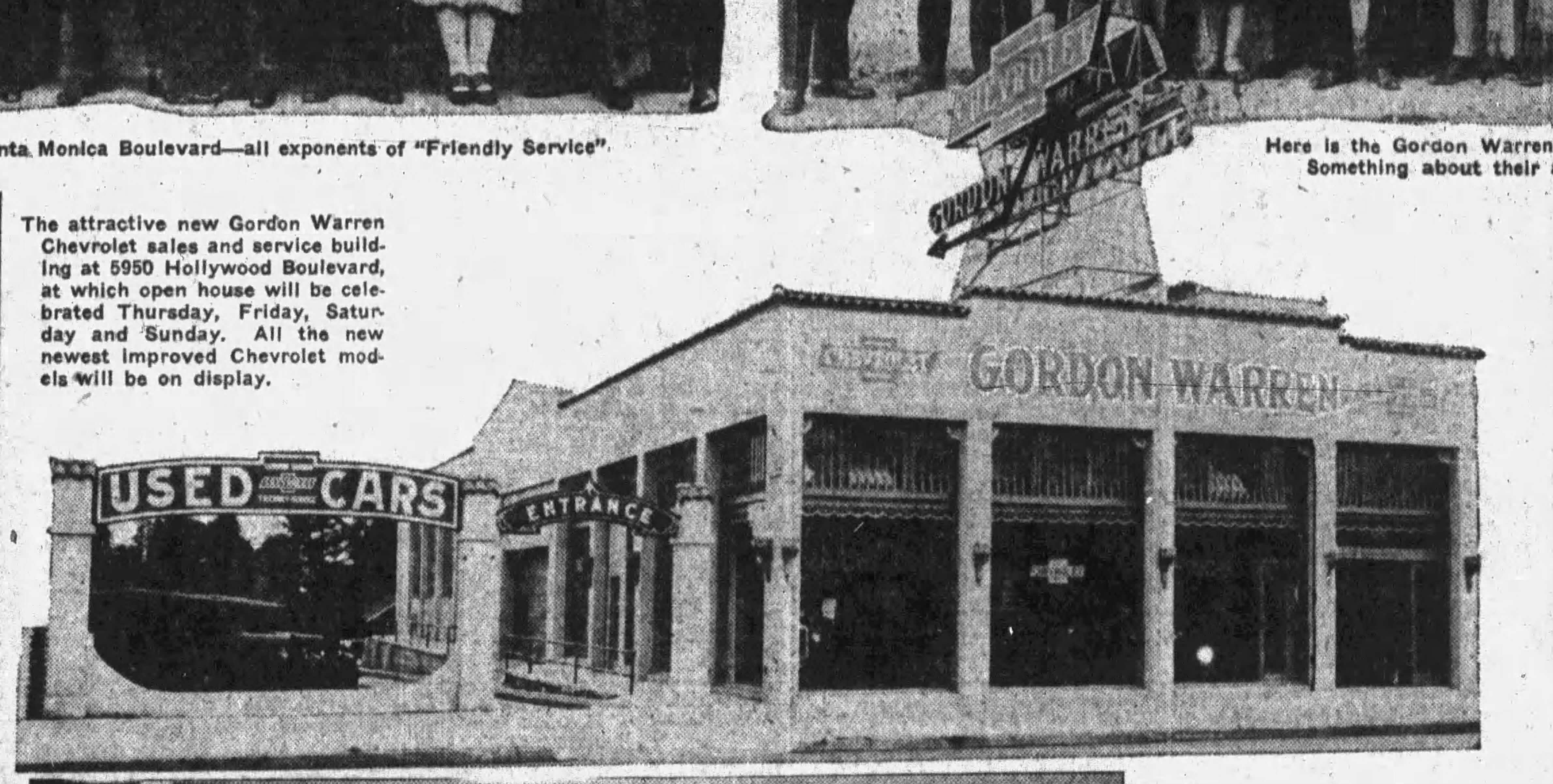
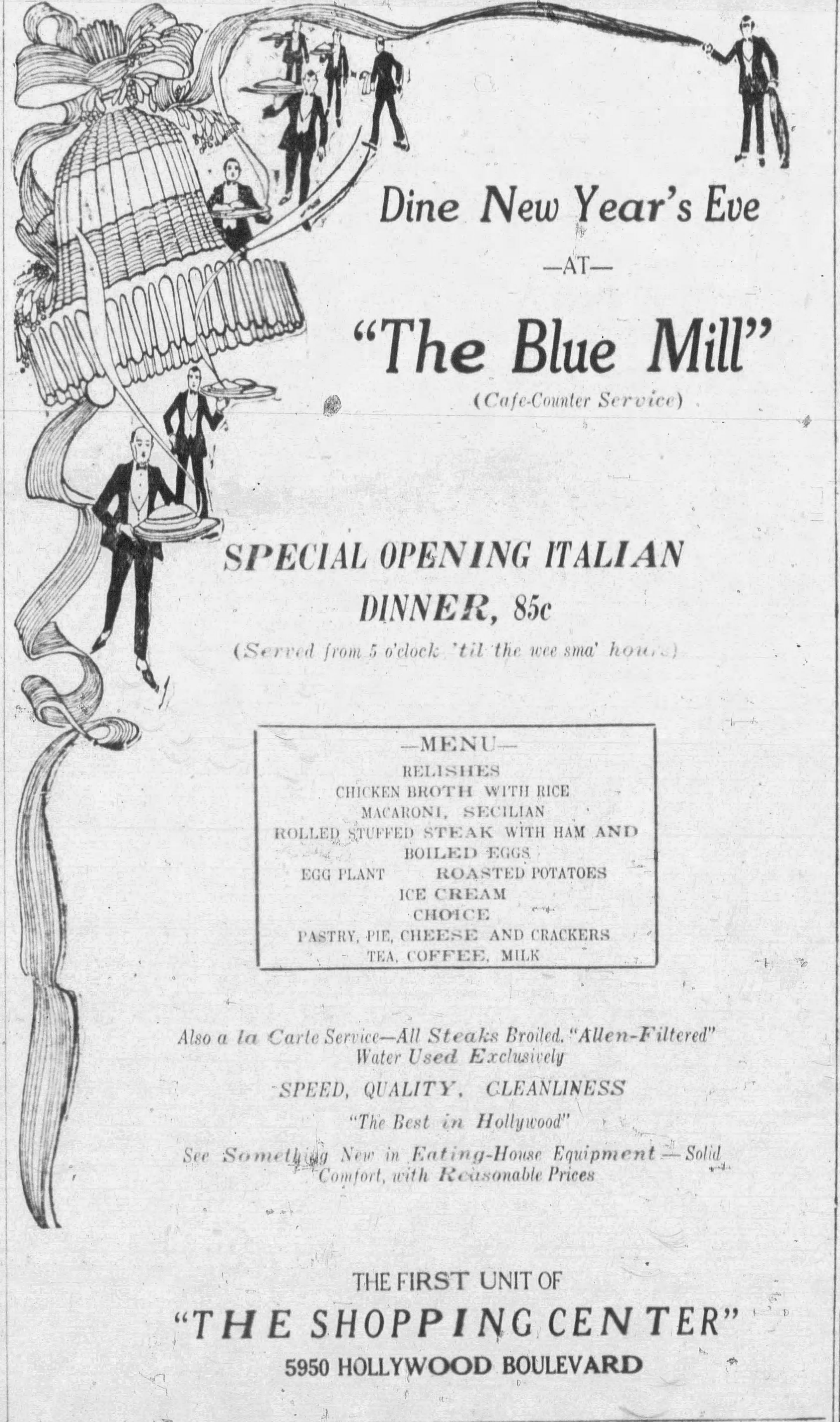
Mary’s Lighhouse referenced in an ad for the Blue Mill cafe, located in the new “The Shopping Center” at 5950 Hollywood Boulevard (later Gordon Warren Chevrolet). Hollywood Citizen News 6/6/1922.

Mary advertised at this location until early April 1925; later that month she moved to 5908 Hollywood Boulevard.

Mary’s lighthouse was repurposed as Lova’s Treasure Chest gift shop in 1925; in 1926 it was the Hollywood branch of the Pacific Coast Mortgage Company, specializing in automobile loans.

Hollywood Daily Citizen 11/24/1925.

LA Times 11/25/1926.
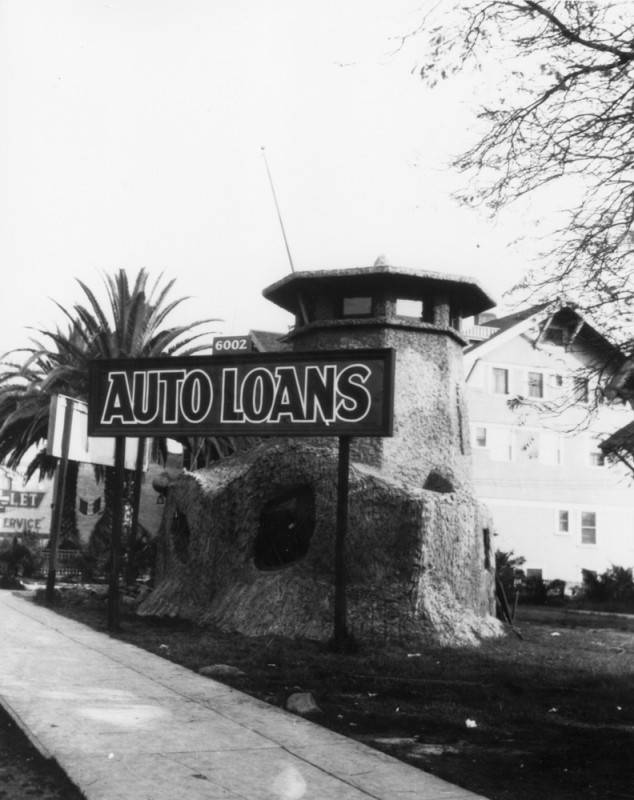
Mary’s lighthouse at 6002 Hollywood Boulevard, repurposed as an auto loan office. The Mountain View Inn can be seen behind it.  LAPL photo.

In December 1923, local papers reported that C.B. Christie of the Christie Hotel had taken a 99-year lease on the property from Fannie Shippee. He planned to build a 12-story hotel there, he said- encouraged by the mammoth hotel recently proposed for the Brokaw property across the street. Like that project, this hotel would never come to be and whether the lease story was true or pie in the sky, Shippee retained control of this property. No structure taller than 1 story would ever be built on it.


In July 1925, Walter Jay Israel, a former Hollywood costume director for Frank Lloyd Productions, Joseph M. Schenck and Jackie Coogan, opened the Hollywood Costume Company, a costume and theatrical supply store, here. In January 1926, L.L. Burns of the Western Costume Company, then located at 937 S. Broadway, purchased Israel’s business and stock. Israel was appointed manager of Western Costume’s costume department.

LA Times 7/5/1925.

In June 1928 Shippee had the residence demolished.

Mary’s lighthouse continued to be used by other business- as of February 1928 it was operating as the Hollywood Brokerage Company. In August 1929 the vacant real estate office was demolished. The lot was now clear. In July 1930 Shippee approved the construction of the miniature golf course and a related lunch stand. Unique as it was, the Eskimo Village links only lasted the one season.

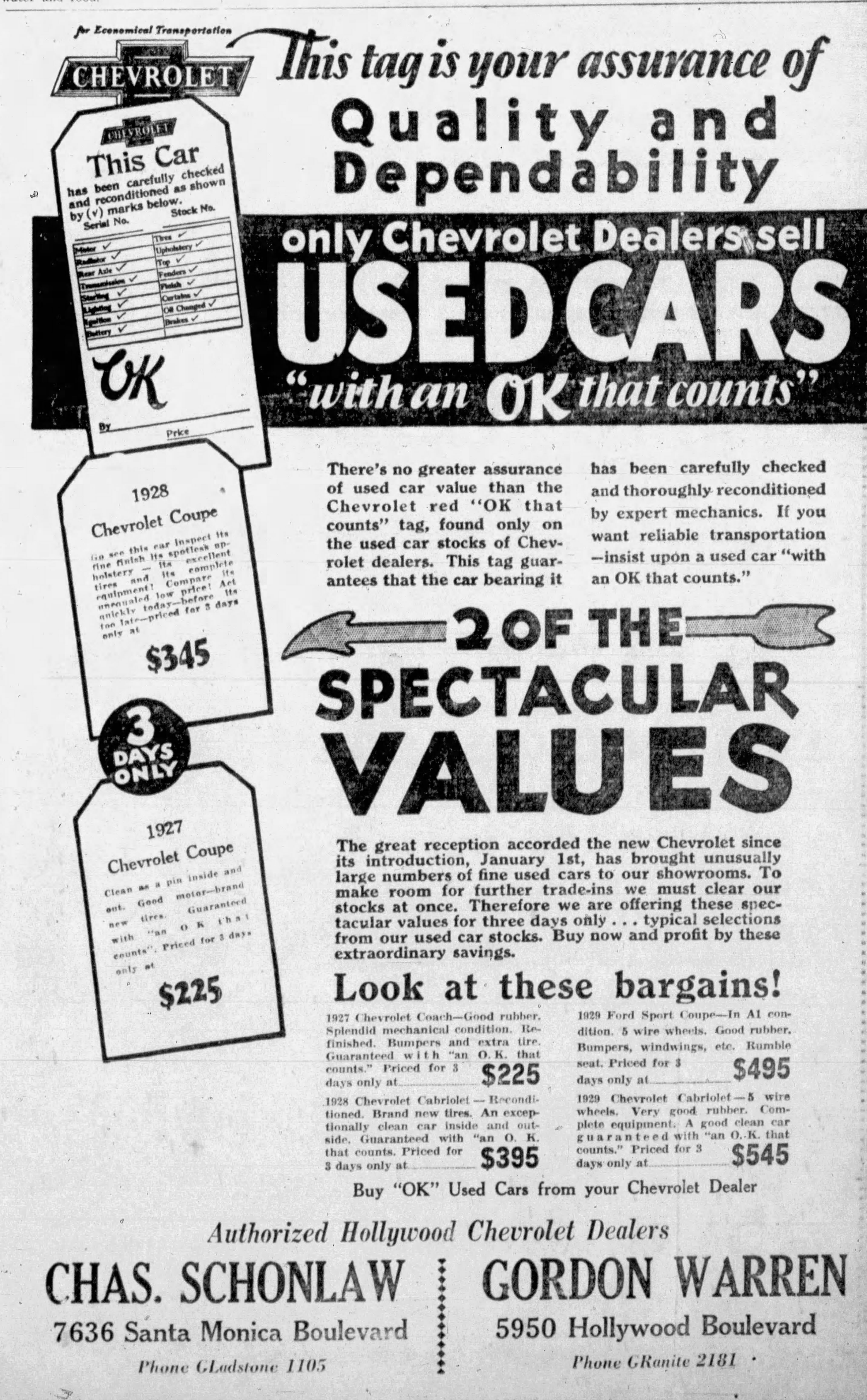
For most of the 1930s into 1941, this parcel, addressed as 6000 Hollywood Boulevard, served as the used car lot of Chevrolet dealer Gordon Warren of 5950 Hollywood Boulevard. After 1941, it was the used car lot for the auto dealership at 6028 Hollywood Boulevard, home to Plymouth, De Soto and most recently Lincoln-Mercury. On May 13, 1957 it became the new home of Hollywood Ford, which moved here from 1748 N. Cahuenga.
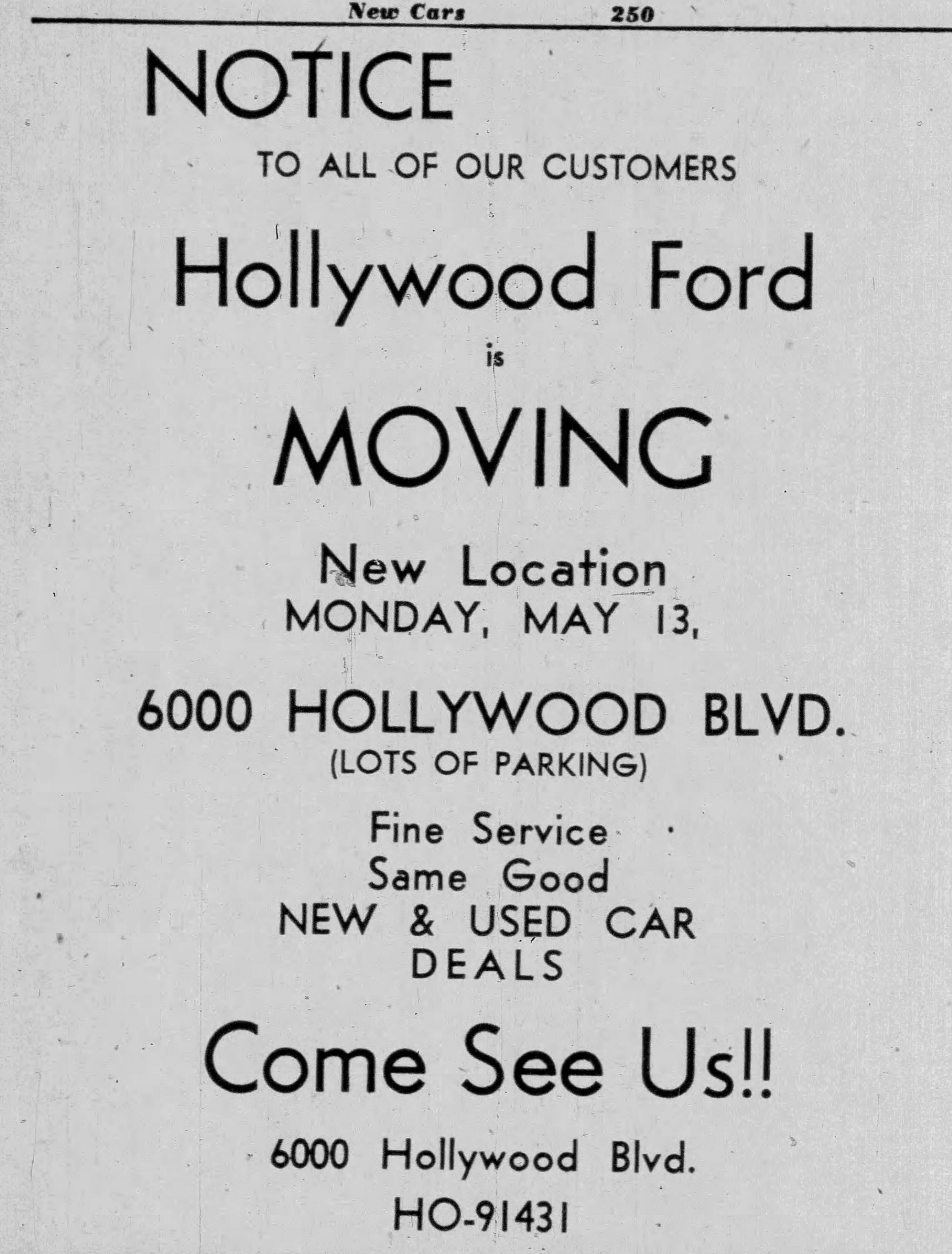
LA Times 5/10/1957.

This was the Hollywood Ford. There was another Ford dealership at 4531 Hollywood Boulevard, run by John G. Caddell from 1930-1941, which became Boyle-Fox Ford, the Cort Fox Ford. This was considered East Hollywood. (It will have its own post).

Hollywood Ford could be traced back to A. C. Gray, who became Hollywood’s authorized Ford agent in May 1912. He operated from his Reliable Garage, just off Hollywood Boulevard.

Hollywood Citizen 3/8/1912.

Hollywood Ford Agent A C Gray now operated out of 1627 Cahuenga as of June 1912. Hollywood Citizen 6/21/1912.

In November 1912, Gray partnered with E. A. Walden, former Ford dealer in Peabody, Kansas, who had recently moved to Hollywood. Now known as Walden and Gray, the firm constructed a new garage on North Cahuenga just north of Hollywood Boulevard at 1716 N. Cahuenga. It would open by April 1913.
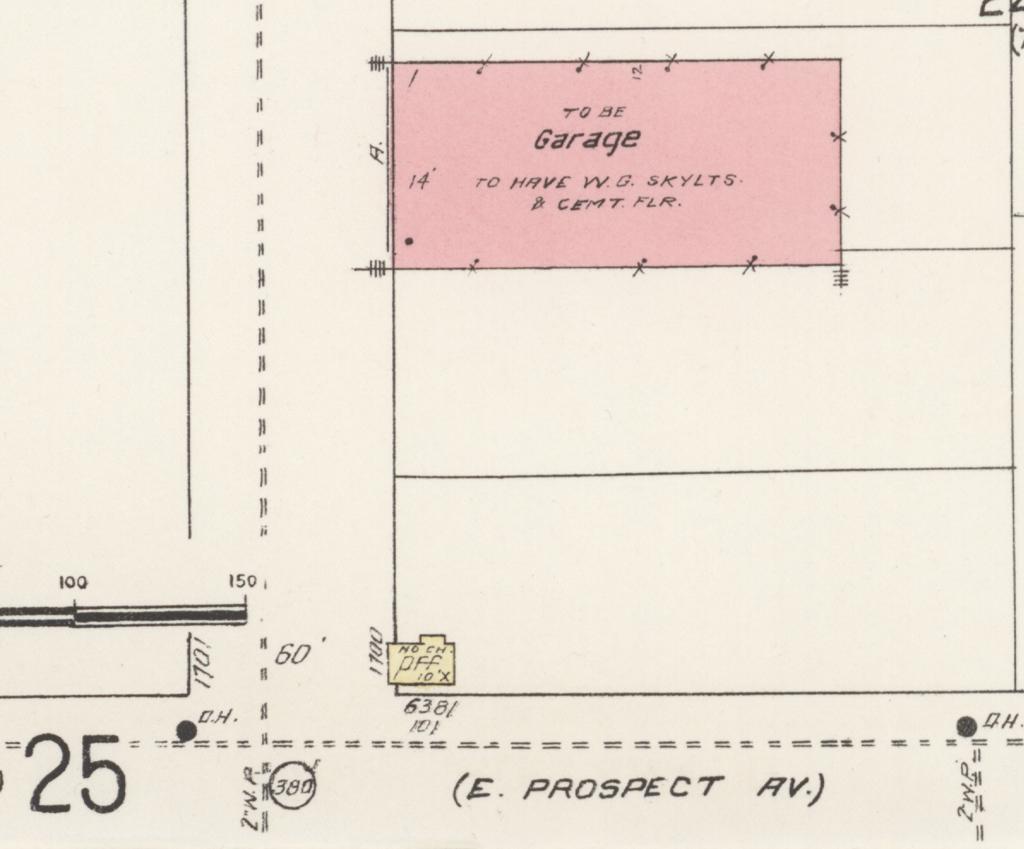
Detail of a January 1913 Sanborn Fire Insurance Co. map for Hollywood showing the Walden & Gray Ford garage under construction at what would become 1716 N. Cahuenga. Library of Congress.

Hollywood Citizen 4/25/1913.

Walden and Gray operated the Ford dealership out of 1716 N. Cahuenga, Hollywood together through April 1918, when Walden turned his share of the business back over to Gray. Gray continued at 1716 as the Gray Motor Car C., Hollywood branch of the Ford agency.
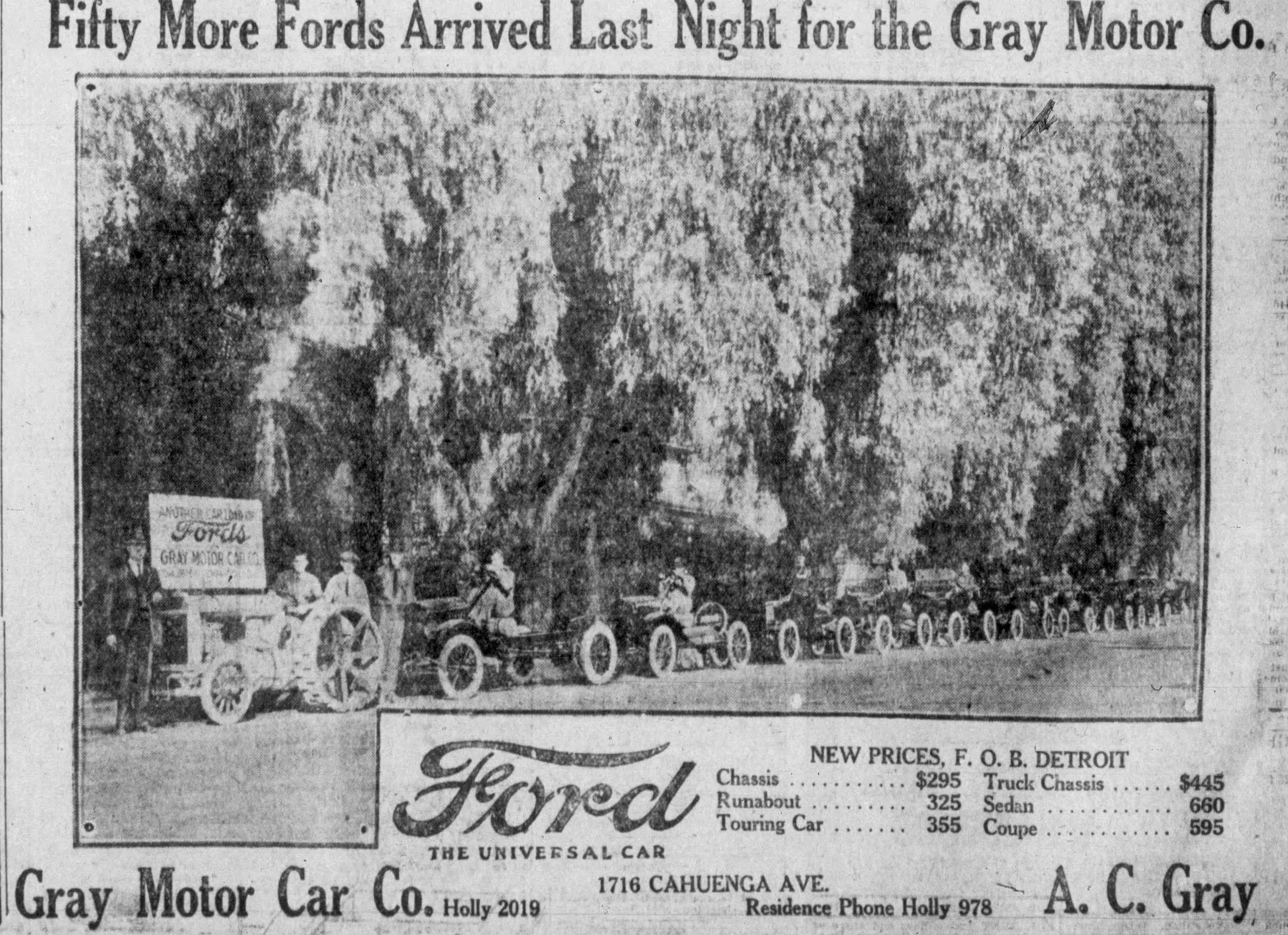
Hollywood Citizen 12/7/1921

In January 1922 A C Gray’s son C. A. Gray, Hollywood Dodge dealer of 1734 N. Cahuenga, moved into 1716.  Dad A. C. Gray’s Gray Motor Co. Ford dealership moved into 1734 and also occupied a new garage just north of that at 1742 N. Cahuenga. Gray senior would be back to using 1716-1920 in 1930 then back to 1742-1748 N. Cahuenga in 1932.

1716 N. Cahuenga later became the popular Tick Tock Tearoom.

Built for Walden and Gray Hollywood Ford dealer, 1716 N. Cahuenga became the Tick Tock Tearoom in 1934.

Hollywood Citizen News 11/28/1934.

Hollywood Daily Citizen 6/10/1922

Hollywood Daily Citizen 9/19/1930.

Hollywood Citizen News 8/17/1932.

Gray Motor Car Co. Ford occupied 1734-1948 through 1935.

In January 1936, Douglas Applewhite took over the Ford dealership. Applewhite had been working for A. C. Gray since 1917, most recently as a salesman. He renamed the dealership Douglas Applewhite Inc. He also had a used car lot at 6350 Santa Monica Boulevard.

Douglas Applewhite became the new Hollywood ford dealer in January 1936, taking over the Gray Motor Car Co. Hollywood Citizen News 1/29/1936.

In May 1939, Al Stuebing, former Ford dealer of Long Beach, took over Douglas Applewhite Inc. and continued to operate the Ford dealership here at what was now addressed as 1748 N. Cahuenga. Stuebing also marketed Ford products at 5457 Crenshaw Boulevard and would later have a used car lot at 1335 N. Vine. His dealership was known as “Stuebing Hollywood Ford.”

As Al Stuebing Hollywood Ford. Hollywood Citizen News 5/17/1939.
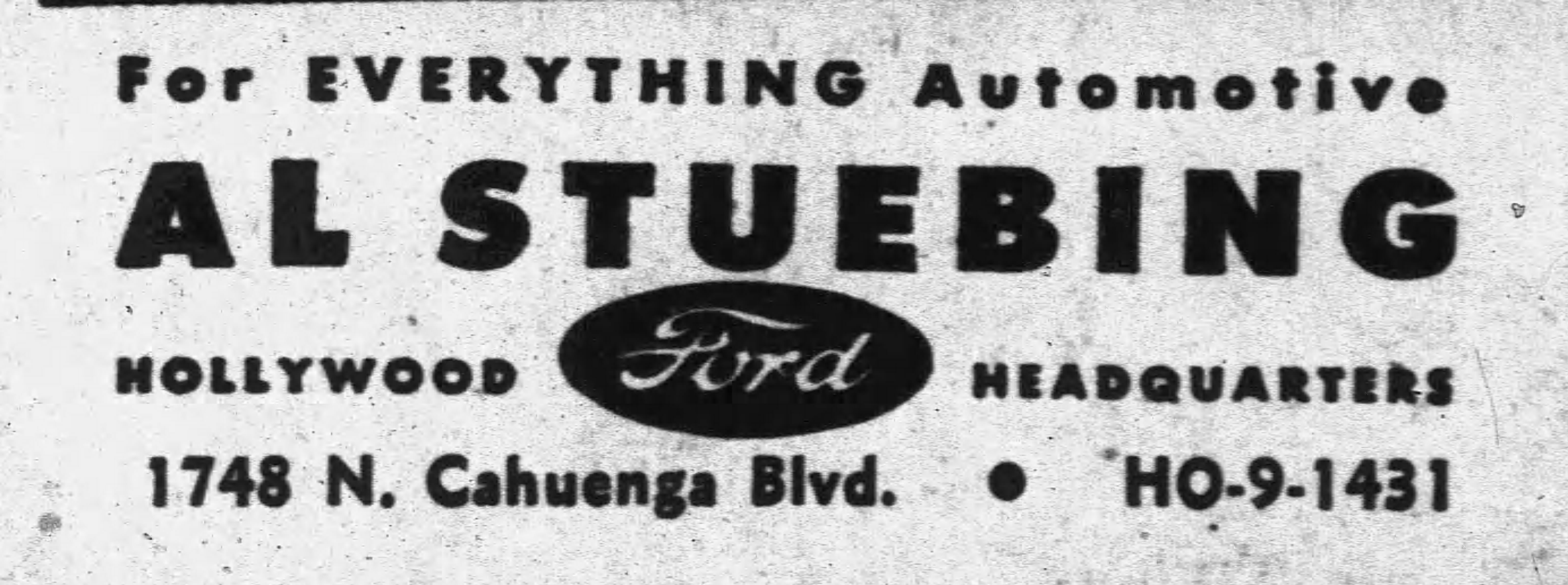
Hollywood Citizen News 5/18/1949.
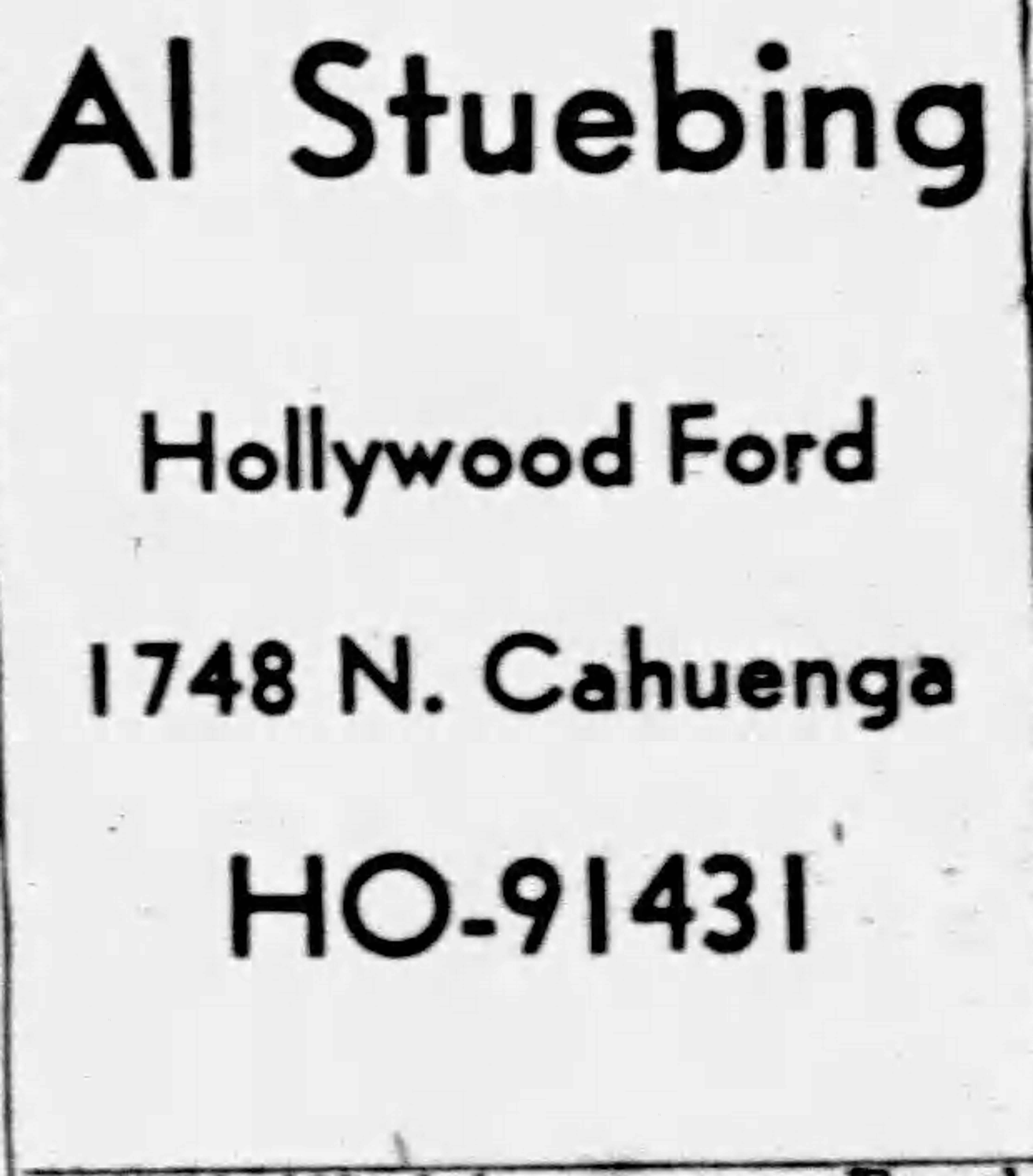
Hollywood Citizen News 6/27/1953.

Effective November 19, 1954, DeForest “Pappy” Laurence, formerly general manager of a Ford dealership in Studio City, took over Al Stuebing Hollywood Ford, still at 1748 N. Cahuenga, and renamed the business Hollywood Motors, Inc., but more commonly known as Hollywood Ford.

Hollywood Citizen News 11/2/1955


Hollywood Citizen News 12/31/1954.

In May 1957, Pappy Laurence announced that his Hollywood Ford Motors had moved its headquarters from 1748 N. Cahuenga to enlarged new quarters at 6000 Hollywood Boulevard, adjacent to Pearson Lincoln-Mercury.

In May 1970, Fannie Shippee died. In June 1970, the Ford Motor Company, having over time acquired the adjacent parcels to the west to the corner of Gower, had these lots cleared of extant structures. The address 6000 Hollywood Boulevard now included 6028 and 6032 Hollywood Boulevard.

In January 1983, Hollywood Toyota moved to 6000 Hollywood Boulevard, sharing the space for a time with Hollywood Lincoln-Mercury. Today 6000 Hollywood Boulevard is still the Hollywood Toyota dealership.

LA Times 1/24/1983.

LA Times 6/24/1983.

Notes:

The permit listing A.F. Leicht as architect is also stamped “cancelled” so it’s not clear if it was carried out. Ultimately, Mary’s building was constructed. If A.F. Leicht designed Mary’s lighthouse, it’s interesting that he was later commissioned to design a series of lighthouses for Amiee Semple McPherson’s “Navy of the Lord” tabernacles. The architect sued McPherson in December 1929 for nonpayment of his services, stating that he had carried out the commission for McPherson between June 1925 and January 1928.

5959 Hollywood Boulevard: The Holly-Food Mart

Located at 5959 Hollywood Boulevard, the Holly-Food-Mart, also known as the Hollywood Food Mart was the second of four commercial structures to be built on the Brokaw ranch property- the first being the Palms Grill to the east, which had started construction shortly before this project was announced in February 1937. The  Florentine Gardens would open next door the following year, and the Hawaii Theater in 1939.

LA Times 2/7/1937

The owner of the former Brokaw property, the Times-Mirror Company, commissioned the building, designed by architect Arlos R. Sedgley (mistakenly identified as “A.B.” Sedgely in the Times article above), and leased it for use as a market. The Holly-Food Mart opened by September 1937.

Hollywood Citizen News 9/14/1937

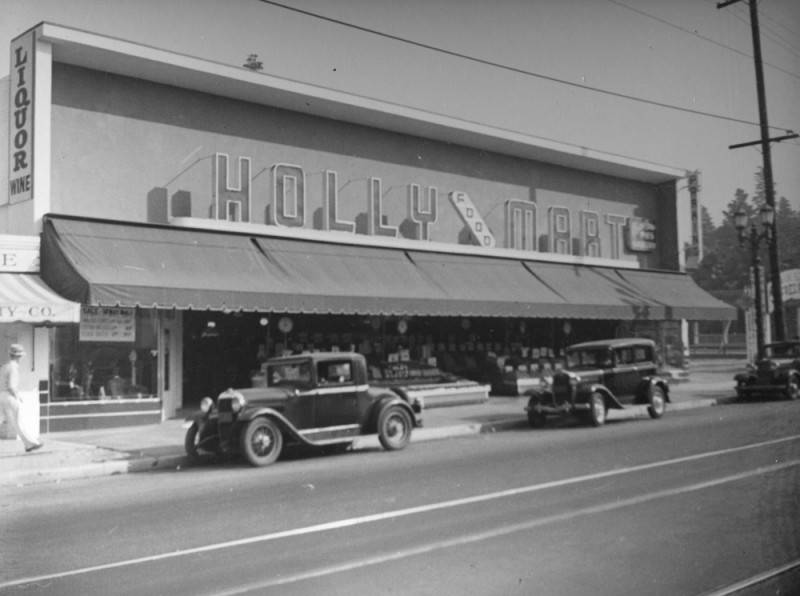
The Holly-Food Mart c. 1937. LAPL photo

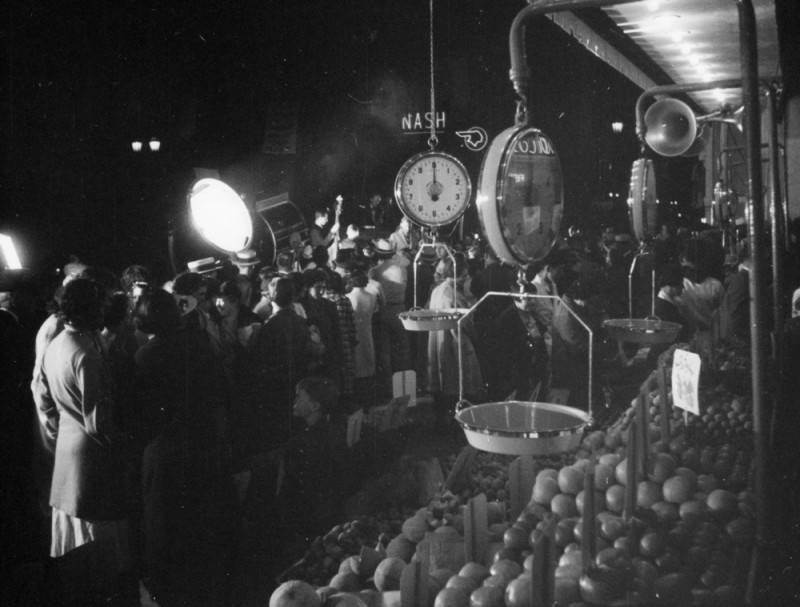
The Holly-Food Mart opening night, 1937. Like most LA markets at the time, the displays of fresh fruit and veg were placed out front. Reflections of the neon signs for the Nash (6028) and Pontiac (6032) dealerships across the street can be seen. LAPL photo.

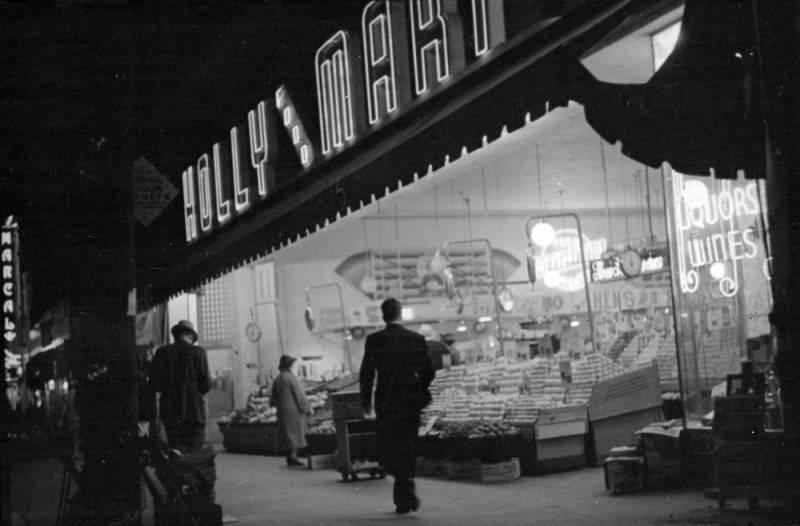
The Holly-Food Mart at night, c.1937. The Marcal Theater at 6021-6025 can be seen. LAPL photo.

The Holly-Food Mart was a market for less than 10 years. Open through December 1945, starting in 1946, it took on other uses. For most of the 1950s and 1960s, the remodeled building served as the offices of a publishing firm.

In June 1970  it was converted into a two-screen (twin) theater called the Adam and Eve, which opened in July, specializing in adult films.

Sketch of the former Holly-Food Mart, converted to use as a theater. LA Times 7/19/1970

An example of the fare being screened at the Adam and Eve. LA Times 7/31/1970

In November 1974, 5959 Hollywood Boulevard became another adult movie house, the X, Theatre, notable for the giant neon X on its facade.

LA Times 11/1/1974.As the X Theater. The “X” movie rating came to be in 1968.

Hollywood Boulevard looking west from just east of Gower in 1986. 5959 as the X Theatre can be seen on the right. UCLA photo.

It remained the X Theatre longer than it was the Holly-Food Mart.

The much-altered building was demolished in 2016.

5950 Hollywood Boulevard: Gordon Warren Chevrolet

Hollywood Citizen News 1/27/1926

One of those properties no one ever took a picture of on purpose, Gordon Warren’s Chevrolet dealership occupied the parcel directly east of the Mountain View Inn on the south side of Hollywood Boulevard west of Bronson.

The building started out as a shopping center with the imaginative name, “The Shopping Center,” built for investor Roland J. Pagen, an auditor with the Ventura Refining Company, who took a 99-year lease for the site on September 16, 1921, and realtor A. H. Meyer.

Hollywood Citizen 9/16/1921

The Shopping Center, like El Adobe Market, was an early example of 1920s car culture and the Los Angeles tend of drive-in everything. Open on the front and sides, it catered to both pedestrian and motorized customers, with auto entrances on both sides and driveways along the sides of the building that led to a parking lot in the rear, completely encircling the building. Its motto was, no wonder, “Circumnavigate the Shopping Center.”

The first vendor, an Italian restaurant called The Blue Mill opened in December 1921. The market itself had a 2-day gala grand opening February 10-11, 1922.

Hollywood Daily Citizen 12/20/1921


Hollywood Daily Citizen 2/10/1922

The “Shopping Center” was The Motorists Market. Hollywood Daily Citizen 2/10/1922.

Let the record state that Blue Mill was not stingy with the maple syrup. The Mary’s Lighthouse referenced in this ad was a new real estate office located at 6002 Hollywood Boulevard. Hollywood Citizen News 6/6/1922.

If you want to travel back in time and circumnavigate The Shopping Center, set your time machine to no later than July 1923.

On May 25, 1925, the business reopened as Anderson’s Hollywood Grand Central Market, a link in a chain of “Daley’s” grocery stores (formerly Federated Grocery Co.).

Hollywood Daily Citizen 5/4/1925

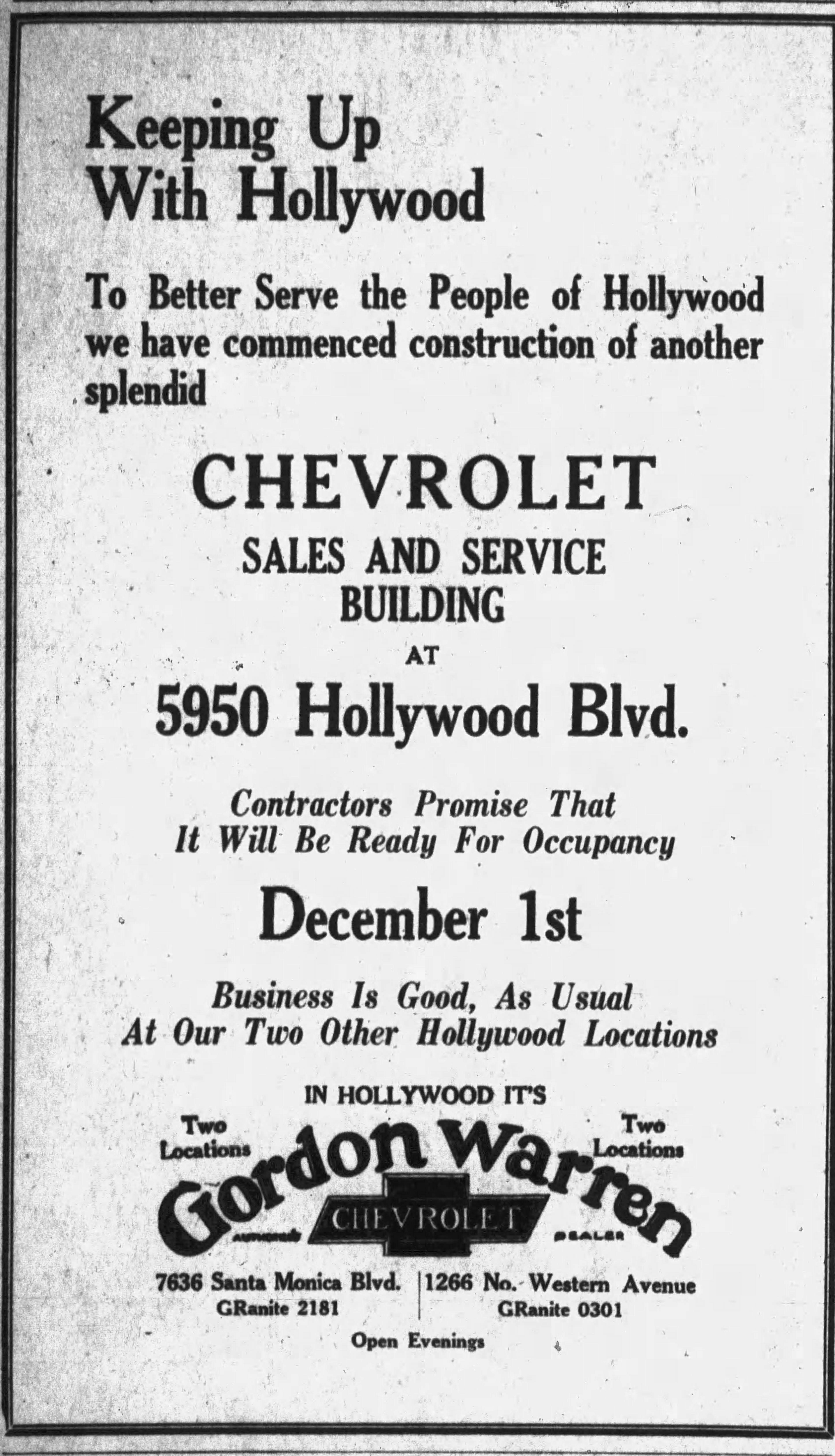
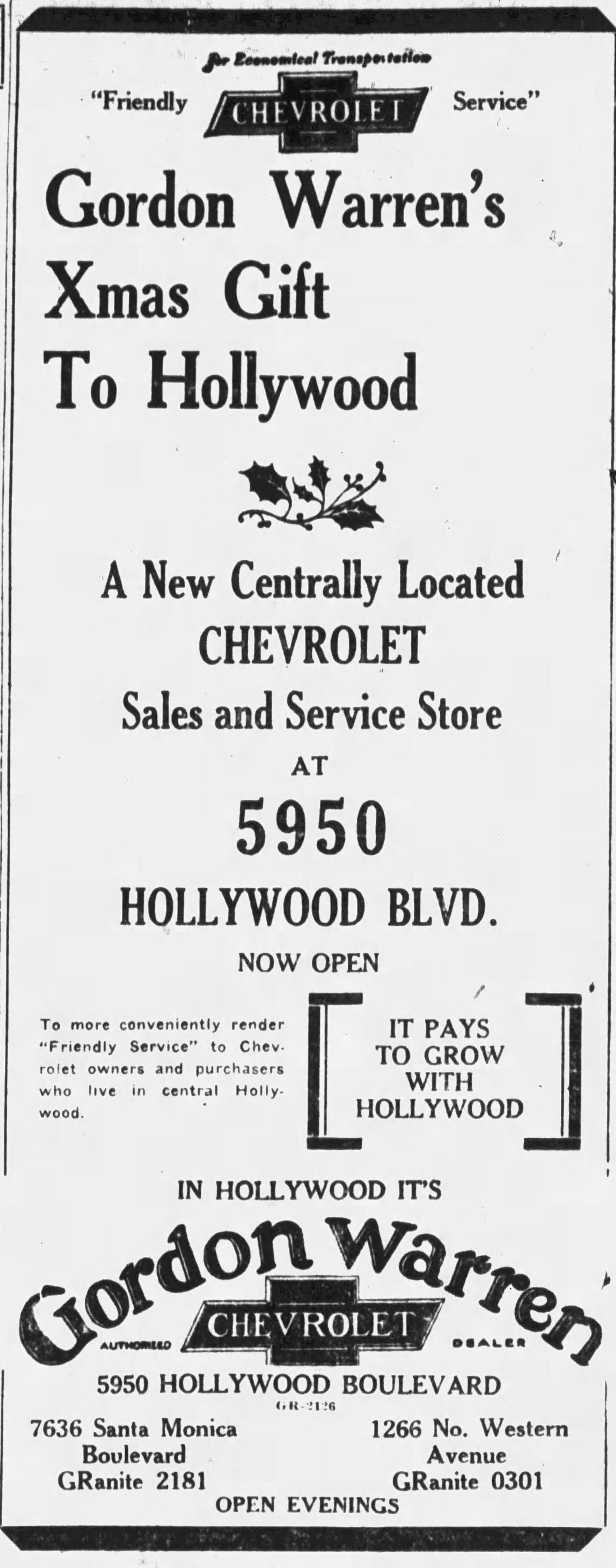
In November 1925, it was announced that the site was being taken over as a third Hollywood outlet of Gordon Warren Chevrolet.

Hollywood Citizen 11/4/1925

Warren came to California in the ‘teens from his native Missouri, where he’d owned a clothing store. Previously a salesman for a Chevrolet dealer, he opened his own Chevy dealership in July 1923 and soon had 2 locations.

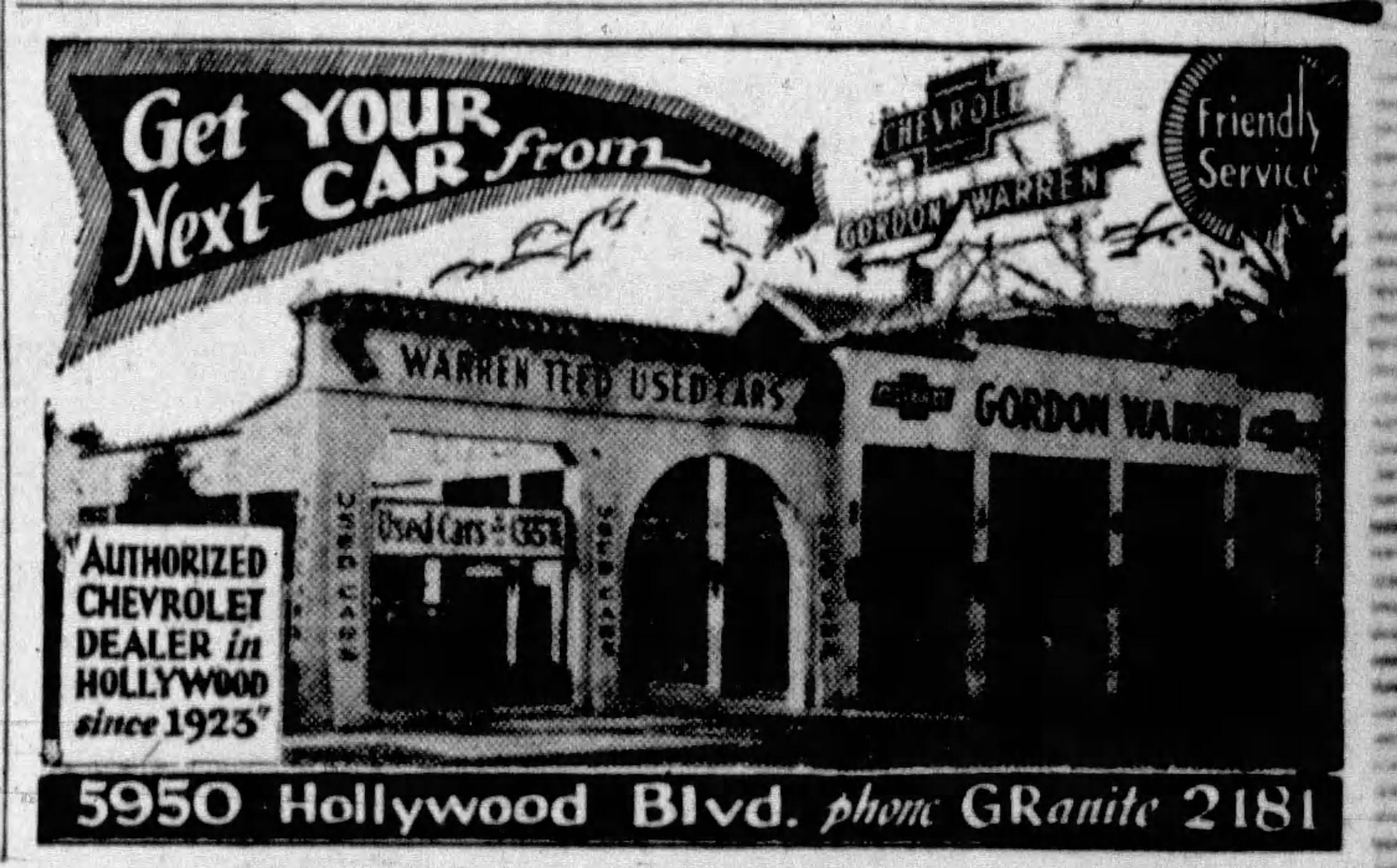
Warren altered the existing market building, keeping only the exterior walls and roof, which were revamped to give the building a “modified Spanish” architectural style. The new dealership opened in December 1925.

Hollywood Citizen 12/16/1925

Hollywood Daily Citizen 8/19/1931.

Chevrolet marketed its used cars under the “OK” guarantee system. 4/23/1930.

5950 remained Gordon Warren Chevrolet for nearly 30 years. In July 1952, when the Mountain View Inn at 5956 Hollywood Boulevard was demolished, Warren would expand his car lot to include this property. He retired in July 1954 and the dealership was sold. He died in November 1955, age 65.

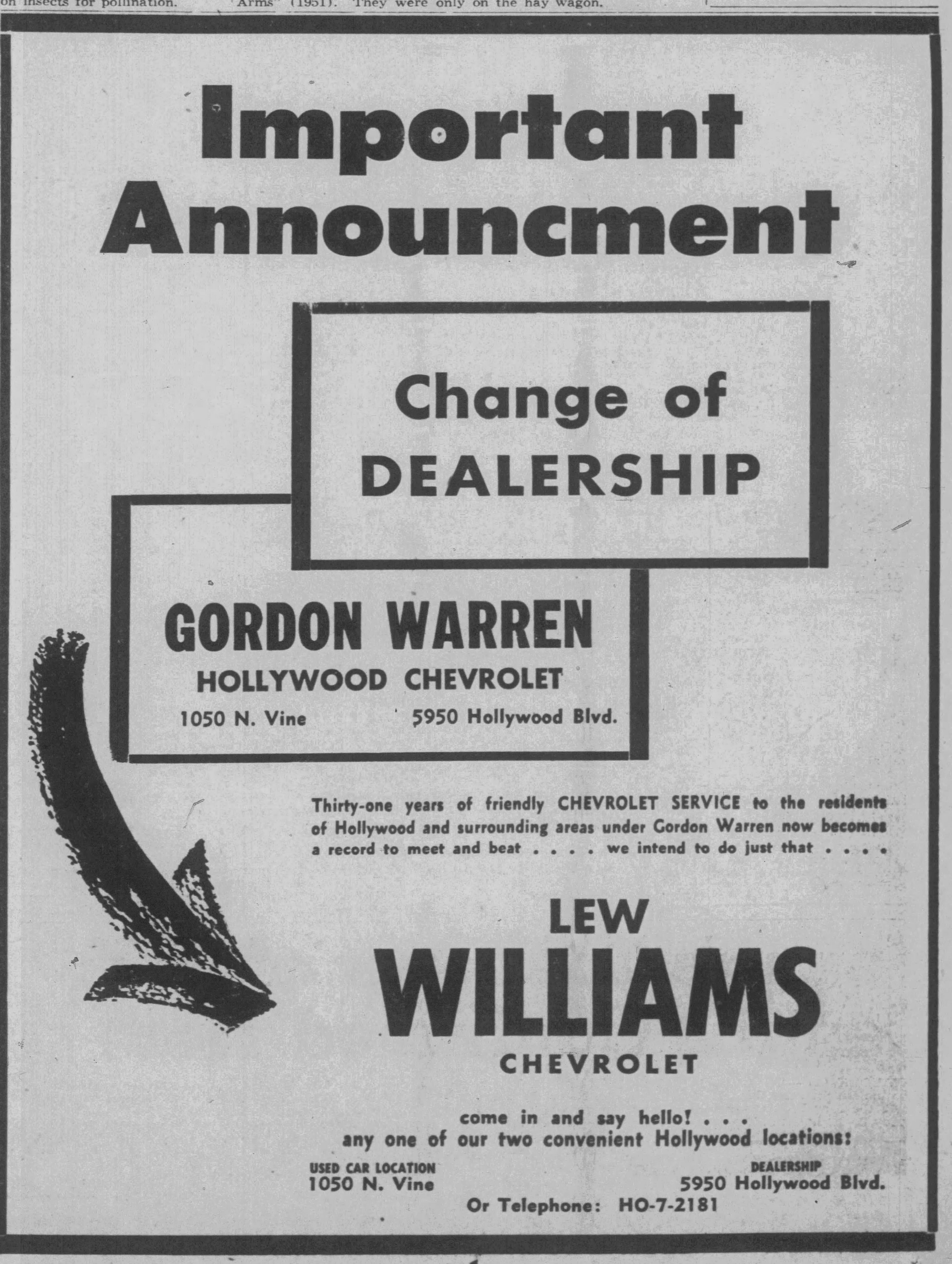
Gordon Warren Hollywood Chevrolet became Lew Williams Chevrolet. Hollywood Citizen News 6/12/1954

Hollywood Citizen News 5/4/1955

5950 Hollywood Boulevard remained a Chevrolet dealership, first as Lew Williams Chevrolet, starting in June 1954, until September 1957, when Williams’ salesman Fritz Bruder took it over. It became Vic Potamkin Chevy in 1966 to 1969.

As Lew Williams Chevrolet. Hollywood Citizen News 5/8/1957.

Fire damaged the (previously altered) building in May 1969 when it was Potanikin Chevy. Hollywood Citizen News 5/26/1969.

It continued to have various auto-related uses after that. Today the lot is vacant and appears to be used for parking.

5956 Hollywood Boulevard: Mountain View Inn


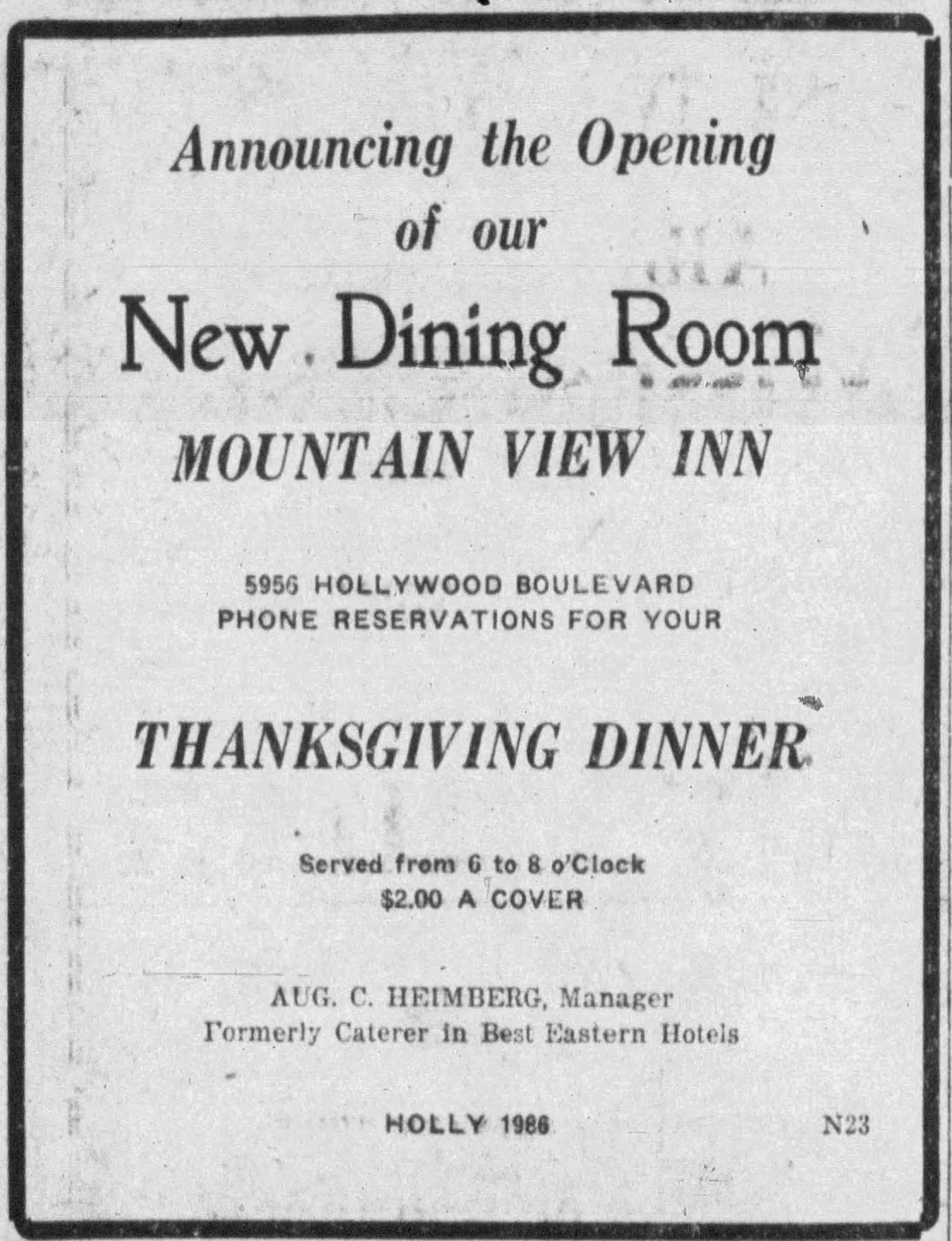
The Mountain View inn was a three-story wood-framed Shingle style hotel located on Hollywood Boulevard for 25 years. It was built on land acquired from John B. and Ida Brokaw, whose ranch home was across the street, on what was called the Brokaw Tract No. 2.

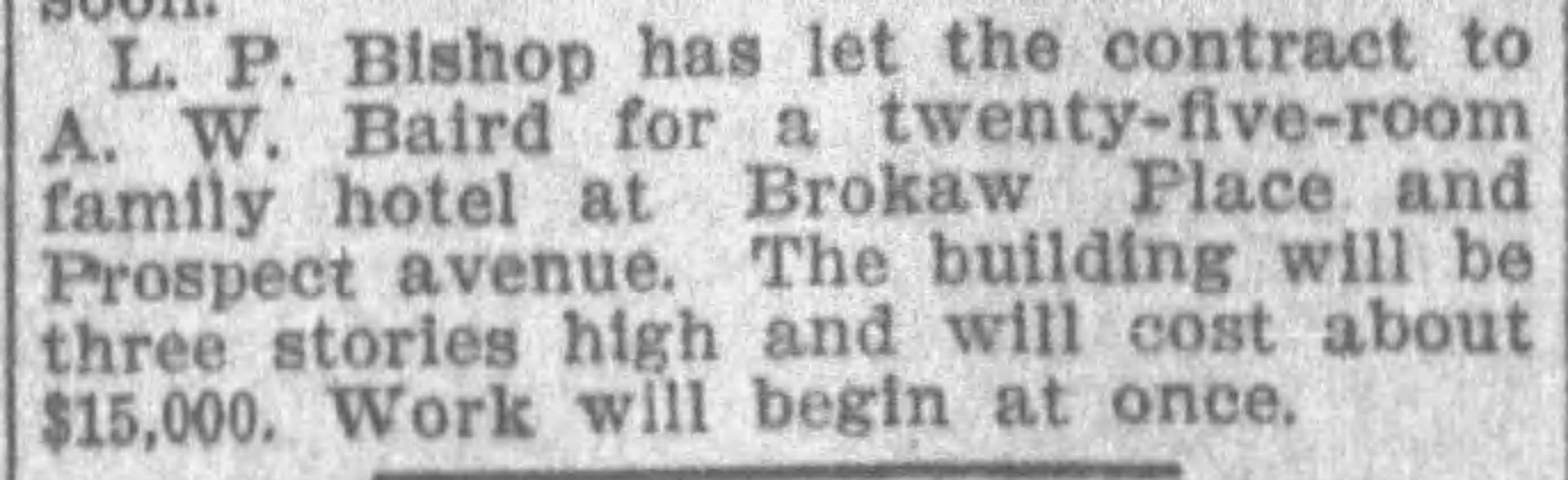
Investor Leon P. Bishop of Utica New York owned the land and had the 25-room hotel built in 1906.

Hollywood Boulevard was then known as Prospect Avenue. Brokaw Place was an alley just west of the Mountain View Inn that connected Hollywood Boulevard and Carlton Way. LA Times 9/5/1906

Originally addressed as 620 E. Prospect Avenue,  the hotel was leased to Benjamin Fowler and his wife Louise, formerly of Redlands. It opened in 1907.

LA Times 5/31/1907.


The Mountain View Inn. California State Library image.


Rates started at $10 a week in 1908. It had steam heat, a telephone and croquet grounds. LA Times 2/2/1908

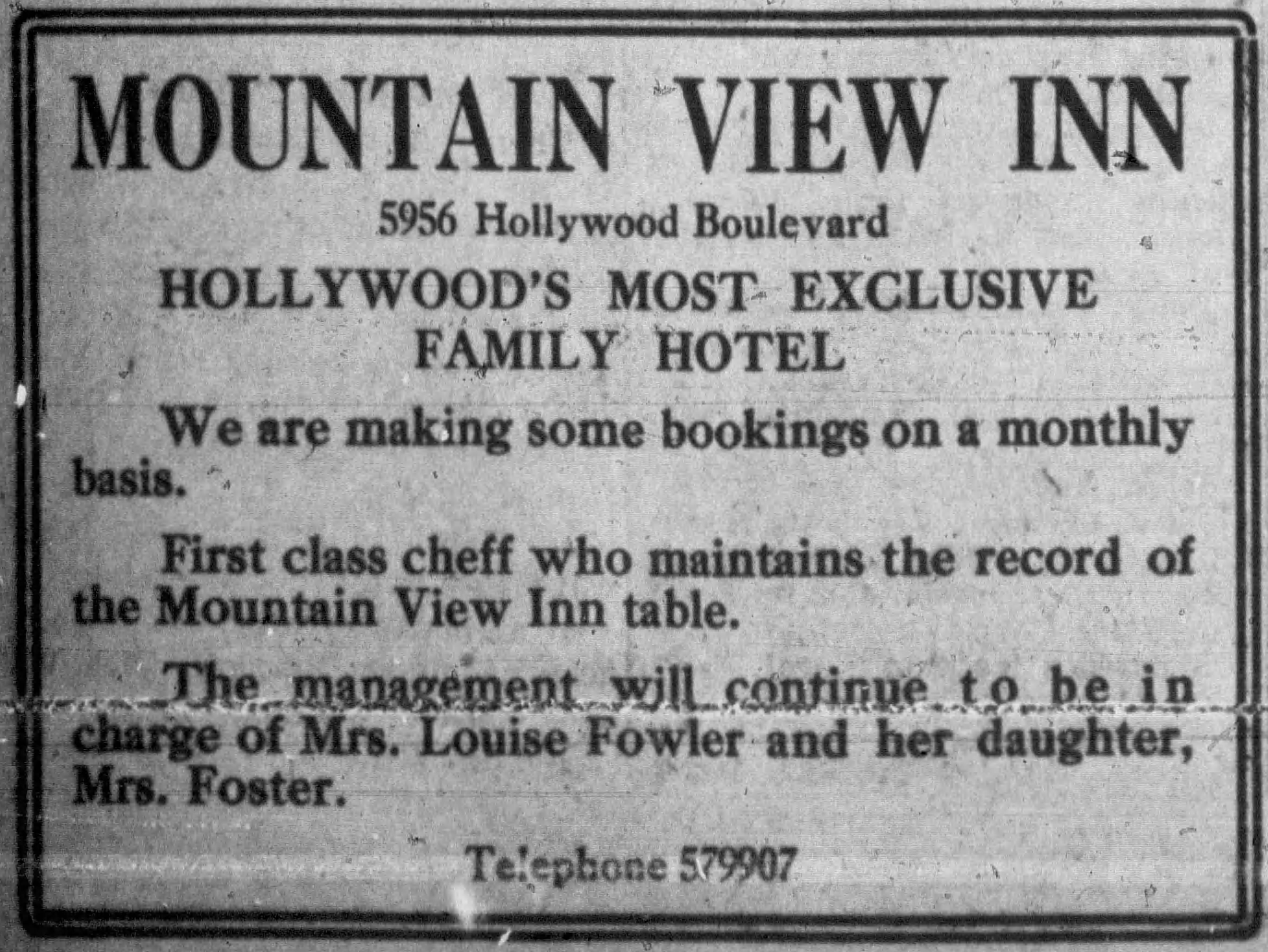
Benjamin Fowler died in October 1911 at age 69. His wife, Louise Ely Fowler continued to run the hotel with the assistance of the couple’s married daughter, Mabel Foster, through April 1925.

A fire in March 1912 destroyed the second and third floors; no one was injured. The Mountain View Inn was quickly rebuilt and reopened for business in May 1912.

Fire. LA Express 3/14/1912.


“Recently opened” here meant re-opened after the fire. Hollywood Citizen 5/24/1912


The Mountain View Inn parcel in 1913. Detail from a Sanborn Fire Insurance map. Library of Congress.


LA Times 2/21/1915

Some of the earliest residents were actors from David Horsley’s Nestor Studios, established in 1911 at Sunset and Gower; it would also be convenient to the old Warner studio at Sunset and Bronson.

Hollywood Citizen 6/11/1920


Hollywood Citizen 4/29/1921


Hollywood Daily Citizen 11/22/1921


The Mountain View Inn can be seen c. 1937 across the street from the Palms Grill at 5831 Hollywood Boulevard. LAPL photo.

The Mountain View Inn remained a residence up until the end. Veteran actress Augustine B. Mudge was still living here at the time of her death, in April 1952, at age 79.

The building was demolished on July 10, 1952. The adjacent Gordon Warren Chevrolet dealership at 5950 used the space to expand their car lot.

Hollywood Citizen News 7/10/1952

Hollywood Citizen News 7/10/1952


5931-5937 Hollywood Boulevard: Palms Grill

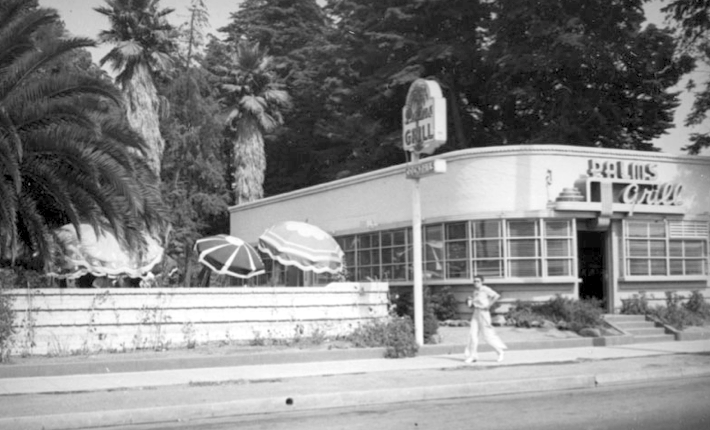
This restaurant was located on the grounds of the old Brokaw ranch property. It featured a large outdoor patio for dining, shaded by the Brokaw’s mature landscaping and colorful umbrella tables.

The first commercialized use of this garden space was in June 1930, when it became Ralph B. Smith’s “Shady Greens” miniature golf course.

Miniature golf became a national craze in the summer of 1930. Another large rural property a few blocks east was also developed as a mini golf links that summer. Shady Greens was operated by Ralph B. Smith, a former real estate broker in the valley. Landscaper Daniel R. Hull, formerly of the National Parks Service, preserved the Brokaw’s ornamental shrubs, palms and mature trees that put the shade in Shady Greens. The 1-acre course featured rustic bridges over a winding waterway, a public address system and lights for night play. Smith also built a brick office structure and 2 concrete decks for shuffleboard.

“Golf in a Garden.” Shady Greens ad, 6/27/1930. Hollywood Daily Citizen

The opening, on the night of June 28, 1930, attracted a crowd of over 1000 duffers, including film stars.

Dorothy Granger, film star, teeing off at Shady Greens. LA Times 7/6/1930

“Since They’re All Playing Miniature Golf,” written by Eddie Cantor, Ballard MacDonald and Dave Dreyer in 1930. Dreyer was reportedly an investor in Shady Greens and made an arrangement with music stores to give free passes to anyone who purchased a copy of the song.

Shady Greens did open for the season the following year- on May 15, 1931- but it would be its last. While Hollywood would still play miniature golf, just as it had before 1930, the craze was over. Most of the links that opened in 1930 were short-lived.

The Van Nuys News 5/14/1931

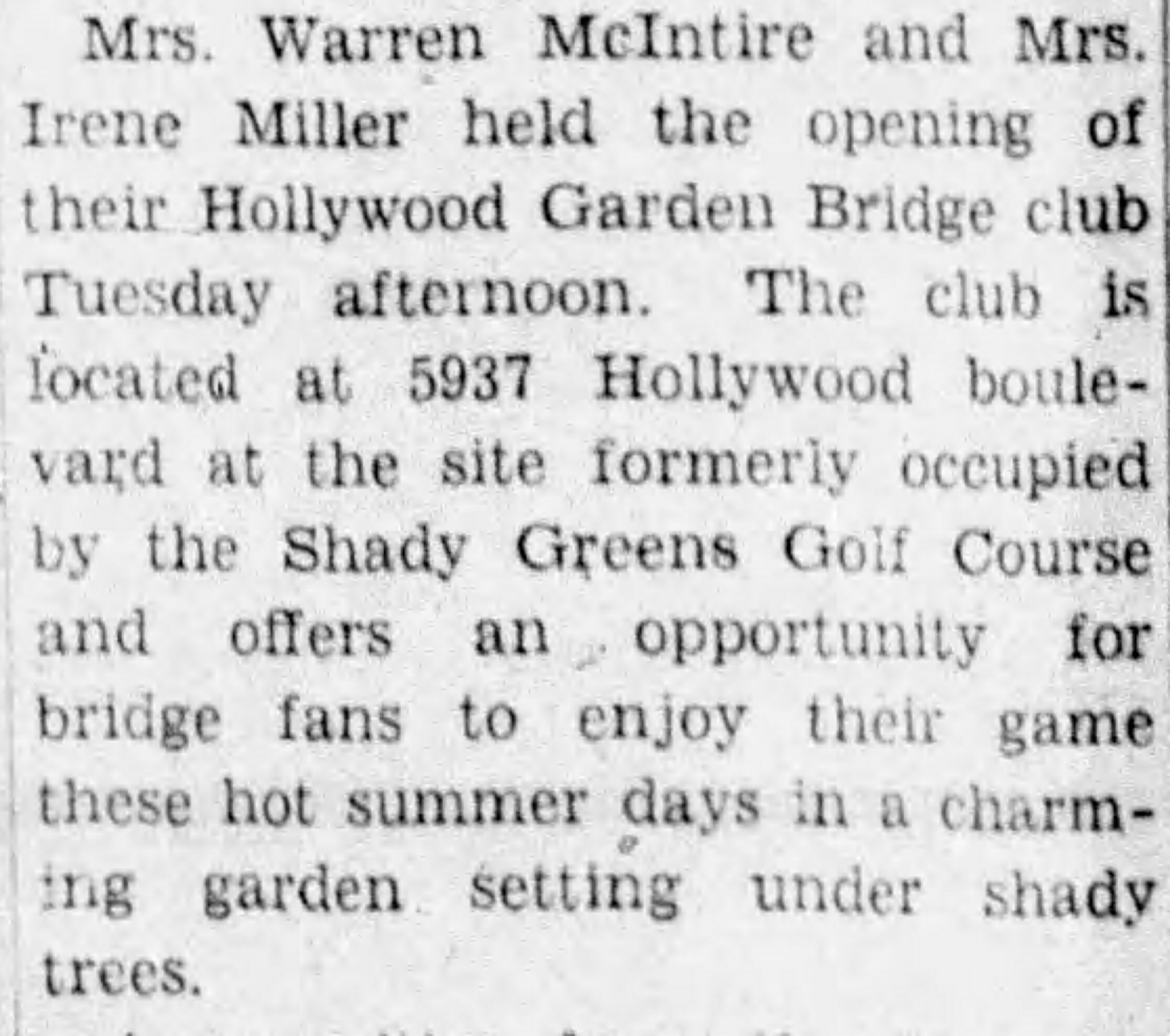
One year later, on May 24, 1932, the space formerly occupied by the green, became an outdoor bridge club, called Hollywood Gardens founded by Elaine McIntire and Irene Miller. McIntire added toilets and an orchestra stage. But even with these improvements, the club was only here for one season.

LA Times 5/22/1932

The Van Nuys News 5/26/1932.

In May 1933, the gardens hosted the LA Kennel Club’s national dog show. Although given the address 5945, the event – which was held in the evenings as well- clearly made use of the Shady Greens PA system, lighting and concrete decks, and the orchestra stage added by McIntire.

LA Times 5/4/1933

When the Kennel Club hosted the event again in May 1936, it had the address 5937 Hollywood Boulevard.

Widowed in 1926, Ida H. Brokaw had continued to occupy her ranch home at 5947 Hollywood Boulevard. She moved sometime between 1932 and 1934 and the property was acquired by the Times-Mirror Company, owner of the Los Angeles Times.

According to permit records in 1933, the property still had the one small approximately 12×12 brick building on it, constructed for Shady Greens. Addressed as 5931, in July 1933, it was being used as a cafe by a Ralph Leamon, who added an awning over the concrete decks. As 5937, it was a cafe run by Sophia Alters from late 1935 through February 1937.

In December 1936, the Times-Mirror Co. obtained a permit for a cafe building to be built at 5931 Hollywood Boulevard, just east of the concrete decks built for the +Shady Greens shuffleboard court. The unfinished building was leased to William H. Klute for a cafe.

The reinforced brick, 1-story cafe building, streamline moderne in style, was designed by architect Gordon B. Kaufmann.  A curved wall was added around the concrete decks and became the cafe’s outdoor dining area.

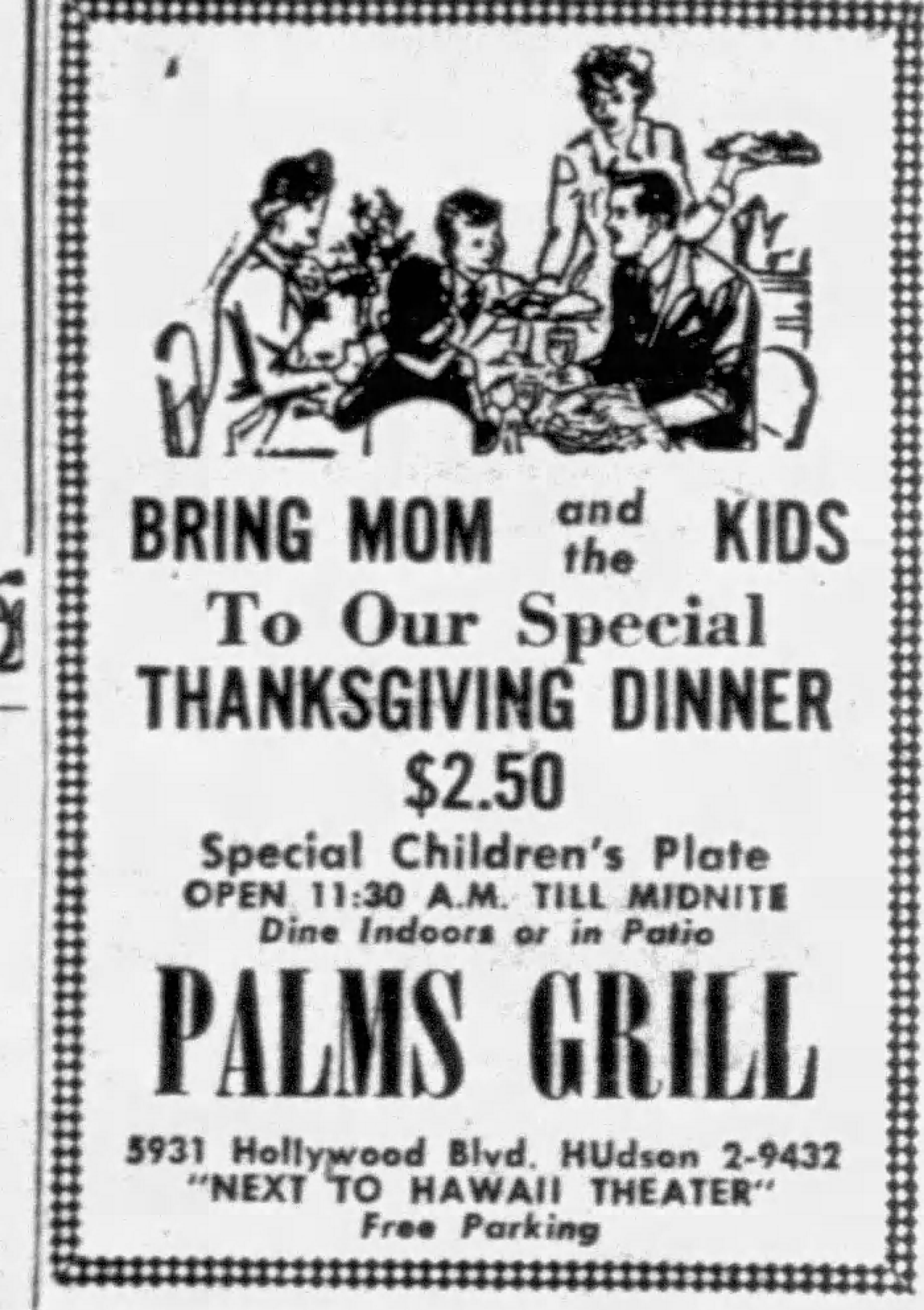
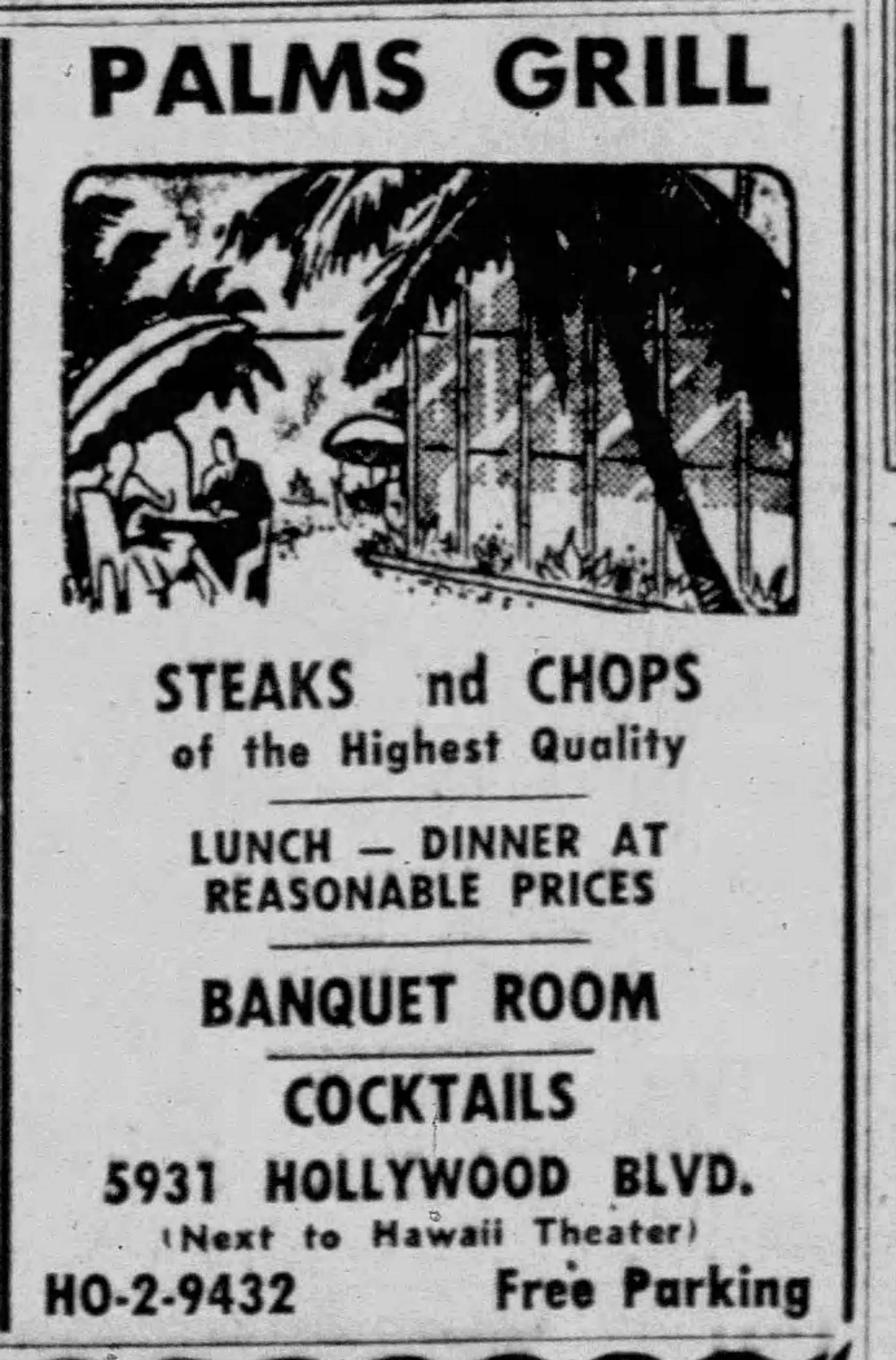
Originally known as the Palms Garden and Grill, the cafe opened in July 1937. It was known for its clam chowder and delightful outdoor dining under the colorful umbrellas.

LA Times 7/15/1937

The Palms Grill c. 1937. Herman Schultheis image, LAPL.


The Palms Grill, c. 1937. Herman Schultheis image, LAPL.


Herman Schultheis took this photo of his wife and in-laws on the patio at the Palms Grill c. 1937. The Mountain View Inn can be seen across the street. LAPL.

5/6/1950 ad for the Palms Grill in the LA Mirror (owner of the property is was built on).

The LA Mirror 11/26/1952.


In 1946, the Palms Grill had an 800 square foot addition, in the same style as the original building, designed by architect Harold S. Johnson. It provided a banquet facility as well as storage and additional kitchen space.

Hollywood Citizen-News 8/18/1955


Bill Klute, who was the Palms Grill chef as well as its owner, retired in October 1959. He passed away in January 1960 at age 58.

The Hawaii Theater next door closed in July 1963 and the building was acquired by the Salvation Army, which also took over the Palms Grill around the same time. It eventually became their children’s youth center. The building, with later additions at the north elevation, is still extant. The outdoor patio area was demolished; that space became a driveway to access the rear of the complex.

Notes

In 1952, the Palms Grill would celebrate its “20 year” anniversary. The building definitely wasn’t built until early 1937. It may have been counting the year 1932 as that was when, informally, patio dining began at this location.

The Salvation Army is listed as owner as of January 1964 for sure. The vacant property was likely taken over around the same time as the Hawaii Theater.

5947 Hollywood Boulevard: The Brokaw Property


The Brokaw home at 5947 Hollywood Boulevard. LAPL photo.

The 2-story ranch home of John B. and Ida H. Brokaw, set amid lemon orchards, was located on 10 acres on the north side of Hollywood Boulevard (then Prospect Avenue) between Bronson and Gower extending north almost to Franklin. The residence was originally 539 E. Prospect Avenue; as of 1913 it was 5947 Hollywood Boulevard.

Brokaw, a buggy maker from Ohio, came to California on a visit in the 1880s and bought up 30 acres in the heart of Hollywood. He returned in 1892 and bout a 2-1/2 acre tract that he had planted with lemons; in 1894 he purchased the 10-acre tract that became the ranch home. Near the home, the Brokaws planted cypress and cedars and more exotic specimen trees and shrubs. The couple didn’t reside in Hollywood permanently, however, until after 1900; the 1900 US Census shows them still living in Ohio.

By 1901 Brokaw had decided to sell off his orchard property, other than the home ranch, in 1- to 3-acre tracts, through agent Alex Culver. The next year he would also sell tracts in Brokaw Tract #2, across the street from the family ranch on the south side of Hollywood Boulevard.

Ad for the first Brokaw Tract, along Hollywood Boulevard between Bronson and Gower, not including the family ranch parcel. LAT 11/17/1901.


The Brokaws did NOT move from the family ranch, however. In the 1910 US Census, they are at 539 E. Prospect, where John lists his profession as “rancher.”

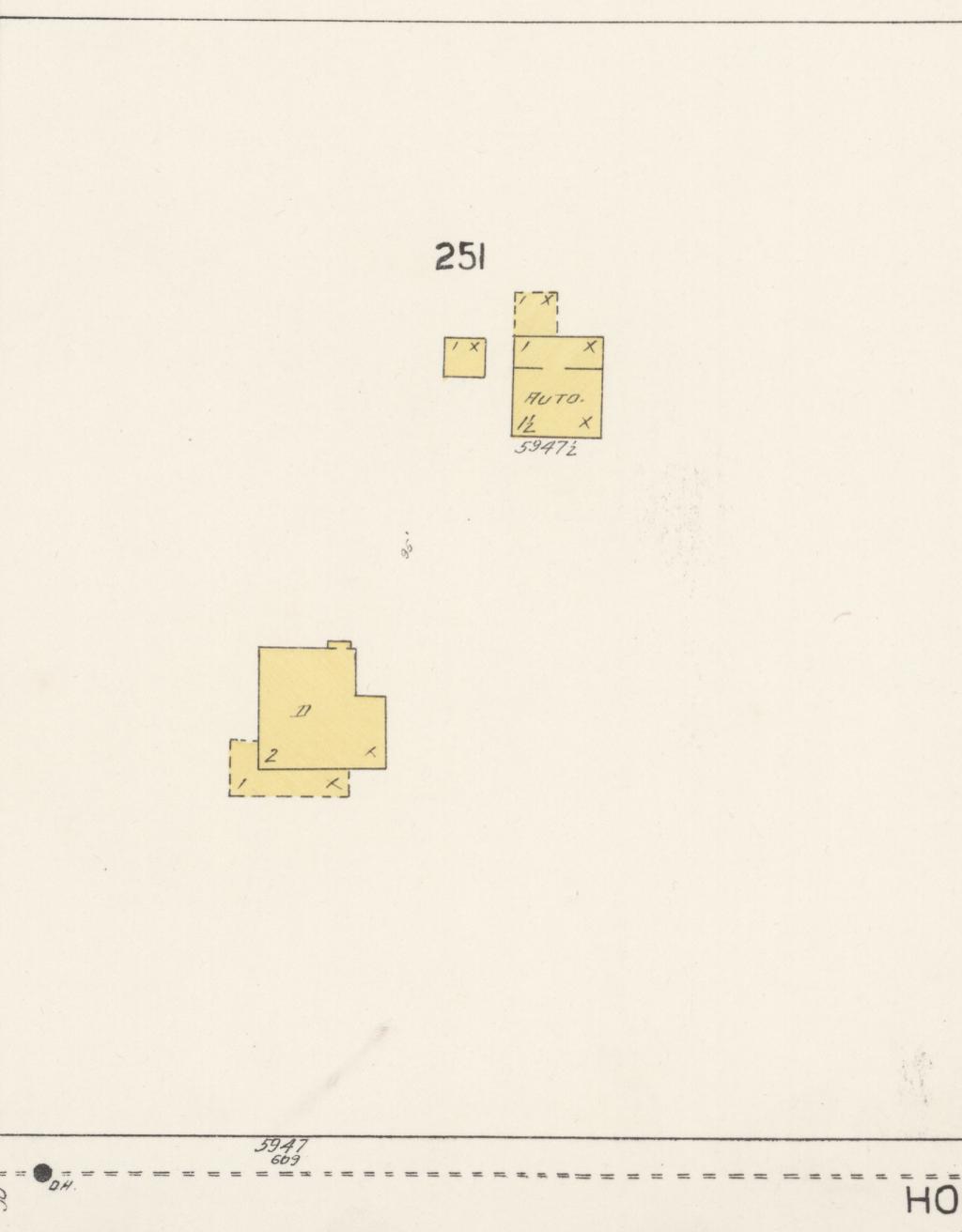
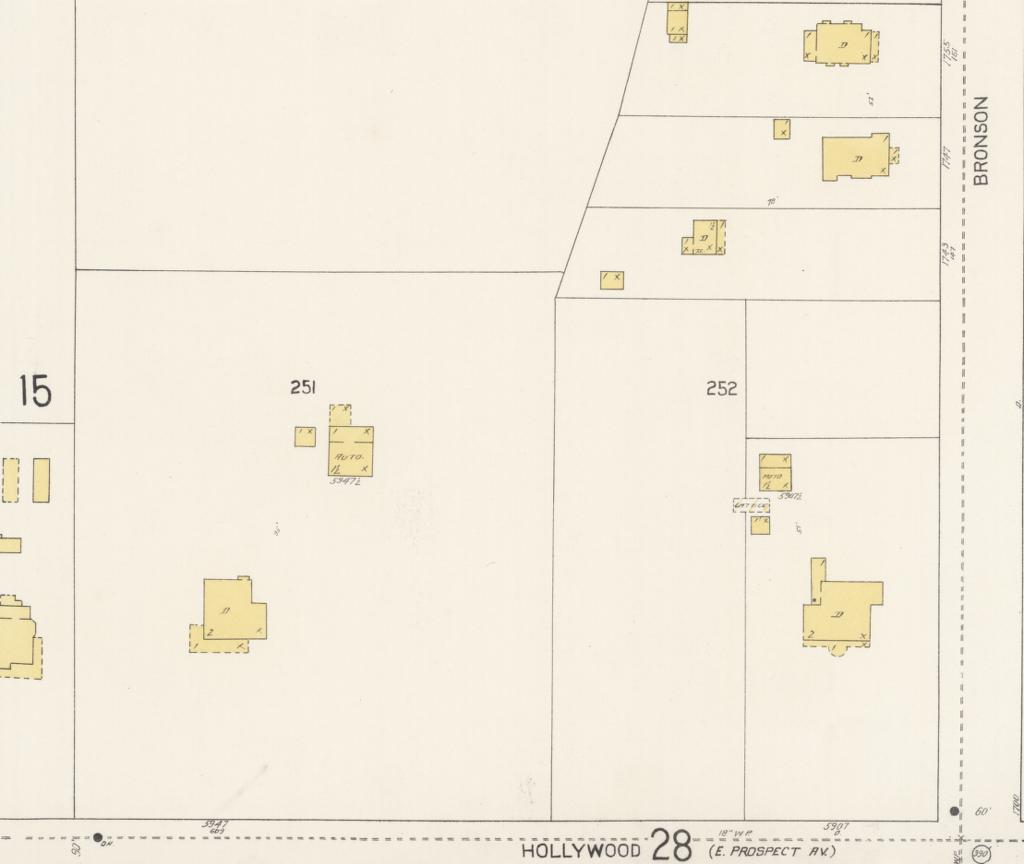
Detail of the 1913 Sanborn Fire Insurance Company map showing the Brokaw home at 5947 Hollywood Boulevard.

Portion of a 1913 Sanborn Fire Insurance Company map showing the Brokaw ranch property at 5947 Hollywood Boulevard and some of the buildings built in the vicinity since the tracts were sold in 1-3 acre parcels starting in 1901. Library of Congress.

They were still living at the ranch, since re-addressed as 5947 Hollywood Boulevard, in the US census of 1920.

Excerpt of the 1920 US Census. National Archives.


In February 1921, Ida leased a 3-story brick building at 1320 S. Main Street in downtown Los Angeles to the Los Angeles Auto Engineering Company. In November 1921, John, the former buggy maker, announced the opening of his new auto body shop here.

LA Times 11/6/1921


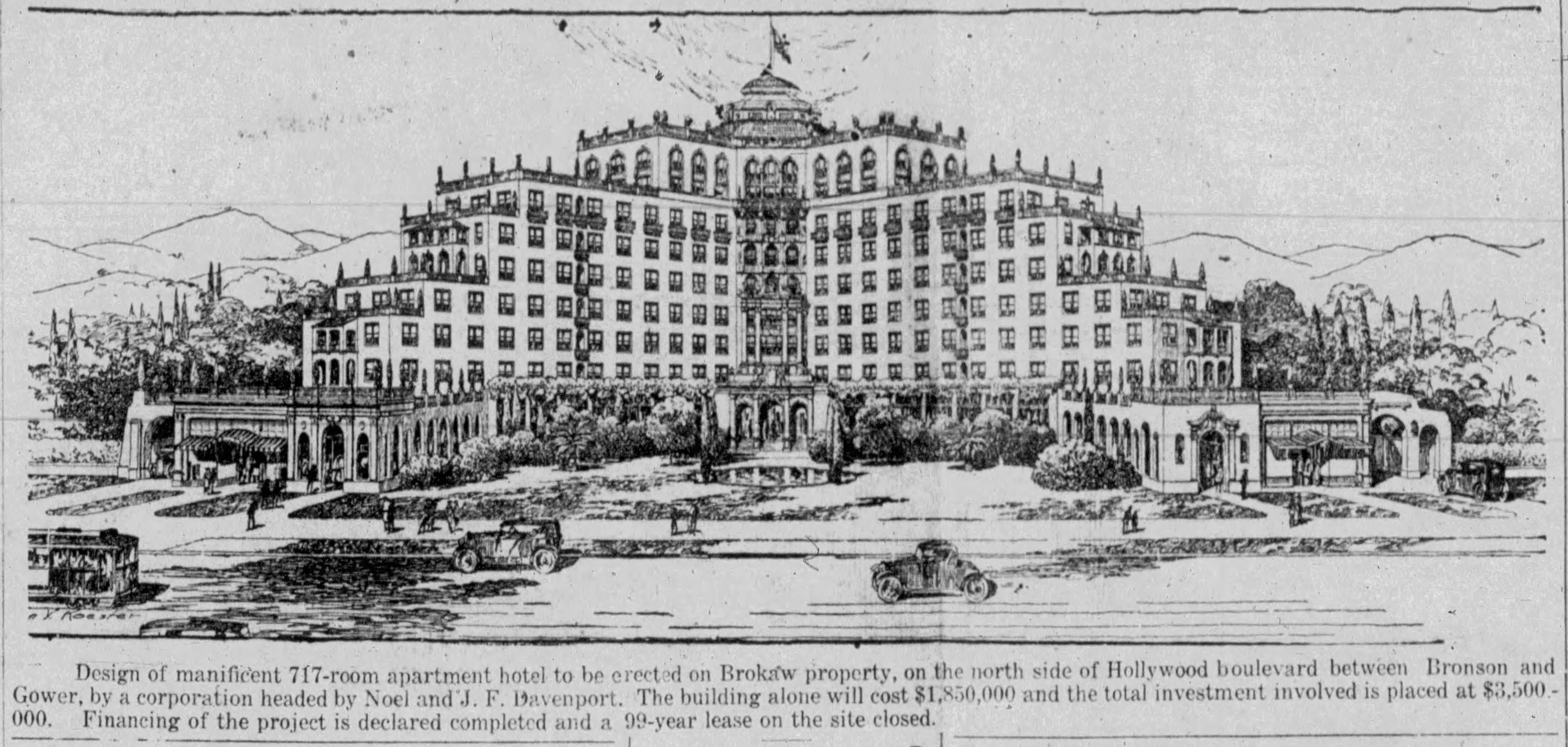
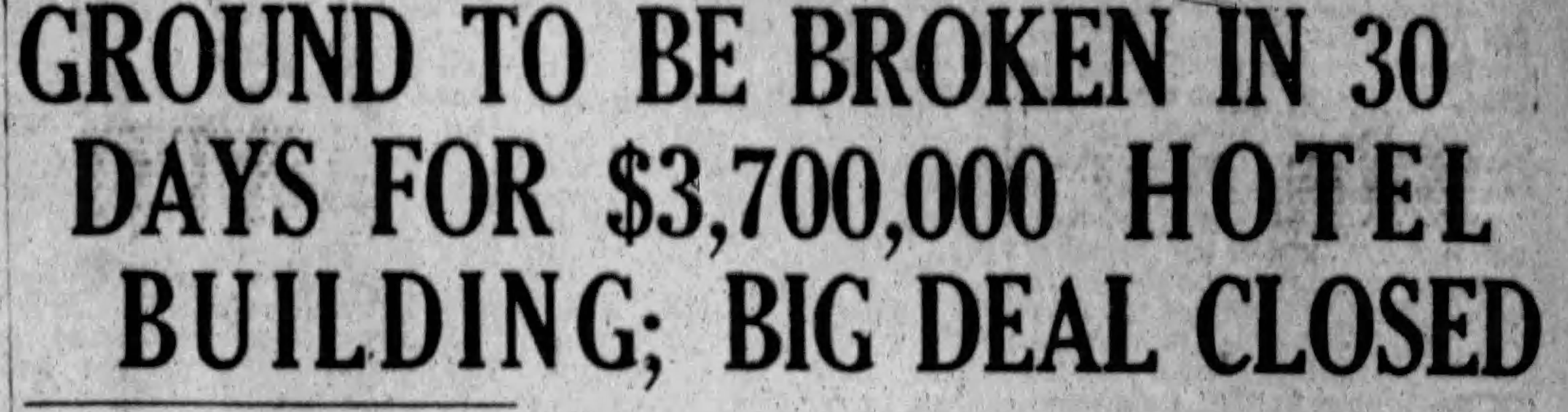
On September 1, 1922 local papers blared the news of a gigantic 717-room. $6,000,000 hotel to be built in Hollywood on the Brokaw ranch property that would be known as the Hollywood-California Apartment Hotel. To be built by the Davenport Corporation, Noel Davenport told reporters he had secured a 99-year lease for the Brokaw ranch where the hotel would be built. Sketches of the mammoth project, by architect H. H Whiteley, were splashed across the front pages of the major local papers. It even made the mountains look small.

Hollywood Daily Citizen 9/1/1922.


On January 17, 1923, Davenport breathlessly announced that rather than leasing the property from Brokaw, the company had just completed paperwork to buy it outright. This was not true. The work of removing the old Brokaw residence would begin within 2-weeks, he said; the company would then build itself a 1-story admin structure and a month after that, excavation of the hotel would commence. None of this would happen, either. The Brokaw residence was not going anywhere anytime soon.


Hollywood Daily Citizen 1/17/1923


Ten months passed, then on November 13, 1923, the LA Times reported that the Davenports, “well-known Southern California hotel men” were building at 1002-room hotel on the Brokaw ranch house property. They wrote this as if it was the first time anyone was hearing about this project. Almost all details provided are verbatim from previous announcements. Work, they said, was to begin within 60 days and would be complete by the end of 1924.

LA Times 11/13/1923

LA Times 4/24/1924

Sixty days came and went. Nearly five months into 2024, Davenport announced that work on the $6,000,000 Hollywood-California Hotel would start within a few weeks (At least this time the paper acknowledged its previous reporting). Ads selling stock in the project, featuring a drawing of an entirely different building, sketched by architects Curlett & Beelman, appeared in local papers on May 5, 1924. Ida H. Brokaw was among the asserted board of directors.

LAT 5/5/1924


On May 22, the promoters held a presentation at the Jonathan Club. Curlett & Beelman showed of the plans. Finance director David A. Coleman said they’d sold a bond of $2,500,000 and almost half the preferred and common stock was subscribed.  June 15, 1924, yet another drawing of the $6,000,000 hotel appeared (again) in major local papers. Davenport said preliminary construction work was to begin the project the first of next week and dismantling of the Brokaw homestead was to start immediately. That did not happen.

LAT 6/15/1924


It’s the last we hear of the hotel on the Brokaw ranch property. In 1925, Brokaw was the victim of a swindle, also coincidentally involving a $6,000,000 project- in this case a fake railroad merger that burned many LA businessmen, bankers and politicians. The bunco artists behind the swindle. Thomas Hennessey and Harry D. Hibbs were exposed by Brokaw in May 1925. They were found guilty in September 1925. Brokaw’s investment was variously reported as $10,000, $30,000 and $100,000.

LA Times 5/8/1925

LA Time 5/8/1925


John Brokaw died, age 74, on August 9, 1926 at his ranch home at 5947 Hollywood Boulevard.

Hollywood Daily Citizen 8/10/1926.

The ranch house property became the subject of a lawsuit brought by Ida Brokaw against Guarantee Trust & Title Company, the executors of her late husband’s estate. The title company asserted that she had signed away her rights to the property in 1924 in a document conveying her share to her husband. Ida argued that she had not understood the document she signed. The court agreed on August 27, 1929,that Ida was the victim of fraud, and her signature on the document was the result of duress and undue influence.


LA Times 8/28/1929

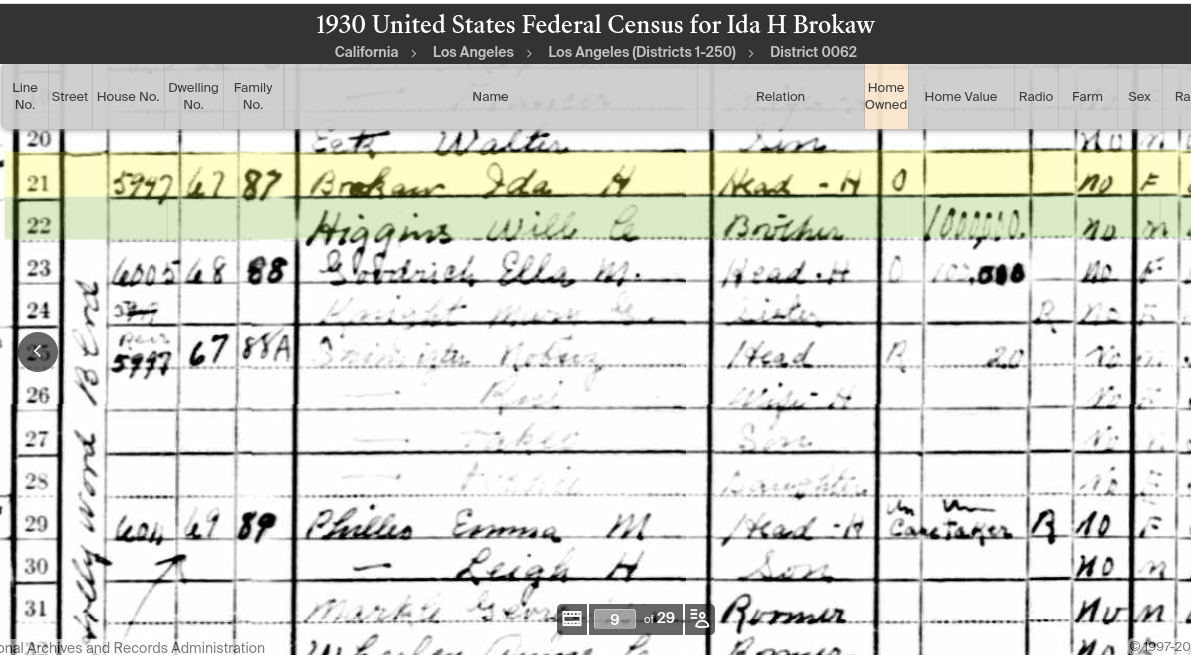
Ida continued to live on the ranch property, with her brother Will C. Higgins, in 1930, when a 1-acre section of the grounds were made into a miniature golf course.

1930 US Census showing Ida Brokaw living at 5947 Hollywood Boulevard.

The miniature golf craze was at its height in the summer of 1930. Another old ranch property down the street at 5261-5263 Hollywod Boulevard had a course put in around the same time. Ralph B. Smith’s “Shady Greens” opened with the address 5937 Hollywood Boulevard on June 28, 1930. It did open the next season, 1931, but that was it.

“Golf in a Garden.” Shady Greens ad, 6/27/1930. Hollywood Daily Citizen.

In May 1932, the site opened as the Hollywood Garden Bridge Club, using a part of the gardens for outdoor bridge club gatherings. The club was founded by Mrs. Elaine Warren McIntire, who added an orchestra stage and toilets. Concrete pads installed for shuffleboard during Shady Greens’ run were used as a patio with a canvas canopy overhead.

LA Times 5/22/1932

Ida still lived at 5947 Hollywood Boulevard in 1931 and into 1932. Sometime between 1932 and early 1933, the property was acquired by the owner of the Los Angeles Times, the Times-Mirror Corp. and Ida moved out.

In 1933, the property served as an outdoor venue for the Los Angeles Kennel Club’s national dog show, addressed as 5945 Hollywood Boulevard- the only time this address was used. When the Los Angeles club hosted the event again in 1936, the address used was 5937.

Hollywood Citizen News 5/19/1933.

LA Times 5/4/1933

In December 1936 owner Times Mirror obtained a permit for a cafe building, to be built at 5931 Hollywood Boulevard. Designed by architect Gordon B. Kaufmann, it occupied part of the ranch property next to the concrete decks where the golf course/bridge club had served outdoor meals. The unfinished building was leased to William Klute for a cafe, to be known as the Palms Grill. (It has its own post here).

The Palms Grill c. 1937. Schultheis Collection, LAPL photo.

In February 1937, Times Mirror commissioned a building designed by architect A. B. Sedley, to be construction on the west end of the property, at 5959 Hollywood Boulevard. As with the Palms Grill, it was leased before construction began to a grocery store and would open as the Hollywood Food Mart (it will have its own post).

5959 Hollywod Boulevard as the Hollywood Food Mart, c. 1937. LAPL photo.

In November 1937, another project for the parcel was announced: the Florentine Gardens cabaret restaurant, to be constructed at 5955 Hollywood Boulevard. Also designed by Gordon B. Kaufman, it would open in December 1938 (it has its own post here).

Florentine Gardens at 5955 Hollywood Boulevard. LAPL photo.

the Brokaw ranch house was being used as a boarding house in its last years. A permit to demolish the residence was obtained on June 9, 1938.

Ad for the Brokaw ranch house. Hollywood Citizen-News 8/19/1936.

Finally, in November 1939, Times Mirror announced a theater was to be built on the last vacant part of the parcel, to be known as the Hawaii Theater. (It has its own post here).s 5939 Hollywood Boulevard, it reportedly occupied the site of the Brokaw ranch house itself.

Sketch of the proposed Hawaii Theater, 5939 Hollywood Boulevard. LA Times 11/19/1939


Notes:

Ida H. Brokaw was buying property in Los Angeles as of 1888. Even after moving from the ranch, she remained in the vicinity of her longtime home. In 1934-1936 she lived at 6060 Franklin Boulevard. By 1938 she was at 1781 Gower. In financial difficulties later, she spent her last years in an apartment with her brother at 1765 N. Vine. Her brother died in February 1948. Ida passed away in July 1948 at age 90.

5920 Hollywood Boulevard: Movie Town Motel

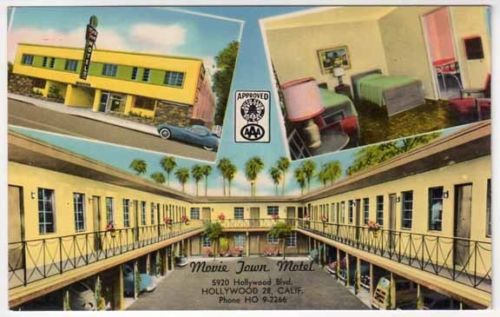
Anthony Pinelli obtained a permit to build a 2-story apartment house at 5920 Hollywood Boulevard located within the Bronson Tract #2 on the south side of the street just west of Bronson in April 1951.  It opened as the Movie Town Motel (not to be confused with the Hollywood Town Motel just down the street).

The property had a brush with notoriety when it was barely a year old. On November 19, 1952, a man was arrested in Hollywood for petty theft after making a phone call from a booth at 1269 N. Vine Street using “slugs” instead of real coins. Two telephone company employees who had been staking out the booth, as a number of expensive calls to Las Vegas had been made to it in recent days using slugs, nabbed the man as he was about to step into his new Caddy. He tried to bribe them but they turned him over to police. The man,”John Baker,” was booked for petty theft and released on bond. But before he had breathed the clean, fresh, Los Angeles air for more than a few paces, police rearrested him.

Hollywood Citizen News 11/20/1952.

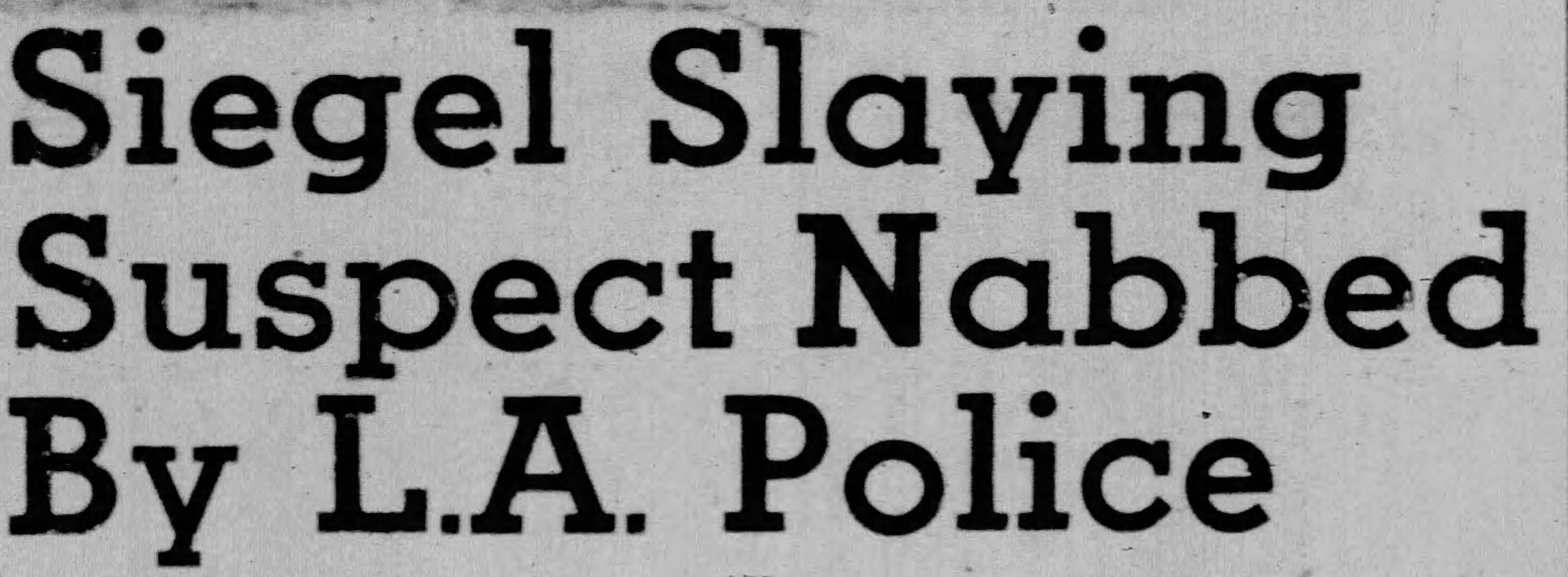
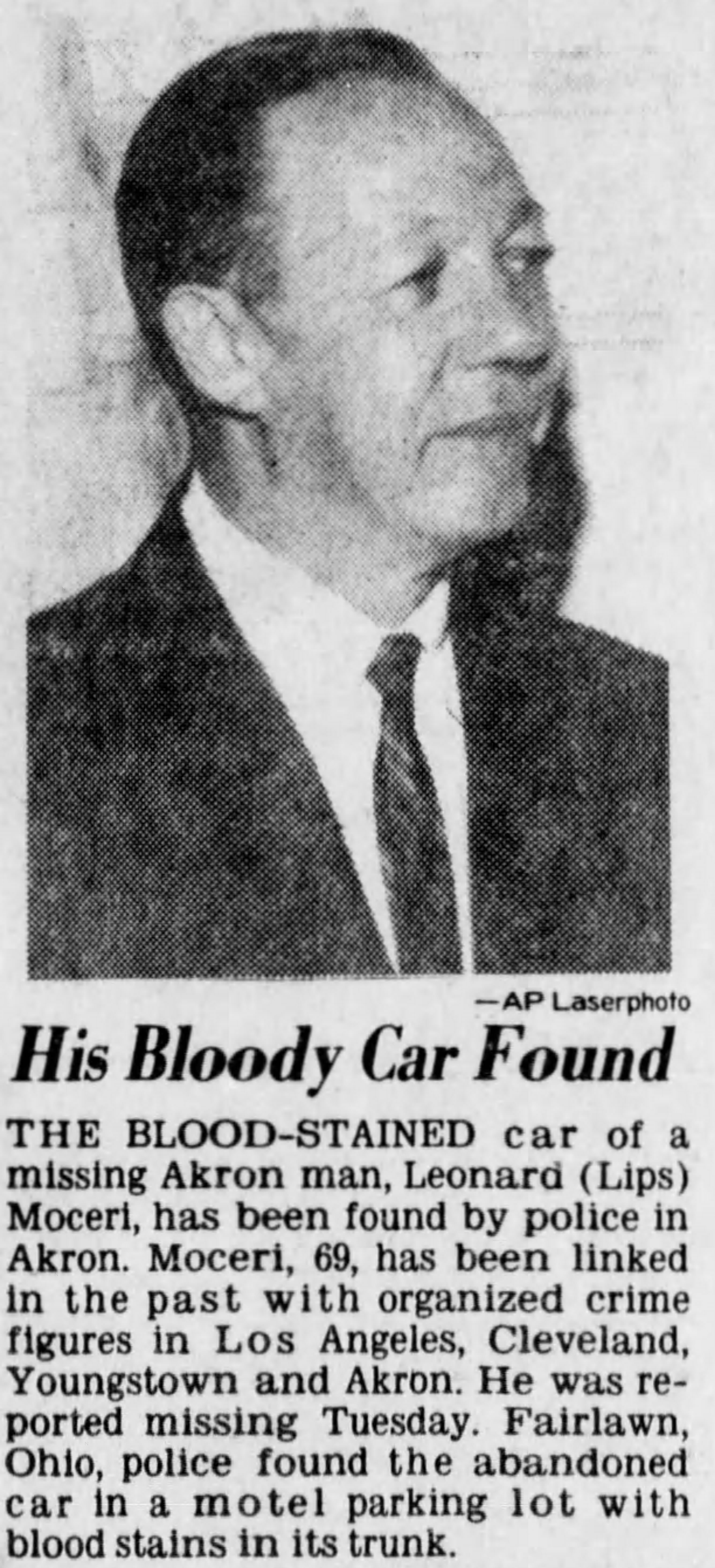
The slug user was identified through his fingerprints as a Midwestern gangster, Leonardo “Lips” Moceri. Thought to be a hired killer for a gang run by Thomas “Yonnie” Licacoli (then doing time in Ohio State Prison), Moceri was long wanted in Toledo as a suspect in the October 1931 murders of bootleggers Abe Lubitsky and Norman Blatt and the July 1932 slaying of gangster Jack Kennedy and Kennedy’s girlfriend Louise Bell in November 1932. Locally, police questioned him about the June 1947 murder of Bugsy Siegel, the suspected 1949 murders of Mickey Cohen henchman Dave Ogult and Frank Nicoli, the December 1950 murder of mob lawyer Sam Rummel, August 1951 double murder of the “two Tonys” Trombino and Brancato, in front of a Hollywood apartment building at 1648 N. Ogden, and the December 1951 disappearance of former moonshine king Frank Borgia. He was also wanted by the FBI for draft dodging.

Leo Moceri after his Los Angeles arrest, 11/19/1952. UCS photo.

In Moceri’s wallet contained $1800 cash, a bank deposit slip for $10,000 made out to Charles Battaglia, and a business card for Salvatore Pinelli, identified as the operator of the Movie Town Motel.

Pinnelli was picked up for questioning along with Tom Dragna, ex-Cohen henchman Mike Rizzo, and Jimmy “the Weasel” Fratiano. All but Fratiano were released without charge after questioning.

Whatever information Moceri may have had about local crimes came to nothing. He remained jailed here until being extradited to Ohio in December 1952 and charged with four counts of murder but the charges were dropped due to the deaths of key witnesses. In March 1953 he was convicted of blackmail. He went on to become underboss of the Cleveland crime family. In August 1976 he went missing. His car, with a bloodstained trunk, was found in a motel parking lot (in Fairlawn Ohio- not the Movie Town Motel).

Cincinnati Enquirer 9/3/1976.

Movie Town Motel in 2011. Google Map image.

The former Movie Town Motel  motel operates today as the Banana Bungalow.

5800 Block of Hollywood Boulevard: Hollywood Freeway

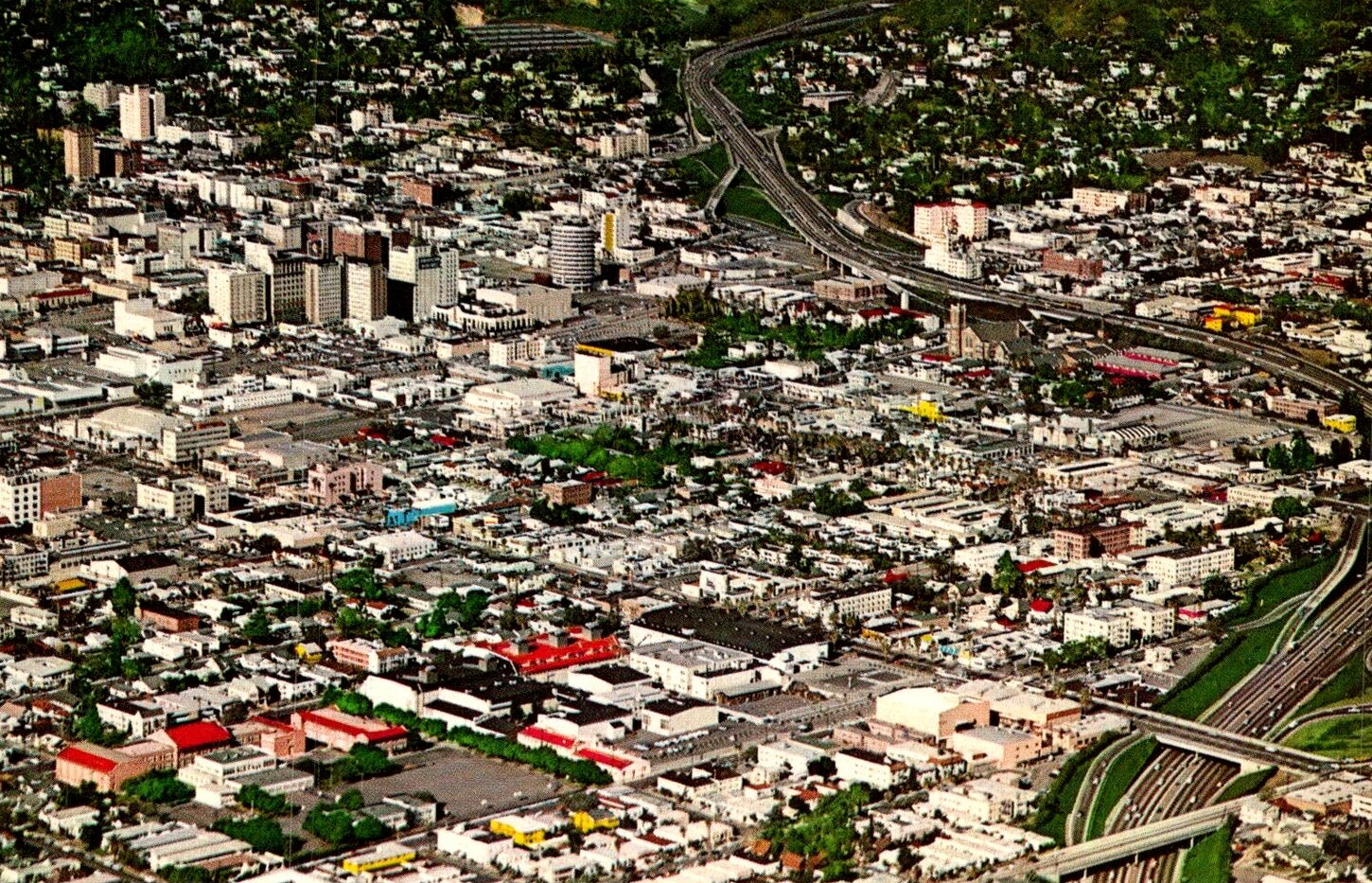
The Hollywood Freeway (US Route 101) was constructed to connect downtown Los Angeles with the San Fernando Valley.

Originally to be known as the Hollywood Parkway when a plan was presented to Mayor Bowron in 1939, the first unit, constructed by the City of Los Angeles with city and state funds, opened in July 1940 through the Cahuenga Pass from Highland Avenue to Barnham Boulevard.

Funding and World War II put a halt to further progress on the freeway for the duration, After the war, restarting of the project was again pushed back as civic leaders and residents protested that removal of existing dwellings would make the already severe housing shortage situation worse (see my posts on the postwar housing crisis here and here), but in 1946 excavation got underway in the Civic Center section and Fort Moore Hill became a lot less hill. The project was full steam ahead when the Collier-Burns Act of 1947 assured state highway funding for freeway construction.

Hollywood business and religious leaders expressed concerns about the route through Hollywood, arguing that it would impact the acoustics of the Hollywood Bowl and cause the destruction of  KTTV’s new studio (later Metromedia Square), which opened at 5746 Sunset Boulevard on January 1, 1947 and the 1923 First Presbyterian Church of Hollywood at 1760 N. Gower. The State Highway Commission did indeed modify the route to avoid the studio and the church, and added what would today be called mitigation measures around the Hollywood Bowl in the form of landscaping to diminish effects to the acoustics (which as it turned out were fine).

By 1949 right of way acquisition for the Western Avenue to Hollywood Boulevard link began. Because the Hollywood Freeway is a depressed freeway, construction on the Boulevard meant excavating underneath it and constructing a bridge over the freeway as well as on and off ramps. The 5800 block of Hollywood Boulevard was affected, between Van Ness Avenue to the east and Bronson Avenue to the west. Canyon Drive, which had gone through to the north side of Hollywood Boulevard, would be rerouted onto Van Ness north of the Boulevard.


Overall, Hollywood Boulevard itself was minimally impacted by the project. There wasn’t a lot of development here; there were 1 and 2-story retail buildings, remnants of large, formerly rural residential estates, used car lots (this was the tail end of Hollywood Boulevard’s Auto Row), and gas stations.

5821 Hollywood Boulevard between Van Ness and Canyon Drive had been the home of Mary Taft, matriarch of the Taft family, from 1904 until her passing in 1938 at age 96; her daughter Dr. Gertrude Taft continued to live here until her death in September 1941. Detail of a 1913 Sanborn Fire Insurance map, LOC.


5873 Hollywood Boulevard, between Bronson and Canyon Drive, was a residence in 1913; the site had been a Union Oil gas station since 1921. It survived the Hollywood Freeway construction and was demolished in 1969. The current Original Tommy’s fast food restaurant was built in 1995. Detail of a 1913 Sanborn Fire Insurance map, LOC.


Nash dealers J. F. O’Conner & Son relocated from 5800 Hollywood Boulevard, where they had been since 1945, to 6028 Hollywood Boulevard due to freeway construction. Mark M. Hansen, owner of the Marcal Theater and part owner of the Florentine Gardens, owned both this property and the new location. Hollywood Citizen News 8/12/1949.

With right of way acquisition completed, excavation work at Hollywood Boulevard got underway in March 1951. The first task was to build a detour for the Pacific Electric tracks between Bronson and Van Ness.

Hollywood Citizen News 2/24/1951


Work on the PE detour. Hollywood Citizen News 3/8/1951

The final link, from Hollywood Boulevard to Mullholland Bridge was opened with a ribbon cutting ceremony on April 15, 1954.

The Hollywood Freeway bridge carrying eastbound Hollywood Boulevard traffic, May 1952. LAPL photo.


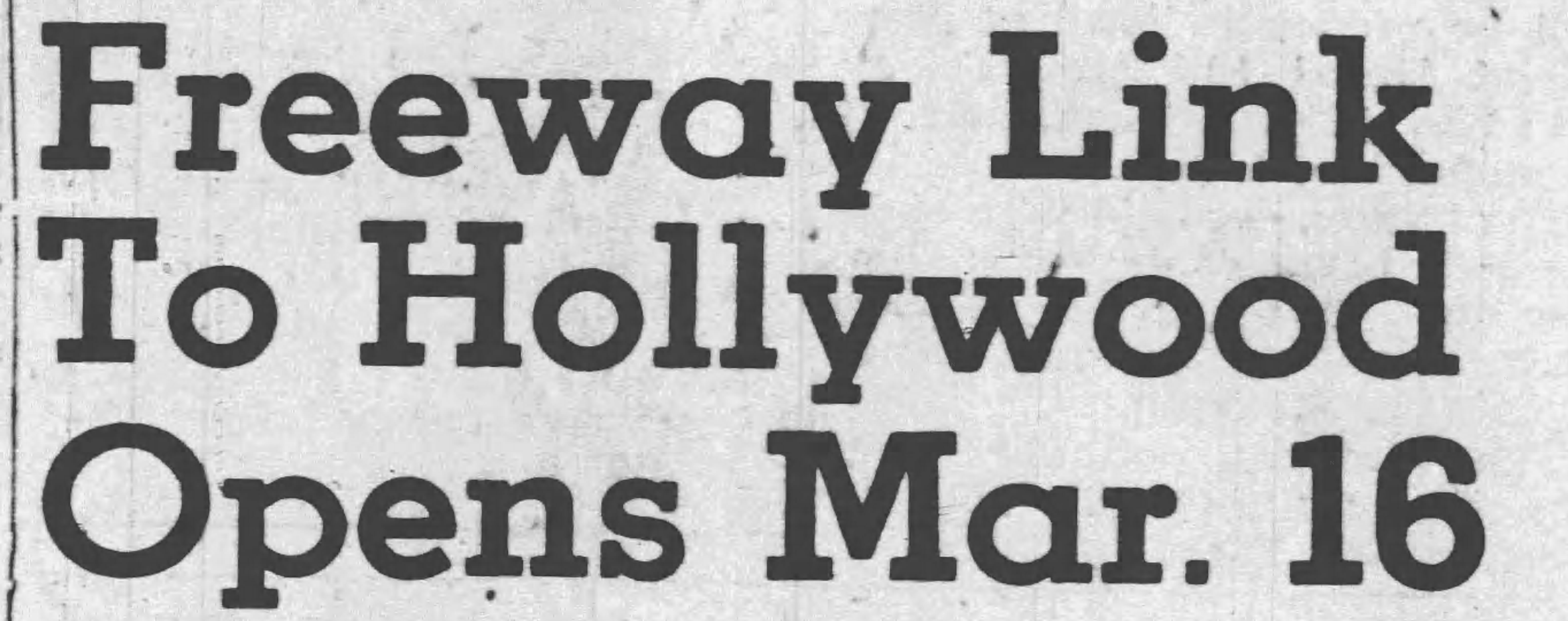
The opening if the Western Avenue to Hollywood Boulevard link. Hollywood Citizen News 3/3/1953

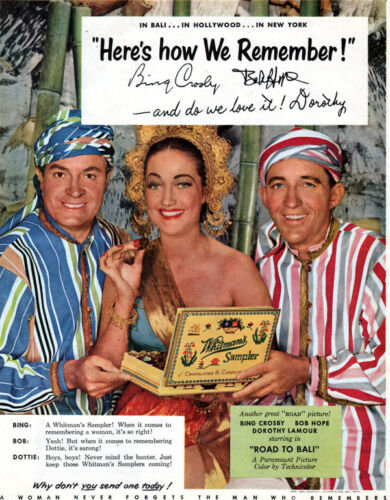
The Western Avenue to Hollywood Boulevard link of the freeway was to have opened in January 1953 but heavy rains delayed construction. It opened on March 16, 1953. Dorothy Lamour appeared at the ribbon-cutting ceremony- a nod to her “Road to…” series of films with Bing Crosby and Bob Hope. The first accident on this stretch of highway occurred about 5 minutes later.

Dorothy Lamour, Bob Hope and Bing Crosby were known for their “Road” films. In 1953 it was “The Road to Bali.”

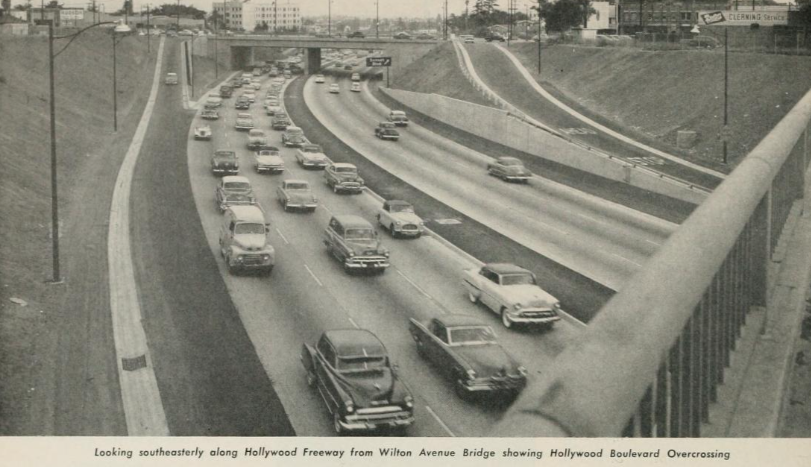
Looking toward the Hollywood Boulevard overcrossing from the Wilton Avenue Bridge. From California Highways and Public Works magazine September/October 1954.

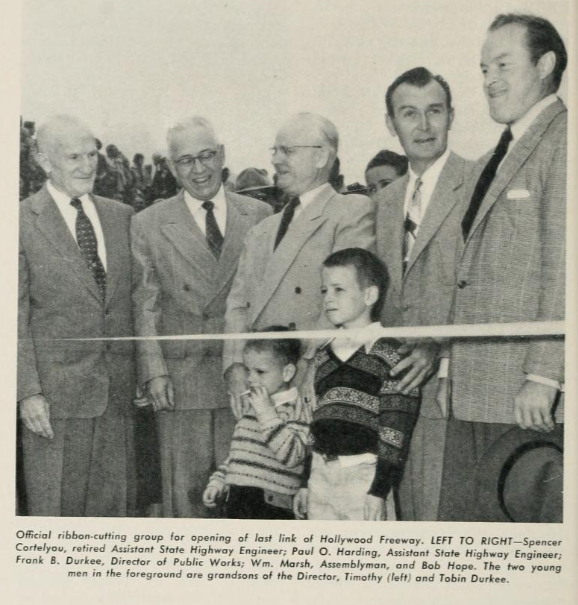
Hollywood Boulevard would be the end of the freeway until the final link opened in April 1954. This time, Bob Hope officiated at the ribbon cutting.

Bob Hope opening the final link of the Hollywood Freeway, April 1954. From California Highways and Public Works magazine May/June 1954.


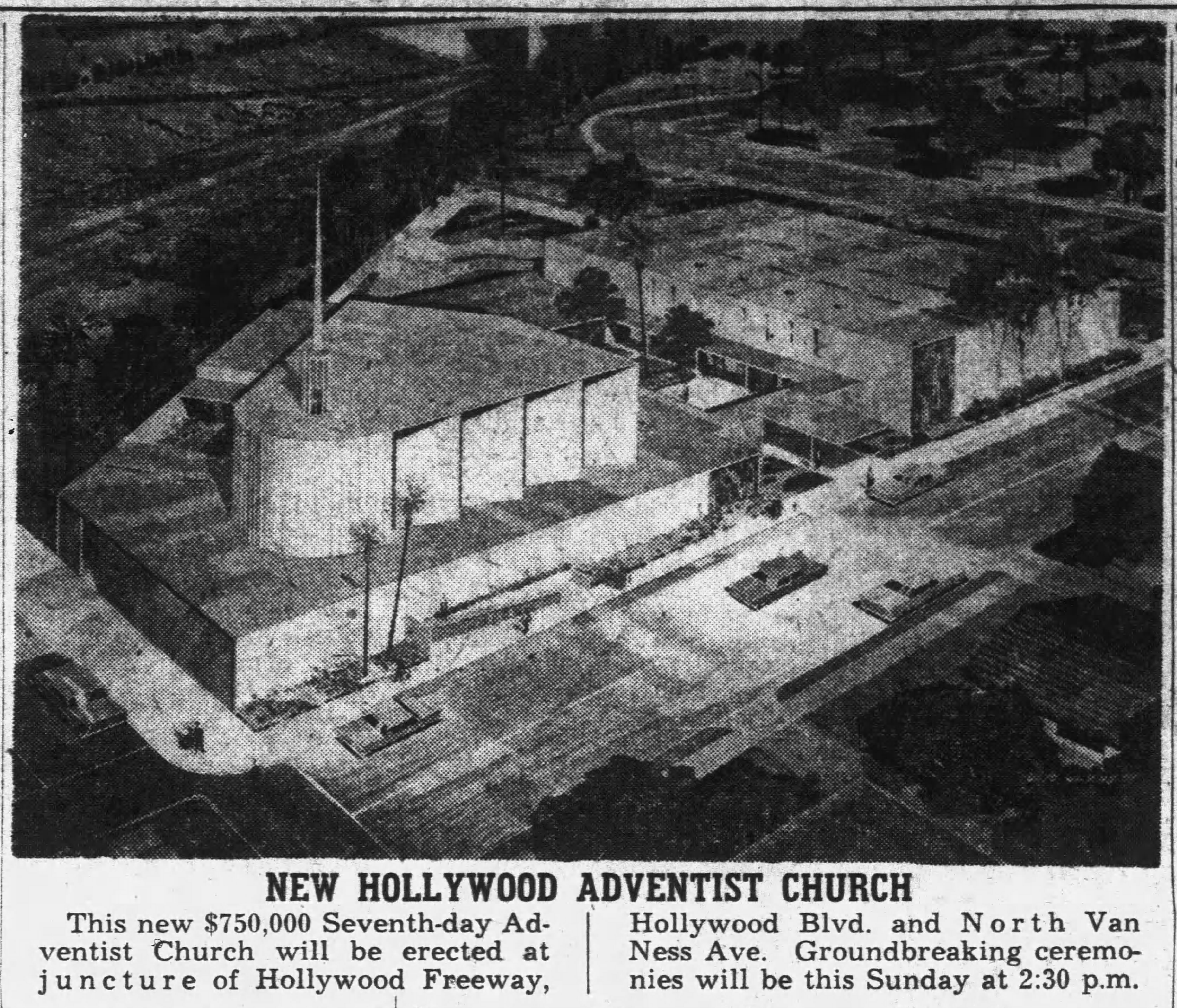
Although it looks like it was marooned by the Hollywood Freeway construction, the Seventh-Day Adventist Church between the ramps was built in 1961, almost 10 years after the freeway was completed. Its address is actually on Van Ness Avenue. Hollywood Citizen News 5/27/1961.


5756 Hollywood Boulevard: Hollywood Town Motel

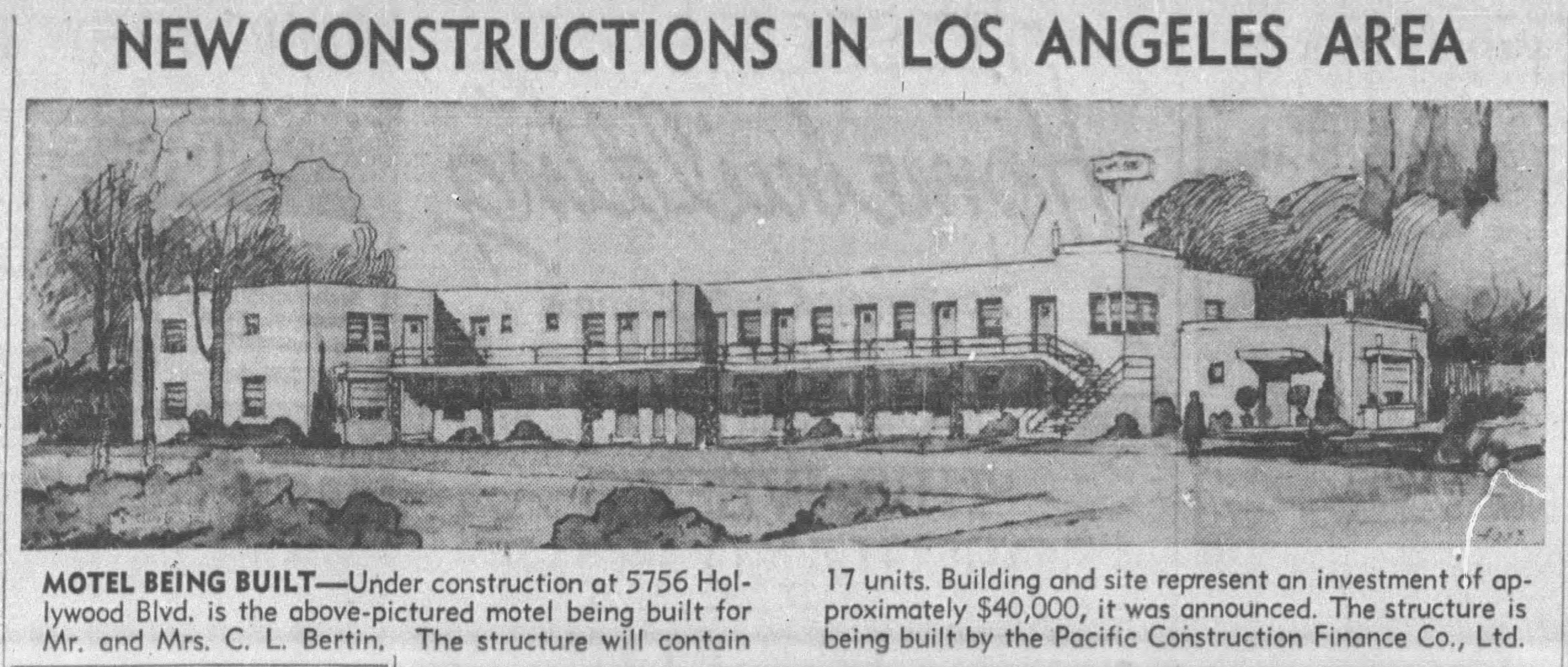
This 2-story brick motel on the south side of Hollywood Boulevard was designed in February 1940 by architect L.B. Clapp for owners Mr. and Mrs. C. L. Berton. Plans for the project were made public in April 1940.


LA Times 4/28/1940.


The Town Motel rooms had kitchens and offered weekly rates, catering to long-term tenants rather than short term tourist traffic. Harry Rubin was owner c. 1945 through 1960.

Colorized postcard view of the Town Motel.


The Hollywood Town Motel c. 1960.

The building was demolished in 1973.

5751 Hollywood Boulevard: Reginald Denny Hobby Shop

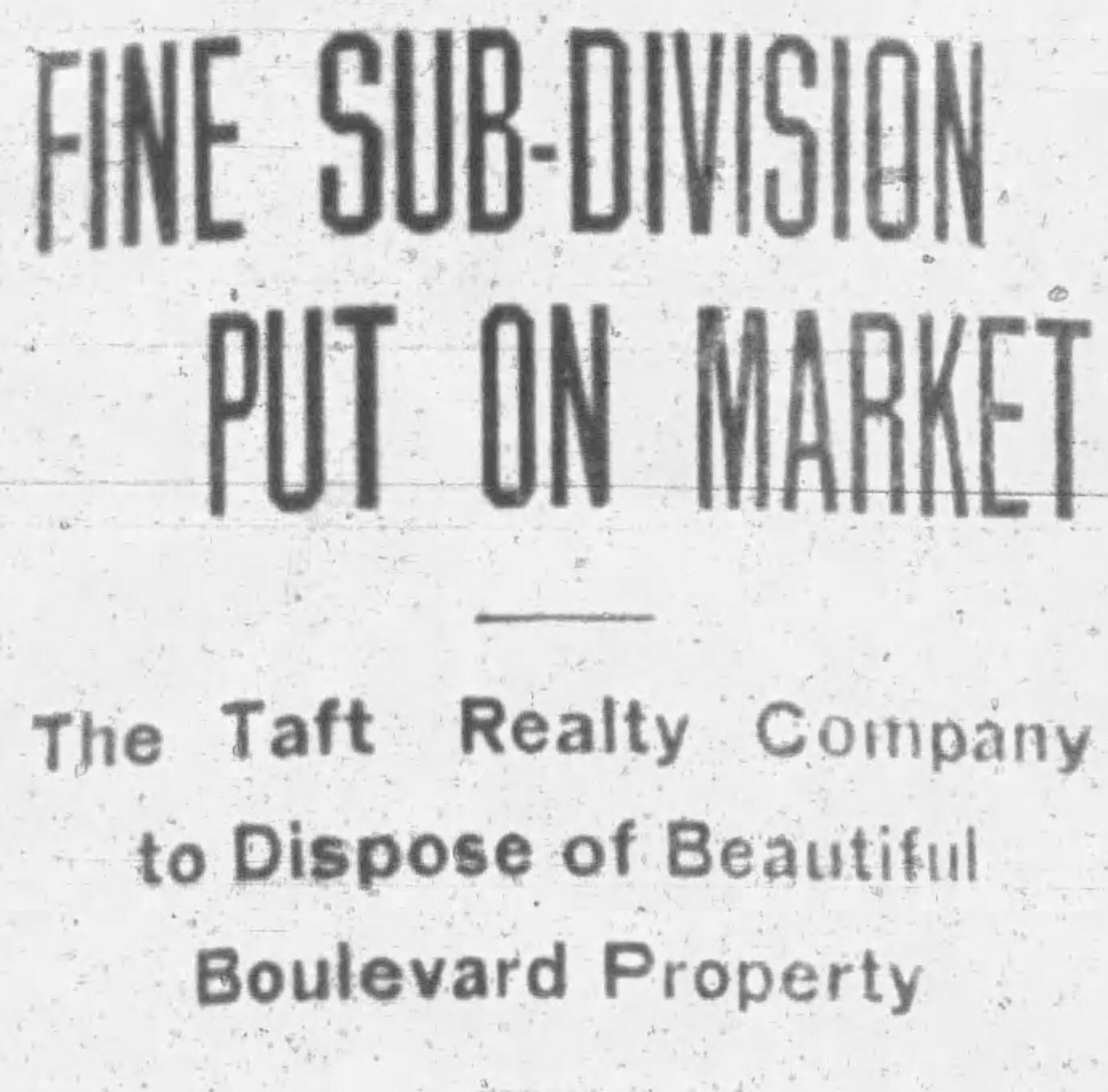
This modest little building at 5751 Hollywood Boulevard on the northwest corner of Taft Avenue started out as the Hollywood sales office of the Taft Realty Company.

The head of Taft Realty was Alfred Z. Taft, Sr.. Son of Harley Taft and Mary E. Hazard, he was a Los Angeles native, born in 1864. In 1888 he married Blanch Tedford. In April 1893, the couple moved with their young children- 3 daughters and 4 sons- to a 10-acre property along Hollywood Boulevard (then Prospect Avenue) between Wilton Place (then Lemona Avenue) and Van Ness Avenue (then Warner Avenue), originally addressed as 716 W Prospect Avenue, which he planted with lemons and oranges.

Taft dabbled in real estate in the early 1900s; by 1910 it had become a full time occupation rather than a sideline. Having bought and sold other properties, in February 1912, the company constructed a tract office on the ranch property and announced that it was subdividing the family orchard into lots along the newly-created Taft Avenue between Hollywood Boulevard and Franklin. The street had already been graded and sidewalks put in. A pair of unique cobblestone pillars marked the north and south entrances.

Hollywood Citizen 2/9/1912

Detail of a 1913 Sanborn Fire Insurance Company map showing the Taft subdivision and tract office at 5751 Hollywood Boulevard on what was now the northwest corner of Taft Avenue. LOC map.

Closeup of the 1913 Sanborn.


Having given up citrus ranching, in 1913 A.Z. Taft, Sr., relocated to Nogales, Arizona where he took up gold mining. His wife, Blanche Taft, died in Los Angeles in December 1915, at only 45 years old.

The two oldest Taft sons, A.Z., Jr. and Bertram Y. (who went by his initials, B.Y.) ran the family real estate and land development businesses.


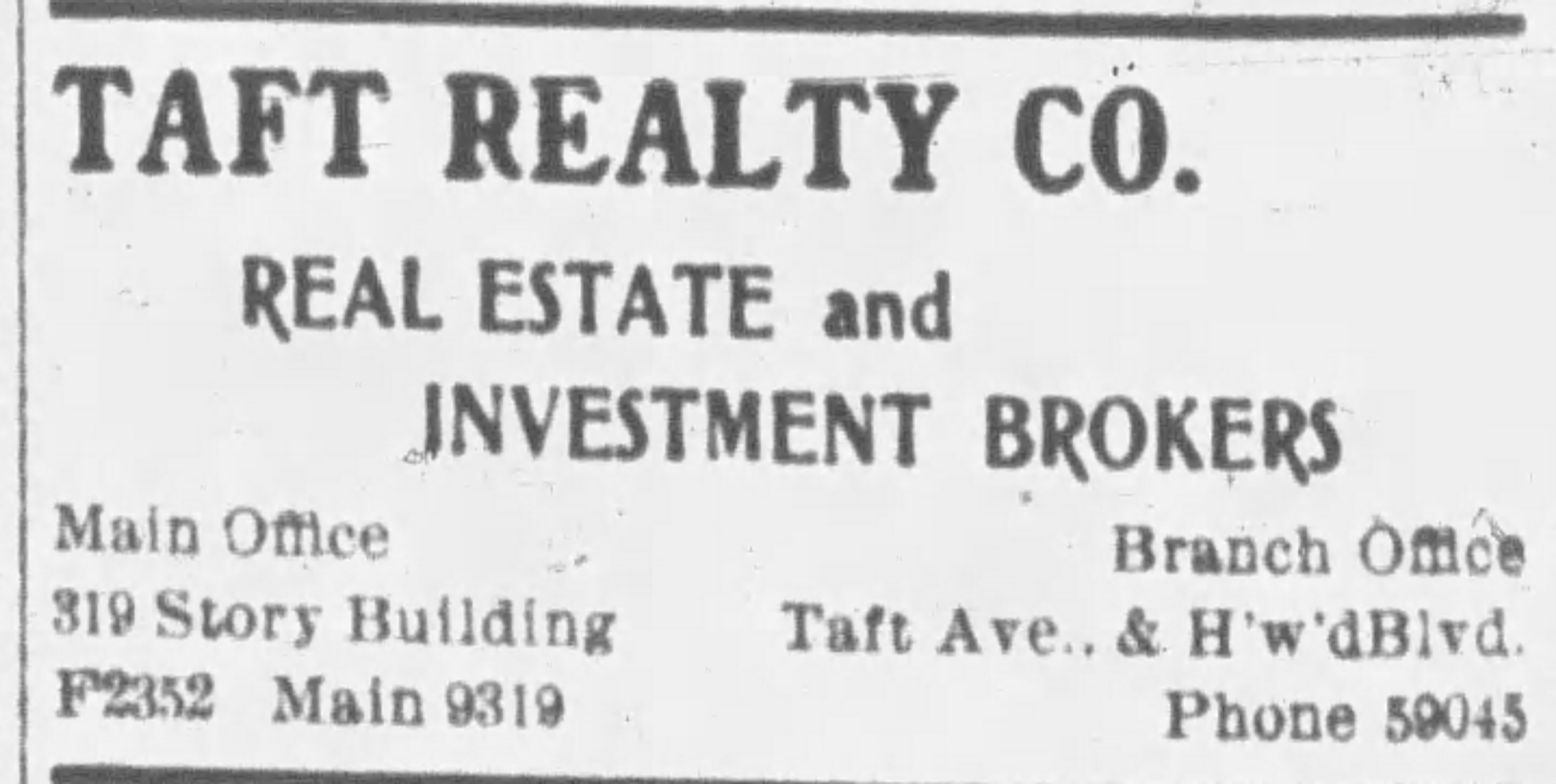
Taft Realty Co’s main office was in the Story Building in Downtown Los Angeles. Hollywood Citizen 2/27/1914

Taft Realty Co. ad, Hollywood Citizen 5/26/1916.

The Taft Realty Co’s Hollywood tract office in January 1920. One of the four cobblestone entrance pillars can be glimpsed on the right. LA Times 1/1/1920.

Originally a wood-clad structure, in November 1920, society architect Frank Rasche (who also designed a retail building at 5526 Hollywood Boulevard for B. Y. that year) obtained a permit to make a number of alterations to the building. Originally a Craftsman-cottage in keeping with the architecture of many of the homes in the subdivision, it would be transformed into a Spanish Colonial Revival structure with stucco walls and a red tile roof as the style gained favor along the Boulevard.

An artist’s view of the remodeled 5751 Hollywood Boulevard. Hollywood Daily Citizen 1/14/1922

In 1923, the company proposed its most ambitious project to date: the Taft Building, to rise on Hollywood Boulevard at Vine Street. Completed in 1924, it would be the first height-limit building in Hollywood.

Sketch of the proposed Taft Building. Hollywood Daily Citizen 9/8/1923.

The Taft Realty Co. continued to use its tract office at 5751 Hollywood Boulevard even as it was renting space in the new Taft Building. Hollywood Daily Citizen 6/27/1924.

5751 Hollywood Boulevard remained in use by the Hollywood Realty Co. into 1925. Note the cobblestone entrance pillar. Mary Taft still lived nearby, at 5821 Hollywood Boulevard on the corner of Canyon Drive, with her daughter, Dr. Gertrude Taft. LA Times 1/1/1925.

After serving as the Taft Realty Co. tract office, the little building took on a variety of (usually short-lived) roles. Starting in July 1926, it became the headquarters of Screen Library Services, Inc.

The Screen Library Service Inc. opened at 5751 Hollywood Boulevard on July 16, 1926.

In June 1929, it became an office for Paul Marshal’s Health Institute.

Hollywood Daily Citizen 6/1/1929

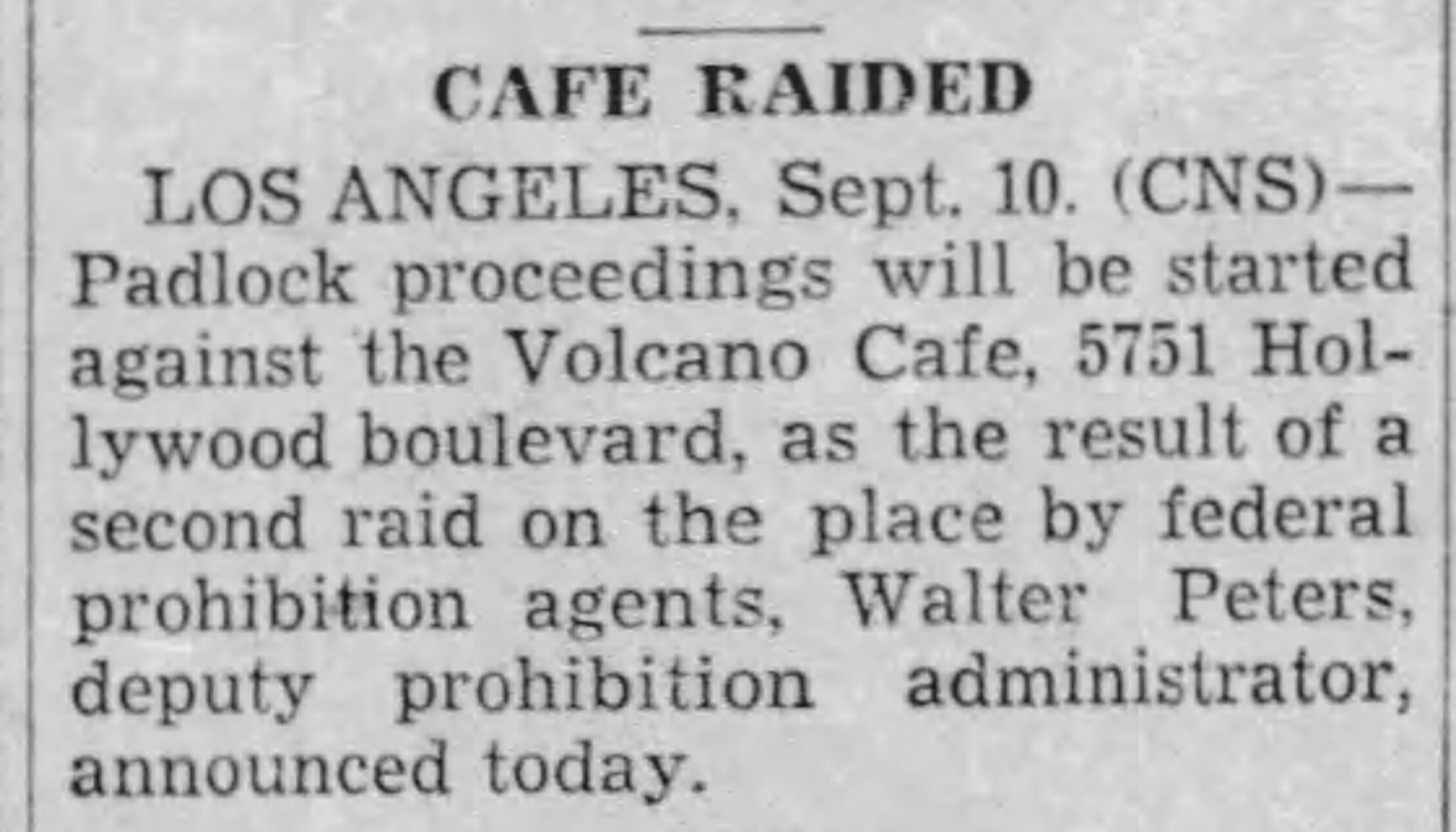
By early 1932, it was Del Zoppo’s Cafe Italian restaurant. Federal Prohibition agents raided the place on June 23, 1932 and found stockpiles of illegal alcohol. Owners Mike and Tony Del Zoppo were charged with violating the Volstead Act. Renamed the Volcano Cafe, it was raided again in September 1932, and Federal prohis recommended it be padlocked permanently.

Hollywood Citizen News 3/12/1932

Pasadena Post 9/11/1932.

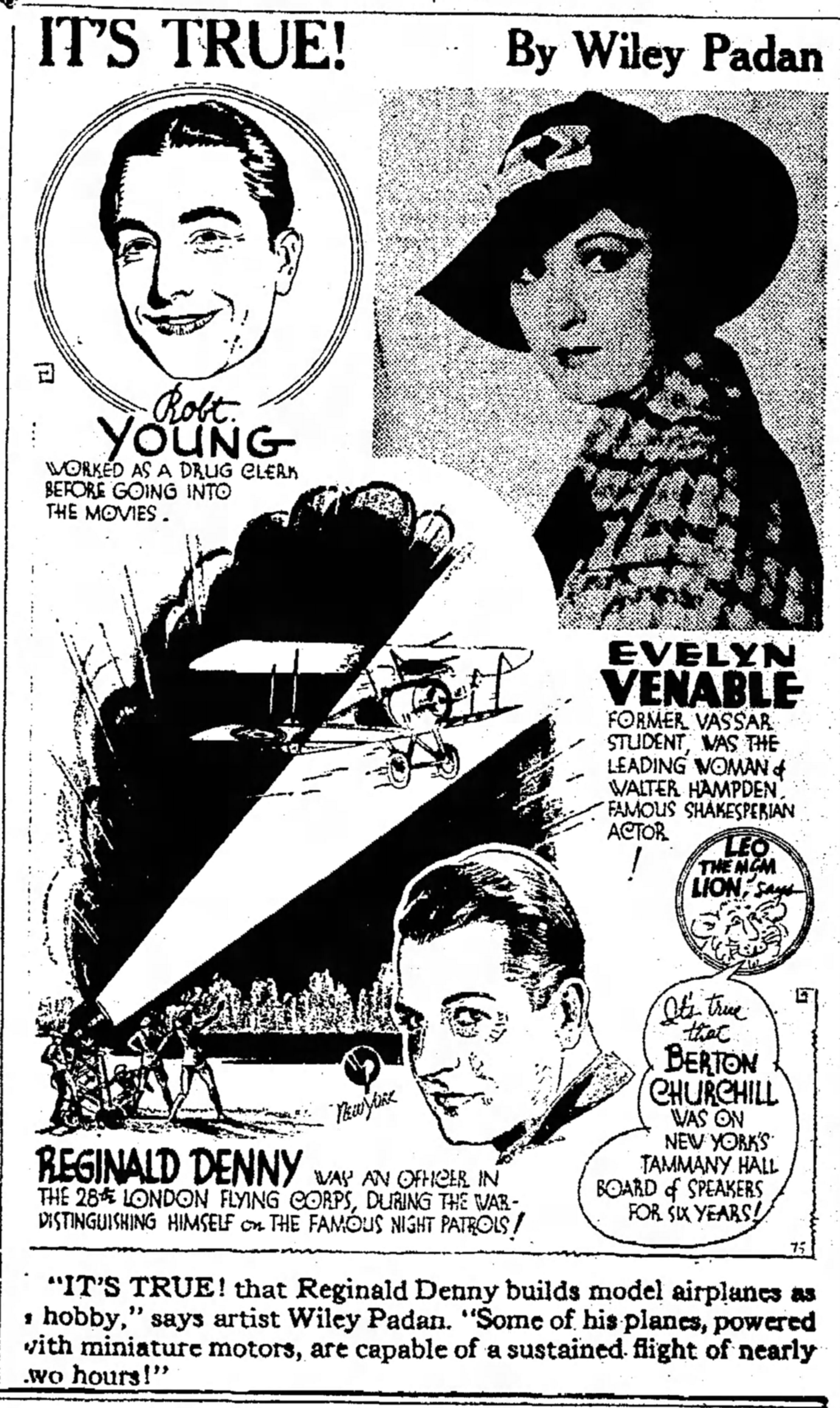
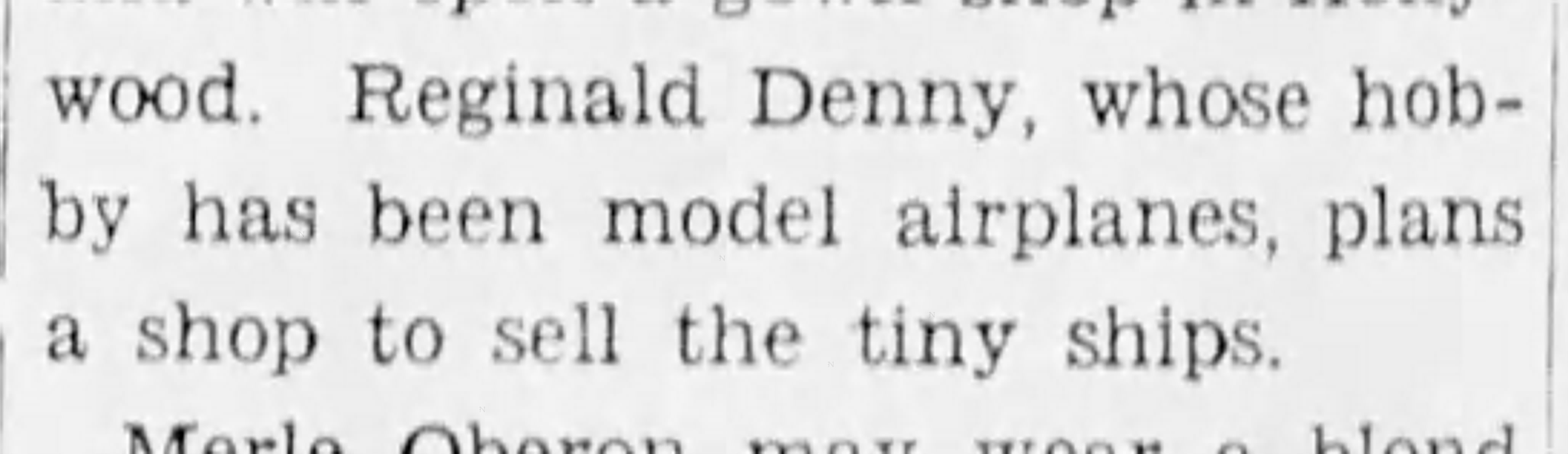
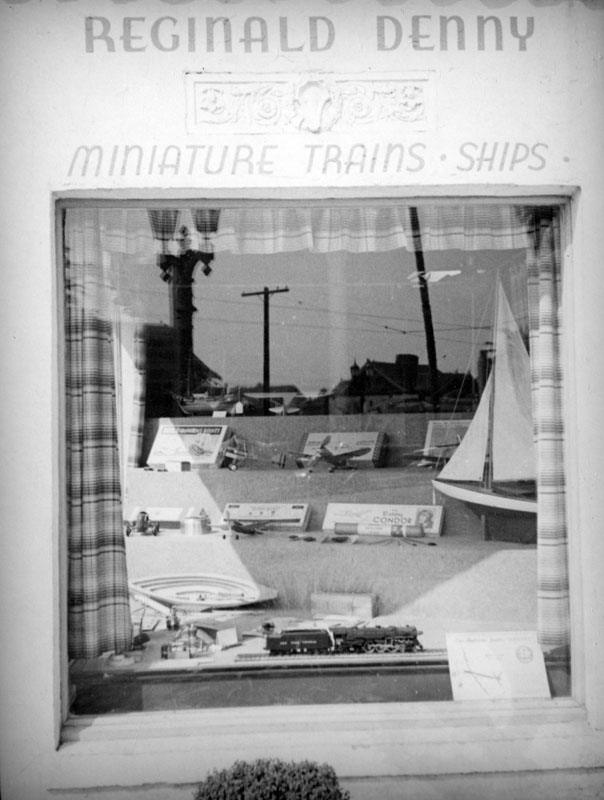
In 1934  through mid-1936 the building housed various theater arts purposes. In July 1936, Reginald Denny Industries, the listed owner of the building, obtained a permit to make minor alterations. By September 1936, 5751 had opened as the Reginald Denny Hobby Shop, selling model airplanes as well as model ships and trains. Denny’s factory for manufacturing his planes was located behind the shop.

5751 Hollywood Boulevard c. 1937 as Reginald Denny’s hobby shop. Note the old Taft subdivision cobblestone pillar and plane-shaped “Denny Planes” neon sign. LAPL photo.

English-born actor Reginald Denny had served in the RAF during World War I and had been a popular leading man in silent films. As his career turned to character roles in the early 1930s, gossip columnists frequently noted Denny’s interest in model airplanes- a hobby that purportedly evolved from making them for himself, to making them in his home workshop for neighborhood children to the creation of Reginald Denny Industries to make and market the kits, which could be purchased from local shops or by mail order. By the Fall of 1935, it was reported that he would open his own retail outlet.

Ames Daily Tribune 5/25/1935.

Santa Ana Register 11/1/1935


A Hollywood gossip colimn mentioned in November 1935 that Denny planned to open a shop to sell his model planes. Perry County Republican 11/28/1935.


Palm Springs Desert Sun 1/29/1936.

Pasadena Post 9/5/1936.


Detail of the shop window c. 1937. LAPL photo.

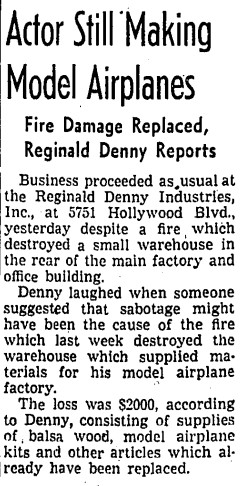
Denny was still affiliated with the shop as of September 1940 when a fire broke out in the rear warehouse.

LA Times 9/4/1940


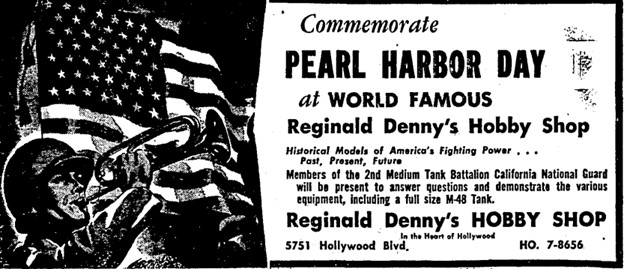
The model shop continued in business here into the early 1960s before moving to another location.

Though it continued to bear his name, Denny was no longer involved with the shop at this time. LA Times 12/6/1959.

The corner of Hollywood Boulevard and Taft looks radically different today. The current buildings on this site, a 7-11 and mini-mall, were constructed in 1976.

Google map image.


Notes:

Harley and Mary Taft moved to Hollywood in 1904. Taft died in 1906. A.Z. Taft Sr. died in Nogales in 1936. His mother, Mary Taft, continued to live at 5821 Hollywood Boulevard until her own passing in 1938 at age 96, one of the Very Old Ladies of Hollywood Boulevard who witness the transformation from rural to commercial.

Her daughter Dr. Gertrude Taft, lived in the residence at 5821 Hollywood Boulevard until she died in  September 1941. A.Z. Taft Jr, died in November 1941, at age 52. B.Y Taft died in November 1977.