Detail of a 1913 Sanborn Fire Insurance map for Hollywood. Library of Congress.
6028 Hollywood Boulevard, on the south side of the street between Bronson and Gower was home to a variety of automobile showrooms.
Like most of the block, the parcel was rural/residential before World War I. The property owner was Edwin Rich, brother of Sanford Rich. The brothers had come to Hollywood in the early 1900s and developed numerous tracts in the heart of Hollywood. Sanford was a pioneer realtor and the first mayor of Hollywood when it was incorporated in 1903 (Hollywood was annexed by the City of Los Angeles in 1910), whose home was at 6048 Hollywood Boulevard until his death in June 1930 at age 89. Two of Edwin’s grown children, son Frank and daughter Bessie, were also in real estate, as Rich & Garlock, based briefly at 6026 Hollywood Boulevard, and developed the adjacent parcel at 6032. Edwin Rich passed away at age 90 in September 1932.
Hollywood Citizen 1/2/1920
F.R. “Jack” Germond was the first known auto dealer to operate at 6028 as The Germond Motor Company. A salesman for Earl V. Armstrong, LA’s distributor for the Chandler Motor Car Co., in October 1919 Germod was appointed Hollywood’s dealer for Cleveland Automobile Company, a new subsidiary of Chandler. Apparently operating out of an existing building on this property, by November 1920 he had moved to temporary quarters at 6151 Hollywood Boulevard and 6028 became an auto repair shop. In 1922 a tire shop opened here as well. Edwin Rich modified the building with a partition to accommodate the two businesses.
Hollywood Citizen 7/23/1920
LA Evening Express 9/9/1922
In November 1929, 6028 became the home of Butts-Andrews Graham-Paige, situated in a new building built for them by engineer William J. Moran. The unusual structure had a slightly Art Nouveau appearance, with a 50-foot-wide arched central window, intended to look like the proscenium arch of a theater. The interior was designed to “represent the tap room of an early Spanish inn,” with un-plastered, polychrome walls that had a “crude stone block” effect and ceilings of rough lumber that featured a “pyro” (burned) finish.
Hollywood Daily Citizen 11/6/1929
F.W. Butts and J. J Andrews had been Pierce-Arrow dealers at 5760 Sunset Boulevard in 1927. In October 1929, at the same location, they became dealers for Graham-Paige. Headquartered in Evansville, Indiana, Graham-Paige was established in 1927 when the Graham brothers purchased the Detroit Motor Car Company, makers of Paige and Jewett automobiles.
As Butts-Andrews Graham-Paige. Hollywood Daily Citizen 11/6/1929
Butts-Andrews were only in their new building a brief time, through June 1930.
The next tenant to move in was Herbert Woodward, Inc. Reo dealership, on October 15, 1930. Based in Lansing, Michigan, Reo was founded by Ransom E. Olds (of Oldsmobile) in 1905.
As Herbert Woodward Reo. Hollywood Daily Citizen 10/15/1930.
Herbert Woodward Reo was only here a brief time, also- through June 1931.
On September 30, 1931, 6028 Hollywood Boulevard became Fisher Motors De Soto-Plymouth, operated by Claude Fisher and Walton M. Brown. The formal opening was held October 3, 1931 with searchlights, music, and a talking picture of Plymouth’s record run through Death Valley. Plymouth and De Soto were divisions of the Chrysler Corporation introduced in July and August, respectively, 1928.
As Fisher Motors De Soto-Plymouth. Hollywood Daily Citizen 9/30/1931
Hollywood Daily Citizen 9/30/1931
Fisher Motors exited in March 1932 but the building remained a De Soto and Plymouth Dealership under H. F. Haldeman, who opened here April 6, 1932.
As H. F. Haldeman DeSoto Plymouth. Hollywood Citizen News 4/6/1932
Haldeman remained here until November 1935. The Thompson-Nash Motor Company moved in in February 1936. Nash Motors Company, based in Kenosha, Wisconsin, was founded by former GM president Charles W. Nash in 1916 when he acquired the Thomas B. Jeffrey Co. Nash took over the LaFayette Motors Co. in 1921. The LaFayette name was retired for a time but revived by Nash in 1934.
LA Times 2/4/1936
In August 1937, Thompson-Nash Motor Co. became Homer C. Thompson Inc. Homer C. Thompson was the general manager of Thompson Nash and continued selling Nash cars at 6028 after the change in name and ownership. Nash Motors Co. had become Nash-Kelvinator Corporation in January 1937, the automotive division of Kelvinator, manufacturer of refrigerators and other appliances.
LA Times 8/12/1937
Homer C. was here only briefly (Nash, however, would later return to the vicinity, next door at 6032). In February 1938, this dealership became J. E. Coberly Lincoln, selling Lincolns and the Lincoln-Zephyr. Lincoln was the luxury division of the Ford Motor Company. Founded in 1917, it was acquired by Ford in 1922. Zephyrs were made from 1936 to 1942.
As Coberly Lincoln. Hollywood Citizen News 2/9/1938
J. E. Coberly was here through January 1939.
The property appears to have languished for a time. In November 1939 it was used as the temporary home of the Hollywood branch public library while the library’s old building at Hollywood and Ivar was being dismantled and salvaged for use at its new location north of the Boulevard on Ivar. In May 1940, 6028 was the temporary quarters of an auction house.
In January 1941, it became the new showroom of Sunset Motors, the Hudson dealership of Frank B. Hughes. Hudson Motor Co. of Detroit was founded in 1909. In 1954 it merged with Nash-Kelvinator to form the American Motors Corporation (AMC).
Hollywood Citizen News 2/19/1941.
Hollywood Citizen News 11/12/1941
Sunset Motors remained here until November 1941, when Hughes retired to serve with the Red Cross disaster emergency transportation organization. The following year, in November 1942, he became head of the auto division of the War Production Board.
With the US at war, the federal Office of Production put a freeze on all sales of passenger cars and the following month, February 1942, production of non-military vehicles came to a halt. 6028 turned into a defense plant for rivets and bolts then was again an auto repair shop- a service in high demand. With no new autos being made, maintenance of your existing car became critical.
In March 1945, Packard dealer W. H. Collins Inc. moved in to 6028. Packard was a luxury automobile, founded in 1899, whose famous slogan was “Ask the man who owns one.”
With the war over, auto makers were given the green light to return to full commercial production on August 25, 1945. Still, it was impossible to meet the demand for new cars and for most customers it was a long wait until their orders could be filled. See my previous post on 1946 cars, here.
Hollywood Citizen News 10/29/1946
W. H. Collins Packard was here until February 13, 1947, when the dealership became L. W. “Eph” Andrews Lincoln-Mercury. Ford had introduced the Mercury in 1938. The Lincoln-Mercury division was formed in October 1945- part of Henry Ford II’s reorganization of the company. Eph Andrews had previously been the president and general manager of W. H. Collins Packard. The official opening was March 8, 1947 under the new name Hollywood Lincoln-Mercury.
As Hollywood Lincoln-Mercury. Hollywood Citizen News 3/7/1947
In August 1949, the dealership was taken over by J. F. O’Connor & Son, whose former location at 5800 Hollywood Boulevard was taken over for the Hollywood Freeway. Previously Nash dealers, O’Connor and Son was now a Lincoln-Mercury dealership.
O’Connor & Sons were previously at 5800 Hollywood Boulevard. Hollywood Citizen News 8/12/1949
LA Times 9/30/1949
O’Connor and Son would use both 6028 and 6032 Hollywood Boulevard at times; both parcels were acquired by Mark M. Hansen of the Marcal Theater and his wife Ida. Hansen also owned O’Connor’s previous location and had a building constructed for him on the lot in 1945. O’Connor also sometimes used 6000 Hollywood Boulevard.
Glenn Pearson Lincoln-Mercury dealership took over from the O’Connors in July 1956. He held his grand opening in a much-remolded 6028 Hollywood Boulevard on November 10, 1956.
Glenn Pearson getting ready to take over 6028. Hollywood Citizen News 7/26/1956.
Hollywood Citizen News 8/3/1956.
As Pearson Lincoln-Mercury. Bye-bye proscenium arch window! LA Times 10/10/1956.
On May 13, 1957, Hollywood Ford moved to 6000 Hollywood Boulevard. Pearson remained at 6028 through May 1957 but thereafter, the address, if it was used at all, was Hollywood Ford. Ford demolished all structures on 6028 and 6032 in 1970. Today this parcel is part of the Hollywood Toyota dealership, addressed as 6000 Hollywood Boulevard.
The Marcal Theater (also written as Mar-Cal), on the north side of Hollywood Boulevard at 6025 just West of the Brokaw property, opened on May 15, 1926. The name was a combination of two of its owners’ names: Screen actress Alice Calhoun and theater operator Mark M. Hansen.
Marinus Mark Hansen was born in Aalborg, Denmark in 1892. He came to the USA by way of Liverpool in March 1910 aboard the doomed ocean liner Lusitania, and settled briefly in Lostwood, North Dakota where he had an older brother, Carl, who had immigrated a few years earlier, and worked as a laborer taking odd jobs.
As of 1914 he was working as a saloon keeper in Madoc, Montana. By 1915 he also had a half-interest in the Lyceum Theatre in Scobey, Montana with partner Charles Peterson; Hansen sold his half-interest in November 1915.
Scobey Montana in 1917.
He married Ida R. Nelson in Plentywood, Montana on September 9, 1915. The couple’s first daughter was born at Madoc in 1916.
In May 1919 Hansen bought a former saloon in Scobey, which he converted into a bowling alley and cigar store.
The Scobey Citizen 12/25/1919
In August 1919, Hansen bought the Lyric Theater in Williston, North Dakota. He soon joined with local businessmen to build a second theater there, the Orpheum.
Williston, ND as it looked in Hansen’s time.
Within two years, the couple had moved to Minnesota, where Mark also had theater interests, and their second daughter was born in August 1921. Hansen sold his theaters in Blue Earth, Minnesota in September 1921.
Blue Earth, Minnesota in 1920.
In June 1922, the Hansens relocated to the Coast when Mark bought 3 theaters in Oxnard, California.
Oxnard in the 1920s.
Oxnard Press Courier 6/2/1922
A year and a half later, on March 19, 1924 it was announced that Hansen was moving to Los Angeles. It was here that he would finally settle permanently.
Hansen already owned three theaters in Los Angeles, including the Larchmont. At 149 N. Larchmont, it had opened in 1922 and was operated by Alice Calhoun. Hansen had become an owner by January 1924.
On July 10, 1925, the Hollywood Daily Citizen reported that Hansen and Calhoun had taken a 99 year lease on the Jewett property at 6025 Hollywood Boulevard where they would build an as-yet unnamed theater, to be designed by architect William Allen.
Hollywood Daily Citizen 7/10/1925
J.C. and Margaret O. Jewett had been living at this address, originally 541 Prospect Avenue, since circa 1906. Margaret Jewett was still living here through 1924 before relocating.
Detail of a 1913 Sanborn Fire Insurance map showing the Jewett property at 6025 Hollywood Boulevard. Library of Congress.
In August 1925, the Jewett ranch house and garage were moved from 6025 Hollywood Boulevard to 3090 St. George Street in the Los Feliz neighborhood. It appears to have survived at this location.
The former 6025 Hollywood Boulevard today. Google map image.
Although the July 10 report had stated construction was to begin within 60 days, ground breaking for the new theater did not happen until December 1, 1925- with Alice Calhoun operating the steam shovel herself.
Alice Calhoun (center) and Mark Hansen (lower right) around the time the Marcal Theater was proposed. Hollywood Daily Citizen 2/25/1926
Earlier reports stated that it was a 99-year lease. LA Times 12/2/1925
Sketch of the Marcal. William Allen was architect. LA Times 1/24/1926.
The completed theater had a gala grand opening on May 14, 1926 with a showing of “Skinner’s Dress Suit.” The stars of the picture, Laura La Plante and Reginald Denny (who would later be on the Boulevard with his hobby shop) made a personal appearance.
Hollywood Daily Citizen 5/15/1926
Hollywood Daily Citizen 5/14/1926
Looking east on Hollywood Boulevard from Gower when the Marcal was new. The theater can be seen near the large trees. LAPL photo.
The new theater was an independent theater, unaffiliated with any movie studio. Independents typically didn’t get to show first-run films made by the major studios until after they had finished their initial run at a studio-owned or affiliated theater.
The exterior lobby and ticket booth of Marcal Theater. USC photo.
The Marcal had barely been open six months when it closed for renovations. On January 1927, Hansen announced that effective January 27, 1927, it would change programs weekly and present only first-run films. It held another gala grand opening on that date to celebrate the post-renovation reopening with a premiere of “Remember” and the Lindsay Simons jazz orchestra
Hollywood Daily Citizen 1/26/1927
Hollywood Daily Citizen 1/26/1927
On September 30, 1927, Mark Hansen and employees of the Marcal were called to testify before the federal grand jury in its investigation of booking agent T.R. Gardner, who was indicted on suspicion of having brought the Jack Dempsey/Gene Tunney fight film to Los Angeles from Chicago. The film had been showing at the Marcal.
It was illegal at the time to transport fight films across state lines. But everyone wanted to see the film of this fight- especially the 7th round and the infamous “long count.” The fight had taken place at Chicago’s Soldier Field on September 22, 1927, a rematch between the two fighters; Tunney had taken the heavyweight title away from Dempsey the year before (my post on that is here). Dempsey knocked Tunney down in the 7th round. It was a new rule that a fighter had until the count of 10 to get up after being knocked down and that the opponent was to retreat to a neutral corner. Dempsey stood over Tunney for several seconds; the referee did not begin the 10 second count until Dempsey went to a neutral corner, therefore giving Tunney that extra time to recover. At the end of the match, Tunney was declared the winner.
It was not illegal to show fight films in theaters, and despite the ad’s warning, there was no attempt to seize the film, which continued at the Marcal through October 3. For more information about fight films, see my post here.
Hansen also operated the Marquis Theater at 9038 Melrose Avenue at Doheny, It opened in November 1925. Hollywood Daily Citizen 9/30/1927.
Mentalist Pierre Brookhart was booked into the Marcal as an added feature following the run of the Dempsey-Tunney fight film. Hollywood Daily Citizen 10/3/1927.
In March 1928, Hansen announced that he was getting into the real estate business, with offices on the second floor of the Marcal (his theater company’s offices were also on the second floor). Hansen and his wife did for sure buy a number of Hollywood Boulevard properties, including 6028 and 6032 across the street and others in the 5800 block.
In December 1931, the Marcal celebrated its 5th birthday, with a cake from the Pig n’ Whistle cafe and in-person appearances by special guest stars. Hansen stated that the theater had hosted over 3 million patrons and had screened over 1200 feature films.
Hollywood Citizen News 12/16/1931
In December 1934, Hansen announced that he was leasing the operation of the Marcal Theater to Jay M. Sutton and Albert A. Galston of Galston & Sutton Theaters and retiring from the theater business, at least temporarily, to focus on running his new nightclubs.
Hollywood Citizen News 12/18/1934.
In the Summer of 1933, with national Prohibition on the way out (beer and wine sales were legalized in March 1933; spirits and hard liquor remained forbidden until full Repeal in December), Hansen opened the Cabin Club at 2914-2916 S. Western Avenue. On Halloween night 1933, he opened a second club, the 3 Little Pigs, at 335 N. La Brea. The theme was inspired by the smash hit Disney cartoon released that year.
Hollywood Citizen News 10/27/1933
LA Illustrated Daily News 10/15/1935.
On November 9, 1933, Hansen was arrested for failure to take out a license to sell alcohol (beer) at his clubs as well as failure to pay sales tax on alcohol sales. In July 1934 he was back in court facing charges by the State Board of Equalization (SBE), which regulated implementation of new State liquor laws after repeal of Prohibition, that he had failed to report to the SBE that he was selling beverages with greater than 3.2% alcohol within 1-1/2 miles of the Sawtelle Soldier’s Home, as the law required. With the laws in flux, such charges were fairly typical at the time. Hansen said her was endeavoring to operate his places in a legal manner and was allowed to continue in business.
Nightclubs typically have a high turnover, however, and Hansen’s career as a nightclub man did not last long. Both clubs appear to have changed hands by the end of 1936. 335 N. La Brea later became the infamous Pirate’s Den club. See my post on this address here.
LA Times 11/10/1933
While Hansen was busy with his nightclubs, Galston & Sutton steered the Marcal through difficult times as the economy slowly began to recover from the Great Depression. Many Hollywood theaters were dark several nights a week, or were leasing them out for radio broadcasts as the Movie Town became a Radio City (I discussed the Westward progress of radio in previous posts here and here.).
The Marcal “now under personal direction of Albert A. Galston.” There was free parking across the street because Mark Hansen owned several parcels there. Hollywood Daily Citizen 1/18/1935
In February 1935, the new management undertook another remodeling. It reopened February 24, 1935 with a 7 day celebratory “inaugural week” to usher in their new policy of lowered loge seat admission price for adults from 25 cents to 20 cents. Galston & Sutton would also institute a revival policy, showing films not seen in Hollywood theaters for several years- and always a double feature.
The Marcal Theater in April 1935 during the run of The Mighty Barnum.” LAPL photo.
Hollywood Citizen News 4/18/1935
In the Spring of 1939, Mark Hansen Theaters, Inc. was thrown into involuntary bankruptcy by creditors. Being a corporation, however, this simply meant that he reorganized and carried on.
In April 1940, Hansen sued Galston & Sutton, seeking to forfeit renewal of their lease. Galston and Sutton argued that the theater’s gross profit had increased by 50% under their management. The duo prevailed and the lease was renewed for 10 years. In May, their second theater, the Hawaii, would open a few doors down at 5939-5941.
In January 1947, Hansen would enter the annals of true crime infamy. The horribly mutilated corpse of a young woman was discovered in a vacant lot on January 15, 1947. She was soon identified through fingerprints as 22-year-old Elizabeth Short, who had been living in Hollywood on and off for several months. Police (and reporters) ran down hundreds of leads but no arrests were made. Just as the case seemed to go cold, someone mailed a package of Short’s belongings – the contents of her purse- to the Los Angeles Examiner.
LA Times 1/25/1947
One of the items was a small date book, known as a diary, that Short had been using as an address book. It was stamped on the cover with the name Mark M. Hansen and the year 1937. Questioned by police on January 25, Hansen said he knew Short “casually” through Ann Toth, a “friend.” Short and Toth assertedly rented rooms at Hansen’s home, 6024 Carlos Avenue, located on the block north of the Marcal. Toth, a bit player in the movies, had been questioned by police on January 17 and told them that Short had lived with her at 6024 Carlos Avenue for about 2 months starting in August 1946. Hansen told the authorities that the book had been black the last time he saw it and that Short must have taken it from his desk. He had last seen Short in November 1946, he said. He was eliminated as a suspect at the time. Amateur sleuths, with scant “evidence” have continued to speculate about his guilt in the case, which was never solved.
Hansen had occupied the Carlos Avenue residence since 1936 at least, along with his wife Ida and daughters though 1940 for sure, per the 1940 US Census. It was convenient to his offices in the Marcal Theater.
In the wee hours of June 25, 1948, the Marcal Theater caught fire. Hansen saw the flames from his Carlos Avenue home and called the fire department. The auditorium was extensively damage- $100,000 worth according to some papers, $75,000 in others. Insurance covered the loss and the theater reopened- with a refurbishment and modernized projection and sound equipment- on March 31, 1949 with a revival of “San Francisco” starring Clark Gable and Jeanette McDonald, and the Marx Brothers comedy classic, “A Night at the Opera.” The gala event was broadcast on local television via Don Lee’s KTSL.
Hollywood Citizen News 6/26/1948
Television by now posed a threat to the movies as audiences stayed home. The reopening of the Marcal was broadcast over Don Lee’s KTSL. LA Times 3/30/1949
Later in 1949, Hansen became a part owner of the Florentine Gardens, just east of the Marcal, which reopened under his management on July 1. Two weeks later, on July 15, 1949, a young woman named Lola Titus shot Hansen at the Carlos Avenue home. He survived, telling police that Titus was mad because he wouldn’t hire her for a show at the Florentine Gardens. Titus’ explanation of a romantic entanglement seems more plausible. Florentine Gardens would be sold to the Hollywood Canteen Foundation by the end of 1950.
Newspaper reports of the incident stated that Hansen and Ida had been estranged for 20 years. If so, they had been living together at the Carlos Avenue home in 1940, at least. They would live together again, at 2274 Canyon Drive (Ida’s address in 1949) per the 1950 US Census. She may have been used to his dalliances with other women (see notes below).
Television In May to June 1950, the television show “Hollywood Amateur Hour” was broadcast from the Marcal on Saturday mornings over KIEV.
Hollywood Citizen News 5/12/1950
San Pedro News Pilot 9/25/1951
In September 1951, the Marcal Theater joined the Hawaii and Beverly Hills Music Hall theaters in filing an anti-trust lawsuit against 20th Century Fox Corp., National Theaters Corp., Loew’s Inc., Warner Brothers Pictures, Inc., Warner Brothers Pictures Distributing Company, Universal Film Exchanges, Inc., Paramount Pictures Corp., Columbia Pictures Corp., United Artists Corp., Fox West Coast Theater Corp., and the Fox West Coast Agency Corp., charging them with unfair distribution and exhibition practices. The suit mirrored an earlier federal lawsuit, which had ultimately prevailed after going all the way to the US Supreme Court, but was still in the process of finalizing its terms.
The Marcal struggled as a film venue, however and for a time ceased showing movies.
In April 1952 FilmCraft Productions used the Marcal Theater for television filming. A pilot for a new Mark Goodson-Bill Todman produced game show, “Two for the Money” was filmed there on June 5, 1952. Allen turned down the job of emcee but the show was picked up using a different host. Excerpts of the pilot, with glimpses of the live audience in the Marcal auditorium, can be viewed here:
In December 1952, Hansen had a full stage constructed in the auditorium so that the theater could host legitimate theater. It’s first production, “The Merry Widow,” debuted on December 4, 1952 but was not well received. The French Postcard Review, an old Earl Carroll “girl review” style show opened on October 2, 1953. It was followed on November 24 by “Brooklyn USA,” a play about the mob’s Murder, Inc. It was poorly reviewed as well.
Films returned in early 1954. In February it screened the Billy Wilder hit Stalag 17. This was followed by the controversial film “Salt of the Earth.”
The LA Mirror 2/23/1954
LA Daily News 5/20/1954.
In November 1957, the theater was rented out to the People’s Church of Hollywood led by Nate Perry. In January 1958 through June 1958 it continued as a religious venue with evangelist Paul Cain conducting services here.
LA Times 11/16/1957
LA Mirror 1/18/1958.
In July 1958, the theater returned to hosting occasional live stage shows and the odd special-interest film. In 1959 it began showing films regularly again. In April 1960 it was reported that Hansen was mulling turning it into a legitimate playhouse but that didn’t happen.
The play The Innocents based on the Henry James novel “The Turn of the Screw” debuted at the Marcal on September 12, 1958 with poor reviews. Hollywood Citizen News 9/13/1958
The last shows screened at the Marcal were “Splendor in the Grass” on a double bill with Elvis in “Girls! Girls! Girls!” The fare opened June 5, 1963. The final show was June 9, 1963.
Hansen sold the Marcal to Pacific Theaters, who had it renovated inside and out by architect Carl Mohler. The facade of the theater was encapsulated by a modern screened effect and new signage was added. It reopened as The World Theater on July 3, 1963 with a screening of “Captain Sinbad” and “The Slave.” The Hawaii Theater was closing around this same time and became the new Hollywood headquarters of the Salvation Army.
Hollywood Citizen News 7/3/1963
Mark Hansen (far right) with reps from Pacific Theaters and Mayor Yorty’s office. Hollywood Citizen News 7/18/1963
An example of typical World Theater fare. Hollywood Citizen News 6/18/1964
Mark Hansen died in June 1964.
The World Theater operated into the 1980s. The facade was damaged in the 1994 Northridge Earthquake and while the building is extant, it has been significantly altered.
Notes:
Different sources (including his own crypt) cite different years for Hansen’s birth date. July 25, 1892, is what he used on his naturalization papers. He applied for citizenship in 1916.
“Used to his dalliances with other women”: In July 1936, an actress named Faith Norton sued Hansen for breach of promise; the case was decided in her favor in January 1937 but the court only awarded her $100 of the $125,000 she sought.
Carlos Avenue was a short street, north of Hollywood Boulevard between Argyle and Bronson. Originally it was even shorter and did not extend east of Gower except for a short stump for the First Presbyterian Church of Hollywood at Gower and Carlos until later. In 1947, newspapers sometimes referred to 6024 Carlos as an apartment, other times a bungalow. It was a small, 1-story, 7-room single-family residence designed by architect C.S. Albright in February 1915. It was demolished in 1973.
On November 14, 1947, gossip columnist May Mann reported that Nils T. Granlund (NTG), formerly of the Florentine Gardens, and Mark Hansen were going to open a 12-story hotel on Hollywood Boulevard near Gower, with a cabaret on the roof. Construction was to begin “shortly.” This project never happened.
Eskimo Village, 1930. California State Library photo.
Located in the Mount View Tract and separated from the Mountain View Inn to the east by an alley called Brokaw Place (connecting Hollywood Boulevard to Carlton Way), Eskimo Village Miniature Golf opened at 6004 Hollywood Boulevard in August 1930 at the height of the nation’s short-lived miniature golf obsession. It wasn’t the only miniature golf links to open on Hollywood Boulevard that summer. It wasn’t even the only mini golf links on this block- there was Shady Greens across the street on the Brokaw ranch property, and Loma Linda links down the street. But it was certainly one of the most unique courses.
Organized by Sid Algier, a film director, it was meant to be the first in a chain of Eskimo Villages. The course was designed and built by H.C. Lydecker, a former art director and miniatures expert with the Tiffany-Stahl studio. It had an Alaskan theme with Hollywood studio snow, wrecked ships, totem poles, icebergs and igloos. It opened on the evening of August 7, 1930. Actress Alice White and her future husband, screenwriter Sidney “Sy” Bartlett, officiated.
Hollywood Daily Citizen 8/7/1930.
6004 Hollywood Boulevard, originally addressed as 556 Prospect Avenue, had been the home of William Thornton Glassell and his wife Fannie.
W.T. Glassell was born in California in 1863. He was named after his uncle, who had been a captain in the Confederate Navy during the Civil War. His father had come West from Virginia during the Gold Rush. Widowed in 1898, in 1901 he married Fannie E. Moore, lately arrived from England and 20 years his junior.
By 1905 the couple had settled in Hollywood with their two young children and William’s grown son from his first marriage. The ranch house was set amid a lemon grove.
LA Express 4/22/1905
The Glassell residence, 6004 Hollywood Boulevard. Detail of a 1913 Sanborn Fire Insurance map. Library of Congress.
William Glassell died in January 1918. Fannie relocated with the children and rented 6004 Hollywood Boulevard, initially as a residence then for retail use as the Boulevard became increasingly commercial. She remarried in 1920 and became Fannie M. Shippee.
In March 1922, a film actress turned real estate agent named Mary Vittitoe obtained a permit, with Shippee’s permission, to build an office on the Glassell parcel. A. F. Leicht was the architect listed. The unique structure, shaped like a lighthouse, became an instant landmark when Mary opened for business, as 6002 Hollywood Boulevard, in July 1922.
Originally it was going to be 6004 Hollywood Boulevard but Mary opened her lighthouse-shaped office as 6002. Hollywood Daily Citizen 3/10/1922.
Postcard view of Mary’s lighthouse-shaped office.
Mary billed herself as the “youngest real estate salesgirl in the world.” How young was she? Well…. In the 1920 US Census Mary’s age is listed as 18. She appears in the census of 1900, however, as a year-old baby; her birth date is given as May 1899. In the 1930 US Census, Mary shaved even more years off her age, stating that she was 25. For 1940 and 1950, though, she reverted back to her actual age. The May 1899 date is correct; therefore she would have been 23 when her lighthouse office opened. Did that still make her the youngest real estate salesgirl in the world? Who was to say.
Mary’s Lighhouse referenced in an ad for the Blue Mill cafe, located in the new “The Shopping Center” at 5950 Hollywood Boulevard (later Gordon Warren Chevrolet). Hollywood Citizen News 6/6/1922.
Mary advertised at this location until early April 1925; later that month she moved to 5908 Hollywood Boulevard.
Mary’s lighthouse was repurposed as Lova’s Treasure Chest gift shop in 1925; in 1926 it was the Hollywood branch of the Pacific Coast Mortgage Company, specializing in automobile loans.
Hollywood Daily Citizen 11/24/1925.
LA Times 11/25/1926.
Mary’s lighthouse at 6002 Hollywood Boulevard, repurposed as an auto loan office. The Mountain View Inn can be seen behind it. LAPL photo.
In December 1923, local papers reported that C.B. Christie of the Christie Hotel had taken a 99-year lease on the property from Fannie Shippee. He planned to build a 12-story hotel there, he said- encouraged by the mammoth hotel recently proposed for the Brokaw property across the street. Like that project, this hotel would never come to be and whether the lease story was true or pie in the sky, Shippee retained control of this property. No structure taller than 1 story would ever be built on it.
In July 1925, Walter Jay Israel, a former Hollywood costume director for Frank Lloyd Productions, Joseph M. Schenck and Jackie Coogan, opened the Hollywood Costume Company, a costume and theatrical supply store, here. In January 1926, L.L. Burns of the Western Costume Company, then located at 937 S. Broadway, purchased Israel’s business and stock. Israel was appointed manager of Western Costume’s costume department.
LA Times 7/5/1925.
In June 1928 Shippee had the residence demolished.
Mary’s lighthouse continued to be used by other business- as of February 1928 it was operating as the Hollywood Brokerage Company. In August 1929 the vacant real estate office was demolished. The lot was now clear. In July 1930 Shippee approved the construction of the miniature golf course and a related lunch stand. Unique as it was, the Eskimo Village links only lasted the one season.
For most of the 1930s into 1941, this parcel, addressed as 6000 Hollywood Boulevard, served as the used car lot of Chevrolet dealer Gordon Warren of 5950 Hollywood Boulevard. After 1941, it was the used car lot for the auto dealership at 6028 Hollywood Boulevard, home to Plymouth, De Soto and most recently Lincoln-Mercury. On May 13, 1957 it became the new home of Hollywood Ford, which moved here from 1748 N. Cahuenga.
LA Times 5/10/1957.
This was the Hollywood Ford. There was another Ford dealership at 4531 Hollywood Boulevard, run by John G. Caddell from 1930-1941, which became Boyle-Fox Ford, the Cort Fox Ford. This was considered East Hollywood. (It will have its own post).
Hollywood Ford could be traced back to A. C. Gray, who became Hollywood’s authorized Ford agent in May 1912. He operated from his Reliable Garage, just off Hollywood Boulevard.
Hollywood Citizen 3/8/1912.
Hollywood Ford Agent A C Gray now operated out of 1627 Cahuenga as of June 1912. Hollywood Citizen 6/21/1912.
In November 1912, Gray partnered with E. A. Walden, former Ford dealer in Peabody, Kansas, who had recently moved to Hollywood. Now known as Walden and Gray, the firm constructed a new garage on North Cahuenga just north of Hollywood Boulevard at 1716 N. Cahuenga. It would open by April 1913.
Detail of a January 1913 Sanborn Fire Insurance Co. map for Hollywood showing the Walden & Gray Ford garage under construction at what would become 1716 N. Cahuenga. Library of Congress.
Hollywood Citizen 4/25/1913.
Walden and Gray operated the Ford dealership out of 1716 N. Cahuenga, Hollywood together through April 1918, when Walden turned his share of the business back over to Gray. Gray continued at 1716 as the Gray Motor Car C., Hollywood branch of the Ford agency.
Hollywood Citizen 12/7/1921
In January 1922 A C Gray’s son C. A. Gray, Hollywood Dodge dealer of 1734 N. Cahuenga, moved into 1716. Dad A. C. Gray’s Gray Motor Co. Ford dealership moved into 1734 and also occupied a new garage just north of that at 1742 N. Cahuenga. Gray senior would be back to using 1716-1920 in 1930 then back to 1742-1748 N. Cahuenga in 1932.
1716 N. Cahuenga later became the popular Tick Tock Tearoom.
Built for Walden and Gray Hollywood Ford dealer, 1716 N. Cahuenga became the Tick Tock Tearoom in 1934.
Hollywood Citizen News 11/28/1934.
Hollywood Daily Citizen 6/10/1922
Hollywood Daily Citizen 9/19/1930.
Hollywood Citizen News 8/17/1932.
Gray Motor Car Co. Ford occupied 1734-1948 through 1935.
In January 1936, Douglas Applewhite took over the Ford dealership. Applewhite had been working for A. C. Gray since 1917, most recently as a salesman. He renamed the dealership Douglas Applewhite Inc. He also had a used car lot at 6350 Santa Monica Boulevard.
Douglas Applewhite became the new Hollywood ford dealer in January 1936, taking over the Gray Motor Car Co. Hollywood Citizen News 1/29/1936.
In May 1939, Al Stuebing, former Ford dealer of Long Beach, took over Douglas Applewhite Inc. and continued to operate the Ford dealership here at what was now addressed as 1748 N. Cahuenga. Stuebing also marketed Ford products at 5457 Crenshaw Boulevard and would later have a used car lot at 1335 N. Vine. His dealership was known as “Stuebing Hollywood Ford.”
As Al Stuebing Hollywood Ford. Hollywood Citizen News 5/17/1939.
Hollywood Citizen News 5/18/1949.
Hollywood Citizen News 6/27/1953.
Effective November 19, 1954, DeForest “Pappy” Laurence, formerly general manager of a Ford dealership in Studio City, took over Al Stuebing Hollywood Ford, still at 1748 N. Cahuenga, and renamed the business Hollywood Motors, Inc., but more commonly known as Hollywood Ford.
Hollywood Citizen News 11/2/1955
Hollywood Citizen News 12/31/1954.
In May 1957, Pappy Laurence announced that his Hollywood Ford Motors had moved its headquarters from 1748 N. Cahuenga to enlarged new quarters at 6000 Hollywood Boulevard, adjacent to Pearson Lincoln-Mercury.
In May 1970, Fannie Shippee died. In June 1970, the Ford Motor Company, having over time acquired the adjacent parcels to the west to the corner of Gower, had these lots cleared of extant structures. The address 6000 Hollywood Boulevard now included 6028 and 6032 Hollywood Boulevard.
In January 1983, Hollywood Toyota moved to 6000 Hollywood Boulevard, sharing the space for a time with Hollywood Lincoln-Mercury. Today 6000 Hollywood Boulevard is still the Hollywood Toyota dealership.
LA Times 1/24/1983.
LA Times 6/24/1983.
Notes:
The permit listing A.F. Leicht as architect is also stamped “cancelled” so it’s not clear if it was carried out. Ultimately, Mary’s building was constructed. If A.F. Leicht designed Mary’s lighthouse, it’s interesting that he was later commissioned to design a series of lighthouses for Amiee Semple McPherson’s “Navy of the Lord” tabernacles. The architect sued McPherson in December 1929 for nonpayment of his services, stating that he had carried out the commission for McPherson between June 1925 and January 1928.
Located at 5959 Hollywood Boulevard, the Holly-Food-Mart, also known as the Hollywood Food Mart was the second of four commercial structures to be built on the Brokaw ranch property- the first being the Palms Grill to the east, which had started construction shortly before this project was announced in February 1937. The Florentine Gardens would open next door the following year, and the Hawaii Theater in 1939.
LA Times 2/7/1937
The owner of the former Brokaw property, the Times-Mirror Company, commissioned the building, designed by architect Arlos R. Sedgley (mistakenly identified as “A.B.” Sedgely in the Times article above), and leased it for use as a market. The Holly-Food Mart opened by September 1937.
Hollywood Citizen News 9/14/1937
The Holly-Food Mart c. 1937. LAPL photo
The Holly-Food Mart opening night, 1937. Like most LA markets at the time, the displays of fresh fruit and veg were placed out front. Reflections of the neon signs for the Nash (6028) and Pontiac (6032) dealerships across the street can be seen. LAPL photo.
The Holly-Food Mart at night, c.1937. The Marcal Theater at 6021-6025 can be seen. LAPL photo.
The Holly-Food Mart was a market for less than 10 years. Open through December 1945, starting in 1946, it took on other uses. For most of the 1950s and 1960s, the remodeled building served as the offices of a publishing firm.
In June 1970 it was converted into a two-screen (twin) theater called the Adam and Eve, which opened in July, specializing in adult films.
Sketch of the former Holly-Food Mart, converted to use as a theater. LA Times 7/19/1970
An example of the fare being screened at the Adam and Eve. LA Times 7/31/1970
In November 1974, 5959 Hollywood Boulevard became another adult movie house, the X, Theatre, notable for the giant neon X on its facade.
LA Times 11/1/1974.As the X Theater. The “X” movie rating came to be in 1968.
Hollywood Boulevard looking west from just east of Gower in 1986. 5959 as the X Theatre can be seen on the right. UCLA photo.
It remained the X Theatre longer than it was the Holly-Food Mart.
One of those properties no one ever took a picture of on purpose, Gordon Warren’s Chevrolet dealership occupied the parcel directly east of the Mountain View Inn on the south side of Hollywood Boulevard west of Bronson.
The building started out as a shopping center with the imaginative name, “The Shopping Center,” built for investor Roland J. Pagen, an auditor with the Ventura Refining Company, who took a 99-year lease for the site on September 16, 1921, and realtor A. H. Meyer.
Hollywood Citizen 9/16/1921
The Shopping Center, like El Adobe Market, was an early example of 1920s car culture and the Los Angeles tend of drive-in everything. Open on the front and sides, it catered to both pedestrian and motorized customers, with auto entrances on both sides and driveways along the sides of the building that led to a parking lot in the rear, completely encircling the building. Its motto was, no wonder, “Circumnavigate the Shopping Center.”
The first vendor, an Italian restaurant called The Blue Mill opened in December 1921. The market itself had a 2-day gala grand opening February 10-11, 1922.
Hollywood Daily Citizen 12/20/1921
Hollywood Daily Citizen 2/10/1922
The “Shopping Center” was The Motorists Market. Hollywood Daily Citizen 2/10/1922.
Let the record state that Blue Mill was not stingy with the maple syrup. The Mary’s Lighthouse referenced in this ad was a new real estate office located at 6002 Hollywood Boulevard. Hollywood Citizen News 6/6/1922.
If you want to travel back in time and circumnavigate The Shopping Center, set your time machine to no later than July 1923.
On May 25, 1925, the business reopened as Anderson’s Hollywood Grand Central Market, a link in a chain of “Daley’s” grocery stores (formerly Federated Grocery Co.).
Hollywood Daily Citizen 5/4/1925
In November 1925, it was announced that the site was being taken over as a third Hollywood outlet of Gordon Warren Chevrolet.
Hollywood Citizen 11/4/1925
Warren came to California in the ‘teens from his native Missouri, where he’d owned a clothing store. Previously a salesman for a Chevrolet dealer, he opened his own Chevy dealership in July 1923 and soon had 2 locations.
Warren altered the existing market building, keeping only the exterior walls and roof, which were revamped to give the building a “modified Spanish” architectural style. The new dealership opened in December 1925.
Hollywood Citizen 12/16/1925
Hollywood Daily Citizen 8/19/1931.
Chevrolet marketed its used cars under the “OK” guarantee system. 4/23/1930.
5950 remained Gordon Warren Chevrolet for nearly 30 years. In July 1952, when the Mountain View Inn at 5956 Hollywood Boulevard was demolished, Warren would expand his car lot to include this property. He retired in July 1954 and the dealership was sold. He died in November 1955, age 65.
Gordon Warren Hollywood Chevrolet became Lew Williams Chevrolet. Hollywood Citizen News 6/12/1954
Hollywood Citizen News 5/4/1955
5950 Hollywood Boulevard remained a Chevrolet dealership, first as Lew Williams Chevrolet, starting in June 1954, until September 1957, when Williams’ salesman Fritz Bruder took it over. It became Vic Potamkin Chevy in 1966 to 1969.
As Lew Williams Chevrolet. Hollywood Citizen News 5/8/1957.
Fire damaged the (previously altered) building in May 1969 when it was Potanikin Chevy. Hollywood Citizen News 5/26/1969.
It continued to have various auto-related uses after that. Today the lot is vacant and appears to be used for parking.
The Mountain View inn was a three-story wood-framed Shingle style hotel located on Hollywood Boulevard for 25 years. It was built on land acquired from John B. and Ida Brokaw, whose ranch home was across the street, on what was called the Brokaw Tract No. 2.
Investor Leon P. Bishop of Utica New York owned the land and had the 25-room hotel built in 1906.
Hollywood Boulevard was then known as Prospect Avenue. Brokaw Place was an alley just west of the Mountain View Inn that connected Hollywood Boulevard and Carlton Way. LA Times 9/5/1906
Originally addressed as 620 E. Prospect Avenue, the hotel was leased to Benjamin Fowler and his wife Louise, formerly of Redlands. It opened in 1907.
LA Times 5/31/1907.
The Mountain View Inn. California State Library image.
Rates started at $10 a week in 1908. It had steam heat, a telephone and croquet grounds. LA Times 2/2/1908
Benjamin Fowler died in October 1911 at age 69. His wife, Louise Ely Fowler continued to run the hotel with the assistance of the couple’s married daughter, Mabel Foster, through April 1925.
A fire in March 1912 destroyed the second and third floors; no one was injured. The Mountain View Inn was quickly rebuilt and reopened for business in May 1912.
Fire. LA Express 3/14/1912.
“Recently opened” here meant re-opened after the fire. Hollywood Citizen 5/24/1912
The Mountain View Inn parcel in 1913. Detail from a Sanborn Fire Insurance map. Library of Congress.
LA Times 2/21/1915
Some of the earliest residents were actors from David Horsley’s Nestor Studios, established in 1911 at Sunset and Gower; it would also be convenient to the old Warner studio at Sunset and Bronson.
Hollywood Citizen 6/11/1920
Hollywood Citizen 4/29/1921
Hollywood Daily Citizen 11/22/1921
The Mountain View Inn can be seen c. 1937 across the street from the Palms Grill at 5831 Hollywood Boulevard. LAPL photo.
The Mountain View Inn remained a residence up until the end. Veteran actress Augustine B. Mudge was still living here at the time of her death, in April 1952, at age 79.
The building was demolished on July 10, 1952. The adjacent Gordon Warren Chevrolet dealership at 5950 used the space to expand their car lot.
Florentine Gardens cabaret restaurant, at 5955 Hollywood Boulevard was the third of 4 buildings constructed on the former Brokaw ranch property.
The project was announced in the LA Times on November 28, 1937. The Times’ parent company, Times Mirror Company, owned the land on which it would be built, having acquired the Brokaw ranch parcel about 1932-1933. It granted a lease to Guido Braccini, Inc., who (with his unnamed investors) would build and operate the restaurant.
Braccini was born in Italy in 1879. He came to the USA in 1903 and settled in San Francisco. He’d sold Italian statuary in the ‘teens and later founded Lucca’s Italian restaurant. A second Lucca’s opened in Los Angeles in 1933. Braccini sold his interest in Lucca’s before embarking on the Florentine Gardens project. The new restaurant would seat 1000 persons, with private banquet rooms and a dance floor that could hold 200 couples. Plus it had 2 acres of free parking.
LA Times 11/28/1937
Architect Gordon B. Kaufmann designed the structure. It originally was to have open-air gardens. The finished design did have a faux-garden effect in the dining room, but the huge dance floor was covered with a neon-lit dome.
Gordon B. Kaufmann’s original design for Florentine Gardens. LA Times 11/28/1937.
The lease deal was still being finalized in late May 1938, but construction finally got underway and was substantially completed by late Fall 1938.
The Florentine Gardens under construction. Hollywood Citizen News 10/15/1938
Florentine Gardens nearing completion. LA Times 11/6/1938
The lobby.
The domed, neon-lit dance floor.
The dining room.
Florentine Gardens held its grand opening on December 28, 1938. It would be competing with- and often compared unfavorably to- Earl Carroll’s new cabaret restaurant at 6230 Sunset Boulevard, which had opened 2 days earlier on December 26.
LA Times 12/27/1938
The new venue was popular for dining and dancing; its house band’s music aired over the radio nightly. But it was hard to fill those 1000 seats. On January 10, 1939, the restaurant began opening in the afternoons with “luncheon dansant” specials to try to draw the lunch-hour crowds.
Hollywood Citizen News 1/9/1939
LA Times 2/4/1939
On February 15, 1939, dance instructor Maurice Kosloff staged a classical ballet floor show at the Florentine Gardens. In general, though, the venue tended to operate more as a restaurant with entertainment as a sideline. That would change in the new year.
LA Times 2/15/1939.
Famous fan dancer Sally Rand appeared at the Florentine Gardens between Christmas 1939 and New Years’ Day 1940. (She needed cash). LA Times 12/23/1939.
In his 1957 memoir, “Blondes, Brunettes and Bullets,” Nils T. Granlund, aka NTG or “Granny” to his friends, says that Florentine Gardens was drowning in red when he agreed to take over its entertainment wing in early 1940.
NTG came from Prohibition-era Broadway where among other things he helped pick out showgirls for Flo Ziegfeld and Earl Carroll. He would take credit for discovering Ruby Keeler, Joan Crawford and Barbara Stanwyck from those days. He’d worked with Texas Guinan as emcee at speakeasies like Frank Fay’s El Fay Club. The relationship between gangsters and nightclubs was described by NTG in his memoir:
“In those days, if you wanted to do business with the nightclubs you did your bargaining with gangsters; it was impossible to avoid contact with them. Anyone who had anything to do with show business in those places had to know gangsters, had to deal with the mob… Blondes, brunettes, redheads, male and female, stars and chorus girls and workers in the vineyards were all mixed up with the gangsters, whether they liked it or not. If you were in show business and you worked in a night club, the club was owned by a member of the fraternity, for only mobsters had the money to afford places big enough to have entertainment.”
There’s no reason to think this changed with the end of Prohibition. Gangsters having got a foothold were not likely to give up such a lucrative income source.
Nils T. Granlund (NTG) c. 1946.
Guido Braccini sold the Florentine Gardens circa early 1940. His name was closely associated with the advertising up to December 1939 but not after that. When NGT began staging its shows, his boss was Frank R. Bruni. Bruni served president and general director of the Gardens. Max Sisenwein was treasurer and general counsel. Harry Barg was secretary and assistant manager. Dave Gould, who had created dances for Fred Astaire and Ginger Rogers in the movies, was choreographer.
Announcing the arrival of Nils T. Granlund. LA Times 2/27/1940.
NTG’s first show for Florentine Gardens, on March 10, 1940, was called, fittingly, “Hello Hollywood.” He wasn’t shy about self promotion .
LA Times 3/13/1940
LA Times 3/24/1940
LA Times 3/31/1940
LA Times 4/21/1940
NTG and the new management put Florentine Gardens back in the black- so much so that just a few months after his arrival- in August 1940- the venue was able to embark on a $25,000 expansion- increasing its seating capacity from 1000 to 1500 and almost doubling the size of the dance floor. Sweeping staircases were added to either side of the orchestra stage and a balcony was added. The project also included removing columns from the dining room, and the booths were terraced, ensuring a good view of the floor from all angles.
LA Times 2/27/1940
NTG often booked artists he had known in the old Broadway days- like Sophie Tucker, Ted Lewis, and Harry Richman, and brought in newer discoveries like Ozzie Nelson.
Celebs packed the audience for the opening of King of Jazz Paul Whiteman at Florentine Gardens December 4, 1941. Three days later, the US was at war. The war years were boom times for Gardens and other nightclubs.
The Zanzibar Room, Florentine Gardens’ re-vamped jungle-themed cocktail lounge, opened in January 1942. The Mills Brothers opened in the Zanzibar Room on July 29, 1942 while NGT’s “Spirit of Victory” review played in the main showroom.
The Zanzibar Room cocktail lounge.
LA Times 7/26/1942
LA Daily News 7/29/1942
Chorus girls in NTG’s reviews at this time included Yvonne DeCarlo, who would soon go on to fame in the movies, and burlesque star Lili St. Cyr, who appeared under her real name: Marie Van Schaack.
Lili St. Cyr- as Marie Van Schaack appeared in a sketch called “Hollywood Canteen” in NTG’s “Petticoat Army review in October 1942. The famous Hollywood Canteen had just opened. LA Times 10/7/1942
In 1942, NTG also produced a film for Monogram Pictures, called “Rhythm Parade,” shot at Florentine Gardens and featuring its house orchestra Ted Fio Rito, its comedian “Candy” Candido, its chorus girls, the Mills Brothers, and NTG himself. The film opened at the Colony Theater down the street from Florentine Gardens on New Years’ Eve. In 1944, NGT (with the Florentine Garden girls) would also make an appearance in RKO’s “Goin’ to Town,” a film featuring radio characters Lum and Abner as well as Paramount’s “Take It Big.”
LA Daily News 12/31/1942
Florentine Gardens in March 1943 during the run of NGT’s “Thrills of 43” review with Ann Corio, Milton Britton, Pinky Tomlin, Paul Regan, Cy Landry and others.
NTG often booked talented artists he had known in the old Broadway days like Sophie Tucker, Ted Lewis and Harry Richman. LA Times 10/20/1943
Though he’d saved the Florentine Gardens, the relationship between NTG and Bruni became strained. NTG still emcee’d for Florentine Gardens, but Bruni took over producing the reviews. Beginning with the “Swinging in Victory” review featuring the Mills Brothers, Bruni used comedian Eppy Pearson as MC while NTG toured with a group of Florentine Gardens beauties. When the group was due to appear in New York City in December 1945, it was widely rumored that NTG was opening a new club on Broadway- possibly started by NTG himself as a trial balloon.
Having packed the Zanzibar room nightly in the Summer of ’42, the Mills Brothers made a triumphant return to the Florentine Gardens as headliners in 1945, having since recorded their smash hit, “Paper Doll.” Hollywood Citizen News 5/2/1945.
The NTG Florentine Gardens tour reached Chicago in January 1946. They appeared at Colosimo’s, where NTG had last performed 7 years earlier before coming to Hollywood. Unfortunately the Tribune’s critic Will Davidson rated the show Not Too Good.
Granlund responded by telling syndicated gossip columnist Lou Sobol that he had been offered a half interest in Colsimo’s plus a “huge salary” to run the show their but that he had “decided” to return to Hollywood.
NTG on tour with the Florentine Gardens beauties 1945-1946. They appeared at the (new) Colosimo’s in Chicago in January 1946. Chicago Tribune 1/10/1946
In February 1946, it was announced that NTG would host a Monday-Friday daytime radio show, “You’re in the Act,” to be broadcast from the Florentine Gardens on CBS starting March 4, 1946. Panned by critics, it did not last long. NTG also resumed emcee duties for Bruni’s Florentine Gardens’ reviews.
LA Times 3/7/1946
Actress-model Jean Spangler appeared in the Pinky Lee comedy review “Laffs with Pinky,” which opened October 14, 1946 but does not appear to have been a regular Florentine Gardens dancer. She went missing in October 1949, the presumed victim of foul play. Valley Times 11/29/1946
LA Daily News 10/14/1946
In November 1946, NTG did return to Broadway, staging shows at the Greenwich Inn. In March 1947 he moved to the new Rio Cabana Club at Broadway and 52nd. John Chaplin of the New York Daily News noted that his jokes did not appear to have changed in 20 years. He returned to emceeing at Bruni’s Florentine Gardens. His old pal and fan favorite Sophie Tucker opened on September 8, 1947 and ran through November 1947. When she left, NTG was again sidelined.
LA Daily News 8/25/1947
On November 14, 1947, gossip columnist May Mann reported that NTG and Mark Hansen were going to open a 12-story hotel on Hollywood Boulevard near Gower, with a cabaret on the roof. Construction was to begin “shortly.” This project never happened.
Mark Hansen was a theater owner whose holding included the Marcal Theater just up the street at 6025 Hollywood Boulevard near Glower. There’s no reason to think he had any connection to the Florentine Gardens at this date.
Hollywood Citizen News 11/14/1947
Florentine Gardens in late December 1947-early January 1948 during Beatrice Kay’s run, which opened December 29, 1947. “Christmas Eve” at the Hawaii Theater next door opened December 31, 1947. California State Library photo.
Lili St. Cyr made her return to the Florentine Gardens as a headliner on March 1, 1948. The show included “Think a Drink Hoffman” and Paul Valentine- St. Cyr’s husband at this time. Hollywood Citizen News 2/28/1948
By 1948, nightclubs, like movie theaters, were experiencing a significant drop in patronage since the boom of the war years.
NTG returned to the Florentine Gardens in March 1948 as emcee for headliners The Ink Spots. Critics, however, now found his audience participation antics, in which businessmen would be called upon to take off their ties, roll up their pant legs and join the beauties on stage, rather stale.
On May 13, 1948, Frank Bruni announced that Florentine Gardens would close after Ethel Waters’ engagement ended on May 17, 1948 and undergo a remodeling to become a legitimate theater, including turning the bandstand into a full stage. Further, he said, it would be known as the Florentine Theater Restaurant beginning with the opening of George White’s Scandals on June 3, 1948.
George White Scandals opened at the newly renamed “Florentine Theater Restaurant” on June 3, 1948. LA Times 6/3/1948.
The Florentine Gardens, or Florentine Theater Restaurant, was shuttered only two days after the opening. Trade publication Variety reported in August 1948 that Bruni’s debts were said to be in the $100,000 range. The corporate owners- Florgar, Inc. headed by architect S. Charles Lee, were supposedly considering operating it themselves. Lou Walters, of New York’s Latin Quarter nightclub, was also reportedly interested in taking it over. In September, 1948, the equipment and fixtures were offered up in a bankruptcy sale.
LA Times 9/19/1948
In October 1948, gossip writer Edith Gwynn reported that NTG (who had lately been staging reviews for Zucca’s Opera House) wanted to reopen the Florentine Gardens. On November 29, 1948 local papers reported that the new owner was Harold Stanley, and it would reopen with a new look on Christmas Eve. The opening date was later pushed back to mid-January. It finally reopened, with a new name as well, on February 7, 1949 as the Cotton Club with Count Basie headlining.
Hollywood Citizen News 2/1/1949
Even the great Count Basie couldn’t keep the doors open, however, and 5955 Hollywood Boulevard was soon shuttered again. It was offered for sale or lease in April 1949.
LA Times 4/10/1949
On June 28, 1949, it was reported that the “new Florentine Gardens” would reopen July 1 under the management of Mark M. Hansen and Eddie Allen. Hansen was said to be a part owner as well; if so, the actual owner was still Flogar, Inc. The first show under Hansen would be a Gay 90s review, Grandfather’s Follies. Jimmy Grier, an old favorite from the Cocoanut Grove in the early ’30s, would provide dance music. Critics generally praised the show, but didn’t rave.
The New LA Mirror 7/9/1949
Two weeks after the Florentine Gardens reopened, Mark Hansen was shot in his home at 6024 Carlos Avenue, Hollywood, by a young woman named Lola Titus, who had recently worked as a taxi dancer at LA’s Roseland Roof and Dreamland Ballroom. Hansen survived. He told police that Titus was upset that he wouldn’t put her in his show at the Florentine Gardens. Titus’ explanation of a lovers’ tiff was more plausible.
Hansen had occupied this address, which was near his offices in the Marcal Theater building, since at least 1936- originally with his wife and two daughters- before the Florentine Gardens was even built, let alone any association between him and the nightclub.
Titus was convicted of assault with a deadly weapon in September 1949. She was deemed insane after the trial (as it worked then, defendants were tried first then assessed for competency) and sent to Patton State Hospital.
Lola Titus in court, 1949.
A new review, Follies Bizarre” opened August 8, 1949. On September 30, 1949, the venue ushered in a “vaudeville police” with the “Florentine Follies.”
LA Mirror 8/25/1949
LA Daily News 11/19/1949
Florentine Gardens wound down after the new year and does not appear to have been open regularly, though special banquet events would still be held there.
On February 20, 1950, Zucca’s Opera House burned down just before its new review, “Virgin Island,” was to open. The show must go on, however; Hansen and Zucca struck a deal and on February 24, it opened for a show to benefit the actors at the Florentine Gardens, renamed Florentine Gardens Opera House. The show then moved to the Paddock Club, a former ballroom on Riverside Drive.
LA Mirror 2/24/1950
In April 1950, Paul V. Coates of the LA Times reported that NTG was dickering to buy the Florentine Gardens, but that did not happen. Instead, on August 30, 1950, the Hollywood Citizen News reported that the Hollywood Canteen Foundation was buying the Florentine Gardens building and equipment to reactivate the Hollywood Canteen in early 1951 under the direction once again of Bette Davis and John Garfield.
The famous Hollywood Canteen for servicemen’s entertainment had operated on Cahuenga Boulevard from October 1943 to November 1945. (My post on the Canteen can be found here). The Canteen had earned $500,000 by selling the rights to use its name to Warner Brothers for the “Hollywood Canteen” film; the Foundation had been formed to manage this money and with the US now in the Korean War a new Canteen seemed like the thing to do with it. S. Charles Lee, as president of the building’s owner (Still Flogar, Inc), officially revealed the plans for the building’s purchase on November 2, 1950. There were not yet enough service persons in Los Angeles at the time to warrant an immediate opening, however. The Canteen would use the Gardens as a nightclub and rented out for special events until it reopened the new Hollywood Canteen- if it ever did. On December 15, 1950, the Police Commission granted the Hollywood Canteen a public dance hall/cafe permit.
LA Times 11/2/1950
Bette Davis herself announced in March 6, 1951 that the Hollywood Canteen would reopen at 5955 Hollywood Boulevard on July 4, 1951. The opening was pushed back to Labor Day “or thereafter.” It still had not opened by the end of 1951 but was used for other events.
The Hollywood Canteen Foundation, owners of the Florentine Gardens, rented the building for special events while planning to reopen it as the new Hollywood Canteen. Hollywood Citizen News 4/3/1952.
The building never did reopen as the Hollywood Canteen.
The Valley Times 12/4/1954
On July 8, 1955, completely revamped for office use, the building became the headquarters of the Retail Clerks Union.
Hollywood Citizen News 7/8/1955
The building would go on to have other uses, including a dance club. In 2005, the City proposed building a new fire station on the site. Owner Kenneth MacKenzie refused to sell, wishing to preserve the building. The city suggested that the facade could be incorporated into the design. The building was ultimately preserved and is extant today as a performance venue, still known as Florentine Gardens.
Notes:
Guido Braccini was threatened with deportation in April 1940, accused of violating the terms of his naturalized citizenship. Ultimately it was dropped. In June 1942 he opened the Louisiana restaurant at 5665 Wilshire Boulevard (formerly the Wilshire Bowl), which became Slapsie Maxie’s in November 1943. In 1950 he opened a new Lucca’s restaurant in Richmond. He died in 1960.
NTG continued to produce shows and hosted talent contest shows on television in the early 1950s. He wrote his memoir, published in February 1957 and was planning to stage shows for the Flamingo Hotel, Las Vegas. He was killed in Las Vegas on April 21, 1957 when a taxi he was riding in was hit by another vehicle.
Lola Titus would tell police her real name was Beverly Alice Bennett but Lola Titus was the name she was born with. Newspapers cited her age as anywhere from 23 to 25; she was actually only 21; her correct birthdate was March 15, 1928. She died at Patton State Hospital in November 1958, age 30, and her body was shipped back to Pennsylvania where her mother and sister still lived; her father died in July 1949 less than two weeks after the Hansen shooting.
The Hawaii Theater in May 1940. Umbrellas on the patio dining area of the Palms Grill can be seen in the center right. California State Library photo.
The Hawaii Theater opened on May 6, 1940. The last of 4 buildings constructed on the former Brokaw ranch property (the others were the Palms Grill at 5931-5937, the Hollywood Food Mart at 5959 and the Florentine Gardens cabaret restaurant at 5955), the theater, addressed initially as 5939 Hollywood Boulevard, was said to occupy the site of the ranch house itself.
Sketch of the proposed Hawaii Theater in the Los Angeles Times on November 19, 1939. The Times’ parent company owned the property that it would be built on.
On November 19, 1939, the property owner, the Times-Mirror Company, announced the project. Carl G. Moeller designed the streamline moderne-style 2-story building, which also housed two retail stores and office space, with supervising architect Clarence J. Smalle. The unfinished building was leased to Albert A. Galston and Jay M. Sutton of Galston & Sutton Theaters, who operated the Marcal Theater just up the block at 6025 Hollywood Boulevard. To be called the Hawaii Theater (it was peak Hawaiian craze, after all), it reflects a new era of theater building- not a movie palace but a neighborhood picture house. With seating for 1100 people, it featured a mezzanine in the “modern colonial” style with a children’s nursery (the Merry Melody room), complete with staffed attendant; a women’s reception room and powder room; a men’s lounge with a private smoking lounge next to the Projection Room; and the offices of Galston & Sutton, all of which would open onto a furnished 50-foot oval lobby.
At the “ground pouring” ceremony in December 1939, Harold Lloyd placed his signatire trademark round glasses in a block of wet cement, like at Graumann’s Chinese Theater up the block.
Hollywood Citizen News 12/30/1939
The Hawaii theater’s decor was, not surprisingly, Hawaiian. The auditorium was notable at the time for the use of blacklight illumination with fluorescent murals by Ruth Seeley.
LA News 5/6/1940
Auditorium of the Hawaii Theater in 1940. California State Library photo.
Citizens lined the Boulevard for the gala opening on May 6, 1940, which featured Hawaiian music, lights, stars, and, more importantly- free parking! Usherettes wore leis and “Hawiian-looking” outfits.
Most of the big-name stars were up the block at the Warner Theater for a preview of “Torrid Zone” with Ann Sheridan, James Cagney and Pat O’Brien. The Hawaii’s debut film was a reissue of “Abe Lincoln In Illinois,” which had premiered in Los Angeles in January 1940. The second feature was a first run film, The Courageous Dr. Christian,” with Jean Hersholt as the doctor, reprising his role in the popular Dr. Christian radio series (1937-1954).
Los Angeles News 5/6/1940
The Mill on the Floss and Isle of Destiny followed Abe Lincoln and Dr. Christian at the Hawaiian. LA Times 5/20/1940.
An independent theater at a time when many theaters were affiliated with, if not owned by, the major movie studios, the Hawaii was the first Los Angeles theater to land Gone With the Wind after the picture finally left the Carthay Circle Theater.
Gone With the Wind had been produced by an independent studio, Selznick International. MGM studio had netted distribution rights to the film as part of the king’s ransom David O. Selznick had to pay MGM (headed by his father-in-law, Louis B. Meyer), for the use of Clark Gable, who was under contract to MGM. The film had its world premiere in Atlanta December 14-16, 1939. It had its Los Angeles premiere at the Carthay Circle on December 28, 1939 and began its public run the following day at Carthay Circle and the United Artis Theater downtown. It remained at UA for 16 weeks and at the Carthay Circle for 24 weeks before closing its initial run on June 12, 1940. The film opened at the Carthay and US for a return engagement August 5-11, 1940 coinciding with the Hawaii Theater opening. The Hawaii Theater had to install benches on the street corners to accommodate all the Gone With the Wind fans arriving or leaving by streetcar or bus.
LA News 8/1/1940
The Hawaii Theater was primarily a second-run house, mostly showing films like Gone With the Wind, that had previously enjoyed an initial run at a major theater, or revivals of pictures that had not been on the screen in several years. Showmen Galston and Sutton often got creative with stunts and performance art “prologues” to fill the Hawaii’s 1100 seats. During the run of “Phantom Speaks,” which opened on Friday, April 13, 1945, for example, actor Loren Palmer would be “electrocuted” on the stage 5 times a day, then would subsequently run through the auditorium as the “electric ghost.”
Hollywood Citizen News 4/11/1945
In June 1945, it was reported that the San Francisco Music Hall theater chain had acquired 4 Los Angeles theater: The Hollywood at 6523 Hollywood Boulevard, the Los Angeles at 8th & Broadway, the Beverly Hills on Wilshire, and the Hawaii Theater. United Artist were partners in the organization, as were Sutton and Galston. Music Hall theaters would show mostly first-run films, starting with Ernie Pyle’s “The Story of G.I. Joe” on August 8, 1945
LA Daily News 8/6/1945
Howard Hughes’ long-delayed film “The Outlaw” finally went into general release in April 1946 and the Hawaii, as one of the Music Hall theaters, was one of the 4 places to see it in Los Angles. Was it a real stinkeroo? Yes. Did audiences flock to see it anyway? Also yes.
Hollywood Citizen News 3/30/1946
Hollywood Citizen News 4/4/1946
The Hawaii Theater in early February 1947 during the run of “The Chase” starring Robert Cummings. LAPL photo.
The Chase in its 2nd week at the Hawaii. LA Times 2/1/1947
With a general shortage of new films being produced in 1948, the Music Hall theaters, including the Hawaii, revived “Lost Horizon,” which had first been seen in 1937. The revival proved to be a huge hit.
Hollywood Citizen News 4/13/1948
In May 1948, the US Supreme Court ruled in favor of the federal government in an anti-trust lawsuit against the major film corporations, filed by the Department of Justice almost 10 full years earlier.
In July 1938, the DOJ sued Paramount Pictures, Inc., Loew’s Inc., the Irving Trust Co. (trustee for RKO Corp., then in bankruptcy), Warner Brothers Pictures, Inc., 20th Century Fox Film Corp., Columbia Pictures Corp., Universal Corp., and United Artists Corp., accusing the industry of violating the 1890 Sherman Anti-Trust Act. The suit was an outgrowth of complaints by small, independent theater operators, who felt that studio policies for motion picture distribution and exhibition were designed to drive them out of business or compel them to sell to studio-owned theaters. A similar suit had been filed in 1928 and the studios lost; however, as with attempts to regulate film content, the studios basically functioned as usual and in 1933 got the federal government to nullify the judgment under FDR’s new National industrial Recovery Act (itself declared unconstitutional in 1935). No doubt there were many late-night meetings about it over at the Meyer Building down the street.
LA Daily News 7/21/1938
A settlement in the 1938 suit was reached in June 1940, shortly after the indy Hawaii Theater opened. The studios were meant to comply with new distribution and exhibition rules by November 1943. The compliance did not happen and the DOJ went back to court. The case went to trial in October 1945 and the District court ruled in favor of the studios. The DOJ appealed to the US Supreme Court, which decided in favor of the government in May 1948. Each of the defendants entered into a consent decree with the DOJ- known as the “Paramount Decrees” – between 1949 and 1952. Among other things, the ruling meant studios could no longer both distribute films and own theaters without prior approval of the Court and outlawed the long -hated (by theater operators) practice of “block-booking” whereby a theater had to take all of a studio’s film offerings, stinkeroos included, not just the pipperoos it wanted.
Hollywood Citizen News 5/3/1948
The ruling is often cited as the cause of the breakup of the studio system. However, movie theaters, like nightclubs, were already struggling as audiences drifted to other past times. Tax figures, for example, showed movie theater and nightclub admissions were down 20% in 1948 compared to 1947. The huge dinner theater nightclub next door to the Hawaii, The Florentine Gardens, went bankrupt in 1948.
Hollywood Citizen News 3/30/1948
“The Golden Gloves Story,” released in May 1950, was one of the last first-run films to show at the Hawaii as part of the Music Hall theater chain.
A fifth Music Hall theater had been added to the chain- the Forum. LA Times 5/17/1950
The stars of “His Kind of Woman,” Robert Mitchum and Jane Russell, signed autographs in the lobby of the Hawaii Theater on August 31, 1951, the day the film opened at the Hawaii, the Orpheum and the El Rey. The Hawaii was no longer part of the Music Hall chain.
Hollywood Citizen News 8/31/1951
In September 1951, operators of the Hawaii Theater, the Marcal and the Beverly Hills Music Hall, filed an anti-trust lawsuit against 20th Century Fox Corp., National Theaters Corp., Loew’s Inc., Warner Brothers Pictures, Inc., Warner Brothers Pictures Distributing Company, Universal Film Exchanges, Inc., Paramount Pictures Corp., Columbia Pictures Corp., United Artists Corp., Fox West Coast Theater Corp., and the Fox West Coast Agency Corp., charging them with unfair distribution and exhibition practices. With the federal lawsuit also finalizing its terms, the lawsuit was successful. Films often began to open at the Hawaii concurrently with their runs at the major downtown theaters.
San Pedro News Pilot 9/25/1951
Paramount’s first-run When Worlds Collide debuted at the Hawaii Theater at the same time as it was showing downtown. Hollywood Citizen News 11/22/1951.
Theaters in general and independent theaters in particular, struggling in the early 50s to compete with television turned to new technology like CinemaScope, Filmorama, cycloramaic screens and 3D pictures to draw customers.
Jane Russel’s 3-D technicolor film The French Line came to the Hawaii on February 24, 1954. LA Mirror 2/23/1954.
Nothing could stop the changes happening to Hollywood Boulevard, however. Over the next decade, The Palms Grill next door closed. The Florentine Gardens and the Hollywood Food Mart became office buildings. The Mountain View Inn across the street was torn down.
The last film to screen at the Hawaii Theater was “Bye Bye Birdie.” The film opened at the Hawaii (and other theaters) on June 19, 1963 in wide release after finishing its held-over 11-week initial run at the Hollywood Paramount Theater.
LA Times 6/19/1963. “Bye Bye Birdie” played in wide release with “Dime With a Halo,” a comedy produced at the Hal Roach Studio.
The final showing of “Bye Bye Birdie” at the Hawaii Theater was June 23, 1963. Its doors closed after that.
LA Times 7/29/1963
“The invasion of Hollywood….” Hollywood Citizen News 10/14/1964
In July 1963 the Salvation Army took over the Hawaii Theater building as its new Hollywood headquarters. (The organization would also take over the vacant Palms Grill next door). The building’s interior was gutted and the exterior was substantially altered. The new headquarters held a grand opening October 16-18, 1964. The building is still extant, but unrecognizable.
Notes:
Sutton & Galston began operating the Marcal, taking a lease from owner Mark M. Hansen, in late December 1934. They continued to run it through 1941. In April 1940 Hansen sued to have their 10-year lease forfeited. The Marcal will have its own post.
This restaurant was located on the grounds of the old Brokaw ranch property. It featured a large outdoor patio for dining, shaded by the Brokaw’s mature landscaping and colorful umbrella tables.
The first commercialized use of this garden space was in June 1930, when it became Ralph B. Smith’s “Shady Greens” miniature golf course.
Miniature golf became a national craze in the summer of 1930. Another large rural property a few blocks east was also developed as a mini golf links that summer. Shady Greens was operated by Ralph B. Smith, a former real estate broker in the valley. Landscaper Daniel R. Hull, formerly of the National Parks Service, preserved the Brokaw’s ornamental shrubs, palms and mature trees that put the shade in Shady Greens. The 1-acre course featured rustic bridges over a winding waterway, a public address system and lights for night play. Smith also built a brick office structure and 2 concrete decks for shuffleboard.
“Golf in a Garden.” Shady Greens ad, 6/27/1930. Hollywood Daily Citizen
The opening, on the night of June 28, 1930, attracted a crowd of over 1000 duffers, including film stars.
Dorothy Granger, film star, teeing off at Shady Greens. LA Times 7/6/1930
“Since They’re All Playing Miniature Golf,” written by Eddie Cantor, Ballard MacDonald and Dave Dreyer in 1930. Dreyer was reportedly an investor in Shady Greens and made an arrangement with music stores to give free passes to anyone who purchased a copy of the song.
Shady Greens did open for the season the following year- on May 15, 1931- but it would be its last. While Hollywood would still play miniature golf, just as it had before 1930, the craze was over. Most of the links that opened in 1930 were short-lived.
The Van Nuys News 5/14/1931
One year later, on May 24, 1932, the space formerly occupied by the green, became an outdoor bridge club, called Hollywood Gardens founded by Elaine McIntire and Irene Miller. McIntire added toilets and an orchestra stage. But even with these improvements, the club was only here for one season.
LA Times 5/22/1932
The Van Nuys News 5/26/1932.
In May 1933, the gardens hosted the LA Kennel Club’s national dog show. Although given the address 5945, the event – which was held in the evenings as well- clearly made use of the Shady Greens PA system, lighting and concrete decks, and the orchestra stage added by McIntire.
LA Times 5/4/1933
When the Kennel Club hosted the event again in May 1936, it had the address 5937 Hollywood Boulevard.
Widowed in 1926, Ida H. Brokaw had continued to occupy her ranch home at 5947 Hollywood Boulevard. She moved sometime between 1932 and 1934 and the property was acquired by the Times-Mirror Company, owner of the Los Angeles Times.
According to permit records in 1933, the property still had the one small approximately 12×12 brick building on it, constructed for Shady Greens. Addressed as 5931, in July 1933, it was being used as a cafe by a Ralph Leamon, who added an awning over the concrete decks. As 5937, it was a cafe run by Sophia Alters from late 1935 through February 1937.
In December 1936, the Times-Mirror Co. obtained a permit for a cafe building to be built at 5931 Hollywood Boulevard, just east of the concrete decks built for the +Shady Greens shuffleboard court. The unfinished building was leased to William H. Klute for a cafe.
The reinforced brick, 1-story cafe building, streamline moderne in style, was designed by architect Gordon B. Kaufmann. A curved wall was added around the concrete decks and became the cafe’s outdoor dining area.
Originally known as the Palms Garden and Grill, the cafe opened in July 1937. It was known for its clam chowder and delightful outdoor dining under the colorful umbrellas.
LA Times 7/15/1937
The Palms Grill c. 1937. Herman Schultheis image, LAPL.
The Palms Grill, c. 1937. Herman Schultheis image, LAPL.
Herman Schultheis took this photo of his wife and in-laws on the patio at the Palms Grill c. 1937. The Mountain View Inn can be seen across the street. LAPL.
5/6/1950 ad for the Palms Grill in the LA Mirror (owner of the property is was built on).
The LA Mirror 11/26/1952.
In 1946, the Palms Grill had an 800 square foot addition, in the same style as the original building, designed by architect Harold S. Johnson. It provided a banquet facility as well as storage and additional kitchen space.
Hollywood Citizen-News 8/18/1955
Bill Klute, who was the Palms Grill chef as well as its owner, retired in October 1959. He passed away in January 1960 at age 58.
The Hawaii Theater next door closed in July 1963 and the building was acquired by the Salvation Army, which also took over the Palms Grill around the same time. It eventually became their children’s youth center. The building, with later additions at the north elevation, is still extant. The outdoor patio area was demolished; that space became a driveway to access the rear of the complex.
Notes
In 1952, the Palms Grill would celebrate its “20 year” anniversary. The building definitely wasn’t built until early 1937. It may have been counting the year 1932 as that was when, informally, patio dining began at this location.
The Salvation Army is listed as owner as of January 1964 for sure. The vacant property was likely taken over around the same time as the Hawaii Theater.
The Brokaw home at 5947 Hollywood Boulevard. LAPL photo.
The 2-story ranch home of John B. and Ida H. Brokaw, set amid lemon orchards, was located on 10 acres on the north side of Hollywood Boulevard (then Prospect Avenue) between Bronson and Gower extending north almost to Franklin. The residence was originally 539 E. Prospect Avenue; as of 1913 it was 5947 Hollywood Boulevard.
Brokaw, a buggy maker from Ohio, came to California on a visit in the 1880s and bought up 30 acres in the heart of Hollywood. He returned in 1892 and bout a 2-1/2 acre tract that he had planted with lemons; in 1894 he purchased the 10-acre tract that became the ranch home. Near the home, the Brokaws planted cypress and cedars and more exotic specimen trees and shrubs. The couple didn’t reside in Hollywood permanently, however, until after 1900; the 1900 US Census shows them still living in Ohio.
By 1901 Brokaw had decided to sell off his orchard property, other than the home ranch, in 1- to 3-acre tracts, through agent Alex Culver. The next year he would also sell tracts in Brokaw Tract #2, across the street from the family ranch on the south side of Hollywood Boulevard.
Ad for the first Brokaw Tract, along Hollywood Boulevard between Bronson and Gower, not including the family ranch parcel. LAT 11/17/1901.
The Brokaws did NOT move from the family ranch, however. In the 1910 US Census, they are at 539 E. Prospect, where John lists his profession as “rancher.”
Detail of the 1913 Sanborn Fire Insurance Company map showing the Brokaw home at 5947 Hollywood Boulevard.
Portion of a 1913 Sanborn Fire Insurance Company map showing the Brokaw ranch property at 5947 Hollywood Boulevard and some of the buildings built in the vicinity since the tracts were sold in 1-3 acre parcels starting in 1901. Library of Congress.
They were still living at the ranch, since re-addressed as 5947 Hollywood Boulevard, in the US census of 1920.
Excerpt of the 1920 US Census. National Archives.
In February 1921, Ida leased a 3-story brick building at 1320 S. Main Street in downtown Los Angeles to the Los Angeles Auto Engineering Company. In November 1921, John, the former buggy maker, announced the opening of his new auto body shop here.
LA Times 11/6/1921
On September 1, 1922 local papers blared the news of a gigantic 717-room. $6,000,000 hotel to be built in Hollywood on the Brokaw ranch property that would be known as the Hollywood-California Apartment Hotel. To be built by the Davenport Corporation, Noel Davenport told reporters he had secured a 99-year lease for the Brokaw ranch where the hotel would be built. Sketches of the mammoth project, by architect H. H Whiteley, were splashed across the front pages of the major local papers. It even made the mountains look small.
Hollywood Daily Citizen 9/1/1922.
On January 17, 1923, Davenport breathlessly announced that rather than leasing the property from Brokaw, the company had just completed paperwork to buy it outright. This was not true. The work of removing the old Brokaw residence would begin within 2-weeks, he said; the company would then build itself a 1-story admin structure and a month after that, excavation of the hotel would commence. None of this would happen, either. The Brokaw residence was not going anywhere anytime soon.
Hollywood Daily Citizen 1/17/1923
Ten months passed, then on November 13, 1923, the LA Times reported that the Davenports, “well-known Southern California hotel men” were building at 1002-room hotel on the Brokaw ranch house property. They wrote this as if it was the first time anyone was hearing about this project. Almost all details provided are verbatim from previous announcements. Work, they said, was to begin within 60 days and would be complete by the end of 1924.
LA Times 11/13/1923
LA Times 4/24/1924
Sixty days came and went. Nearly five months into 2024, Davenport announced that work on the $6,000,000 Hollywood-California Hotel would start within a few weeks (At least this time the paper acknowledged its previous reporting). Ads selling stock in the project, featuring a drawing of an entirely different building, sketched by architects Curlett & Beelman, appeared in local papers on May 5, 1924. Ida H. Brokaw was among the asserted board of directors.
LAT 5/5/1924
On May 22, the promoters held a presentation at the Jonathan Club. Curlett & Beelman showed of the plans. Finance director David A. Coleman said they’d sold a bond of $2,500,000 and almost half the preferred and common stock was subscribed. June 15, 1924, yet another drawing of the $6,000,000 hotel appeared (again) in major local papers. Davenport said preliminary construction work was to begin the project the first of next week and dismantling of the Brokaw homestead was to start immediately. That did not happen.
LAT 6/15/1924
It’s the last we hear of the hotel on the Brokaw ranch property. In 1925, Brokaw was the victim of a swindle, also coincidentally involving a $6,000,000 project- in this case a fake railroad merger that burned many LA businessmen, bankers and politicians. The bunco artists behind the swindle. Thomas Hennessey and Harry D. Hibbs were exposed by Brokaw in May 1925. They were found guilty in September 1925. Brokaw’s investment was variously reported as $10,000, $30,000 and $100,000.
LA Times 5/8/1925
LA Time 5/8/1925
John Brokaw died, age 74, on August 9, 1926 at his ranch home at 5947 Hollywood Boulevard.
Hollywood Daily Citizen 8/10/1926.
The ranch house property became the subject of a lawsuit brought by Ida Brokaw against Guarantee Trust & Title Company, the executors of her late husband’s estate. The title company asserted that she had signed away her rights to the property in 1924 in a document conveying her share to her husband. Ida argued that she had not understood the document she signed. The court agreed on August 27, 1929,that Ida was the victim of fraud, and her signature on the document was the result of duress and undue influence.
LA Times 8/28/1929
Ida continued to live on the ranch property, with her brother Will C. Higgins, in 1930, when a 1-acre section of the grounds were made into a miniature golf course.
1930 US Census showing Ida Brokaw living at 5947 Hollywood Boulevard.
The miniature golf craze was at its height in the summer of 1930. Another old ranch property down the street at 5261-5263 Hollywod Boulevard had a course put in around the same time. Ralph B. Smith’s “Shady Greens” opened with the address 5937 Hollywood Boulevard on June 28, 1930. It did open the next season, 1931, but that was it.
“Golf in a Garden.” Shady Greens ad, 6/27/1930. Hollywood Daily Citizen.
In May 1932, the site opened as the Hollywood Garden Bridge Club, using a part of the gardens for outdoor bridge club gatherings. The club was founded by Mrs. Elaine Warren McIntire, who added an orchestra stage and toilets. Concrete pads installed for shuffleboard during Shady Greens’ run were used as a patio with a canvas canopy overhead.
LA Times 5/22/1932
Ida still lived at 5947 Hollywood Boulevard in 1931 and into 1932. Sometime between 1932 and early 1933, the property was acquired by the owner of the Los Angeles Times, the Times-Mirror Corp. and Ida moved out.
In 1933, the property served as an outdoor venue for the Los Angeles Kennel Club’s national dog show, addressed as 5945 Hollywood Boulevard- the only time this address was used. When the Los Angeles club hosted the event again in 1936, the address used was 5937.
Hollywood Citizen News 5/19/1933.
LA Times 5/4/1933
In December 1936 owner Times Mirror obtained a permit for a cafe building, to be built at 5931 Hollywood Boulevard. Designed by architect Gordon B. Kaufmann, it occupied part of the ranch property next to the concrete decks where the golf course/bridge club had served outdoor meals. The unfinished building was leased to William Klute for a cafe, to be known as the Palms Grill. (It has its own post here).
The Palms Grill c. 1937. Schultheis Collection, LAPL photo.
In February 1937, Times Mirror commissioned a building designed by architect A. B. Sedley, to be construction on the west end of the property, at 5959 Hollywood Boulevard. As with the Palms Grill, it was leased before construction began to a grocery store and would open as the Hollywood Food Mart (it will have its own post).
5959 Hollywod Boulevard as the Hollywood Food Mart, c. 1937. LAPL photo.
In November 1937, another project for the parcel was announced: the Florentine Gardens cabaret restaurant, to be constructed at 5955 Hollywood Boulevard. Also designed by Gordon B. Kaufman, it would open in December 1938 (it has its own post here).
Florentine Gardens at 5955 Hollywood Boulevard. LAPL photo.
the Brokaw ranch house was being used as a boarding house in its last years. A permit to demolish the residence was obtained on June 9, 1938.
Ad for the Brokaw ranch house. Hollywood Citizen-News 8/19/1936.
Finally, in November 1939, Times Mirror announced a theater was to be built on the last vacant part of the parcel, to be known as the Hawaii Theater. (It has its own post here).s 5939 Hollywood Boulevard, it reportedly occupied the site of the Brokaw ranch house itself.
Sketch of the proposed Hawaii Theater, 5939 Hollywood Boulevard. LA Times 11/19/1939
Notes:
Ida H. Brokaw was buying property in Los Angeles as of 1888. Even after moving from the ranch, she remained in the vicinity of her longtime home. In 1934-1936 she lived at 6060 Franklin Boulevard. By 1938 she was at 1781 Gower. In financial difficulties later, she spent her last years in an apartment with her brother at 1765 N. Vine. Her brother died in February 1948. Ida passed away in July 1948 at age 90.
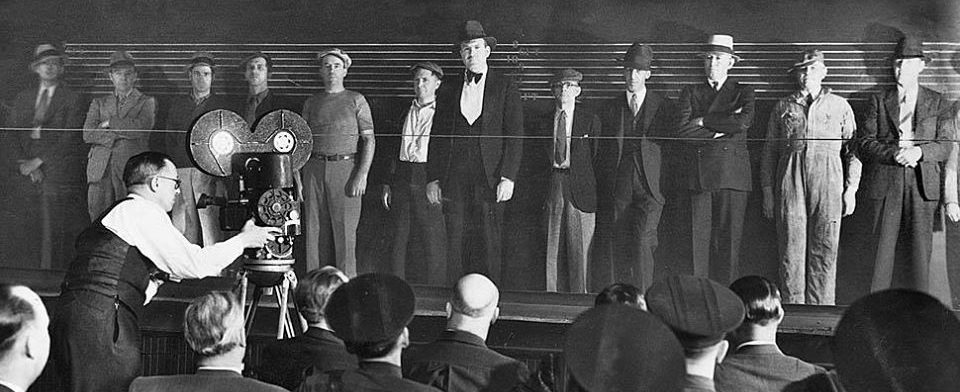

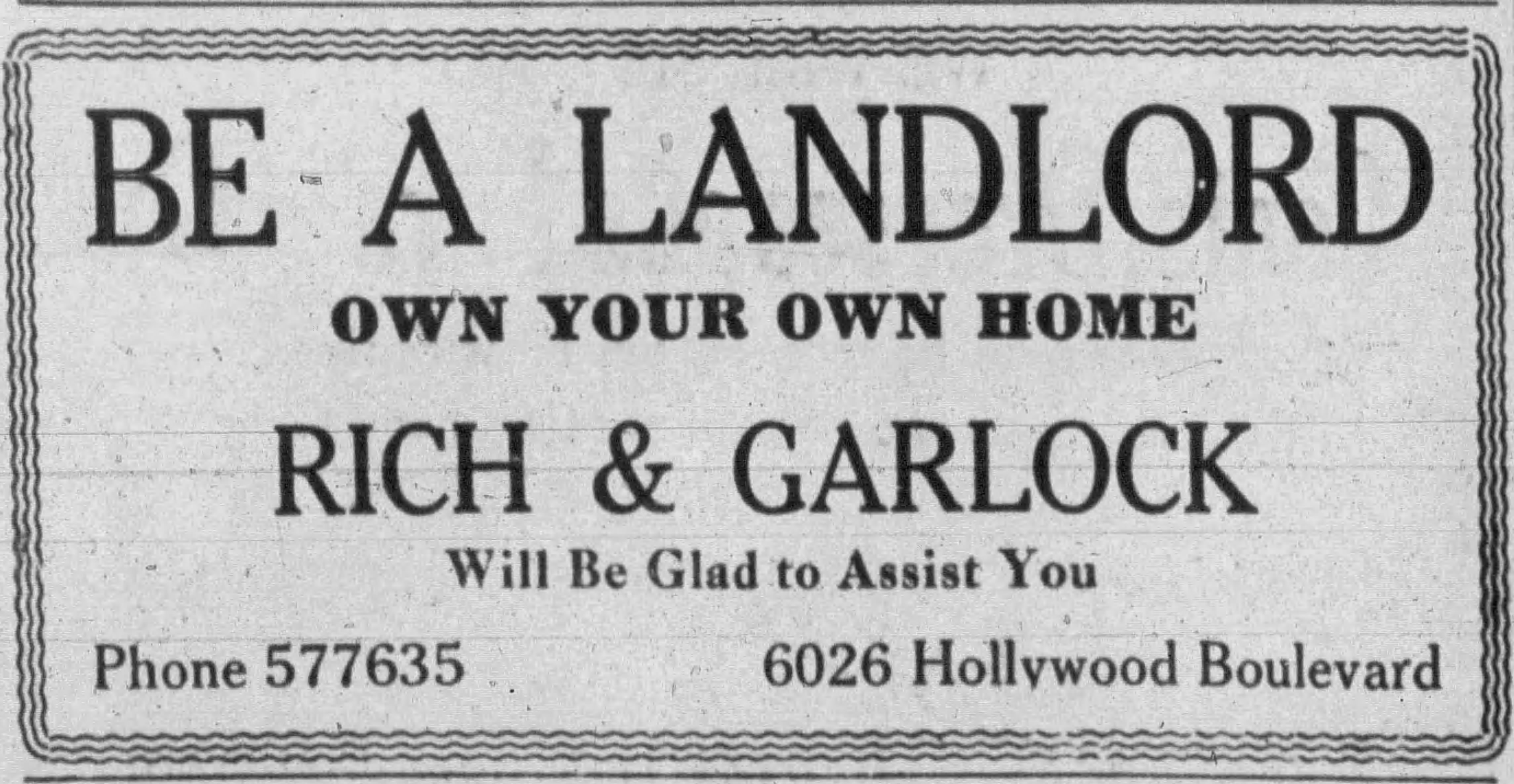

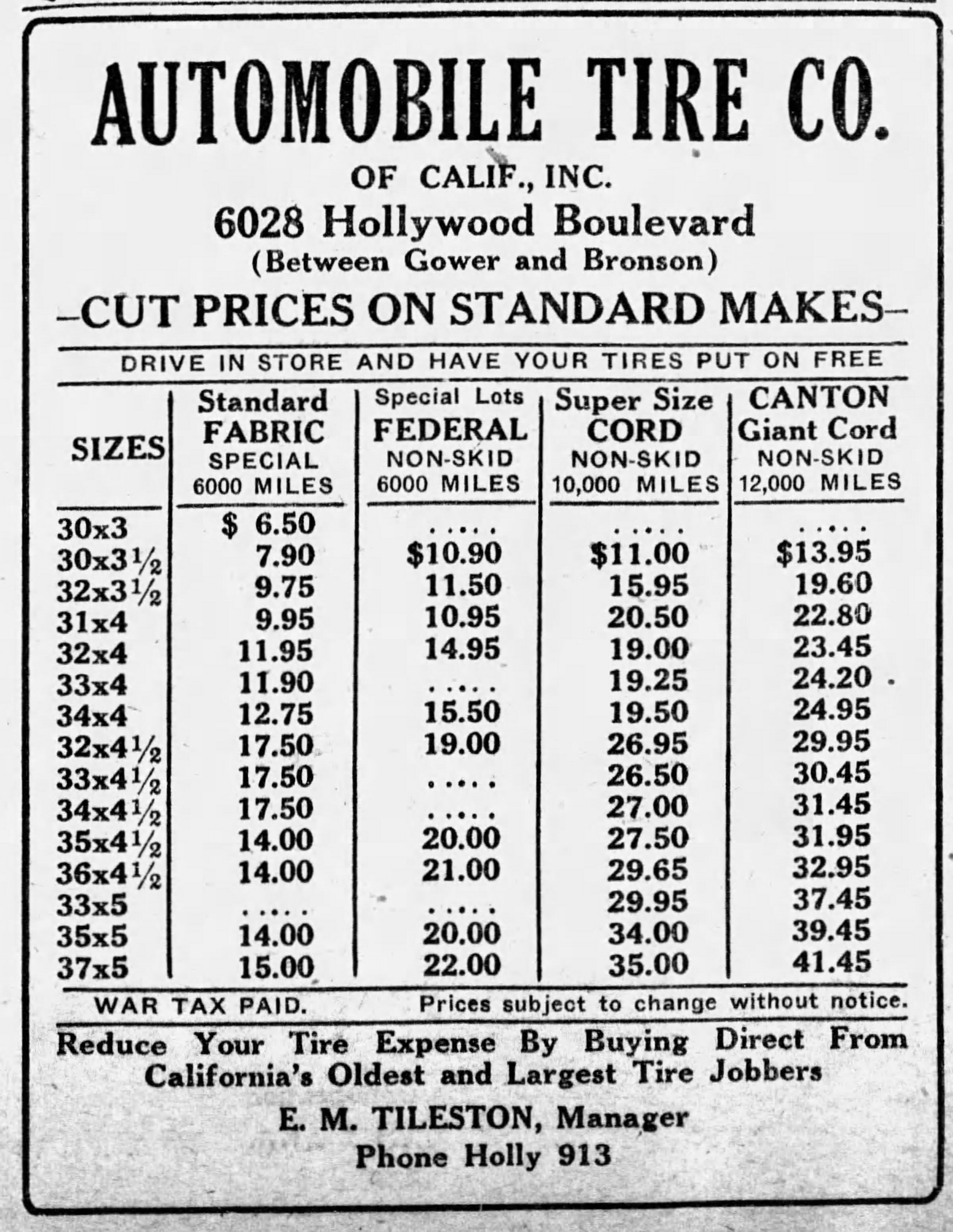
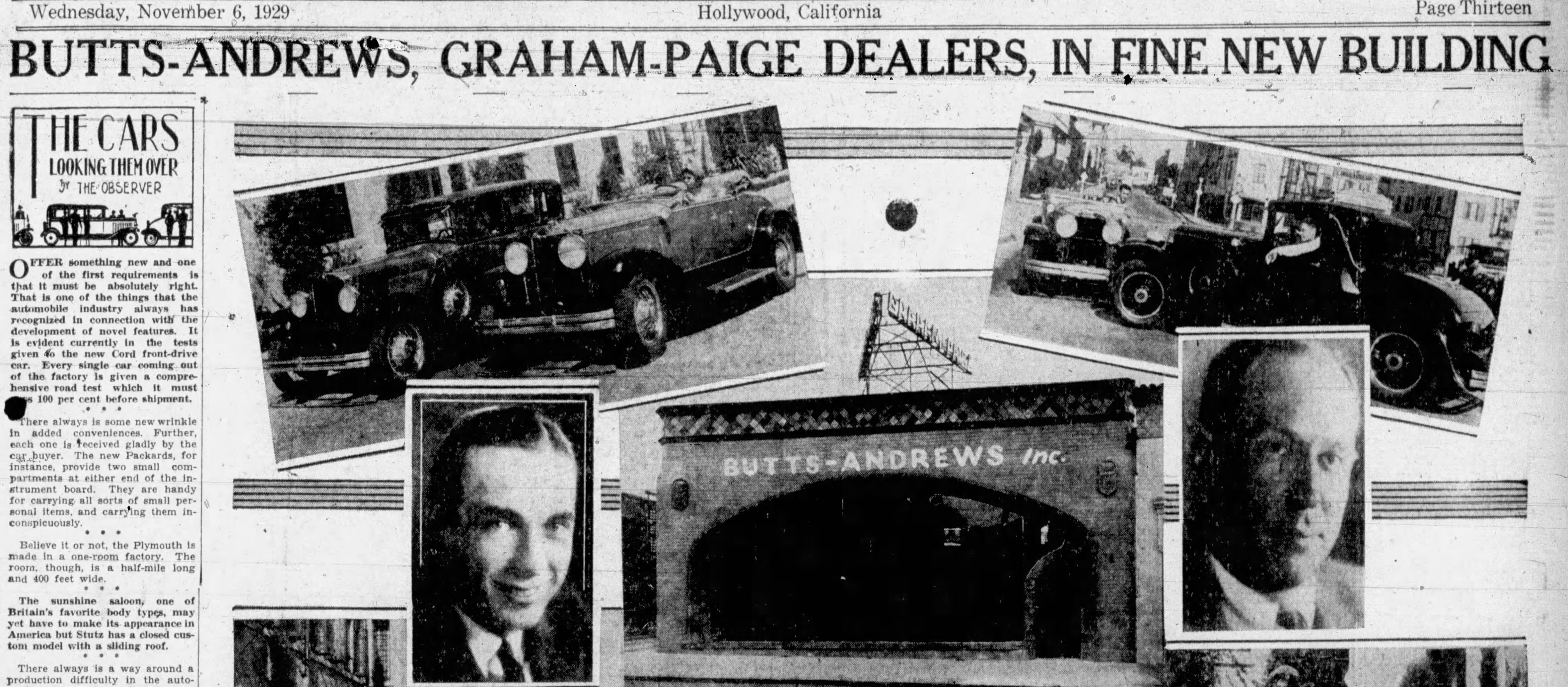


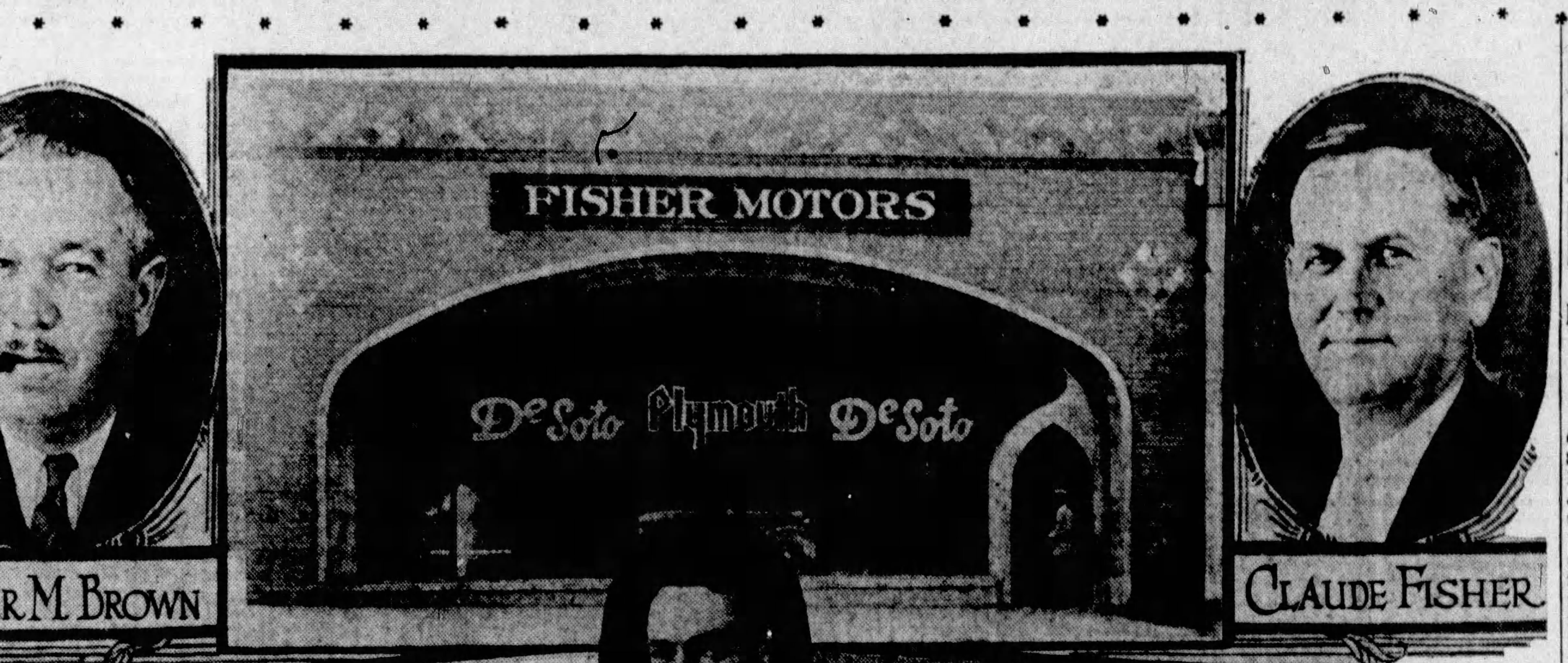
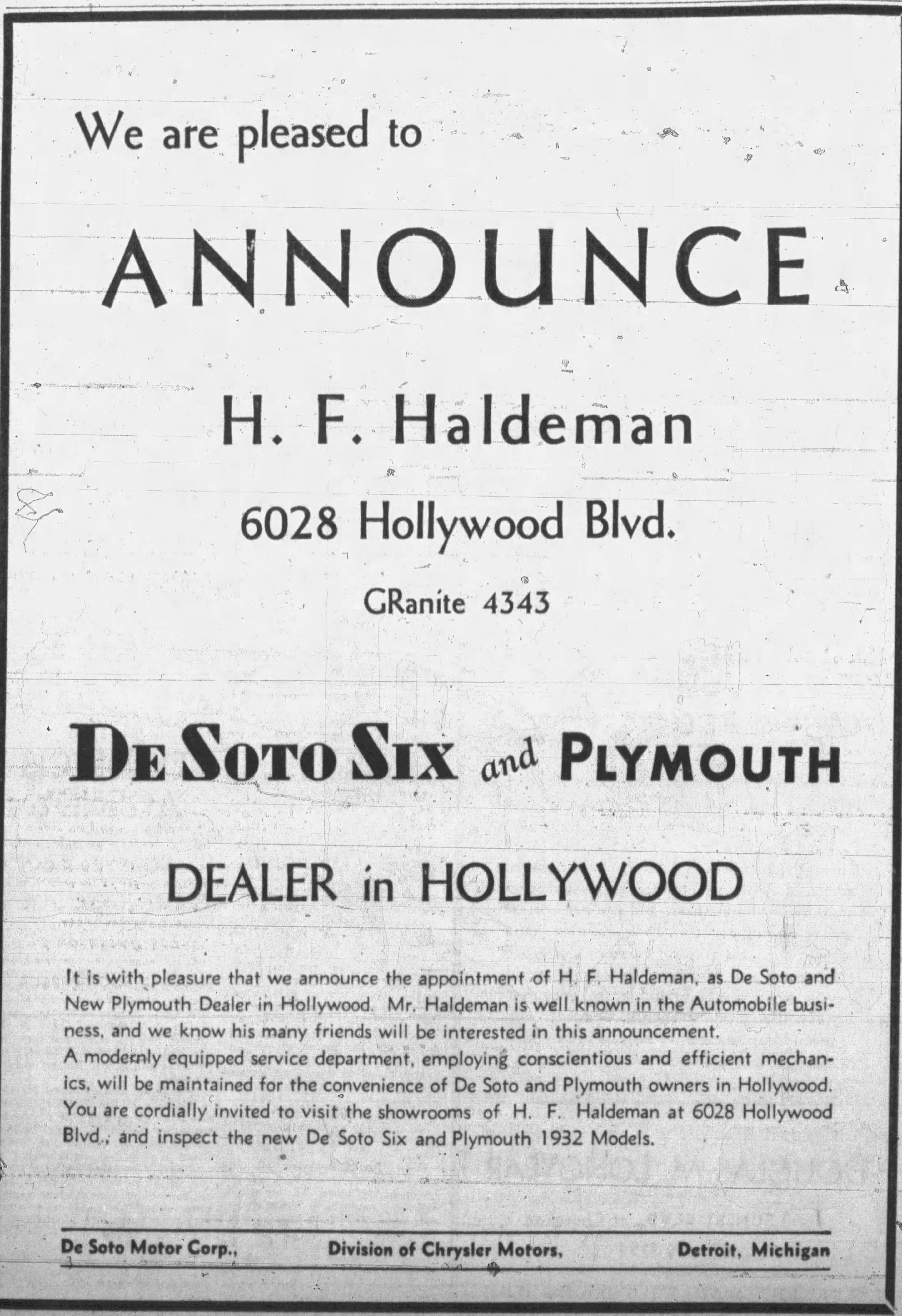
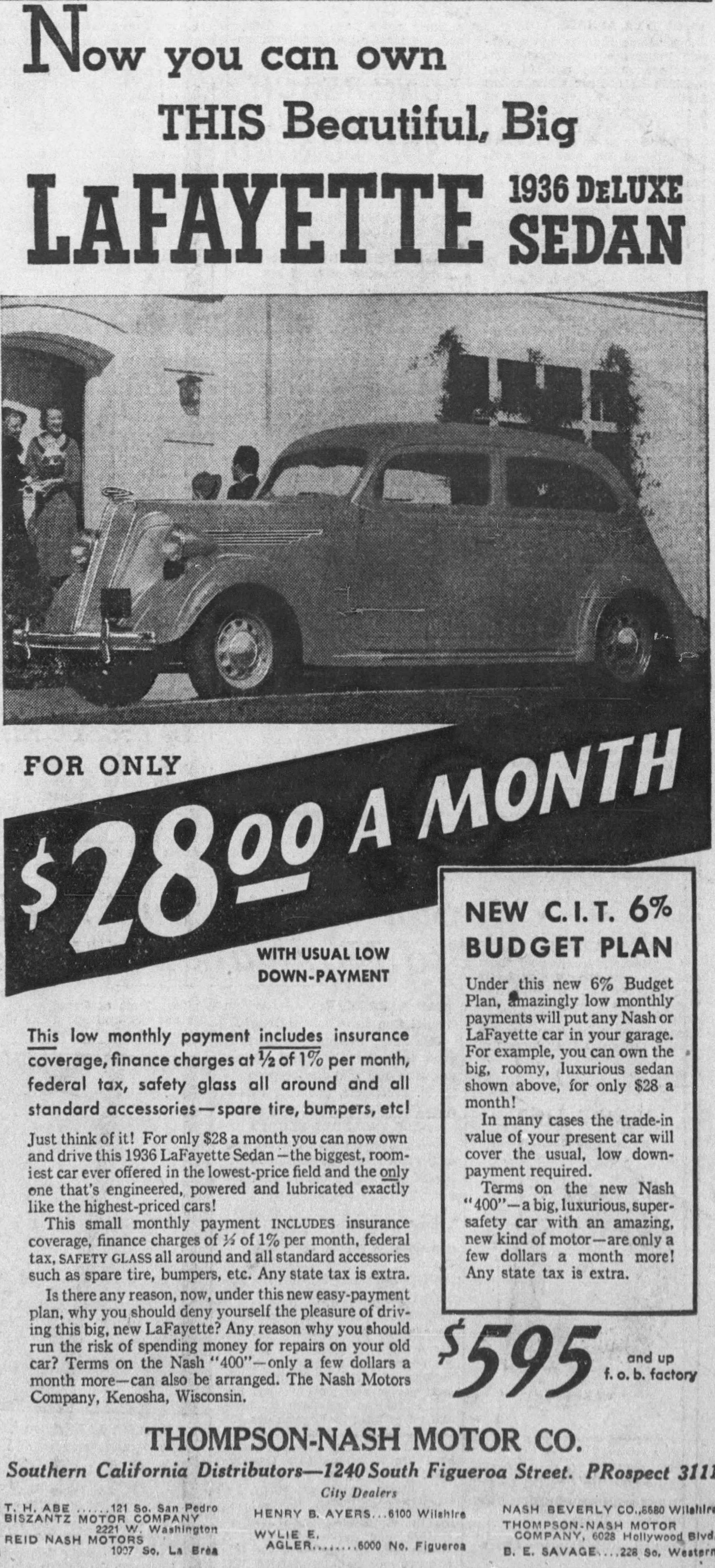
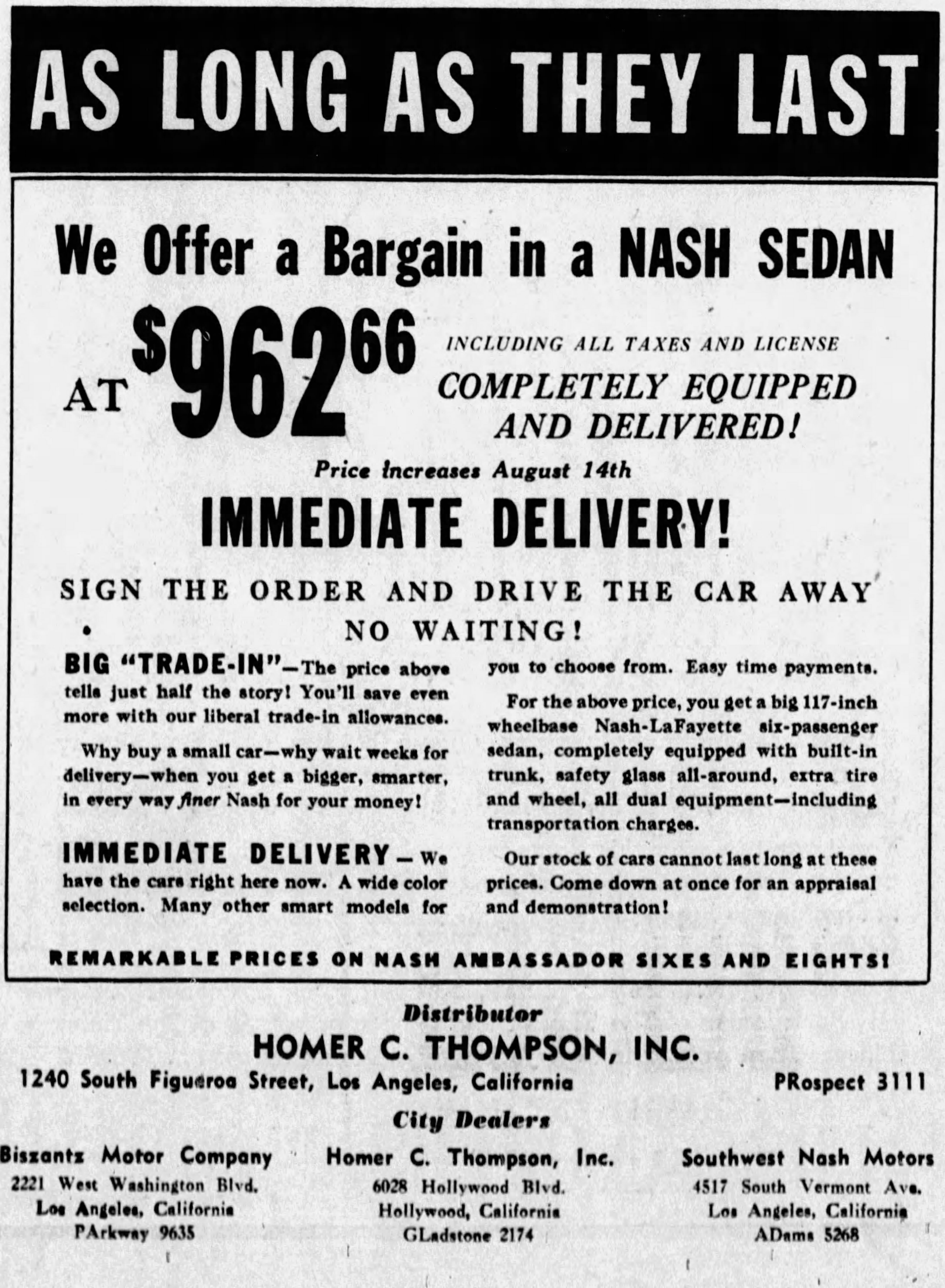
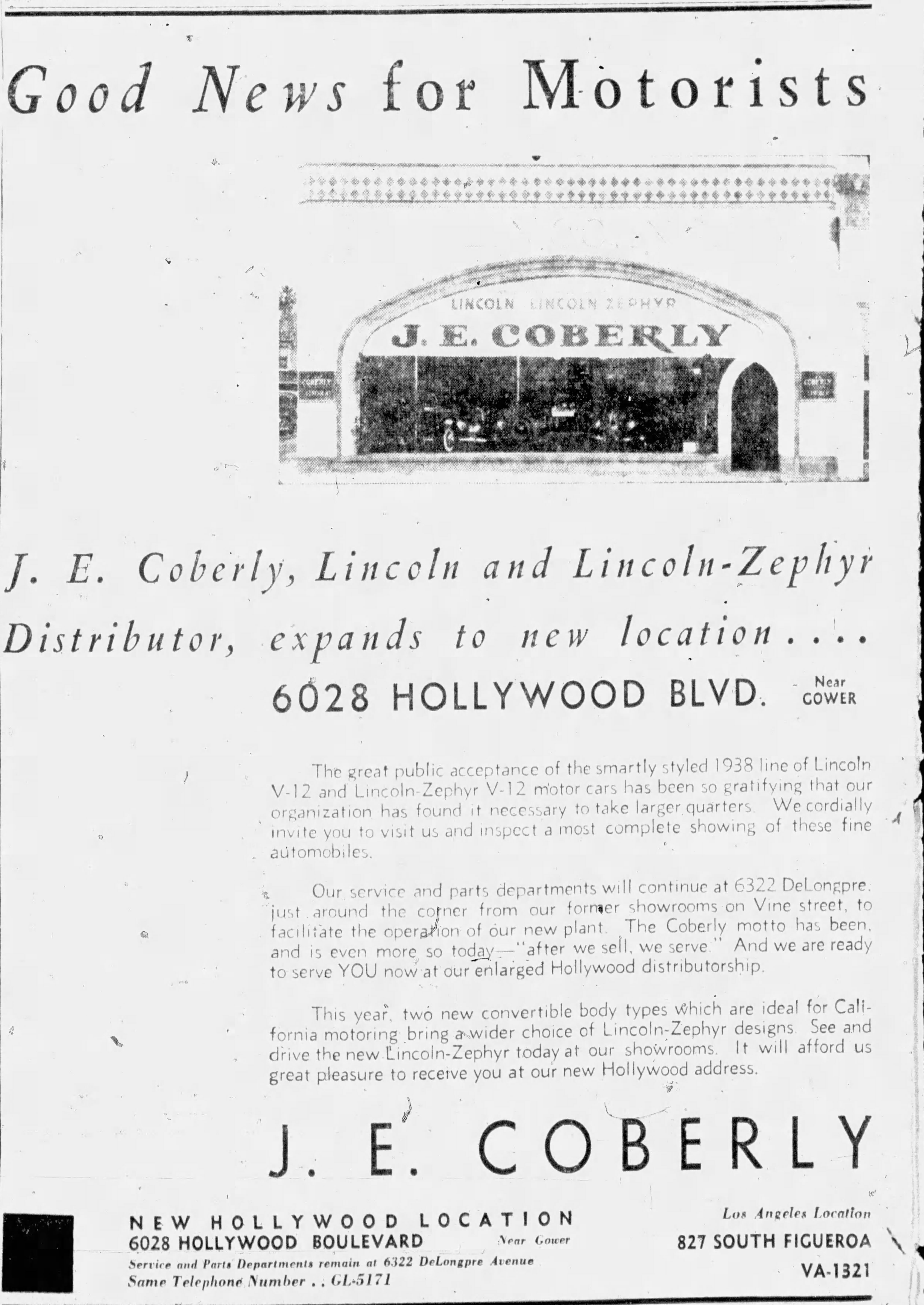


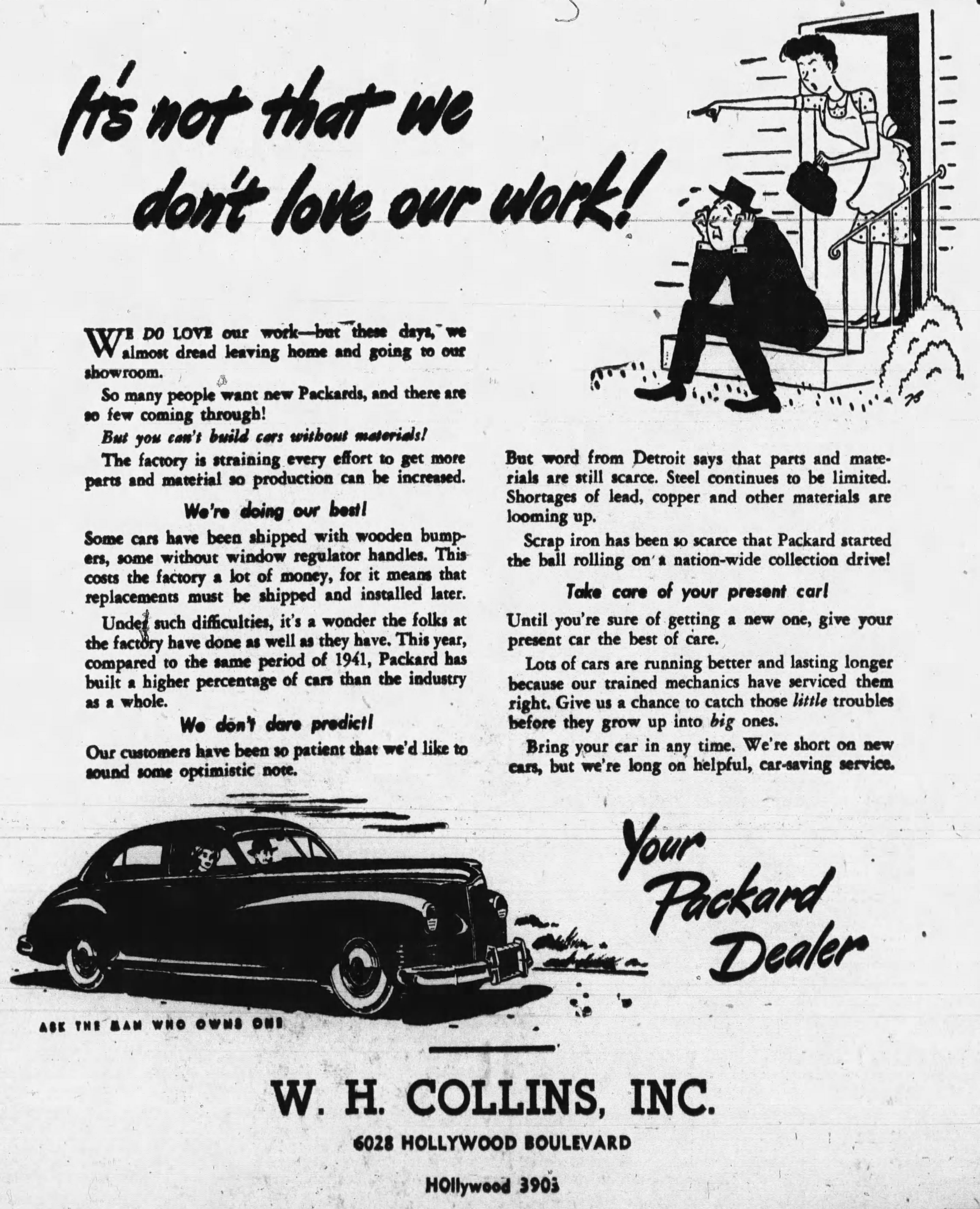
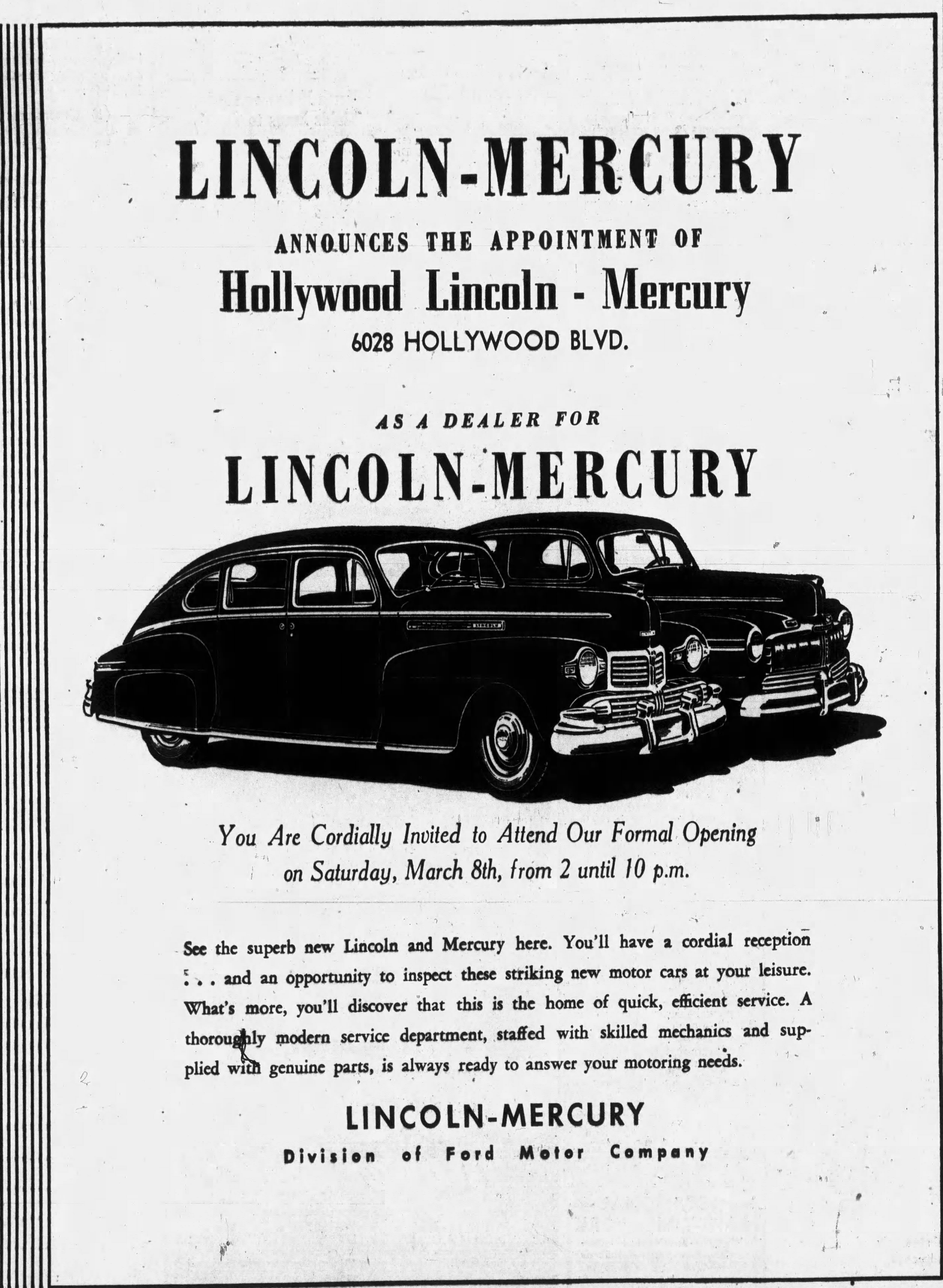


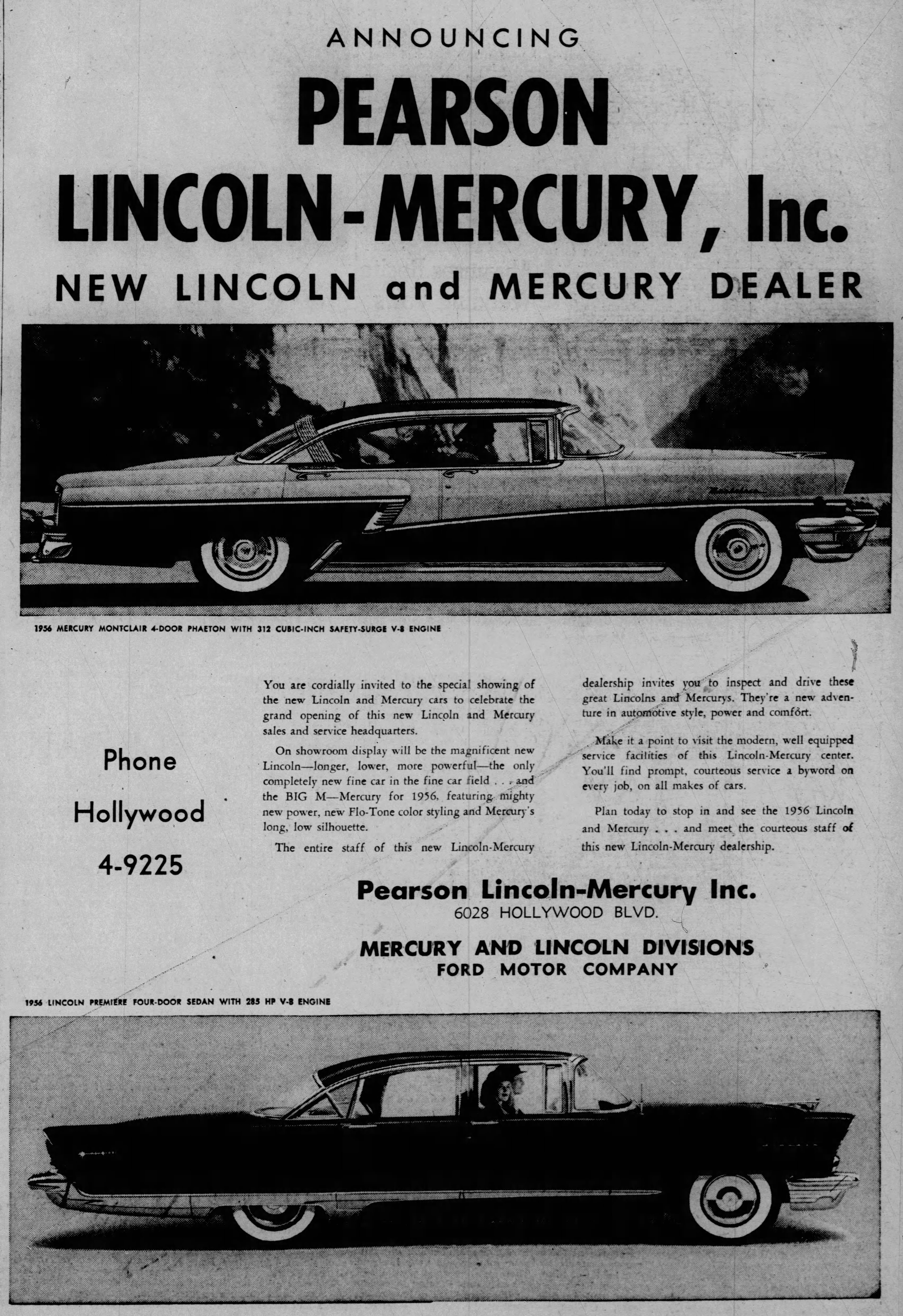


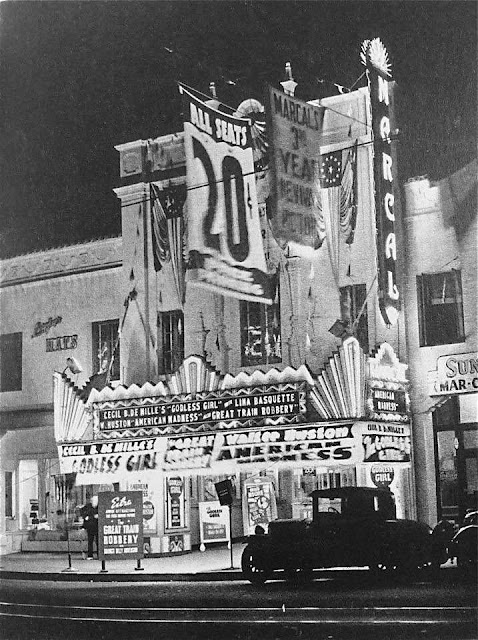

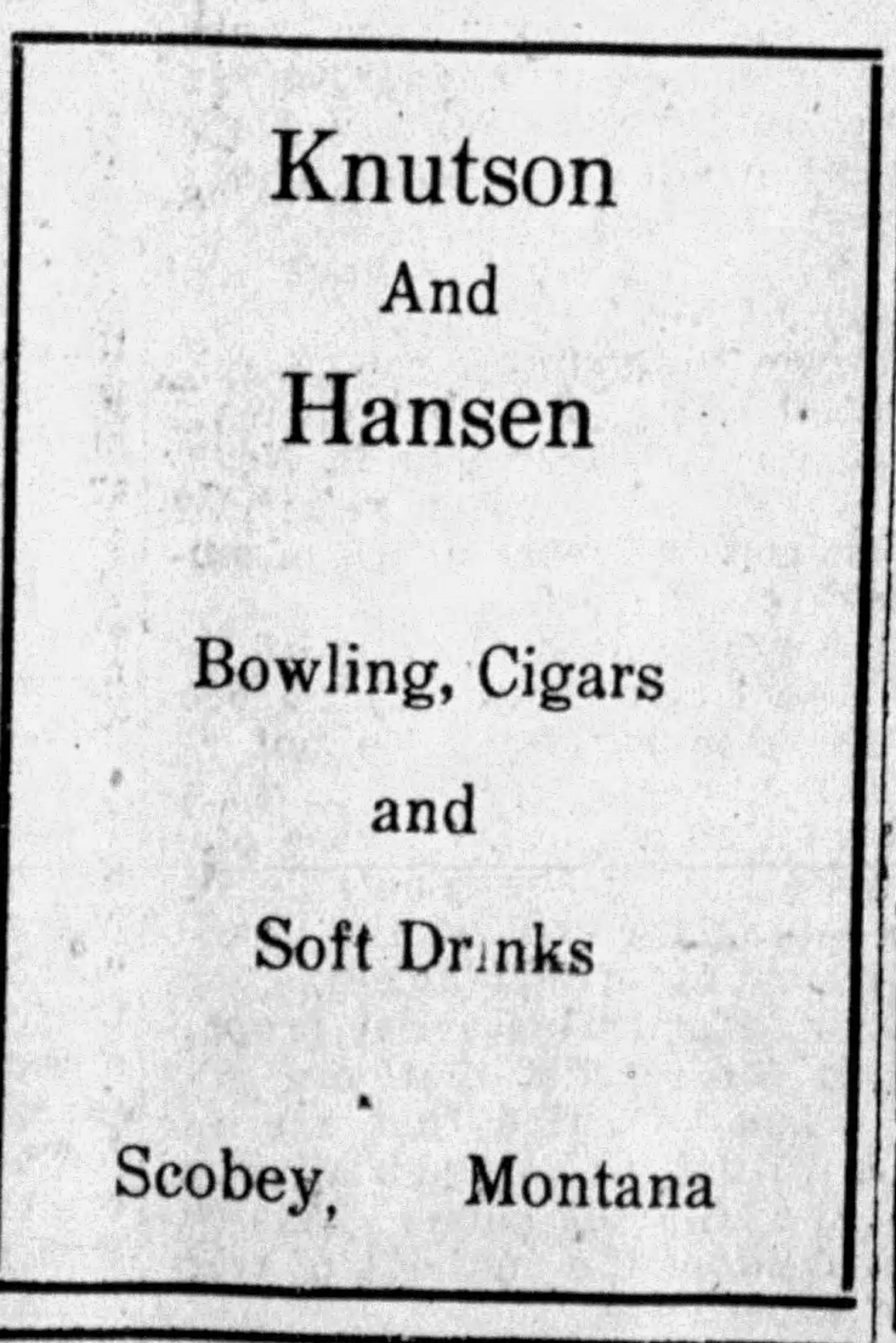


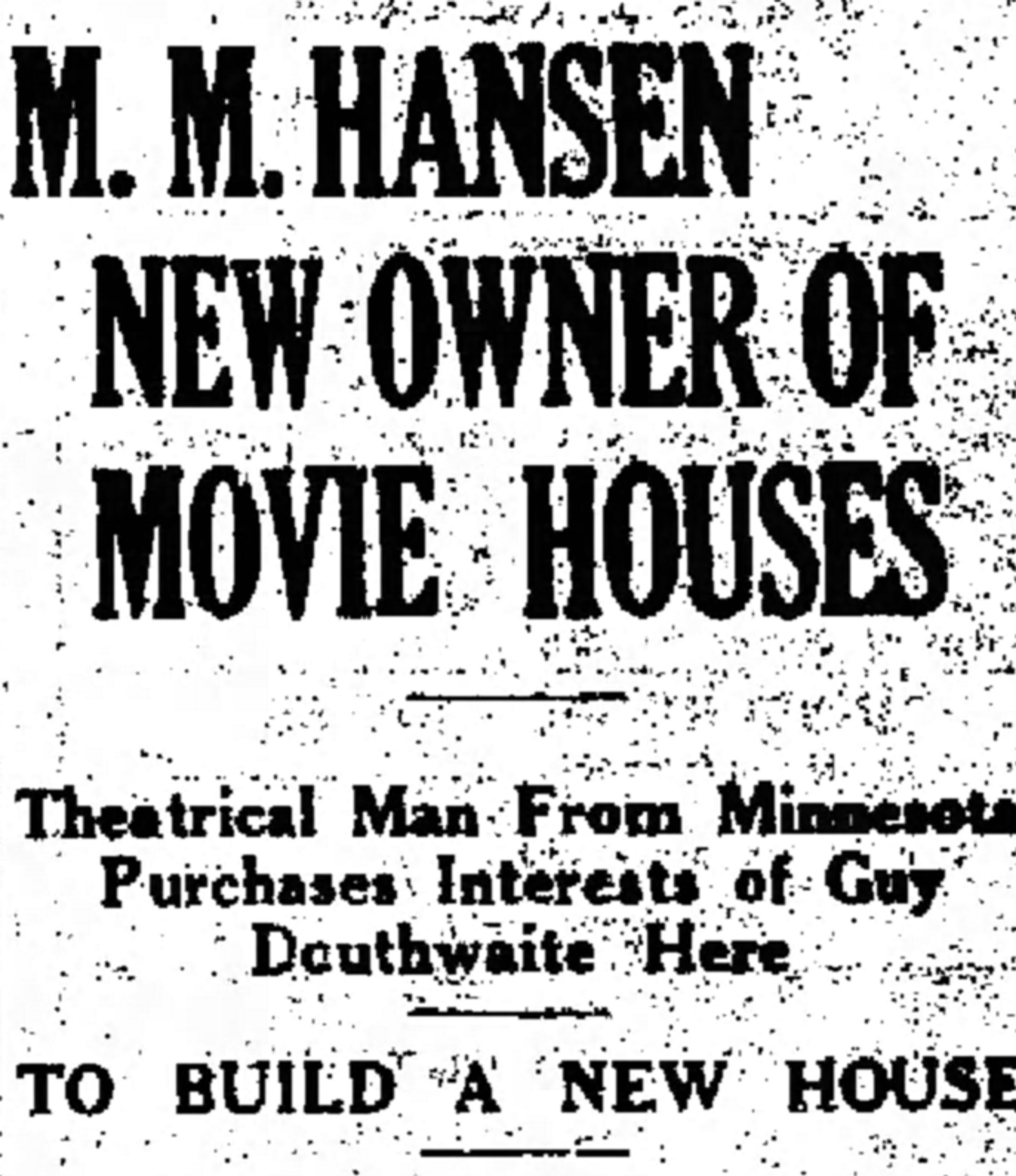
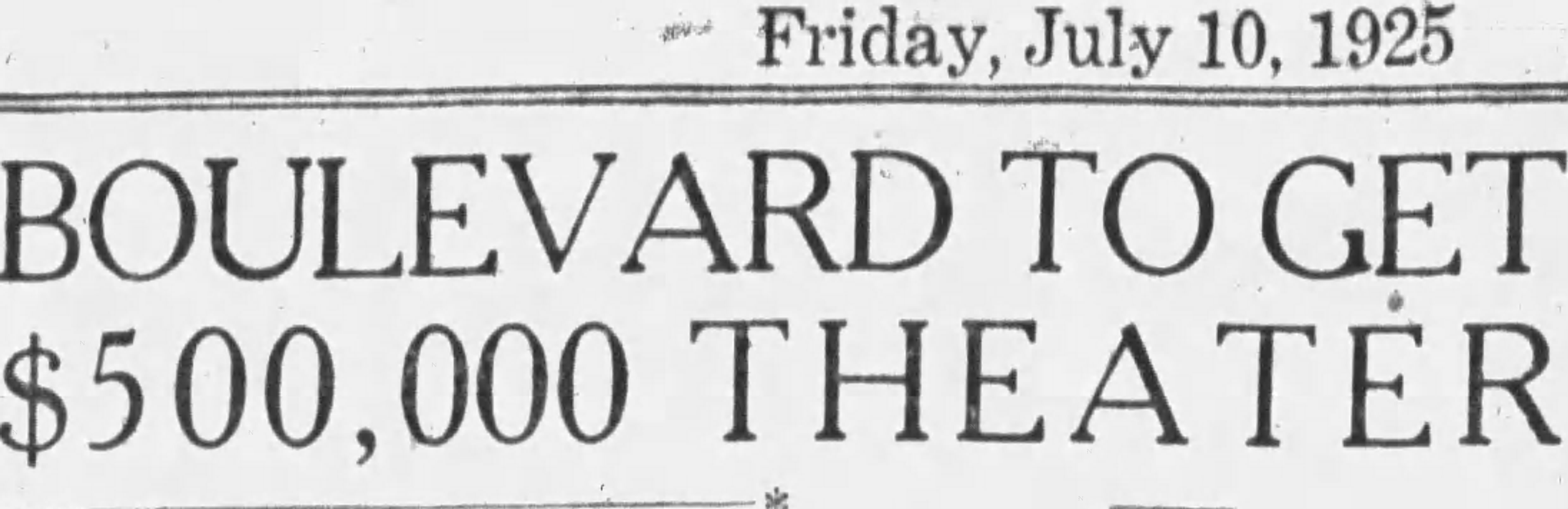

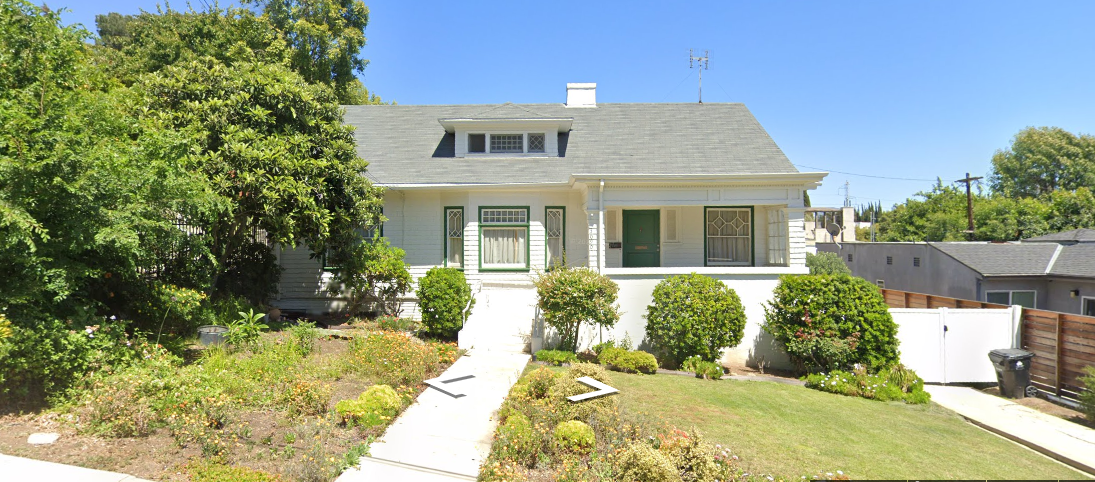


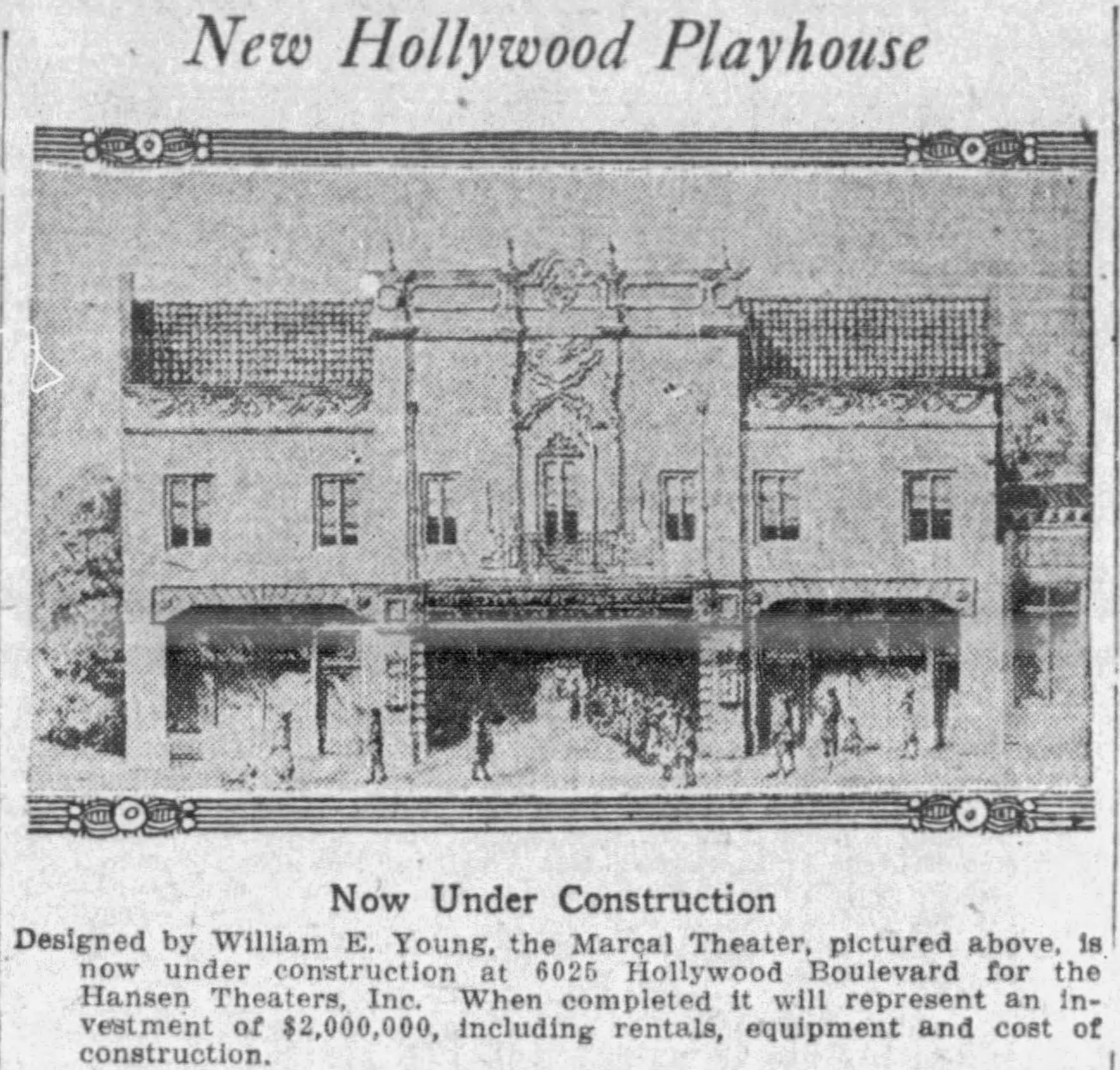





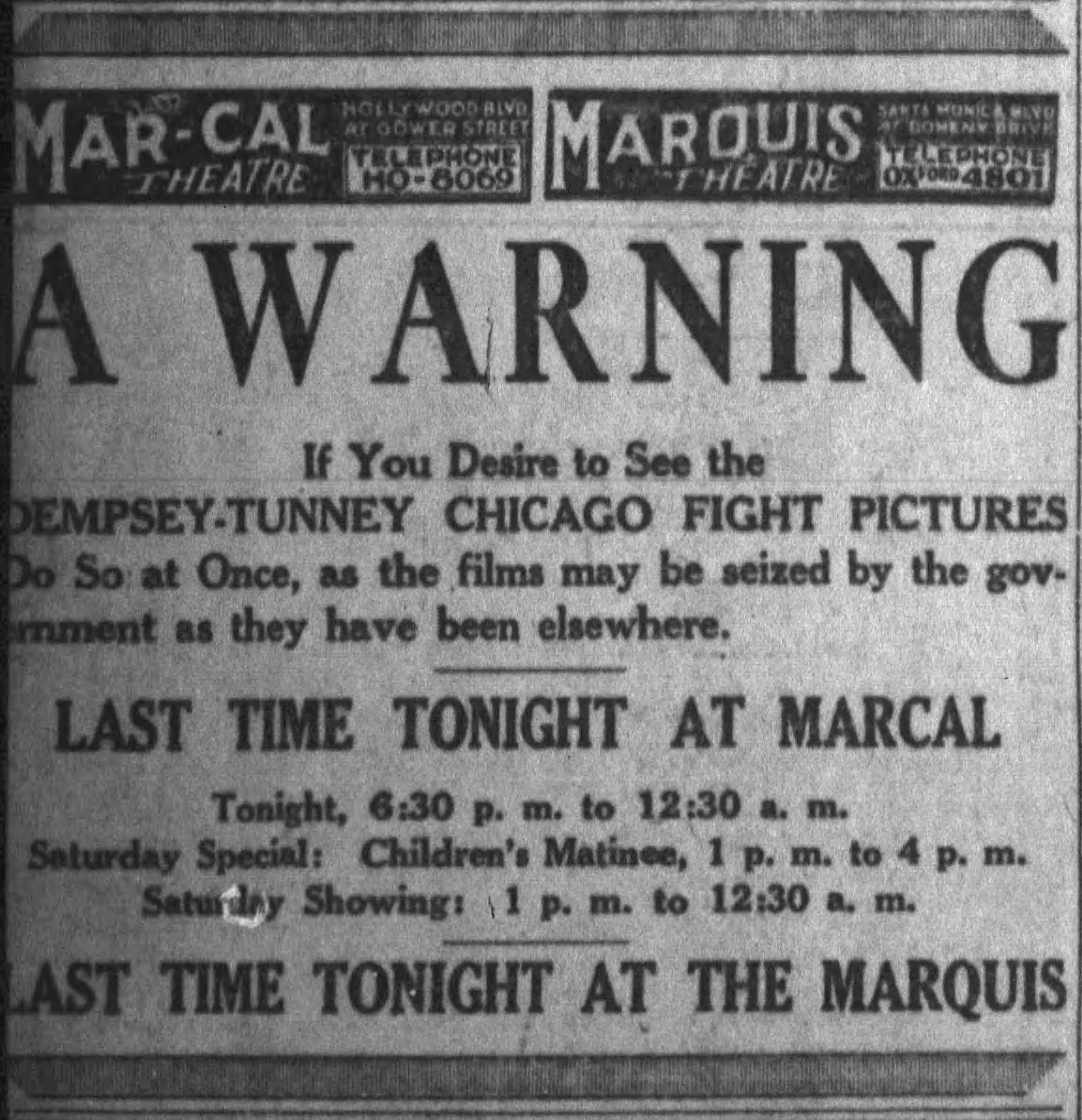
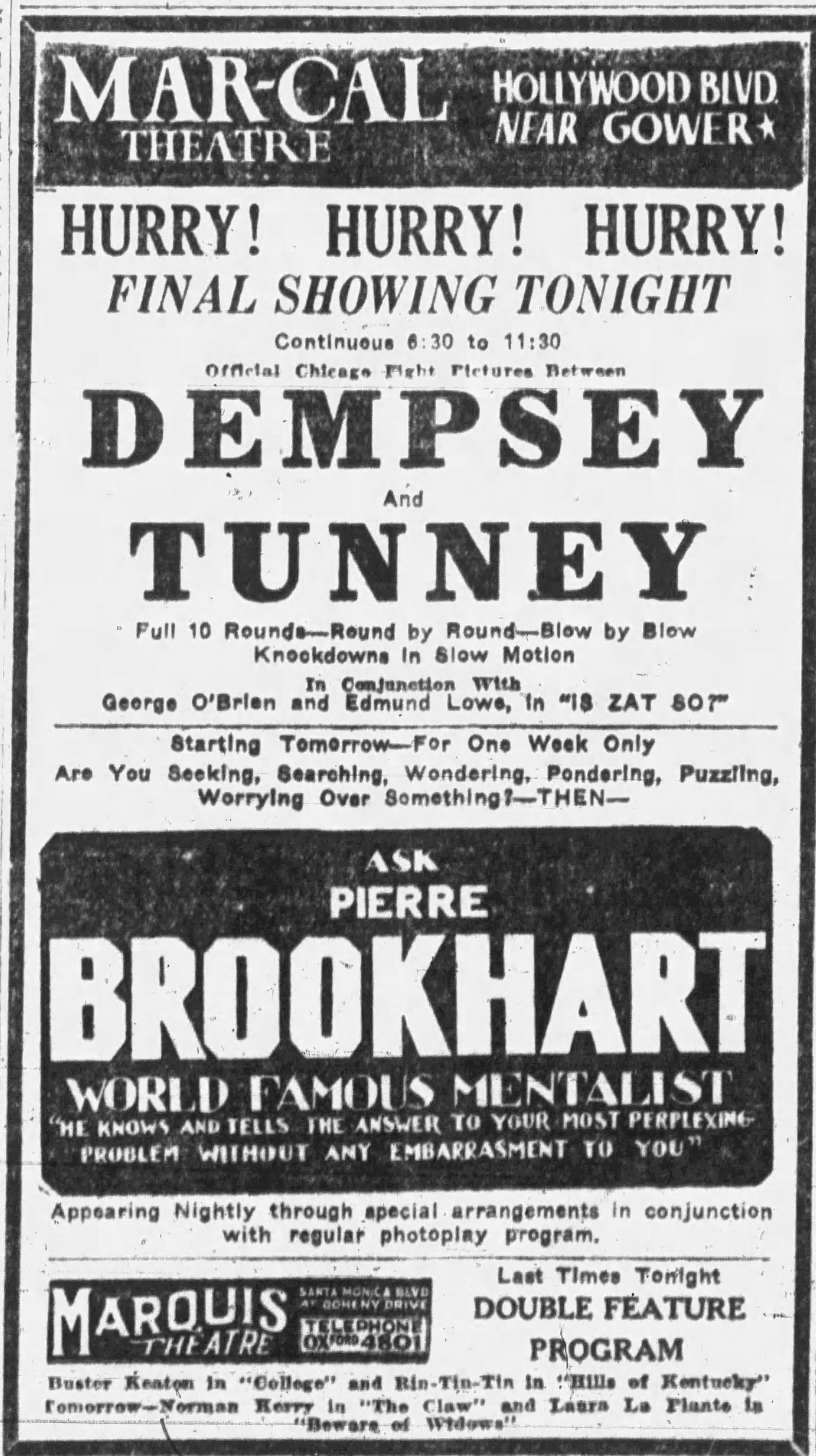


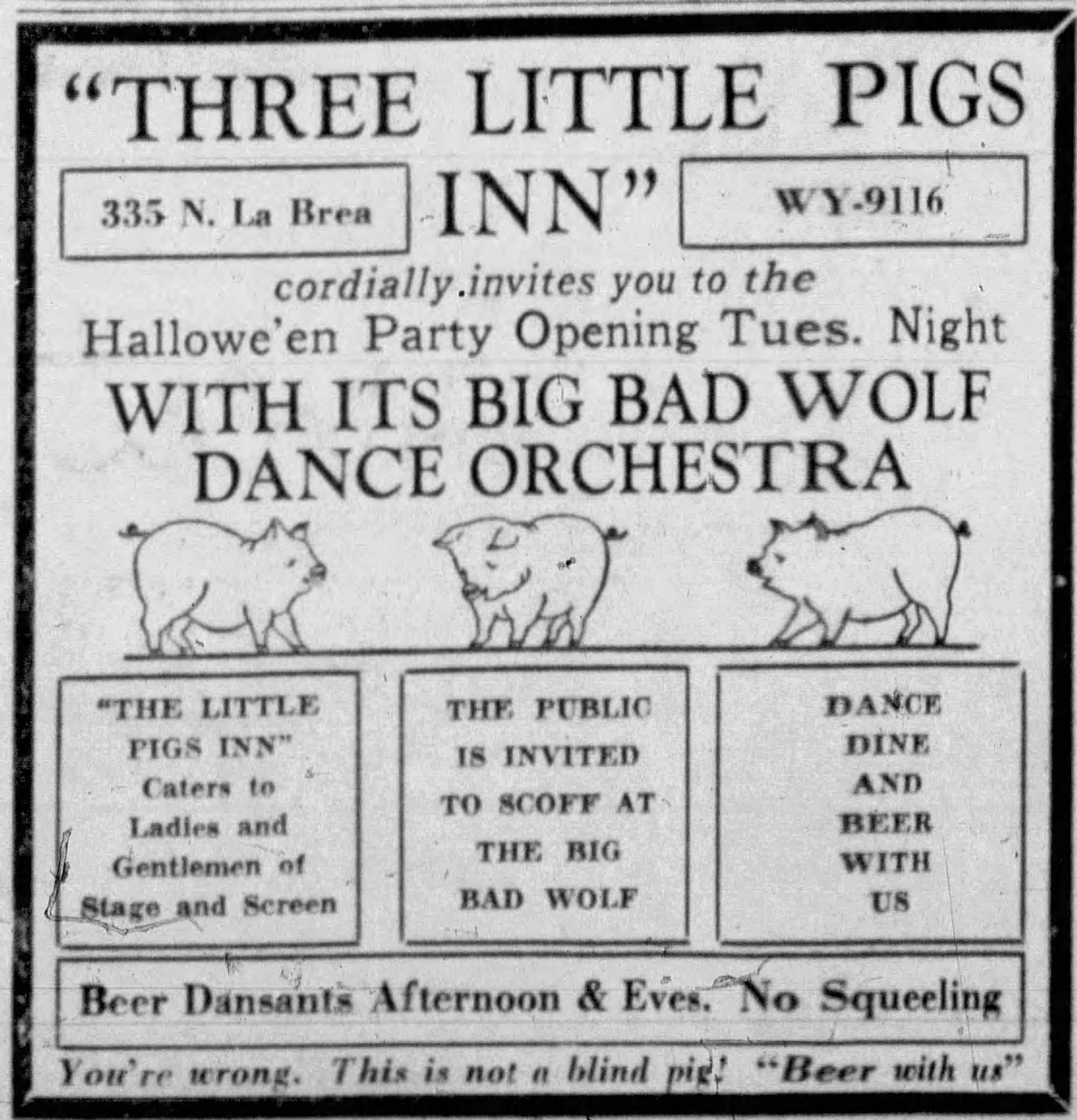
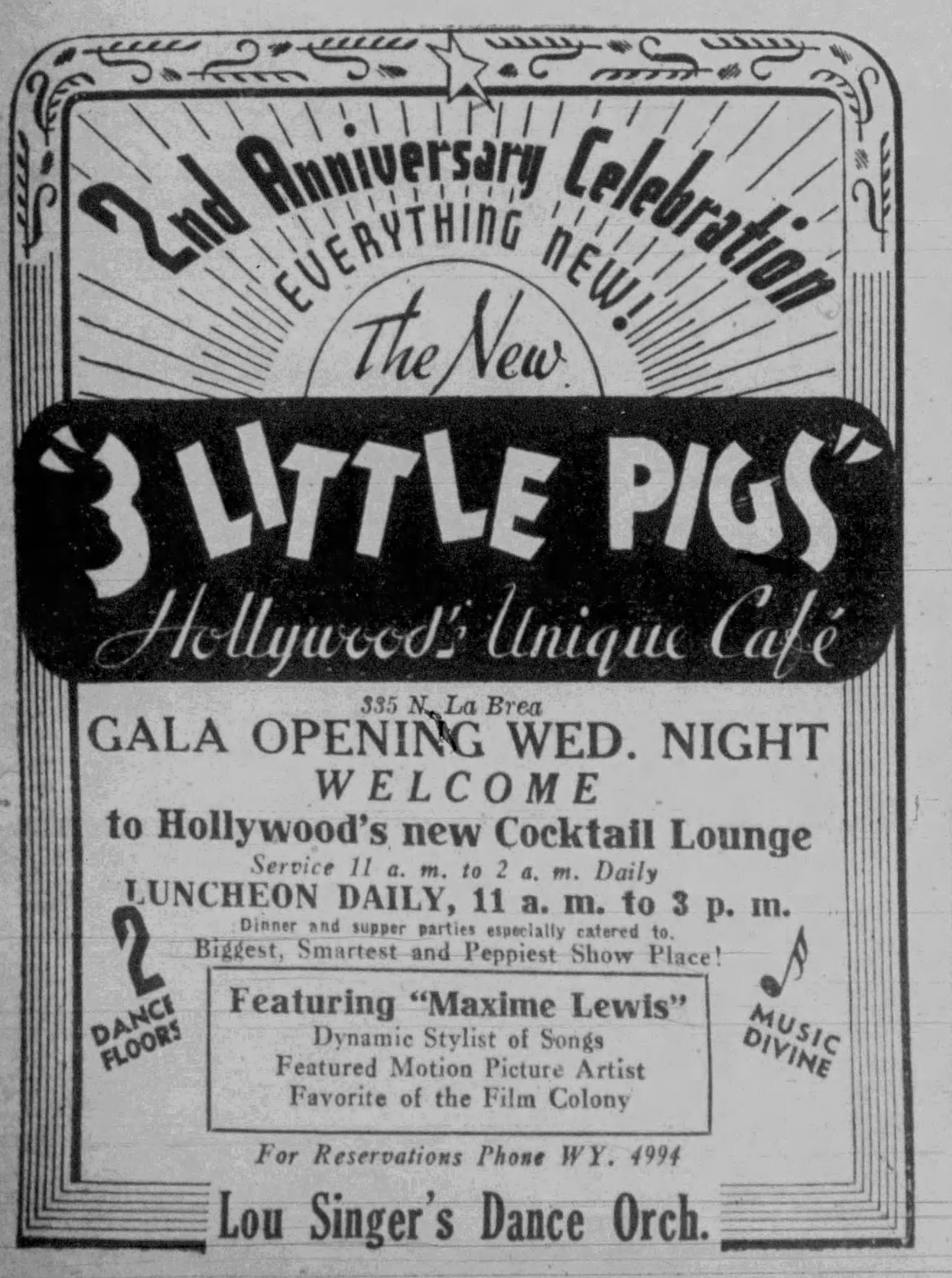

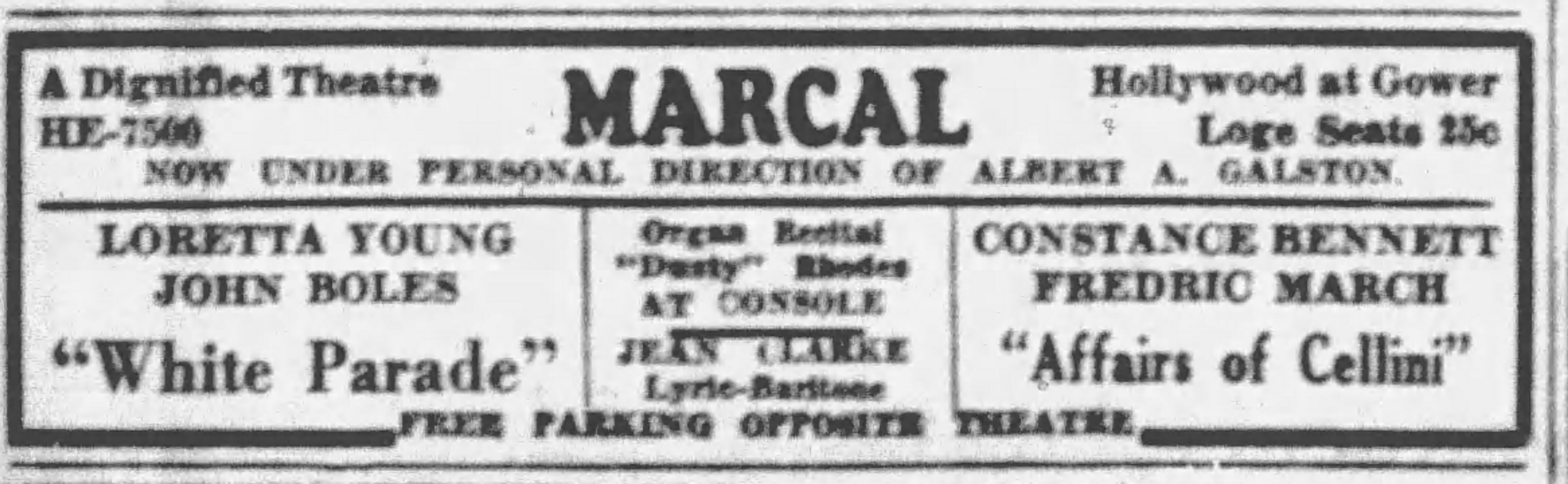
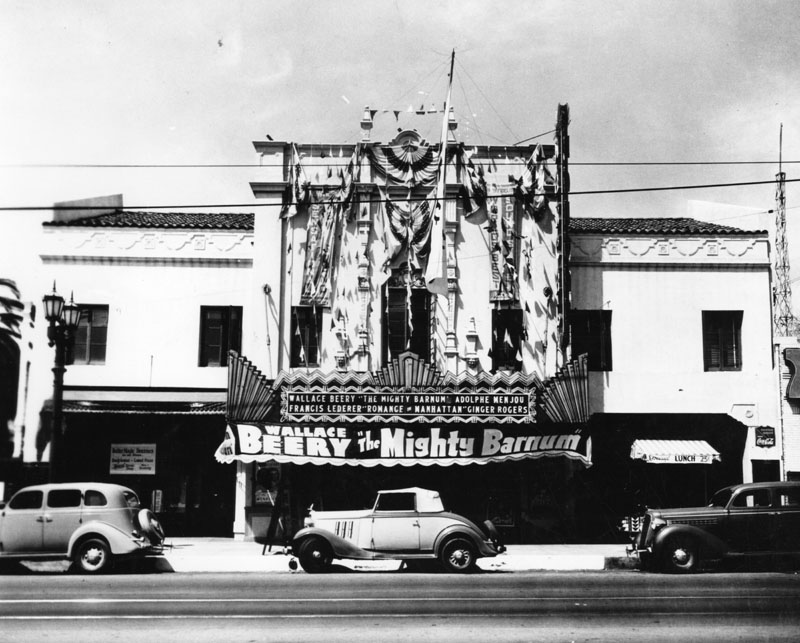






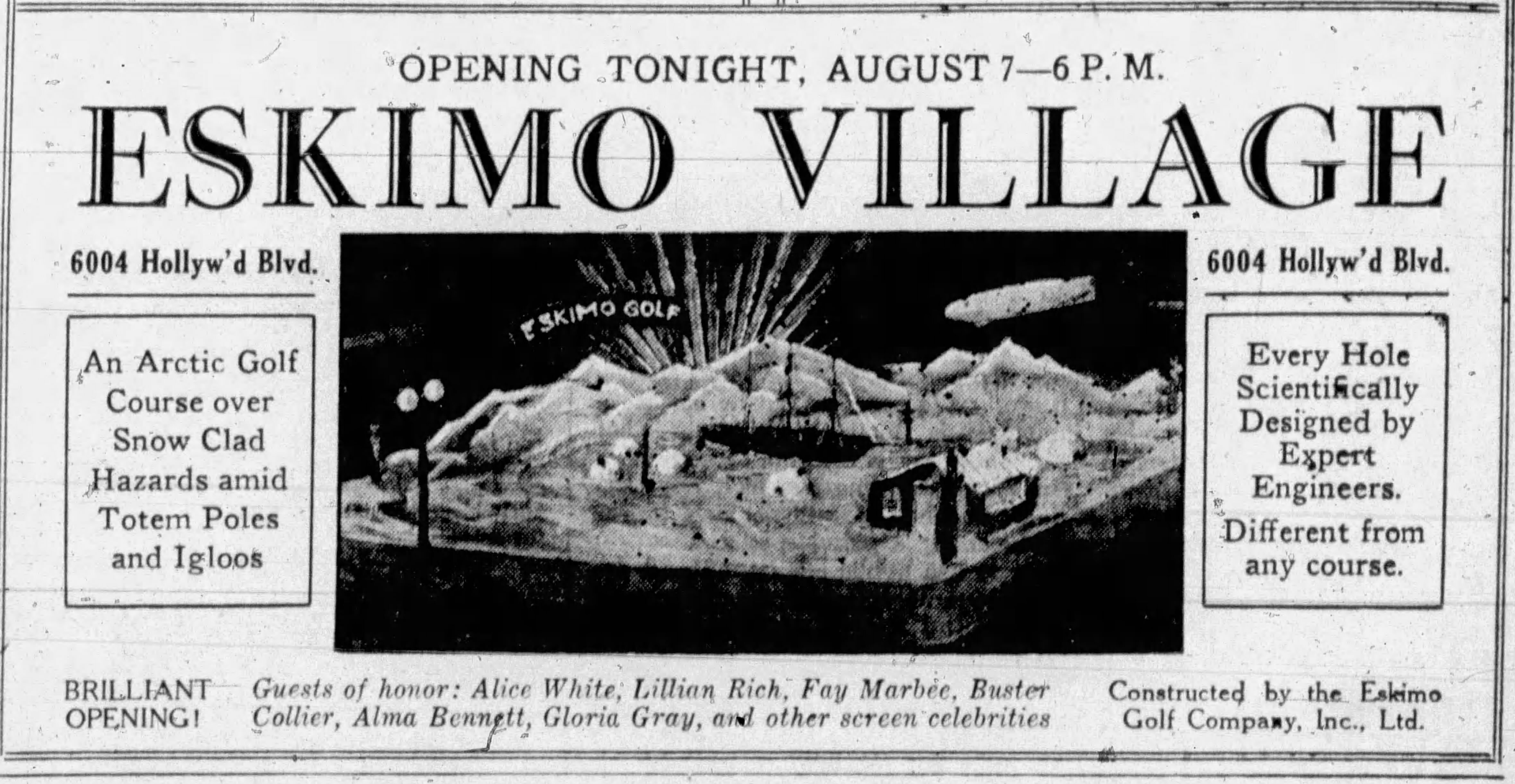

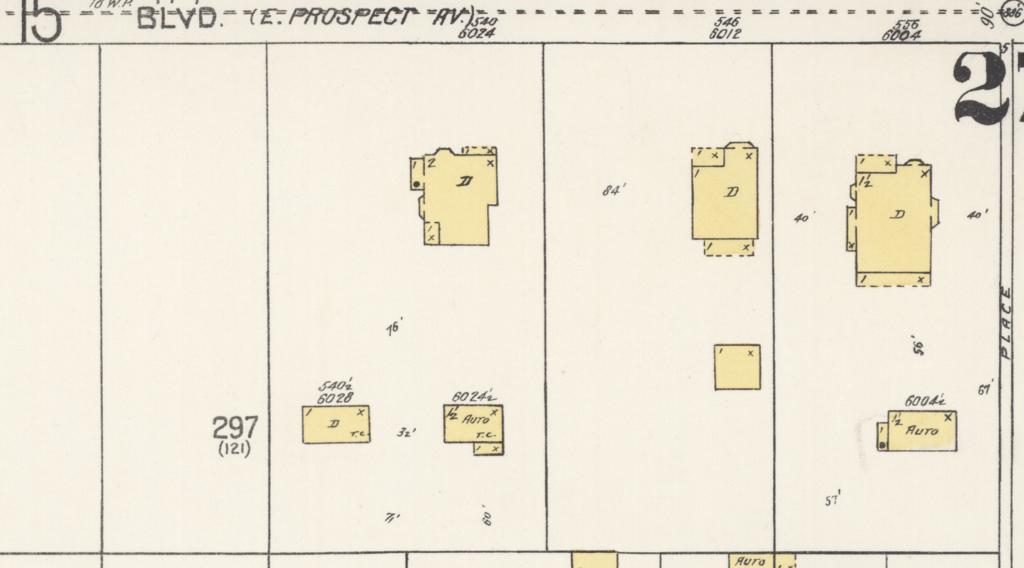


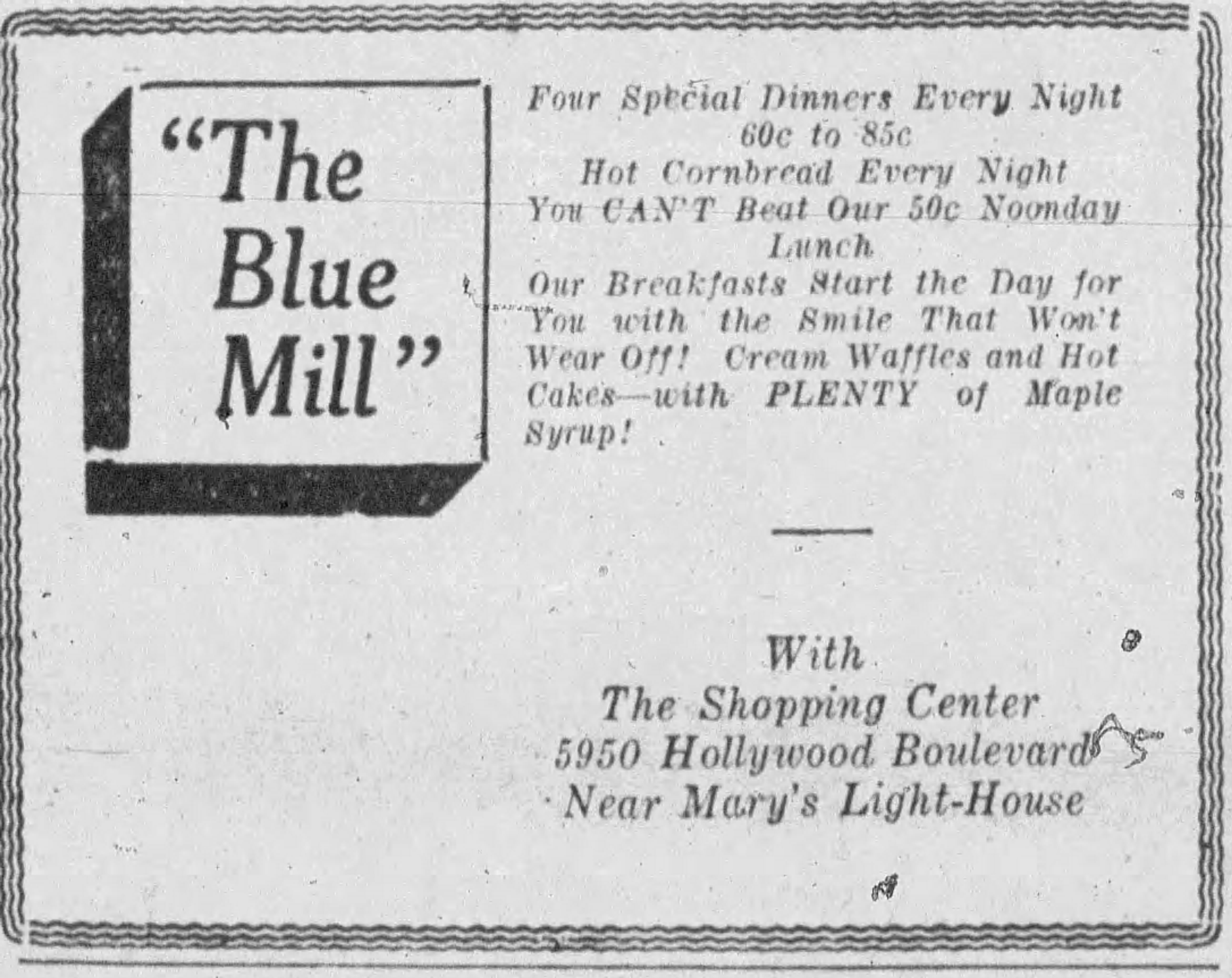


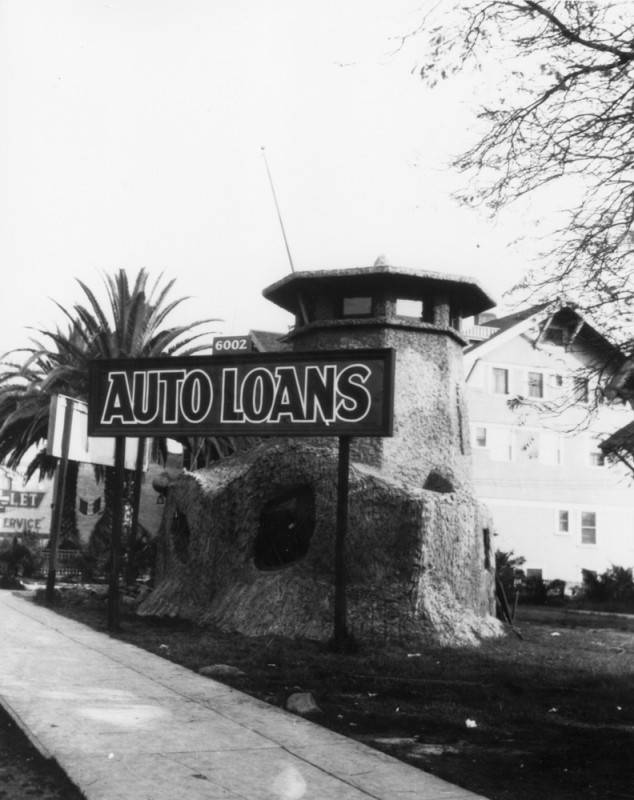

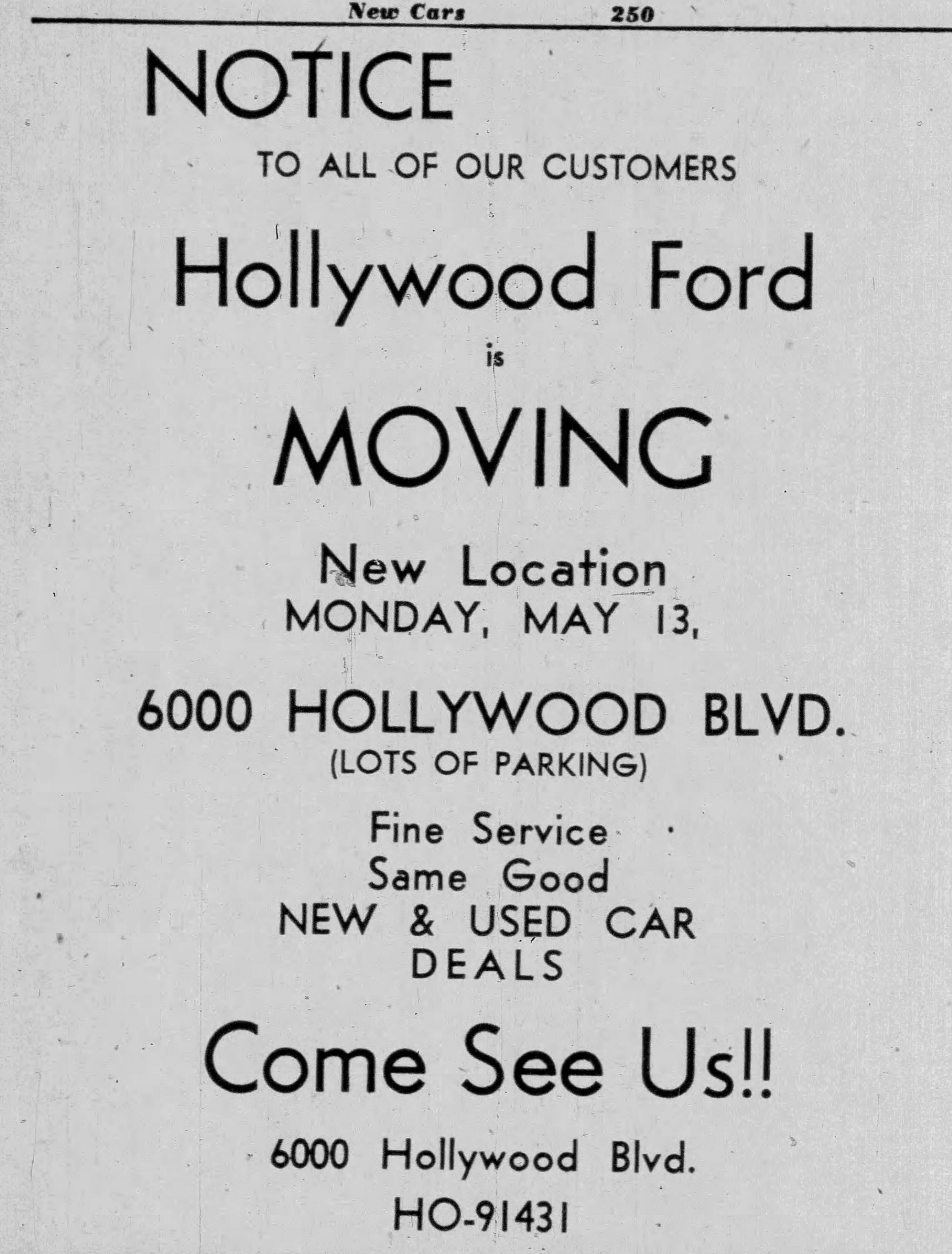


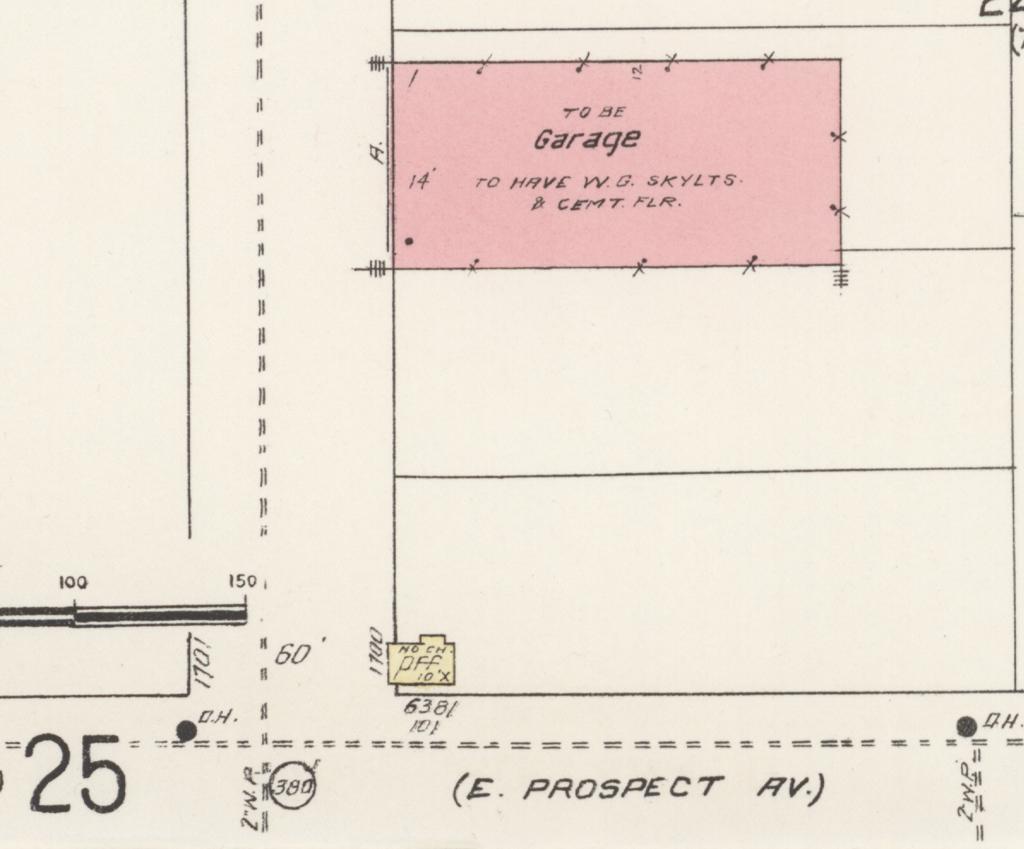

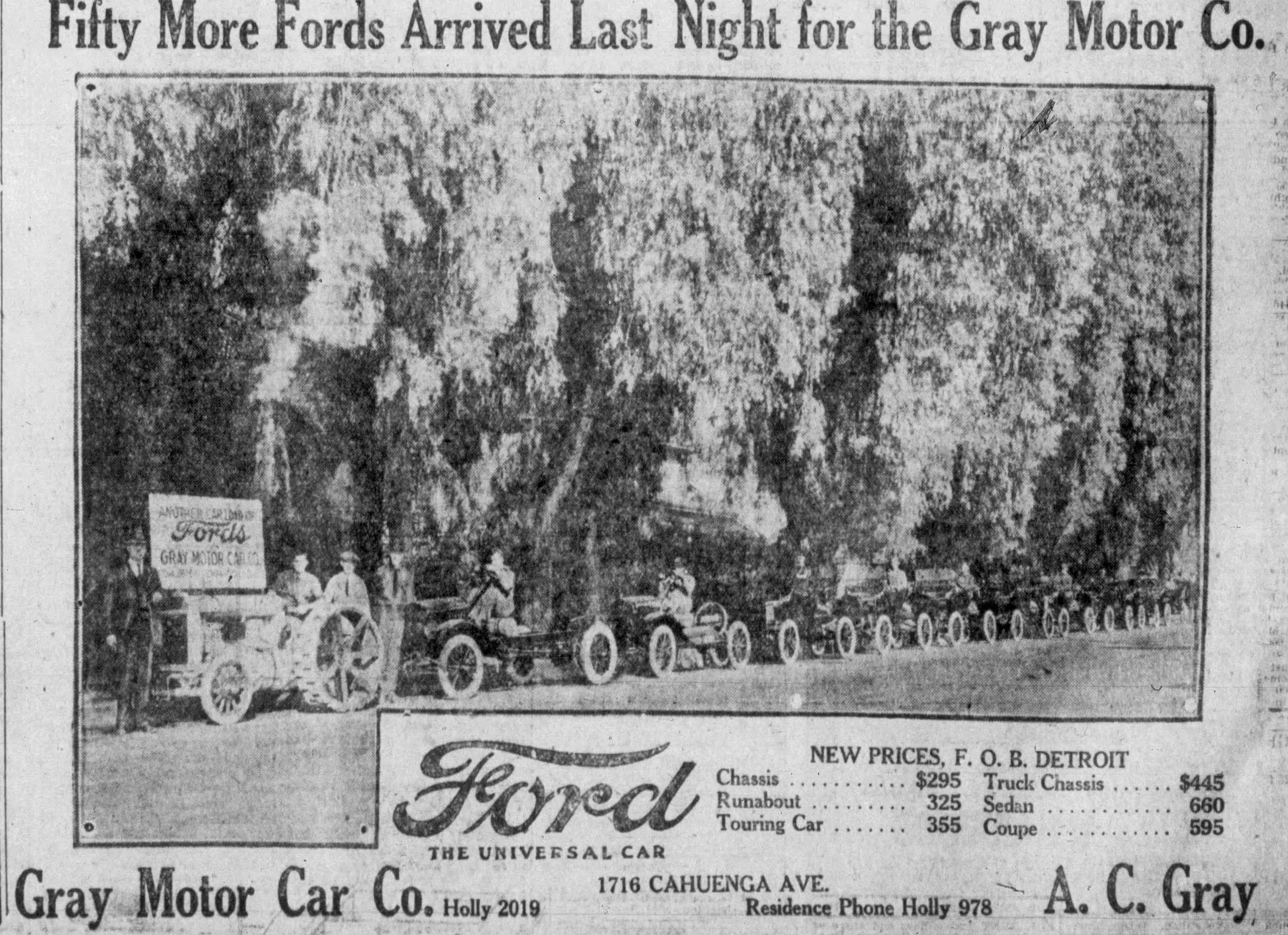


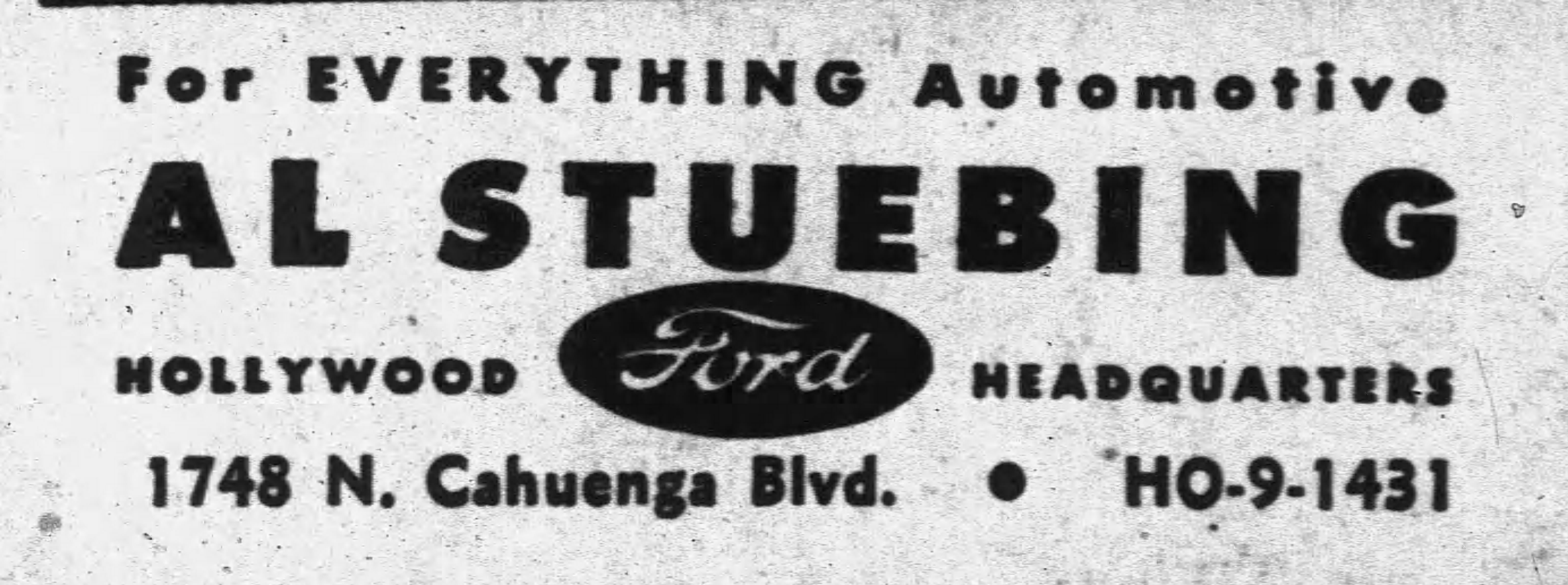



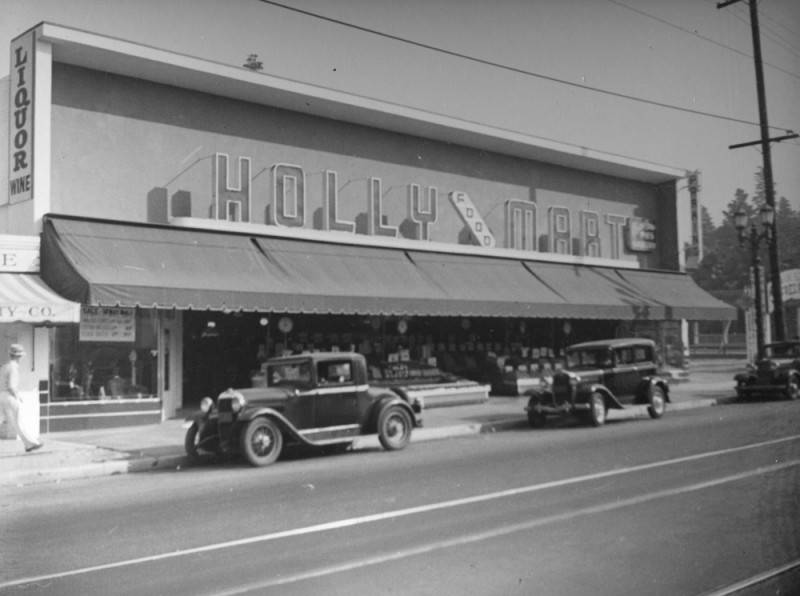
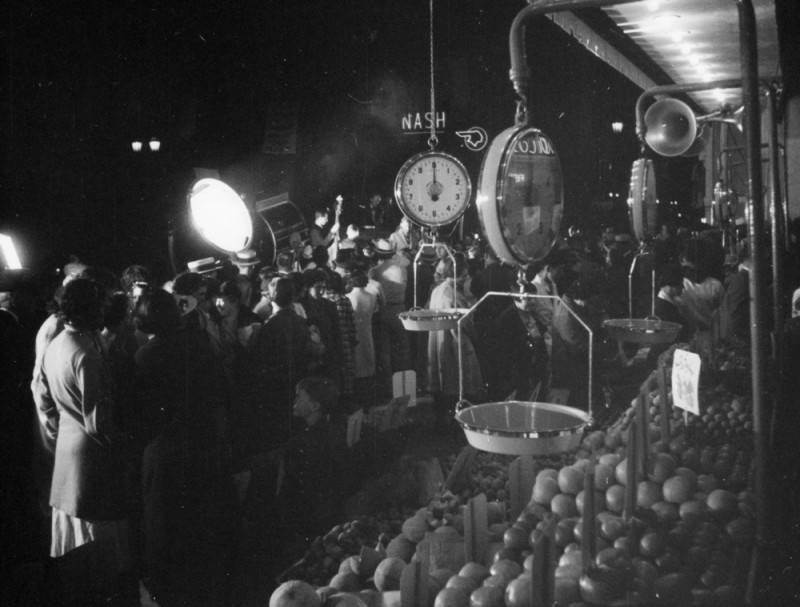
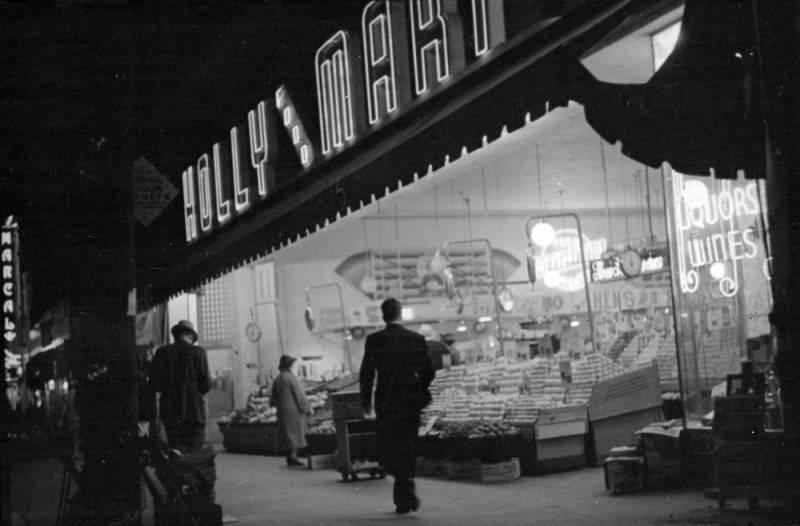


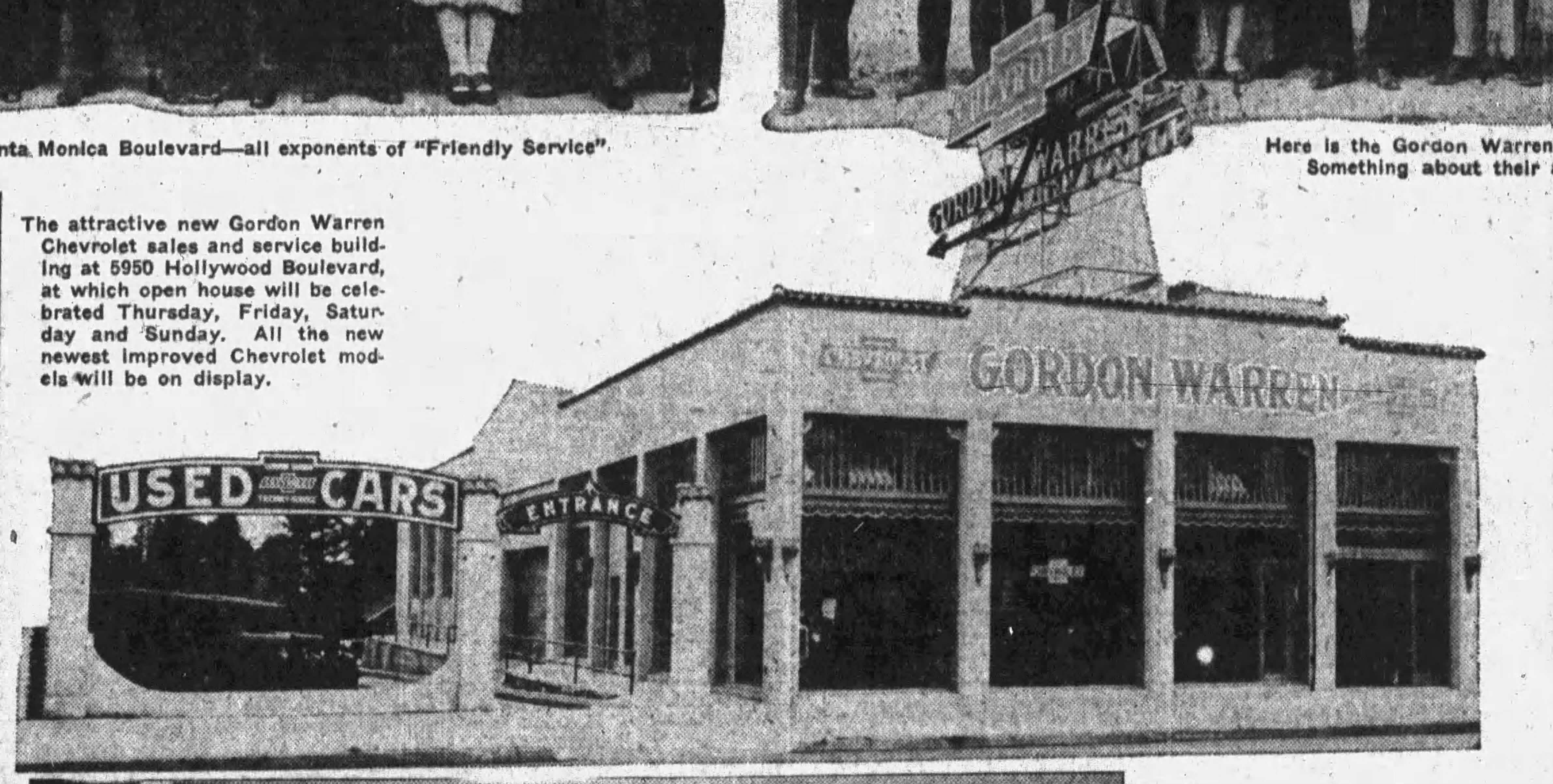

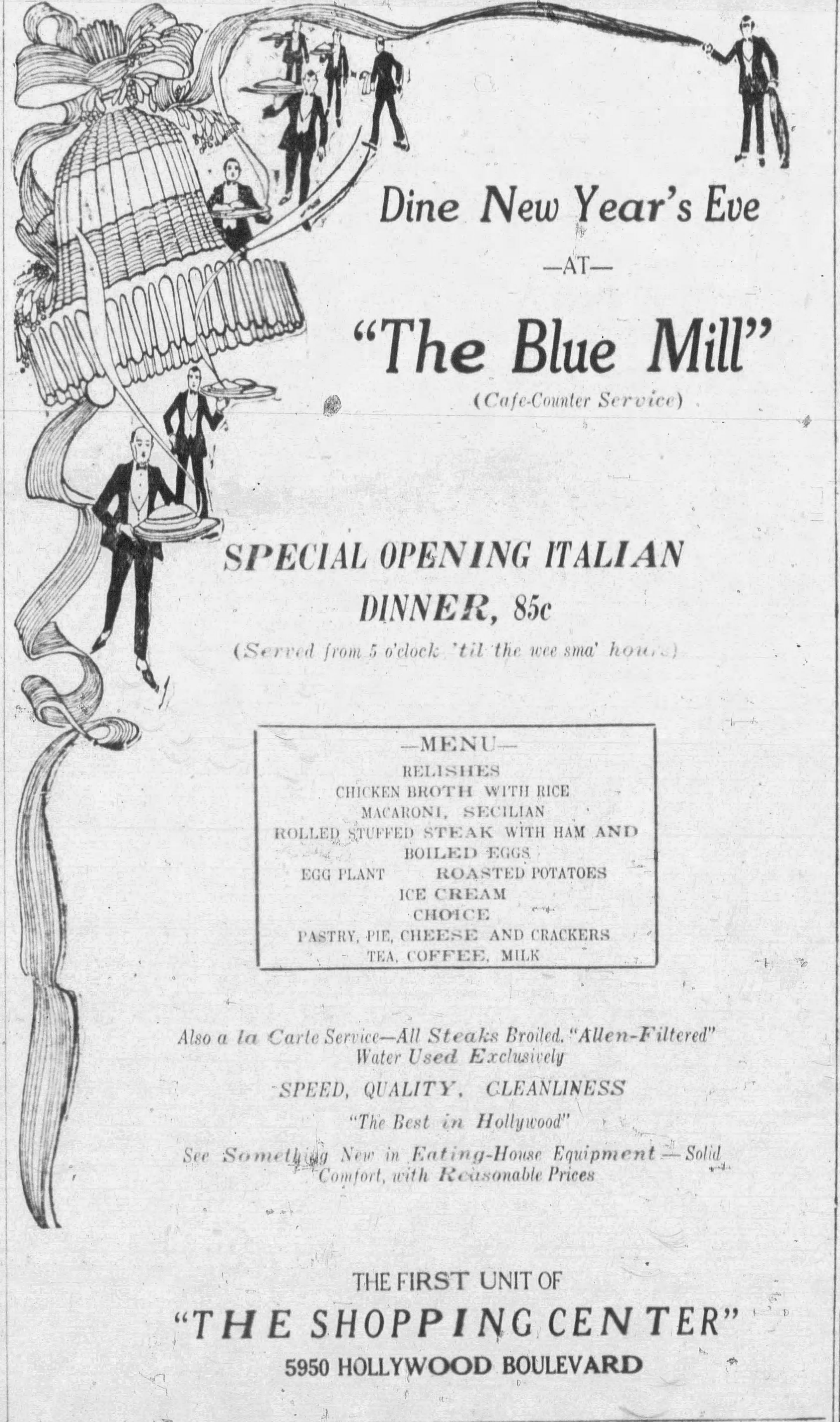


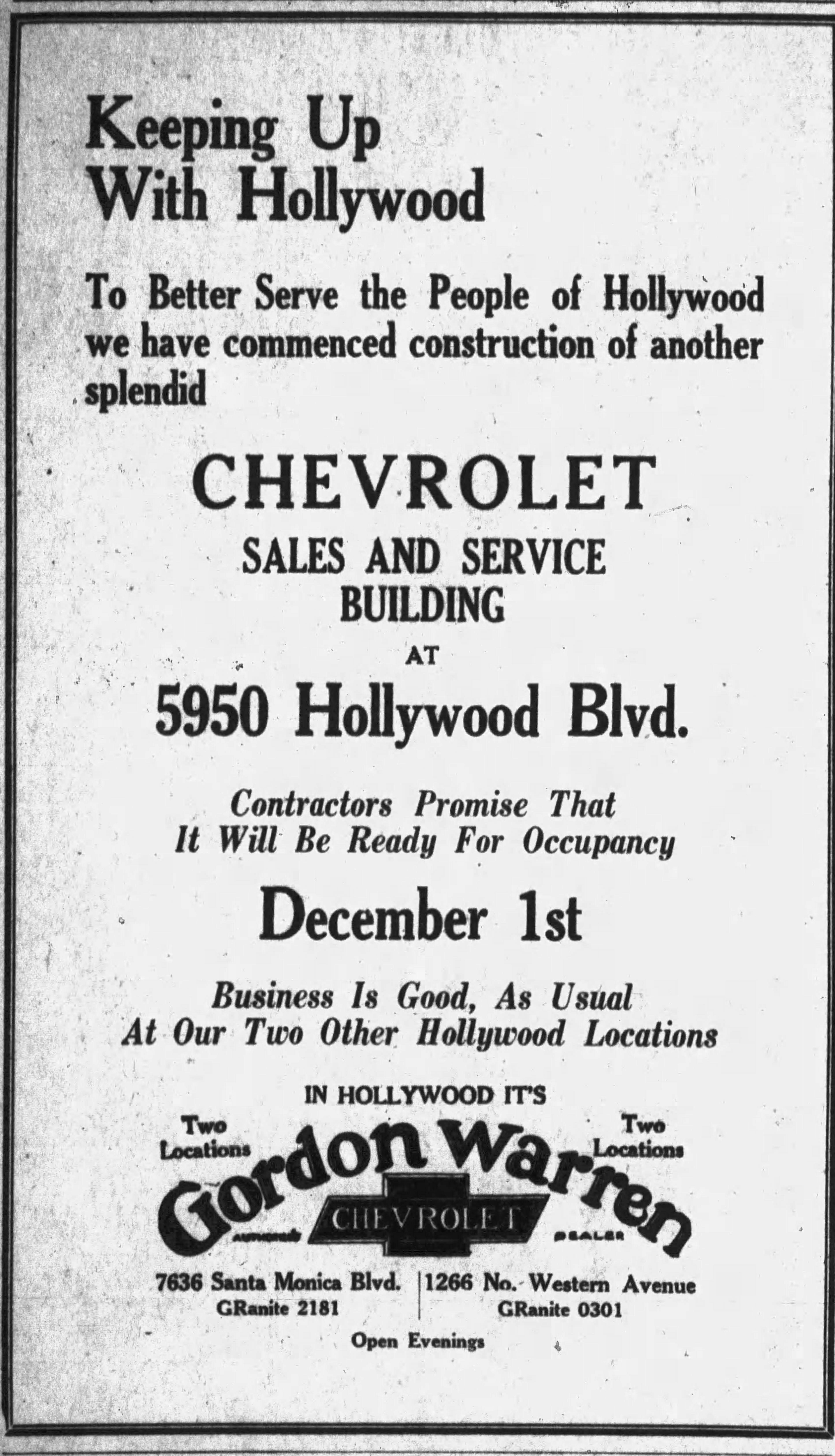
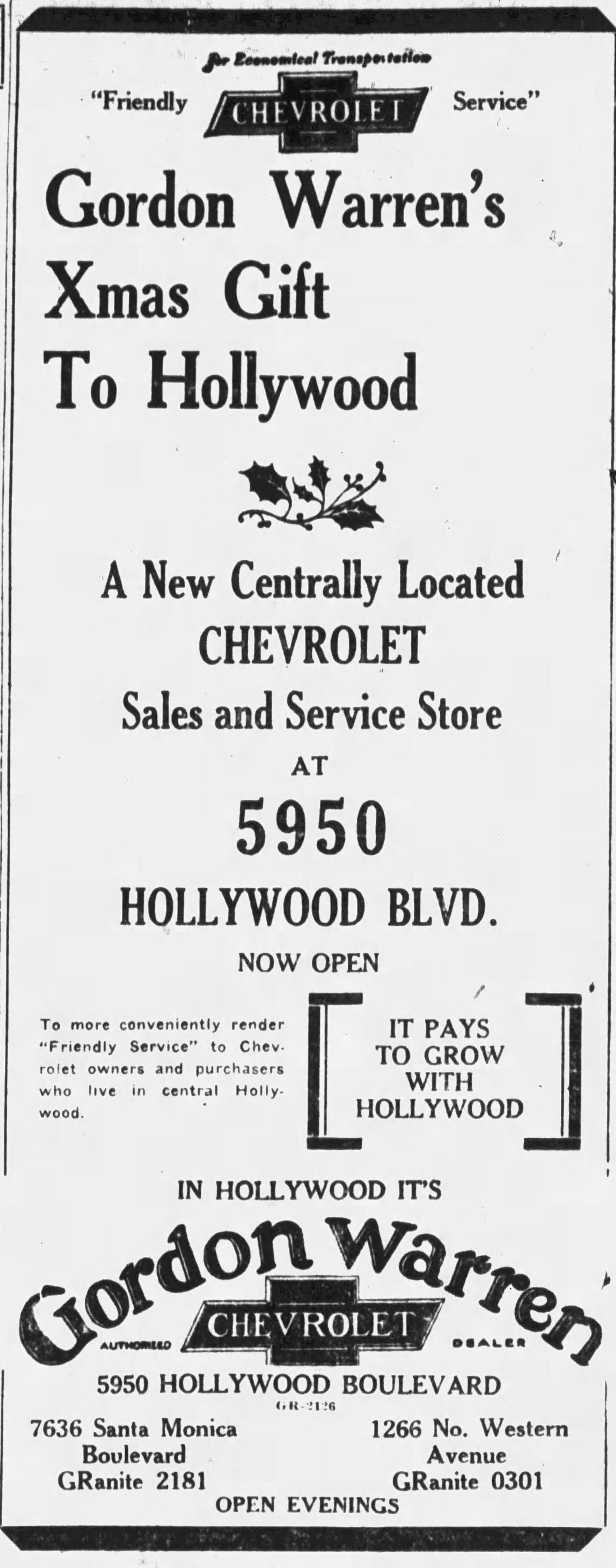
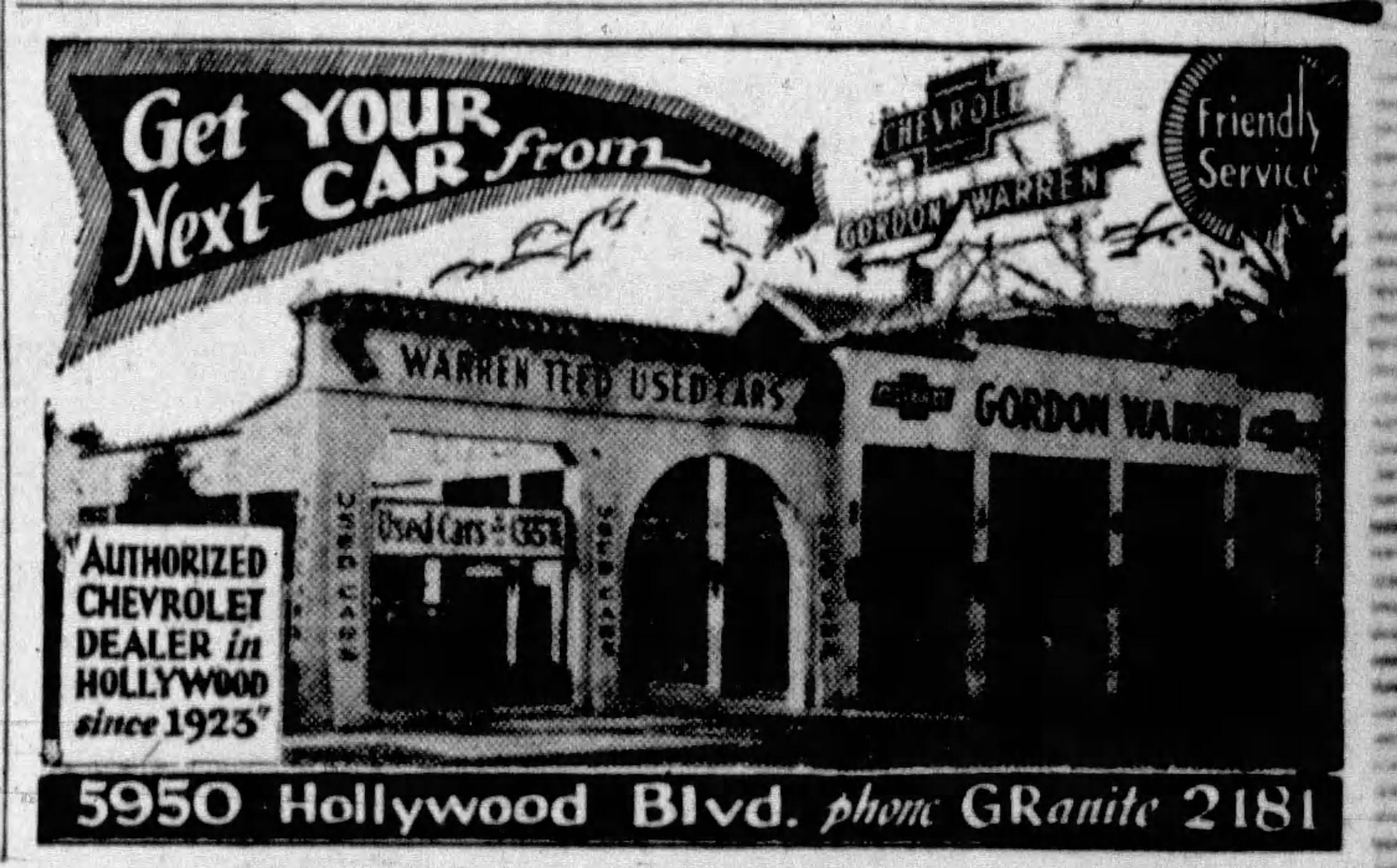
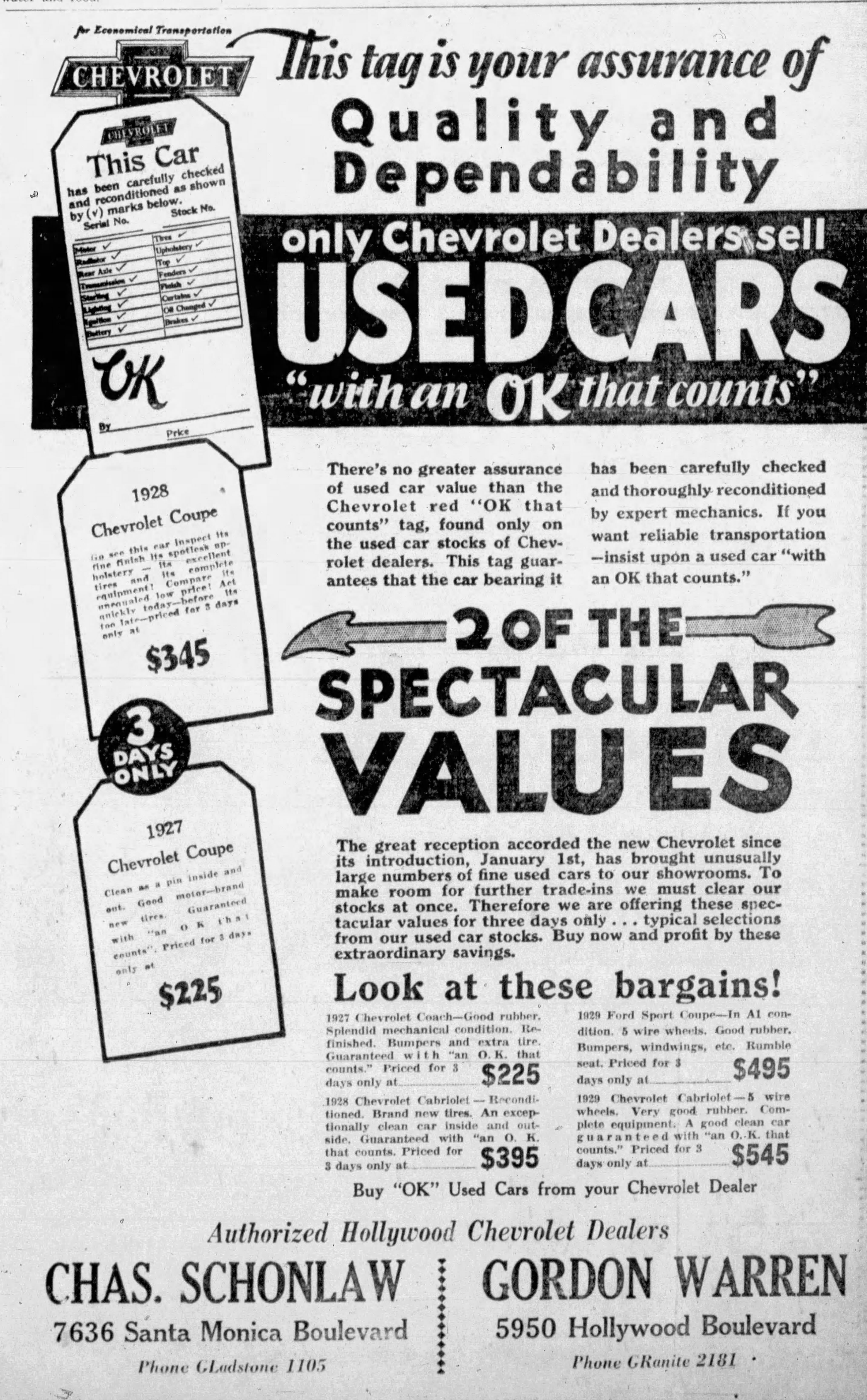
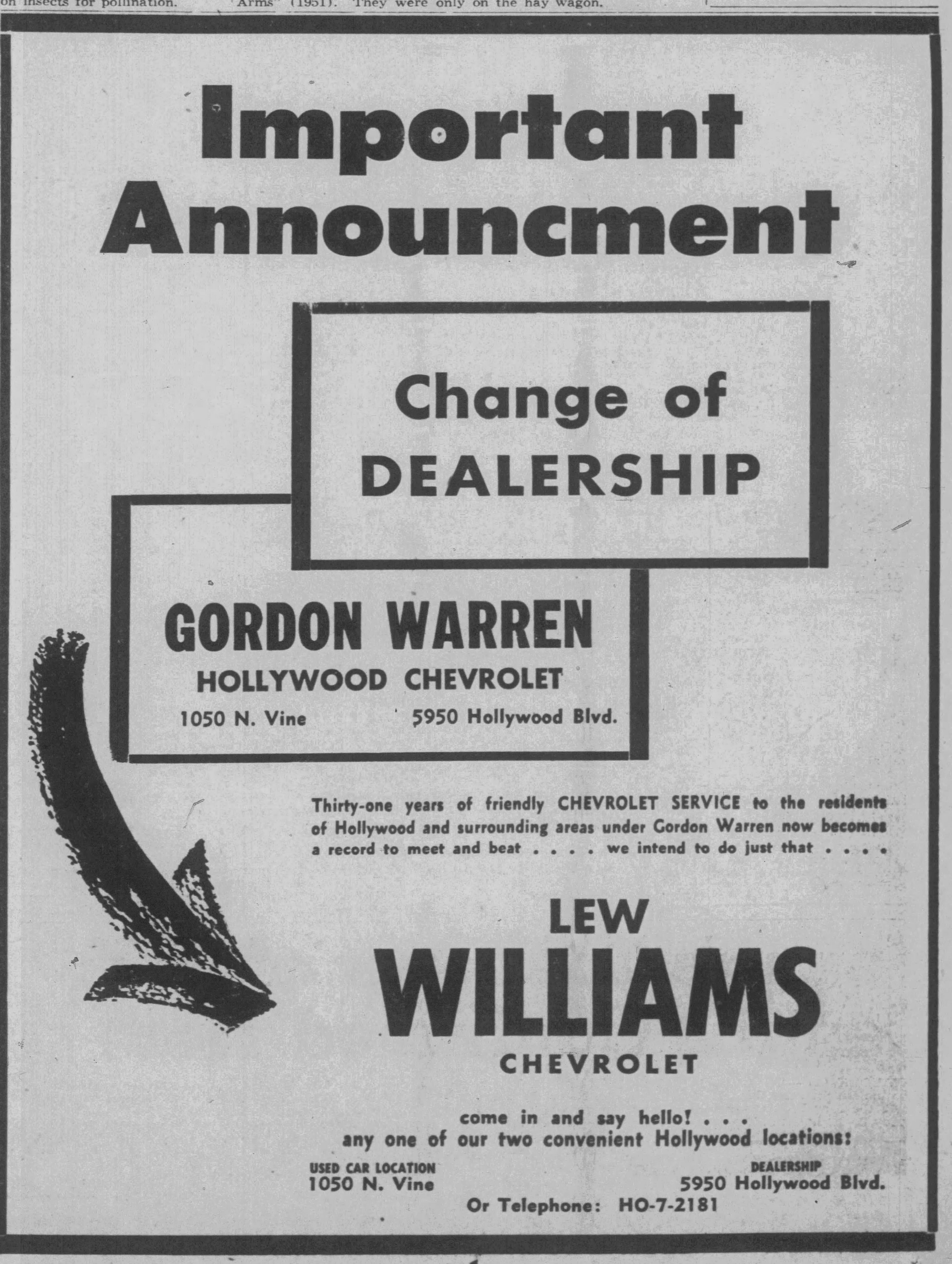




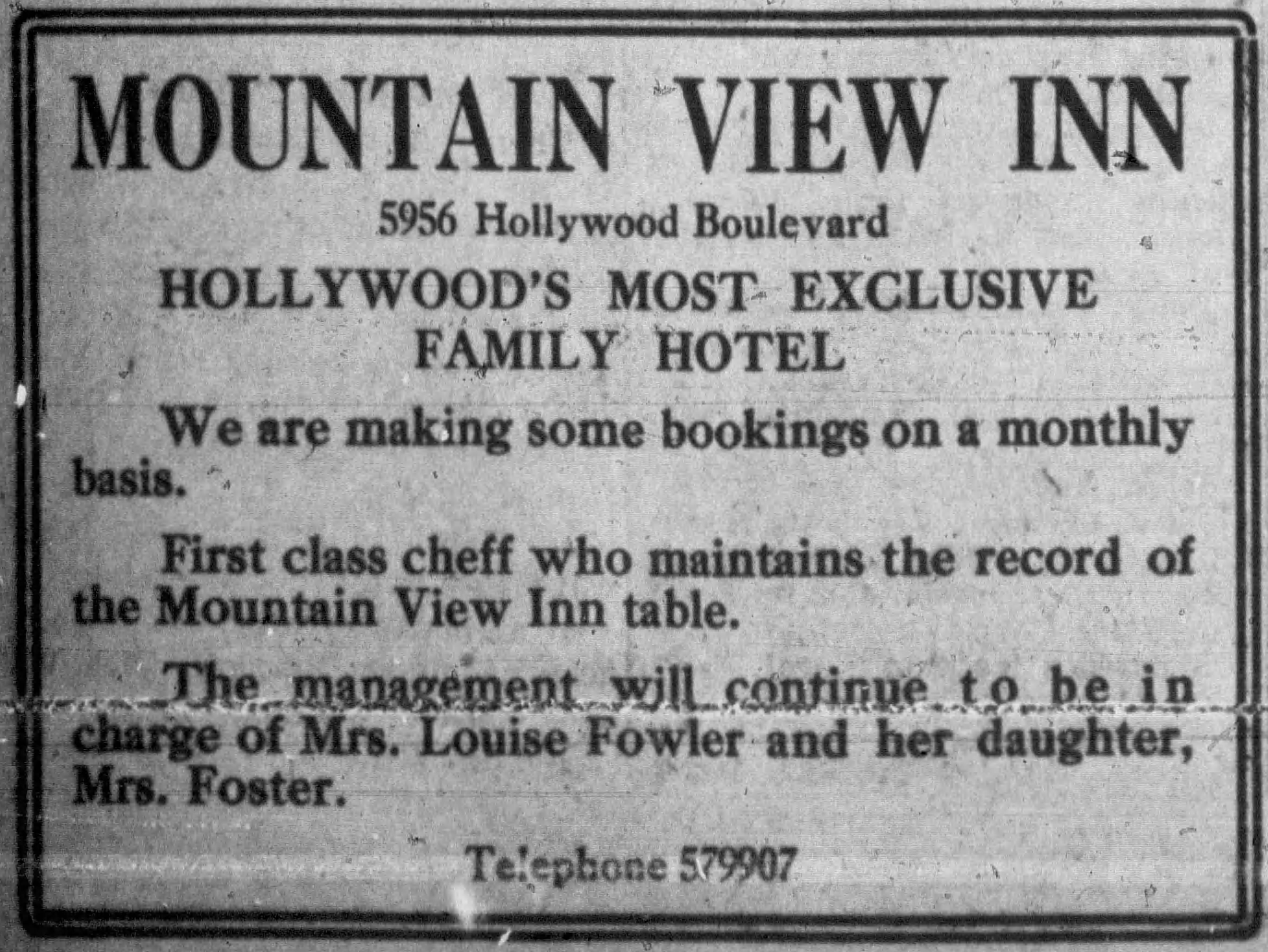

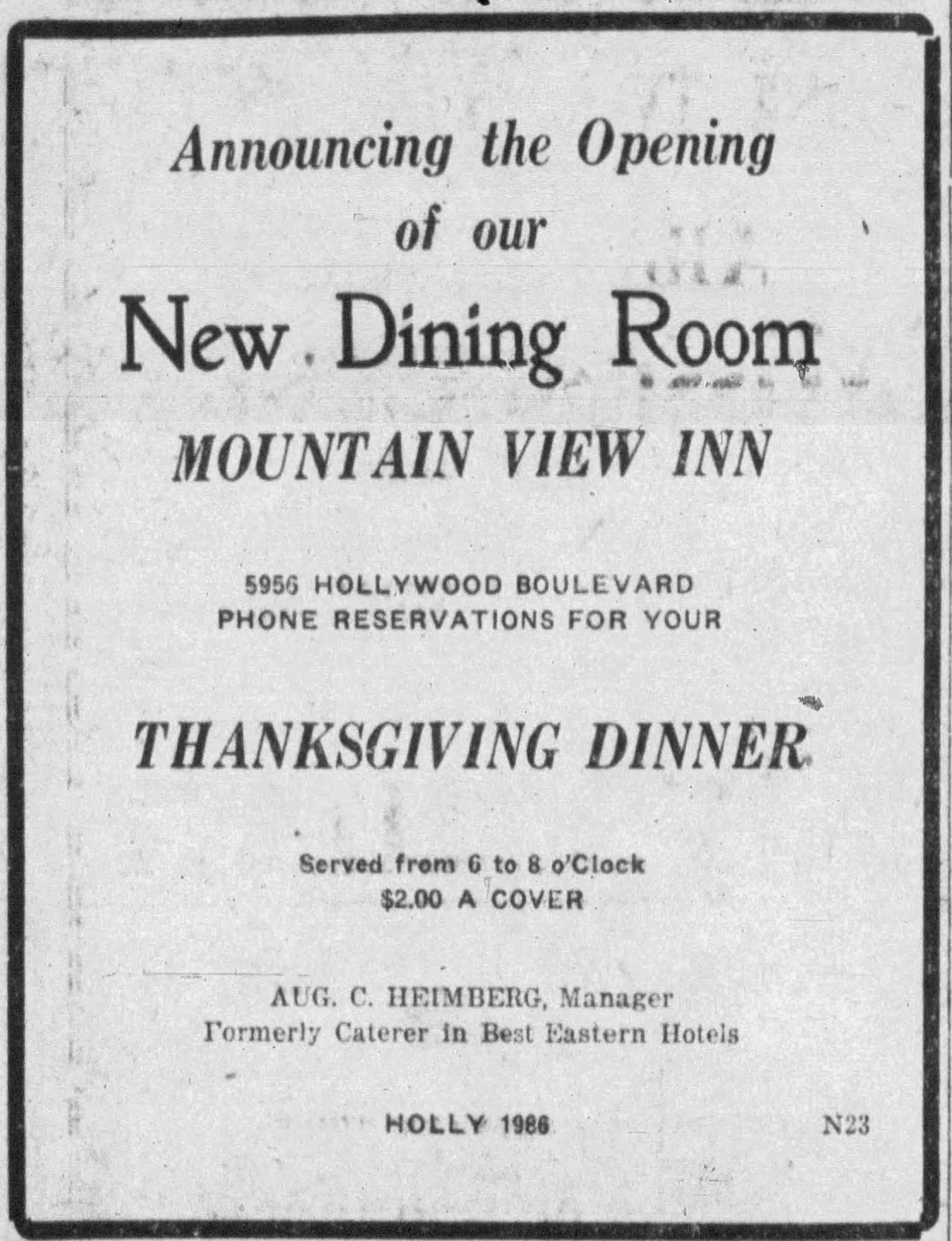




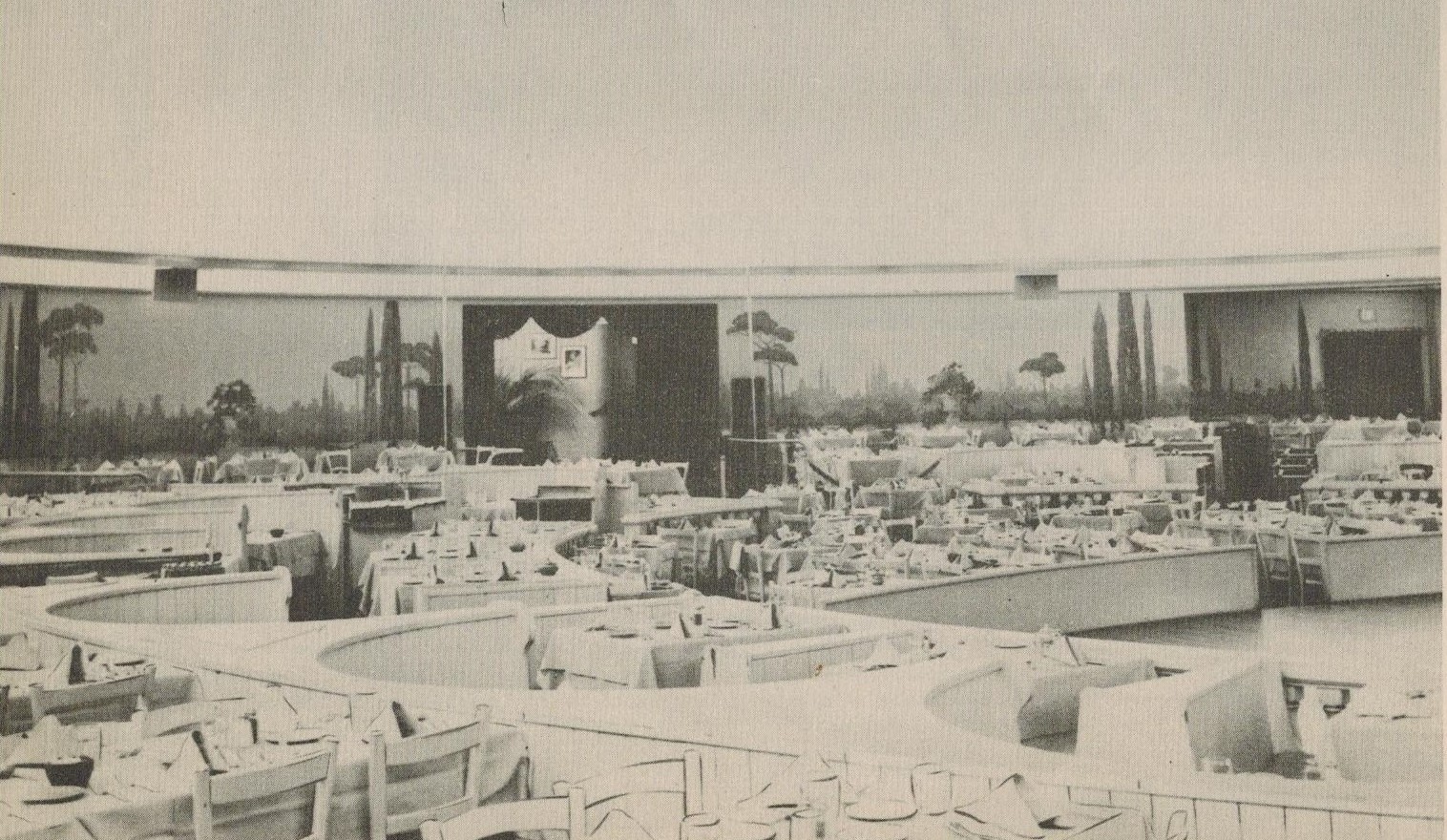
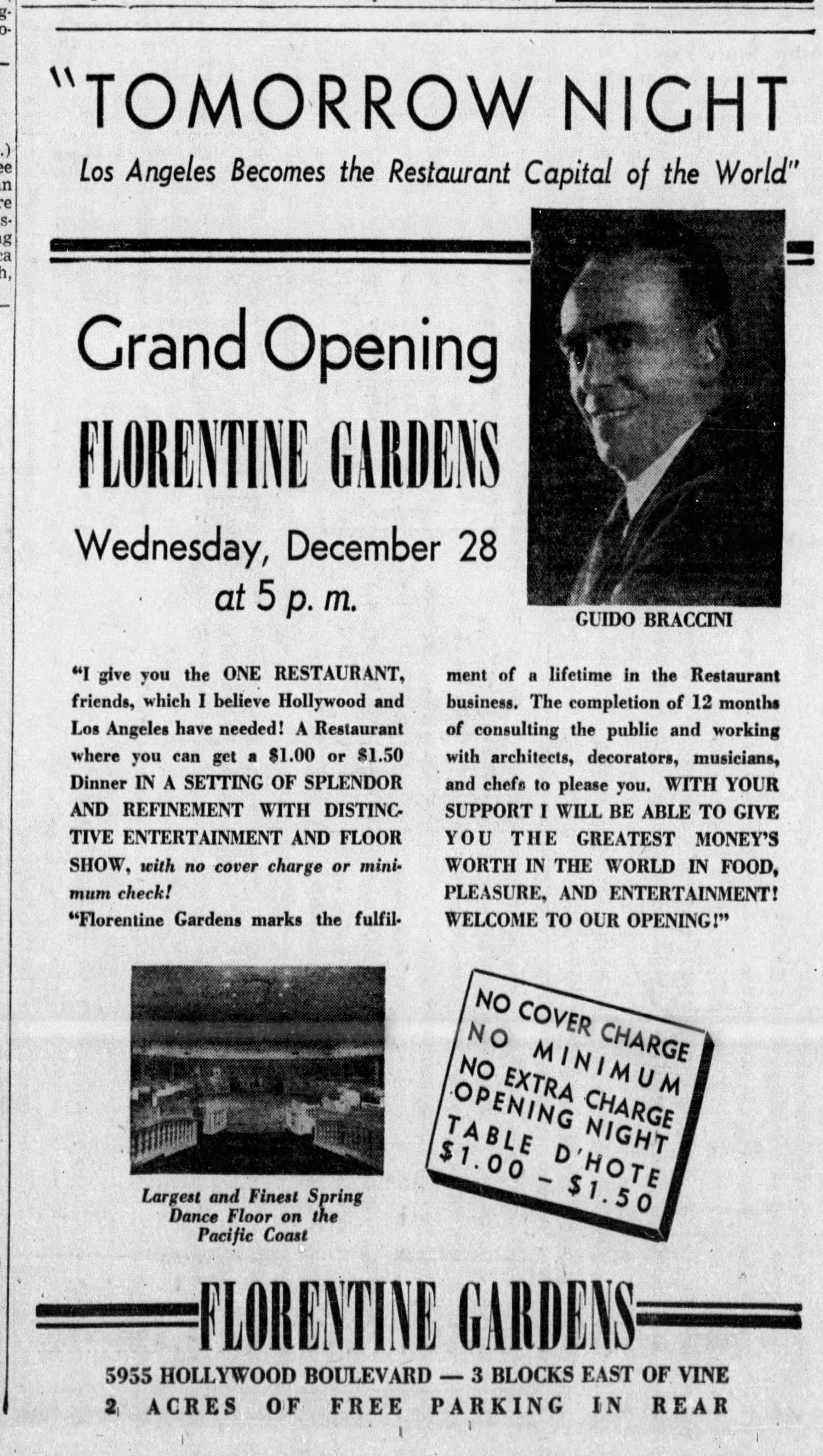
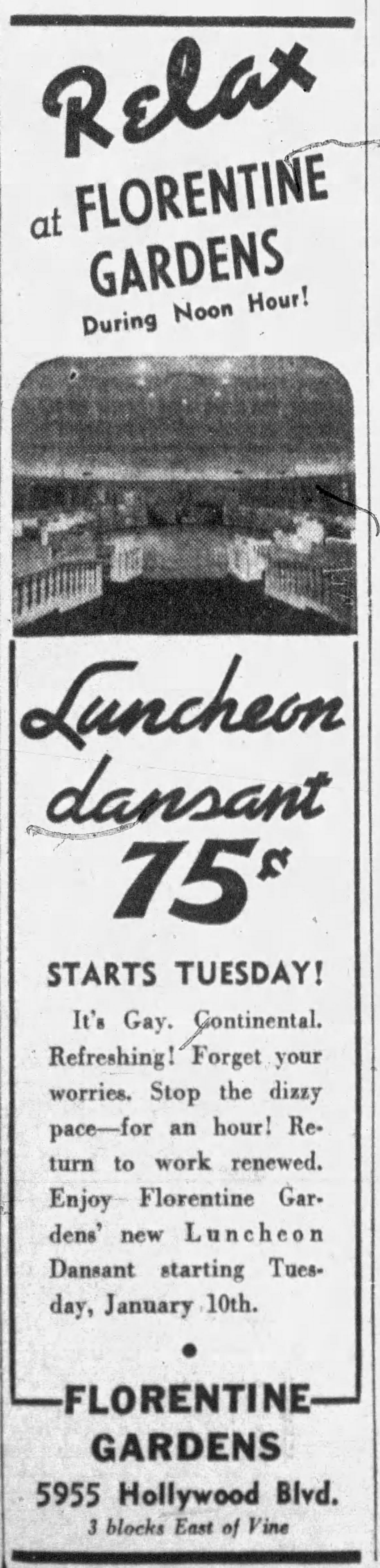


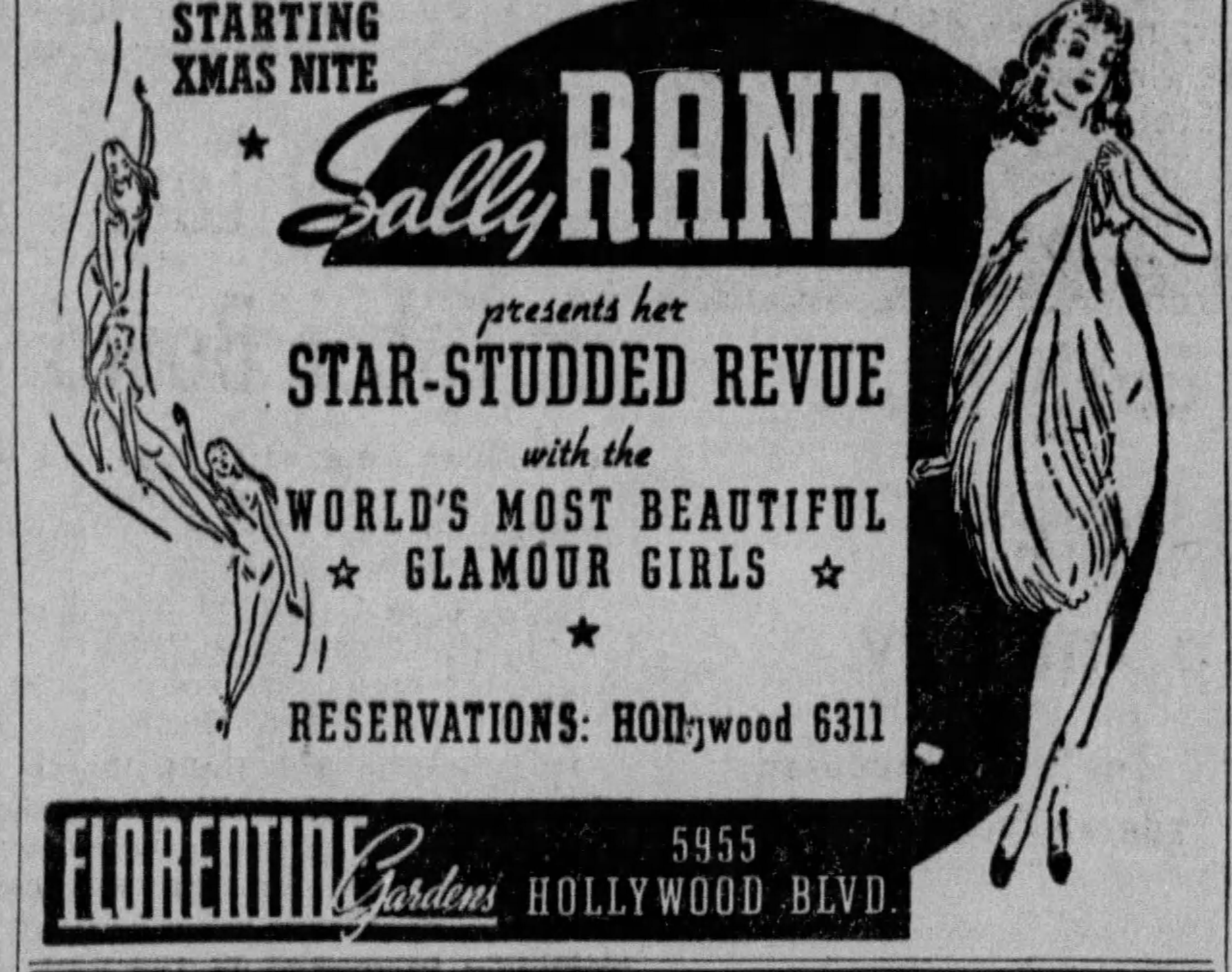


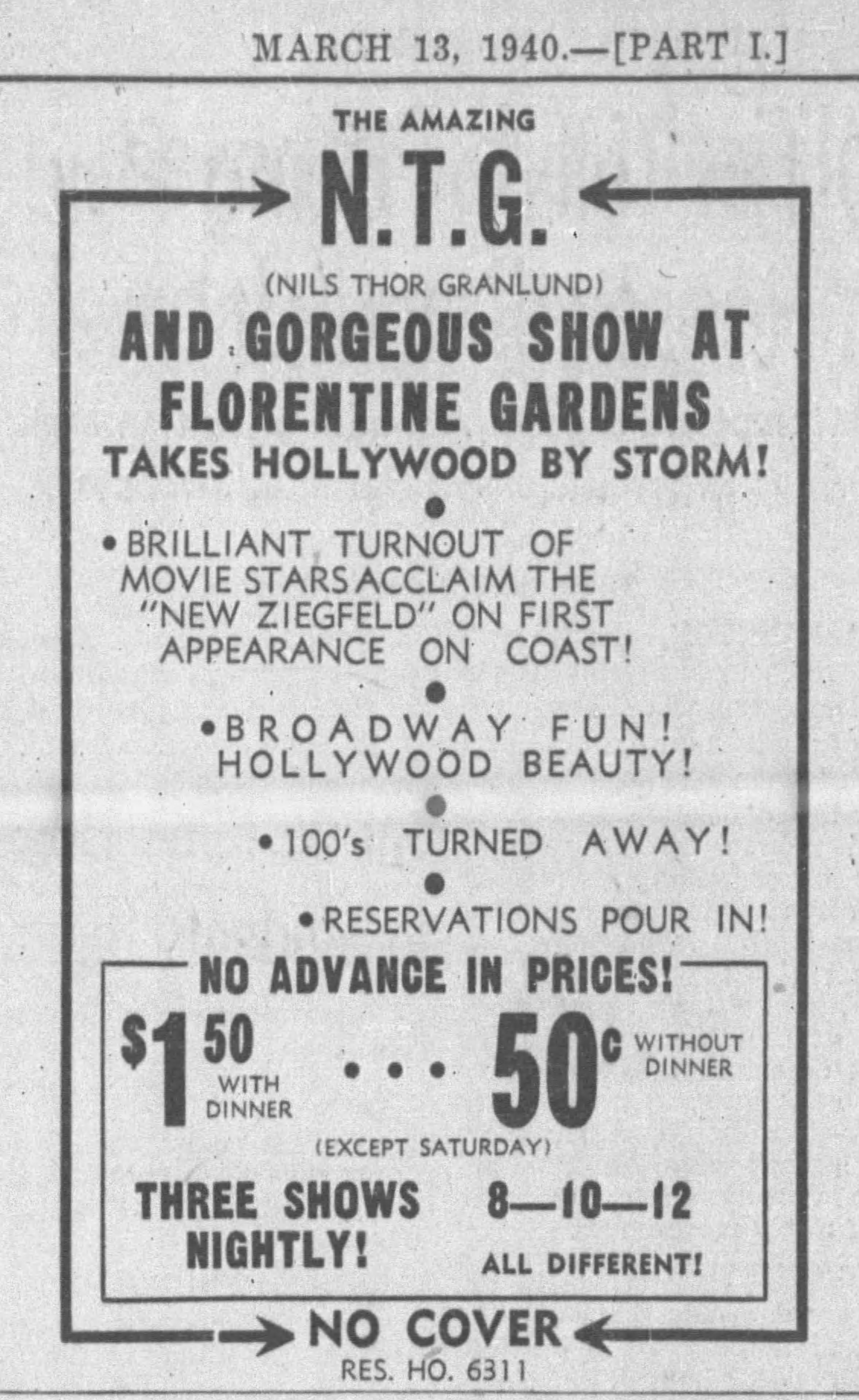


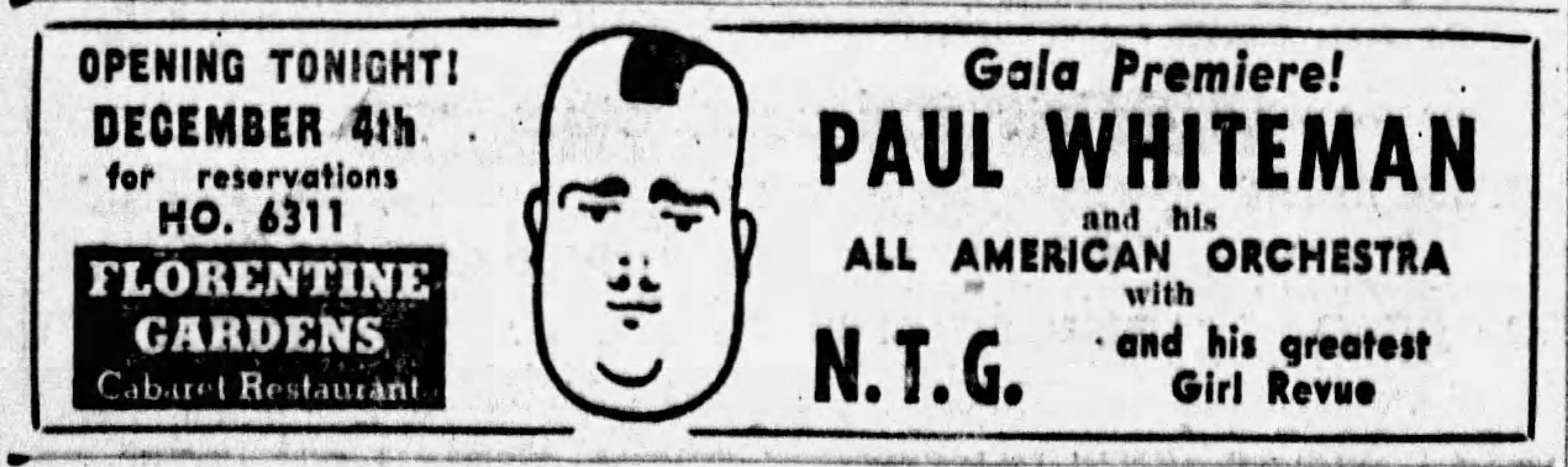
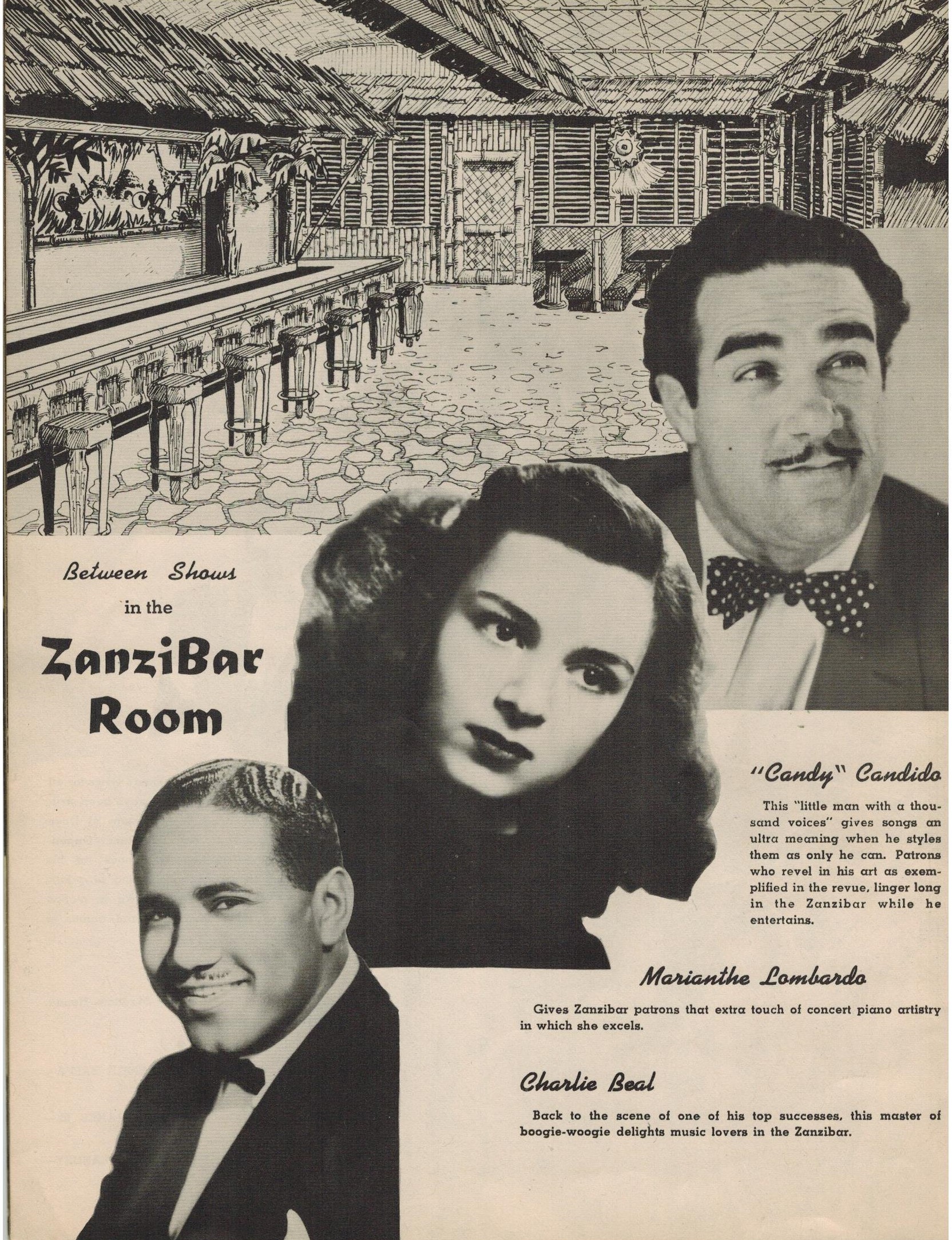


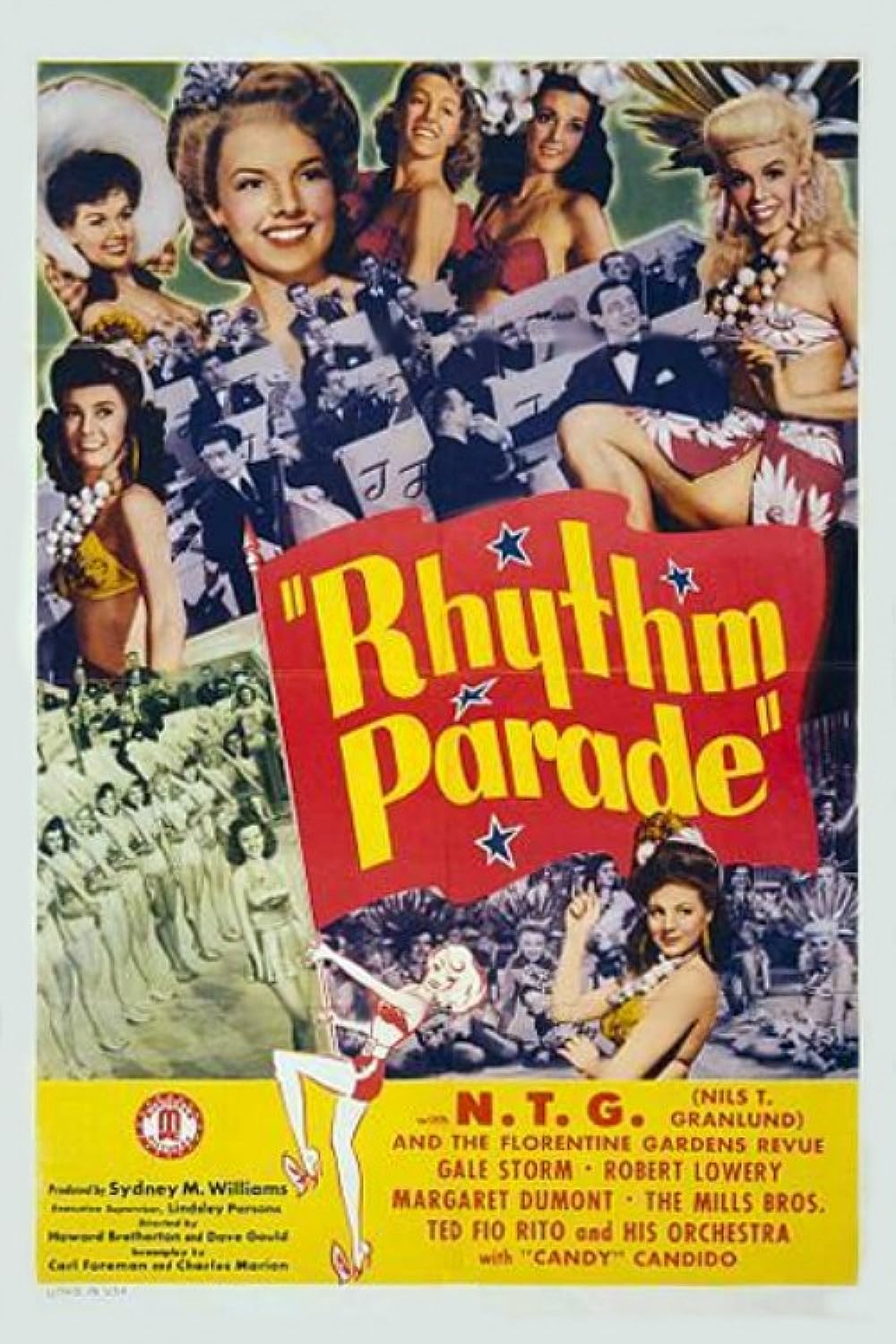


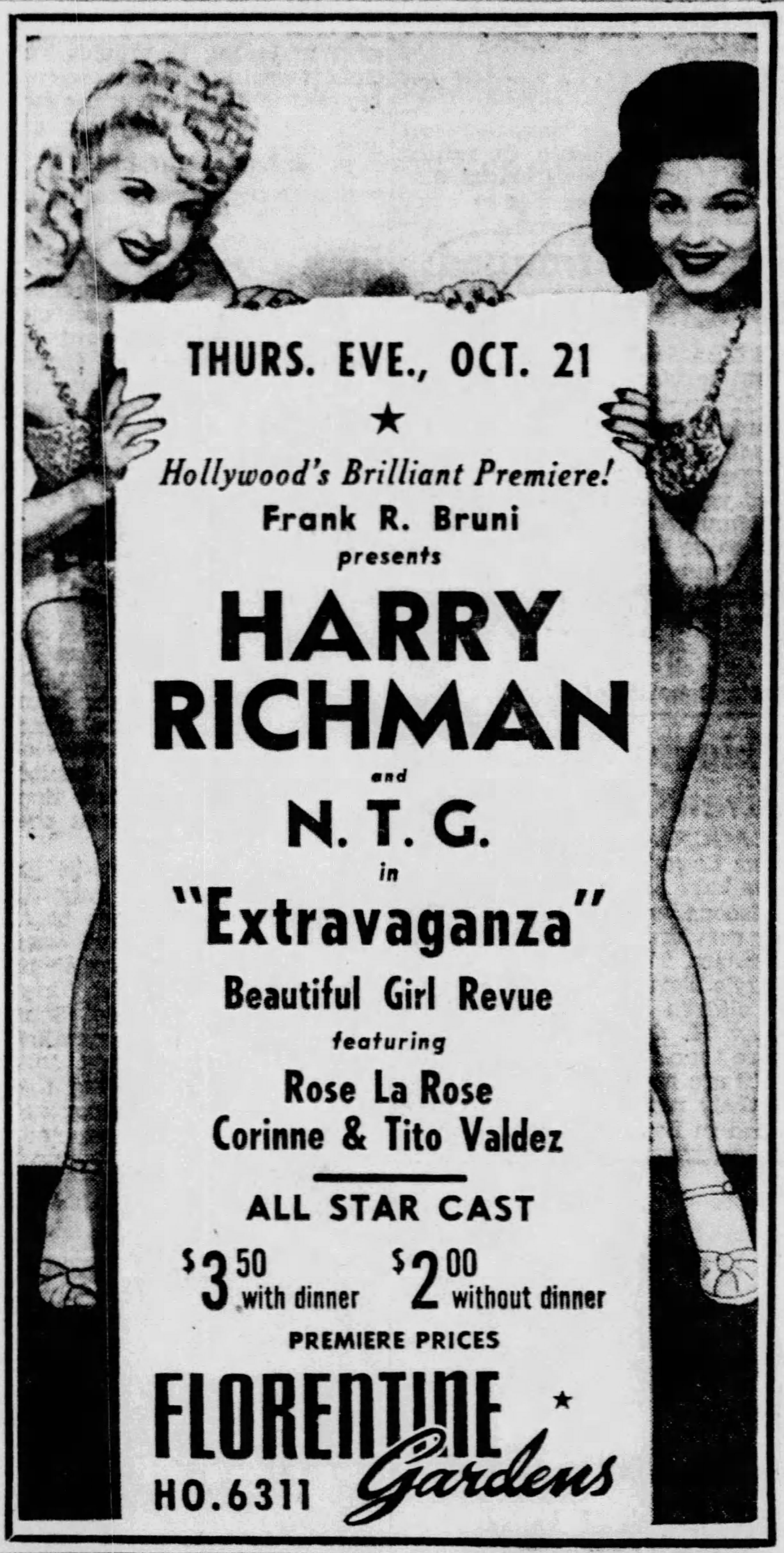
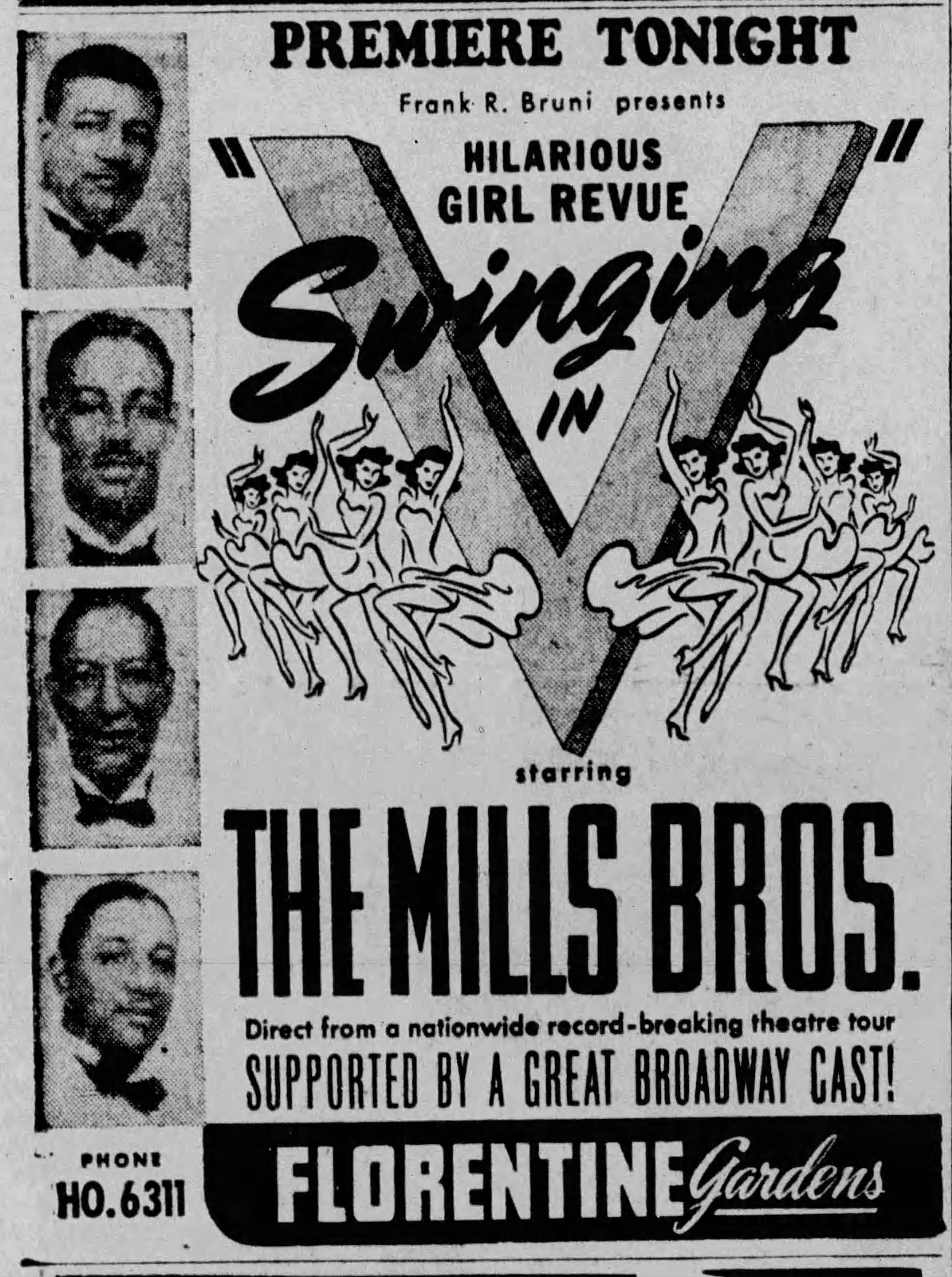
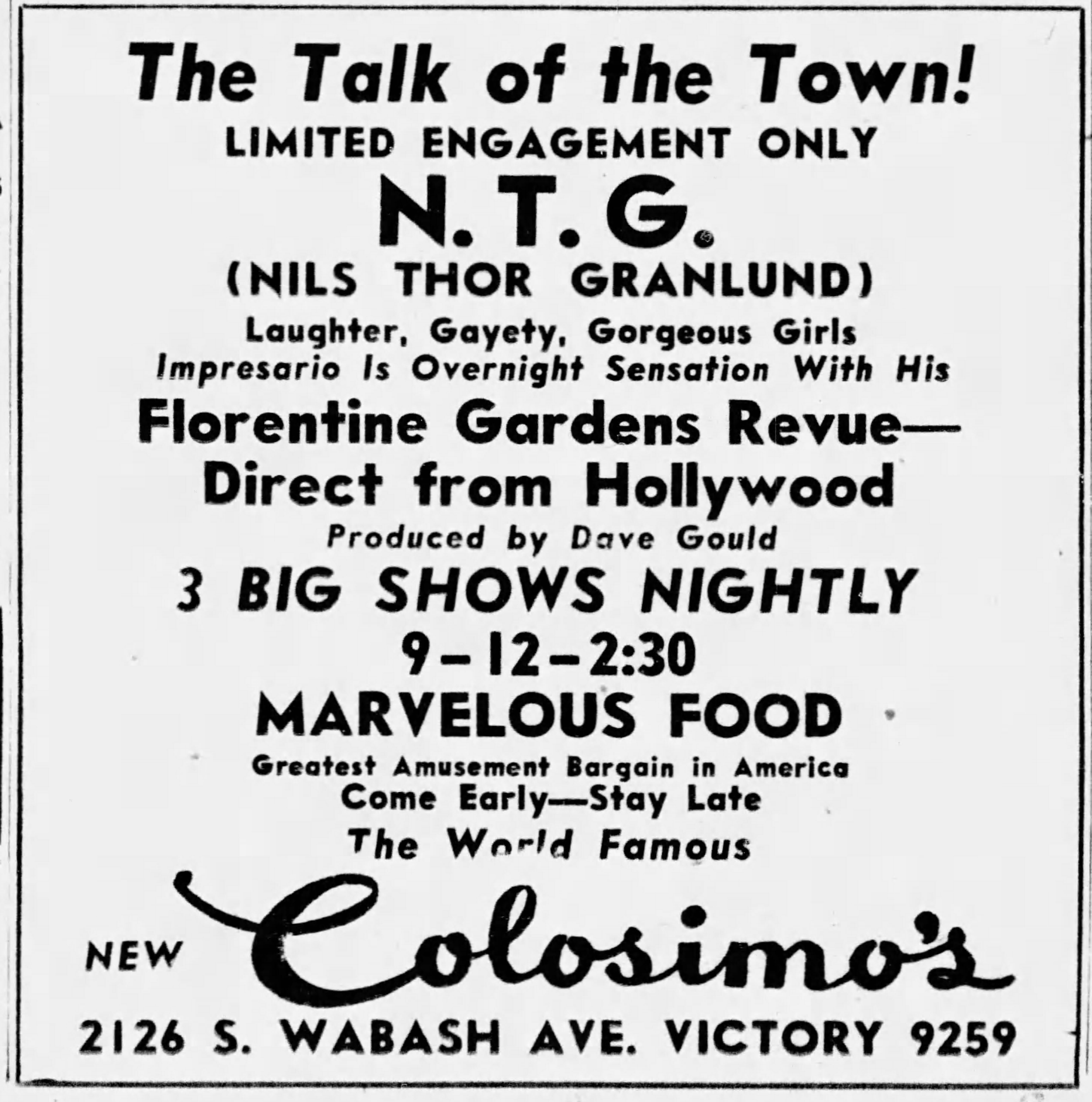
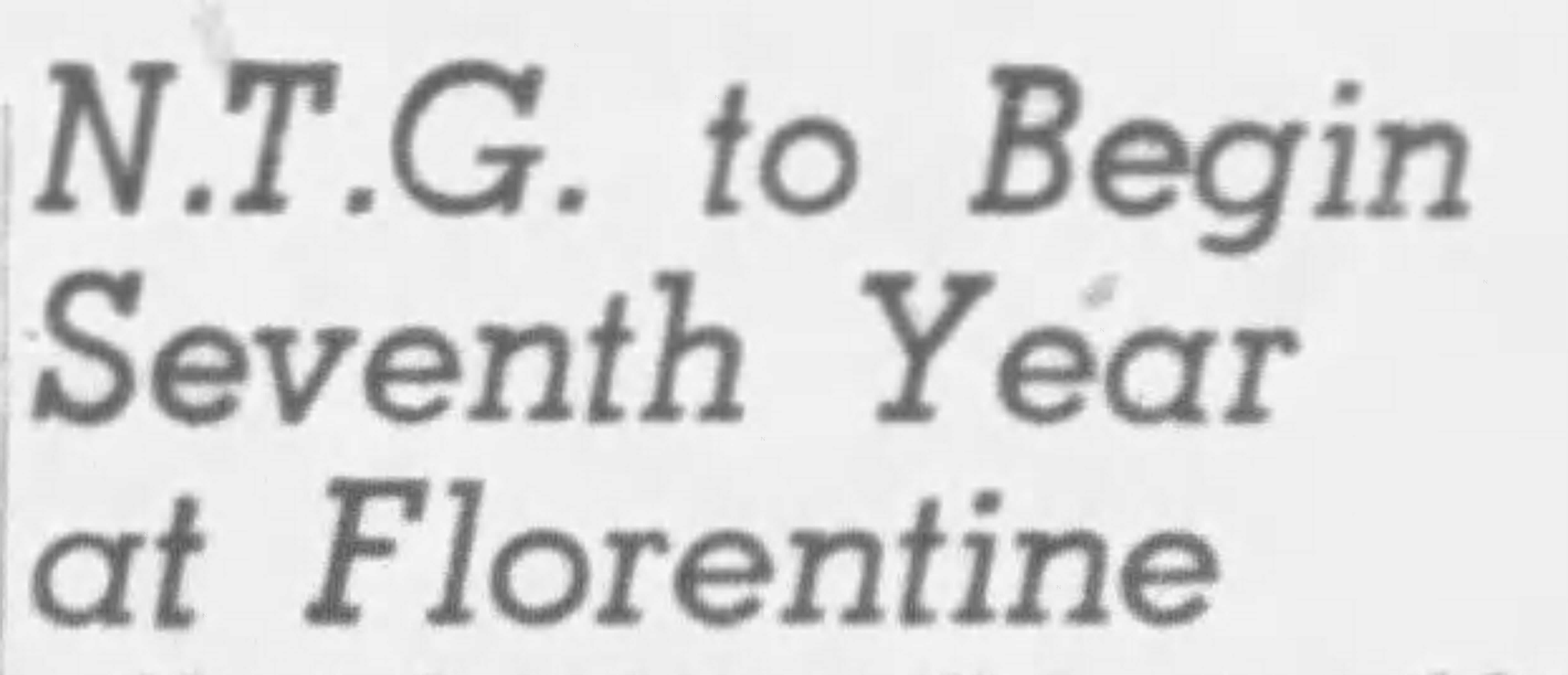

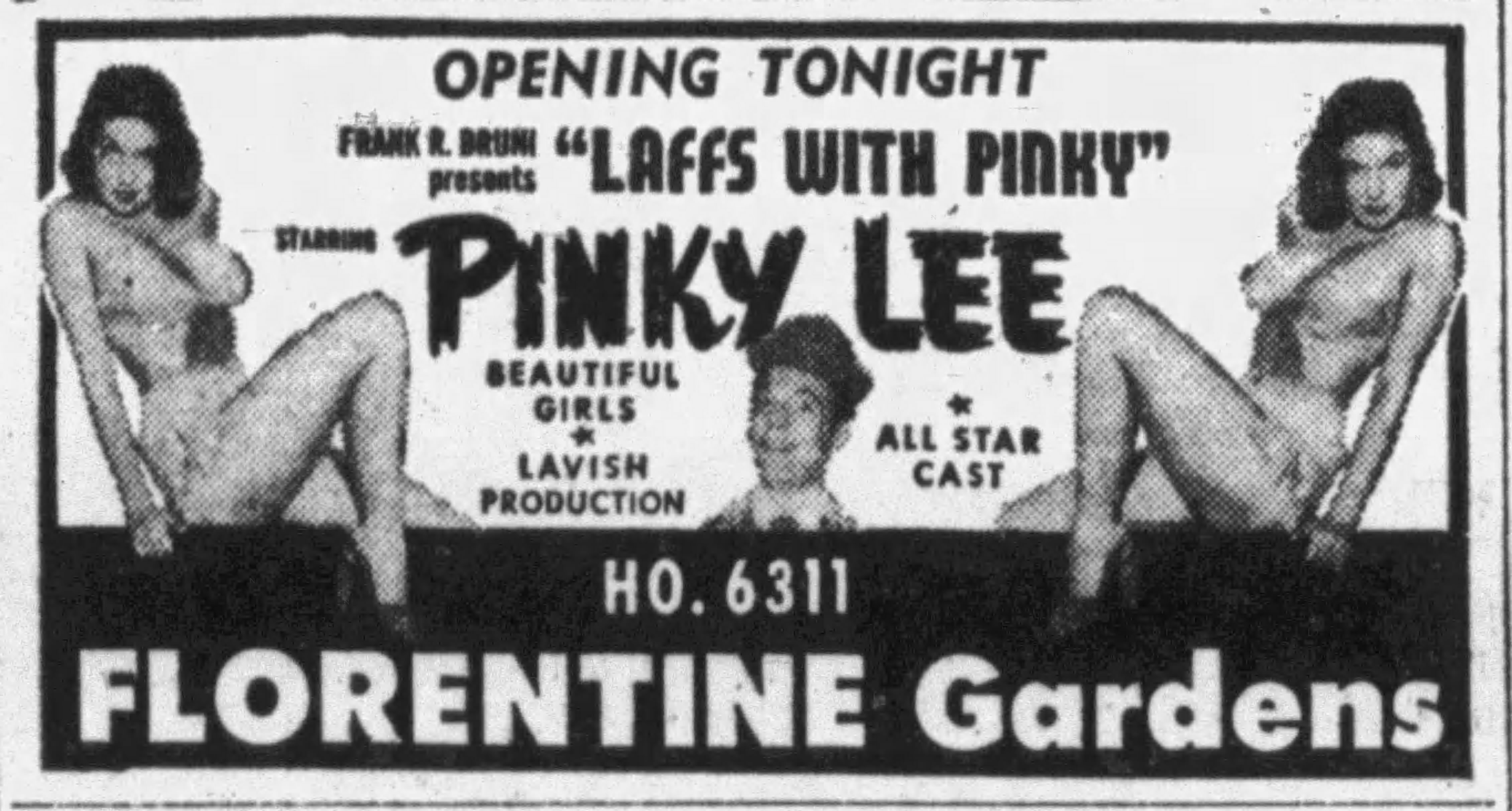


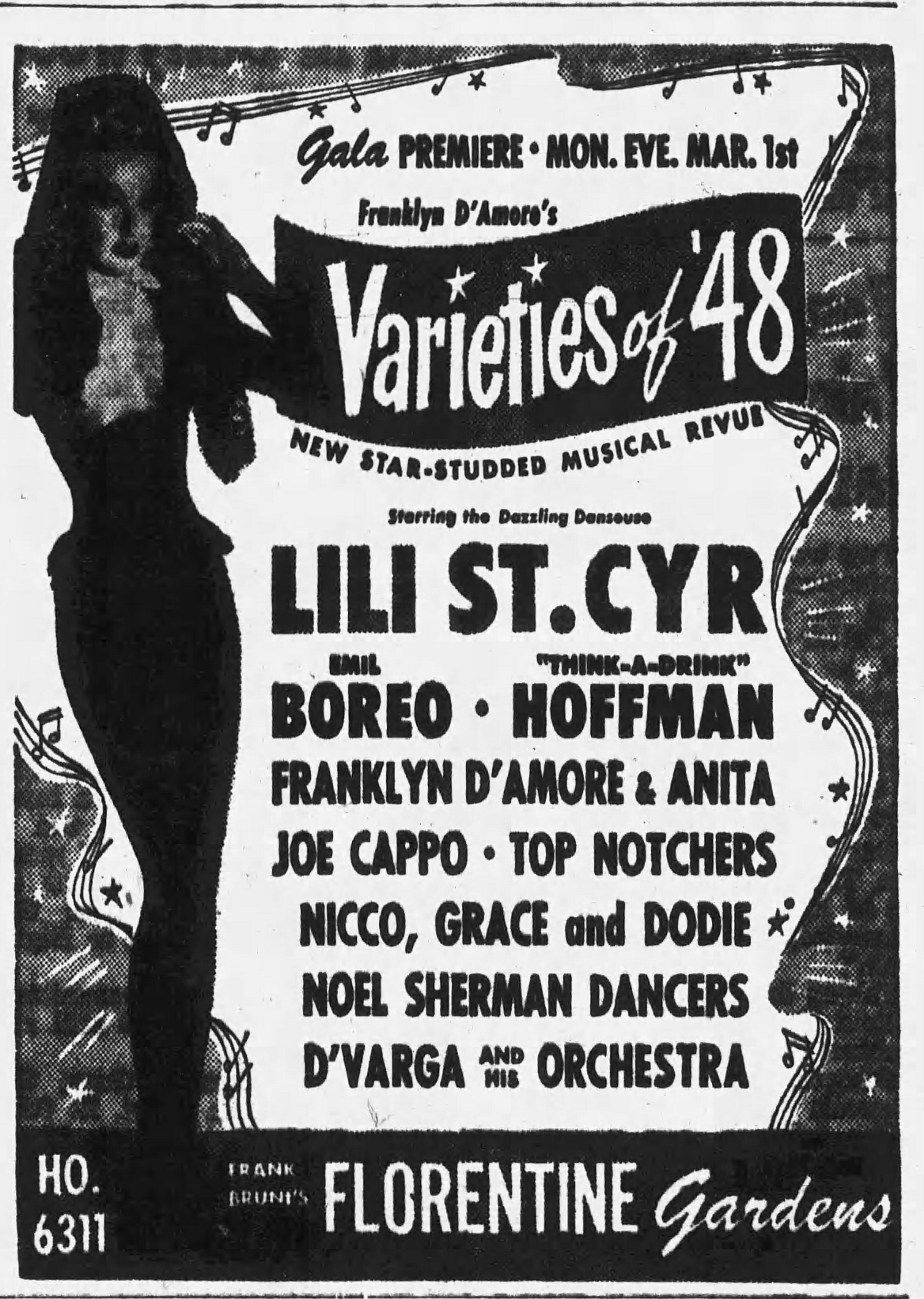





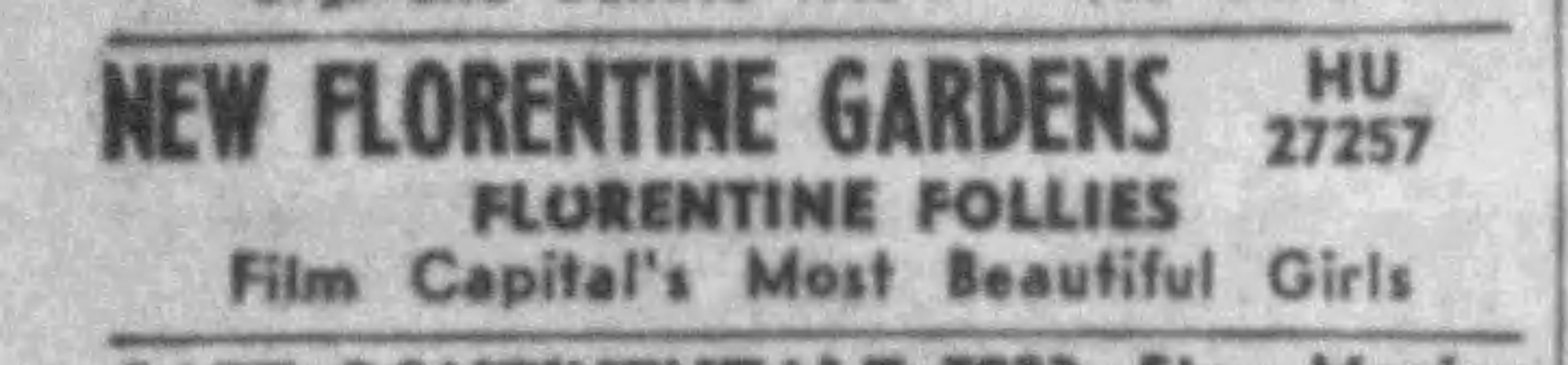



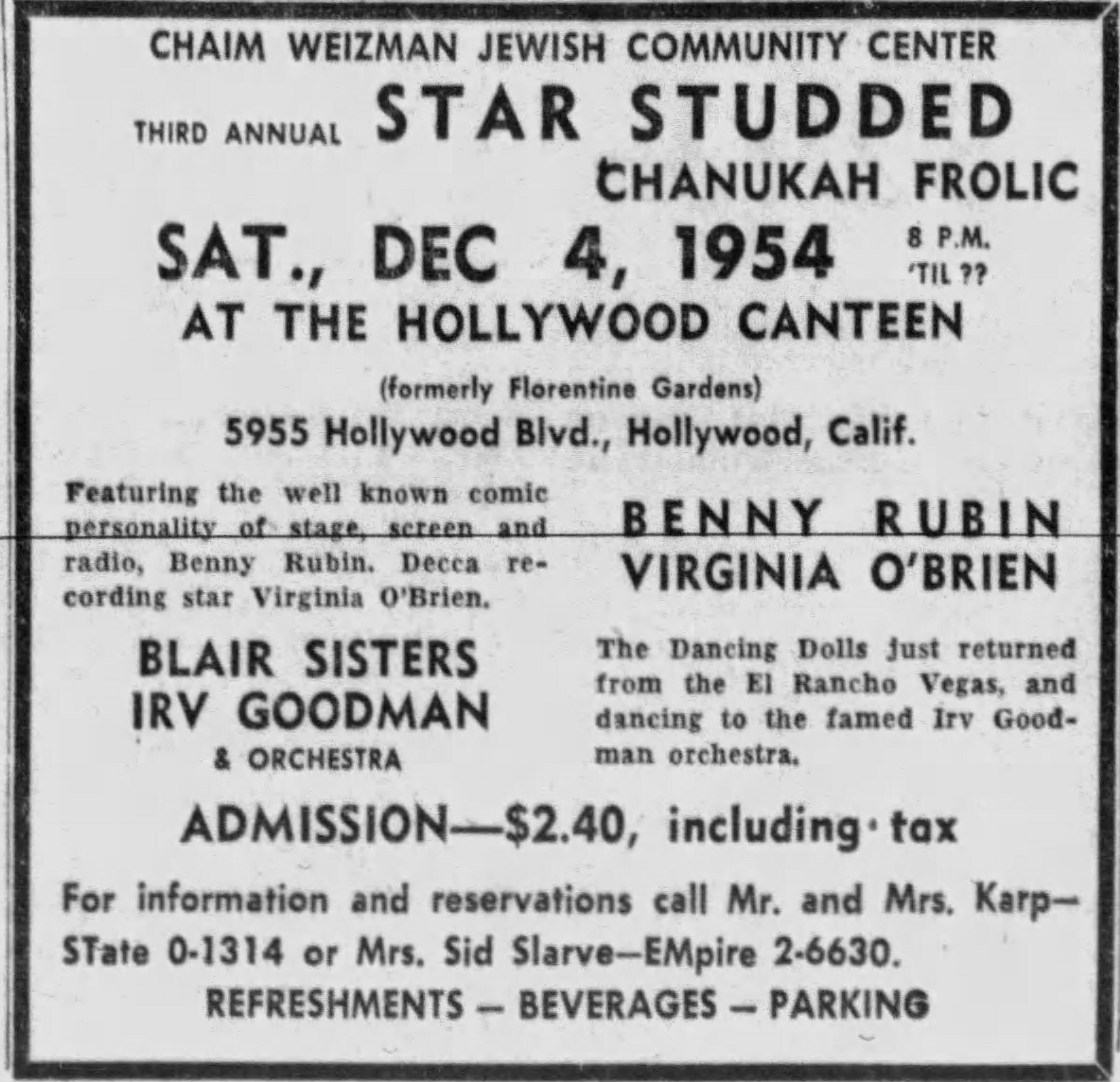


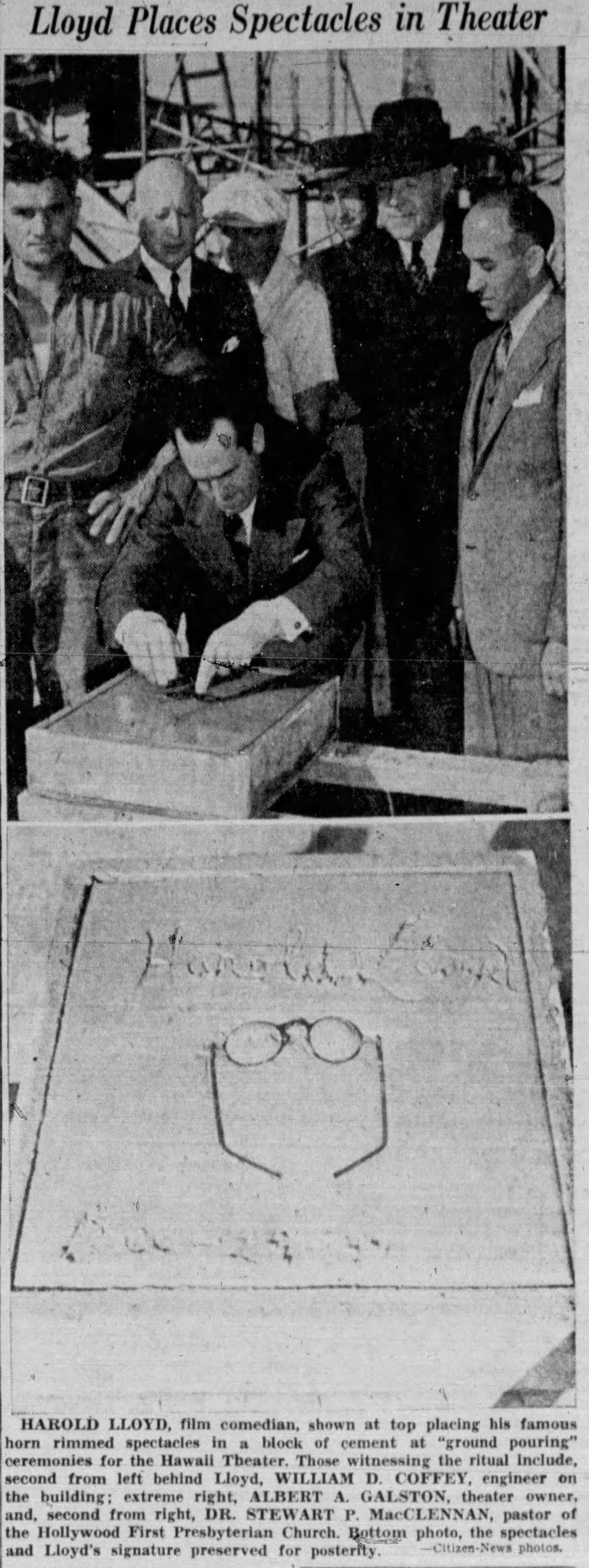
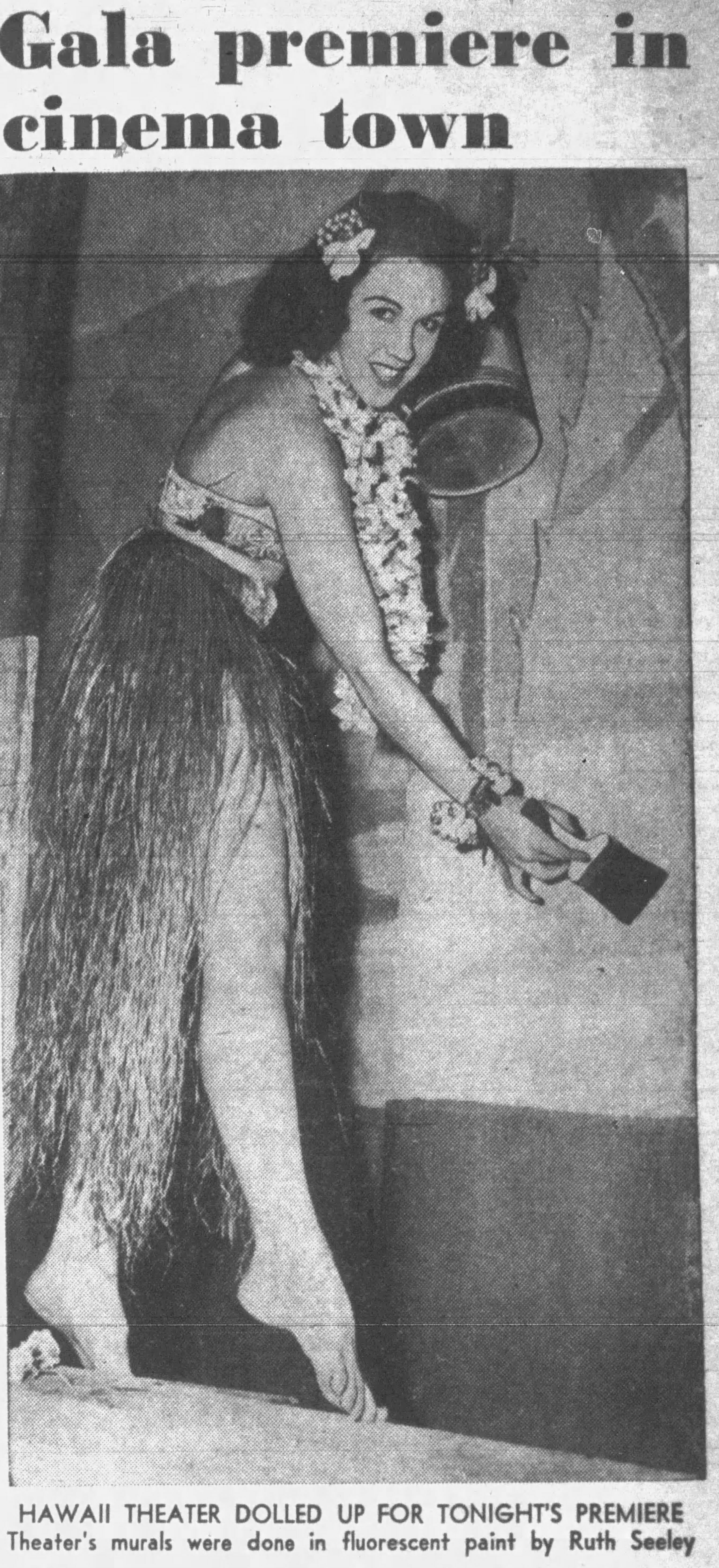
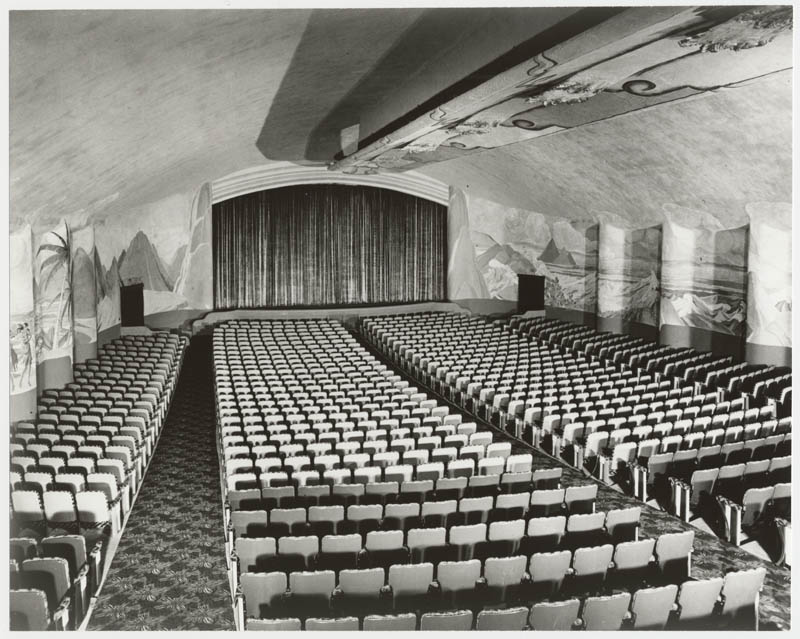
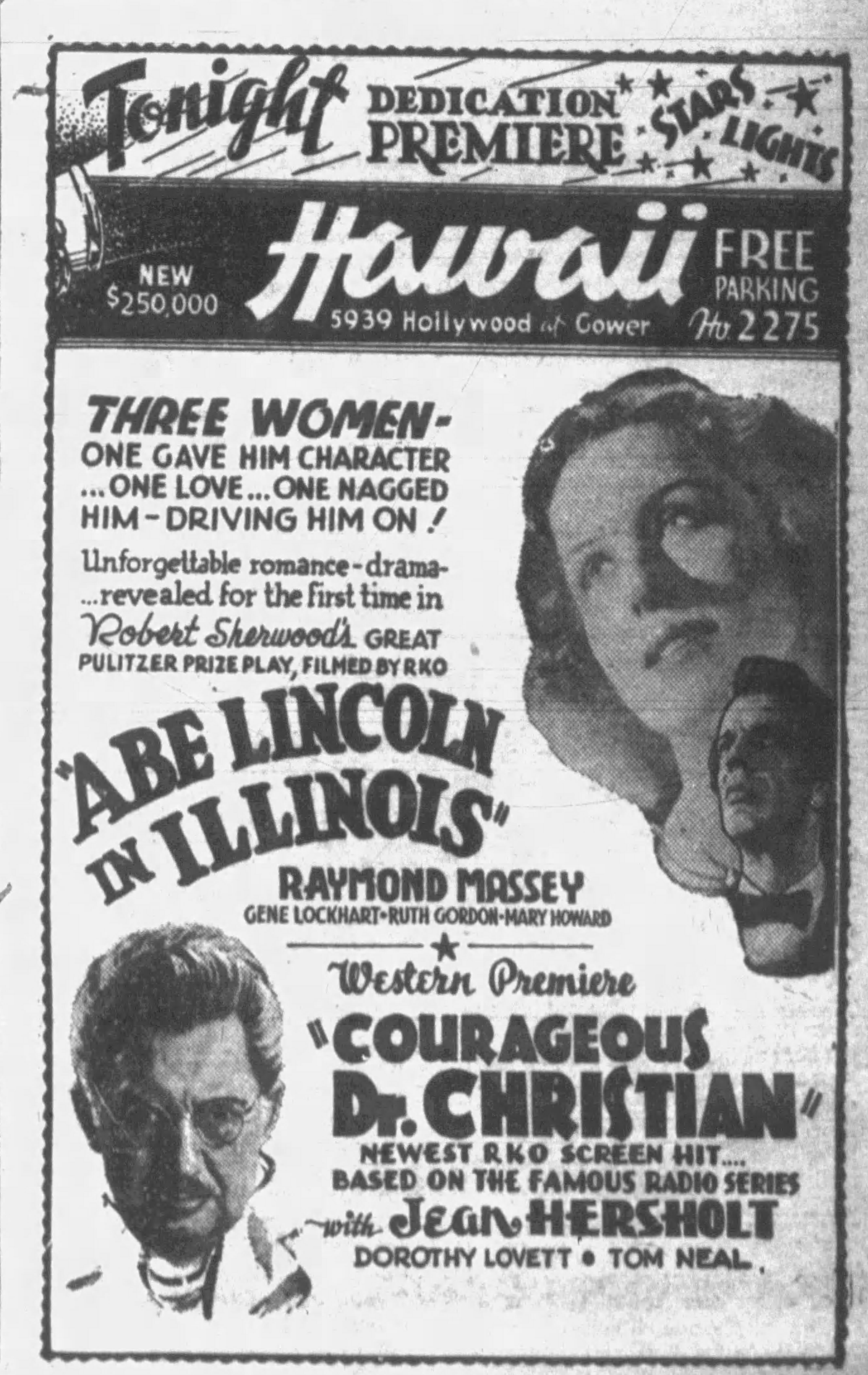
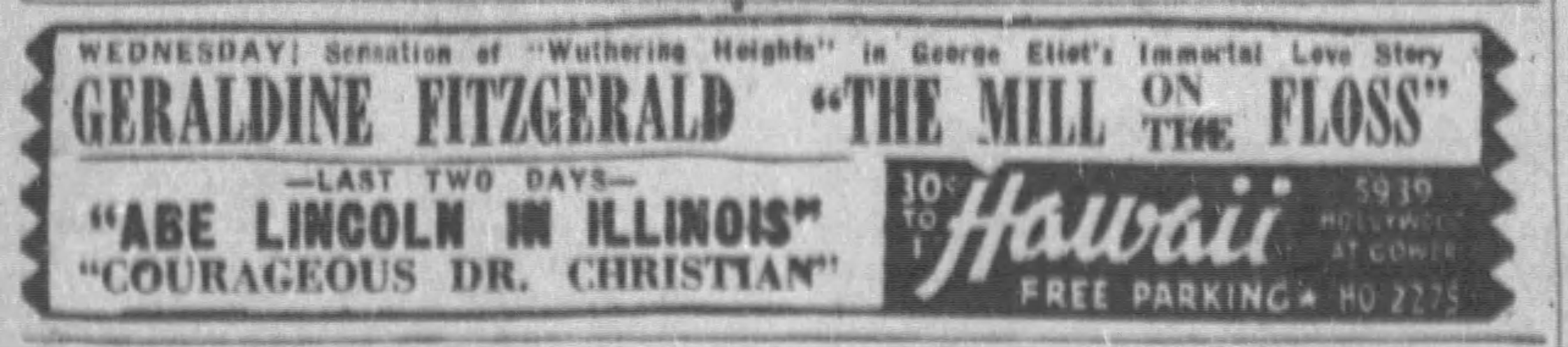


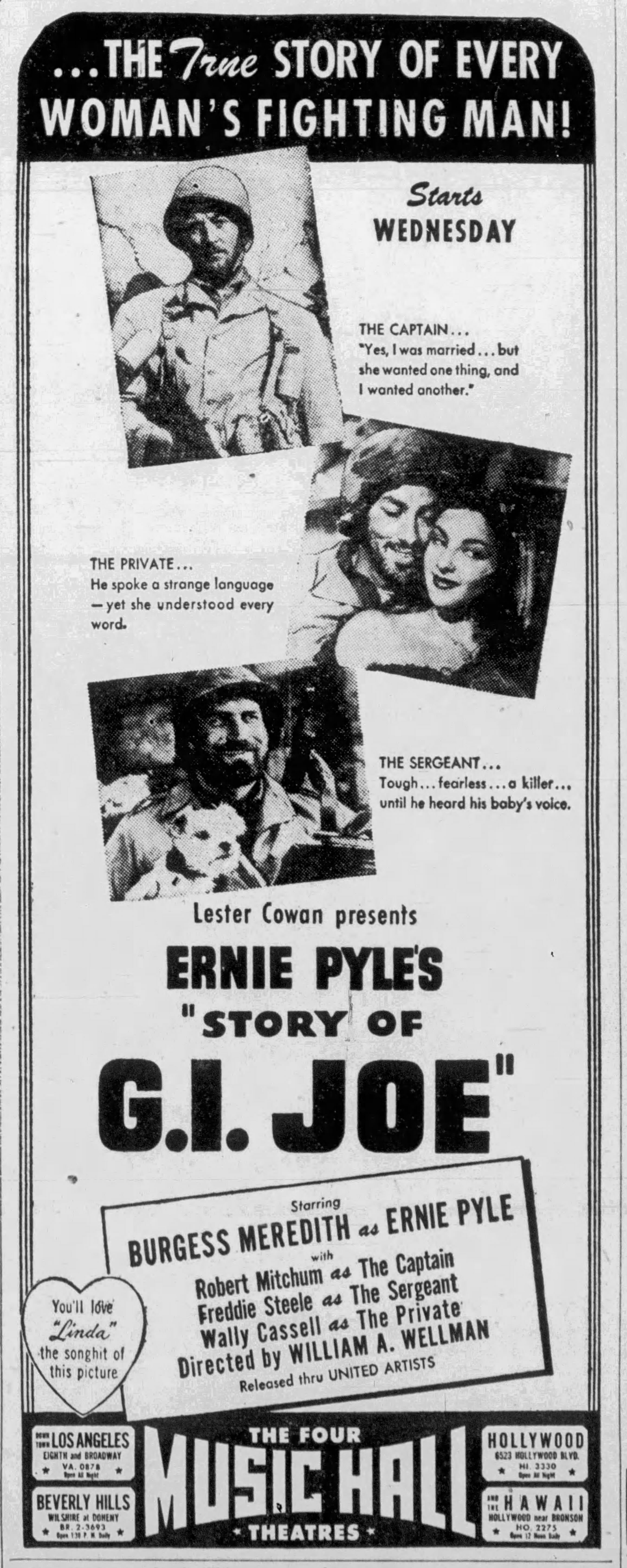


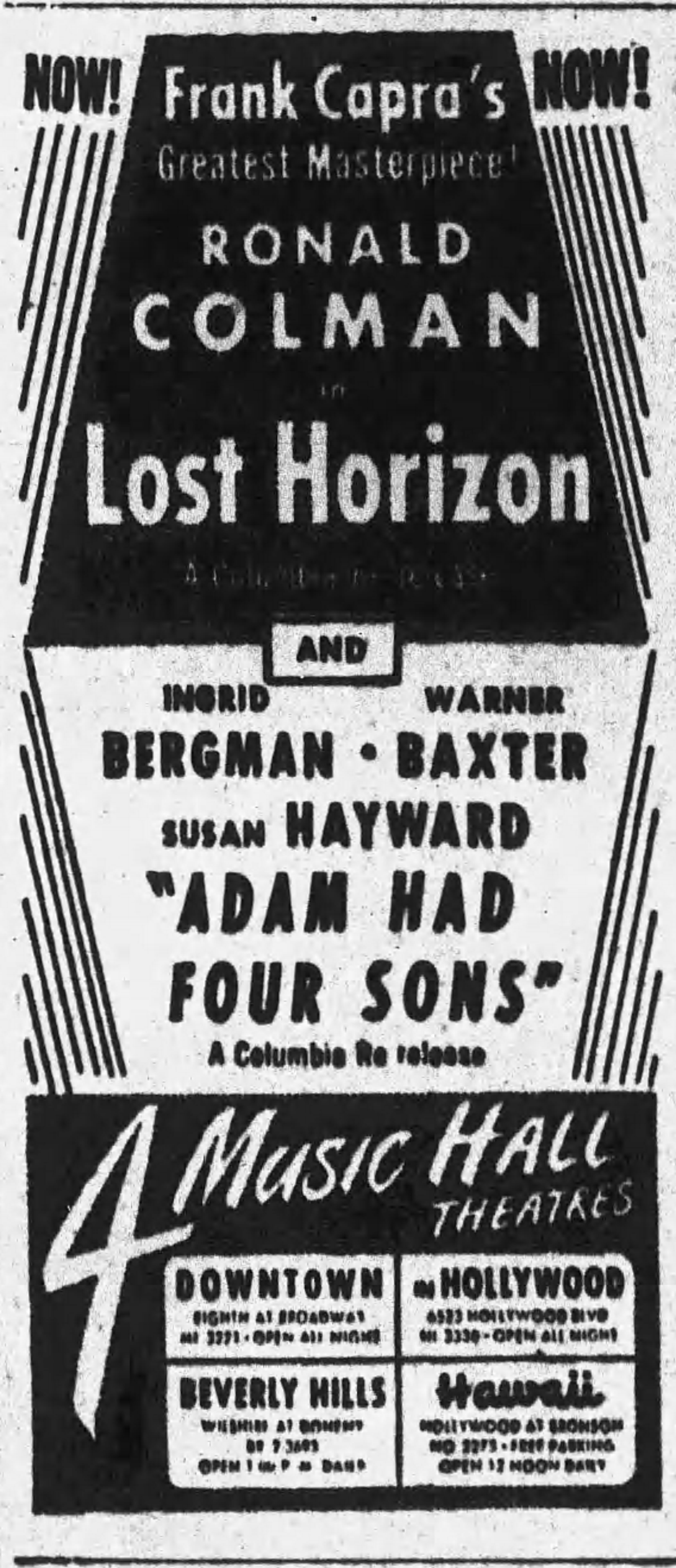

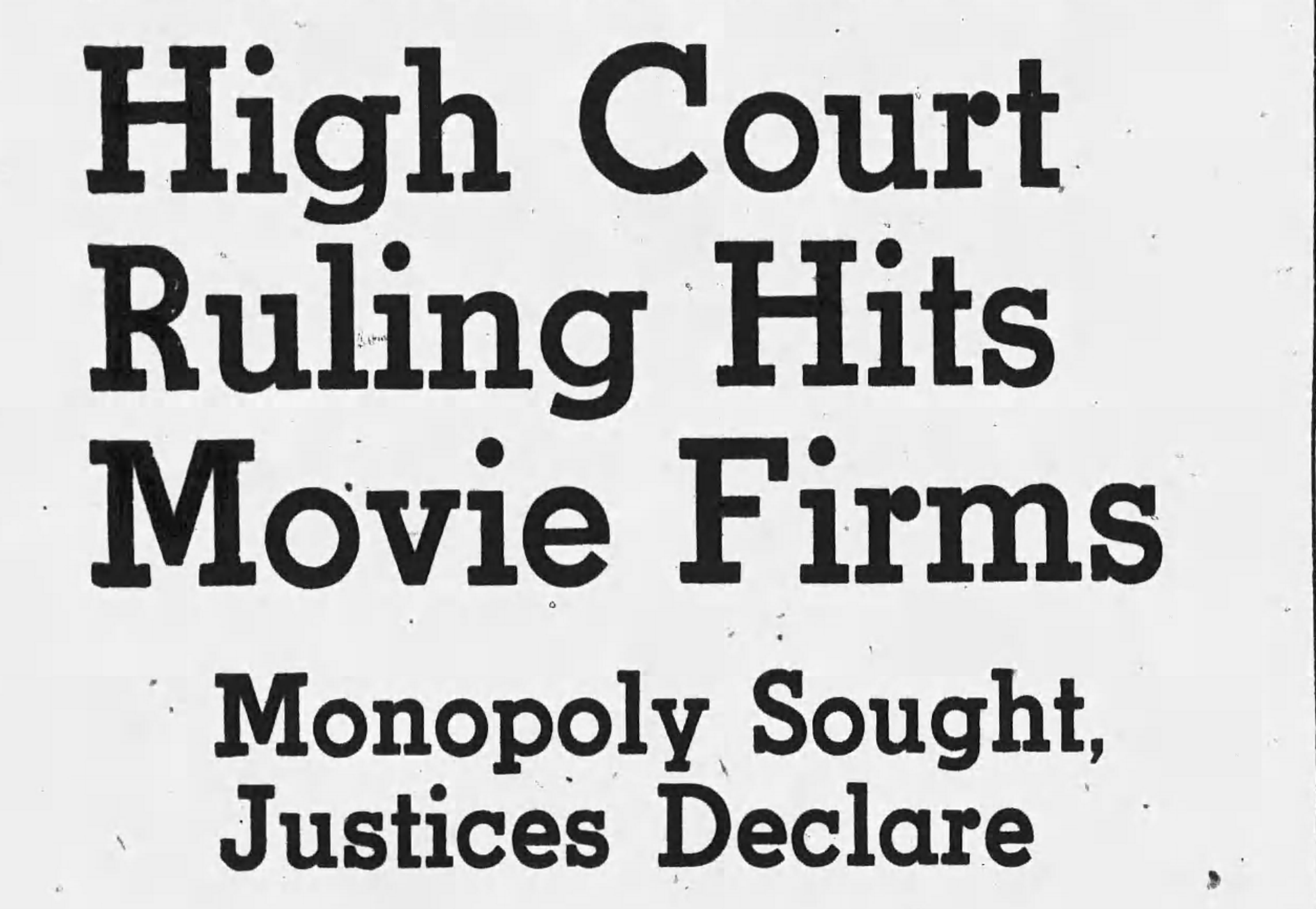

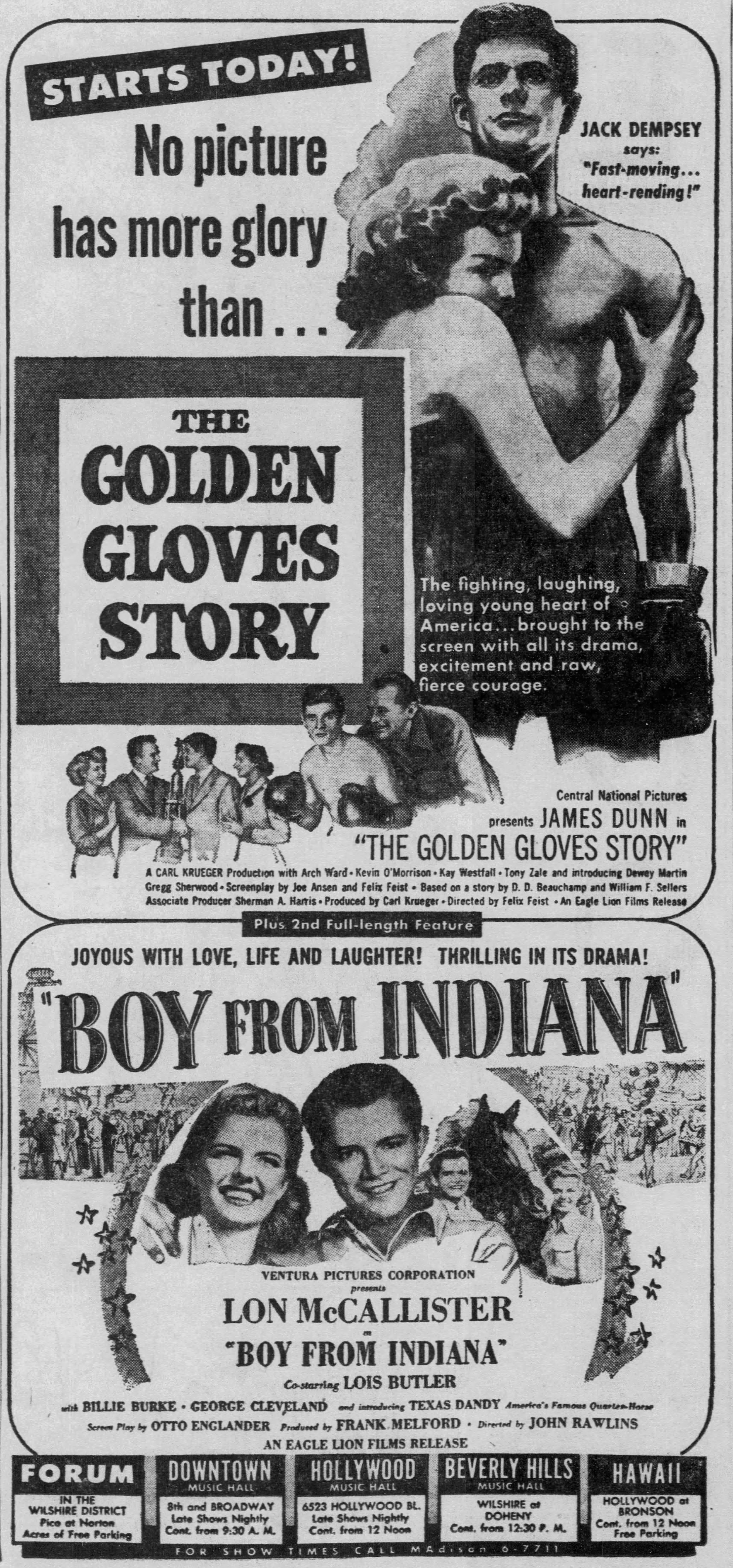
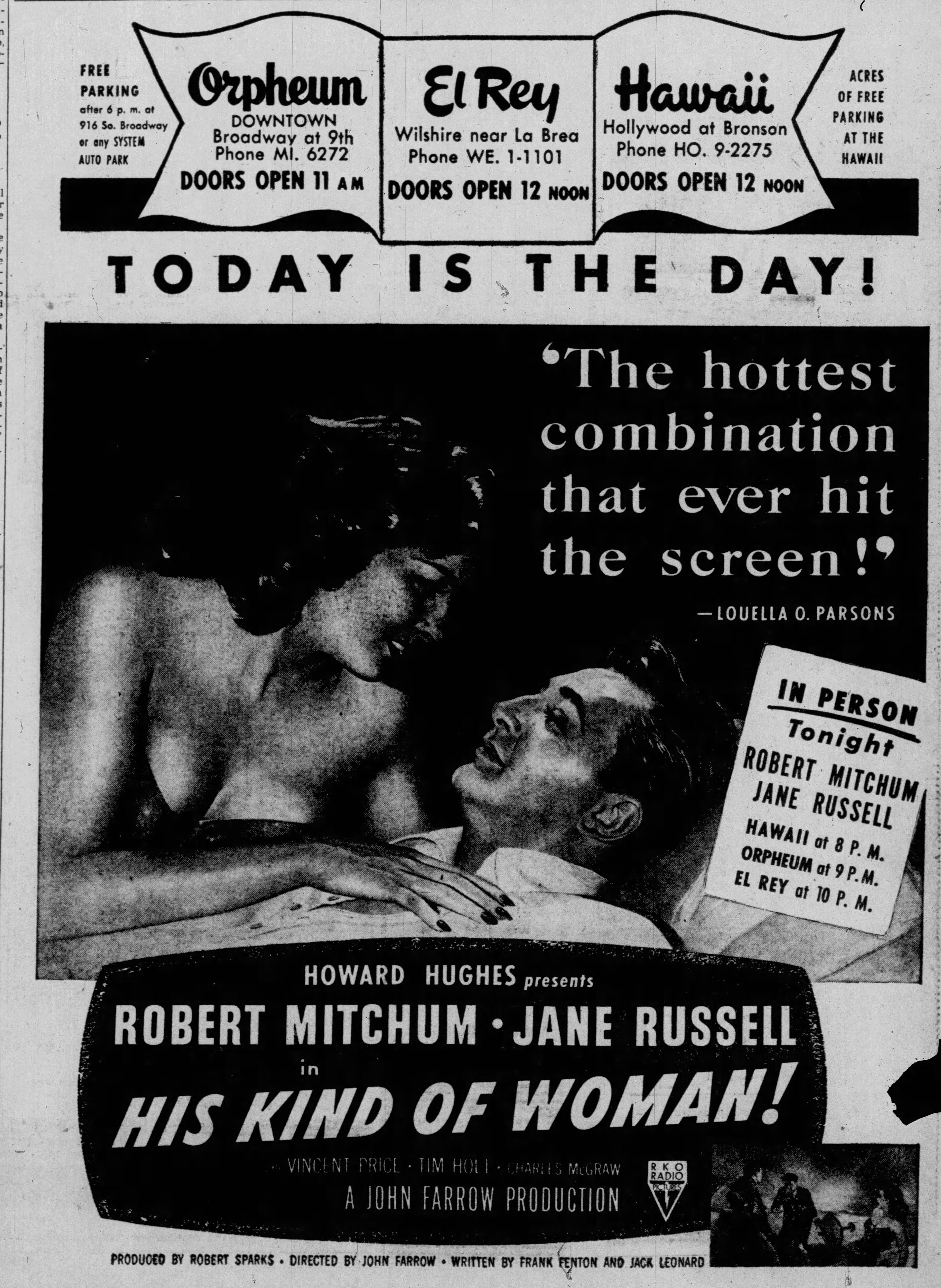
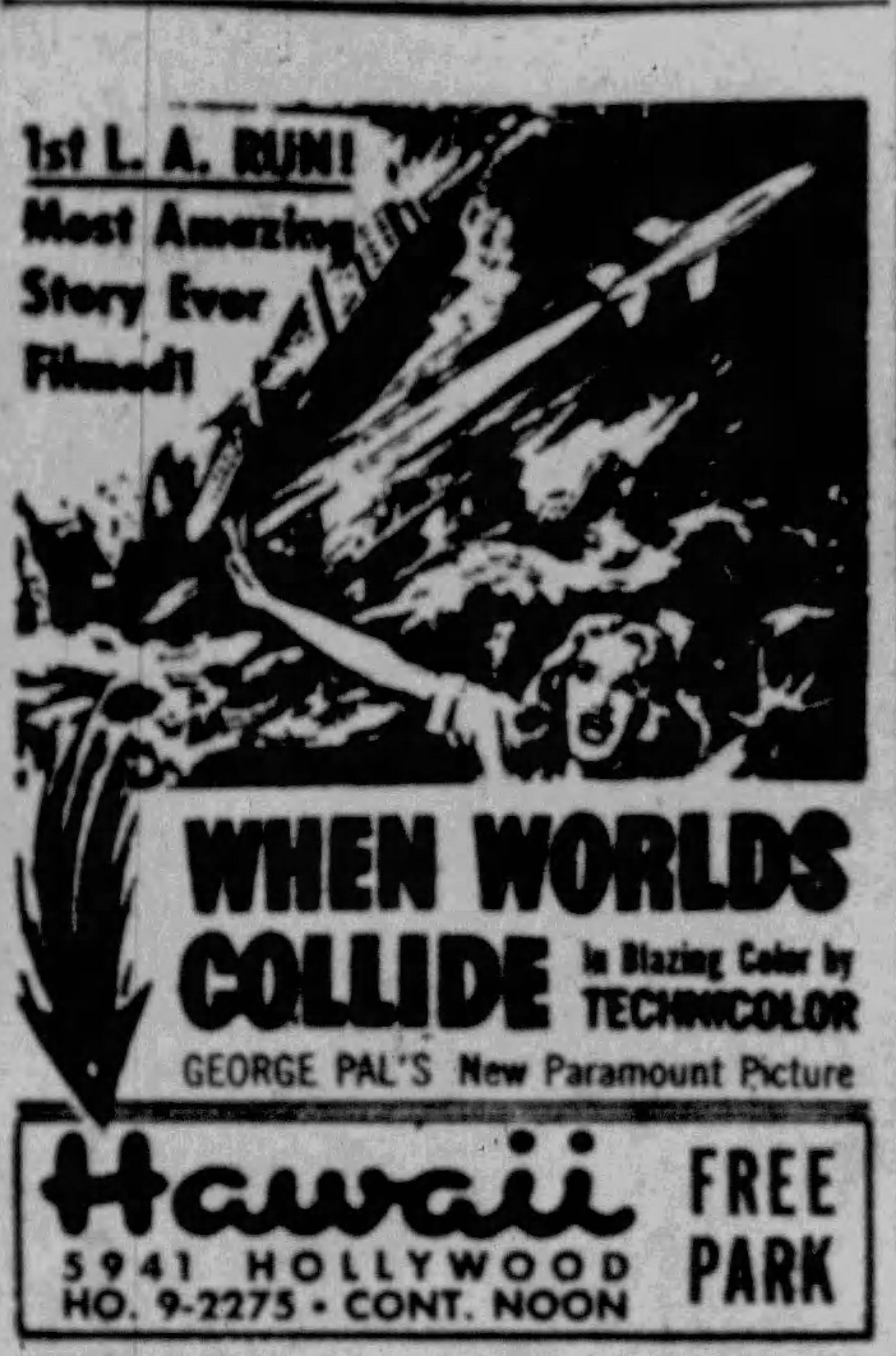
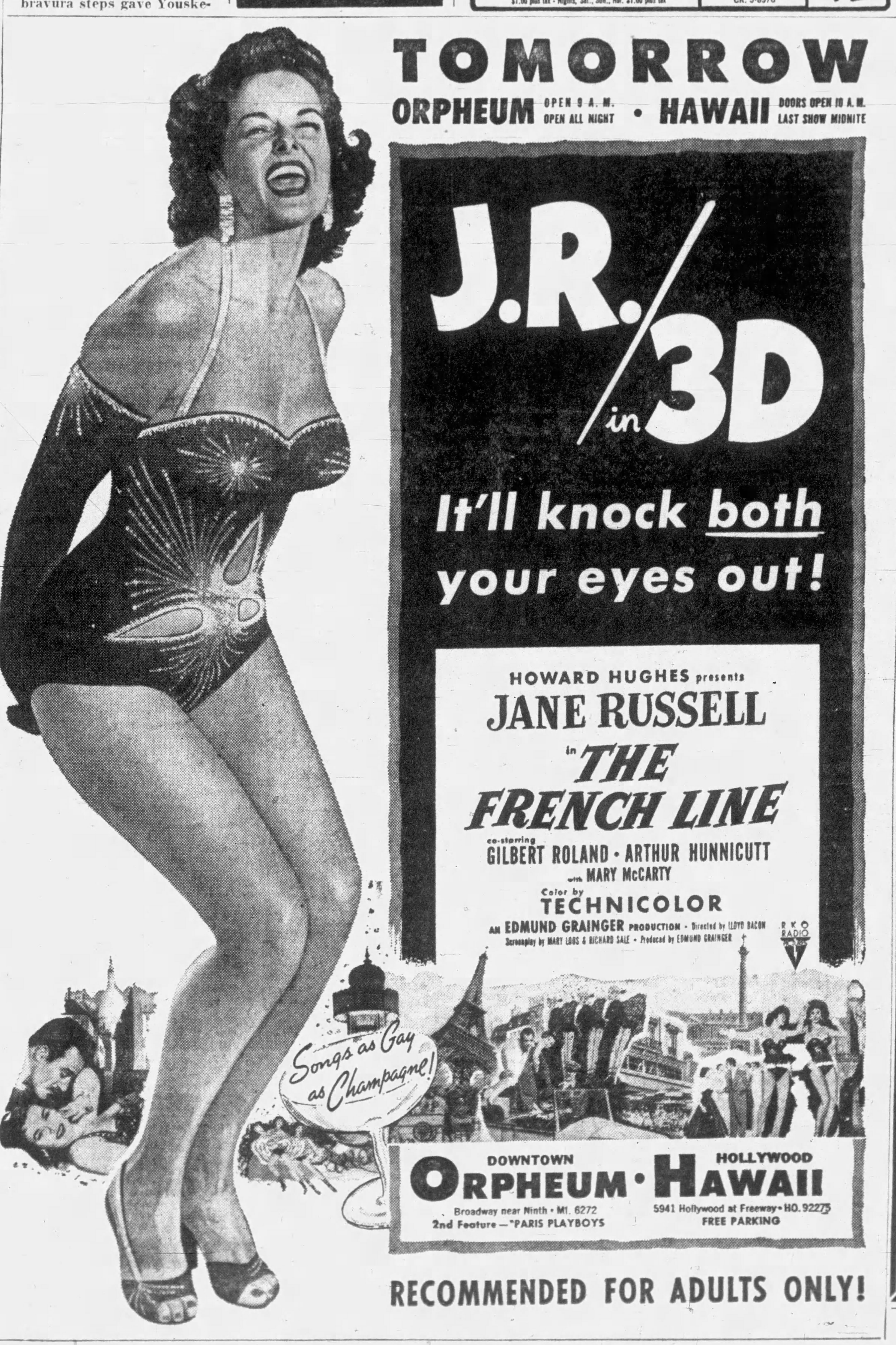
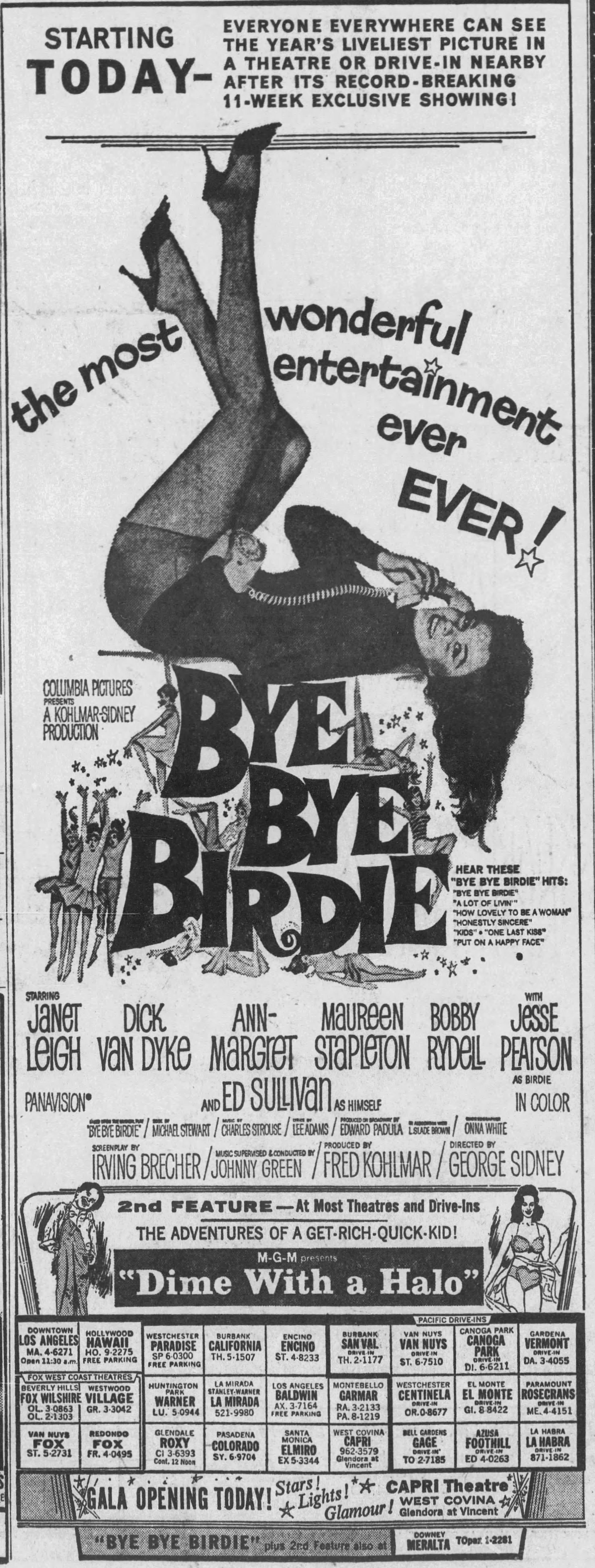


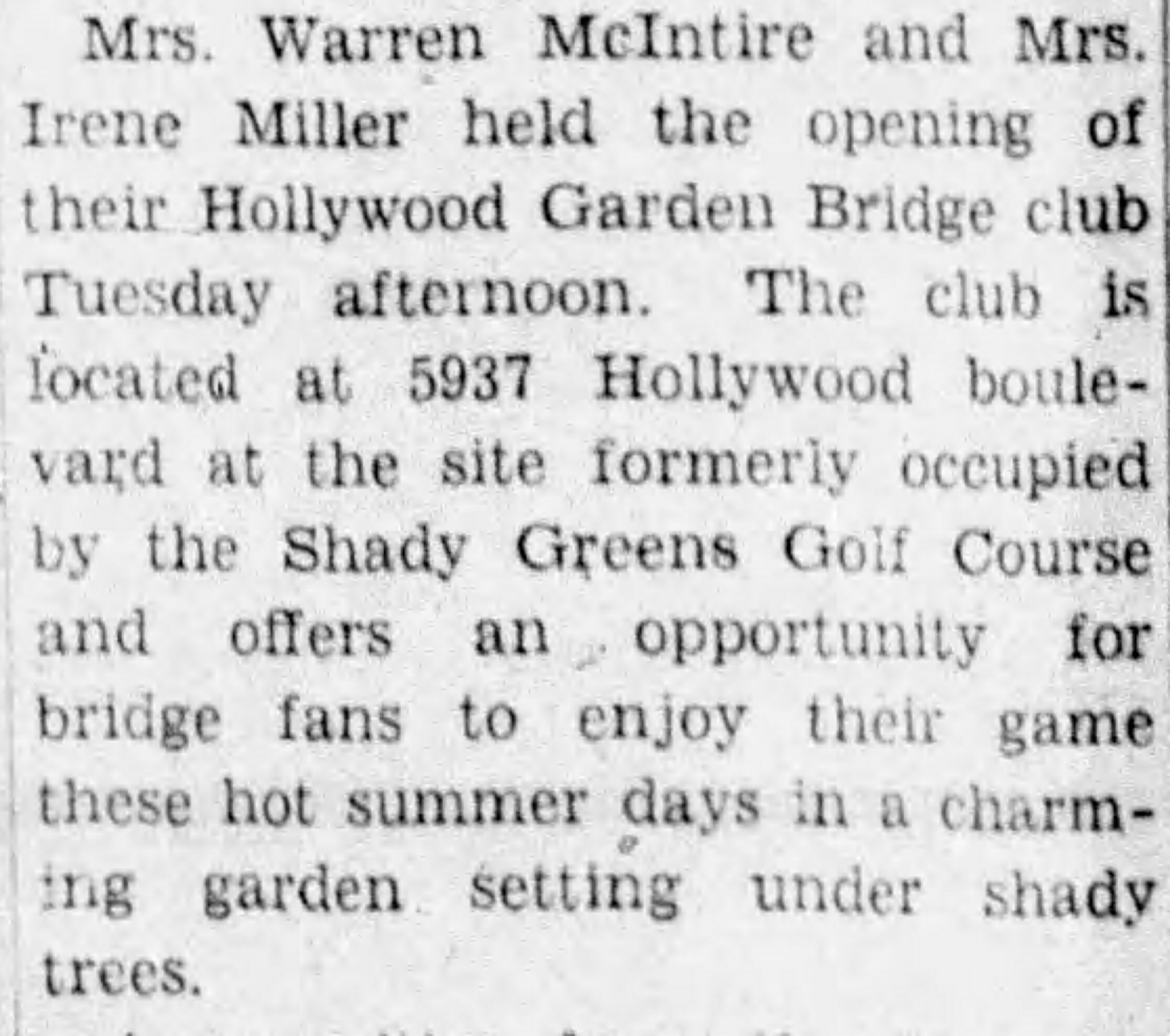

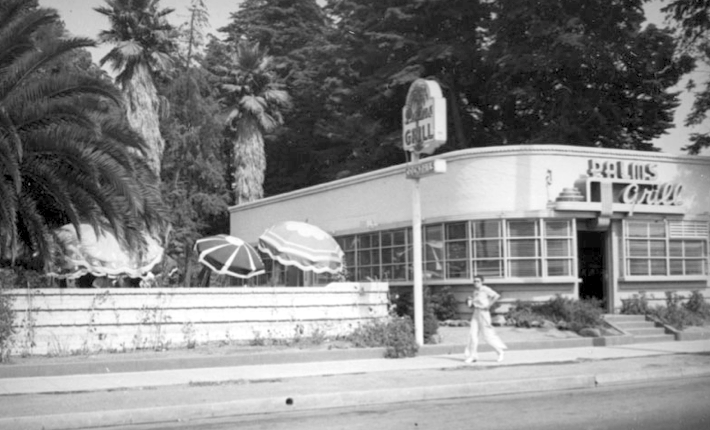


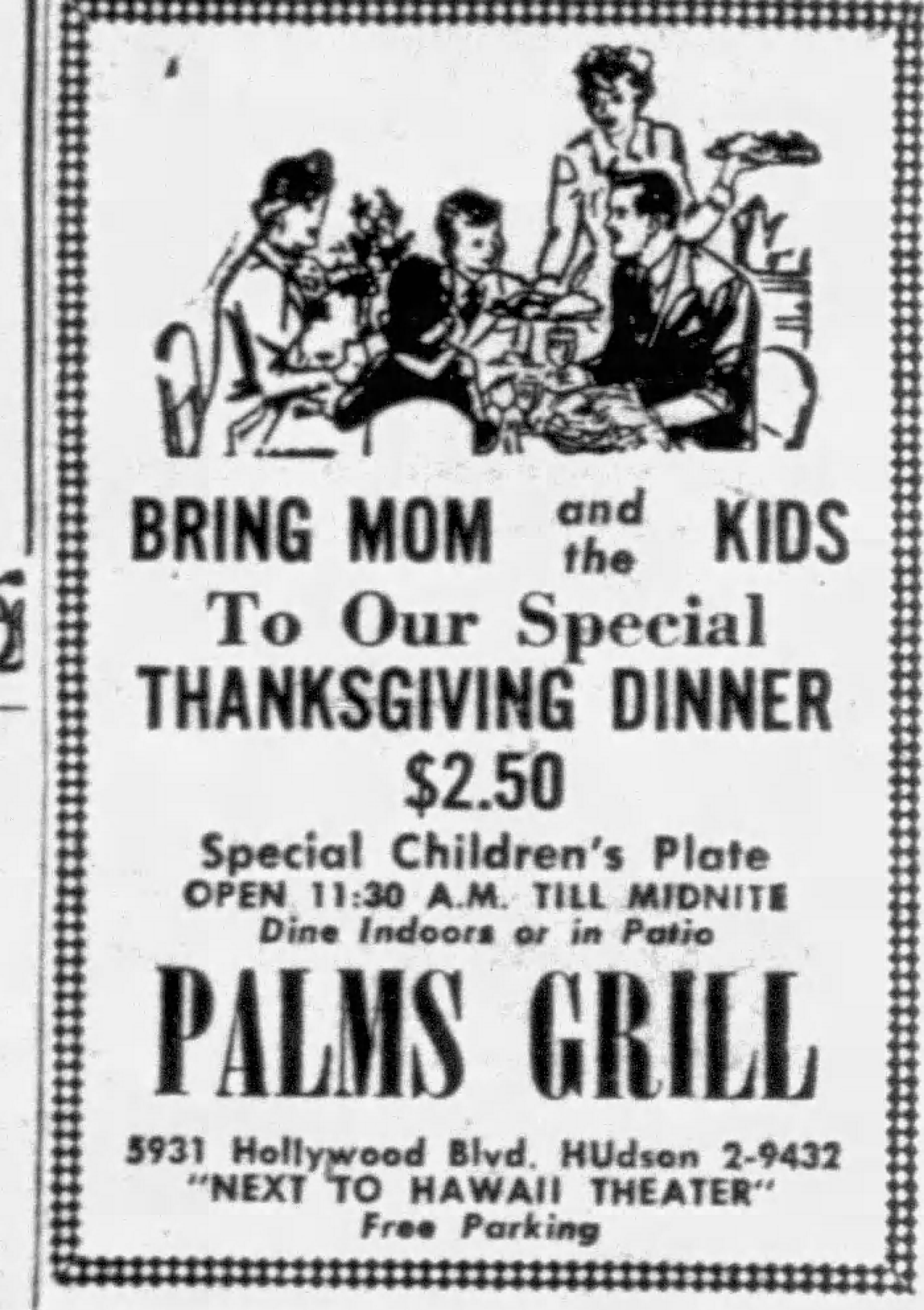
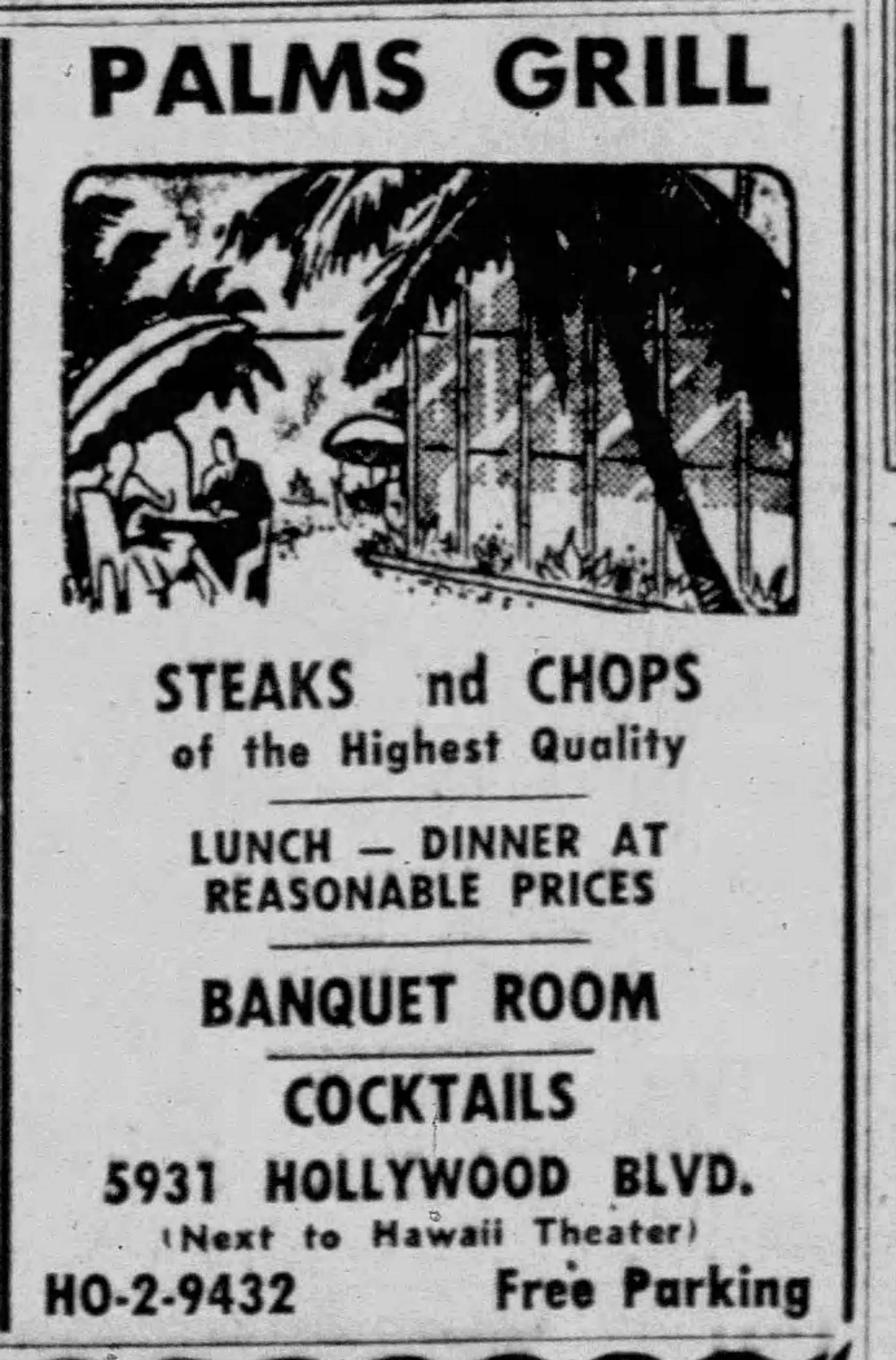


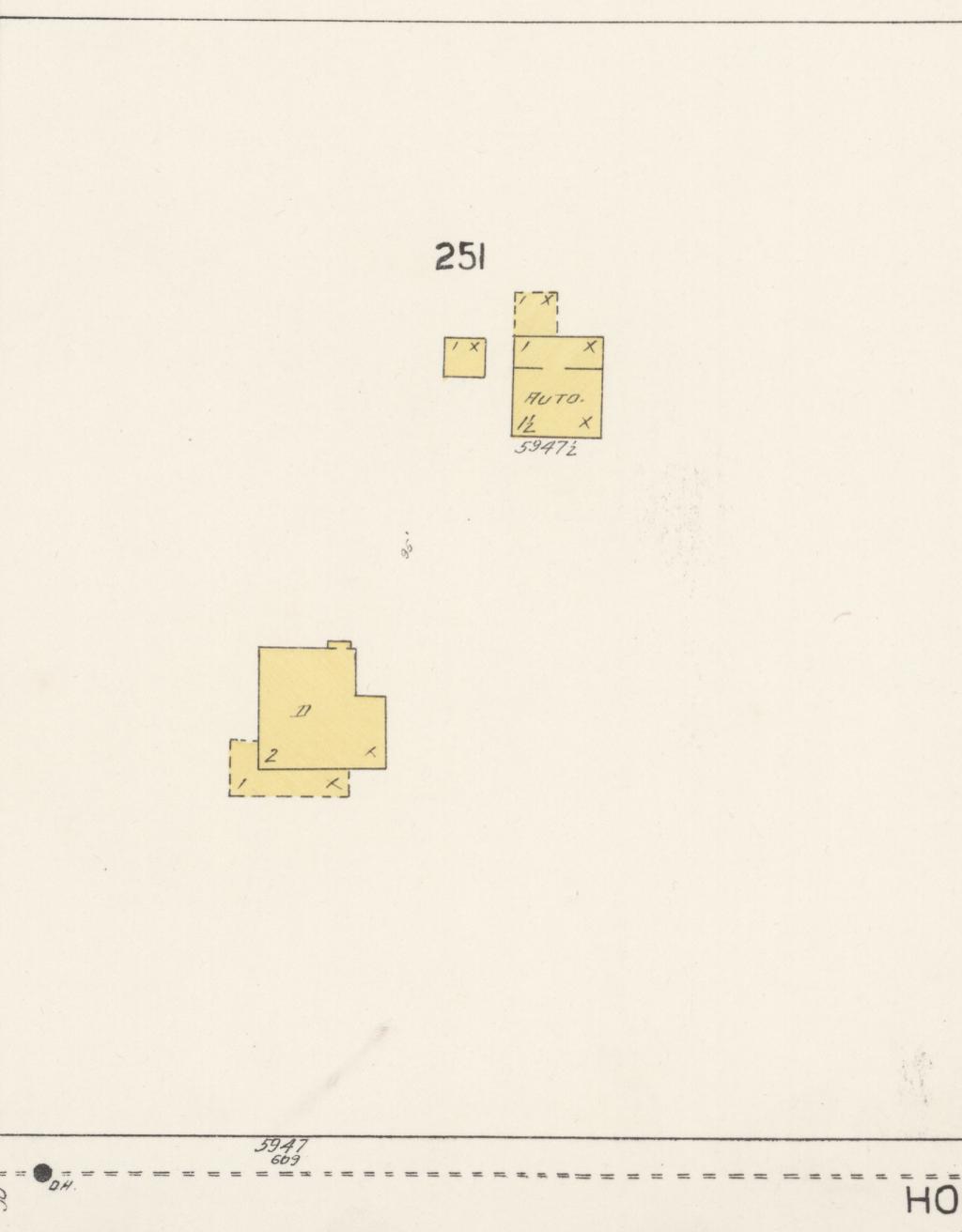
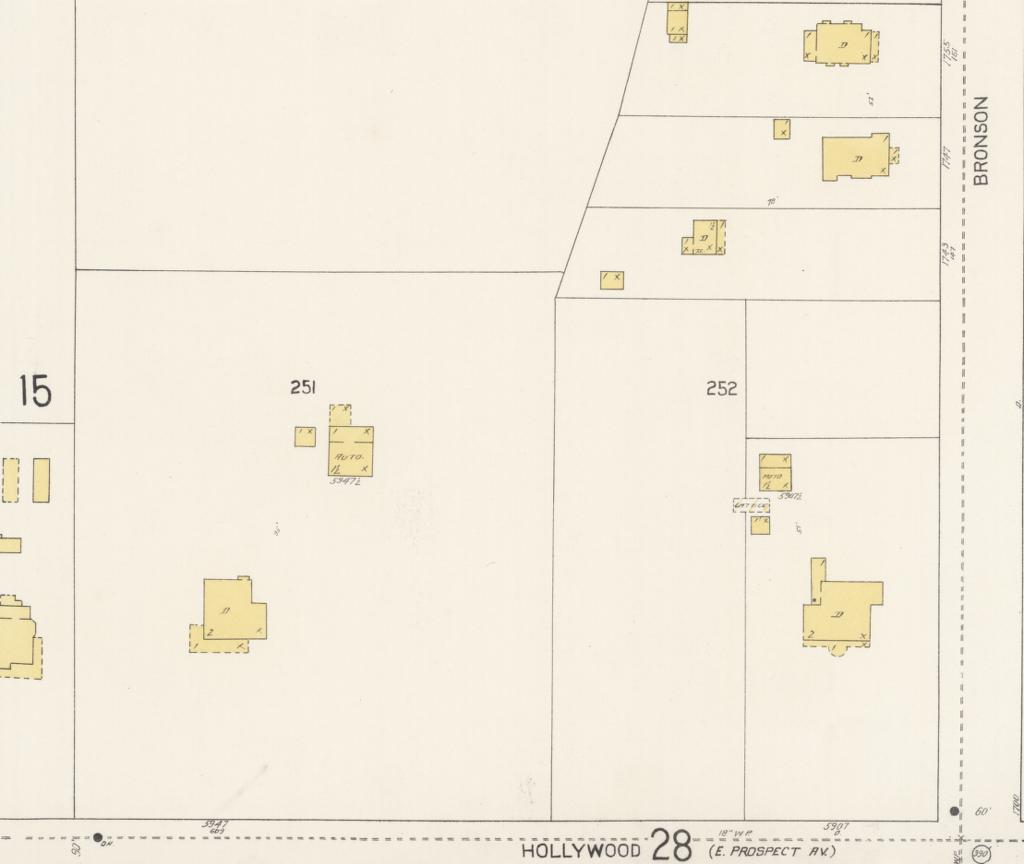


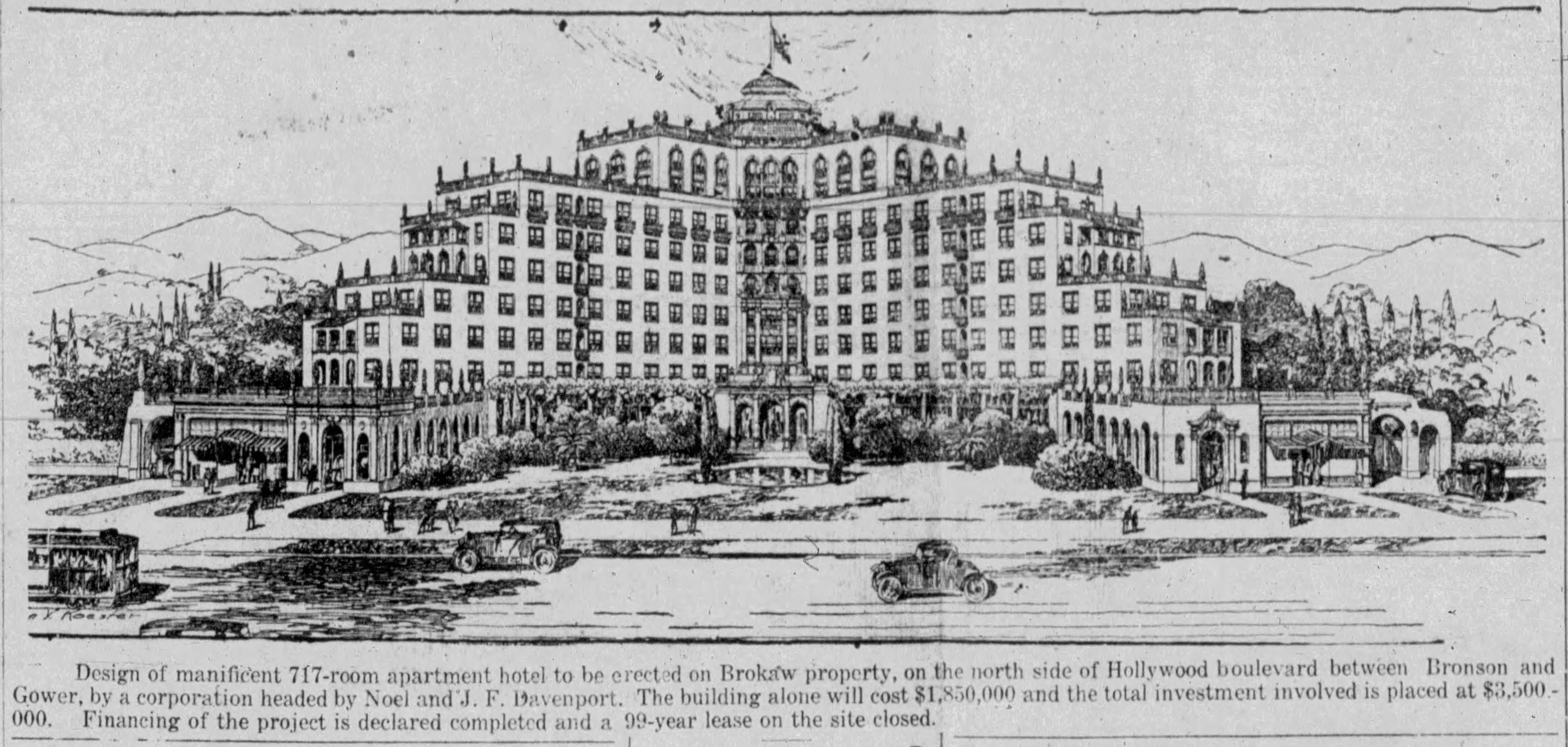


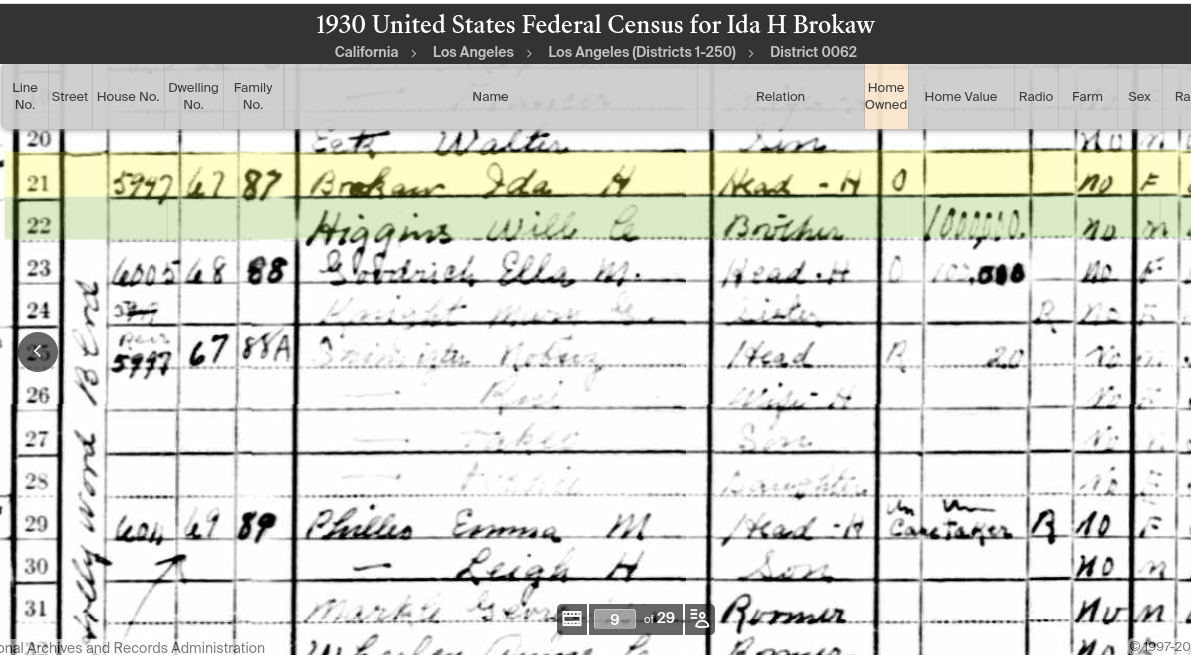


 J. H. Graham